Archive for ‘Belt and Road Initiative (BRI)’

31/08/2019

China, Philippines common interests “far greater” than differences: Premier Li

CHINA-BEIJING-LI KEQIANG-PHILIPPINE PRESIDENT-MEETING (CN)

Chinese Premier Li Keqiang meets with Philippine President Rodrigo Duterte at the Great Hall of the People in Beijing, capital of China, Aug. 30, 2019. (Xinhua/Ding Lin)

BEIJING, Aug. 30 (Xinhua) — Chinese Premier Li Keqiang said Friday that the common interests between China and the Philippines far outweigh the differences in his meeting with visiting Philippine President Rodrigo Duterte.

Li said that China is willing to cooperate with the Philippines on the basis of mutual respect, equality and mutual benefit, and seek better synergy between the Belt and Road Initiative and the Philippines’ “Build, Build, Build” program, so as to promote sustained, stable and healthy development of bilateral relations and cooperation.

Li said that the current situation in the South China Sea is generally stable and the countries in the region are living in peace.

China always acts with the greatest sincerity and is willing to work together with the Philippines and ASEAN countries to achieve the Code of Conduct (COC) in the South China Sea in the period when the Philippines serves as a coordinating country for China-ASEAN relations, said Li.

Li also expected joint efforts to promote offshore oil and gas development, and safeguard peace and stability in the South China Sea and the region.

Duterte said the Philippine side is willing to further expand exchanges and cooperation with China in such fields as the economy, trade and people-to-people exchanges, so as to promote bilateral ties and secure the two peoples concrete benefits.

Duterte said the Philippines will never confront China.

On the South China Sea issue, Duterte said Western countries are not COC negotiators and should not hinder the efforts of regional countries in this regard.

He said as the Philippines now is fulfilling its responsibilities as a coordinating country for China-ASEAN relations, the Philippine side will work with China and ASEAN countries to actively promote the adoption of the COC during his term of office.

Duterte also expressed the willingness to push forward common development with China on offshore oil and gas.

Source: Xinhua

28/08/2019

Chinese premier holds talks with Uzbek PM to boost ties

CHINA-BEIJING-LI KEQIANG-UZBEK PM-TALKS (CN)

Chinese Premier Li Keqiang (L) holds a welcoming ceremony for visiting Uzbek Prime Minister Abdulla Aripov before their talks in Beijing, capital of China, Aug. 27, 2019. (Xinhua/Yin Bogu)

BEIJING, Aug. 27 (Xinhua) — Chinese Premier Li Keqiang held talks Tuesday with visiting Uzbek Prime Minister Abdulla Aripov, and the two sides agreed to cement cooperation.

Li said China attaches great importance to China-Uzbekistan relations and is willing to maintain close high-level exchanges with Uzbekistan, promote trade and investment liberalization and facilitation, and strengthen communication and coordination in international and regional affairs.

Li said China is ready to seek synergy between the Belt and Road Initiative and Uzbekistan’s development strategy, deepen cooperation in production capacity, interconnection and agriculture, and make efforts to ensure the stability of energy cooperation.

He expected the two sides to promote cooperation in culture, tourism and higher education, so as to consolidate the people-to-people foundation of bilateral ties.

China is willing to continue to expand the scale of bilateral trade, import Uzbek products that meet the needs of the Chinese market, and support capable Chinese companies investing in Uzbekistan in accordance with market rules, Li said, hoping Uzbekistan will create a good business environment.

Aripov said Uzbekistan is ready to continue to participate in the Belt and Road Initiative, deepen cooperation in various fields, and welcome Chinese enterprises to expand investment in Uzbekistan, so as to push bilateral relations to a higher level.

The two leaders witnessed the signing of a series of cooperation documents after the talks.

Source: Xinhua

25/08/2019

China increases its presence in Russia’s former Central Asian backyard

  • A recent joint exercise in Tajikistan is the latest example of Beijing’s growing security and economic interests in the former Soviet republic
  • Analysts say Moscow may not be happy about China’s growing reach in the lawless, mountainous area and will be keeping an eye on the situation
Chinese and Tajik troops completed a joint exercise earlier this month in the mountainous region of Gorno-Badakhshan. Photo: Xinhua
China is increasing its military and economic presence in parts of central Asia that Russia has traditionally considered its sphere of influence – a development some analysts believe could cause concern in Moscow.
While Russia’s influence remains strong in many former Soviet republics, China is steadily building up its military and economic influence in Tajikistan, particularly in the remote, mountainous areas on its western borders where central government authority is weak.

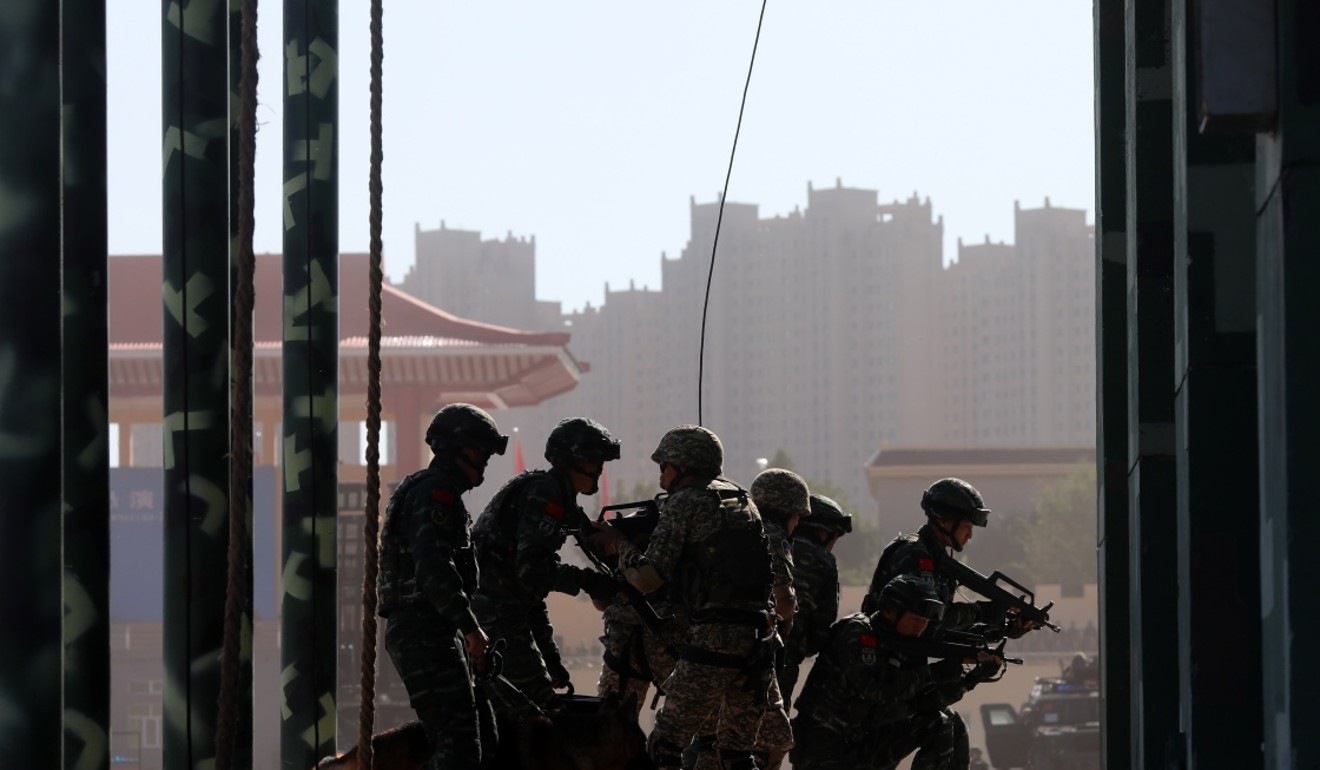
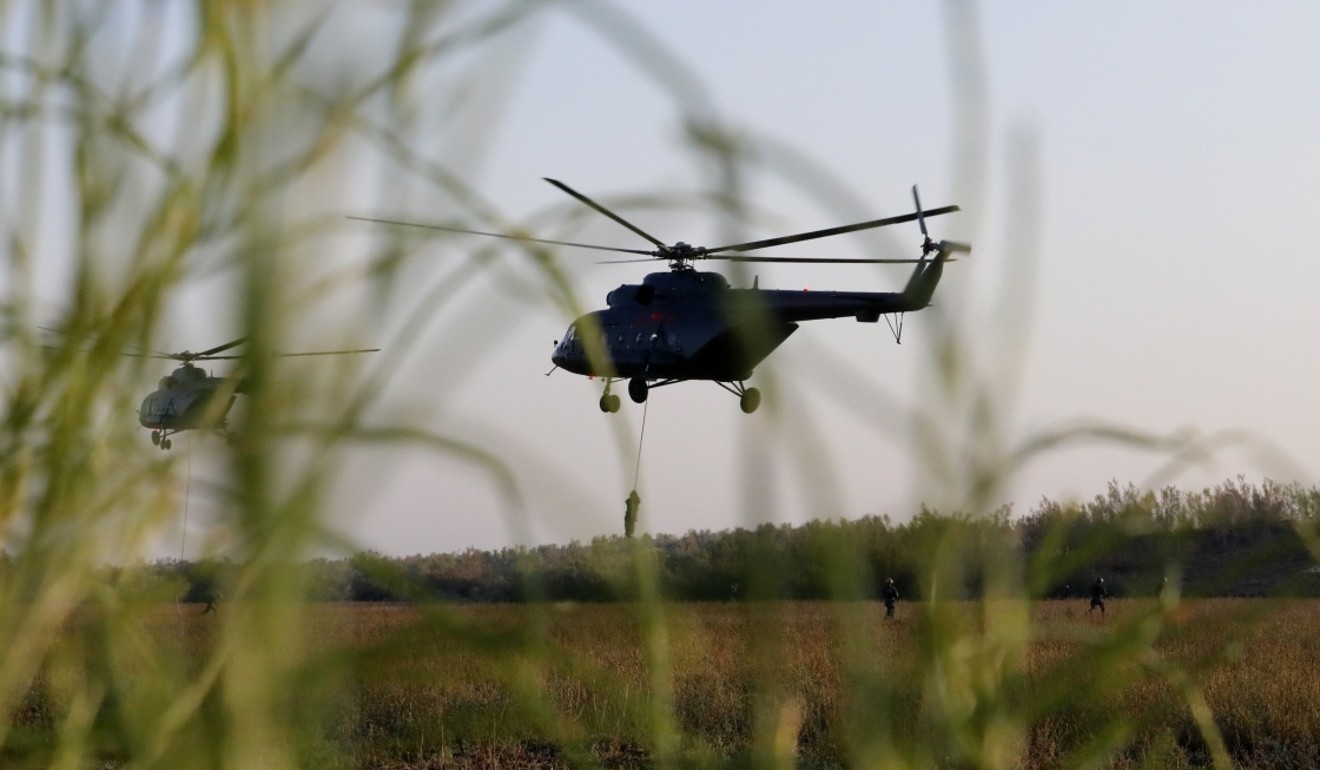
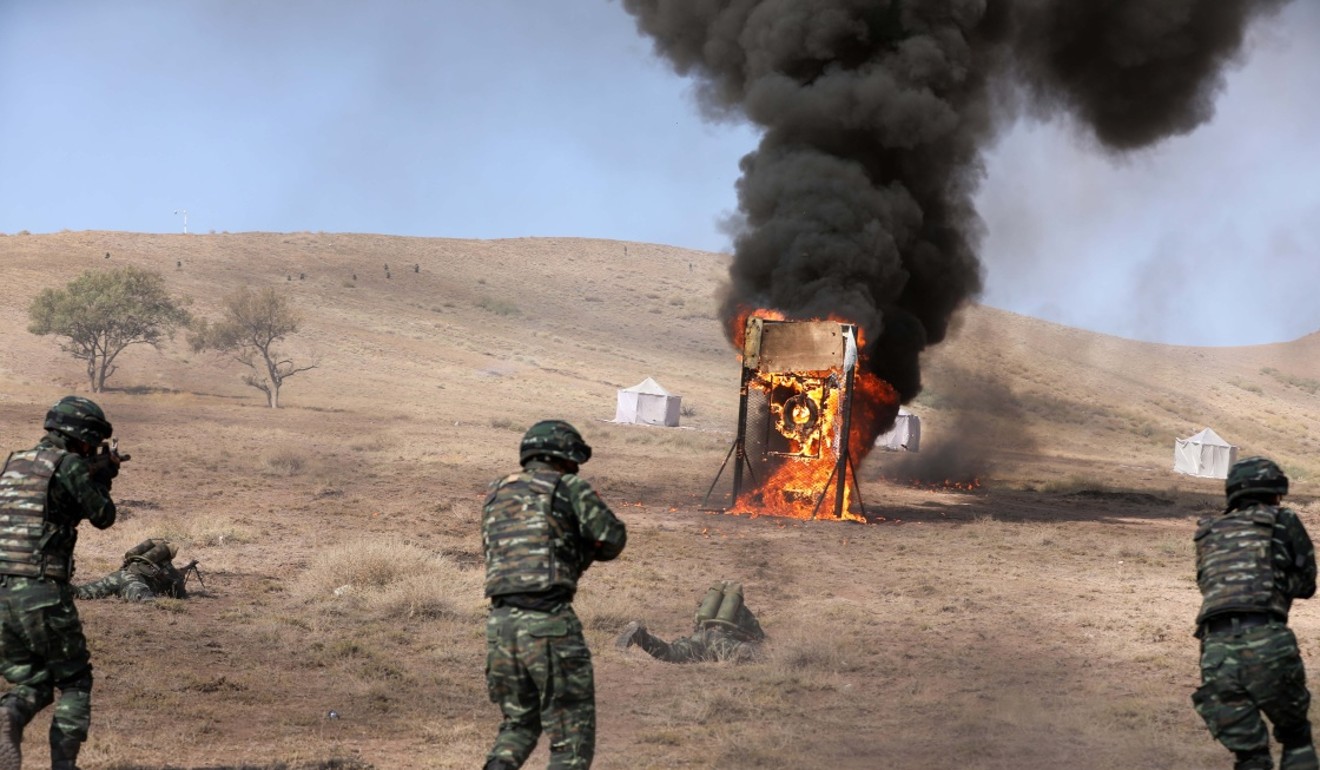
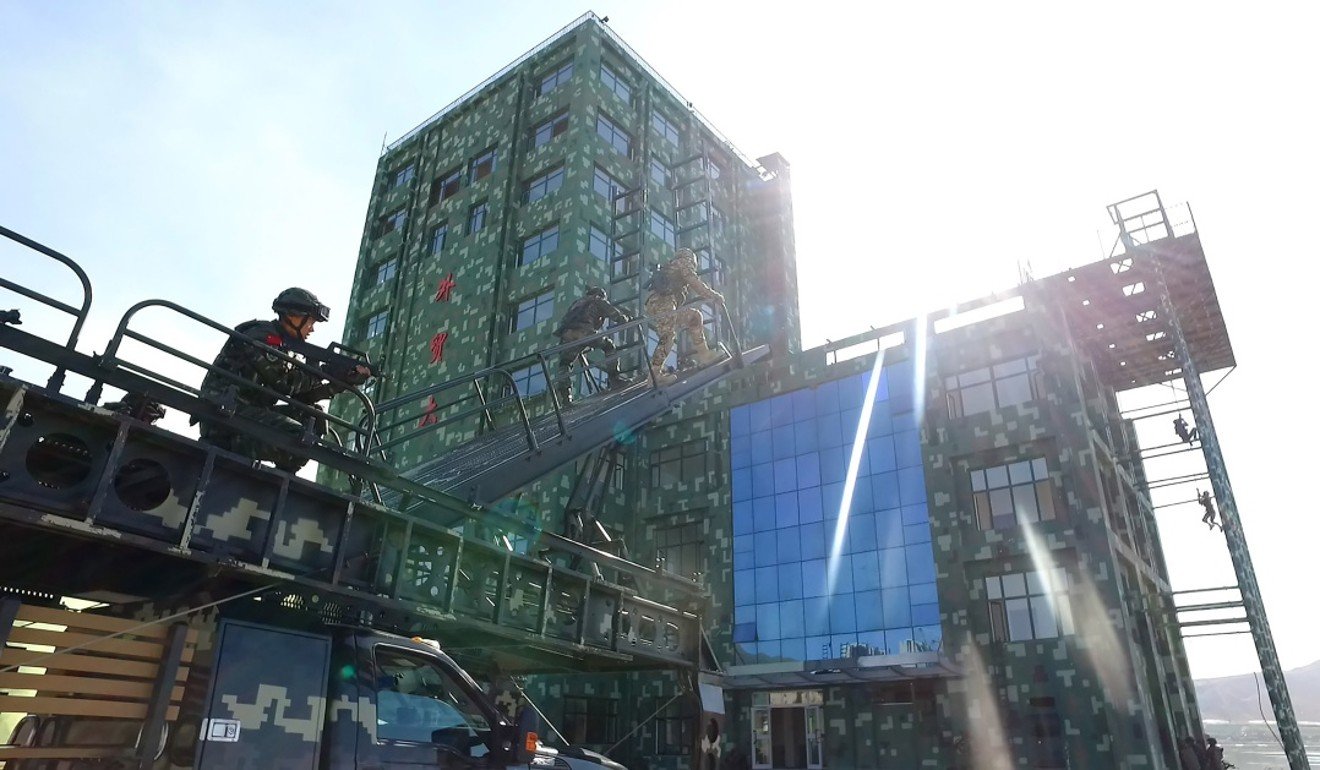
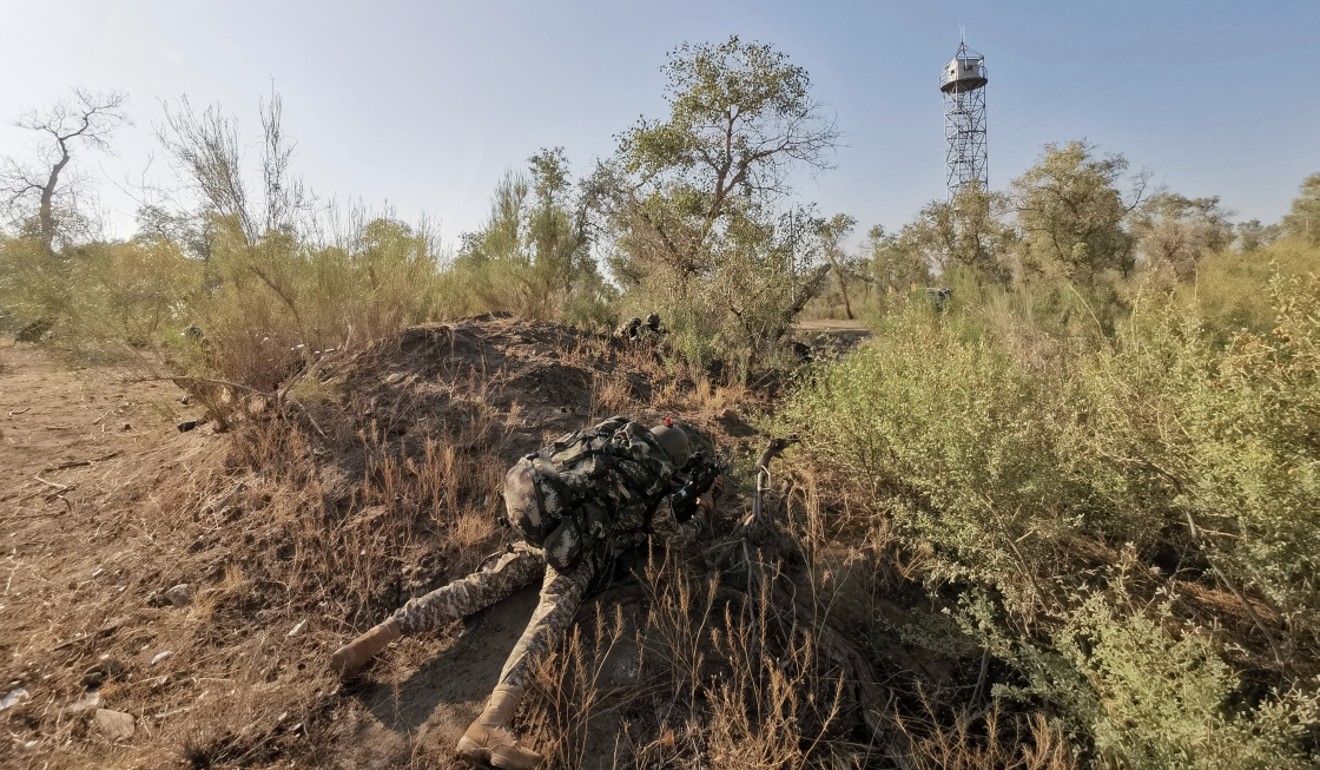
Chinese troops recently concluded a joint drill in eastern Tajikistan involving 1,200 troops from both countries.

The eight-day exercise that finished on August 13 was conducted in the autonomous Gorno-Badakhshan autonomous region, a sparsely populated territory in the high Pamir mountains, which borders China’s Xinjiang region and Afghanistan.
China has been increasing its security presence in the strategically sensitive region. Photo: Xinhua

Although this year’s exercise involved fewer troops than the 10,000 involved in a previous drill three years ago, it tested the use of advanced aerial vehicles and ground reconnaissance technology to monitor the area.

The landlocked country is strategically important for China, which is worried that the porous borders will serve as an entry point for drugs and Islamic militants into Xinjiang, where its deradicalisation strategy has led to the detention of a million Muslim minorities in reeducation camps.

It also sits along the trade routes China hopes to develop under the Belt and Road Initiative – Beijing’s flagship plan to expand its global influence through infrastructure, trade and investment – but the area has long been plagued by lawlessness and outbreaks of violence.

The recent exercise tested aerial surveillance techniques. Photo: Xinhua

Artyom Lukin, a professor of international politics at Far Eastern Federal University in Vladivostok, said Russia was not happy about the deployment of Chinese forces in Tajikistan.

“Russia has traditionally considered Central Asia, including Tajikistan, as its sphere of political-military influence,” he said.

Observers said other Central Asian republics – such as Kazakhstan, Uzbekistan and Kyrgyzstan – are likely to stay within Moscow’s orbit, but China is steadily building closer security ties with Tajikistan.

In February, China’s defence ministry denied that it was building a base and stationing troops in the country, but defended its closer military cooperation with Tajikistan.

The recent training exercise was conducted in an area Russia has long seen as part of its sphere of influence. Photo: Xinhua

China has long-standing security interests in the country and in 2016 it agreed to finance 11 border outposts and a training centre for guards along the Afghan border.

This was part of a deal Beijing made through the Quadrilateral Cooperation and Coordination Mechanism – which also involves Pakistan, Afghanistan and Tajikistan – to strengthen cooperation in combating terrorism and improving security.

China has also overtaken Russia economically, becoming the largest foreign investor in Tajikistan in 2016, accounting for 30 per cent of Tajikistan’s total direct accumulated investments, state news agency Xinhua reported.

Banned Muslim political party blamed for deadly attack on tourists in Tajikistan

China’s direct investment in Tajikistan was worth US$95 million in 2017, according to the latest available figures. China has also grown to become the country’s third largest trading partner with bilateral trade reaching around US$1.5 billion in 2018.

A recent opinion piece published by the Russian state-owned news agency Sputnik suggested China may be “getting carried away” by its investments in the region.

The article suggested that China’s growing presence in the country could lead to a “partial loss” of Tajikistan’s sovereignty and argued that Beijing may want to take control of the border with Afghanistan.

China also has economic interests to protect. Photo: Xinhua

But Lukin said even though this growing involvement may be an irritant for Russia, the strategic partnership between China and Russia will remain strong.

The two countries remain the key players in the Shanghai Cooperation Organisation, an economic and security alliance that includes the Central Asian republics and India and Pakistan.

The two are also keen to cooperate more closely due to their tense relationship with the United States. This year Russian and Chinese armed forces  have stepped up their cooperation, and last week used a UN Security Council debate to criticise the US for pulling out of the Intermediate-Range Nuclear Forces Treaty. Washington defended the move as necessary response to Beijing and Moscow’s build up of arms.

Why Chinese investors are struggling to gain a foothold in Tajikistan

Lukin said: “Moscow no doubt understands that in terms of security, Tajikistan’s border, adjacent to China’s Xinjiang and Afghanistan, is truly a vital concern for Beijing.

“The presence of Chinese troops could actually benefit Russia, because it will be China bearing the costs of policing Tajikistan’s mountainous border areas.”

Stephen Blank, a former professor at the US Army War College and a specialist in Eurasian security, said that while Russia has mostly stayed silent about China’s presence in Tajikistan, it was closely watching the situation.

“What happens in the long run depends on how far China goes to extend its military presence in Central Asia. And if it keeps extending, it may well provoke some expression of concern in Russia beyond the silence that has hitherto been the case,” Blank said.

Chinese troops could play an increasing role in policing the area in future. Photo: Xinhua

“[The recent drills] look like conventional war-fighting exercises as much as anti-terrorist operations and suggest that China may have bigger contingencies than anti-terrorism in mind.”

Mathieu Duchatel, director of the Asia programme at the Institut Montaigne, a French think tank, said both Russia and China share similar concerns about terrorism and drug trafficking in Central Asia.

He said Russia had not objected to the security pact with Pakistan, Afghanistan and Tajikistan because there are more important strategic priorities in China-Russia relations.

“Overall, Russia’s acceptance of a security role for China in Central Asia shows how Russia realistically adjusts to the changing balance of power with China, and is able to avoid a zero-sum game on issues where parallel efforts by China and Russia can serve Russian security interests,” he said.

Source: SCMP

18/08/2019

Japan seeks to counter China in Africa with alternative ‘high-quality’ development

  • Beijing will be watching as leaders of African nations and international organisations gather for development summit in Yokohama later this month
  • Tokyo is expected to use the conference to articulate how its approach to aid and infrastructure is different from Chinese projects
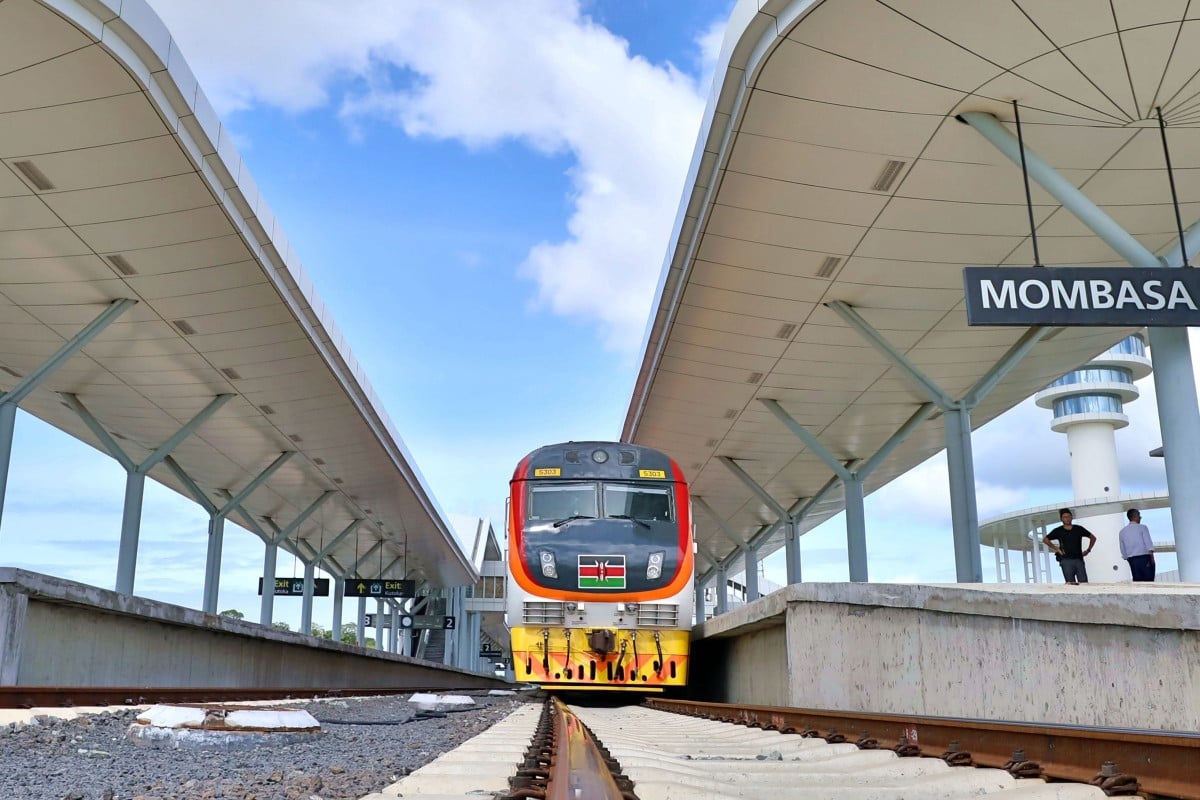
The Mombasa-Nairobi Standard Guage Railway, funded by China, opened in 2017. Japan has criticised Chinese lending practices in Africa. Photo: Xinhua
The Mombasa-Nairobi Standard Gauge Railway, funded by China, opened in 2017. Japan has criticised Chinese lending practices in Africa. Photo: Xinhua
The long rivalry between China and Japan is again playing out in Africa, with Tokyo planning to pour more aid into the continent and invest in infrastructure projects there.
Beijing – which has for decades funnelled money into the continent – will be watching as the leaders of 54 African countries and international organisations descend on Yokohama later this month for the seventh Tokyo International Conference on African Development (TICAD).

Japan reportedly plans to pledge more than 300 billion yen (US$2.83 billion) in aid to Africa during the conference. While that might not be enough to alarm China – which in recent years has been on a spending spree in the continent – it will be paying close attention.

Japan has in the past used the meetings to criticise Chinese lending practices in Africa, saying it was worried about the “unrealistic” level of debt incurred by African countries – concerns that China has dismissed.
This year, analysts expect Tokyo will use the conference to articulate how its approach to African development is substantively different from that of the Chinese.

“So, look for the words ‘quality’, ‘transparency’ and ‘sustainability’ to be used a lot throughout the event,” said Eric Olander, managing editor of the non-partisan China Africa Project.

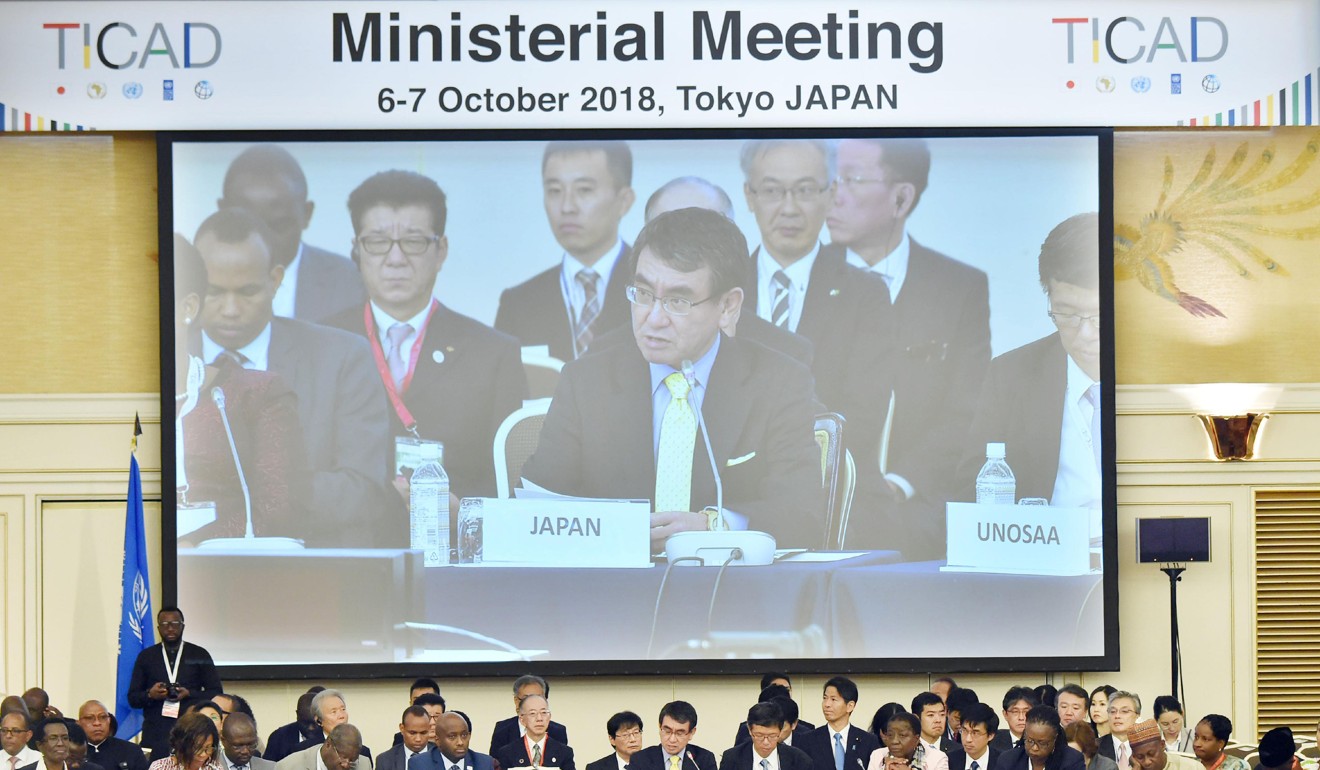
Japanese Foreign Minister Taro Kono gives a speech at the TICAD in Tokyo in October. Japan will reportedly pledge US$2.83 billion in aid to Africa this year. Photo: The Yomiuri Shimbun

Olander said Japan often sought to position its aid and development programmes as an alternative to China’s by emphasising more transparency in loan deals, higher-quality infrastructure projects and avoiding saddling countries with too much debt.

“In some ways, the Japanese position is very similar to that of the US where they express many of the same criticisms of China’s engagement strategy in Africa,” Olander said.

But the rivalry between China and Japan had little to do with Africa, according to Seifudein Adem, a professor at Doshisha University in Kyoto, Japan.

“It is a spillover effect of their contest for supremacy in East Asia,” said Adem, who is from Ethiopia.

“Japan’s trade with Africa, compared to China’s trade with Africa, is not only relatively small but it is even shrinking. It is a result of the acceleration of China’s engagement with Africa.”

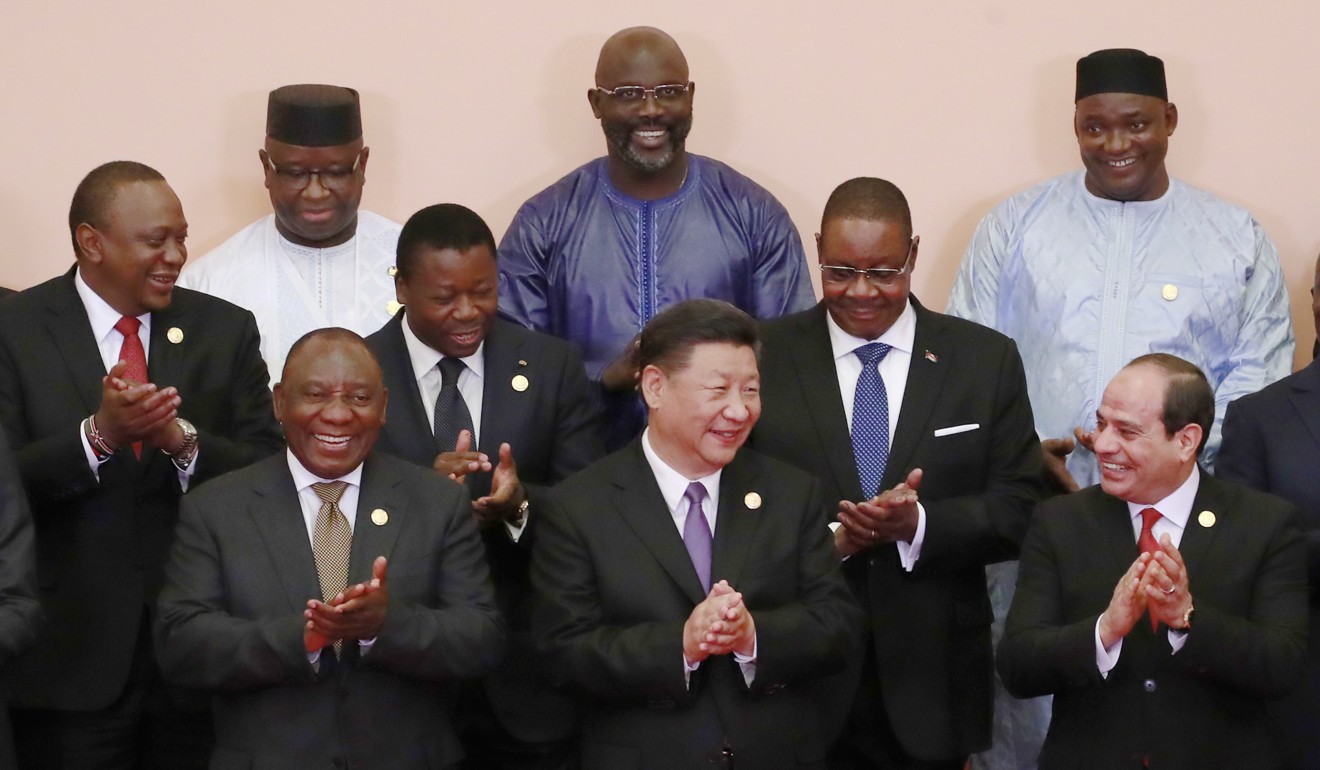
Chinese President Xi Jinping attends a group photo session with African leaders during the Forum on China-Africa Cooperation in Beijing last year. Photo: AP

Japan launched the TICAD in 1993, to revive interest in the continent and find raw materials for its industries and markets for products. About a decade later, China began holding a rival event, the Forum on China-Africa Cooperation.

It is at heart an ideological rivalry unfolding on the continent, according to Martin Rupiya, head of innovation and training at the African Centre for the Constructive Resolution of Disputes in Durban, South Africa.

“China cast Japan as its former colonial interloper – and not necessarily master – until about 1949. Thereafter, China’s Mao [Zedong] developed close relations, mostly liberation linkages with several African nationalist movements,” Rupiya said.

Beijing had continued to invoke those traditional and historical ties, which Japan did not have, he said.

“Furthermore, Japan does not command the type of resources – call it largesse – that China has and occasionally makes available to Africa,” Rupiya said.

Although both Asian giants have made inroads in Africa, the scale is vastly different.

While Japan turned inward as it sought to rebuild its struggling economy amid a slowdown, China was ramping up trade with African countries at a time of rapid growth on the continent.

That saw trade between China and Africa growing twentyfold in the last two decades. The value of their trade reached US$204.2 billion last year, up 20 per cent from 2017, according to Chinese customs data. Exports from Africa to China stood at US$99 billion last year, the highest level since the 1990s. Meanwhile, through its Belt and Road Initiative that aims to revive the Silk Road to connect Asia with Europe and Africa, China is funding and building Kenya’s Standard Gauge Railway and the Addis Ababa-Djibouti Railway. Beijing is also building major infrastructure projects in Zambia, Angola and Nigeria.

Japan’s trade with Africa is just a small fraction of Africa’s trade with China. In 2017, Japan’s exports to the continent totalled US$7.8 billion, while imports were US$8.7 billion, according to trade data compiled by the Massachusetts Institute of Technology.

How speaking with one voice could help Africa get a better deal from China

But Japan now appears eager to get back in the game and expand its presence in Africa, and analysts say this year’s TICAD will be critical – both in terms of the amount of money Tokyo commits to African development and how it positions itself as an alternative to the Chinese model.

Ryo Hinata-Yamaguchi, a visiting professor at Pusan National University in South Korea, said the continent was “economically vital to Japan, both in trade and investments”.

“Moreover, Japan has established some strong links with African states through foreign aid,” Hinata-Yamaguchi said.

“Japan’s move is driven by both economic and political interests. Economically, Japan needs to secure and maintain its presence in, and linkages with, the African states while opening new markets and opportunities,” he said.

To counter China’s belt and road strategy, Japan has launched the Asia-Africa Growth Corridor project, an economic cooperation deal, with India and African countries.

Tokyo meanwhile pledged about US$30 billion in public-private development assistance to Africa over three years at the 2016 TICAD, in Nairobi. But China offered to double that amount last year, during its Forum on China-Africa Cooperation in Beijing.

Still, Japan continues to push forward infrastructure projects on the continent. It is building the Mombasa Port on the Kenyan coast, while Ngong Road, a major artery in Nairobi, is being converted into a dual carriageway with a grant from Tokyo.

Japan is also funding the construction of the Kampala Metropolitan transmission line, which draws power from Karuma dam in Uganda. In Tanzania, it provided funding for the Tanzania-Zambia Railway Authority (Tazara) flyover. And through the Japan International Cooperation Agency, Tokyo also helps African countries improve their rice yields using Japanese technology.

There are nearly 1,000 Japanese companies – including carmakers like Nissan and Toyota – operating in Africa, but that is just one-tenth the number of Chinese businesses on the continent.

Are Chinese loans putting Africa on the debt-trap express?

Olander said Japan’s construction companies were among the best in the world, albeit not necessarily the cheapest, and that Tokyo was pushing its message about “high-quality” construction.

XN Iraki, an associate professor at the University of Nairobi School of Business, said Japan wanted to change its approach to Africa on trade, which had long been dominated by cars and electronics.

“[It has] no big deals like China’s Standard Gauge Railway. But after China’s entry with a bang – including teaching Mandarin through Confucius Institutes – Japan has realised its market was under threat and hence the importance of the TICAD, which should remind us that Japan is also there.”

Source: SCMP

14/08/2019

China-proposed BRI designed with economic development, capacity building in mind, benefiting others, say experts

MALAYSIA-KUALA LUMPUR-BRI-NEW INCLUSIVE ASIA DIALOGUE

Participants pose for photos at the New Inclusive Asia Dialogue in Kuala Lumpur, Malaysia, Aug. 14, 2019. The China-proposed Belt and Road Initiative (BRI) was formulated with economic development agenda through increased connectivity, infrastructure and capacity building, according to academics and experts at the New Inclusive Asia Dialogue here on Wednesday. (Photo by Chong Voon Chung/Xinhua)

KUALA LUMPUR, Aug. 14 (Xinhua) — The China-proposed Belt and Road Initiative (BRI) was formulated with economic development agenda through increased connectivity, infrastructure and capacity building, according to academics and experts at a conference here on Wednesday.

Speaking at the New Inclusive Asia Dialogue, multiple experts said BRI, as a flexible economic oriented initiative, stood in contrast with attempts by certain country to piece together its own trade network, which was described as being focused on political agendas.

Dr S Mahmud Ali, an associate fellow with the University of Malaya’s Institute of China Studies, said countries like Malaysia, which aspired to reach developed nation status, had recognized the real gains to be had from participation in BRI.

Mahmud said once several on-going BRI related projects were completed in the country, the country’s economic capacity would be greatly boosted.

Malaysia does play a significant role and substantial amounts of Chinese investments funding projects will boost Malaysia’s productivity, total production capacity, its ability to export and produce good that will rise quite dramatically once these projects are completed, he said.

Proposed by China in 2013, the Belt and Road Initiative refers to the Silk Road Economic Belt and the 21st century Maritime Silk Road, which aims at building trade and infrastructure networks connecting Asia with Europe and Africa along the ancient trade routes of the Silk Road.

Chairman of the Committee of International Information of the Foreign Affairs Ministry of Kazakhstan Timur Shaimergenov said that the flexible, economically focused BRI had gained strong support due to the inclusive approach taken by China.

“The Belt and Road Initiative is a flexible economic oriented project. It does not come with political pressure but instead it is about giving participating countries the opportunity to take advantage of economic opportunities.”

Criticism against BRI has taken on a political dimension and they are completely ignoring that while BRI started as a Chinese initiative, it has really become a Eurasian initiative,” he said.

Olga Kuznetsova, a professor with the Moscow Lomonosov State University said infrastructure development had the potential to benefit countries along BRI route, calling on countries to formulate clear plans to take advantage of the economic spillover.

“Russia is interested in the development of Eurasian transport corridors and invests in the implementation of projects to create them,” she said.

Chinese Ambassador to Malaysia Bai Tian said China had made it clear that it would continue to be a supporter of fair and equitable international trade and globalization, especially in the backdrop of unilateral protectionism.

“We look forward to joining hands with Asian countries to promote trade and investment facilitation, to accelerate the process of regional free trade zone, and to deepen regional and sub-regional cooperation,” he said.

Hosted by the Center for New Inclusive Asia, a Malaysian based think tank, the two-day dialogue aims to foster better understanding of connectivity as a means to promote inclusive growth in Asia, bringing together prominent scholars, senior government officials and corporate leaders from some 10 countries and regions.

Source: Xinhua

10/08/2019

Xi Focus: China’s head-of-state diplomacy breaks new ground

BEIJING, Aug. 10 (Xinhua) — Chinese President Xi Jinping has led new advances in the development of major country diplomacy with Chinese characteristics.

Xi had a packed diplomatic schedule in the first half of 2019. In April-May, he chaired or attended three events China hosted in a row in just more than half a month. In June, he made four overseas visits and attended four important international meetings in a month.

Amid immense changes in the international situation, the head-of-state diplomacy has led the way forward.

FORGING GLOBAL PARTNERSHIP NETWORK

Xi made his first overseas visit this year in March to three European countries: Italy, Monaco and France, injecting strong impetus into the China-EU comprehensive strategic partnership.

Major-country relations continued to grow. In June, Xi paid a state visit to Russia where he and Russian President Vladimir Putin elevated the China-Russia ties to a comprehensive strategic partnership of coordination for a new era. It was Xi’s eighth visit to Russia and his 31st meeting with Putin since he took office as the Chinese president in 2013.

Friendly exchanges with neighboring countries were deepened. In June, he paid a state visit to the Democratic People’s Republic of Korea (DPRK), opening a new chapter for China-DPRK friendship. Also in June, Xi visited Kyrgyzstan and Tajikistan and met with Japanese Prime Minister Shinzo Abe in the Japanese city of Osaka. All in all, Xi met or held talks with more than 30 leaders of neighboring countries in the first half of the year.

Common progress with the vast majority of developing countries was advanced. Xi congratulated the inauguration of the China-Africa Institute, the opening of the Coordinators’ Meeting on the Implementation of the Follow-up Actions of the Beijing Summit of the Forum on the China-Africa Cooperation, and the first China-Africa Economic and Trade Expo.

Xi also chaired a China-Africa leaders’ meeting on the sidelines of the G20 summit in Osaka, at which leaders reached a broad consensus on a range of issues.

LEADING GLOBAL OPENNESS, COOPERATION

Xi has said a few anti-globalization movements that have emerged in the world cannot stop the tide of globalization.

Thinking in big-picture terms, a Chinese poem says, helps one dispel the clouds to see the sun.

At the G20 summit in Osaka, Xi announced China’s further opening-up measures which have since strengthened the confidence of the global economy.

On the sidelines of the G20 summit, Xi met with U.S. President Donald Trump. They agreed to advance a China-U.S. relationship featuring coordination, cooperation and stability.

China is playing a more positive role in the multilateral trading system, taking globalization toward the direction of more inclusiveness and benefit for all, said World Trade Organization Director General Roberto Azevedo.

Meanwhile, the China-proposed principle of extensive consultation, joint contribution and shared benefits is gaining worldwide recognition.

In April, the Second Belt and Road Forum for International Cooperation was attended by about 6,000 participants from 150 countries and 92 international organizations.

A study published by the World Bank found that fully implementing deeper policy reforms of the Belt and Road Initiative would lift 32 million people out of moderate poverty, increase global trade by up to 6.2 percent and increase global income by as much as 2.9 percent.

WORKING TOGETHER FOR BETTER FUTURE

The Chinese president has called on countries around the world to make concerted efforts and jointly shape the future of humanity.

In various occasions ranging from the global governance forum co-hosted by China and France to the Conference on Dialogue of Asian Civilizations, Xi put forward China’s approaches on global governance and encouraged all parties to build consensus on upholding multilateralism.

China has been committed to firmly upholding the international system with the United Nations at its core and international law as its foundation, and standing on the side of justice as China plays an active role in endeavors such as advancing the political settlement of the Korean Peninsula issue and supporting maintaining the Iran nuclear deal.

China has become a strong pillar of international cooperation and multilateralism, according to UN Secretary-General Antonio Guterres.

At the three events China hosted in the first half of the year, Xi expounded on the concept of building a community with a shared future for humanity from different perspectives: help developing countries break growth bottlenecks, tackle environmental challenges and look to culture and civilization to play their role.

All won broad recognition.

Under Xi’s leadership, the major country diplomacy with Chinese characteristics is sailing towards a brighter future.

Source: Xinhua

07/08/2019

Xinhua Headlines: China expands Shanghai FTZ for further opening-up, globalization

BEIJING, Aug. 6 (Xinhua) — China on Tuesday announced the expanding of its Shanghai free trade zone (FTZ) in its latest major strategic move for further opening-up.

The addition of the Lingang area is a major strategic decision made by the Communist Party of China Central Committee to further opening up, Vice Commerce Minister Wang Shouwen told a press conference Tuesday.

It also demonstrates China’s clear stand to adhere to all-round opening up in the new era and an important measure taken to actively lead the healthy development of economic globalization, Wang said.

The new Lingang section will match the standard of the most competitive free trade zones worldwide and implement opening-up policies and systems with strong global market competitiveness, according to an overall plan for the new Lingang area of the China (Shanghai) Pilot Free Trade Zone issued by the State Council, or the cabinet.

Lingang, with a start-up area of 119.5 square kilometers, will facilitate overseas investment and capital flows and realize the free flow of goods, according to the plan.

Aerial photo taken on June 27, 2019 shows the Lingang area in Shanghai, east China. (Xinhua/Fang Zhe)

“The new area is not just a simple expansion of the existing free trade zone and a copy of existing policies. It is comprehensive, profound and fundamental institutional innovation and reform,” Chen Yin, executive vice mayor of Shanghai, told the press briefing.

The Shanghai FTZ had an area of 28.78 square kilometers when it was established in September 2013 and expanded to 120.72 square kilometers in December 2014.

Over the past years, the Shanghai FTZ has made remarkable progress in its bold exploration in sectors like investment, trade and finance and contributed precious experience to the all-around deepening of reforms and high-level opening-up, said Wang.

SPECIAL ZONE

The area will be built into a special economic function zone with global influence and competitiveness, to better serve the country’s overall opening-up strategy, the plan says.

“The status as a special economic function zone means that it is not adding more facilitation but moving toward real investment and trade liberalization,” said Shen Yuliang, a researcher with the Institute of World Economics under the Shanghai Academy of Social Sciences.

By 2025, the Lingang area will have a relatively mature institutional system of investment and trade liberalization and facilitation. By 2035, it will be built into a special economic function zone with strong global market influence and competitiveness, becoming an important platform for the country to integrate into economic globalization.

The area, administered like a special economic zone, will establish an institutional system with its focus on investment and trade liberalization and set up an open industrial system with global competitiveness, according to the plan.

Aerial photo taken on June 27, 2019 shows new cars wating for shipment at a port in the Lingang area in Shanghai, east China. (Xinhua/Fang Zhe)

It will strive to become a business cluster for international business, cross-border financial services, frontier technology research and development and cross-border services trade, and speed up the industrial upgrading of existing companies.

The Yangshan comprehensive bonded area will be set up there, and the area will also pilot free capital inflows and outflows and free capital conversion.

Income tax shall be levied at a reduced rate of 15 percent within five years from its establishment for qualified enterprises engaged in manufacturing and R&D in key fields including integrated circuits, artificial intelligence, biomedicine and civil aviation, says the plan.

Shanghai will also set up a fund of 100 billion yuan (14.2 billion U.S. dollars) in five years to support the development of the new area, said Chen.

OPENING-UP, INNOVATION LEADER

The plan says the new area will be granted greater administration power for self-development, self-reform and self-innovation, and regularly promote its experience to spearhead a new round of reform and opening-up of the Yangtze River Delta.

Apart from serving the Belt and Road Initiative and the Yangtze River Economic Belt, the new area is also designed to promote the coordinated development, reform and opening-up of the Yangtze River Delta, said Wang.

The Lingang area, home to Tesla’s gigafactory, has become a cluster of high-end industries after more than a decade of development, and it now emphasizes the development of key industries like integrated circuits, AI, biomedicine and civil aviation.

Aerial photo taken on July 25, 2018 shows Phase IV of the Yangshan Deep Water Port of east China’s Shanghai. (Xinhua/Ding Ting)

China’s economy faces complicated external situations and to improve industrial competitiveness and move up the value chain, the boost of scientific and technological innovation capacity is the only way, said Yin Chen, secretary general of the Shanghai Free Trade Zone Comprehensive Research Institute with Fudan University.

With more openness, the new area can boost Shanghai’s high-end resources allocation ability and better represent the country to take part in global cooperation and competition, said Yin.

BOON FOR BUSINESSES

The addition of the new area to the FTZ is a boon for both domestic and foreign businesses.

“The new tax policy support will help speed up the commercialization of autonomous driving,”said Xue Jiancong, vice president of TuSimple, an AI company registered in Lingang that received the country’s first open road testing license for trucks.

“We hope that the new policies will help promote the free flow of auto parts,”said Song Feng, president of Caterpillar Remanufacturing Services (Shanghai) Co., Ltd., citing current restrictions on imports of old machinery parts.

Yu Bo, a tax partner at accounting firm PwC, said China has been rolling out institutional reforms over the past years to allow domestic institutions in alignment with international standards.

China, among the top three investment destinations with the biggest development potential for business executives worldwide in an PwC survey, should continue to improve the business environment for foreign investment and conduct more institutional reforms to promote the higher-level opening-up, said Yu.

Source: Xinhua

05/08/2019

China, Iraq to boost cooperation, bilateral ties in various fields

BAGHDAD, Aug. 5 (Xinhua) — China and Iraq vowed to enhance cooperation and develop bilateral relations in various fields, the Chinese embassy in Baghdad said in a statement on Monday.

The statement came after Iraqi President Barham Salih received on Sunday China’s Ambassador to Iraq Zhang Tao at the presidential palace, where the two sides exchanged views on bilateral relations.

During the meeting, Salih said that the two countries have a long history of friendship, and the bilateral ties have currently maintained a sound momentum of development with fruitful pragmatic cooperation in various fields, the statement said.

Salih added that “Iraq attaches great importance to developing relations with China.”

He said that “Iraq is willing to continuously strengthen exchanges at all levels, deepen the strategic integration of each other’s development strategies, enhance strategic cooperation under the framework of the Belt and Road Initiative and promote the new strategic partnership between Iraq and China,” according to the statement.

For his part, Zhang said that China is “willing to encourage more Chinese enterprises to participate in post-war reconstruction in Iraq, support Iraq’s economic and social development, and continuously enrich the content of China-Iraq strategic partnership,” the statement said.

He added that “the traditional friendship between China and Iraq is profound and long-lasting, and the establishment of diplomatic relations has contributed to developing bilateral ties in a healthy and stable manner.”

Zhang believes that “since the establishment of the strategic partnership in 2015, the development of China-Iraq relations entered the fast lane, as the political mutual trust between the two countries has been consolidated, pragmatic cooperation has been deepened, and cultural exchanges have continued to expand.”

On May 5, Zhang said in an interview with Iraqi state-run al-Sabah newspaper that the volume of the trade exchange between China and Iraq exceeded 30 billion U.S. dollars in 2018.

He asserted that “China is considered the biggest trading partner of Iraq, and Iraq is the second biggest oil supplier to China, and the fourth biggest trading partner of China in the Middle East.”

Source: Xinhua

31/07/2019

China and US court Asean members to strengthen Indo-Pacific ties as trade war enters second year

  • China’s Wang Yi and US’ Mike Pompeo at summit in Thailand to sell their visions of future for Southeast Asia
  • Analysts expect pragmatism from Asean as world’s two biggest economic powers play diplomatic game
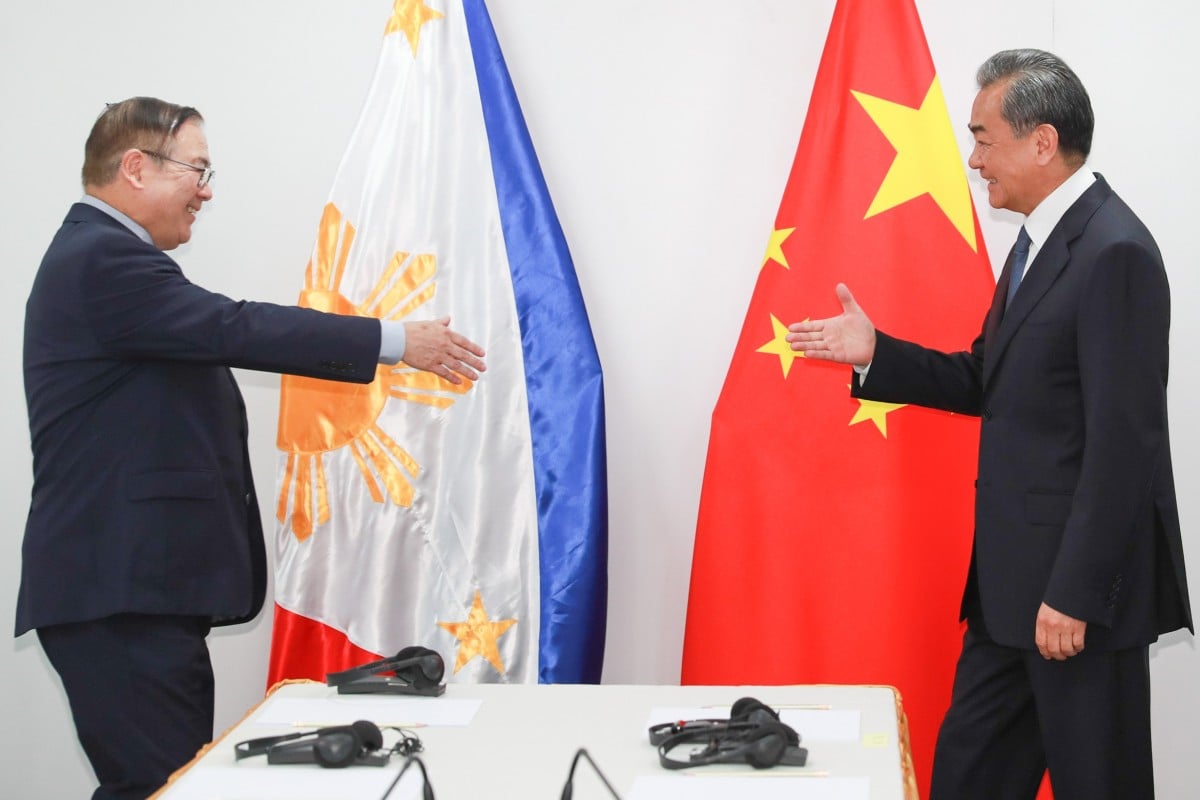
Chinese Foreign Minister Wang Yi (right) greets his Philippine counterpart Teodoro Locsin at the Asean meeting in Bangkok, Thailand. Photo: Xinhua
China and the United States are on a mission to strengthen ties with allies and expand their influence in Southeast Asia this week as their trade war enters a second year.
US Secretary of State Mike Pompeo arrived for a meeting of the Association of Southeast Asian Nations (Asean) in Bangkok on Wednesday to promote the US-led Indo-Pacific strategy, while Chinese Foreign Minister Wang Yi touched down a day earlier to advance Beijing’s Belt and Road Initiative.
The US Department of State said Pompeo’s trip was aimed at deepening Washington’s “long-standing alliances and vibrant bilateral relations with these countries, and [to] reaffirm our commitment to Asean, which is central to our vision for the Indo-Pacific region”.
In Beijing on Wednesday, Chinese foreign ministry spokeswoman Hua Chunying said that while their meeting was yet to be set, Wang and Pompeo were expected to meet and talk “frankly” about bilateral relations.
“I think that it is indeed necessary for China and the United States to maintain communication, as the two countries face many situations,” Hua said. “The issues would be communicated frankly”.

The Indo-Pacific strategy is a military and economic framework to contain China’s expansion into the Pacific and Indian oceans, and give an alternative to Beijing’s flagship belt and road development programme.

En route to Thailand, Pompeo said that after a stalled start to US Indo-Pacific policy during the Barack Obama administration, Washington’s strategy was well on its way to bearing fruit for the US and its allies.

South China Sea tensions, US-China trade war loom over Asean summit

“We have watched these coalitions build out,” he said.

Pompeo dismissed claims that China’s sphere of influence among Asean members was growing, saying such speculation was “not factually accurate”.

“[Asean countries] are looking for partners that are going to help them build out their economies and to take good care of their people,” he said, pledging greater engagement from President Donald Trump’s administration.

Pompeo was expected to sit down on Friday with his South Korean and Japanese counterparts to consolidate their trilateral alliance in the region.

He was also expected to hold talks with Thai Foreign Minister Don Pramudwinai that day.

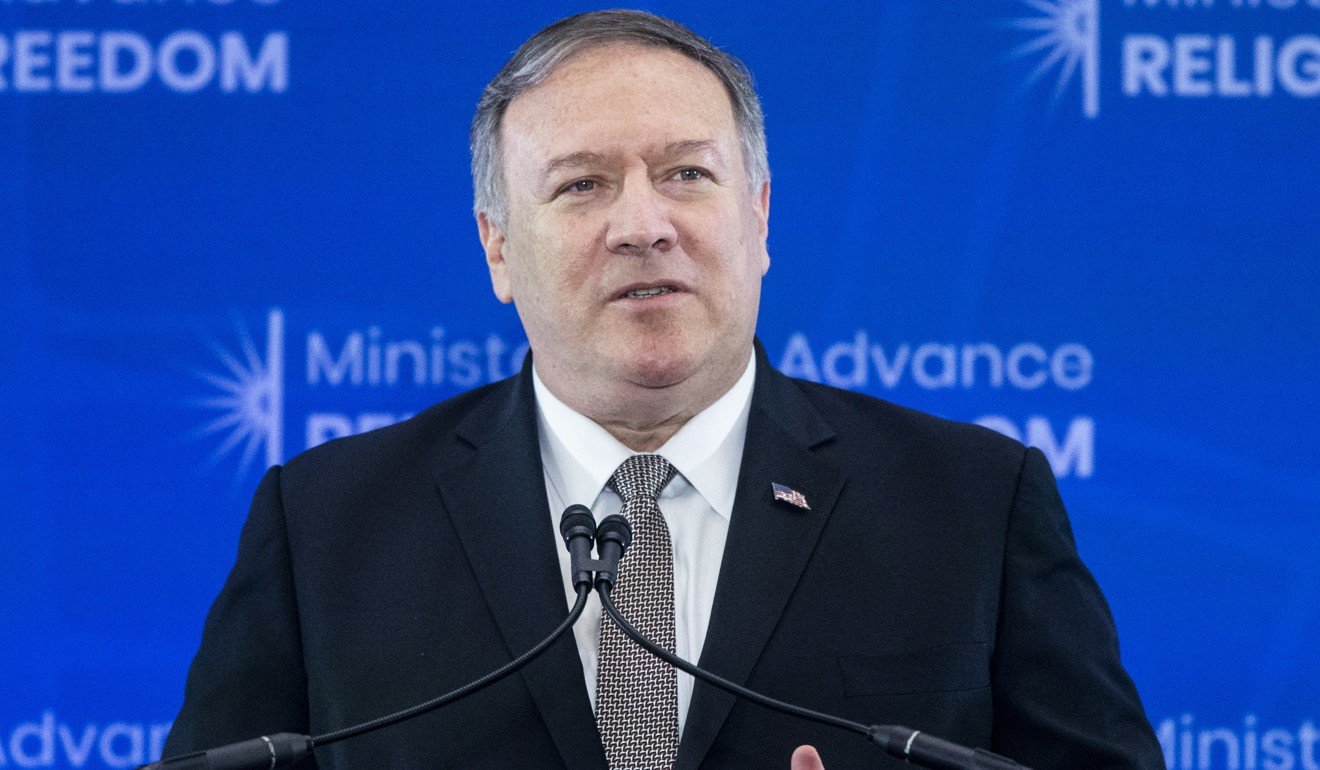
US Secretary of State Mike Pompeo is expected to meet Chinese Foreign Minister Wang Yi at Asean in Thailand. Photo: EPA-EFE

Meanwhile, Wang launched his belt and road pitch to his Cambodian, Philippine and Indonesian counterparts after he arrived in Thailand for the gathering, which ends on Saturday.

The belt and road projects are largely commercial and aimed at strengthening land and sea infrastructure linking Asia, Europe and Africa. But they raised suspicion in the West that they are aimed at eroding the US-led world order.

During his meeting with Philippine Foreign Affairs Secretary Teodoro Locsin, Wang said: “China is willing to have high-level exchanges with the Philippines, to deepen the mutual trust, and promote the Belt and Road Initiative [in the Philippines] … to accelerate the development of regional infrastructure.”

Can China’s trade boost with Asean help get the Regional Comprehensive Economic Partnership over the line?

This year’s Asean forum was taking place as countries were more receptive to Chinese initiatives, in part due to the unpredictability of the US administration, according to Rajeev Ranjan Charturvedy, a visiting fellow at the S. Rajaratnam School of International Studies at Nanyang Technological University in Singapore.

“Policy uncertainties under the Trump administration have already pushed some Asean countries towards China in ways that would have seemed unlikely a few years ago,” Charturvedy said.

Analysts said Trump’s “America first” approach shaped his Asean policy. The president had vowed to apply “punishments” to countries – including Asean member states – for contributing to the US trade deficit.

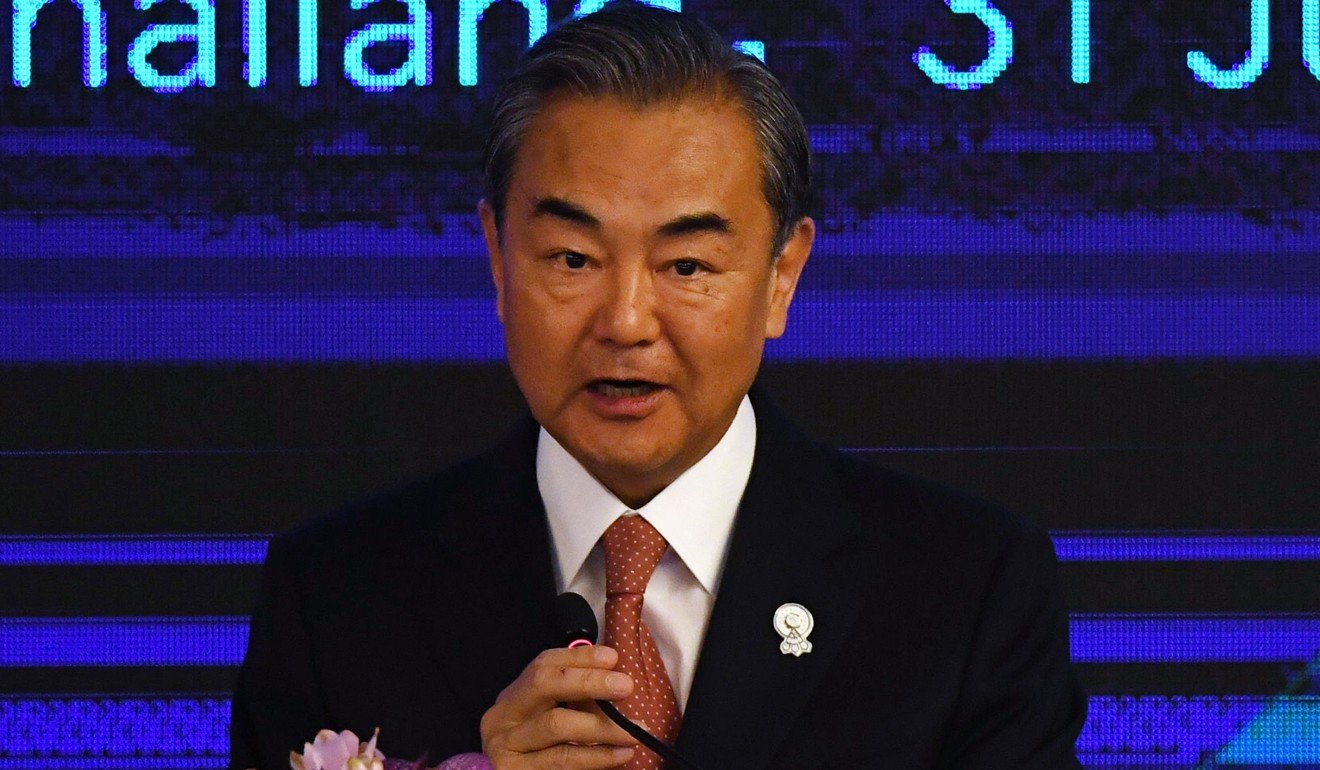
Chinese Foreign Minister Wang Yi is talking to Asean counterparts at a time when they are receptive to China’s proposals, an analyst says. Photo: AFP

Trump was absent at the Asean summit in Singapore last year, leading to concerns that Washington’s commitment to Asia was declining.

Charturvedy said the Asean forum’s focus was about building constructive regionalism, but China’s attitudes to security could pose a challenge.

“[However] Asean countries clearly hope not to be forced to choose between the US and Chinese offers. Rather, they would like more freedom of choice while accommodating for a larger role for China in the region,” he said.

Clarita Carlos, a professor of political science at the University of the Philippines, suggested that Asean members would be pragmatic during the forum.

Robert Lighthizer warns Vietnam over trade deficit with US

They would try to find their own balance between the two major powers – as countries rather than a bloc – to try to maximise each state’s interests and advantages, Carlos said.

“Vietnam has a love-hate relationship with China, especially as a winner in the ongoing US-China trade war,” she said. “Singapore has close relations with China. There are also ups and downs in the relationship with China for Brunei, Malaysia and Indonesia.”

Source: SCMP

22/07/2019

Chinese state councilor meets UAE FM

CHINA-BEIJING-WANG YI-UAE-MEETING (CN)

Chinese State Councilor and Foreign Minister Wang Yi (R) meets with Minister of Foreign Affairs and International Cooperation of the United Arab Emirates (UAE) Sheikh Abdullah bin Zayed Al Nahyan in Beijing, capital of China, July 21, 2019. (Xinhua/Yan Yan)

BEIJING, July 21 (Xinhua) — Chinese State Councilor and Foreign Minister Wang Yi met with Sheikh Abdullah Bin Zayed Al Nahyan, minister of Foreign Affairs and International Cooperation of the United Arab Emirates (UAE), here Sunday.

Hailing the UAE as China’s important and reliable partner in the Middle East, Wang said China stands ready to work with the UAE to implement the consensus reached by the two countries’ leaders, deepen their partnership under the Belt and Road Initiative, promote cooperation in various fields, enhance people-to-people exchanges, strengthen cooperation on anti-terrorism and law enforcement, and bring the China-UAE comprehensive strategic partnership to higher levels.

Sheikh Abdullah said the UAE is willing to strengthen cooperation with China in trade, investment, energy, culture, education and third-market cooperation, and to work for closer coordination within the United Nations and in regional affairs.

Source: Xinhua

Law of Unintended Consequences

continuously updated blog about China & India

ChiaHou's Book Reviews

continuously updated blog about China & India

What's wrong with the world; and its economy

continuously updated blog about China & India