Archive for ‘Belt and Road Initiative’

20/02/2019

China’s top legislator holds talks with Iran’s parliament speaker

CHINA-BEIJING-LI ZHANSHU-IRAN-ALI LARIJANI-TALKS (CN)

Li Zhanshu (R), chairman of the National People’s Congress (NPC) Standing Committee, holds talks with Iranian Parliament Speaker Ali Larijani at the Great Hall of the People in Beijing, capital of China, Feb. 19, 2019. (Xinhua/Pang Xinglei)

BEIJING, Feb. 19 (Xinhua) — China’s top legislator Li Zhanshu on Tuesday held talks with visiting Iranian Parliament Speaker Ali Larijani, calling for stronger cooperation to boost ties.

Li, chairman of the National People’s Congress (NPC) Standing Committee, urged the two sides to take a strategic and long-term view in bilateral ties, constantly deepen political mutual trust, strengthen communication and coordination, and provide mutual support on issues concerning each others’ core interests.

He also called for more anti-terrorism security cooperation and more mutually beneficial cooperation within the framework of the Belt and Road Initiative.

Despite profound changes in the international situation and increasing instabilities and uncertainties, China’s position in safeguarding the Iranian nuclear deal has not changed, neither has its commitment to developing China-Iran relations, Li said.

During Chinese President Xi Jinping’s state visit to Iran in 2016, the two countries established a comprehensive strategic partnership, ushering in a new chapter in bilateral ties, said Li.

Hailing the smooth progress in all-round cooperation in recent years, Li said that exchanges between the countries’ legislative institutions are an important component in the comprehensive strategic partnership.

“The NPC is willing to carry out friendly exchanges with Iranian parliament at different levels and in different forms, strengthen communication on experiences in legislation, supervision, and state governance, so as to provide sound legal guarantee for the two countries’ mutually beneficial cooperation,” he said.

Larijani said the ancient trade routes of the Silk Road witnessed the long history of exchanges between the two countries, and the Belt and Road Initiative proposed by President Xi Jinping gives new meanings to the Silk Road.

He said the Iranian side highly values and actively participates in the Belt and Road Initiative. The Iranian Parliament would like to carry out more exchanges with the NPC and support mutually beneficial cooperation in various fields.

Source: Xinhua
15/02/2019

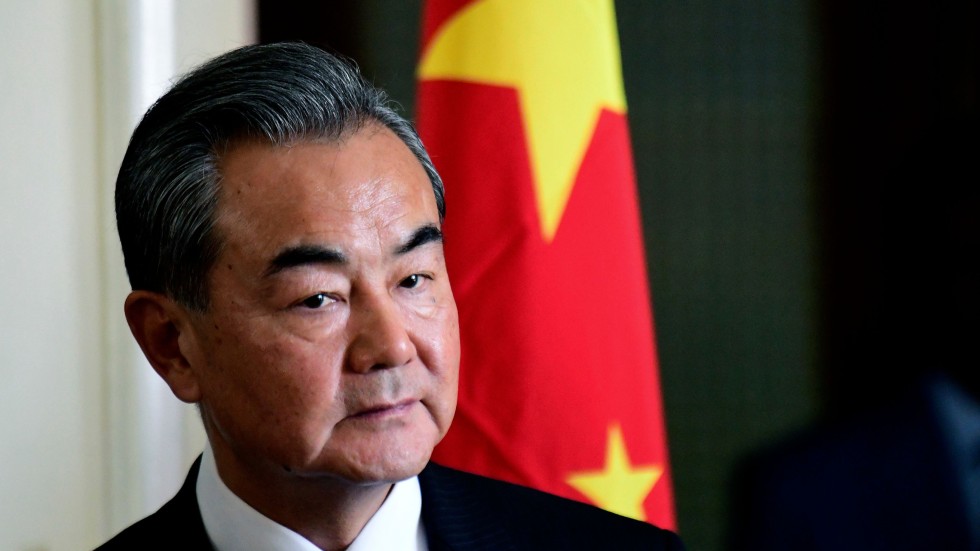
Chinese Foreign Minister Wang Yi holds talks in Thailand ahead of general election

  • Official will meet his opposite number Don Pramudwinai in Chiang Mai
  • Wang likely to discuss investment projects under Beijing’s ‘belt and road’ plan
PUBLISHED : Friday, 15 February, 2019, 7:17pm
UPDATED : Friday, 15 February, 2019, 7:17pm

9 Feb 2019

Chinese Foreign Minister Wang Yi arrived in Thailand on Friday for high-level talks likely aimed at reassuring Beijing about its investments in the Southeast Asian country ahead of a long-delayed general election, analysts said.

During his two-day trip to the northern city of Chiang Mai, Wang will meet his counterpart Don Pramudwinai, Thailand’s ministry of foreign affairs said on its website.

Zhang Mingliang, a Southeast Asian affairs specialist at Jinan University, said China was concerned the upcoming poll might have an impact on its interests.

“The recent events regarding the sudden changes to Thailand’s prime ministerial candidate could affect the country’s political stability and affect its relationship with China,” he said.

He was referring to the fact that on Wednesday, Thailand’s Election Commission asked the constitutional court to dissolve the Thai Raksa Chart, a political party allied with the powerful Shinawatra clan, for putting forward Princess Ubolratan as candidate for prime minister.

The move came just days after Thai King Maha Vajiralongkorn, Ubolratan’s younger brother, issued a royal decree denying her bid to become prime minister hours after her name was submitted.
Zhang said that only by ensuring the political stability of Thailand could China’s interests in the country and Southeast Asia as a whole be protected.

“In the past, political instability meant Thailand’s leaders were unable to attend foreign events such as meetings with Asean and China,” he said.

“If there is political stability in Thailand … that can aid its contribution to Asean and its ties with China.

“China’s relationship with Thailand is the best among the Asean nations, with the least conflict of interests,” he said.

Concerns over China’s overseas investments are growing and there have been accusations that Beijing is using them to gain political leverage.

China and Thailand reached an agreement in 2017 for the construction of Thailand’s first high-speed rail line. Once completed it will run from Bangkok to Nong Khai on the Thai border with Laos.

The line is seen as a key project under the “Belt and Road Initiative”, Beijing’s plan to connect China with countries across Asia, the Middle East and Africa.

Elections in Southeast Asia have proved troublesome for the initiative, however. Soon after being re-elected as prime minister of Malaysia last year, Mahathir Mohamad’s government cancelled the China-funded US$20 billion East Coast Rail Link. Officials later backtracked on the decision, leaving its future in the air.

Xu Liping, a specialist in Southeast Asian studies at the Chinese Academy of Social Sciences, said that Thailand, as this year’s chair of Association of Southeast Asian Nations, has a crucial role to play in promoting China’s relationship with other members of the group.

“Ensuring the continuity of China-Thailand ties after the elections in March will also be on the agenda in Wang’s meeting,” he said.

Meanwhile, China’s top diplomat Yang Jiechi, a member of the Communist Party Politburo, travelled to Germany on Friday to attend the Munich Security Conference, which runs until Sunday.

Source: SCMP

16/01/2019

Pentagon warns of global power play behind Chinese projects such as Belt and Road Initiative

  • US Defence Department highlights range of military and non-military challenges to US strategic interests from Beijing’s favoured projects
PUBLISHED : Wednesday, 16 January, 2019, 6:03pm
UPDATED : Wednesday, 16 January, 2019, 6:20pm

Monday’s report assessed China’s military and non-military expansion efforts, such as the Belt and Road Initiative and the “Made in China 2025” industrial strategy, and their implications for America around the world.

It coincided with another detailed assessment by the US Defence Intelligence Agency on Tuesday, which said China’s drive to acquire cutting-edge weaponry – including nuclear bombers and a space-based early warning system – was intended to establish itself as a global military power.

In December 2017 US President Donald Trump shifted the focus of US national security policy away from terrorism to make “great power rivalry” with China and Russia his main concern.

Since then the White House has taken a number of measures to counter Beijing, including the multibillion-dollar trade war.

“China’s most substantial expansion of its military access in recent years has occurred in its near-abroad, where territorial disputes in the East and South China Seas persist, but China has also expanded its military operations further from the Chinese mainland,” said the US Defence Department report“China’s pursuit of expanded global military access is thus driven both by new PLA missions to protect overseas interests and by a shifting approach to potential contingencies along its maritime periphery,” it said.

The report, mandated by the US National Defence Authorisation Act for the financial year of 2018, reflects increasing hawkish views among the Trump administration.

The acting defence secretary Patrick Shanahan has recently called for an effort to “sharpen and strengthen US competitiveness”.

Although this year marked the 40th anniversary of the normalisation of the US-China relations, recent months have seen growing suspicion and mistrust between the two sides.

Despite a temporary trade ceasefire he reached with Xi last month, Trump has shown little sign of softening his hardline approach towards China.

The report also raised concerns about Beijing’s economic and infrastructure investments and its acquisition of military and dual-use technology.

In particular, it warned that the Belt and Road Initiative, President Xi Jinping’s push for a transcontinental infrastructure and trade network, and the “21st century Digital Silk Road” were designed to serve “greater strategic purposes”.

Echoing widespread criticism about Beijing’s “predatory loans” and “debt-trap diplomacy”, it cited 17 cases where Chinese investment projects have had a detrimental effect on the host country.

“China’s attempts to gain veto authority over other countries’ decisions, and its coercion directed at US allies and partners in particular, will likely threaten US posture and access if not addressed,” it warned.

The Digital Silk Road strategy, announced by Xi in May 2017 as a plan to boost connectivity in the digital economy, has received little international attention so far compared with the Belt and Road Initiative.

Beijing has revealed few details so far, but Xi said the initiative should involve cooperation and development in “frontier areas”, such as the digital economy, artificial intelligence, nanotechnology, and quantum computing, as well as areas such as big data, cloud computing, and “smart cities.”

The report said Beijing was actively using state-owned or state-affiliated enterprises – including China Telecom, China Unicom, China Mobile, Huawei, and ZTE – to push for forced technology transfer and accelerate its race for tech supremacy with the US.

Huawei, the world’s largest telecoms equipment supplier, has suffered major setbacks in its global push to build 5G infrastructure recently and its alleged ties with the Chinese government and military have prompted increasing suspicion around the world.

Despite a seemingly bipartisan support for a tougher approach on Beijing in the US and frequent hostile comments by Trump administration officials, an article published by the Brookings Institute on Tuesday expressed doubts about the White House’s policies towards China.

It said it was not clear “whether the Trump administration’s objectives are to compel China to alter its behaviour in specific areas of concern, to ‘decouple’ the American economy from China’s through supply chain diversification, or to obstruct China’s rise”.

The article was written by Jeffrey Bader, an Asia adviser to US presidents Barack Obama and Bill Clinton, along with senior Brookings fellows David Dollar and Ryan Hass.

“There also is little clarity on the Trump administration’s strategy for achieving its objectives … Such comments reflect an attitude, but not a strategy,” they said.

Source: SCMP

12/12/2018

Book of Xi’s remarks on Belt and Road Initiative published

BEIJING, Dec. 11 (Xinhua) — A compilation of remarks by President Xi Jinping on the Belt and Road Initiative (BRI) over the past five years has been published by the Central Party Literature Press.

The book contains 42 articles drawn from the speeches and public remarks made by Xi, beginning with a speech he delivered at Nazarbayev University, Kazakhstan, in September 2013 calling for jointly building the Silk Road Economic Belt, and ending with the one he delivered at the opening ceremony of the 8th Ministerial Meeting of the China-Arab States Cooperation Forum in July 2018.

The book, with about 130,000 Chinese characters, was compiled by the Institute of Party History and Literature of the Communist Party of China Central Committee.

The BRI, first proposed by Xi, has received warm responses from the international community, especially the countries along the BRI routes. Jointly pursuing the BRI is becoming a Chinese solution for the country to participate in global opening-up and cooperation, improve the global economic governance, push for common development and prosperity of the world and build a community with a shared future for humanity.

The book will be available nationwide starting Tuesday.

Law of Unintended Consequences

continuously updated blog about China & India

ChiaHou's Book Reviews

continuously updated blog about China & India

What's wrong with the world; and its economy

continuously updated blog about China & India