Archive for ‘Big data’

29/05/2020

Xi Focus: Xi replies to letter from scientific, technological workers

BEIJING, May 29 (Xinhua) — President Xi Jinping on Friday encouraged scientific and technological workers across China to make new and greater contributions to building China into a global power in science and technology.

Xi, also general secretary of the Communist Party of China Central Committee and chairman of the Central Military Commission, made the remarks in replying to a letter by 25 representatives of sci-tech workers. He also called for efforts to achieve breakthroughs in key and core technologies.

Xi extended greetings to sci-tech workers across the country ahead of China’s fourth national sci-tech workers’ day, which falls on May 30.

A vast number of sci-tech workers have dedicated themselves to serving the country through their innovative thinking and practices, Xi noted.

He pointed out that innovation is the primary driving force for development, and science and technologies are powerful tools to overcome difficulties.

Facing the sudden COVID-19 outbreak, sci-tech workers have risen up to challenges and worked day and night on the clinical treatment, vaccine research and development, material support as well as big data application, providing sci-tech support against the epidemic, Xi said.

Xi hoped that sci-tech workers across the country strive to resolve problems with key and core technologies, promote the in-depth integration of application, education and scientific research, reach the peak of science and technology and make new and greater contributions to building China into a global power in science and technology.

In November 2016, the State Council, China’s cabinet, set down May 30 as the national sci-tech workers’ day.

Recently, 25 representatives of sci-tech workers, including agronomist Yuan Longping, respiratory specialist Zhong Nanshan and space expert Ye Peijian, wrote to Xi to express their determination to make contributions in the new era of innovation and entrepreneurship.

Source: Xinhua
17/03/2020

AutoNavi maps data shows recovery in traffic around shopping areas in China as coronavirus fears recede

  • AutoNavi’s latest data shows increase in offline traffic and searches of major business districts
  • Traffic data could signal that consumer activity in China has entered a recovery
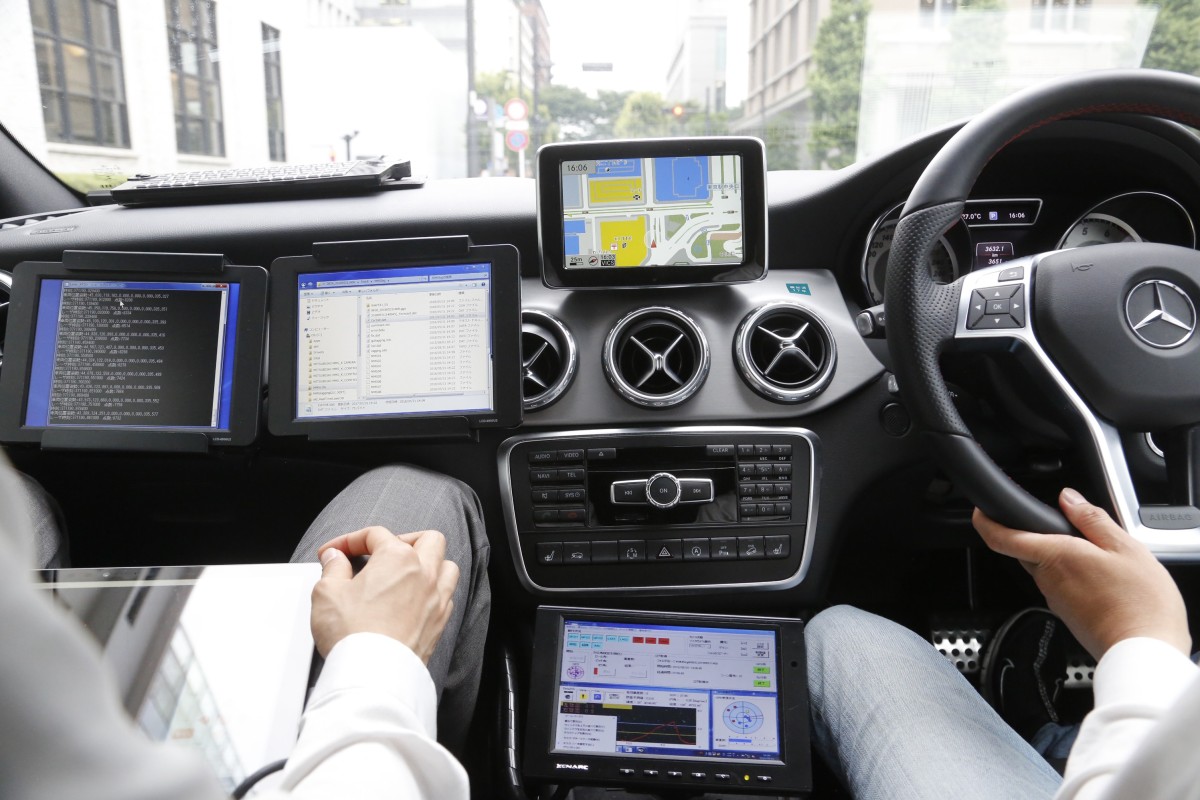
AutoNavi’s mobile app users can search the names of malls and shops to see real-time traffic data. Photo: AP

Data from AutoNavi, the maps app operated by Alibaba Group Holding, shows that traffic in major shopping districts in China picked up by an average of 30 per cent over the past month, as consumer activity gradually returns to normal now that the coronavirus infection rate appears to have peaked in the country.

The early sign of increased consumer activity in China contrasts with the panic and economic uncertainty now engulfing Europe and the US, as the widening pandemic forces governments around the world to take lessons from China on how to tackle the spread of the disease with curfews and social distancing measures.

AutoNavi’s latest big data report, released on Monday, shows that traffic in and around shopping districts in several major cities in the country rose 30 per cent over the weekend of March 14-15 compared with the weekend of February 15-16, when the coronavirus in China was at its height and many areas in the country were under lockdown.

China’s Meituan Dianping to join maps service battle
15 Aug 2019

“Consumer confidence is starting to rebound as the coronavirus comes under control,” said Guo Ning, vice-president of AutoNavi. “We are seeing more and more people stepping out, with offline consumption slowly recovering.”

Alibaba is the owner of the South China Morning Post.

China’s nearly two-month lockdown has dealt a hammer blow to the economy, with retail sales – a key metric of consumption – down by 20.5 per cent across the combined two months of January and February, marking the first decline on record. The virus has however proved a boon for China’s e-commerce sector, as shoppers stuck at home buy even more online.

The new data appears to show that the country’s offline economy could now see a slow recovery. This does not mean that retail businesses can slack off on preventive measures – hand sanitiser, extra cleaning and temperature monitoring are likely to remain fixtures of everyday life in shopping malls.

AutoNavi’s mobile app users can search the names of malls and shops to see real-time traffic data – often used to avoid visiting malls at peak periods. AutoNavi said the average 30 per cent increase in traffic refers to the combined volume of people using the app to navigate the shopping destinations.

Alibaba’s AutoNavi crosses 100 million daily users

5 Oct 2018

AutoNavi has more than 400 million monthly active users, according to company data. It was the first domestic travel platform to exceed 100 million daily active users.

Digital maps have become a key tool in China’s attempts to control the coronavirus pandemic, with competitor map apps from Baidu and Tencent also launching features to track population flows and provide information on clinics able to test for and treat the disease.

Covid-19, as the novel coronavirus is known, has now killed over 3,200 people in China and infected just over 80,000, of which around 68,000 have recovered. There are now around 87,000 confirmed cases outside China, according to the latest figures from health authorities.

Source: SCMP

21/10/2019

6th World Internet Conference opens in China’s Zhejiang

CHINA-ZHEJIANG-WUZHEN-HUANG KUNMING-WORLD INTERNET CONFERENCE (CN)

Huang Kunming, a member of the Political Bureau of the Communist Party of China (CPC) Central Committee and head of the Publicity Department of the CPC Central Committee, attends the opening ceremony of the sixth World Internet Conference in Wuzhen, east China’s Zhejiang Province, Oct. 20, 2019. Before delivering his speech, Huang read Chinese President Xi Jinping’s congratulatory letter to the conference. (Xinhua/Liu Bin)

WUZHEN, Zhejiang Province, Oct. 20 (Xinhua) — The sixth World Internet Conference opened Sunday in the river town of Wuzhen in east China’s Zhejiang Province.

With the theme of “Intelligent Interconnection for Openness and Cooperation — Building a Community with a Shared Future in Cyberspace,” the three-day conference will bring together more than 1,500 participants from over 80 countries and regions, including members of the Internet Hall of Fame, Nobel Prize winners and Turing Award winners.

Executives from major tech companies from home and abroad such as Microsoft, Qualcomm, Alibaba Group and Huawei will share their insight on the future development of the internet at 20 sub-forums, covering popular and cutting-edge topics such as artificial intelligence (AI), 5G and industrial digitization.

Huang Kunming, a member of the Political Bureau of the Communist Party of China (CPC) Central Committee and head of the Publicity Department of the CPC Central Committee, delivered a keynote speech at the opening ceremony of the conference.

Fifty years after the birth of the internet, efforts should be made to seize new opportunities and address risks and challenges to build cyberspace into a shared community that benefits all humanity, Huang said.

The senior official also called for enhanced efforts to develop the digital economy, unleash the digital dividend, and protect the security and order of cyberspace.

During the conference, reports on China and world internet development will be released to forecast the future trend of internet development.

The reports will review global internet development over the past five decades and the history of Chinese internet during the last 25 years.

Around 15 top scientific and technological projects in the internet sector will also be unveiled, covering AI, 5G, big data, cloud computing, digital manufacturing, industrial internet and other internet-related fields.

The number of internet users in China hit 854 million in June 2019, with the internet availability rate reaching 61.2 percent, according to the China Internet Network Information Center.

Source: Xinhua

06/07/2019

Shanghai aims to have full 5G coverage by 2020

SHANGHAI, July 6 (Xinhua) — Shanghai will realize full 5G coverage by 2020, said a guideline for promoting 5G network coverage and application over the next three years released by the municipal government on Friday.

According to the guideline, 10,000 5G base stations will be built to cover the whole of downtown and main suburban areas in Shanghai by the end of 2019.

By 2020, the city will have full 5G coverage throughout the city with 20,000 5G base stations. A total of 20 billion yuan (about 2.9 billion U.S. dollars) will be invested in the area.

By 2021, Shanghai will have 5G related industries worth 100 billion yuan and 100 innovative companies in 5G application industries. The city will add 10,000 more base stations and 10 billion yuan investment based on 2020 numbers.

Shanghai will roll out a three-year action plan to promote 5G in key industries such as manufacturing, transport, medical care, education, leisure and entertainment and the city’s administration.

The city will also push forward innovative application of “5G+4K/8K+AI” in important venues such as China International Import Expo and AI World Conference & Expo, as well as key transport hubs.

Demonstrative regions will be established to promote the in-depth integration of 5G with intellectual manufacturing, industrial internet, big data, artificial intelligence, ultra-high-definition video and industrial control security, according to the guideline.

China is currently testing 5G across all major cities, provinces and regions, including Shanghai. It is forecasted that 28 percent of China’s mobile connections will be running on 5G networks by 2025, accounting for about one-third of all 5G connections globally, according to a report by telecoms lobby group GSMA, which represents the interests of 750 mobile operators.

Source: Xinhua
14/03/2019

China to invest more in emerging industries

BEIJING, March 13 (Xinhua) — China’s emerging industries will become a major driving force for investment growth this year, the Economic Information Daily reported Wednesday.

China will increase policy support for and infrastructure investment in emerging industries in 2019, including commercial applications of 5G, artificial intelligence, industrial internet and internet of things, according to the National Development and Reform Commission (NDRC).

The country will cultivate emerging industrial clusters with market influence and distinctive advantages that can vigorously drive regional economic transformation, the newspaper quoted Ren Zhiwu, deputy secretary-general of the NDRC, as saying.

The Ministry of Industry and Information Technology also plans to promote the deep integration of the internet, big data and artificial intelligence with the real economy, and encourage innovation in new technologies and new forms of industry, the newspaper said.

Local governments will also step up support for strategic emerging industries in financial aid, technological innovation and the business environment. Efforts should be made to improve strategic emerging industries’ capabilities to innovate, said the newspaper.

Source: Xinhua

Law of Unintended Consequences

continuously updated blog about China & India

ChiaHou's Book Reviews

continuously updated blog about China & India

What's wrong with the world; and its economy

continuously updated blog about China & India