Archive for ‘boost’

24/11/2019

Farmers move in new residential area, conduct various ways to boost income in Yunnan

CHINA-YUNNAN-QUJING-RURAL DEVELOPMENT (CN)

People walk in Huahongyuan residential area in Zhanyi District in Qujing, southwest China’s Yunnan Province, Nov. 22, 2019. In 2013, under the guidance of local government, farmers in Songlin community started to build a new residential area following the principle to integrate environmental improvement, infrastructure construction and industrial development into building beautiful countryside. In 2016, the farmers moved in the newly-built Huahongyuan residential area and conducted various ways to boost income. (Xinhua/Yang Zongyou)

Source: Xinhua

14/11/2019

China’s top political advisor visits Egypt to enhance bilateral cooperation, boost ties

EGYPT-CHINA-WANG YANG-VISIT

Wang Yang, chairman of the National Committee of the Chinese People’s Political Consultative Conference (CPPCC), meets with Egyptian President Abdel-Fattah al-Sisi in Egypt, Nov. 11, 2019. Invited by Speaker Ali Abdel-Aal of the Egyptian Parliament, Wang paid an official visit to Egypt from Nov. 10 to 13. (Xinhua/Yan Yan)

CAIRO, Nov. 13 (Xinhua) — China and Egypt agreed to enhance cooperation and further promote bilateral ties as China’s top political advisor Wang Yang visited the North African country from Nov. 10 to 13.

During his meeting with Egyptian President Abdel-Fattah al-Sisi, Wang, chairman of the National Committee of the Chinese People’s Political Consultative Conference (CPPCC), hailed the robust development of bilateral ties.

Wang conveyed Chinese President Xi Jinping’s cordial greetings and best wishes to Sisi, noting that, under the guidance of the two heads of state, Sino-Egyptian relations have achieved historical development.

He said China stands ready to work with Egypt to increase high-level exchanges, deepen political mutual trust, actively promote practical cooperation under the framework of the Belt and Road Initiative (BRI), enhance coordination over regional and global affairs, strengthen anti-terrorism cooperation, and push the Sino-Egyptian comprehensive strategic partnership for greater development.

Wang said that the just-concluded fourth plenary session of the 19th Communist Party of China Central Committee has constructed a reliable mechanism for the modernization of China’s national governance system and capacity, as well as realization of national rejuvenation, which also provides Chinese wisdom and solutions to the institutional civilization of humanity.

Wang said China is ready to work with Egypt to strengthen exchanges of experience on governance and support Egypt’s choice of a development path that suits its own national conditions.

For his part, Sisi asked Wang to convey his cordial greetings to Xi, while expressing his heartfelt congratulations to China on its great achievements made in the past 70 years.

Applauding the unprecedented level and depth of Sino-Egyptian relations, Sisi said Egypt supports the BRI and welcomes Chinese enterprises to increase investment in Egypt.

The Egyptian leader also expressed the hope that China will give full play to its influence to promote peace and stability in the Middle East.

Egypt is willing to enhance exchanges and mutual learning on de-radicalization, he added.

At his meeting with Egyptian Parliament Speaker Ali Abdel-Aal, Wang said that political mutual trust is the foundation of Sino-Egyptian relations and the BRI has become the new focus of cooperation between the two countries.

Wang appreciated Egypt’s firm support on the issues concerning China’s core interests, adding that China is ready to work with Egypt to enhance coordination on development strategies, implement major cooperation projects, and boost cooperation in tourism and people-to-people exchanges.

He said that the CPPCC is willing to increase exchanges with Egyptian parliament at all levels, with an aim to increase each other’s capabilities of fulfilling own duties.

Abdel-Aal expressed his country’s firm support for the one-China principle and the measures adopted by China to safeguard its territorial and sovereign integrity and national stability.

He said Egypt supports the two sides to enhance friendly exchanges between legislative and consultative bodies.

Abdel-Aal hoped that more Egyptian agricultural products will enter China’s market, while pledging to offer convenience for Chinese enterprises to expand investment in Egypt.

When meeting with Egyptian Prime Minister Mostafa Madbouly, Wang said that Egypt, which boasts huge market potential and demographic dividend at a crucial stage of industrialization and urbanization, is China’s natural partner in BRI development.

Wang said China is willing to positively participate in Egypt’s strategic planning including the Suez Canal Corridor development, encourage competitive Chinese enterprises to invest in Egypt, explore conducting Africa-oriented tripartite cooperation, and facilitate the access to China’s market by high-quality Egyptian agricultural products.

Madbouly said China has become Egypt’s largest trading partner and the Sino-Egyptian ties are taking a leap forward.

He said that Egypt is willing to learn from China’s advanced experience in technological innovation, and enhance mutually beneficial cooperation and mutual support on cyber security and anti-terrorism.

Egypt also looks forward to working with China to jointly promote the interconnection and intercommunication between China and Africa, Madbouly added.

During his stay in Egypt, Wang also had in-depth exchanges with Grand Imam of al-Azhar Ahmed el-Tayeb and Governor of Luxor Moustafa Mohamed Alham Khaled, inspected Chinese telecom company Huawei’s innovation exhibition center in North Africa, and attended the inauguration ceremony of Luxor University’s Confucius classroom.

Source: Xinhua

05/08/2019

China, Iraq to boost cooperation, bilateral ties in various fields

BAGHDAD, Aug. 5 (Xinhua) — China and Iraq vowed to enhance cooperation and develop bilateral relations in various fields, the Chinese embassy in Baghdad said in a statement on Monday.

The statement came after Iraqi President Barham Salih received on Sunday China’s Ambassador to Iraq Zhang Tao at the presidential palace, where the two sides exchanged views on bilateral relations.

During the meeting, Salih said that the two countries have a long history of friendship, and the bilateral ties have currently maintained a sound momentum of development with fruitful pragmatic cooperation in various fields, the statement said.

Salih added that “Iraq attaches great importance to developing relations with China.”

He said that “Iraq is willing to continuously strengthen exchanges at all levels, deepen the strategic integration of each other’s development strategies, enhance strategic cooperation under the framework of the Belt and Road Initiative and promote the new strategic partnership between Iraq and China,” according to the statement.

For his part, Zhang said that China is “willing to encourage more Chinese enterprises to participate in post-war reconstruction in Iraq, support Iraq’s economic and social development, and continuously enrich the content of China-Iraq strategic partnership,” the statement said.

He added that “the traditional friendship between China and Iraq is profound and long-lasting, and the establishment of diplomatic relations has contributed to developing bilateral ties in a healthy and stable manner.”

Zhang believes that “since the establishment of the strategic partnership in 2015, the development of China-Iraq relations entered the fast lane, as the political mutual trust between the two countries has been consolidated, pragmatic cooperation has been deepened, and cultural exchanges have continued to expand.”

On May 5, Zhang said in an interview with Iraqi state-run al-Sabah newspaper that the volume of the trade exchange between China and Iraq exceeded 30 billion U.S. dollars in 2018.

He asserted that “China is considered the biggest trading partner of Iraq, and Iraq is the second biggest oil supplier to China, and the fourth biggest trading partner of China in the Middle East.”

Source: Xinhua

22/07/2019

China prepares to axe inefficient industry in manufacturing heartland, despite slowing economy

  • Growth in Shandong, China’s third largest provincial economy, slowed in the first quarter due to cuts in inefficient industrial capacity
  • Shandong government aims to cut capacity in traditional sectors to boost ‘new’ industries, as well as reduce pollution
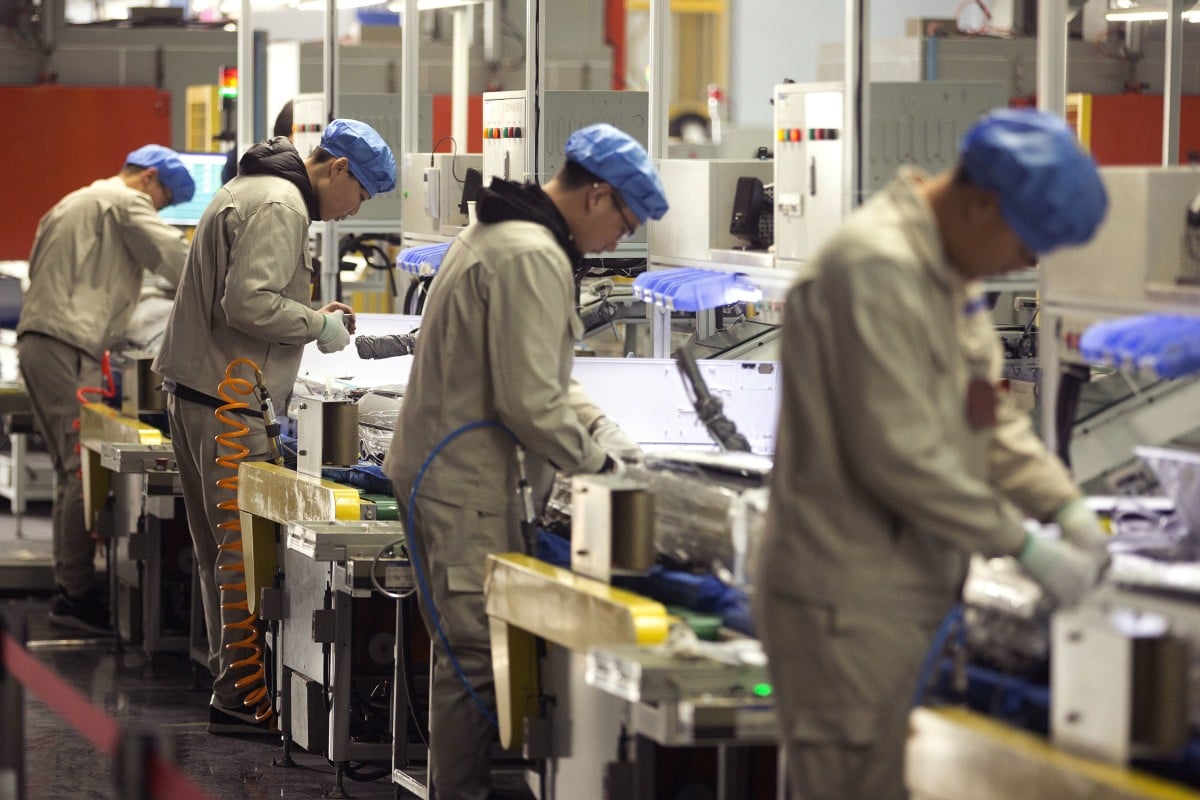
Shandong’s gross domestic product growth accelerated to 6.4 per cent last year from 5.7 per cent in 2017, but slipped back to 5.5 per cent in the first quarter of 2019. Photo: AP
Shandong province, a manufacturing heavyweight in eastern China, will press ahead with plans to cut capacity in inefficient “old” industries, even though it will hurt short-term growth, the provincial party chief said on Tuesday.
Like many provinces that still rely heavily on traditional industries, Shandong’s growth has slowed recently, in part due to the effect of the trade war with the United States.
While its gross domestic product (GDP) growth accelerated to 6.4 per cent last year from 5.7 per cent in 2017, it slipped back to 5.5 per cent in the first quarter of 2019, according to to Liu Jiayi, the secretary of Shandong Provincial Committee of the Communist Party of China.
The primary reason for the slowdown in growth was a plunge in production in “backward” industries at the start of the year, due in part to cuts already made to reduce production capacity, said Liu. He added that the capacity cutting measures will help the province reduce air pollution, one of the central government’s priorities for 2019.

“The quality of development is changing [in Shandong],” said Liu, who referred to the fact that Shandong’s industrial sectors dominate the economy and that 70 per cent of this heavy industry is in the chemicals sector. “As a result, our economic volume is large, but the quality of development is not very high.”

According to statistics from the Hong Kong Trade Development Council (HKTDC), Shandong’s industrial output has been dominated by heavy industry, which accounted for about 67.1 per cent of the gross industrial output in 2017. Within that, raw chemical materials and chemical products had the biggest share of all value-added industrial output, at 9.7 per cent, according to the HKTDC.

“This decline [in first quarter growth] was in exchange for our development of high-quality [production], because our traditional and backward production capacity has declined,” Liu added.

Shandong, the third largest provincial economy in China, will continue to reduce its reliance on chemicals production, while also cutting the use of coal for power, heating and fuelling heavy trucks for transport, all of which are major contributors to regional pollution, according to Gong Zheng, the governor of Shandong.

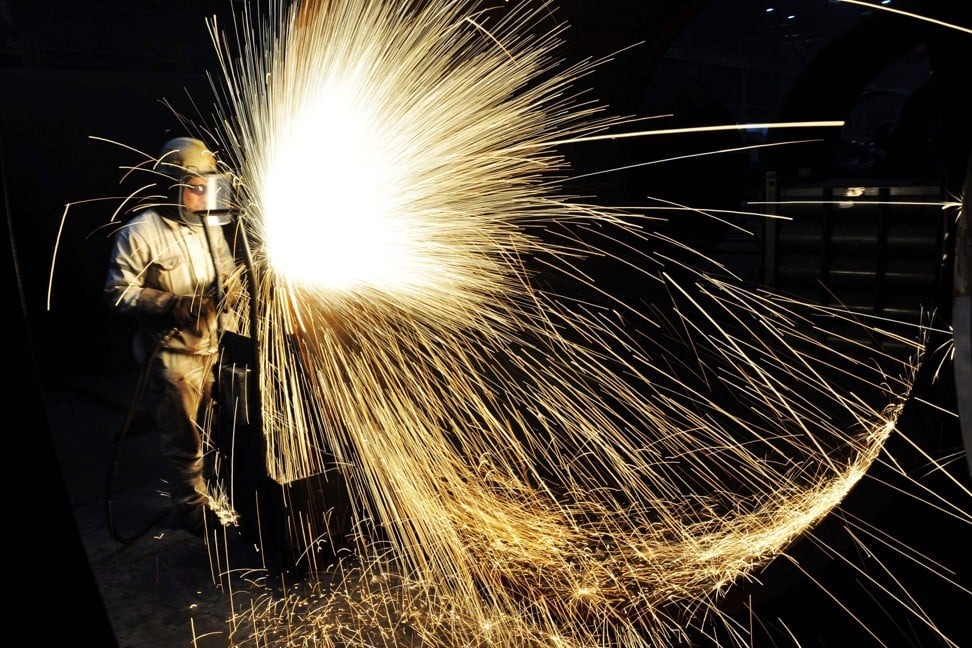
Shandong’s gross domestic product growth accelerated to 6.4 per cent last year from 5.7 per cent in 2017, but slipped back to 5.5 per cent in the first quarter of 2019. Photo: AFP

“We have stepped up our efforts [to cut pollution] and have refused to allow it to rebound, and we will do this well,” said Gong.

The central government launched a campaign to tackle pollution in 2014 as it sought to reverse the severe damage done to the environment after decades of breakneck industrial growth.

However, the rising costs of doing business in China – including higher wages and the costs of pollution control – have forced some manufacturing out of China. That process has been accelerated by firms searching for an alternative production base to avoid 

US tariffs

implemented as part of the trade war, which has made a severe dent in China’s investor and consumer confidence.China’s GDP growth slid to 6.2 per cent in the second quarter, the lowest reading since records began in the first quarter of 1992, and below the levels reported during the global financial crisis, the National Bureau of Statistics said on Monday.

However, Shandong party chief Liu, the former head of the National Audit Office who led the nationwide investigation into local government debt in 2014, said he was not concerned with GDP growth in Shandong.
“Now our GDP growth rate has dropped a little, and the growth rate for fixed asset investment has dropped a little,” said Liu. “Some people worry that the growth of Shandong is slipping. I can tell you responsibly, not only [growth] will not slip, we have to take a step back these years in exchange for the healthy development of the next few years.”
Source: SCMP
03/01/2019

Full speed ahead for China’s high-speed rail network in 2019 in bid to boost slowing economy

  • The state-owned China Railway Corporation plans to put a total of 6,800km of new track into service this year, a 45 per cent increase in expansion from 2018
  • Significant infrastructure investment by a Beijing government keen to offset the trade war with the United States
PUBLISHED : Thursday, 03 January, 2019, 6:16pm
UPDATED : Thursday, 03 January, 2019, 6:16pm

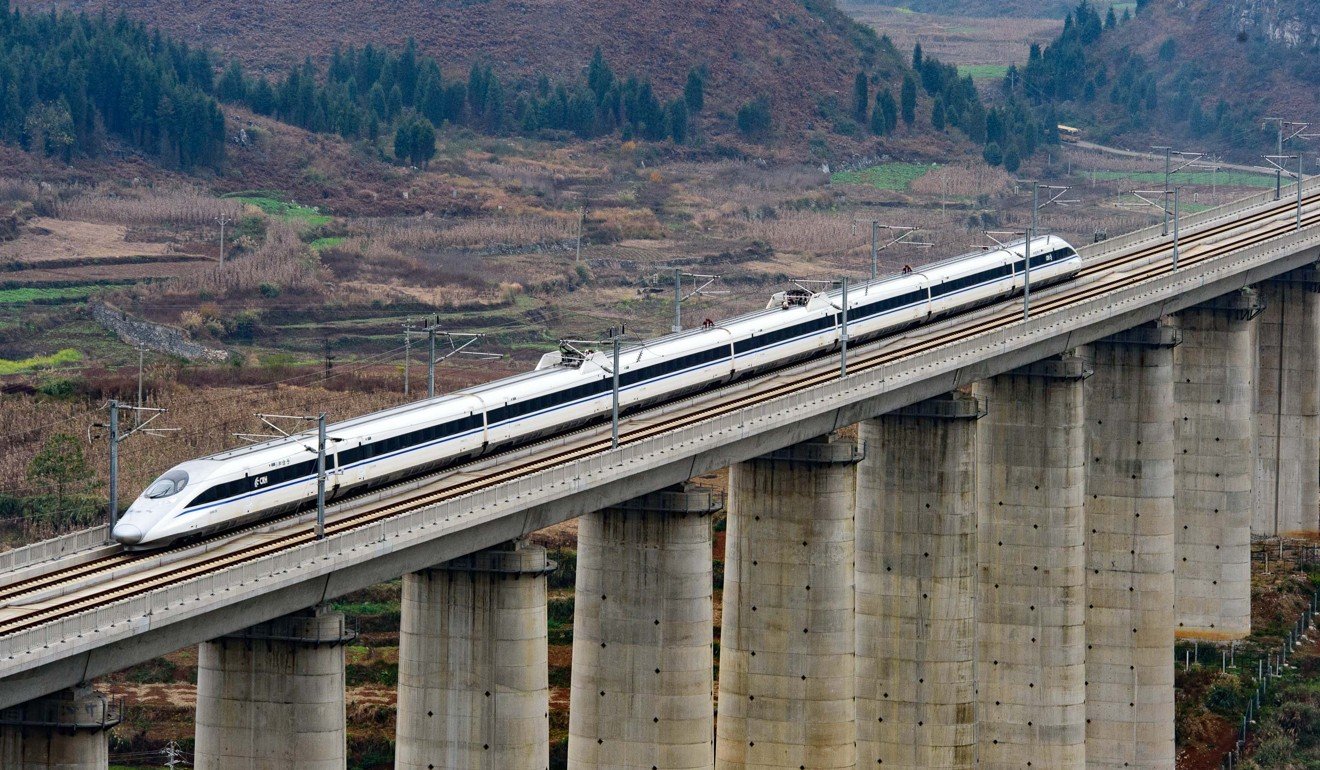
China plans to expand its high-speed rail network by 3,200km in 2019, which is more than is currently being operated in either Spain, Japan, Germany or France, in a bid to aid a slowing economy locked in the trade war with the United States.

The China Railway Corporation, the state-owned agency in charge of railway construction, plans to put a total of 6,800km of new track into service in 2019 as Beijing again relies on infrastructure investment to arrest an economic slowdown, according to a government plan released this week.

Spain, which has the world’s second biggest high-speed rail network after China, only has a total of around 3,100km of track in operation, followed by Japan, Germany and France.

China’s spending spree on railway infrastructure, which started in the aftermath of the global financial crisis a decade ago, means Beijing is well ahead of its schedule to build a total of 30,000km of high-speed railway lines by 2020.

At the end of 2018, China had over 29,000km of 250km/h (155mph) high-speed railway lines, two thirds of the world’s total, having added 4,100km in 2018 as part of a 4,683km overall expansion project last year.

As China is completing its strategic goal of building a nationwide high-speed rail network after a decade of construction, which has greatly reduced travel time between major Chinese cities, the railway authority is now looking at new lines that extend deep into the country’s remote corners.

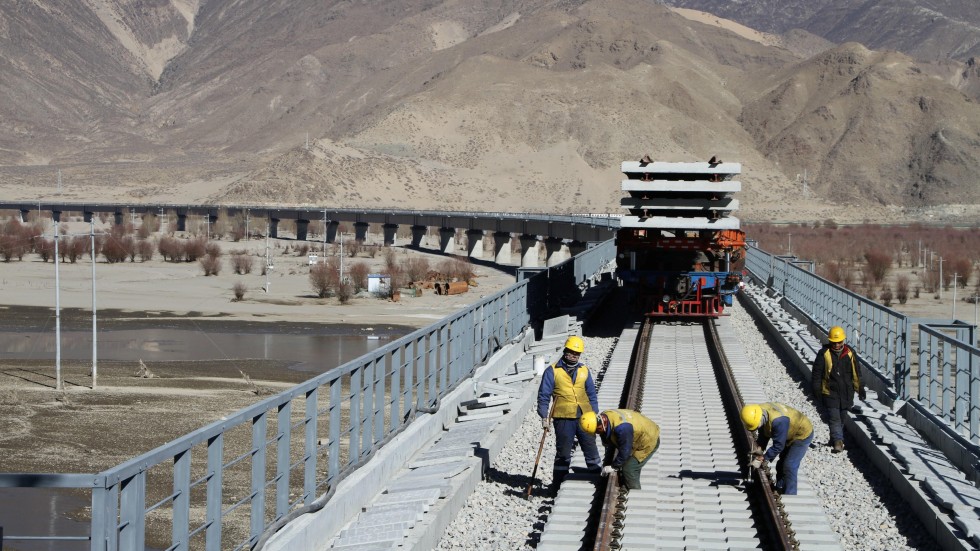
These include a second railway from Sichuan to Tibet – a line that is strategically important but also has to cross some of the deepest valleys in the world along the route.

China Railway said a feasibility study of the 1,700km line winding through the “roof of the world”, with a budget of 250 billion yuan (US$36.42 billion), is scheduled to be completed in the second quarter before before a possible start to construction in the third quarter. The project is not included in the 6,800km total for 2019.

Beijing’s determination to invest in railway infrastructure came after the country’s fixed asset investment, a major growth engine, slowed to a decade-low of 5.9 per cent in the first 11 months of 2018.

Infrastructure construction, including roads and railways, surprisingly slowed to 3.7 per cent from January to November from 20.1 per cent a year earlier.

The slowdown in investment helped to drag down China’s overall economic growth with the world’s second biggest economy facing headwinds from the trade war with the United States.

Iris Pang, chief Greater China economist of ING Bank, said Beijing needs to start making preparations because no one knows for sure what next direction the trade war will take next.

The 90-day trade truce with the United States will end on March 2, right ahead of China’s Two Sessions meeting, during which Premier Li Keqiang will announce the 2019 gross domestic product growth target, fiscal deficit ratio and probably the money supply goal.

China’s first quarter growth for 2019 is widely believed to be a test to Beijing’s policymakers because substantial damages from current US tariffs will be felt, with some predicting it will drop below the psychologically important threshold of 6 per cent in the first half of the year.

“One of the defensive measures would be to push up railway investment when the national economy slowed to certain point, such as below 6 per cent,” said Pang.

At their annual work conference on Wednesday, general manager Lu Dongfu said China Railway “will maintain the intensify” of spending.

While the specific spending target was not disclosed, China’s total investment in its rail network could easily hit a record high in 2019.

Railway construction is often used as a countercyclical tool, with investment plans adjusted according to government needs.

For instance, Beijing had originally planned to cut 2018 railway investment to 732 billion yuan (US$106.63 billion) from 801 billion yuan in 2017, but instead opted to raise spending after the first round of US tariffs were imposed on Chinese exports, eventually spending 802.8 billion yuan last year.

“The infrastructure investment could be stabilised at the current level, but it won’t reach the high growth like [seen a decade earlier],” added Pang.

China’s railway fixed-asset investment jumped 61.5 per cent to 416.8 billion yuan in 2008, when the country started the construction of its high-speed rail network, government data showed.

Investment rose another 69.1 per cent to 701.3 billion yuan in 2009, as the authority stepped up domestic construction to offset the global financial crisis.

12/12/2018

India’s Modi suffers biggest state election loss, boosting opposition

NEW DELHI (Reuters) – India’s ruling party lost power in three key states on Tuesday, dealing Prime Minister Narendra Modi his biggest defeat since he took office in 2014 and boosting the opposition ahead of national polls next year.

The results in the heartland rural states of Rajasthan, Chhattisgarh and Madhya Pradesh could force the federal government run by Modi’s Hindu nationalist Bharatiya Janata Party (BJP) to raise spending in the countryside, where more than two-thirds of India’s 1.3 billion people live.

Political analysts said the BJP’s defeat would underscore rural dismay with the government and could help unite the opposition led by the Congress party. Modi is personally popular but has been criticised for failing to deliver jobs for young people and better conditions for farmers.

Reacting late on Tuesday to the results, Modi wrote on Twitter: “Victory and defeat are an integral part of life. Today’s results will further our resolve to serve people and work even harder for the development of India.”

The results came as a shot in the arm for Rahul Gandhi, president of the left-of-centre Congress, who is trying to forge a broad alliance with regional groups and present Modi with his most serious challenge yet in a general election that must be held by May.

Congress has ruled India for most of its post-independence era after 1947 but was decimated by Modi’s BJP in national polls in 2014. Since then, it had struggled to make major inroads, even in state polls.

Gandhi, the fourth generation scion of the Nehru-Gandhi dynasty, has sought to build a coalition of regional groups.

On Tuesday, celebrations erupted outside the Congress party headquarters in New Delhi, with supporters dancing, setting off fircrackers and brandishing posters praising Gandhi.

“We are going to provide the states with a vision and a government they can be proud of,” Gandhi told reporters.

“There is a feeling among people that the promises made by the prime minister … have not been fulfilled.”

In Chhattisgarh, Congress was ahead in 68 of the 90 seats at stake, with the BJP on 16, according to data from the Election Commission. In Rajasthan, the Congress was leading in 99 of the 199 seats contested, against 73 for the ruling BJP.

CONGRESS CONFIDENT

In Madhya Pradesh, the most important of the five states that have held assembly elections in recent weeks, Congress was leading with 113 seats while the BJP had 110 out of 230.

Slideshow (9 Images)

Regional parties were leading in two smaller states that also voted, Telangana in the south and Mizoram in the northeast.

Congress said it was confident it could form governments in all three big states. The BJP previously ruled all three, for three terms in two of them.

The BJP said the state results would not necessarily dictate what happens in next year’s general election.

Investors said the BJP had not fared as badly as feared, and nationally would still likely have an edge over an opposition coalition in the general election.

“A disappointing set of state election results … suggests that the ruling national party has lost some goodwill,” London-based economic research consultancy, Capital Economics, said in a note.

“That said, we maintain our view that the BJP will secure victory in the general election, which would allow PM Modi to get his reform agenda back on track after a lacklustre 2018.”

Markets recovered from sharp early losses and ended marginally higher, though the central bank governor’s sudden resignation on Monday kept investors nervous.

A lawmaker for the BJP said it had erred in focusing its campaign on partisan themes, such as the building of a Hindu temple at a site disputed by Muslims, instead of offering jobs and growth.

“We forgot the issue of development that Modi took up in 2014,” said Sanjay Kakade.

Law of Unintended Consequences

continuously updated blog about China & India

ChiaHou's Book Reviews

continuously updated blog about China & India

What's wrong with the world; and its economy

continuously updated blog about China & India