Archive for ‘boxes’

13/09/2019

Beijing campaign sends 650 boxes of Maxim’s mooncakes to Hong Kong police in show of support over protests

  • Top law enforcement body starts campaign to rally mainland support for officers amid anti-government protests
  • Maxim’s described as ‘company that loves the country and loves Hong Kong’ after condemnation of unrest by daughter of founder
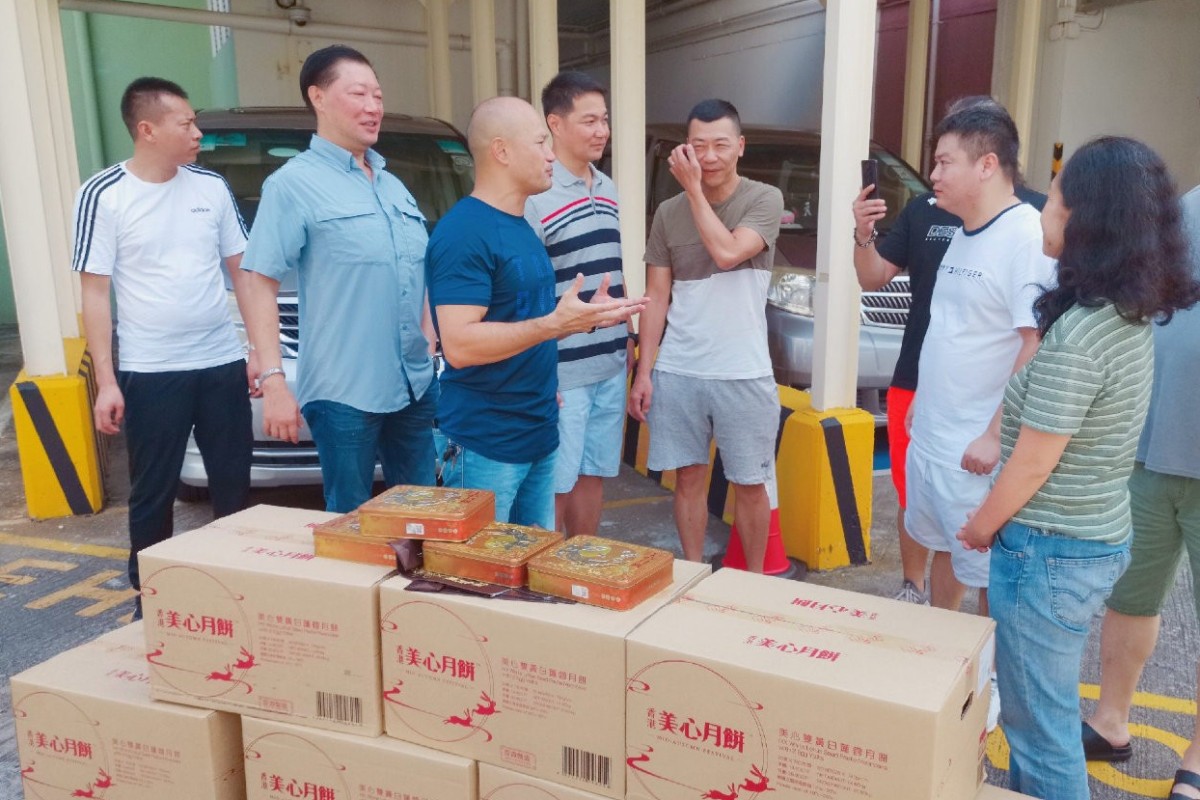
Officer Lau (third from left) and police colleagues receive a delivery of mooncakes. Photo: Weibo
China’s top law enforcement agency has shown its support for Hong Kong’s embattled police by delivering 650 boxes of mooncakes to the force’s dormitories and stations ahead of Friday’s Mid-Autumn Festival.

The festive gifts were sent after an online campaign titled “I want to send hometown delicacies to Hong Kong Police”, launched last Friday by Chang An Jian, an official social media account of the Central Political and Legal Affairs Commission, Beijing’s top political body responsible for law and order.

The commission – a Communist Party organ, rather than a government body that police report to – said in a blog post that seven people had donated about 150,000 yuan (US$21,000) between them.

The campaign represents the latest display of mainland support for the force, with no end in sight to mass protests in Hong Kong triggered in June by opposition to an 

extradition bill

that would have allowed the transfer of criminal suspects to mainland China. Hong Kong police have faced numerous accusations of excessive use of force during the unrest.

But the mooncake delivery was complicated by customs regulations, with most major Chinese courier services unwilling to take deliveries containing processed meat and egg yolk across the border with Hong Kong.

“[We] were panicking because a lot of enthusiastic netizens had their salted duck and mooncake deliveries to Hong Kong rejected by couriers!” a Chang An Jian blog post said on Wednesday night.

In the end, 650 boxes of mooncakes that were bought from Hong Kong were sent to police dormitories and stations on Wednesday evening.

Mid-Autumn Festival is the second most important traditional Chinese holiday after Lunar New Year.

“[The mooncakes] were from Maxim’s, a company that loves the country and loves Hong Kong!” the blog post also said.

Annie Wu Suk-ching, whose father co-founded the Maxim’s chain, last week

spoke out against

the anti-government protests in Hong Kong.

She was lauded by Communist Party mouthpiece People’s Daily for “clearly adhering to the one country principle” – referring to “one country, two systems”, the principle under which Hong Kong was guaranteed a high degree of autonomy after it was handed over from British to Chinese rule in 1997.

One of Maxim’s biggest rival mooncake manufacturers in Hong Kong, Taipan Bread and Cake, had its products removed from shops across the Chinese mainland and from its biggest e-commerce sites, Tmall.com and JD.com, after the son of its founder was vilified by People’s Daily for a Facebook post that the newspaper said showed he backed the protests.
Recipients of the mooncakes included a police officer who in July was hailed as a hero by Chinese state media and nicknamed “bald sergeant Lau Sir” after pointing a shotgun at protesters who had besieged a police station. Lau has since been invited by Beijing to attend a grand celebration on October 1 for the 70th anniversary of the founding of the People’s Republic of China.
Mooncake importer says stock will be destroyed after mainland backlash
Beijing has focused attention on the violent elements of the Hong Kong protests in its social media posts and media coverage, while businesses have been carefully monitored and expected to toe Beijing’s line on condemning violence and supporting one country, two systems.
“Hong Kong Police have been having a very difficult time,” said one mainlander, surnamed Lu, in a video posted by Chang An Jian. “We want to cheer them up.”

Source: SCMP

19/05/2019

China’s ban on scrap imports revitalises US recycling industry

  • US paper mills are expanding capacity to take advantage of a glut of cheap waste materials
  • Some facilities that previously exported plastic or metal to China have retooled so they can process it themselves
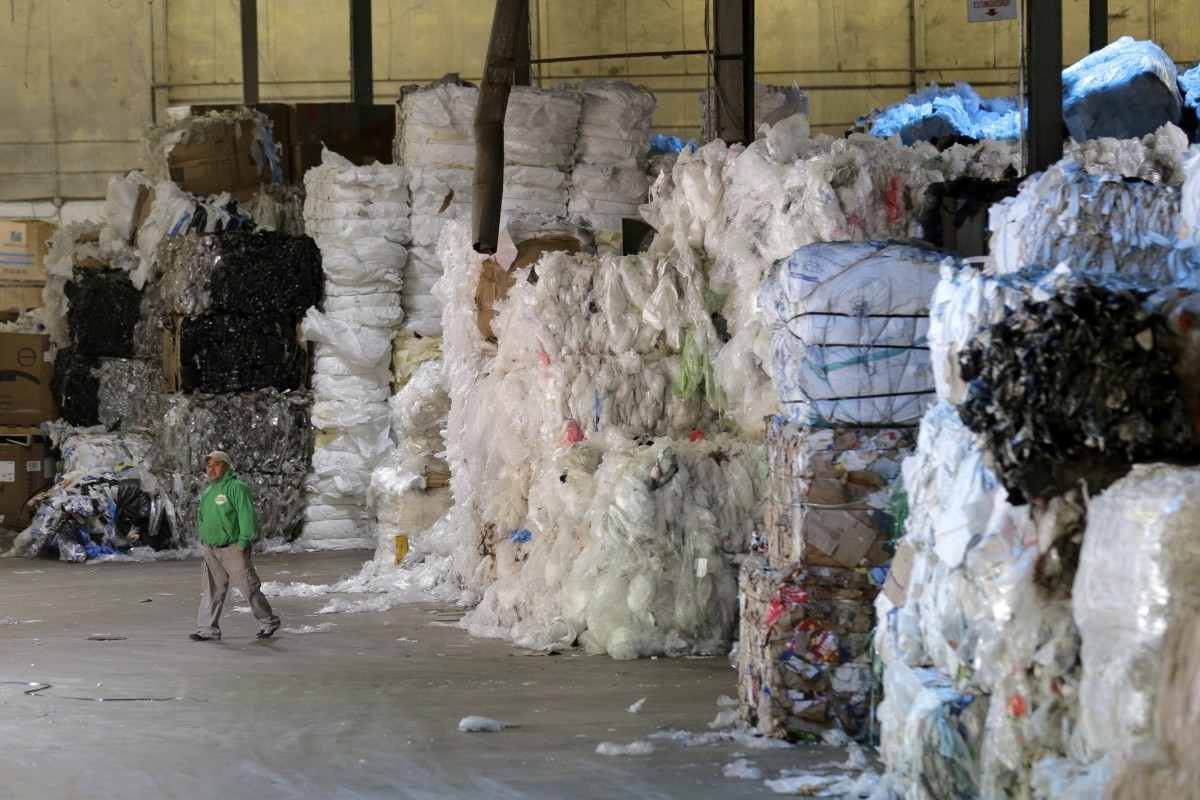
China phased in import restrictions on scrap paper and plastics in January last year. Photo: AP
The halt on China’s imports of waste paper and plastic that has disrupted US recycling programmes has also spurred investment in American plants that process recyclables.

US paper mills are expanding capacity to take advantage of a glut of cheap scrap. Some facilities that previously exported plastic or metal to China have retooled so they can process it themselves.

And in a twist, the investors include Chinese companies that are still interested in having access to waste paper or flattened bottles as raw material for manufacturing.

“It’s a very good moment for recycling in the United States,” said Neil Seldman, co-founder of the Institute for Local Self-Reliance, a Washington-based organisation that helps cities improve recycling programmes.
Global scrap prices plummeted in the wake of China’s ban. Photo: AP

China, which had long been the world’s largest destination for paper, plastic and other recyclables, phased in import restrictions in January last year.

Global scrap prices plummeted, prompting waste-hauling companies to pass the cost of sorting and baling recyclables on to municipalities. With no market for the waste paper and plastic in their blue bins, some communities scaled back or suspended kerbside recycling programmes. But new domestic markets offer a glimmer of hope.

How China’s ban on plastic waste imports became an ‘earthquake’

About US$1 billion in investment in US paper processing plants has been announced in the past six months, according to Dylan de Thomas, a vice-president at The Recycling Partnership, a non-profit organisation that tracks and works with the industry.

Hong Kong-based Nine Dragons, one of the world’s largest producers of cardboard boxes, has invested US$500 million over the past year to buy and expand or restart production at paper mills in Maine, Wisconsin and West Virginia.

Brian Boland, vice-president of government affairs and corporate initiatives for ND Paper, Nine Dragons’ US affiliate, said that as well as making paper from wood fibre, the mills would add production lines turning more than a million tonnes of scrap into pulp to make boxes.

“The paper industry has been in contraction since the early 2000s,” he said. “To see this kind of change is frankly amazing. Even though it’s a Chinese-owned company, it’s creating US jobs and revitalising communities like Old Town, Maine, where the old mill was shuttered.”

Hong Kong-based Nine Dragons has invested US$500 million in paper mills in Maine, Wisconsin and West Virginia. Photo: Handout

The Northeast Recycling Council said in a report last autumn that 17 North American paper mills had announced increased capacity to handle recyclable paper since the Chinese cut-off.

Another Chinese company, Global Win Wickliffe, is reopening a closed paper mill in Kentucky. Georgia-based Pratt Industries is constructing a mill in Wapakoneta, Ohio that will turn 425,000 tonnes of recycled paper per year into shipping boxes.

Plastics also had a lot of capacity coming online, de Thomas said, noting new or expanded plants in Texas, Pennsylvania, California and North Carolina that turned recycled plastic bottles into new bottles.

Chinese companies were investing in plastic and scrap metal recycling plants in Georgia, Indiana and North Carolina to make feedstocks for manufacturers in China, he said.

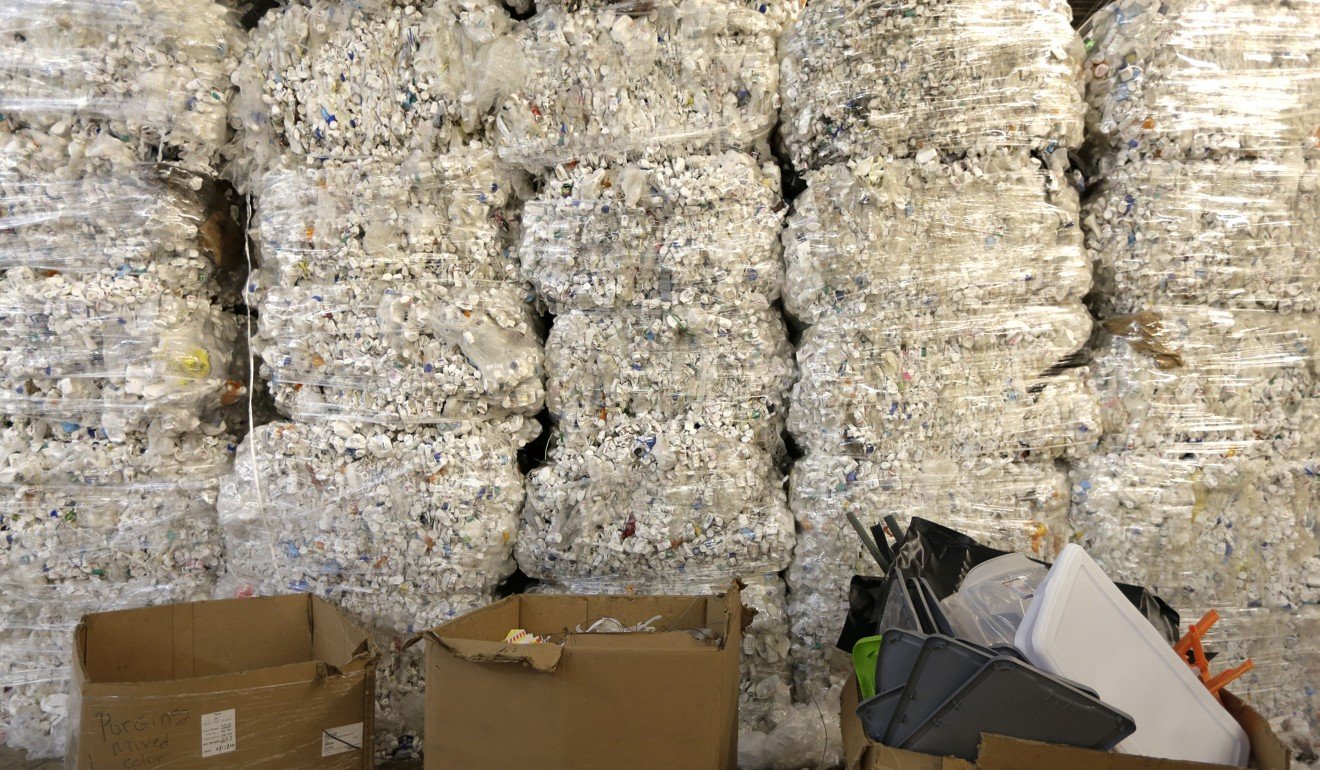
GDB International processes bales of scrap plastic film into pellets to make garbage bags and plastic pipe. Photo: AP

In New Brunswick, New Jersey, the recycling company GDB International exported bales of scrap plastic film such as pallet wrap and grocery bags for years. But when China started restricting imports, company president Sunil Bagaria installed new machinery to process it into pellets he sells profitably to manufacturers of garbage bags and plastic pipe.

The imports cut-off that China called “National Sword” was a much-needed wake-up call to his industry, he said.

“The export of plastic scrap played a big role in easing recycling in our country,” Bagaria said. “The downside is that infrastructure to do our own domestic recycling didn’t develop.”

China to suspend checks on US scrap metal shipments, halting imports

That was now changing, but he said far more domestic processing capacity would be needed as a growing number of countries restricted scrap imports.

“Ultimately, sooner or later, the society that produces plastic scrap will become responsible for recycling it,” he said.

It has also yet to be seen whether the new plants coming on line can quickly fix the problems for municipal recycling programmes that relied heavily on sales to China to get rid of piles of scrap.

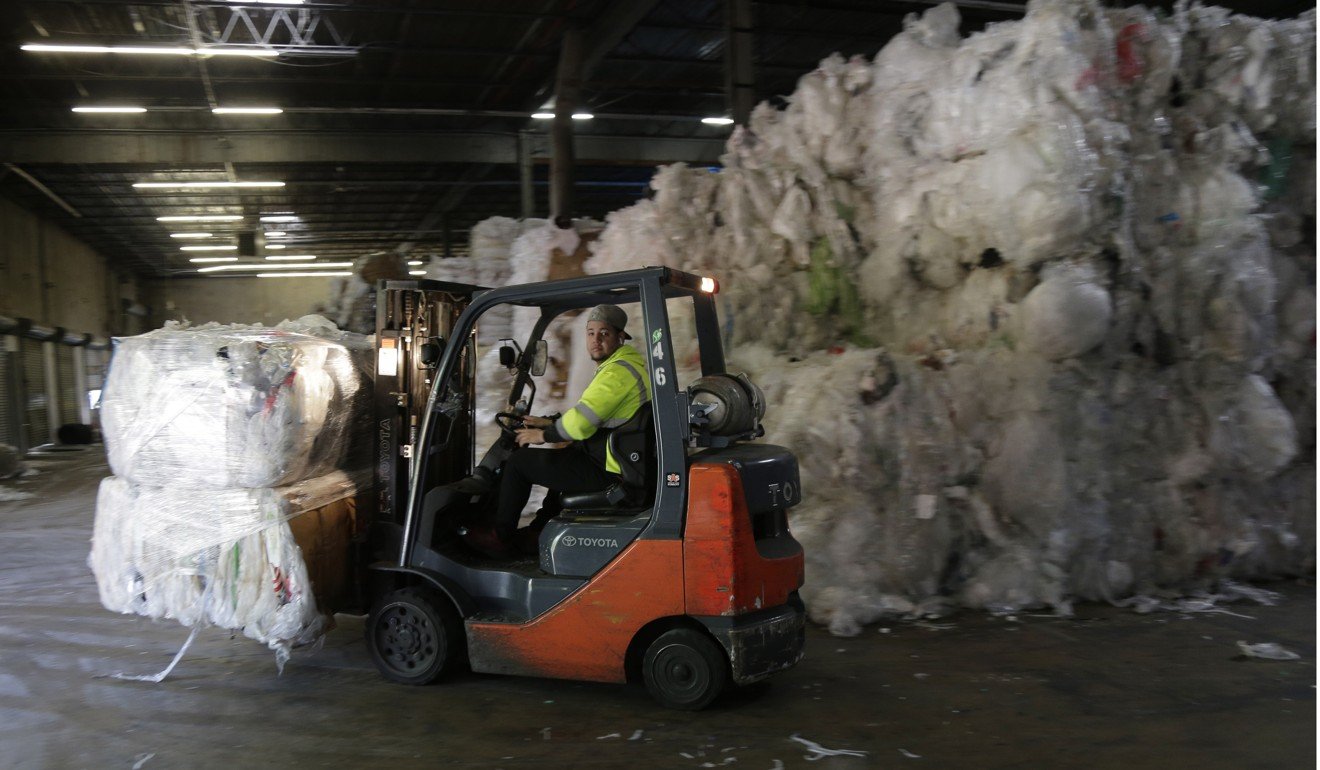
About US$1 billion in investment in US paper processing plants has been announced in the past six months, according to a non-profit group that tracks the industry. Photo: AP

“Chinese companies are investing in mills, but until we see what the demand is going to be at those mills, we’re stuck in this rut,” said Ben Harvey, whose company in Westborough, Massachusetts, collects trash and recyclables for about 30 communities.

He had a car park filled with stockpiled paper a year ago after China closed its doors, but eventually found buyers in India, Korea and Indonesia.

China to collect applications for scrap metal import licences from May

Keith Ristau, chief executive of Far West Recycling in Portland, Oregon, said most of the recyclable plastic his company collected used to go to China but now most of it went to processors in Canada or California.

To meet their standards, Far West invested in better equipment and more workers at its material recovery facility to reduce contamination.

In Sarepta, Louisiana, IntegriCo Composites is turning bales of hard-to-recycle mixed plastics into railroad ties. It expanded operations in 2017 with funding from New York-based Closed Loop Partners.

“As investors in domestic recycling and circular economy infrastructure in the US, we see what China has decided to do as very positive,” said Closed Loop founder Ron Gonen.

Source: SCMP

Law of Unintended Consequences

continuously updated blog about China & India

ChiaHou's Book Reviews

continuously updated blog about China & India

What's wrong with the world; and its economy

continuously updated blog about China & India