Archive for ‘breadwinner’

25/08/2019

More Chinese men open to the idea of becoming stay-at-home fathers

  • The traditional view that the man of the house must be the breadwinner may be crumbling, according to a recent survey

Just over half of the men questioned said they were in favour of stay-at-home fathers. Photo:Shutterstock
More Chinese husbands are open to the idea of becoming stay-at-home fathers in a shift away from traditional mores, according to a recent survey.
The idea that the man of the house should be the breadwinner, while child care and domestic duties are the woman’s duties, is deep-rooted in Chinese culture.
But the survey, jointly conducted by the state-run China Youth Daily and questionnaire website wenjuan.com earlier this month, found that 52.4 per cent of male respondents supported the idea of men being a full-time carer.
The number in favour was lower among women, just 45.8 per cent of whom supported the idea.
But however keen men may be about the idea, there may also be practical difficulties.

Yu Xiang, a middle schoolteacher in Shanghai who has a six-month-old daughter, said he was willing to be a stay-at-home father but in reality it was not practical to do that because his wife, who is also a teacher, did not earn enough to support the family.

He also said his wife was not happy leaving him to do the housework, adding that she often scolded him for doing it badly. “She also said he would not feel comfortable letting me take care of our daughter,” he said. “She says I am too careless.”

Chinese father decides to drop in on daughter’s school … via helicopter

Robin Ge, a financial manager from Shanghai, admitted he took a more old-fashioned view of household duties.

The father of a five-year-old boy said he would not accept the idea of becoming a stay-at-home father even if his wife, an office worker, started earning more than him.

“Perhaps I am a traditional Chinese man,” he said. “I believe men should earn more than women. I remember my father told me years ago that a man’s status in his family is determined by his economic status. Compared with stay-at-home mothers, the acceptance rate for stay-at-home fathers among the public is very low.

“I agree that a father caring for the kids has benefits, such as helping the kid to be brave and responsible. However, that doesn’t mean a man needs to be full-time father. What he should do is to spend much of his spare time caring for and playing with his kid.”

The survey questioned 1,987 married people, some 89.2 per cent of whom were parents. Sixty per cent of the respondents agreed that the stereotypical view of the husband being the breadwinner put fathers off staying at home to look after the children.

However, the number of women who said they were opposed to the idea of stay-at-home fathers, 30.9 per cent, was slightly higher than the 28 per cent of men who did not support the notion.

But women whose husbands have given up their jobs to look after the children generally appreciated what they had done.

“I don’t think a man who stays at home is a failure in life. His sacrifice helps me so much and I really am grateful for his support,” a woman wrote on China’s leading parental website ci123.com, adding that this kind of family is more stable and the relationship between husband and wife is more harmonious.

Chinese father takes daughter, 10, to top school’s open day despite her being on an IV drip

Zhang Baoyi, a sociology professor at the Tianjin Academy of Social Sciences, said he believed attitudes would change as society evolved.

“To embrace this practice, we need to recognise the contribution and value of homemakers,” Zhang told China Youth Daily.

“The fact that dads are willing to be more involved in their children’s lives shows that the traditional mentality of ‘career husband and domestic wife’ is changing.”

Zhang also said that more parents in general were willing to stay at home to provide full-time child care because they were attaching increasing importance to their children’s education.

“The number of stay-at-home fathers or mothers is increasing,” he said.

“Couples should adjust the [family] model … according to their economic conditions and abilities to educate the children.”

Source: SCMP

22/07/2019

Migrant workers forced out as one of Shenzhen’s last ‘urban villages’ faces wrecking ball

  • Some 150,000 residents of Baishizhou have to leave by the end of September to make way for malls, hotels and high-end residential projects
  • They worry about finding affordable housing in the city, and their children’s education
Urban villages like Baishizhou provide affordable housing, mostly for migrant workers. Photo: Phoebe Zhang
As their eviction deadline nears, all Chen Jian can think about is the wrecking ball – and where his family is going to go. He often dreams about the negotiations – with officials, real estate developers, landlords. On other nights, he cannot sleep at all.
“I’m mostly worried about my daughter – she starts secondary school in September,” said Chen, 41, who works as a quality supervisor for a foreign trading company.

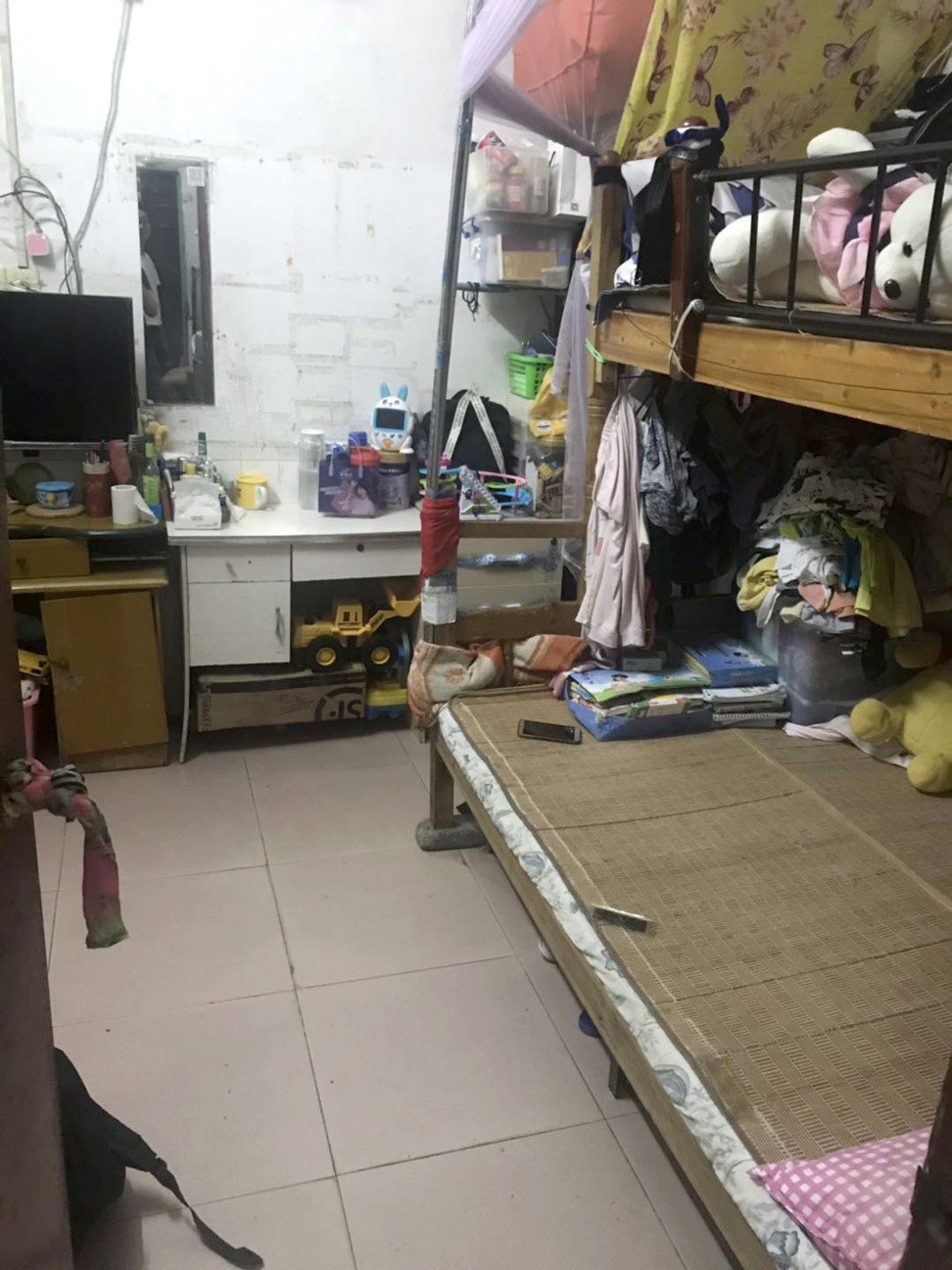
His family of four lives in a cheap one-bedroom flat in Baishizhou, one of the last standing chengzhongcun, or “urban villages”, in the flourishing commercial zones of southern Chinese city Shenzhen.

The villages provide affordable housing – costing from a few hundred to a few thousand yuan per month – to a mostly migrant worker population that provides services and labour.
But Baishizhou, in the Nanshan district, will not be standing for much longer. Many tenants in the area have received eviction notices since June, telling them to move out before the end of September to make way for a real estate project led by Shenzhen-based developer LVGEM Group.
The developer bought the land and buildings from their landlords, and it plans to knock them down and replace them with malls, hotels, high-end residential projects and skyscrapers.
Some 150,000 people are affected, mostly migrant workers, and they will have to find new homes, change jobs or even move back home at short notice.
Chen Jian lives in a one-bedroom flat in Baishizhou with his wife, daughter and son. Photo: Phoebe Zhang

For Chen and more than 2,000 other families, their children’s education is the most urgent issue. He said they could move somewhere else nearby, but the rent would be more than four times higher. A cheaper area would mean a long walk to school for his daughter from the nearest subway station.

As the breadwinner, Chen’s monthly income of 12,000 yuan (US$1,750) has to cover the whole family. His wife takes care of their three-year-old son and their daughter, 12.

“If I were here by myself, I would just pack up my bags and go,” said Chen, who moved to Shenzhen from Henan province. “But I can’t – I have children, I would do anything for my children.”

Families who’ve lived in old Chinese town for generations being kicked out to make way for tourists
Urban villages are a phenomenon that grew from China’s rapid development. In the 1980s, soon after Shenzhen became the country’s first special economic zone, the local government expropriated mostly vacant land from villagers and allowed developers to build commercial properties there.
The locals invested the large sums of money they received into new living spaces in their villages, which they rented out to the migrant workers that flowed into the city amid a manufacturing boom.
These chengzhongcun emerged as a tangle of damp alleyways, where electricity and telephone wires hang like spiderwebs. They bustle with fruit carts, soy milk shops, cobblers, karaoke parlours, short-stay love hotels and hair salons offering massage services. The “handshake buildings” where people live are packed together so tightly that residents could reach out of the window and shake their neighbour’s hand in the opposite flat.
“I call this ‘voluntary urbanisation’,” said Duan Peng, an architect based in the city. Since he moved to Shenzhen in 2001, Duan has spent many days and nights in Baishizhou. He said its development was in line with the government’s urban planning policy, since it allowed migrant workers to live in a relatively prosperous area in the city centre rather than on its periphery.
“Handshake buildings”, where residents can shake their neighbours’ hands through the windows, are a feature of China’s urban villages. Photo: Phoebe Zhang

Chen moved to Shenzhen with his wife in 2000, and both their children were born there. They moved to Baishizhou in 2008 after he was introduced to his landlord, who is from Chen’s hometown and rented him the flat for 650 yuan a month.

The rent has gone up by just 300 yuan in the 11 years they have lived there. They have watched as new developments sprang up around them – amusement parks, a golf course, malls and an area that is home to some of the country’s top tech companies including Huawei, Tencent and DJI.

How the eviction of Beijing’s migrant workers is tearing at the fabric of the city’s economy
But away from the shiny new developments, 150,000 migrant workers from all over the country are packed into 2,500 buildings in Baishizhou, where rents and services are affordable.
The urban village is full of people like Chen. Small business owner Wang Fang came to Shenzhen from northeast China in 2003 and has lived in Baishizhou ever since. Six months ago, she signed a three-year lease on a commercial space and opened a dumpling restaurant, but she is worried about the future.
“I can’t go back home, I already have a Shenzhen hukou,” she said, referring to the household registration document that gives access to public services. “I don’t have land there any more and can’t make a living there [as a farmer].”
She has not been told she has to leave the restaurant, but Wang and her two sons have until the end of September – when the building’s water and electricity will be cut off – to vacate their flat.
“It’s only a matter of time before the business is shut down as well,” she said.
Small shops and street vendors line Baishizhou’s bustling alleyways. Photo: Phoebe Zhang

According to an online poll of 1,031 Baishizhou residents this week, about half said they may have to find another job, and more than 600 were concerned about their children’s education. The survey, conducted by Shenzhen University urban planning professor Chen Zhu, also found that 70 per cent of those polled planned to find another flat in the city, while 28 per cent would leave.

Duan said the evictions and redevelopment would inevitably affect the surrounding areas, as well as the residents.

“The prices of services in the neighbourhood will increase, because many of the workers [now providing those services] will move far away, and rents will increase as well,” he said.

But for many such redevelopments, while the government, landlords and village officials might be consulted, the tenants are left out.

“Most of these residents, their voices and their interests aren’t on the negotiating table – their losses aren’t calculated in the real estate developer’s demolition costs,” Duan said.

A receptionist at LVGEM said he was not aware of any complaints about the redevelopment, while emails to the company went unanswered.

Meanwhile the developer’s partner, Baishizhou Corporation, told Southern Metropolis Daily it would provide legal services, rentals support and school buses for tenants who will be displaced.

But it is not enough for migrant workers like Chen. Like many of those facing eviction, he fears he will have to pay more rent, and there may not be a school bus service in his area.

He mentions a slogan plastered on walls in the city, “Once you come, you’re a Shenzhener” – part of a government campaign to lure talent and investors.

Chen said he worried that Shenzhen wanted only hi-tech workers and luxury residential compounds in the city, leaving little room for low-income workers.

“Despite what the slogan says, you ask yourself, are you really a Shenzhener?” he said.

Source: SCMP

20/05/2019

The Indian Dalit man killed for eating in front of upper-caste men

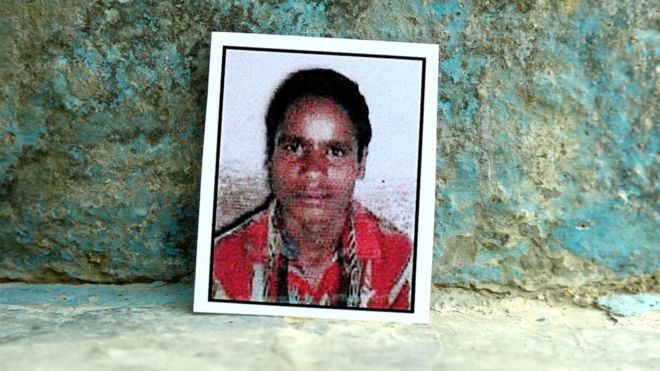
Jitendra
Image caption Jitendra was a carpenter and the only breadwinner in his family

A helpless anger pervades the Dalit community in the remote Indian village of Kot.

Last month, a group of upper-caste men allegedly beat up a 21-year-old Dalit resident, named Jitendra, so badly that he died nine days later.

His alleged crime: he sat on a chair and ate in their presence at a wedding.

Not even one of the hundreds of guests who attended the wedding celebration – also of a young Dalit man – will go on record to describe what happened to Jitendra on 26 April.

Afraid of a backlash, they will only admit to being at a large ground where the wedding feast was being held.

Only the police have publicly said what happened.

The wedding food had been cooked by upper-caste residents because many people in remote regions don’t touch any food prepared by Dalits, who are the bottom of the rigid Hindu caste hierarchy.

“The scuffle happened when food was being served. The controversy erupted over who was sitting on the chair,” police officer Ashok Kumar said.

The incident has been registered under the Scheduled Castes and Scheduled Tribes (Prevention of Atrocities Act) – a law meant to protect historically oppressed communities.

Dalits, formerly known as untouchables, have suffered public shaming for generations at the hands of upper-caste Hindus.

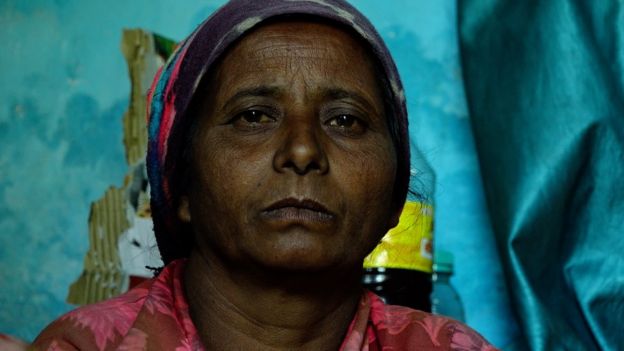
Geeta Devi
Image caption Geeta Devi says she found her son dead outside their home

Dalits continue to face widespread atrocities across the country and any attempts at upward social mobility are violently put down.

For example, four wedding processions of Dalits were attacked in the western state of Gujarat within a week in May.

It is still common to see reports of Dalits being threatened, beaten and killed for seemingly mundane reasons.

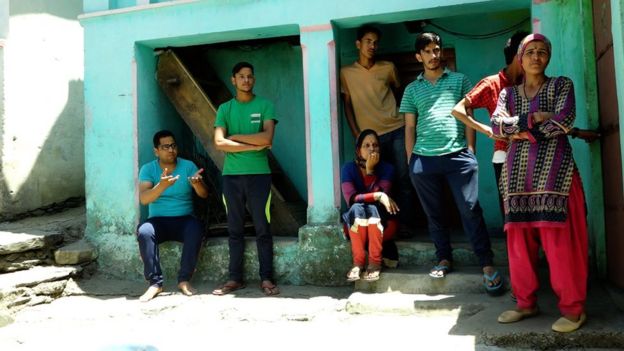
The culture that pervades their community is visible everywhere – including in Kot, which is in the hilly northern state of Uttarakhand.

Local residents from the Dalit community allege that Jitendra was beaten and humiliated at the wedding.

They say he left the event in tears, but was ambushed again a short distance away and attacked again – this time more brutally.

Jitendra’s mother, Geeta Devi, found him injured outside their dilapidated house early the next morning.

“He had been perhaps lying there the entire night,” she said, pointing to where she found him. “He had bruises and injury marks all over his body. He tried to speak but couldn’t.”

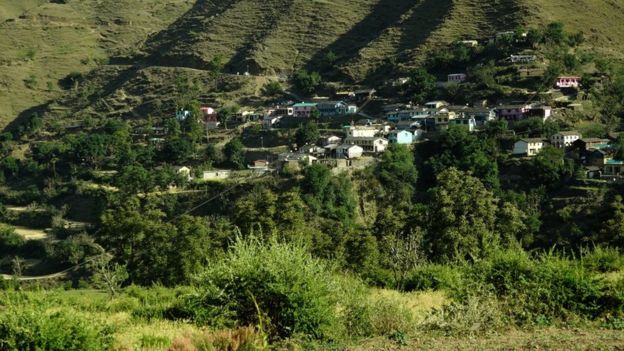
Kot village in Uttarakhand state
Image caption Dalits are outnumbered by upper-caste families in the village

She does not know who left her son outside their home. He died nine days later in hospital.

Jitendra’s death is a double tragedy for his mother – nearly five years ago her husband also died.

This meant that Jitendra, who was a carpenter, became the family’s only breadwinner and had to drop out of school to start working.

Family and friends describe him as a private man who spoke very little.

Loved ones have been demanding justice for his death, but have found little support among the community.

“There is fear. The family lives in a remote area. They have no land and are financially fragile,” Dalit activist Jabar Singh Verma said. “In surrounding villages too, the Dalits are outnumbered by families from higher castes.”

Of the 50 families in Jitendra’s village, only some 12 or 13 are Dalits.

Dalits comprise almost 19% of Uttarakhand’s population and the state has a history of atrocities committed against them.

Police have arrested seven men in connection with Jitendra’s death, but all of them deny any involvement.

Group of upper-caste residents in the village
Image caption Upper-caste villagers deny discriminating against the Dalit community

“It’s a conspiracy against our family,” said a woman whose father, uncles and brothers are among the accused. “Why would my father use caste slurs at a Dalit’s marriage?”

“He must have been embarrassed that he got beaten and popped dozens of pills that led to his death,” another local upper-caste person said.

But the Dalits in the village, who are livid over Jitendra’s death, hotly deny these claims.

They say Jitendra suffered from epilepsy, but insist there is no chance that he overdosed on his medication.

Apart from these expressions of anger, local Dalit families have largely remained silent.

“It is because they are economically dependent on families from the higher castes,” activist Daulat Kunwar said.

“Most Dalits are landless. They work the fields of their wealthy upper caste neighbours. They know the consequences of speaking out loud.”

Jitendra’s family has already experienced some of these consequences – Geeta Devi says they are under pressure to stop pushing for the truth.

“Some men came over to our house and tried to scare us,” she said. “There is no one to support us but I will never give up our quest for justice.”

Source: The BBC

Law of Unintended Consequences

continuously updated blog about China & India

ChiaHou's Book Reviews

continuously updated blog about China & India

What's wrong with the world; and its economy

continuously updated blog about China & India