Archive for ‘Brics countries’

08/04/2020

Xi and his unremitting call for global health cooperation

BEIJING, April 7 (Xinhua) — Over the past seven years, Chinese President Xi Jinping has on various occasions stressed the importance of global health cooperation, expressed China’s support for international health organizations, and voiced the country’s determination to help improve global health governance.

His remarks on global public health in recent years, especially in the last few months, have become particularly meaningful as countries worldwide mark the 2020 World Health Day on Tuesday amid a raging COVID-19 pandemic.

Back in 2013, during a meeting with then World Health Organization (WHO) Director-General Margaret Chan in Beijing, Xi said China will continue to improve public health and enhance cooperation with the WHO.

He also expressed his hope that China and the WHO could work closer to help promote Chinese medicine and medical products into overseas markets, and jointly assist African countries to improve their disease control and public health systems to meet the United Nations Millennium Development Goals.

In March 2015, Xi pointed out in a meeting in China’s Hainan province with Bill Gates, co-chair of the Bill & Melinda Gates Foundation, that preventing and controlling public epidemics is a common challenge to the international community and requires strengthening international cooperation on joint control.

Two years later, during his trip to Switzerland, Xi paid a special visit to the WHO headquarters, in which he co-witnessed with Chan the signing of a memorandum of understanding between China and the WHO pledging to step up health cooperation under the framework of the China-proposed Belt and Road Initiative.

During the meeting with Chan, Xi noted that China stands ready to enhance cooperation with the WHO in implementing the 2030 Agenda for Sustainable Development and assisting other developing countries.

Also in 2017, in his congratulatory letter to a meeting of BRICS countries’ health ministers, Xi called on relevant parties to study work in the field of traditional medicine and make joint efforts to tackle public health challenges.

“It is our common good vision that everyone enjoys good health,” he said in the letter.

In the past several months of 2020 which witnessed a hike in global caseload of COVID-19 infections, Xi has taken each opportunity to reiterate his call for global public health cooperation against the virus.

When meeting with visiting WHO Director-General Tedros Adhanom Ghebreyesus in Beijing in January, Xi said China attaches great importance to the cooperation with the WHO, and is ready to work with the organization as well as the international community to safeguard regional and global public health security.

In February, in a reply letter to Gates, Xi said “we are resolute in protecting the life and health of the people of China, and of all countries around the world. We are determined to do our part to uphold global public health security.”

In March, when the global anti-virus fight entered a critical stage, Xi highlighted the need for international health cooperation not only in several domestic meetings on epidemic prevention and control, but also in phone conversations with foreign leaders and heads of international organizations, as well as in such global events as the Extraordinary G20 Leaders’ Summit.

On March 12, Xi spoke with United Nations (UN) Secretary-General Antonio Guterres over phone, and urged the international community to take urgent action and carry out effective international cooperation in joint prevention and control, so as to form a strong concerted force to beat the disease.

China stands ready to share its experience with other countries, carry out joint research and development on drugs and vaccines, and offer as much assistance as it can to countries where the disease is spreading, Xi said.

Several days later, speaking at a meeting of the Standing Committee of the Political Bureau of the Communist Party of China Central Committee, he required closer cooperation with the WHO to strengthen the analysis and prediction of the changes in the global epidemic situation, and improvement in strategies and policies to cope with imported risks.

On March 21, in a phone conversation with his French counterpart, Emmanuel Macron, Xi pointed out that public health security is a common challenge faced by humanity.

China, he said, is willing to make concerted efforts with France to enhance international cooperation in epidemic prevention and control, support the UN and WHO playing a core role in improving global public health governance, and build a community of common health for mankind.

Three days later, talking with Kazakh President Kassym-Jomart Tokayev over phone, Xi said in the battle against the current global public health crisis, the urgency and significance of building a community with a shared future for mankind have become even greater.

On March 26, in his keynote speech at the Extraordinary G20 Leaders’ Summit via video, Xi said at such a moment, it is imperative for the international community to strengthen confidence, act with unity and work together in a collective response.

He called on G20 members to jointly help developing countries with weak public health systems enhance preparedness and response, and enhance anti-epidemic information sharing with the support of WHO and to promote control and treatment protocols that are comprehensive, systematic and effective.

Source: Xinhua

15/11/2019

Xi urges BRICS countries to champion multilateralism

BRAZIL-BRASILIA-CHINA-XI JINPING-BRICS-SUMMIT

Chinese President Xi Jinping delivers a speech entitled “Together for a New Chapter in BRICS Cooperation” at the 11th summit of BRICS in Brasilia, Brazil, Nov. 14, 2019. The 11th summit of BRICS, an emerging-market bloc that groups Brazil, Russia, India, China and South Africa was held on Thursday in Brasilia. Brazilian President Jair Bolsonaro presided over the summit. Chinese President Xi Jinping, Russian President Vladimir Putin, Indian Prime Minister Narendra Modi and South African President Cyril Ramaphosa also attended the summit. (Xinhua/Li Xueren)

BRASILIA, Nov. 14 (Xinhua) — Chinese President Xi Jinping on Thursday called on the BRICS countries to undertake their due obligations in championing and practicing multilateralism.

Xi made the appeal in a speech entitled “Together for a New Chapter in BRICS Cooperation” at the 11th summit of BRICS, an emerging-market bloc that groups Brazil, Russia, India, China and South Africa.

Noting that the summit was held at a time when crucial developments are taking place in the world economy and international landscape, Xi pointed out that a new round of technological revolution and industrial transformation is in the ascendant, and the unstoppable rise of emerging markets and developing countries has injected strong impetus to the reform of the global economic governance system.

Nevertheless, there are also causes for concern, Xi said, referring to rising protectionism and unilateralism; greater deficit of governance, development and trust; and growing uncertainties and destabilizing factors in the world economy.

Faced with profound changes rarely seen in a century, Xi said, the BRICS countries should grasp the trend of the times, respond to the call of the people, and shoulder their responsibilities.

“We must remain true to our unwavering commitment to development and strengthen solidarity and cooperation for the well-being of our people and for the development of our world,” he said, before laying out a three-pronged proposal.

First, the BRICS countries should work to foster a security environment of peace and stability, he said, urging the five members to safeguard peace and development for all, uphold fairness and justice, and promote win-win results.

“It is important that we uphold the purposes and principles of the UN Charter and the UN-centered international system, oppose hegemonism and power politics, and take a constructive part in settling geopolitical flash points,” he said.

The BRICS countries should also maintain close strategic communication and coordination and speak in one voice for a more just and equitable international order, he added.

Second, the BRICS countries should pursue greater development prospects through openness and innovation, said the Chinese president.

The five-member bloc should deepen the BRICS Partnership on New Industrial Revolution, and strive for more productive cooperation in such fields as trade and investment, digital economy and connectivity, so as to achieve high-quality development, Xi said.

He called for the five countries to advocate extensive consultation, joint contribution and shared benefits in global governance, and push for reform of the global economic governance system.

The BRICS countries should stand firm against protectionism, uphold the WTO-centered multilateral trading system, and increase the voice and influence of emerging markets and developing countries in international affairs, Xi said.

The Chinese president also urged the BRICS member states to prioritize development in the global macro policy framework, follow through the UN 2030 Agenda for Sustainable Development and the Paris Agreement on climate change, and promote coordinated progress in the economic, social and environmental spheres.

Third, the BRICS countries should promote mutual learning through people-to-people exchanges and take their people-to-people exchanges to greater breadth and depth, said Xi.

Xi proposed to leverage “BRICS Plus” cooperation as a platform to increase dialogue with other countries and civilizations to win BRICS more friends and partners.

In his speech, the president also stressed that China will open up still wider. “We will import more goods and services, ease market access for foreign investments, and step up intellectual property protection. With these efforts, we will break new ground in pursuing all-dimensional, multi-tiered and all-sectoral opening-up in China,” he said.

China will continue to act in the principle of extensive consultation, joint contribution and shared benefits, and pursue open, green and clean cooperation within the framework of the Belt and Road Initiative, Xi said.

“We will continue to follow a high-standard, people-centered, and sustainable approach to promote high-quality Belt and Road cooperation with partner countries,” he said.

China, added the president, will stay committed to an independent foreign policy of peace and to the path of peaceful development, and continue to enhance friendship and cooperation with all other countries on the basis of the Five Principles of Peaceful Coexistence.

China is committed to working with Africa for an even stronger China-Africa community with a shared future, Xi said, adding that China will pursue closer cooperation with Latin America and the Caribbean (LAC) in various areas and build a China-LAC community with a shared future and common progress.

Meanwhile, China strives for an Asia-Pacific community with a shared future that features openness and inclusiveness, innovation-driven growth, greater connectivity, and mutually beneficial cooperation, Xi said.

“All in all, China will work with the rest of the international community toward the goal of building a new type of international relationship and of building a community with a shared future for mankind,” he said.

Source: Xinhua

28/07/2019

Latin America trade grows as China and US tussle for influence

  • Chinese Foreign Minister Wang Yi wraps up tour of Brazil and Chile, as Colombian president heads for Beijing
  • Ecuador president tells US Secretary of State Mike Pompeo ‘smaller countries pay when the big ones fight’
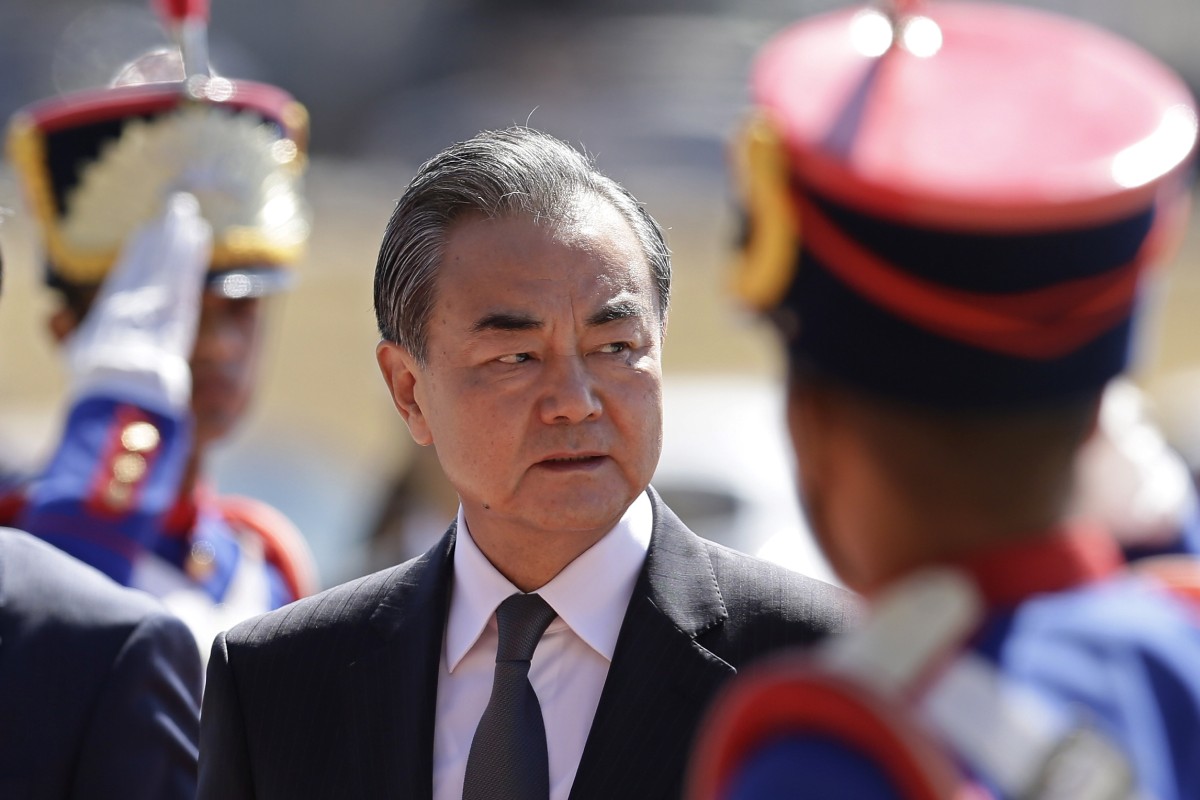
Chinese Foreign Minister Wang Yi is greeted by an honour guard as he arrives at the Itamaraty Palace for a meeting with his Brazilian counterpart Ernesto Araujo on Thursday. Photo: AP
Latin American countries are caught in the middle of a geopolitical tug of war between Beijing and Washington as China boosts its ties in the region in a bid to counterbalance the effects of its trade war with the US.
China’s Foreign Minister Wang Yi wraps up a tour of Latin America on Sunday which began last week in Brazil and ended with an official visit to Chile. He returns to Beijing on the same day Colombia’s President Ivan Duque Marquez arrives for a three-day state visit to China which will include a meeting with Chinese President Xi Jinping.
Wang was in Brazil for the latest summit of foreign ministers from the BRICS countries – an association of emerging countries made up of Brazil, Russia, India, China and South Africa – as well as the third China-Brazil foreign ministers’ comprehensive strategic dialogue with Brazilian Foreign Minister Ernesto Araujo.
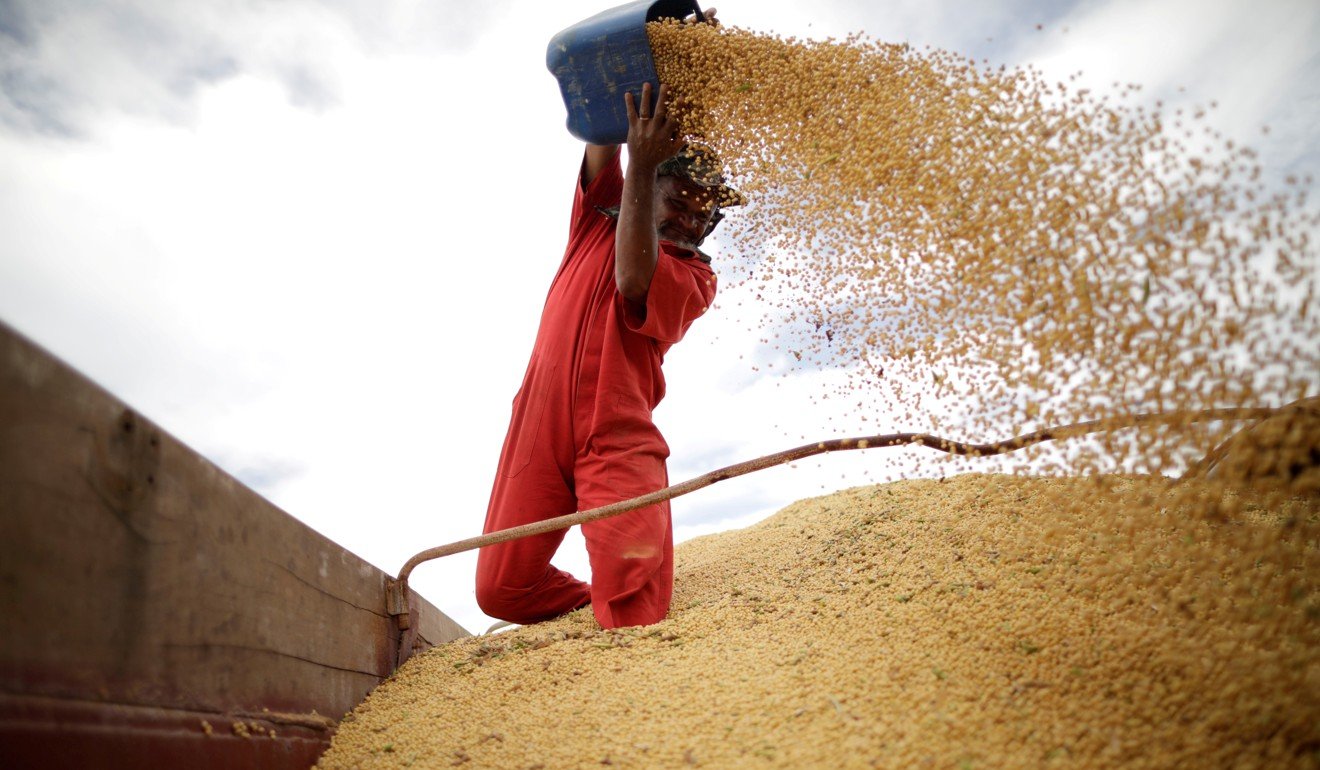
China has overtaken the US as Brazil’s largest trading partner, with Brazilian soybeans – one of the country’s biggest exports – and other agricultural products replacing American imports since the start of the US-China trade war a year ago.
Brazilian soybeans – one of the country’s biggest exports – and other farm products are being sold to China as a result of the trade war. Photo: Reuters

The growing importance of China to Brazil’s economy has created a difficult position for President Jair Bolsonaro, who accused Beijing of trying to buy Brazil during his election campaign, but changed tack on assuming office in January.

In March, Bolsonaro called China his country’s “main partner, politically as well as economically and commercially” and announced plans to travel to Beijing this year, a visit which was confirmed on Tuesday for late October.

China is now Latin America’s second largest trading partner with bilateral trade at US$307.4 billion, growing 18.9 per cent over the previous year, according to China’s ministry of commerce, in a relationship focused on commodity imports, including mining products like copper and energy, as well as soybeans and other agricultural goods.

While the US and China have tentatively agreed to resume talks in Shanghai next week, China and Latin American countries are likely to continue deepening their trade relations as production chains realign as a result of the trade war, according to Gustavo Oliveira, assistant professor of global and international studies at the University of California, Irvine.

“This means Chinese imports of Latin American agricultural and mineral commodities, and Latin American imports of Chinese manufactured products and hi-tech, might contribute to China’s ability to stand its ground against US pressure,” he said.

China in Latin America: partner or predator?
Oliveira said domestic contradictions in most Latin American countries complicated relations with China, as few leaders had the capacity to press or leverage China for much. “Unfortunately, therefore, most in this crop of Latin American leaders are basically placing themselves as junior partners or pawns in the geopolitical tug of war between the US and China.”
US Secretary of State Mike Pompeo put the pressure on Latin American countries over their relationship with China during his four-day tour of the region last weekend, when he visited Argentina, Ecuador, Mexico, and El Salvador.
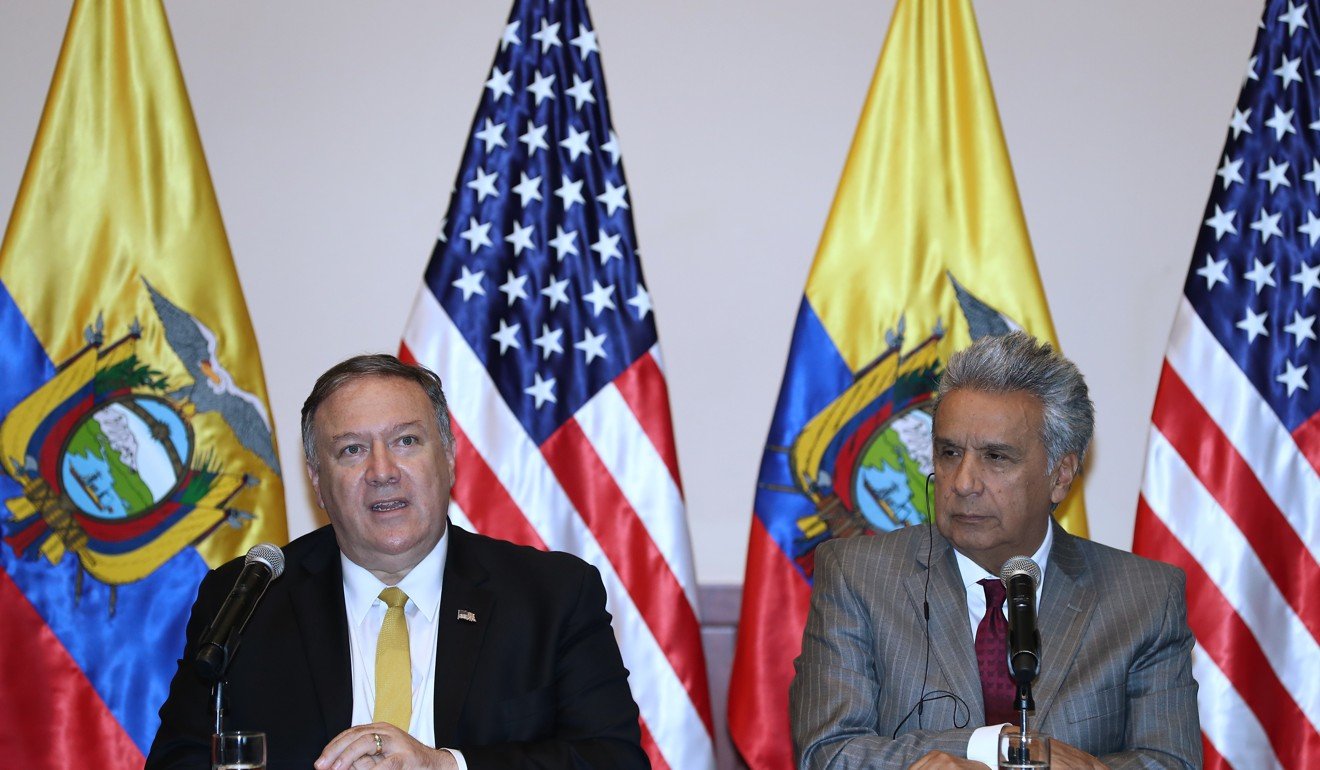
In a joint interview with Pompeo during the visit, Ecuador’s new President Lenin Moreno defended the country’s China ties, and urged Washington and Beijing to resolve their conflicts for the benefit of other nations in the region.
“We hope that the US and China, the greatest powers in the world now, will find agreement easily because, unfortunately, when the big ones are discussing or fighting and have conflicts, the ones that are paying for all of that are the smaller countries,” he said.
“Now, when two elephants fight, the ones who lose are the insects who are of course being crushed by the elephants in the attempt to evade them.”
US Secretary of State Mike Pompeo (left) and Ecuadorian President Lenin Moreno hold a joint press conference during Pompeo’s tour of Latin America on July 20. Photo: EPA-EFE

Pompeo blasted China’s role in the region during a previous tour of South America in April, when he singled out Beijing’s support for President Nicolas Maduro of Venezuela. Maduro is backed by Beijing, Russia and other allies, while the US and many European countries have supported opposition leader Juan Guaido as legitimate president since elections in January.

Speaking from Chile on that tour, Pompeo said Beijing’s calls for non-intervention in Venezuela were “hypocritical” and aimed at protecting Beijing’s investments in the country, as well as debts owed to China by Venezuela.

Pompeo also accused Beijing of “sowing discord” in the region through debt traps. “When China does business in places like Latin America, it often injects corrosive capital into the economic bloodstream, giving life to corruption and eroding good governance,” he said.

Professor Cui Shoujun of Renmin University in Beijing said Washington’s concerns about “debt trap diplomacy” in Latin America reflected concerns that China’s growing involvement in financing infrastructure and development projects would make the region more pro-China.

“China’s interests in Latin America go beyond raw materials extraction,” he said. “The biggest point of tension between the US and China in the region is perhaps that China presents an alternative model for development that is very different from the Western model.”

‘Mr Pompeo, you can stop’: China hits back over Latin America criticism

While the US was drumming up tensions about China across the world, Beijing was not openly retaliating but responding with investment and trade for global partners, said Kevin Gallagher, researcher on China-Latin America ties, and professor at Boston University.

“The US points fingers and makes angry speeches in the region as China cuts investment deals and helps address infrastructure needs,” he said.

“Latin American countries’ governments are rightly keeping their heads down on the broader geopolitical winds, and are getting down to business with their largest trading partner.”

Source: SCMP

24/05/2019

Chinese vice president holds talks with Brazilian vice president

CHINA-BEIJING-WANG QISHAN-BRAZIL-VP-TALKS-COSBAN-MEETING (CN)

Chinese Vice President Wang Qishan and Brazil’s Vice President Hamilton Mourao hold talks and co-chair the fifth meeting of the China-Brazil High-Level Coordination and Cooperation Committee (COSBAN) at the Great Hall of the People in Beijing, capital of China, May 23, 2019. (Xinhua/Zhang Ling)

BEIJING, May 23 (Xinhua) — Chinese vice president Wang Qishan on Thursday held talks with Brazil’s Vice President Hamilton Mourao in Beijing. They also co-chaired the fifth meeting of the China-Brazil High-Level Coordination and Cooperation Committee (COSBAN).

The Chinese-Brazilian ties have been developing steadily ever since the two countries established diplomatic ties 45 years ago, said Wang, adding that their bilateral relationship has become mature and stable relationship.

The two sides maintain close communication and coordination on major international and regional issues, and have effectively promoted the solidarity and cooperation between developing and emerging market countries, Wang said.

He noted that both sides are committed to promoting development through structural reforms and opening up, and said that China was ready to work with the Brazilian side to make good use of the COSBAN to jointly resist the uncertainty of the external environment, make greater contributions to the recovery of global economy, and create a new era of higher-level, broader areas and more dynamic bilateral relations.

Mourao said Brazil and China respected each other and shared profound traditional friendship. The Brazilian new government attaches great importance to the comprehensive strategic partnership with China and is willing to strengthen dialogue and cooperation between the two countries as well as to promote the integration of the Belt and Road Initiative with Brazil’s development strategy.

Brazil is willing to strengthen cooperation with China in the multilateral arena, maintain the stability of the international system, and make contributions to promote world peace and prosperity, he said.

The two sides agreed to strengthen exchanges and cooperation in various fields, promote trade facilitation, optimize trade structure and promote high-quality growth of bilateral trade, according to a news briefing.

The two sides attach great importance to dovetailing the Belt and Road Initiative with Brazil’s development strategy including the investment partnership projects.

The two sides agreed to continue to cooperate closely under multilateral organizations and frameworks such as the United Nations, the BRICS countries and the World Trade Organization (WTO), jointly maintain multilateralism and free trade, improve global economic governance, and safeguard the multilateral trading system with the WTO as the core to build an open world economy, said the news briefing.

Source: Xinhua

Law of Unintended Consequences

continuously updated blog about China & India

ChiaHou's Book Reviews

continuously updated blog about China & India

What's wrong with the world; and its economy

continuously updated blog about China & India