Chindia Alert: You’ll be Living in their World Very Soon
aims to alert you to the threats and opportunities that China and India present. China and India require serious attention; case of ‘hidden dragon and crouching tiger’.
Without this attention, governments, businesses and, indeed, individuals may find themselves at a great disadvantage sooner rather than later.
The POSTs (front webpages) are mainly 'cuttings' from reliable sources, updated continuously.
The PAGEs (see Tabs, above) attempt to make the information more meaningful by putting some structure to the information we have researched and assembled since 2006.
City at centre of outbreak finally able to declare itself clear of disease after months in lockdown and thousands of deaths
Risk of infection remains, however, with some patients testing positive for coronavirus that causes disease without showing symptoms
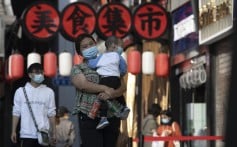
Ferries and other public transport services resumed in Wuhan last week. Photo: Xinhua
The city of Wuhan, the initial epicentre of the coronavirus pandemic, no longer has any Covid-19 patients in hospital after the last 12 were discharged on Sunday.
Their release ended a four-month nightmare for the city, where the disease was first detected in December. The number of patients being treated for Covid-19, the disease caused by a new coronavirus, peaked on February 18 at 38,020 – nearly 10,000 of whom were in severe or critical condition.
“With the joint efforts of Wuhan and the national medical aid given to Hubei province, all cases of Covid-19 in Wuhan were cleared as of April 26,” Mi Feng, a spokesman for the National Health Commission said on Sunday afternoon.
The announcement came only one day after the city discharged the last patient who had been in a severe condition. That patient also was the last severe case in Hubei province.
The last patient discharged from Wuhan Chest Hospital, a 77-year-old man surnamed Ding, twice tested negative for Sars-CoV-2, the virus that causes Covid-19, and was released at noon on Sunday.
“I missed my family so much!” Ding told Changjing Daily.
Another unidentified patient exclaimed as he left the hospital: “The air outside is so fresh! The weather is so good today!”
Wuhan faced a long journey to bring its patient count down to zero.
The city of 11 million, the capital of Hubei province and a transport hub for central China, was put under a strict lockdown on January 23 that barred anyone from entering or exiting the city without official approval for 76 days until it was officially lifted on April 8.
Coronavirus: Wuhan, Los Angeles officials discuss getting back to work after lockdown
22 Apr 2020
Residents were ordered to stay in their apartments as the city stopped public transport and banned private cars from city streets. As the epidemic worsened, more than 42,000 medical staff from across the country were sent to the city and to Hubei province to help ease the burden on the local health care system.
Wuhan was the hardest hit city in China, accounting for 50,333 of the 82,827 locally transmitted Covid-19 cases recorded in China. More than 4,600 died in the country from the disease.
On March 13, the city reported for the first time that there were no new suspected cases of the infection, and five days later there were no confirmed cases.
The number of discharged patients bottomed out at 39.1 per cent at the end of February, gradually climbing to 92.2 per cent by last Thursday.
“Having the patients in the hospital cleared on April 26 marks a major achievement for the city’s Covid-19 treatment,” the Wuhan Health Commission said in a statement.
However, having no severe cases in hospital does not mean all the discharged patients will require no further treatment as they may still need further care.
“Clearing all the severe cases marks a decisive victory for the battle to safeguard Wuhan,” health minister Ma Xiaowei told state broadcaster China Central Television on Saturday.
“Some patients who have other conditions are being treated in specialised hospitals. It has been properly arranged.”
Coronavirus: Chinese writer hit by nationalist backlash over diary about Wuhan lockdown
18 Apr 2020
Ten patients aged between 42 and 85 who have been declared coronavirus-free are still in intensive care at the city’s Tongji Hospital where they are being treated for kidney problems and other complications arising from Covid-19. Some still need ventilators to help them breathe.
These 10 patients are under 24-hour care, with 190 nurses on four-hour rotations. There are other patients in a similar condition in two other hospitals in Wuhan, according to the Hubei Broadcasting and Television Network.
However, the discharge of the last batch of Covid-19 patients does not mean that the risk of infection is gone.
The city reported 20 new cases of people testing positive for Sars-CoV-2, the official name for the coronavirus that causes the disease, but who do not yet show symptoms.
There are 535 such carriers under medical observation. Past data shows some of these asymptomatic carriers will develop symptoms, and so will be counted as Covid-19 patients under China’s diagnosis and treatment plan.
China’s coronavirus infection curve has flattened out with about 694 imported cases of Covid-19 on top of about 800 locally transmitted ones now under treatment.
The national health commission spokesman warned that people still need to be on high alert as the virus is continuing to spread around the globe, with no sign yet of a slowdown.
“[We] must not drop our guard and loosen up. [We] must discover cases in time and deal with them quickly,” Mi said, citing the continued pressure from cases imported by people returning from overseas.
“The next step will be to implement the requirements of the central government and continue to guard against imported cases and a rebound of domestic transmitted cases.”
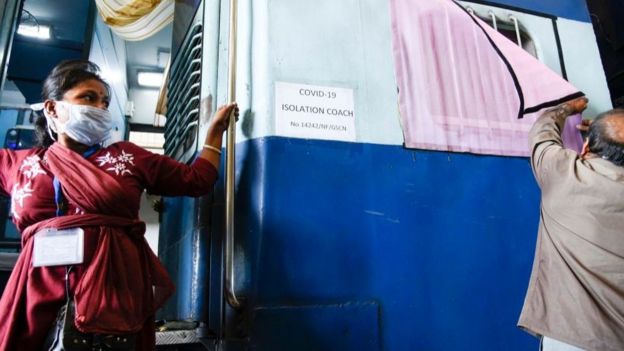
Image copyright GETTY IMAGESImage caption India’s railways are hoping to ease the burden on hospitals
India is preparing for a potential surge in Covid-19 patients by tapping into an unusual resource: its trains, which power the world’s fourth biggest rail network.
The country suspended its passenger trains for the first time after it announced a three-week lockdown on 25 March to contain the coronavirus. As of Wednesday, it had reported 4,643 active cases and 149 deaths, and the numbers are rapidly increasing.
“We, at the railways, thought: how can we contribute?” its spokesman, Rajesh Bajpai, told the BBC. “So we came up with this idea and everyone liked it.”
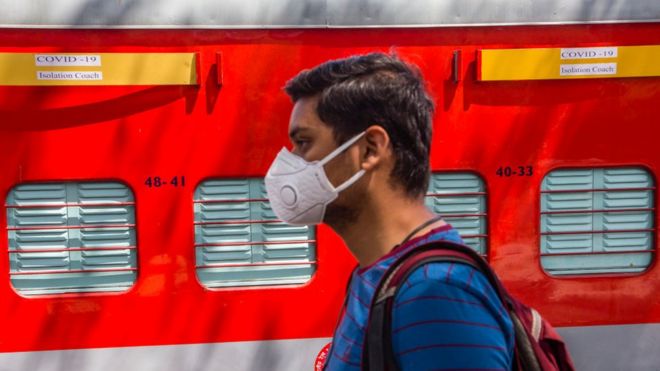
Work has already begun to convert 5,000 train coaches into quarantine or isolation wards, which amounts to 40,000 beds. And the railway ministry says it’s prepared to convert 15,000 more coaches.
The Indian railways – as the ministry is known – is a behemoth. Largely constructed during British rule, it’s still the mainstay of India’s public transport, and includes some of the world’s busiest urban rail systems. It transports 23 million passengers a day and its 12,000 trains crisscross 65,000km (40,389 miles) of tracks, connecting the remotest parts of India.
Mr Bajpai says the coaches can be spared as they are mostly trying to convert older ones, and passengers will be fewer than ever in the coming months even if restrictions are eased.
He adds that this is not unusual for the railways, which already runs several “special” trains, from luxury trains to exhibition trains to a hospital train, complete with operation theatres.
“The coach is a shell and inside, you can provide anything – a drawing room, a dining room, a kitchen, a hospital.”
A looming crisis?
And India may well need the extra beds.
States have already turned all sorts of spaces – sports centres, stadiums, wedding venues, hotels, resorts – into quarantine or isolation centres. But officials fear they will run out of space as the country ramps up testing.
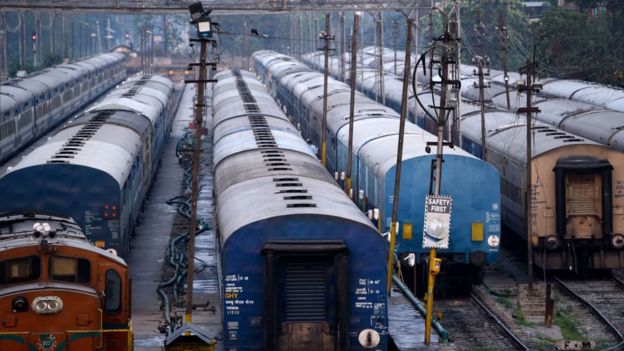
Image copyright GETTY IMAGESImage caption India suspended all passenger trains last month
For every person who tests positive, there are scores more who need to be traced, quarantined and, if necessary, isolated. But isolation at home is not always an option in India’s joint family households – and especially not in its densely-populated slums.
“There are so many options available and this [the coaches] is one of the options,” Mr Bajpai says.
He doesn’t foresee them being used until beds in existing quarantine or isolation centres are filled. But, he adds, they will keep them ready with the necessary facilities.
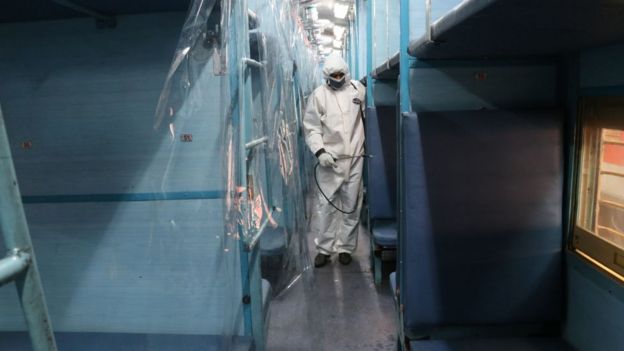
That includes converting one of the two toilets in each coach into a “bathing room”, providing oxygen cylinders in every coach, and modifying all the cabins so they can hold medical equipment. And then there are measures that are specific to Covid-19 – such as replacing taps that turn with those that have long handles, and fitting dustbins with foot pedals.
Image copyright GETTY IMAGESImage caption It takes up to three days to turn a coach into an isolation ward
The ministry has also ordered extra coat hooks and mosquito nets for every cabin, and has instructed officials to make sure that charging points are working, the upholstery “is in good condition” and “broken panels are replaced”.
The coaches are being readied in 130 different locations across the country, but it’s yet to be decided where they will be stationed.
Mr Bajpai says it’s up to states to decide which stations they want the coaches in. But that in itself is a process because the coaches need regular water and electric supply.
And there are other concerns too. Summer has begun and large parts of India record scorching temperatures, often more than 40C. And the coaches that are being converted are not air-conditioned.
“The patient will be very uncomfortable. Doctors and nurses will be wearing protective gear, and they will find it very difficult,” says Vivek Sahai, a former chairman of the railway board.
Image copyright GETTY IMAGESImage caption Staff member of Northeast Frontier Railway (NFR) prepare train coaches to convert them into isolation wards for COVID-19 patients.
He also says not everyone might be comfortable squatting to use Indian-style toilets; and he wonders if all the designated coaches have a proper system of waste management. (Indian coaches are designed to dispose of human waste onto the tracks although new technologies have begun to be adopted in recent years.)
“I am not saying it cannot be done but they have to take care of these things,” he says. “But if anybody can do it, it’s the railways.”
However, some experts say that this by itself is not going to help solve India’s problems.
“You don’t just need space,” says Dr Sumit Sengupta, a pulmonologist. “We need thousands of doctors and nurses if you really have to make a dent.”
India is severely short of both, and at least three hospitals have been sealed this week alone after members of the staff tested positive.
Media caption As cases of coronavirus rise and the virus hits India’s congested slums, will the country cope?
“Why isolate someone who has symptoms when there is no treatment? Because you don’t want them to spread the infection,” Dr Sengupta says.
But, he adds, the virus is spreading anyway because so many patients are asymptomatic. He says isolating symptomatic patients will not help unless India starts testing aggressively.
“This will work only as part of a larger strategy,” he adds. “Test, trace and isolate. Test should come first.”
Millions of Chinese children are raised by their grandparents but some seniors are demanding compensation
For generations in China grandparents have provided childcare, but some are no longer willing to do so for free. Photo: Shutterstock
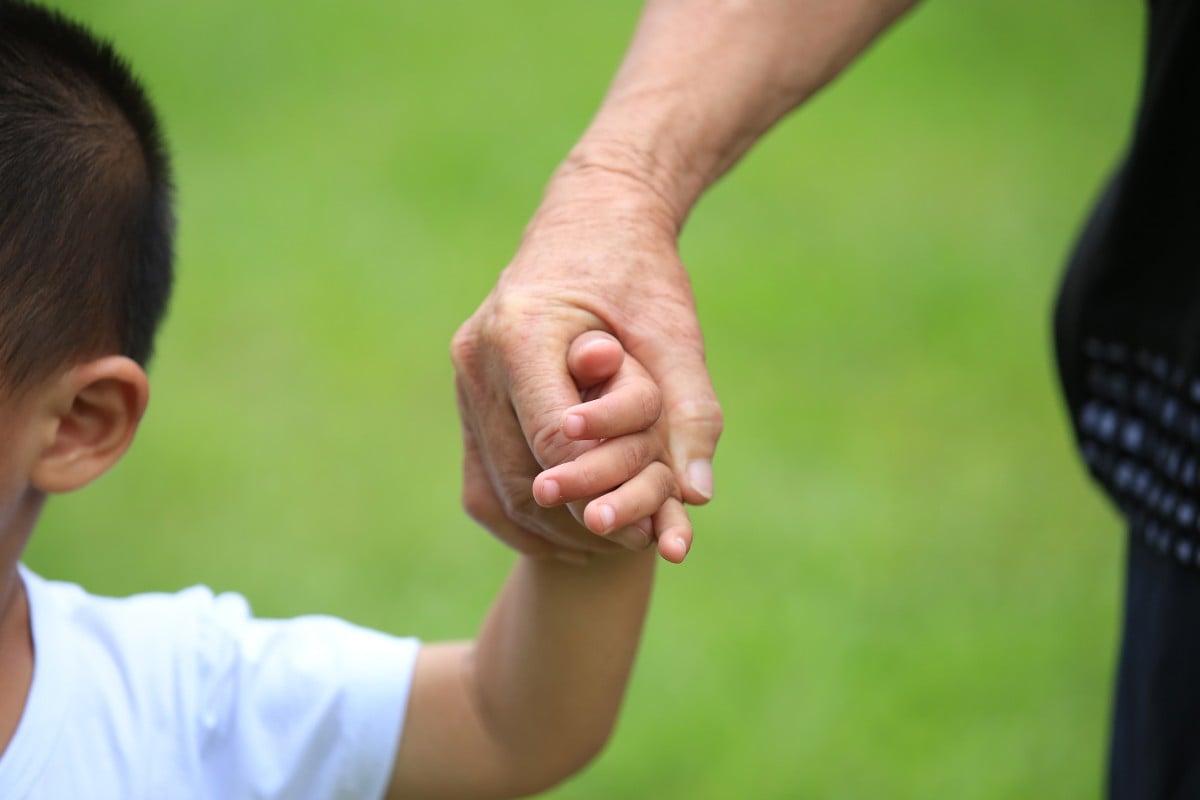
The traditional role of grandparents in caring for China’s children has been called into question with two recent lawsuits sparking debate about whether seniors should be paid for their efforts.
Two grandmothers took their demands for compensation to court in separate cases which have highlighted the reliance of Chinese workers on their parents to provide childcare while they pursue professional advancement.
A woman in Mianyang, in the southwestern province of Sichuan, was awarded more than 68,000 yuan (US$9,500) by a local court after she sued her son and daughter-in-law for the costs of raising her nine-year-old grandchild, according to Red Star News.
The woman, identified only by her surname Wang, had been the child’s full-time carer for eight years after his parents left home to seek better-paid jobs elsewhere. Wang said she had taken care of most of her grandson’s living expenses and had decided to seek compensation when his parents said they were considering a divorce.
They should respect our contribution. Grandmother Wang, Sichuan province
“I only want to let them know through this lawsuit that it’s their obligation to raise their children,” she was reported as saying. “The young ones should not take it for granted that old people ought to look after their grandchildren. They should respect our contribution.”
Despite winning the case, she has not received a penny and the boy still lives with her.
In another case, three months ago, a Beijing court supported a woman’s demand for compensation for helping to raise her granddaughter since her birth in 2002.
The stories of the two women generated a public reflection on the Chinese way of childcare which, for generations, has involved leaving most – if not all – of the burden on grandparents.
One of 60 million: life as a ‘left-behind’ child in China
From a cultural perspective, it has been a matter of course in a country with a long history of several generations living under one roof, for grandparents to participate in child rearing, according to Xu Anqi, a researcher specialising in family studies at the Shanghai Academy of Social Sciences.
“Today, as people face fierce competition and great pressure from work, it’s still common to rely on their old parents to look after their children,” she said.
While rapid urbanisation in recent decades has broken up multi-generational households, Chinese elderly still take an active role in child rearing, with many relocating to their children’s cities to take on the job.
Millions more families do it the other way round – with parents leaving children in their hometown with the grandparents while they seek better paying jobs in the cities. In August last year, according to the Ministry of Civil Affairs, China had nearly 7 million “left behind kids”, as they are known.
My little granddaughter is adorable, and generally I enjoy doing all this.Li Xiujuan, grandmother
“Many grandmothers like me would joke that we are ‘unpaid nannies’, but at the same time we feel it’s our responsibility to help them out – they would be in financial stress if one of them quit or they hired a nanny,” said Li Xiujuan, who relocated from her hometown in the central province of Henan to Shanghai two years ago to help look after her granddaughter.
“I’m a 24-hour nanny for my grandkid. I prepare food for her, wash her clothes, attend early childhood classes with her, take her for a walk in the park twice a day, sleep beside her at noon and night …” she said.
“I never cared for my daughter when she was little like I do her daughter now. You know, it was also her grandmother who mainly took care of her daily life when she was young,” Li said, laughing.
“My little granddaughter is adorable, and generally I enjoy doing all this. The hard part is that I miss my friends and relatives back home. We don’t have friends here. I have plenty of things to do at home, but here, nothing but babysitting. People are polite, but it’s difficult to make new friends,” she said.
‘Left behind’ sisters cry when parents leave home to go to work
In a 2017 study of about 3,600 households in six major cities including Beijing and Guangzhou, the Chinese Society of Education found almost 80 per cent of surveyed households had at least one grandparent as carer before children began primary school.
The study also showed that 60 per cent of parents still relied on help from grandparents after children were old enough for primary school at the age of six.
Whether grandparents should be compensated for their efforts split a poll of 49,000 users conducted by social media platform Weibo in late June, with half believing that the older generation should be paid for raising their grandchildren. Only 2.3 per cent said babysitting grandchildren was “an unalterable principle” for the elderly.
“This arrangement could be well managed and improve blood ties if children reward the elderly in their own ways, such as sending gifts on holidays and taking them on trips,” Shanghai researcher Xu said.
I think what they need more is words of appreciation, which many of us have neglected. David Dai, Beijing parent
Grandmother Li agreed: “I think regular payment is a little awkward, but I do expect some kind of reward, like cash gifts on festivals and daily necessities as presents.”
David Dai, a 30-year-old white collar worker in Beijing, said how to reward grandparents for their contribution depended on the financial situation of each household.
“My parents are farmers – they are in good shape and not so old – in their late 50s, and if they didn’t come all the way from my hometown in Anhui to Beijing to look after my son, they would still be taking some odd jobs,” he said.
“Therefore, besides covering their living costs at my place, I give them cash gifts on their birthdays, the Spring Festival and other important occasions, because babysitting their grandchild means they lose the opportunity to work,” he added.
“In some families, the grandparents might have retired and have a good pension. They don’t lack money and enjoy spending time with their grandkids. I don’t think they need to be paid. I think what they need more is words of appreciation, which many of us have neglected,” Dai said.
China boosts childcare and maternal health services in bid to lift birth rate
But for those who never show any gratitude, their parents have every reason not to offer child rearing help or to demand payment, Xu said.
Zhang Tao, a lawyer at the Hiways Law Firm in Shanghai, noted that as long as at least one parent of a child was living, the grandparents had no obligation to help with childcare.
“The grandparents should be compensated for the money they have paid for the child’s education, medical fees, and accommodation from the beneficiary,” he said.
But whether they should be paid has become the latest controversy as more grandparents find it a burden.





 CHINDIA ALERT: You'll be living in their world, very soon