25/04/2020
- But trade with partner countries might not be as badly affected as with countries elsewhere in the world, observers say
- China’s trade with belt and road countries rose by 3.2 per cent in the January-March period, but second-quarter results will depend on how well they manage to contain the pathogen, academic says
China’s investment in foreign infrastructure as part of its Belt and Road Initiative has been curtailed because of the coronavirus pandemic. Photo: Xinhua
The
coronavirus pandemic is set to cause a slump in Chinese investment in its signature
and a dip in trade with partner countries that could take a year to overcome, analysts say.
But the impact of the health crisis on China’s economic relations with nations involved in the ambitious infrastructure development programme might not be as great as on those that are not.
China’s total foreign trade in the first quarter of 2020 fell by 6.4 per cent year on year, according to official figures from Beijing.
Trade with the United States, Europe and Japan all dropped in the period, by 18.3, 10.4 and 8.1 per cent, respectively, the commerce ministry said.
By comparison, China’s trade with belt and road countries increased by 3.2 per cent in the first quarter, although the growth figure was lower than the 10.8 per cent reported for the whole of 2019.
China’s trade with 56 belt and road countries – located across Africa, Asia,
Europe and South America – accounts for about 30 per cent of its total annual volume, according to the commerce ministry.
Despite the first-quarter growth, Tong Jiadong, a professor of international trade at Nankai University in Tianjin, said he expected China’s trade with belt and road countries to fall by between 2 and 5 per cent this year.
His predictions are less gloomy than the 13 to 32 per cent contraction in global trade forecast for this year by the
World Trade Organisation.
“A drop in [China’s total] first-quarter trade was inevitable but it slowly started to recover as it resumed production, especially with Southeast Asian, Eastern European and Arab countries,” Tong said.
“The second quarter will really depend on how the epidemic is contained in belt and road countries.”
Nick Marro, Hong Kong-based head of global trade at the Economist Intelligence Unit, said he expected China’s total overseas direct investment to fall by about 30 per cent this year, which would be bad news for the belt and road plan.
“This will derive from a combination of growing domestic stress in China, enhanced regulatory scrutiny over Chinese investment in major international markets, and weakened global economic prospects that will naturally depress investment demand,” he said.
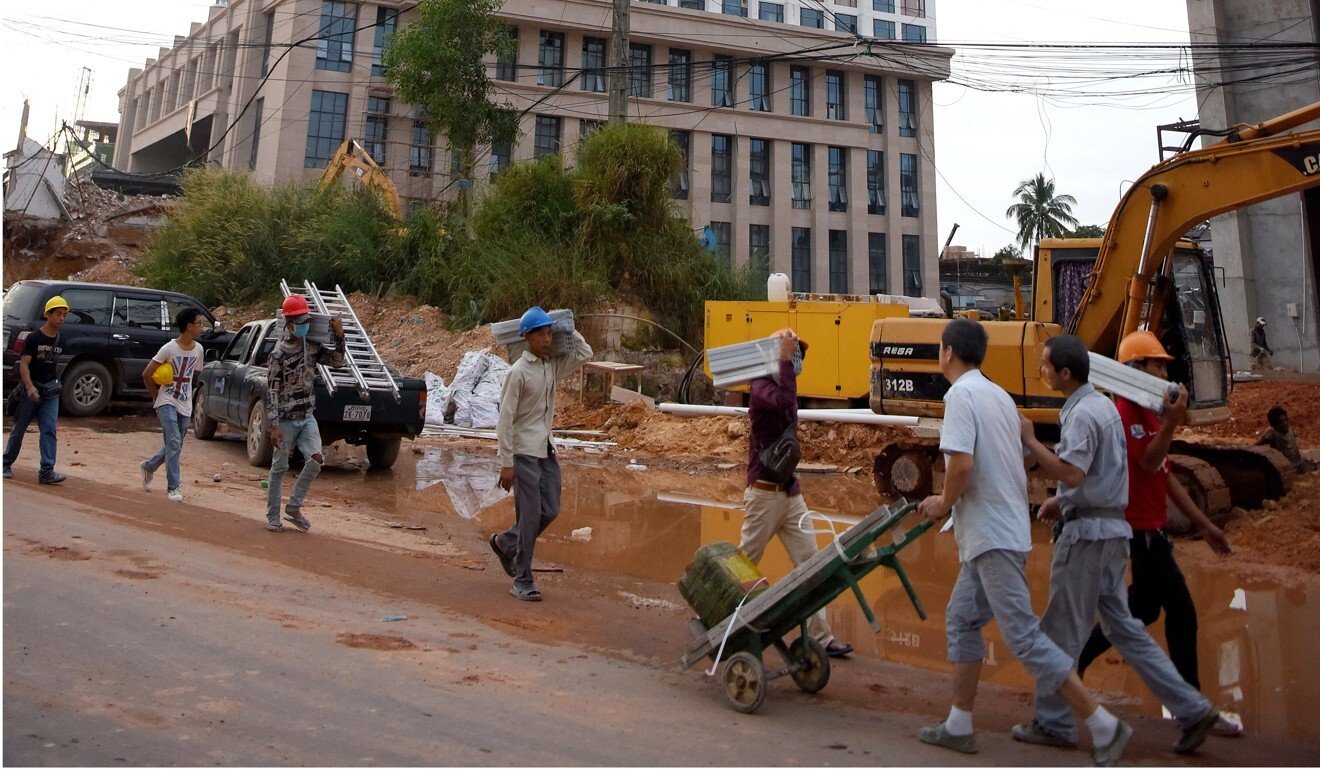
The development of the Chinese built and operated special economic zone in the Cambodian town of Sihanoukville is reported to have slowed, while infrastructure projects in Bangladesh, including the Payra coal-fired power plant, have been put on hold.
The development of the Chinese built and operated special economic zone in the Cambodian town of Sihanoukville is reported to have slowed. Photo: AFP
Marro said the reduction of capital and labour from China might complicate other projects for key belt and road partner, like Pakistan, which is home to infrastructure projects worth tens of billions of US dollars, and funded and built in large part by China.
“Pakistan looks concerning, particularly in terms of how we’ve assessed its sovereign and currency risk,” Marro said.
“Public debt is high compared to other emerging markets, while the coronavirus will push the budget deficit to expand to 10 per cent of GDP [gross domestic product] this year.”
Last week, Pakistan asked China for a 10-year extension to the repayment period on US$30 billion worth of loans used to fund the development of infrastructure projects, according to a report by local newspaper Dawn.
China’s overseas investment has been falling steadily from its peak in 2016, mostly as a result of Beijing’s curbs on capital outflows.
Last year, the direct investment by Chinese companies and organisations other than banks in belt and road countries fell 3.8 per cent from 2018 to US$15 billion, with most of the money going to South and Southeast Asian countries, including Singapore, Vietnam, Indonesia and Pakistan.
Tong said the pandemic had made Chinese investors nervous about putting their money in countries where disease control measures were becoming increasingly stringent, but added that the pause in activity would give all parties time to regroup.
“Investment in the second quarter will decline and allow time for the questions to be answered,” he said.
“Past experience along the belt and road has taught many lessons to both China and its partners, and forced them to think calmly about their own interests. The epidemic provides both parties with a good time for this.”
Dr Frans-Paul van der Putten, a senior research fellow at Clingendael Institute in the Netherlands, said China’s post-pandemic strategy for the
belt and road in Europe
might include a shift away from investing in high-profile infrastructure projects like ports and airports.
Investors might instead cooperate with transport and logistics providers rather than invest directly, he said.
“Even though in the coming years the amount of money China loans and invests abroad may be lower than in the peak years around 2015-16, I expect it to maintain the belt and road plan as its overall strategic framework for its foreign economic relations,” he said.
Source: SCMP
Posted in 10-year, 2018, 2019, 2020, 30, academic, according, accounts, across, activity, africa, airports, allow, ambitious, analysts, annual volume, answered, Arab countries, Asia, bad news, Bangladesh, because, Beijing, Belt and Road Initiative, belt and road plan, billion, billions, budget deficit, Cambodian, capital, capital outflows, cause, China, China’s, Chinese, Clingendael Institute, combination, Commerce Ministry, compared, comparison, complicate, contained, contraction, cooperate, coronavirus, Coronavirus pandemic, countries, curbs, Currency, curtailed, Dawn, decline, demand, depend, depress, derive, development, dip, direct investment, disease control measures, domestic stress, dropped, Eastern European, economic prospects, economic relations, Economist Intelligence Unit, elsewhere, Emerging markets, enhanced, epidemic, especially, Europe, extension, fall, falling, Fell, figure, first-quarter, forecast, foreign, foreign trade, GDP [gross domestic product], global trade, gloomy, great, growth, health crisis, high, impact, increased, increasingly, Indonesia, inevitable, Infrastructure, infrastructure projects, international markets, International trade, Investment, investors, involved, January, Japan, Labour, last week, loans, local newspaper, located, logistics, lower, Major, manage, March, might not, nations, naturally, nervous, Netherlands, observers, official figures, on hold, other, overall strategic framework, overcome, overseas, Pakistan, pandemic, parties, partner, pathogen, pause, Payra coal-fired power plant,, per cent, Period, ports, predictions, production, professor, programme, providers, Public debt, put, questions, recover, reduction, regroup, regulatory scrutiny, repayment, reported, results, resumed, Risk, second-quarter, signature, Singapore, slowed, slower, slump, South, South America, Southeast Asian, sovereign, special economic zone, stringent, take, this year, Tianjin, time, Total, town, Trade, Transport, Uncategorized, United States, US dollars, US$30, Vietnam, weakened, while, World, world trade organisation, worth, year, year-on-year |
Leave a Comment »
31/07/2019
- China’s Wang Yi and US’ Mike Pompeo at summit in Thailand to sell their visions of future for Southeast Asia
- Analysts expect pragmatism from Asean as world’s two biggest economic powers play diplomatic game
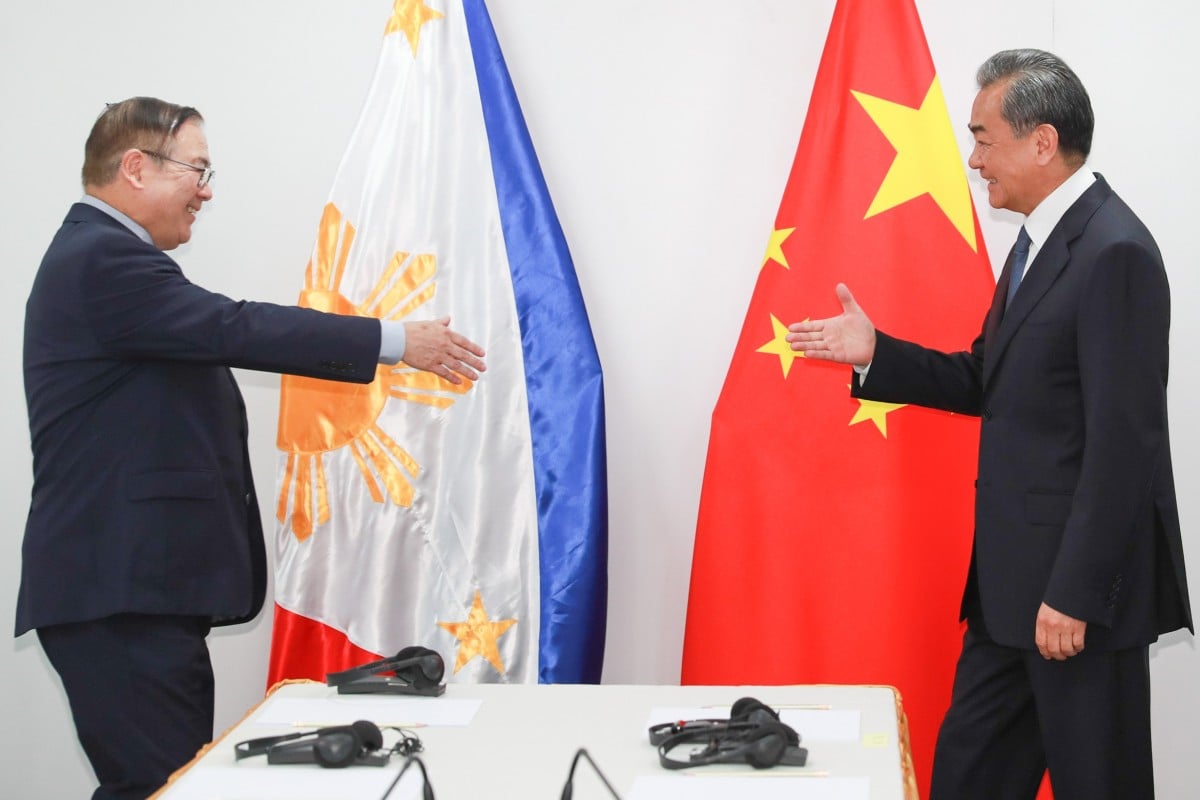
Chinese Foreign Minister Wang Yi (right) greets his Philippine counterpart Teodoro Locsin at the Asean meeting in Bangkok, Thailand. Photo: Xinhua
China and the United States are on a mission to strengthen ties with allies and expand their influence in Southeast Asia this week as their trade war enters a second year.
US Secretary of State Mike Pompeo arrived for a meeting of the Association of Southeast Asian Nations (Asean) in Bangkok on Wednesday to promote the US-led Indo-Pacific strategy, while Chinese Foreign Minister Wang Yi touched down a day earlier to advance Beijing’s Belt and Road Initiative.
The US Department of State said Pompeo’s trip was aimed at deepening Washington’s “long-standing alliances and vibrant bilateral relations with these countries, and [to] reaffirm our commitment to Asean, which is central to our vision for the Indo-Pacific region”.
In Beijing on Wednesday, Chinese foreign ministry spokeswoman Hua Chunying said that while their meeting was yet to be set, Wang and Pompeo were expected to meet and talk “frankly” about bilateral relations.
“I think that it is indeed necessary for China and the United States to maintain communication, as the two countries face many situations,” Hua said. “The issues would be communicated frankly”.
The Indo-Pacific strategy is a military and economic framework to contain China’s expansion into the Pacific and Indian oceans, and give an alternative to Beijing’s flagship belt and road development programme.
En route to Thailand, Pompeo said that after a stalled start to US Indo-Pacific policy during the Barack Obama administration, Washington’s strategy was well on its way to bearing fruit for the US and its allies.
South China Sea tensions, US-China trade war loom over Asean summit
“We have watched these coalitions build out,” he said.
Pompeo dismissed claims that China’s sphere of influence among Asean members was growing, saying such speculation was “not factually accurate”.
“[Asean countries] are looking for partners that are going to help them build out their economies and to take good care of their people,” he said, pledging greater engagement from President Donald Trump’s administration.
Pompeo was expected to sit down on Friday with his South Korean and Japanese counterparts to consolidate their trilateral alliance in the region.
He was also expected to hold talks with Thai Foreign Minister Don Pramudwinai that day.
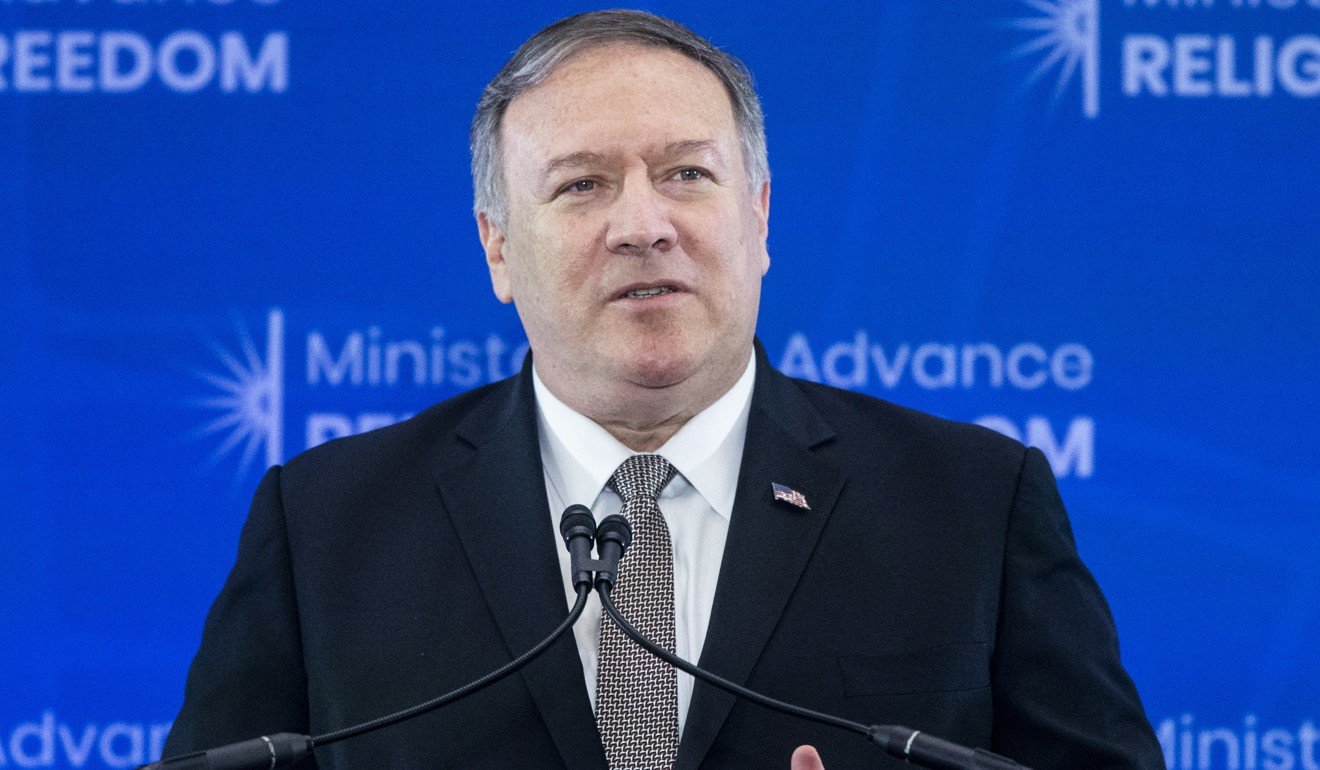
US Secretary of State Mike Pompeo is expected to meet Chinese Foreign Minister Wang Yi at Asean in Thailand. Photo: EPA-EFE
Meanwhile, Wang launched his belt and road pitch to his Cambodian, Philippine and Indonesian counterparts after he arrived in Thailand for the gathering, which ends on Saturday.
The belt and road projects are largely commercial and aimed at strengthening land and sea infrastructure linking Asia, Europe and Africa. But they raised suspicion in the West that they are aimed at eroding the US-led world order.
During his meeting with Philippine Foreign Affairs Secretary Teodoro Locsin, Wang said: “China is willing to have high-level exchanges with the Philippines, to deepen the mutual trust, and promote the Belt and Road Initiative [in the Philippines] … to accelerate the development of regional infrastructure.”
Can China’s trade boost with Asean help get the Regional Comprehensive Economic Partnership over the line?
This year’s Asean forum was taking place as countries were more receptive to Chinese initiatives, in part due to the unpredictability of the US administration, according to Rajeev Ranjan Charturvedy, a visiting fellow at the S. Rajaratnam School of International Studies at Nanyang Technological University in Singapore.
“Policy uncertainties under the Trump administration have already pushed some Asean countries towards China in ways that would have seemed unlikely a few years ago,” Charturvedy said.
Analysts said Trump’s “America first” approach shaped his Asean policy. The president had vowed to apply “punishments” to countries – including Asean member states – for contributing to the US trade deficit.
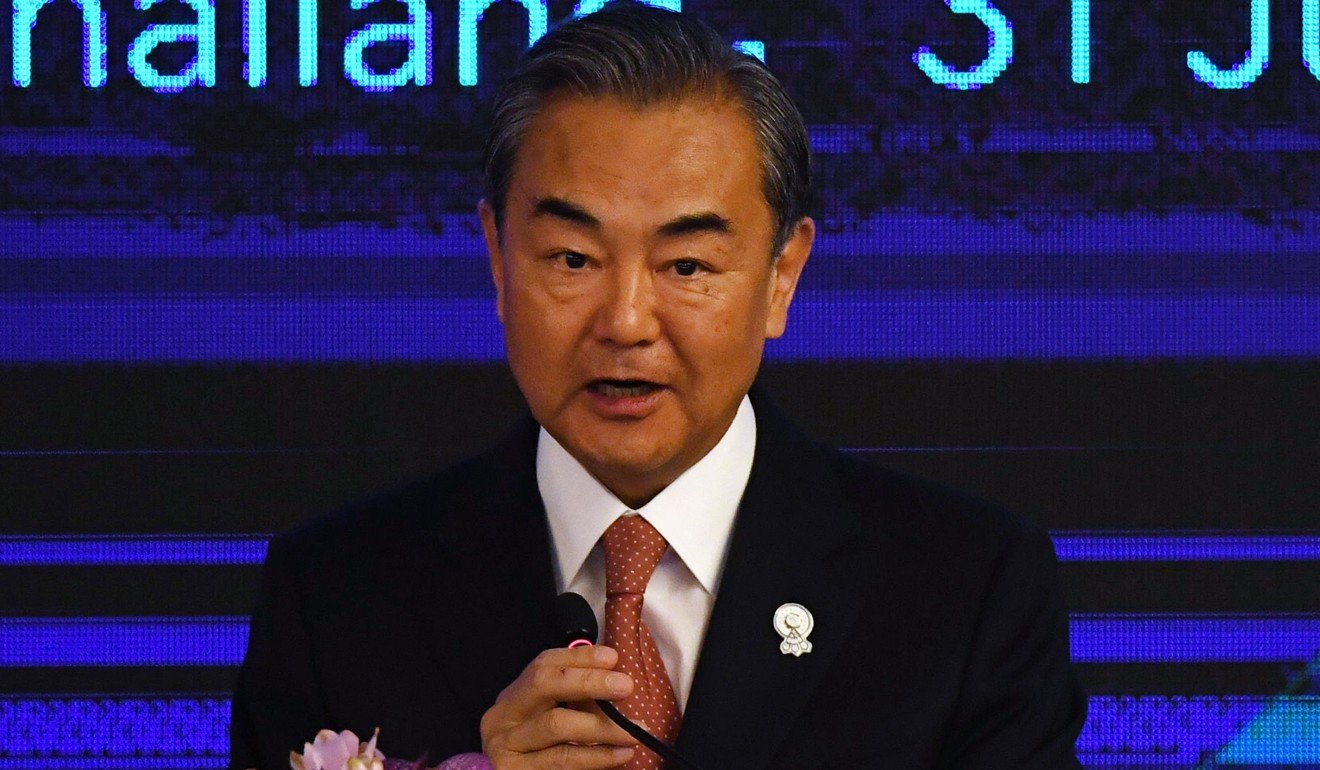
Chinese Foreign Minister Wang Yi is talking to Asean counterparts at a time when they are receptive to China’s proposals, an analyst says. Photo: AFP
Trump was absent at the Asean summit in Singapore last year, leading to concerns that Washington’s commitment to Asia was declining.
Charturvedy said the Asean forum’s focus was about building constructive regionalism, but China’s attitudes to security could pose a challenge.
“[However] Asean countries clearly hope not to be forced to choose between the US and Chinese offers. Rather, they would like more freedom of choice while accommodating for a larger role for China in the region,” he said.
Clarita Carlos, a professor of political science at the University of the Philippines, suggested that Asean members would be pragmatic during the forum.
Robert Lighthizer warns Vietnam over trade deficit with US
They would try to find their own balance between the two major powers – as countries rather than a bloc – to try to maximise each state’s interests and advantages, Carlos said.
“Vietnam has a love-hate relationship with China, especially as a winner in the ongoing US-China trade war,” she said. “Singapore has close relations with China. There are also ups and downs in the relationship with China for Brunei, Malaysia and Indonesia.”
Source: SCMP
Posted in africa, Asia, Association of Southeast Asian Nations (ASEAN), Bangkok, Barack Obama administration, Beijing, belt and road development programme, Belt and Road Initiative (BRI), belt and road projects, Brunei, Cambodian, China alert, China court Asean members, Chinese foreign minister Wang Yi, diplomatic game, Don Pramudwinai, enters second year, Europe, Indo-Pacific strategy, Indonesia, Indonesian, land infrastructure, Malaysia, Mike Pompeo, Philippine, Philippine Foreign Affairs Secretary, pragmatism, President Donald Trump, Regional Comprehensive Economic Partnership, Regional Comprehensive Economic Partnership (RCEP), S. Rajaratnam School of International Studies, sea infrastructure, Singapore, Singapore’s Nanyang Technological University, Southeast Asia, strengthen Indo-Pacific ties, summit, Teodoro Locsin, Thai Foreign Minister, Thailand, trade war, Trump administration, Uncategorized, United States, University of the Philippines, US court Asean members, visions of future, Washington |
Leave a Comment »
04/06/2019
- Brahma Chellaney writes that excessive damming and drastic overuse of water resources are causing the world’s major waterways to run dry
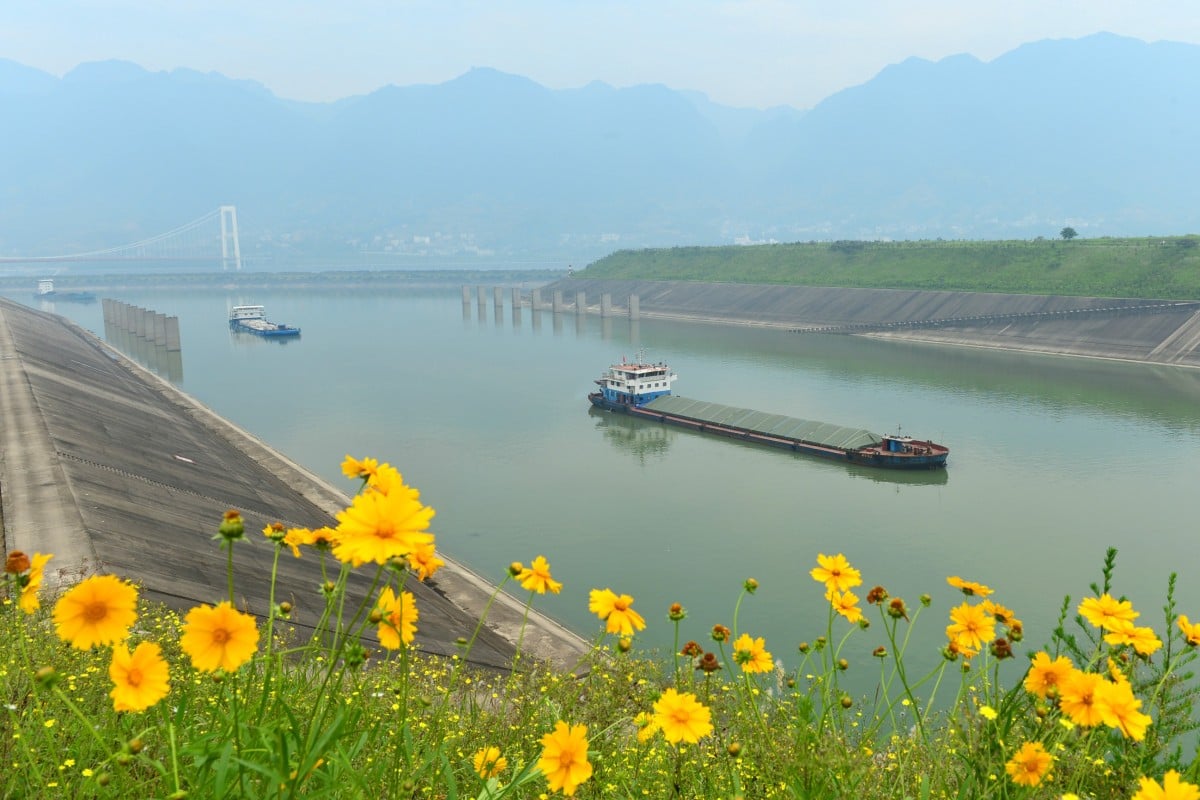
Vessels head for the lock of the Three Gorges Dam in Yichang, in central China’s Hubei province. Sediment build-up in the dam’s reservoir stems from silt flow disruption in the Yangtze River, Brahma Chellaney writes. Photo: Xinhua
Thanks to excessive damming and drastic overuse of water resources, an increasing number of major rivers across the world are drying up before reaching the sea.
Nowhere is this more evident than in China, where the old saying, “Follow the river and it will eventually lead you to a sea,” is no longer wholly true.
While a number of smaller rivers in China have simply disappeared, the Yellow River – the cradle of the Chinese civilisation – now tends to run dry before reaching the sea.
This has prompted Chinese scientists to embark on a controversial rainmaking project to help increase the Yellow’s flow. By sucking moisture from the air, however, the project could potentially affect monsoon rains elsewhere.
For large sections of the world’s population, major river systems serve as lifelines. The rivers not only supply the most essential of all natural resources – water – but also sustain biodiversity, which in turn supports human beings.
Yet an increasing number of rivers, not just in China, are drying up before reaching the sea.
A major new United Nations study published early this month offers grim conclusions: human actions are irremediably altering rivers and other ecosystems and driving increasing numbers of plant and animal species to extinction.
“Nature across the globe has now been significantly altered,” according to the study’s summary of findings.
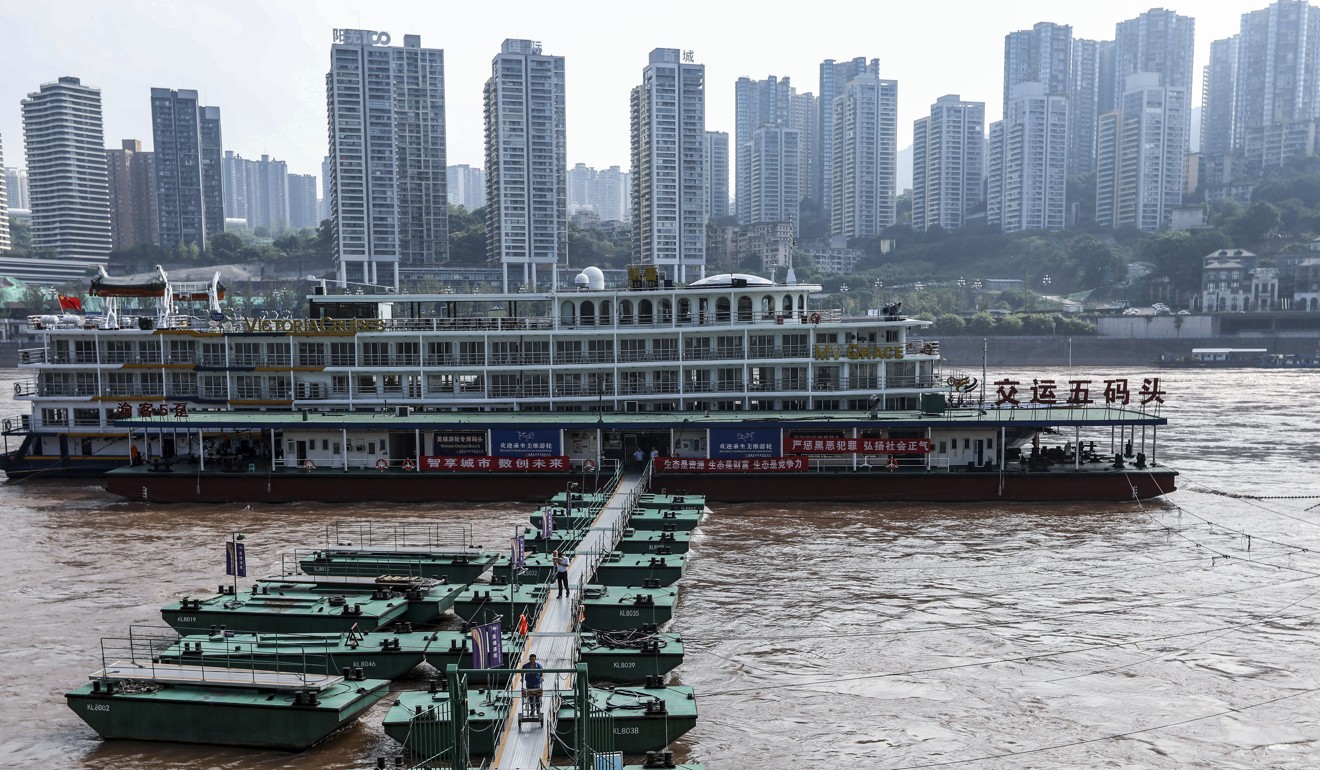
The Yangtze and Jialing rivers come together in the southwestern city of Chongqing. Photo: Simon Song
Water sustains life and livelihoods and enables economic development.
If the world is to avert a thirsty future and contain the risks of greater intrastate and interstate water conflict, it must protect freshwater ecosystems, which harbour the greatest concentration of species.
The Mekong is mighty no more: book charts river’s demise
Yet, according to another study published in Nature this month humans have modified the flows of most long rivers, other than those found in the remote regions of the
Amazon and Congo basins and the Arctic.
Consequently, only a little more than one-third of the world’s 246 long rivers are still free-flowing, meaning they remain free from dams, levees and other man-made water-diversion structures that leave them increasingly fragmented.
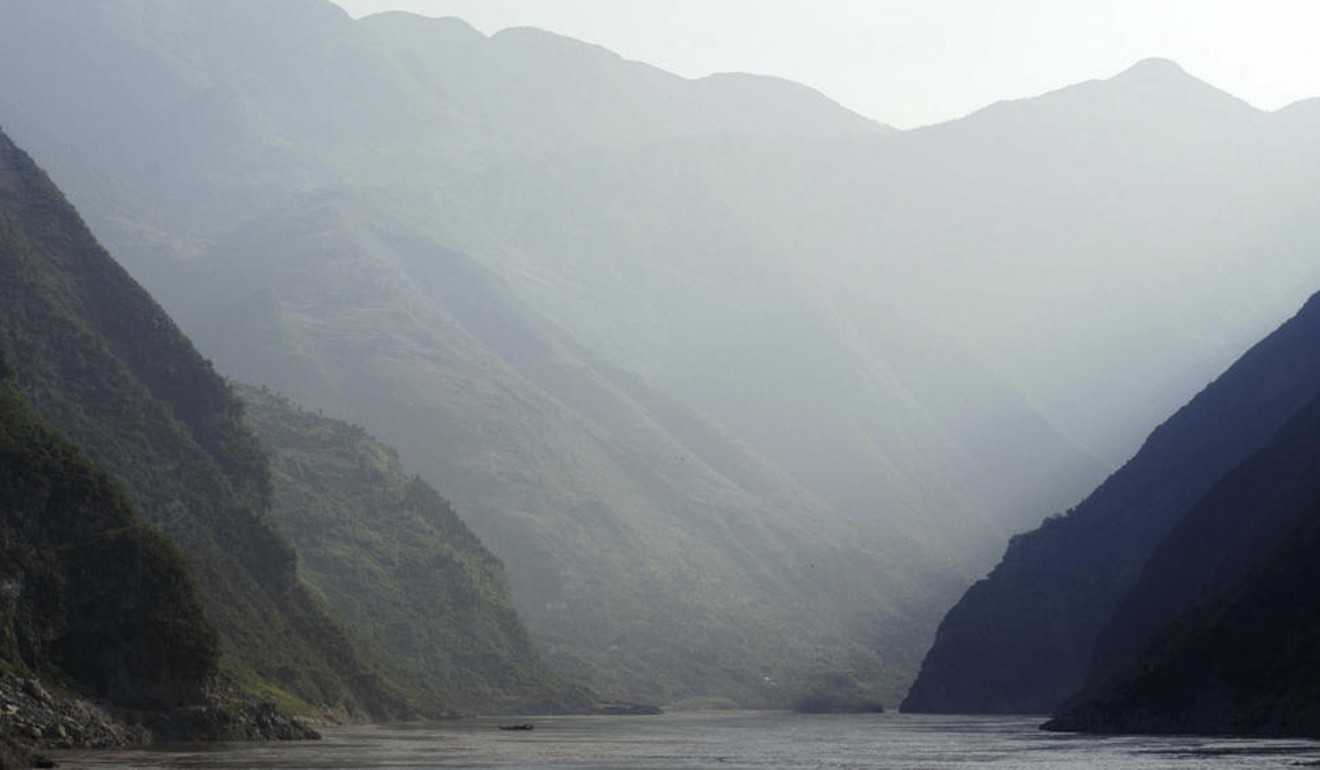
Humans have modified the flows of most long rivers, including the Yangtze, home to some of China’s most spectacular natural scenery. Photo: WWF
Such fragmentation is affecting river hydrology, flow of nutrient-rich sediment from the mountains where rivers originate, riparian vegetation, migration of fish and quality of water.
Take the Colorado River, one of the world’s most diverted and dammed rivers. Broken up by more than 100 dams and thousands of kilometres of diversion canals, the Colorado has not reached the sea since 1998.
Sinking sands along the Mekong River leave Vietnamese homeless
The river, which originates in the Rocky Mountains and is the lifeblood for the southwestern United States, used to empty into the Sea of Cortez in Mexico.
But now, owing to the upstream diversion of 9.3 billion cubic metres (328.4 billion cubic feet) of water annually, the Colorado’s flow into its delta has been reduced to a trickle.
Altering the flow characteristics of rivers poses a serious problem for sustainable development, because they affect the ecosystem services on which both humans and wildlife depend. Photo: AP
Other major rivers that run dry before reaching the sea include the Amu Darya and the Syr Darya, the two lifelines of Central Asia; the Euphrates and the Tigris in the Middle East; and the Rio Grande, which marks the border between Texas and Mexico before heading to the Gulf of Mexico.
The overused Murray in Australia and Indus in Pakistan are at risk of meeting the same fate.
Are China’s Mekong dams washing away Cambodian livelihoods?
More fundamentally, altered flow characteristics of rivers are among the most serious problems for sustainable development, because they seriously affect the ecosystem services on which both humans and wildlife depend.
Free-flowing rivers, while supporting a wealth of biodiversity, allow billions of fish – the main source of protein for the poor – to trek through their waters and breed copiously.
Urgent action is needed to save the world’s rivers, including improving agricultural practices, which account for the bulk of freshwater withdrawals
Free-flowing rivers also deliver nutrient-rich silt crucial to agriculture, fisheries and marine life.
Such high-quality sediment helps to naturally re-fertilise overworked soils in the plains, sustain freshwater species and, after rivers empty into seas or oceans, underpin the aquatic food chain supporting marine life.
China’s hyperactive dam building illustrates the high costs of river fragmentation. No country in history has built more dams than China. In fact, China today boasts more large dams than the rest of the world combined.
China’s chain of dams and reservoirs on each of its long rivers impedes the downstream flow of sediment, thereby denying essential nutrients to agricultural land and aquatic species.
A case in point is China’s Three Gorges Dam – the world’s largest – which has a problematic build-up of sediment in its own massive reservoir because it has disrupted silt flows in the Yangtze River.
Likewise, China’s cascade of eight giant dams on the Mekong, just before the river enters Southeast Asia, is affecting the quality and quantity of flows in the delta, in Vietnam.
Yangtze dams may spell end to sturgeon in a decade
Undeterred, China is building or planning another 20 dams on the Mekong.
How the drying up of rivers affects seas and oceans is apparent from the Aral Sea, which has shrunk 74 per cent in area and 90 per cent in volume, with its salinity growing nine-fold.
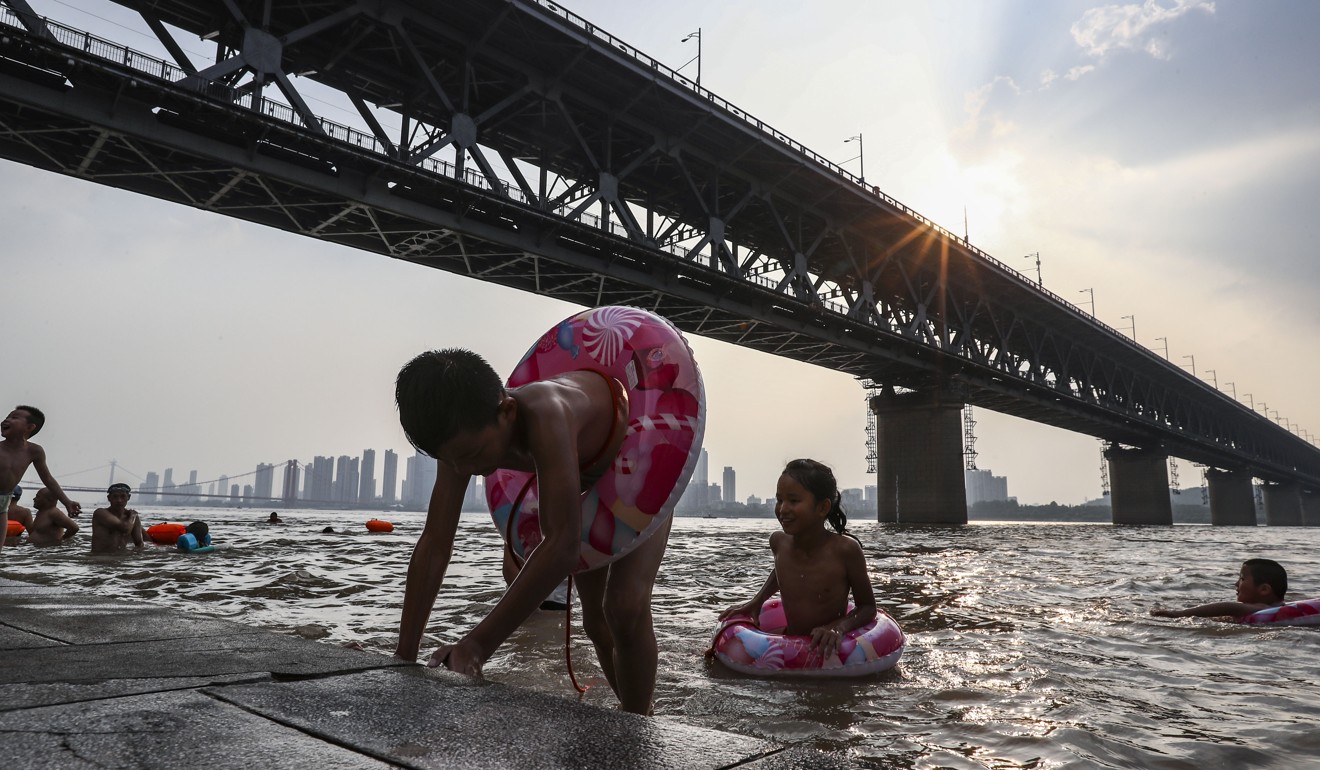
People beat the heat by cooling off in the Yangtze River in Wuhan, in central China’s Hubei province. Photo: Nora Tam
This change is the result of the Aral Sea’s principal water sources, the Amu Darya and Syr Darya, being so overexploited for irrigation that they are drying up before reaching what was once the world’s fourth-largest inland lake.
Compounding the challenges is the increasing pollution of rivers. Aquatic ecosystems have lost half of their biodiversity since the mid-1970s alone.
Chinese court jails nine for dumping toxic waste in Yangtze
Urgent action is needed to save the world’s rivers. This includes action on several fronts, including improving practices in agriculture, which accounts for the bulk of the world’s freshwater withdrawals.
Without embracing integrated water resource management and other sustainable practices, the world risks a parched future.
Source: SCMP
Posted in Amazon, Amu Darya, Aral Sea, Arctic, Australia, Brahma Chellaney, Cambodian, China alert, Chinese civilisation, Chongqing, Colorado River, Congo, drastic overuse, drying up, ecosystems, especially, Euphrates, excessive damming, extinction, Gulf of Mexico, hubei province, hyperactive dam building, Indus River, Jialing, major waterways, Mekong, Mexico, Middle East, Murray, nature, No time to waste, Pakistan, Rio Grande, Rocky Mountains, run dry, saving, Sea of Cortez, Syr Darya, Texas, Three Gorges Dam, Tigris, Uncategorized, United Nations, United States, Water resources, world’s rivers, Yangtze River, Yellow River, Yichang |
Leave a Comment »



 CHINDIA ALERT: You'll be living in their world, very soon