Archive for ‘Central Asia’

18/02/2020

China Uighurs: Detained for beards, veils and internet browsing

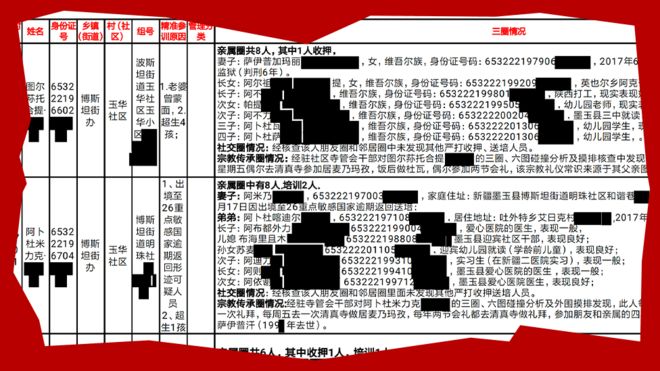
Redacted copy of The Karakax List in ChineseImage copyright UHRP

A document that appears to give the most powerful insight yet into how China determined the fate of hundreds of thousands of Muslims held in a network of internment camps has been seen by the BBC.

Listing the personal details of more than 3,000 individuals from the far western region of Xinjiang, it sets out in intricate detail the most intimate aspects of their daily lives.

The painstaking records – made up of 137 pages of columns and rows – include how often people pray, how they dress, whom they contact and how their family members behave.

China denies any wrongdoing, saying it is combating terrorism and religious extremism.

The document is said to have come, at considerable personal risk, from the same source inside Xinjiang that leaked a batch of highly sensitive material published last year.

One of the world’s leading experts on China’s policies in Xinjiang, Dr Adrian Zenz, a senior fellow at the Victims of Communism Memorial Foundation in Washington, believes the latest leak is genuine.

“This remarkable document presents the strongest evidence I’ve seen to date that Beijing is actively persecuting and punishing normal practices of traditional religious beliefs,” he says.

One of the camps mentioned in it, the “Number Four Training Centre” has been identified by Dr Zenz as among those visited by the BBC as part of a tour organised by the Chinese authorities in May last year.
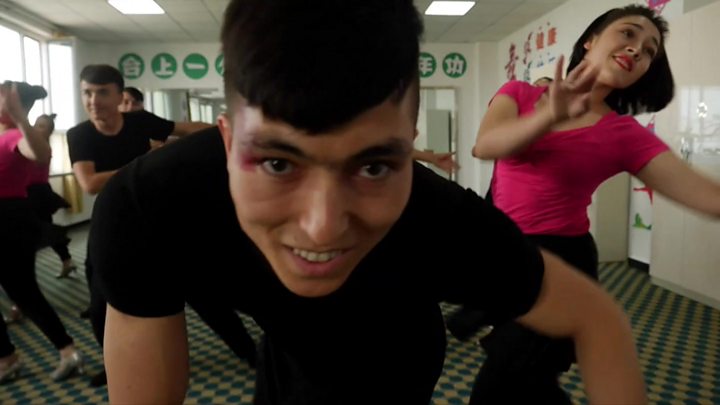
Media caption The BBC previously visited one of the camps identified by scholars using the Karakax List

Much of the evidence uncovered by the BBC team appears to be corroborated by the new document, redacted for publication to protect the privacy of those included in it.

It contains details of the investigations into 311 main individuals, listing their backgrounds, religious habits, and relationships with many hundreds of relatives, neighbours and friends.

Verdicts written in a final column decide whether those already in internment should remain or be released, and whether some of those previously released need to return.

It is evidence that appears to directly contradict China’s claim that the camps are merely schools.

In an article analysing and verifying the document, Dr Zenz argues that it also offers a far deeper understanding of the real purpose of the system.

It allows a glimpse inside the minds of those making the decisions, he says, laying bare the “ideological and administrative micromechanics” of the camps.
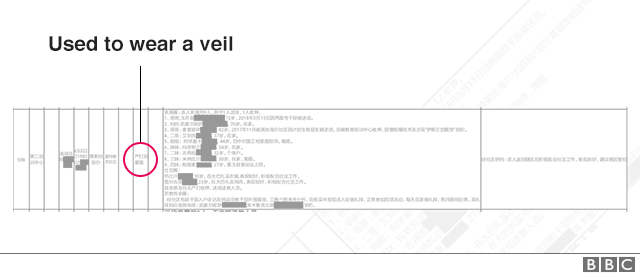
An image showing the lits

Row 598 contains the case of a 38-year-old woman with the first name Helchem, sent to a re-education camp for one main reason: she was known to have worn a veil some years ago.

It is just one of a number of cases of arbitrary, retrospective punishment.

Others were interned simply for applying for a passport – proof that even the intention to travel abroad is now seen as a sign of radicalisation in Xinjiang.
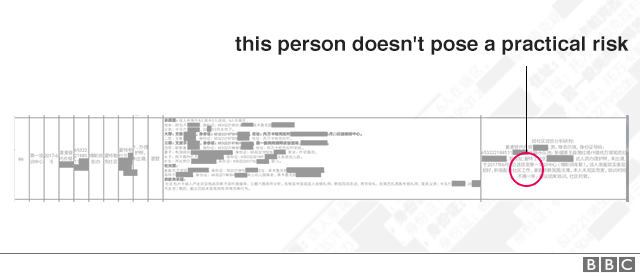
An image showing the list of names and observations

In row 66, a 34-year-old man with the first name Memettohti was interned for precisely this reason, despite being described as posing “no practical risk”.

And then there’s the 28-year-old man Nurmemet in row 239, put into re-education for “clicking on a web-link and unintentionally landing on a foreign website”.
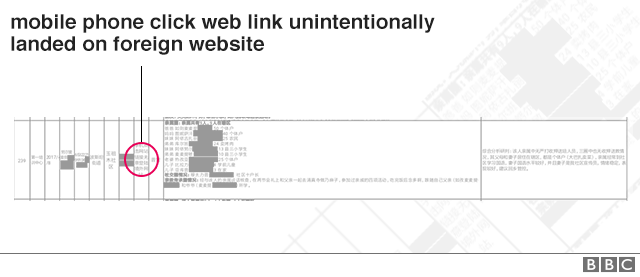
A picture showing the list

Again, his case notes describe no other issues with his behaviour.

The 311 main individuals listed are all from Karakax County, close to the city of Hotan in southern Xinjiang, an area where more than 90% of the population is Uighur.

Predominantly Muslim, the Uighurs are closer in appearance, language and culture to the peoples of Central Asia than to China’s majority ethnicity, the Han Chinese.

In recent decades the influx of millions of Han settlers into Xinjiang has led to rising ethnic tensions and a growing sense of economic exclusion among Uighurs.

Those grievances have sometimes found expression in sporadic outbreaks of violence, fuelling a cycle of increasingly harsh security responses from Beijing.

It is for this reason that the Uighurs have become the target – along with Xinjiang’s other Muslim minorities, like the Kazakhs and Kyrgyz – of the campaign of internment

The “Karakax List”, as Dr Zenz calls the document, encapsulates the way the Chinese state now views almost any expression of religious belief as a signal of disloyalty.

To root out that perceived disloyalty, he says, the state has had to find ways to penetrate deep into Uighur homes and hearts.

In early 2017, when the internment campaign began in earnest, groups of loyal Communist Party workers, known as “village-based work teams”, began to rake through Uighur society with a massive dragnet.

With each member assigned a number of households, they visited, befriended and took detailed notes about the “religious atmosphere” in the homes; for example, how many Korans they had or whether religious rites were observed.

The Karakax List appears to be the most substantial evidence of the way this detailed information gathering has been used to sweep people into the camps.

It reveals, for example, how China has used the concept of “guilt by association” to incriminate and detain whole extended family networks in Xinjiang.

For every main individual, the 11th column of the spreadsheet is used to record their family relationships and their social circle.

Presentational grey line

China’s hidden camps

BBC
Presentational grey line

Alongside each relative or friend listed is a note of their own background; how often they pray, whether they’ve been interned, whether they’ve been abroad.

In fact, the title of the document makes clear that the main individuals listed all have a relative currently living overseas – a category long seen as a key indicator of potential disloyalty, leading to almost certain internment.

Rows 179, 315 and 345 contain a series of assessments for a 65-year-old man, Yusup.

His record shows two daughters who “wore veils and burkas in 2014 and 2015”, a son with Islamic political leanings and a family that displays “obvious anti-Han sentiment”.

His verdict is “continued training” – one of a number of examples of someone interned not just for their own actions and beliefs, but for those of their family.

The information collected by the village teams is also fed into Xinjiang’s big data system, called the Integrated Joint Operations Platform (IJOP).

The IJOP contains the region’s surveillance and policing records, culled from a vast network of cameras and the intrusive mobile spyware every citizen is forced to download.

The IJOP, Dr Zenz suggests, can in turn use its AI brain to cross-reference these layers of data and send “push notifications” to the village teams to investigate a particular individual.
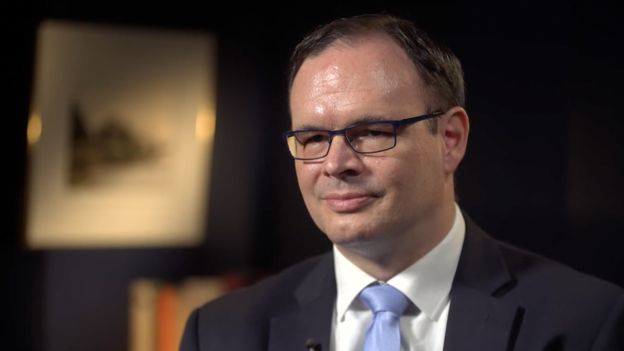
Adrian Zenz, the academic who has analysed and assessed the Karakax List
Image caption Adrian Zenz has analysed the leaked document

The man found “unintentionally landing on a foreign website” may well have been interned thanks to the IJOP.

In many cases though, there is little need for advanced technology, with the vast and vague catch-all term “untrustworthy” appearing multiple times in the document.

It is listed as the sole reason for the internment of a total of 88 individuals.

The concept, Dr Zenz argues, is proof that the system is designed not for those who have committed a crime, but for an entire demographic viewed as potentially suspicious.

China says Xinjiang has policies that “respect and ensure people’s freedom of religious belief”. It also insists that what it calls a “vocational training programme in Xinjiang” is “for the purposes of combating terrorism and religious extremism”, adding only people who have been convicted of crimes involving terrorism or religious extremism are being “educated” in these centres.

However, many of the cases in the Karakax List give multiple reasons for internment; various combinations of religion, passport, family, contacts overseas or simply being untrustworthy.

The most frequently listed is for violating China’s strict family planning laws.

In the eyes of the Chinese authorities it seems, having too many children is the clearest sign that Uighurs put their loyalty to culture and tradition above obedience to the secular state.
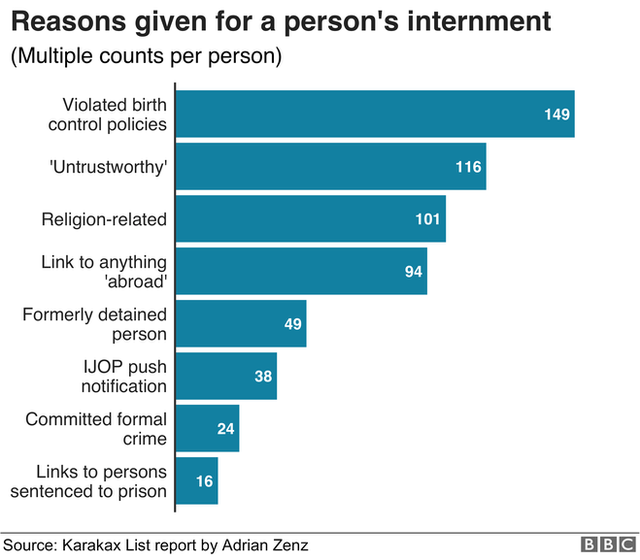
Chart showing reasons given for a person's internment
China has long defended its actions in Xinjiang as part of an urgent response to the threat of extremism and terrorism.

The Karakax List does contain some references to those kinds of crimes, with at least six entries for preparing, practicing or instigating terrorism and two cases of watching illegal videos.

But the broader focus of those compiling the document appears to be faith itself, with more than 100 entries describing the “religious atmosphere” at home.

The Karakax List has no stamps or other authenticating marks so, at face value, it is difficult to verify.

It is thought to have been passed out of Xinjiang sometime before late June last year, along with a number of other sensitive papers.

They ended up in the hands of an anonymous Uighur exile who passed all of them on, except for this one document.

Only after the first batch was published last year was the Karakax List then forwarded to his conduit, another Uighur living in Amsterdam, Asiye Abdulaheb.

She told the BBC that she is certain it is genuine.

Asiye Abdulaheb, the Uighur woman who helped leak the Karakax List
Image caption Asiye Abdulaheb decided to speak out, despite the danger

“Regardless of whether there are official stamps on the document or not, this is information about real, live people,” she says. “It is private information about people that wouldn’t be made public. So there is no way for the Chinese government to claim it is fake.”

Like all Uighurs living overseas, Ms Abdulaheb lost contact with her family in Xinjiang when the internment campaign began, and she’s been unable to contact them since.

But she says she had no choice but to release the document, passing it to a group of international media organisations, including the BBC.

“Of course I am worried about the safety of my relatives and friends,” she says. “But if everyone keeps silent because they want to protect themselves and their families, then we will never prevent these crimes being committed.”

At the end of last year China announced that everyone in its “vocational training centres” had now “graduated”. However, it also suggested some may stay open for new students on the basis of their “free will”.

Almost 90% of the 311 main individuals in the Karakax List are shown as having already been released or as being due for release on completion of a full year in the camps.

But Dr Zenz points out that the re-education camps are just one part of a bigger system of internment, much of which remains hidden from the outside world.
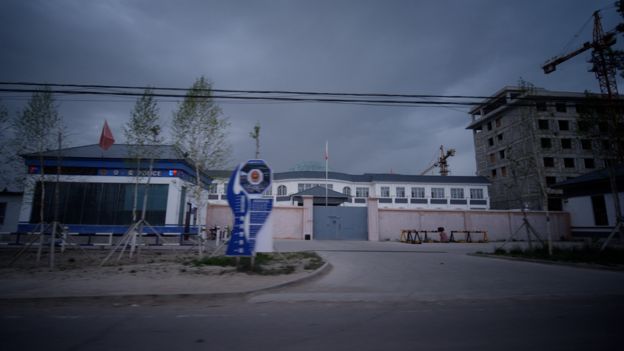
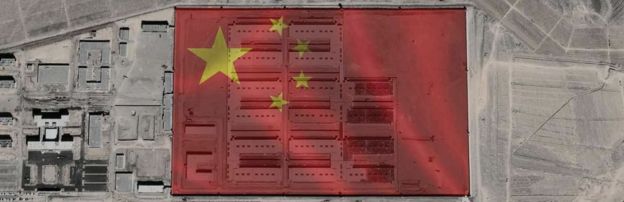
A camp holding Muslims in Xinjiang. (nb: NOT a camp identified in the Karakax List)
Image caption The outside of one of the camps in Xinjiang

More than two dozen individuals are listed as “recommended” for release into “industrial park employment” – career “advice” that they may have little choice but to obey. There are well documented concerns that China is now building a system of coerced labour as the next phase of its plan to align Uighur life with its own vision of a modern society.

In two cases, the re-education ends in the detainees being sent to “strike hard detention”, a reminder that the formal prison system has been cranked into overdrive in recent years.

Many of the family relationships listed in the document show long prison terms for parents or siblings, sometimes for entirely normal religious observances and practices.

One man’s father is shown to have been sentenced to five years for “having a double-coloured thick beard and organising a religious studies group”.

A neighbour is reported to have been given 15 years for “online contact with people overseas”, and another man’s younger brother given 10 years for “storing treasonable pictures on his phone”.

Whether or not China has closed its re-education camps in Xinjiang, Dr Zenz says the Karakax List tells us something important about the psychology of a system that prevails.

“It reveals the witch-hunt-like mindset that has been and continues to dominate social life in the region,” he said.

Source: The BBC
27/09/2019

EU and Japan play ‘guardians of universal values’ in effort to challenge China’s Belt and Road Initiative

  • Japan’s Prime Minister Shinzo Abe and EC President Jean-Claude Juncker mark first anniversary of EU-Asia Connectivity scheme with swipes at China
  • Partners reach out to countries in Balkans and Africa and agree US$65.5 billion development plan
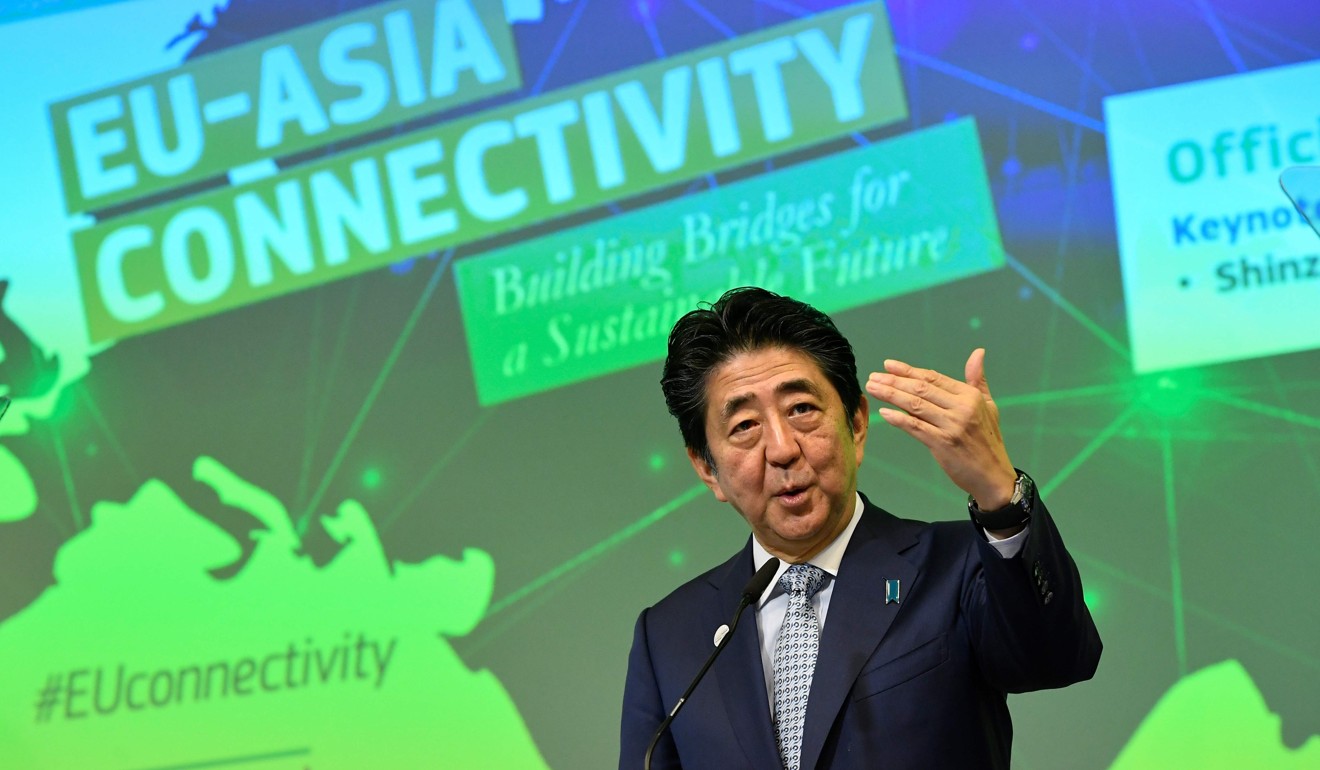
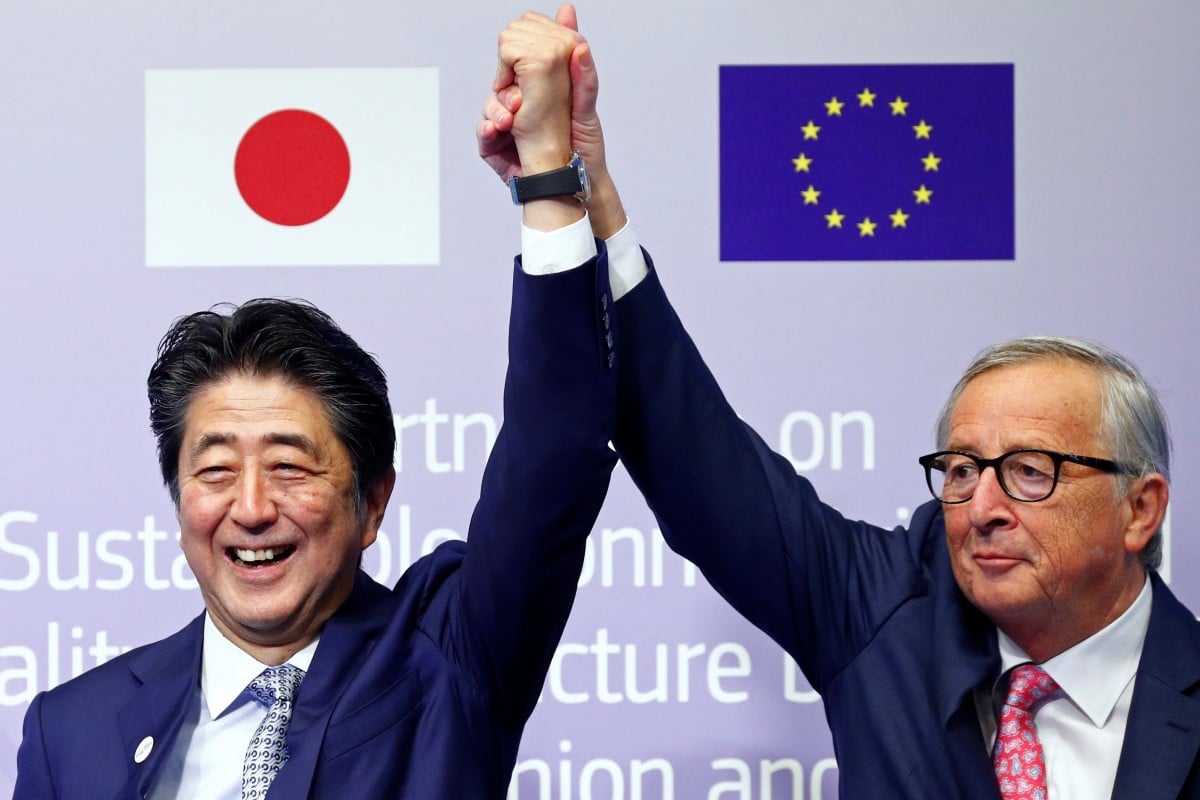
Japan’s Prime Minister Shinzo Abe (left) and European Commission President Jean-Claude Juncker mark the anniversary of the EU-Asia Connectivity scheme in Brussels, Belgium. Photo: Reuters
The European Union and Japan are stepping up their efforts to counter China’s

Belt and Road Initiative

, with their leaders vowing to be “guardians of universal values” such as democracy, sustainability and good governance.

Speaking in Brussels on Friday, Japanese Prime Minister Shinzo Abe said the world’s third-biggest economy would work with the EU to strengthen their transport, energy and digital ties to Africa and the Balkans – key regions for China’s flagship trade and development project.
At a forum to mark the first anniversary of the EU-Asia Connectivity scheme, Abe and European Commission President Jean-Claude Juncker signed an agreement formalising Japan’s involvement in the Europe-Asia plan that will be backed by a 60 billion (US$65.54 billion) EU guarantee fund, development banks and private investors.

Abe said Japan would ensure that officials from 30 African countries would be trained in sovereign debt management over the next three years, a veiled attack on what Western diplomats claim is China’s debt trap for its belt and road partners.

“The EU and Japan are linked through and through,” Abe said. “The infrastructure we build from now on must be [high] quality infrastructure.

“Whether it be a single road or a single port, when the EU and Japan undertake something, we are able to build sustainable, comprehensive and rules-based connectivity, from the Indo-Pacific to the west Balkans and Africa.”

Japan wants to extend its business reach through its alliance with the EU as its economy slows and geopolitical competition from China takes its toll.

Japan indicates China is bigger threat than North Korea in latest defence review

China’s low-key delegation to the forum was led by Guo Xuejun, deputy director general of international affairs at the foreign ministry.

The US was represented by its deputy assistant secretary of state for cyber policy, Robert Strayer, who was in Europe to lobby against Chinese telecoms giant Huawei Technologies and its involvement in fifth-generation telecoms networks.

Abe and Juncker made cybersecurity the highlight of their addresses. Juncker, who will step down from the presidency by the end of October, repeated his attack on China’s trade policies without naming the country.

“Openness is reciprocal, based on high standards of transparency and good governance, especially for public procurement, and equal access to businesses while respecting intellectual property rights,” he said.

Prime Minister Shinzo Abe says Japan will train officials from 30 African countries in sovereign debt management in three years. Photo: AFP

European policymakers and businesses have for years complained about China’s refusal to allow foreign companies in without a Chinese joint venture partner, a practice that critics claimed involved forced transfer of intellectual property to the Chinese side.

“One of the keys to successful connectivity is to respect basic rules and common sense,” Juncker said, stressing that EU-Japanese cooperation focused on the “same commitment to democracy, rule of law, freedom and human dignity”.

European businesses urge EU to take ‘defensive’ measures against China’s state-owned enterprises

When the commission proposed improved transport, energy and digital infrastructure links with Asia last year, it denied it was seeking to stymie Chinese ambitions.

The EU plan, which would be backed by additional funds from the EU’s common budget from 2021, private sector loans and development banks, amounted to a response to China’s largesse in much of central Asia and south-eastern Europe, where Beijing has invested billions of dollars.

Source: SCMP

25/08/2019

China increases its presence in Russia’s former Central Asian backyard

  • A recent joint exercise in Tajikistan is the latest example of Beijing’s growing security and economic interests in the former Soviet republic
  • Analysts say Moscow may not be happy about China’s growing reach in the lawless, mountainous area and will be keeping an eye on the situation
Chinese and Tajik troops completed a joint exercise earlier this month in the mountainous region of Gorno-Badakhshan. Photo: Xinhua
China is increasing its military and economic presence in parts of central Asia that Russia has traditionally considered its sphere of influence – a development some analysts believe could cause concern in Moscow.
While Russia’s influence remains strong in many former Soviet republics, China is steadily building up its military and economic influence in Tajikistan, particularly in the remote, mountainous areas on its western borders where central government authority is weak.

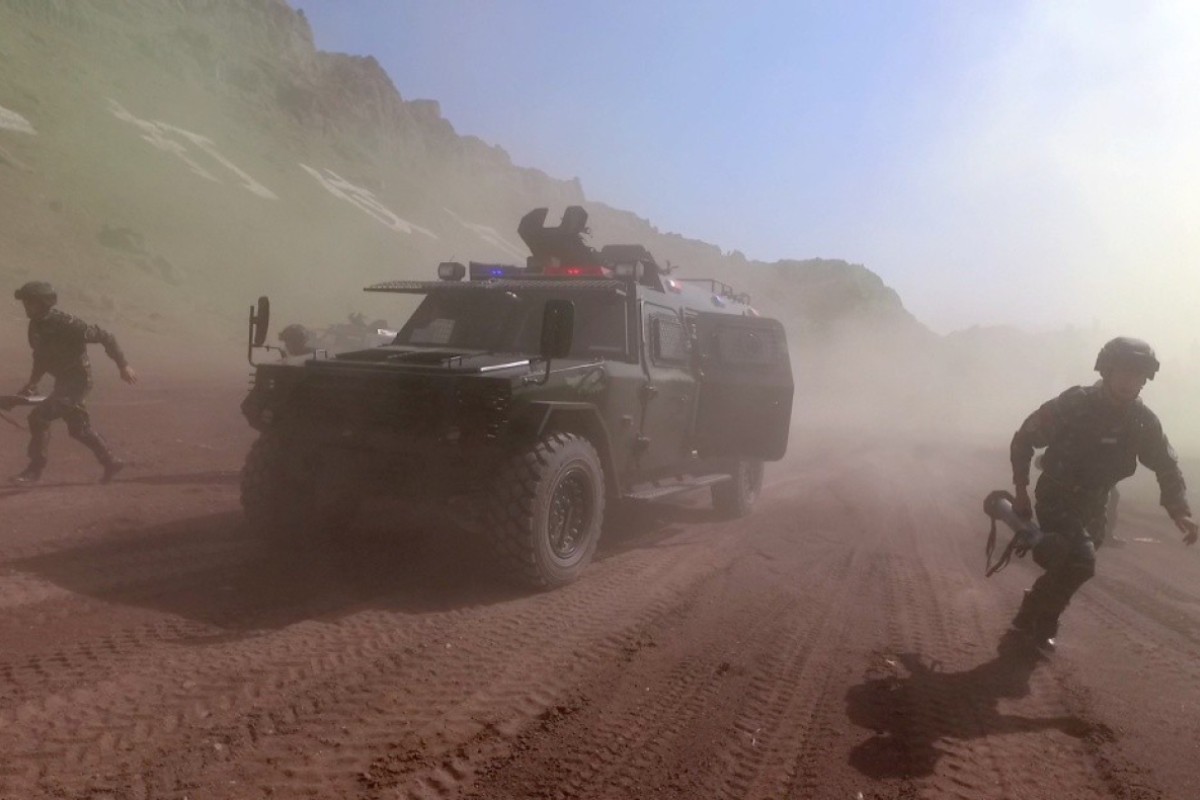
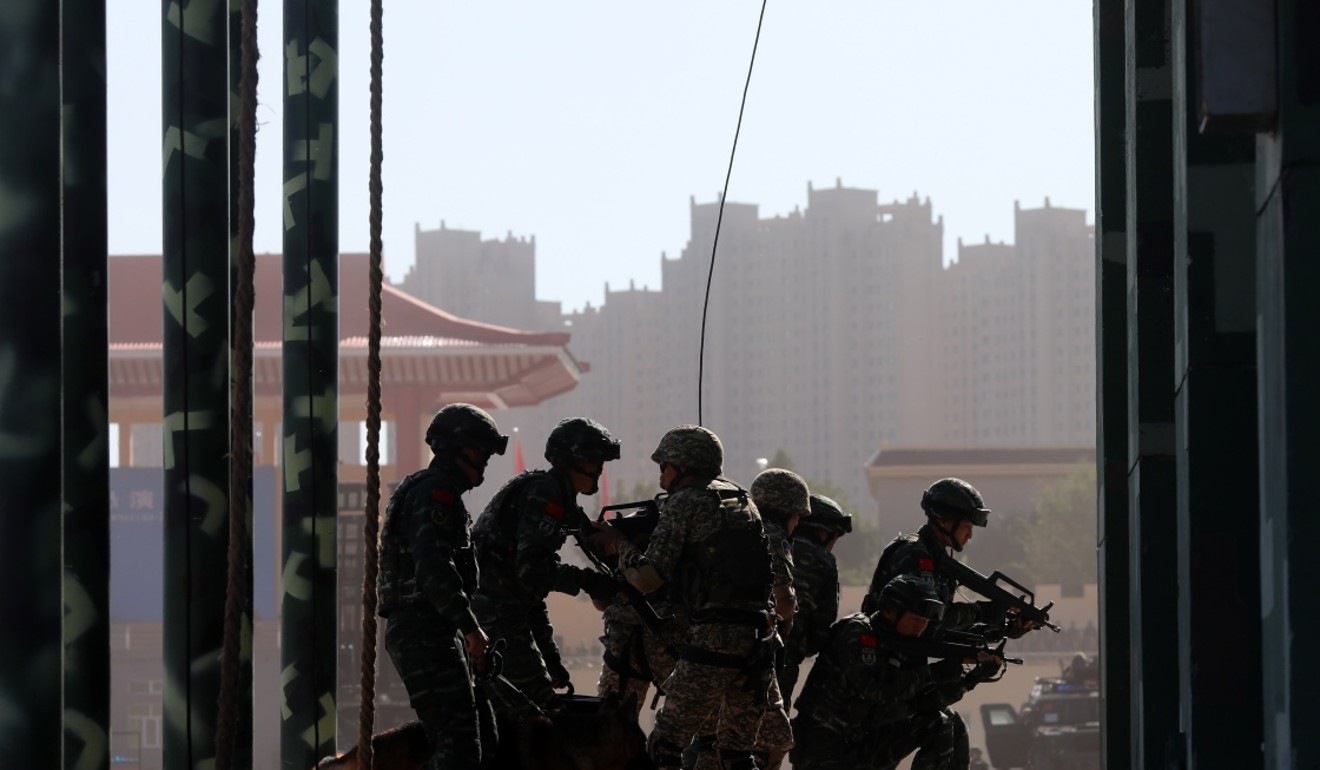
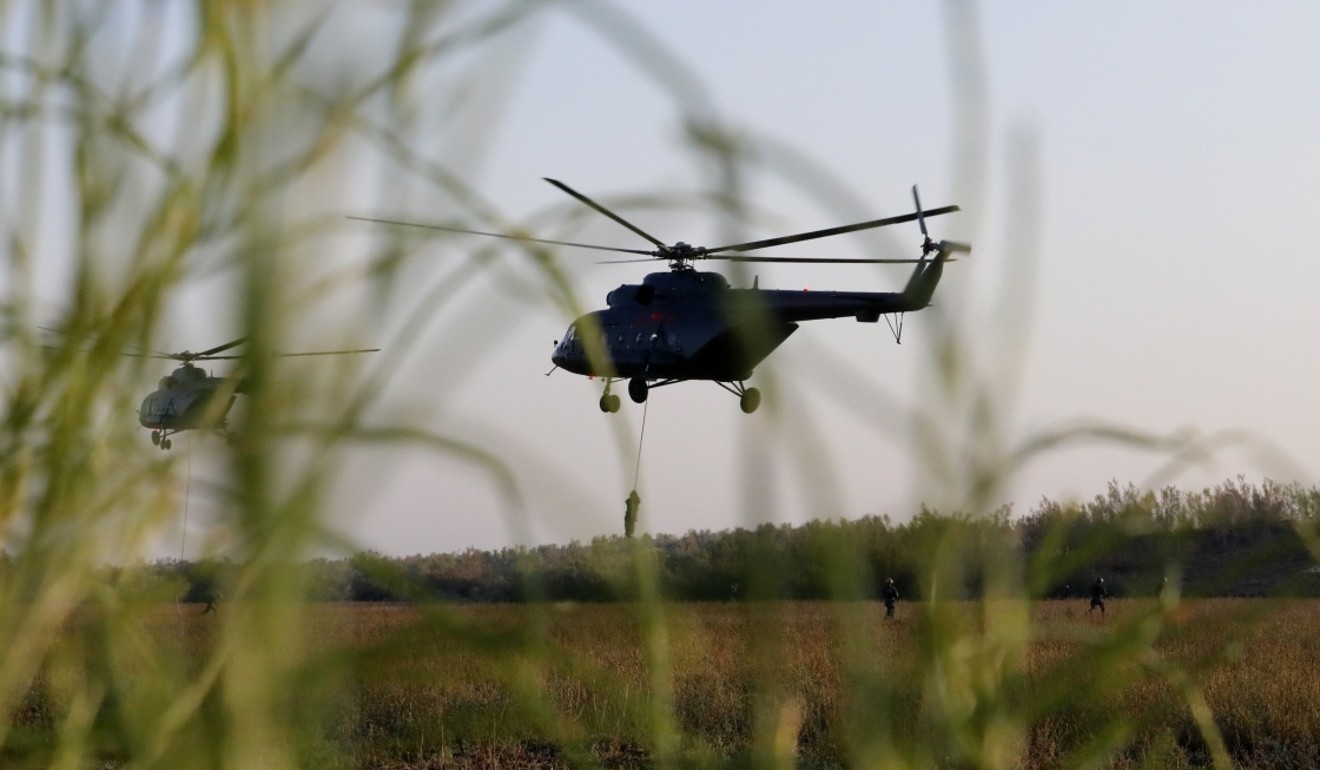
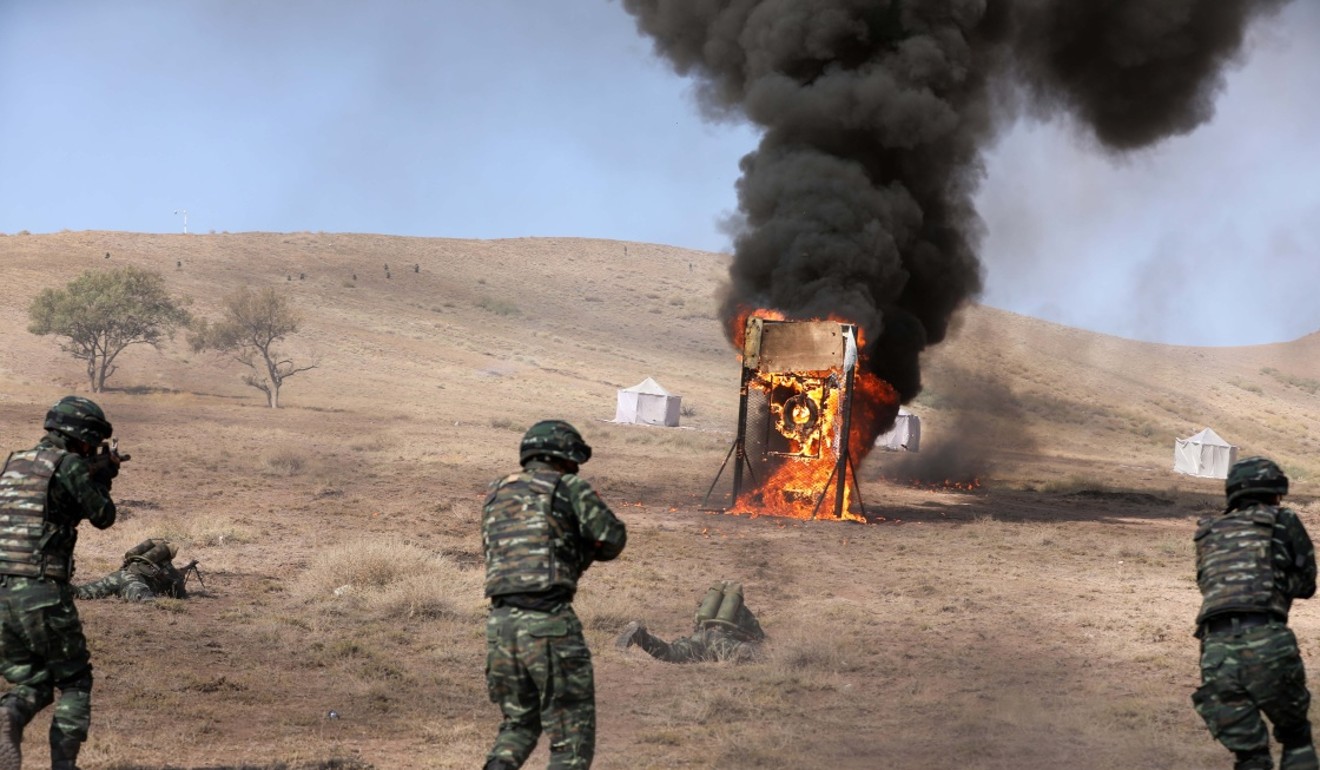
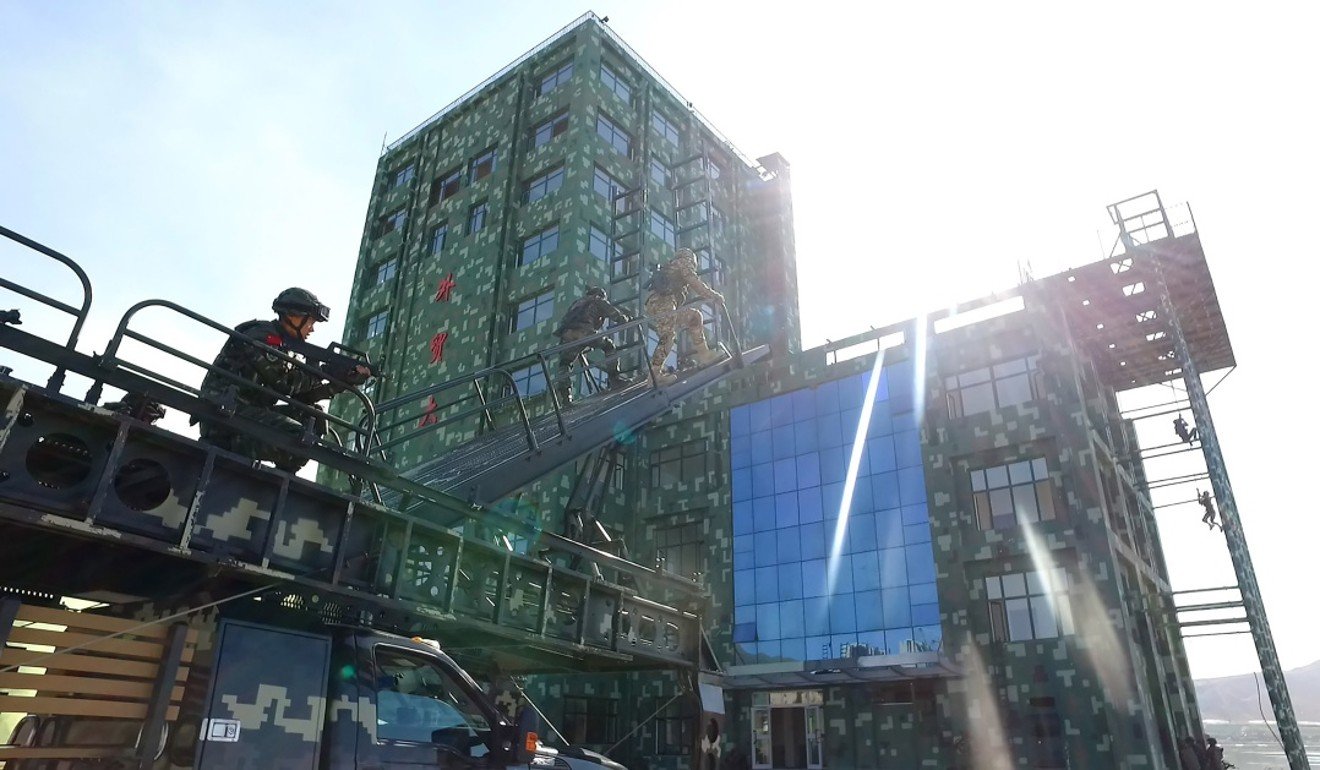
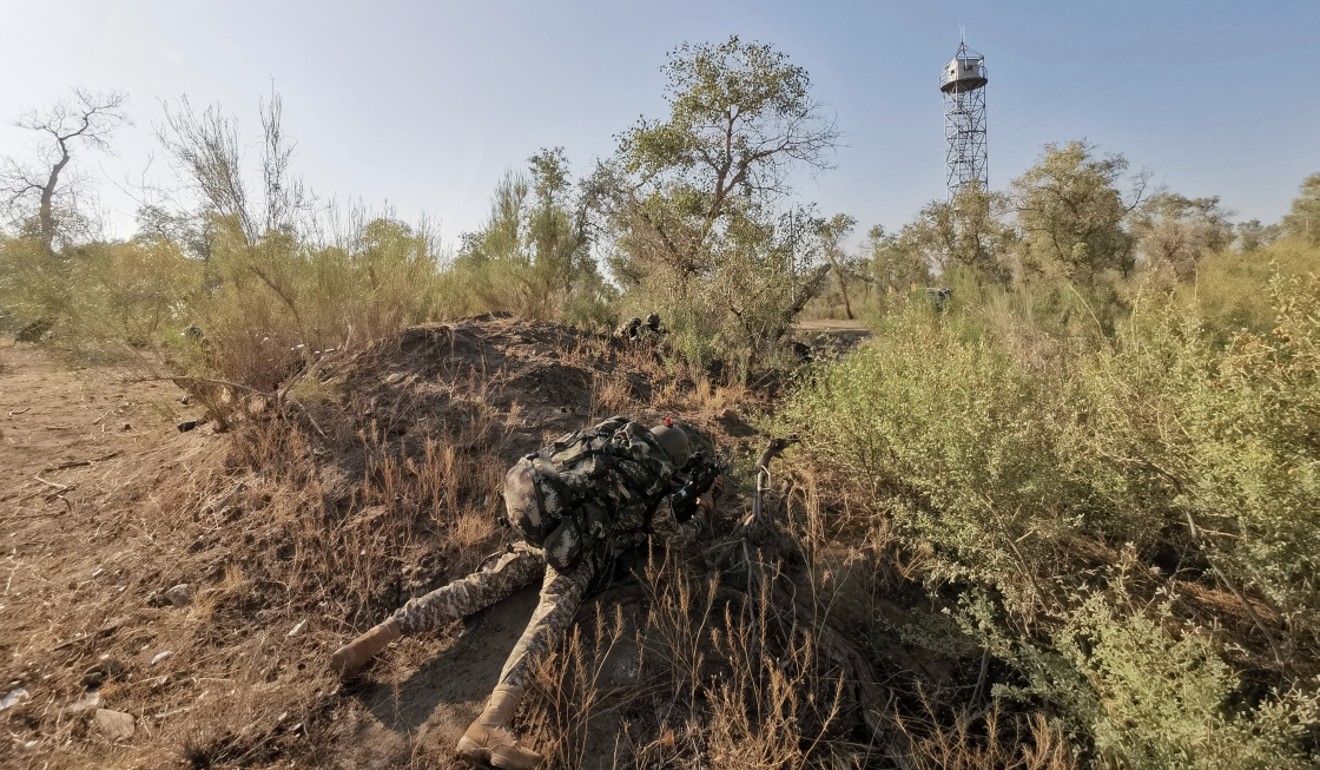
Chinese troops recently concluded a joint drill in eastern Tajikistan involving 1,200 troops from both countries.

The eight-day exercise that finished on August 13 was conducted in the autonomous Gorno-Badakhshan autonomous region, a sparsely populated territory in the high Pamir mountains, which borders China’s Xinjiang region and Afghanistan.
China has been increasing its security presence in the strategically sensitive region. Photo: Xinhua

Although this year’s exercise involved fewer troops than the 10,000 involved in a previous drill three years ago, it tested the use of advanced aerial vehicles and ground reconnaissance technology to monitor the area.

The landlocked country is strategically important for China, which is worried that the porous borders will serve as an entry point for drugs and Islamic militants into Xinjiang, where its deradicalisation strategy has led to the detention of a million Muslim minorities in reeducation camps.

It also sits along the trade routes China hopes to develop under the Belt and Road Initiative – Beijing’s flagship plan to expand its global influence through infrastructure, trade and investment – but the area has long been plagued by lawlessness and outbreaks of violence.

The recent exercise tested aerial surveillance techniques. Photo: Xinhua

Artyom Lukin, a professor of international politics at Far Eastern Federal University in Vladivostok, said Russia was not happy about the deployment of Chinese forces in Tajikistan.

“Russia has traditionally considered Central Asia, including Tajikistan, as its sphere of political-military influence,” he said.

Observers said other Central Asian republics – such as Kazakhstan, Uzbekistan and Kyrgyzstan – are likely to stay within Moscow’s orbit, but China is steadily building closer security ties with Tajikistan.

In February, China’s defence ministry denied that it was building a base and stationing troops in the country, but defended its closer military cooperation with Tajikistan.

The recent training exercise was conducted in an area Russia has long seen as part of its sphere of influence. Photo: Xinhua

China has long-standing security interests in the country and in 2016 it agreed to finance 11 border outposts and a training centre for guards along the Afghan border.

This was part of a deal Beijing made through the Quadrilateral Cooperation and Coordination Mechanism – which also involves Pakistan, Afghanistan and Tajikistan – to strengthen cooperation in combating terrorism and improving security.

China has also overtaken Russia economically, becoming the largest foreign investor in Tajikistan in 2016, accounting for 30 per cent of Tajikistan’s total direct accumulated investments, state news agency Xinhua reported.

Banned Muslim political party blamed for deadly attack on tourists in Tajikistan

China’s direct investment in Tajikistan was worth US$95 million in 2017, according to the latest available figures. China has also grown to become the country’s third largest trading partner with bilateral trade reaching around US$1.5 billion in 2018.

A recent opinion piece published by the Russian state-owned news agency Sputnik suggested China may be “getting carried away” by its investments in the region.

The article suggested that China’s growing presence in the country could lead to a “partial loss” of Tajikistan’s sovereignty and argued that Beijing may want to take control of the border with Afghanistan.

China also has economic interests to protect. Photo: Xinhua

But Lukin said even though this growing involvement may be an irritant for Russia, the strategic partnership between China and Russia will remain strong.

The two countries remain the key players in the Shanghai Cooperation Organisation, an economic and security alliance that includes the Central Asian republics and India and Pakistan.

The two are also keen to cooperate more closely due to their tense relationship with the United States. This year Russian and Chinese armed forces  have stepped up their cooperation, and last week used a UN Security Council debate to criticise the US for pulling out of the Intermediate-Range Nuclear Forces Treaty. Washington defended the move as necessary response to Beijing and Moscow’s build up of arms.

Why Chinese investors are struggling to gain a foothold in Tajikistan

Lukin said: “Moscow no doubt understands that in terms of security, Tajikistan’s border, adjacent to China’s Xinjiang and Afghanistan, is truly a vital concern for Beijing.

“The presence of Chinese troops could actually benefit Russia, because it will be China bearing the costs of policing Tajikistan’s mountainous border areas.”

Stephen Blank, a former professor at the US Army War College and a specialist in Eurasian security, said that while Russia has mostly stayed silent about China’s presence in Tajikistan, it was closely watching the situation.

“What happens in the long run depends on how far China goes to extend its military presence in Central Asia. And if it keeps extending, it may well provoke some expression of concern in Russia beyond the silence that has hitherto been the case,” Blank said.

Chinese troops could play an increasing role in policing the area in future. Photo: Xinhua

“[The recent drills] look like conventional war-fighting exercises as much as anti-terrorist operations and suggest that China may have bigger contingencies than anti-terrorism in mind.”

Mathieu Duchatel, director of the Asia programme at the Institut Montaigne, a French think tank, said both Russia and China share similar concerns about terrorism and drug trafficking in Central Asia.

He said Russia had not objected to the security pact with Pakistan, Afghanistan and Tajikistan because there are more important strategic priorities in China-Russia relations.

“Overall, Russia’s acceptance of a security role for China in Central Asia shows how Russia realistically adjusts to the changing balance of power with China, and is able to avoid a zero-sum game on issues where parallel efforts by China and Russia can serve Russian security interests,” he said.

Source: SCMP

14/08/2019

China is building world’s most powerful laser radar to study Earth’s solar shield

  • New facility is designed to help scientists study particles that help deflect cosmic rays in the high atmosphere
  • Despite scepticism among some scientists, those familiar with the project insist radar will have a range about 10 times greater than existing ones
When completed the new laser radar will be used to study the high atmosphere. Photo: Handout
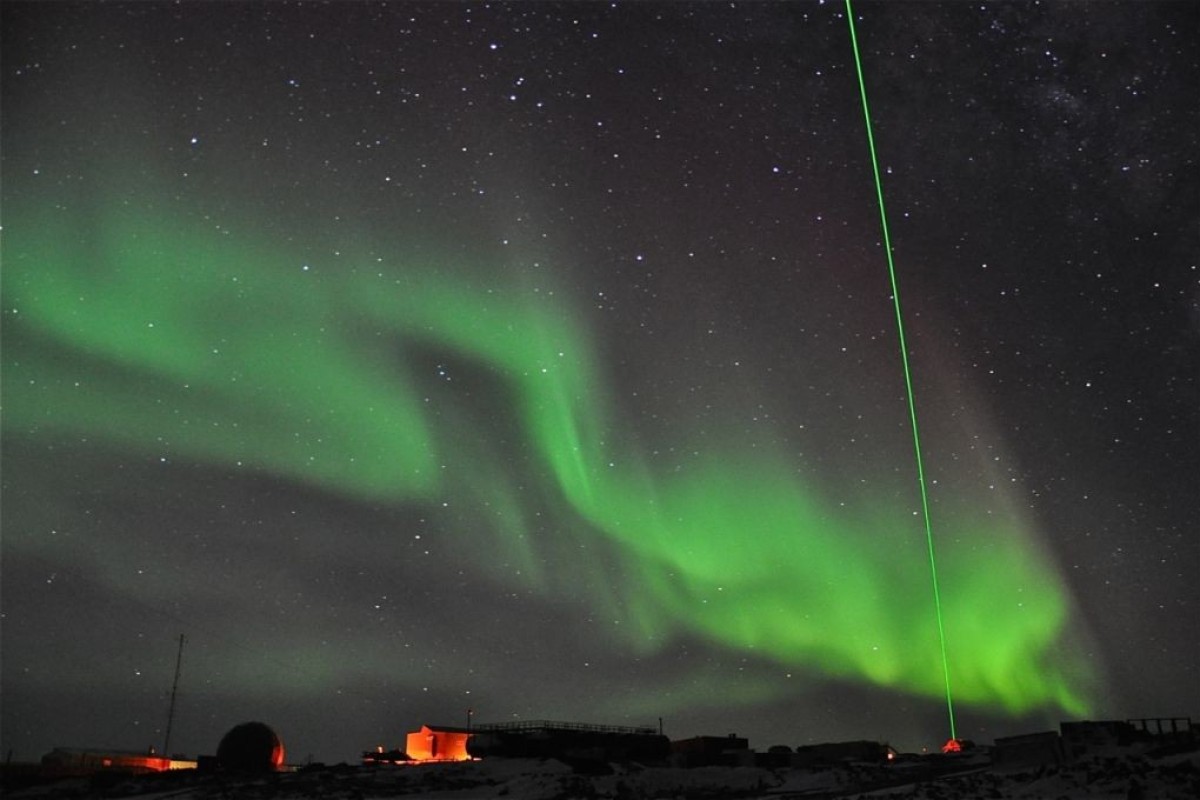
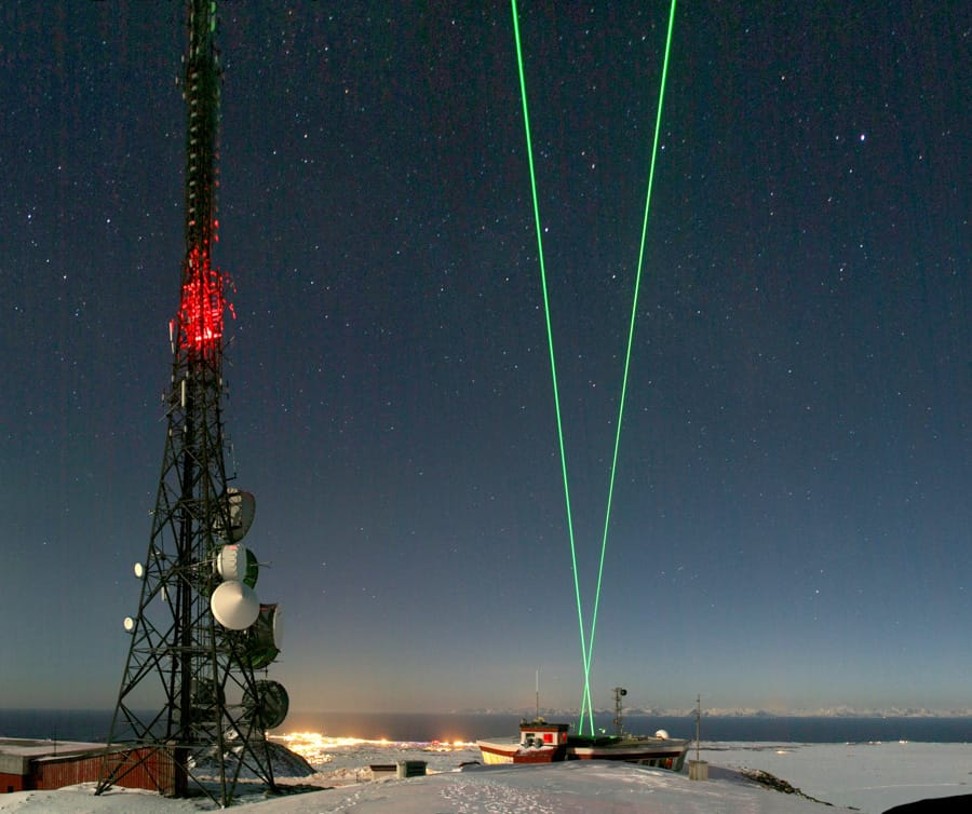
China has started building the world’s most powerful laser radar designed to study the physics of the Earth’s high atmosphere, according to state media reports and scientists informed of the project.
It is described as having a detection range of 1,000km (600 miles) – 10 times that of existing lasers – and will be used to study atmospheric particles that form the planet’s first line of defence against hostile elements from outer space such as cosmic rays and solar winds.
The facility, to be built on a site that remains classified, is expected to be up and running within four years and will form part of an ambitious project to reduce the risk from abnormal solar activities.
The radar will use a high-energy laser beam that can pierce through clouds, bypass the International Space Station and reach the outskirts of the atmosphere, beyond the orbiting height of most Earth observation satellites.
Lasers help tell ghostly story of doomed Nazi submarine U-576 and its entombed crew

There, the air becomes so thin that scientists will be able to count the number of gas atoms found within a radius of several metres.

These high-altitude observations could greatly expand our knowledge of a part of the atmosphere that has been little studied because the distances involved mean no one has been able to make direct observations from the ground.

“The large-calibre laser radar array will achieve the first detection of atmospheric density of up to 1,000km in human history,” said a statement posted on the website of the Chinese Academy of Sciences on Tuesday, a day after the launch of the project.

But the claim has been greeted with some scepticism in the scientific world.

“I think the 1,000km is a misprint!” professor Geraint Vaughan, director of observations at the National Centre for Atmospheric Science in the UK, replied when asked about the project.

Vaughan, who is also a Fellow of the Royal Meteorological Society, said that while he thought the Chinese announcement was “very interesting”, it did not seem possible with existing technology.

At present, the effective range of atmospheric lasers is about 100 kilometres.

Some other senior scientists in China and overseas also expressed doubt about the project, although they requested anonymity due to the sensitivity of the issue.

US warns airmen to beware of laser attacks near China’s military base in Djibouti
“There are other approaches, such as launching a satellite. Building such a huge, expensive machine on the ground does not make sense,” said a Beijing-based laser scientist.
But several researchers told the South China Morning Post that the project did exist, and insisted that 1,000km range was not a mistake.
Hua Dengxin, a professor at Xian University of Technology and a lead scientist in China’s laser radar development programmes, said: “I have heard of the project, yes. But I cannot speak about it.”
Powerful telescopes will pick up the signals reflected back to earth. Photo: Handout

According to publicly available information, the facility will use several large optical telescopes to pick up the faint signals reflected by the high-altitude atoms when the laser is fired at them.

The project is part of the Meridian Space Weather Monitoring Project, an ambitious programme that started in 2008 to build one of the largest, most advanced observation networks on Earth to monitor and forecast solar activities.

By 2025 Meridian stations containing some of the world’s most powerful radar systems will be established across the world – with facilities in Arctic and Antarctic, South China Sea, the Gobi desert, the Middle East, Central Asia and South America.

China in race for counter-drone tech and laser weapons as it tries to catch up with US

The purpose of the Meridian project, according to the Chinese government, is to reduce the risk abnormal solar activities pose to a wide range of Chinese assets including super-high voltage power grids, wireless communication, satellite constellations, space stations or even a future base on the Moon.

Chinese laser scientists have developed some of the world’s most sophisticated systems in recent years, including ranging stations that can track the movement of satellites and space debris, which the Pentagon has claimed have temporarily blinded some American scientists.

Last year researchers based in Xian, the capital of Shaanxi province, announced that they had developed a “ laser AK-47” that could set fire to target from a distance of 800 metres.

The Chinese government is also funding the development of a laser satellite that can penetrate seawater to a depth of 500 metres from space to detect the waves generated by submarines.

The use of such a powerful laser raises concerns that passing objects such as planes, satellites or spacecraft – to say nothing of birds – may be at risk from its beams.

But Professor Qiao Yanli, engineer in chief at the Anhui Institute of Optics and Fine Mechanics, part of the Chinese Academy of Sciences, said there was an “extremely low” risk of this happening.

“The sky is enormous. Getting hit by a tiny beam is almost impossible,” he said.

Some much smaller laser radars, such as those installed in auto-driving test vehicles, have reportedly damaged digital cameras by burning a few pixels on sensor.

But spacecraft such as earth observation satellites, according to Qiao, usually have some protection mechanisms, such as a warning system, to avoid permanent damage caused by an accidental laser hit.

‘Laser AK-47’? Chinese developer answers sceptics with videos of gun being tested

Professor Li Yuqiang, a researcher at the Yunnan Observatories in Kunming, whose team has measured the distance between the Earth and the Moon by shooting lasers at a reflector placed on the lunar surface during the US Apollo 15 mission, said detecting atom-sized targets on the fringes of the atmosphere posed many technical challenges.

“The number of photons [particles of light] reflected by the sparse gas particles will be very small. Even if they can be picked up by large telescopes on the ground, the analysis will require some very good algorithms to separate the useful signals from the noise,” Li said.

“How that can be achieved is beyond the scope of my knowledge.”

Source: SCMP

29/05/2019

China looks to Russia, Central Asia for support amid tensions with US

  • President Xi Jinping will meet Russian counterpart Vladimir Putin next month and address economic summit in St Petersburg
  • Diplomatic flurry will also include regional security forums in Kyrgyzstan and Tajikistan
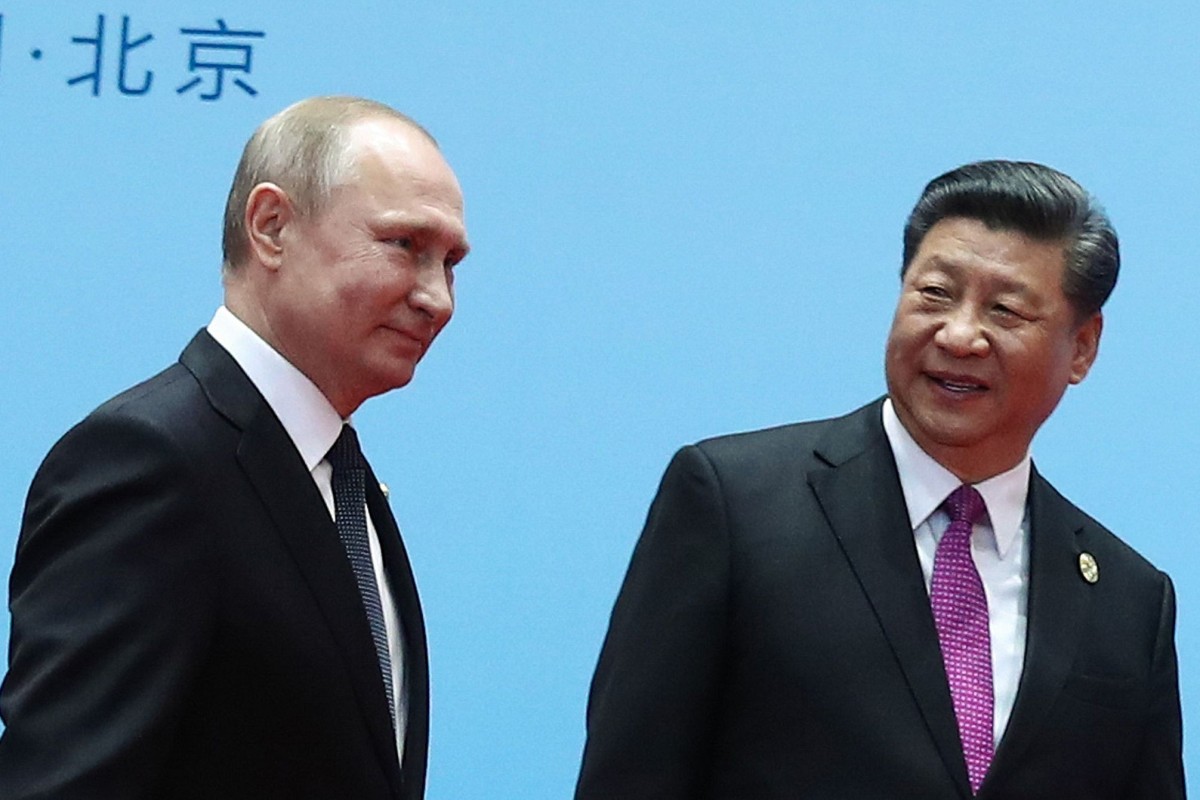
Xi Jinping has met Vladimir Putin more times than any other foreign leader since he took power in 2013. Photo: AFP
Beijing is stepping up efforts to seek support from regional and global players such as Russia and Central Asian nations as its geostrategic rivalry with Washington heats up.

President Xi Jinping is expected to meet his Russian counterpart Vladimir Putin next month, when he will also address the St Petersburg International Economic Summit,

Russian presidential aide Yuri Ushakov told state-run TASS news agency earlier.

The Chinese president will also visit the Kyrgyzstan capital Bishkek for the Shanghai Cooperation Organisation (SCO) summit in June, as well as another regional security forum in Dushanbe, Tajikistan.

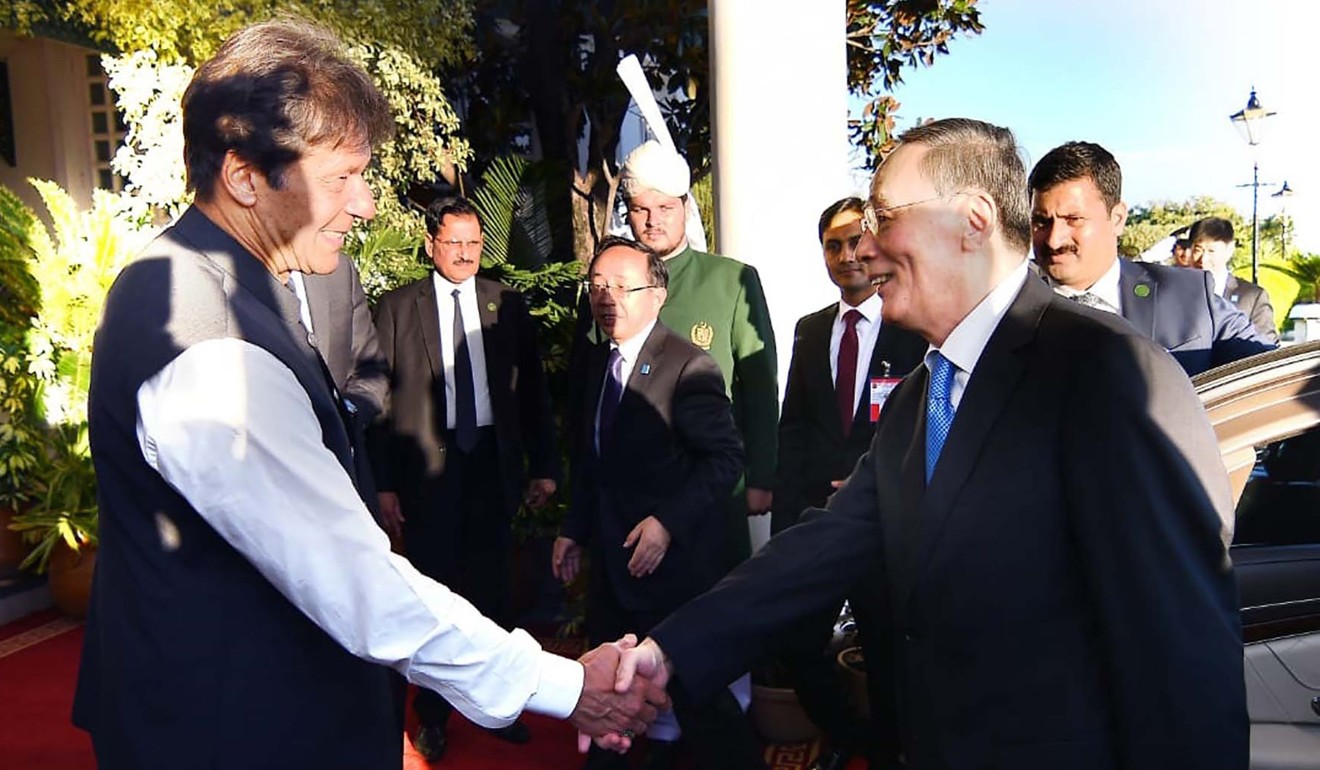
Meanwhile, Vice-President Wang Qishan is visiting Pakistan before he heads to the Netherlands and Germany, according to the Chinese foreign ministry.
Pakistani Prime Minister Imran Khan meets Chinese Vice-President Wang Qishan in Islamabad on Sunday. Photo: AFP
The latest flurry of diplomatic activity comes as competition between China and the US intensifies on several fronts including trade and technology, the South China Sea and the Arctic, where Beijing’s partnership with Moscow –

funding and building ports, berths and icebreakers off Russia’s shores

– has drawn criticism from Washington.

It will be Xi’s second time at the St Petersburg forum, and observers expect the Chinese leader will reaffirm Beijing’s commitment to multilateralism and promote the nation as a champion of openness and cooperation.
China-Russia ties unrivalled, Beijing warns before Pompeo meets Putin
It will also be his second meeting with Putin in two months, after talks on the sidelines of the Belt and Road Forum in Beijing in late April, when the Russian president

offered his support

for the controversial China-led infrastructure and investment initiative.

With China and Russia edging closer, the latest meeting is likely to see efforts to coordinate their strategies on a range of issues – including Venezuela, North Korea, nuclear weapons and arms control, according to observers. Xi has met Putin more times than any other foreign leader since he took power in 2013.

“This time it is very likely that the latest anti-China moves by the US, such as new tariffs and the Huawei ban, will feature prominently in their conversations,” said Artyom Lukin, an associate professor at Far Eastern Federal University in Vladivostok.

Lukin said Russia’s stagnating economy and sanctions imposed by the West limited its role as a substitute for the foreign markets and technologies China could lose access to because of the US crusade. But he said Putin would “provide political and moral support to Xi”.

“That is also significant as Russia has been withstanding intense US-led sanctions pressure for more than five years already,” Lukin said, referring to sanctions imposed after Russia’s annexation of Crimea in 2014.

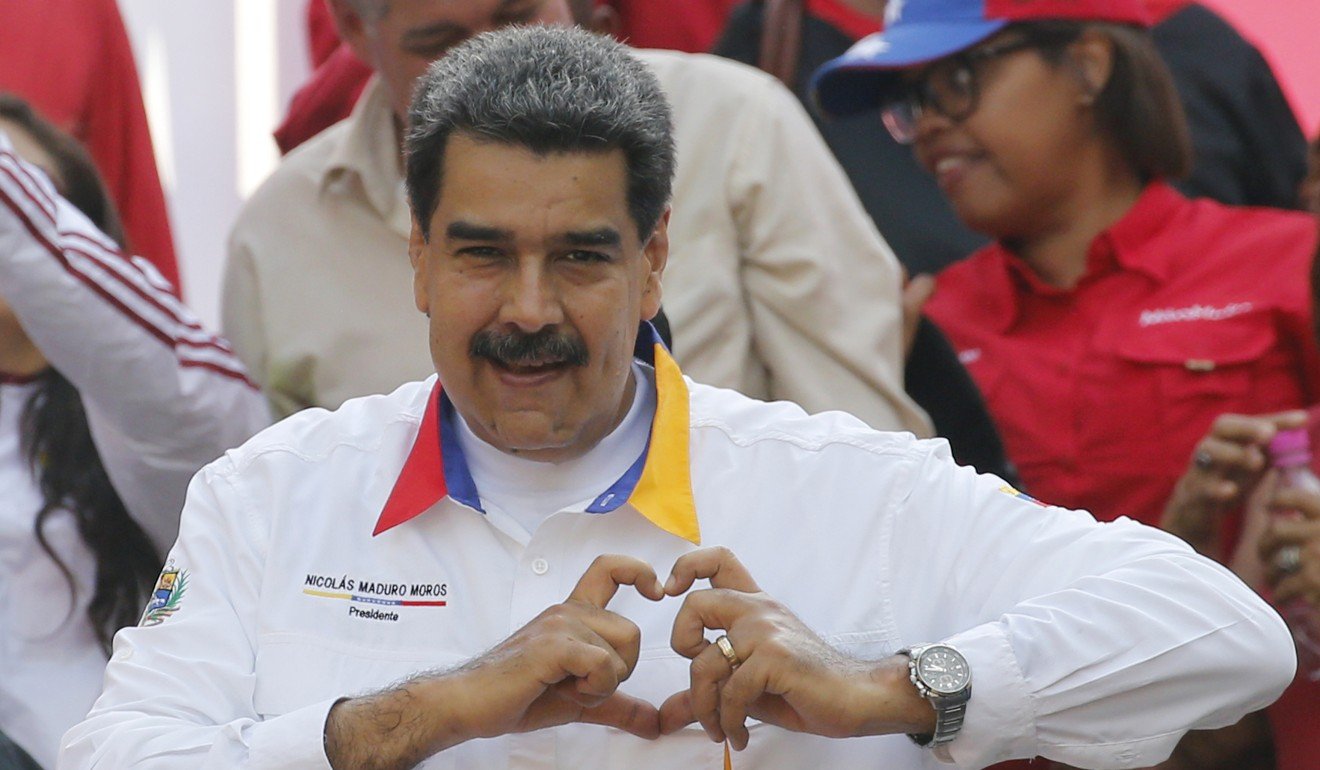
Xi and Putin are also expected to talk about Venezuela, where US-backed opposition leader Juan Guaido is attempting to oust socialist President Nicolas Maduro, who has the support of China and Russia.

Venezuelan President Nicolas Maduro has the backing of China and Russia. Photo: AP

“Moscow and Beijing are not able to seriously hurt Washington by raising tariffs or denying access to high technology. However, there are plenty of areas where coordinated Sino-Russian policies can damage US interests in the short term or in the long run,” Lukin said. “For example, Moscow and Beijing could intensify their joint support for the Venezuelan government of Nicolas Maduro, frustrating Washington’s efforts to dislodge him.”

China and Russia would also be seeking to boost economic ties. Bilateral trade, dominated by Chinese imports of gas and oil, reached US$108 billion last year – falling far short of the target set in 2011 by Xi’s predecessor, Hu Jintao, of US$200 billion by 2020.

China and Russia to forge stronger Eurasian economic ties

Li Lifan, an associate research professor at the Shanghai Academy of Social Sciences, said bilateral trade was a sticking point. “This is one of the potential hindrances in China-Russia relations and Beijing is hoping to [address this] … in the face of a possible global economic slowdown,” Li said.

Given the escalating trade war with Washington, he said China would seek to diversify its investments and markets to other parts of the world, particularly Russia and Europe.

“China will step up its investment cooperation with Europe and Russia and focus more on multilateral investment,” Li said.

But Beijing was not expected to do anything to worsen tensions with Washington.

“China is currently taking a very cautious approach towards the US, trying to avoid heating up the confrontation and further aggravation of the situation,” said Danil Bochkov, a contributing author with the Russian International Affairs Council. “For China it is important to demonstrate that it has a reliable friend – Russia – but that should not be done in an openly provocative manner.”

Stephen Blank, a senior fellow at the American Foreign Policy Council in Washington, said Beijing and Moscow would also seek to contain US influence “as far as possible” from Central Asia, where China has increased its engagement through infrastructure building under the “Belt and Road Initiative”.

Leaders from the region will gather in Bishkek next month for the SCO summit, a security bloc set up in 2001 that now comprises China, Russia, Kazakhstan, Kyrgyzstan, Tajikistan, Uzbekistan, India and Pakistan. Those members account for about 23 per cent of the world’s land mass, 45 per cent of its population, and 25 per cent of global GDP.

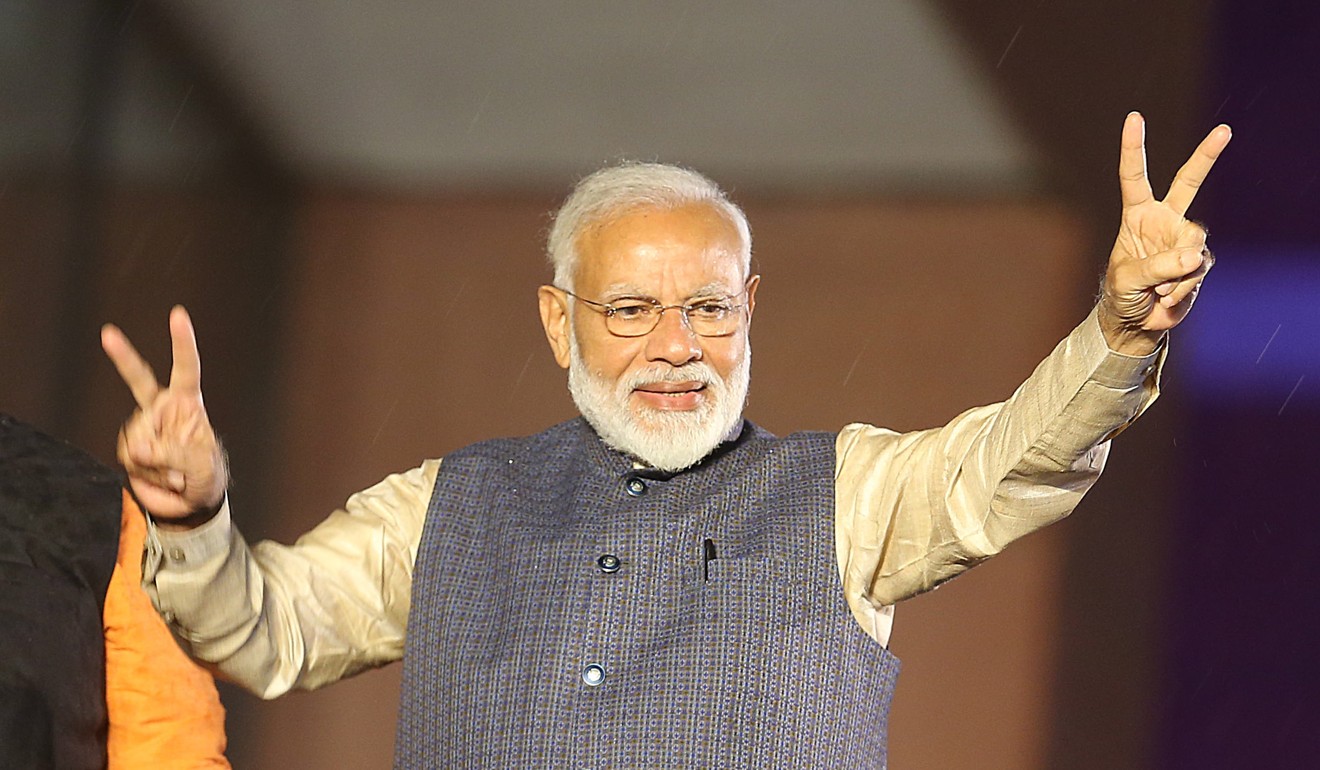
Newly re-elected Indian Prime Minister Narendra Modi could meet the Chinese president for talks in Bishkek next month. Photo: EPA-EFE

There is growing speculation that Xi will meet newly re-elected Indian Prime Minister Narendra Modi on the sidelines of that summit.

Independent analyst and author Namrata Goswami said India would be seeking a commitment to a WTO-led and rules-based multilateral trading system during the SCO talks.

“This is interesting and significant given the current US tendencies under President Donald Trump focused on ‘America first’ and the US-China trade war,” Goswami said.

Counterterrorism will again be a top priority at the SCO summit, amid concerns among member states about the rising number of Islamic State fighters returning from Syria and Iraq. Chinese scholars estimated last year that around 30,000 jihadists who had fought in Syria had gone back to their home countries, including China.

Alexander Bortnikov, chief of the main Russian intelligence agency FSB, said earlier that 5,000 fighters from a group affiliated with Isis had gathered in areas bordering former Soviet states in Central Asia, saying most of them had fought alongside Isis in Syria.

War-torn Afghanistan, which shares a border with four SCO member states – China, Pakistan, Tajikistan and Uzbekistan – is also likely to be high on the agenda at the Bishkek summit.

“With the Trump administration drafting plans to withdraw troops from Afghanistan, the SCO will assess the security situation there and decide whether to provide training for Afghan troops,” Li said.

Eva Seiwert, a doctoral candidate at the Free University of Berlin, expected the security bloc would also discuss Iran after the US withdrew from the 2015 nuclear deal and ordered new sanctions against the country.

Iran, which has observer status with the SCO, was blocked from becoming a full member in 2008 because it was subject to UN sanctions at the time. But its membership application could again be up for discussion.

Iran presses China and Russia to save nuclear deal

“The Trump administration’s unilateral withdrawal from the Iran nuclear deal in 2018 made it easy for China and Russia to present themselves as the proponents of peaceful settlement of conflicts,” Seiwert said. “Discussing the possibility of admitting Iran as a full member state would help the SCO members demonstrate their support of multilateral and peaceful cooperation.

“This would be a strong signal to the US and enhance the SCO’s standing in the international community,” she said.

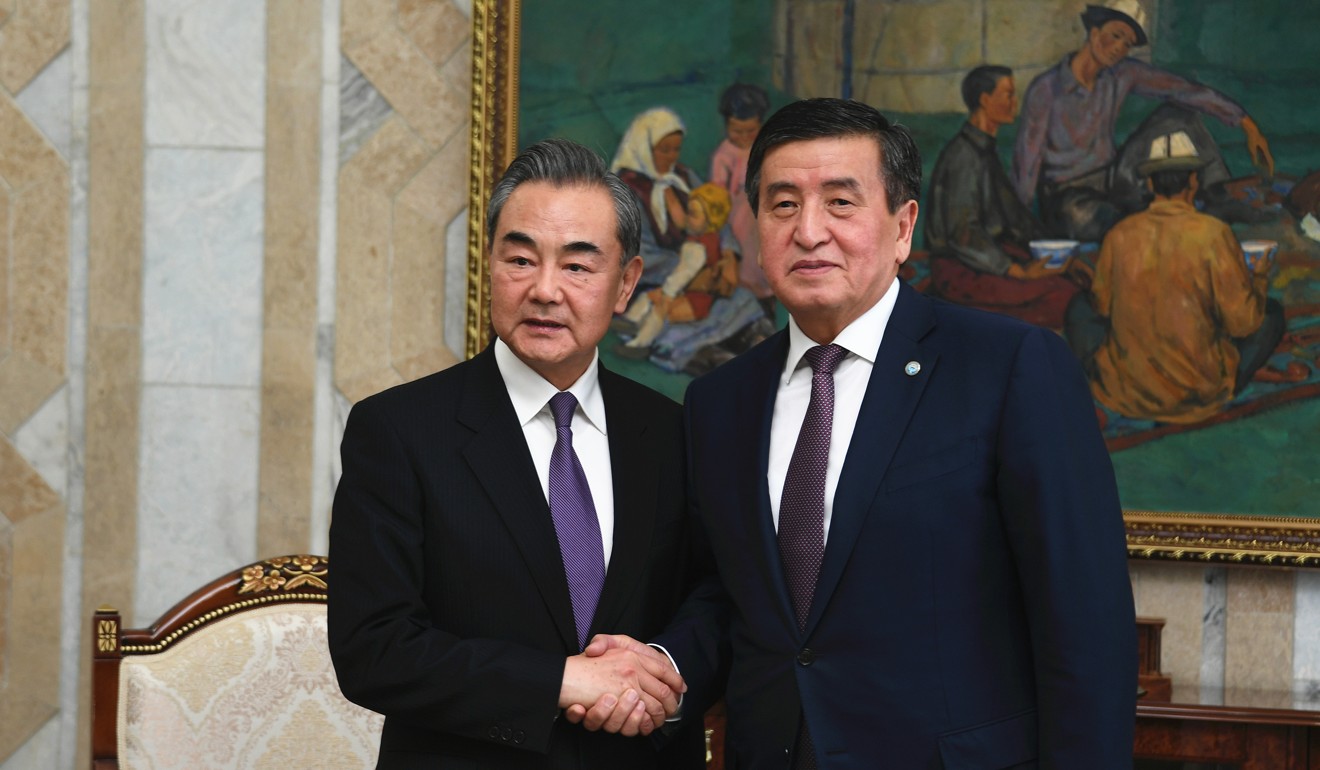
Kyrgyz President Sooronbay Jeenbekov (right) meets Chinese Foreign Minister Wang Yi in Bishkek on Tuesday last week. Photo: Xinhua

As well as security, Xi’s visit to Central Asia is also likely to focus on economic ties. Meeting Kyrgyz President Sooronbay Jeenbekov in Bishkek last week, Chinese Foreign Minister Wang Yi said Beijing would continue to “provide support and help national development and construction in Kyrgyzstan”.

Li said China may increase investment in the Central Asian region, especially in greenfield projects.

“China will continue to buy agriculture products from Central Asia, such as cherries from Uzbekistan, and build hydropower projects to meet local energy demand,” Li said. “Investment in solar and wind energy projects is also expected to increase too.”

Source: SCMP

29/04/2019

Cambodian PM says China ready to help if EU imposes sanctions

PHNOM PENH (Reuters) – China will help Cambodia if the European Union (EU) withdraws special market access over its rights record, Cambodian Prime Minister Hun Sen said on Monday as he announced a 600 million yuan ($89 million) Chinese aid package for his military.

Hun Sen, who is on a five-day trip to China to attend a Belt and Road Initiative (BRI) forum in Beijing, held bilateral talks with President Xi Jinping and signed several agreements with Cambodia’s most important ally.

Cambodia benefits from the EU’s “Everything But Arms” trade scheme which allows the world’s least developed countries to export most goods to the EU free of duties.

But Cambodia risks losing the special access to the world’s largest trading bloc over its human rights records.

During a meeting with Chinese Prime Minister Li Keqiang, Li pledged to help Cambodia if the EU withdraws the market access, according to a post on Hun Sen’s official Facebook page.

“In this regard … Prime Minister Li Keqiang also confirmed his efforts to help Cambodia,” the post said.
China is Cambodia’s biggest aid donor and investor, pouring in billions of dollars in development aid and loans through the Belt and Road initiative, which aims to bolster land and sea links with Southeast Asia, Central Asia, the Middle East, Europe and Africa.
Unlike Western countries, China does not question Cambodia’s record on rights.
The EU, which accounts for more than one-third of Cambodia’s exports, including garments, footwear and bicycles, in February began an 18-month process that could lead to the suspension of the special market access.
Among the agreements Hun Sen struck in China was one for Huawei Technologies to help Cambodia develop a system for 5G technology. The Chinese tech giant has ambitions to build the next generation of data networks across the world and boasts 40 commercial 5G contracts worldwide.
China also agreed to import 400,000 tonnes of Cambodian rice, according to Hun Sen’s Facebook page.
“China will continue to support the national defence sector in Cambodia, and in this regard, the Chinese president announced that China will provide 600 million yuan to Cambodia’s defence sector,” the post said.
Source: Reuters
Law of Unintended Consequences

continuously updated blog about China & India

ChiaHou's Book Reviews

continuously updated blog about China & India

What's wrong with the world; and its economy

continuously updated blog about China & India