Chindia Alert: You’ll be Living in their World Very Soon
aims to alert you to the threats and opportunities that China and India present. China and India require serious attention; case of ‘hidden dragon and crouching tiger’.
Without this attention, governments, businesses and, indeed, individuals may find themselves at a great disadvantage sooner rather than later.
The POSTs (front webpages) are mainly 'cuttings' from reliable sources, updated continuously.
The PAGEs (see Tabs, above) attempt to make the information more meaningful by putting some structure to the information we have researched and assembled since 2006.
The measures China has taken to stop the spread of the coronavirus are starting to have an impact, Mi Feng, a spokesman at the National Health Commission, said on Sunday.
In other developments:
The number of people who have tested positive on the Diamond Princess cruise ship, which is being held in quarantine in Japan, has risen to 355. The US and Canada are sending planes to evacuate their citizens
A Chinese tourist has died in France – the first fatality outside Asia
An 83-year-old American woman has tested positive after disembarking another cruise ship that was turned away by a number of countries before being allowed to dock in Cambodia
In the UK, all but one of nine people being treated have been discharged from hospital
On Saturday, World Health Organization (WHO) head Tedros Adhanom Ghebreyesus praised Beijing’s response to the outbreak.
“China has bought the world time. We don’t know how much time,” he said. “We’re encouraged that outside China, we have not yet seen widespread community transmission.”
How is China coping?
Tens of millions of Chinese still face heavy restrictions on their day-to-day life as part of the government’s efforts to halt the spread of the disease, which causes a disease named Covid-19.
Much of the response has focused on the hard-hit province of Hubei and its capital Wuhan, where the outbreak began. The city is all but sealed off from the rest of the country.
Foreign Minister Wang Yi said that along with a drop in infections within Hubei there had also been a rapid increase in the number of people who had recovered.
China’s central bank will also disinfect and store used banknotes before recirculating them in a bid to stop the virus spreading.
Media caption Medics in Wuhan resort to shaving their heads in a bid to prevent cross-infection of the coronavirus
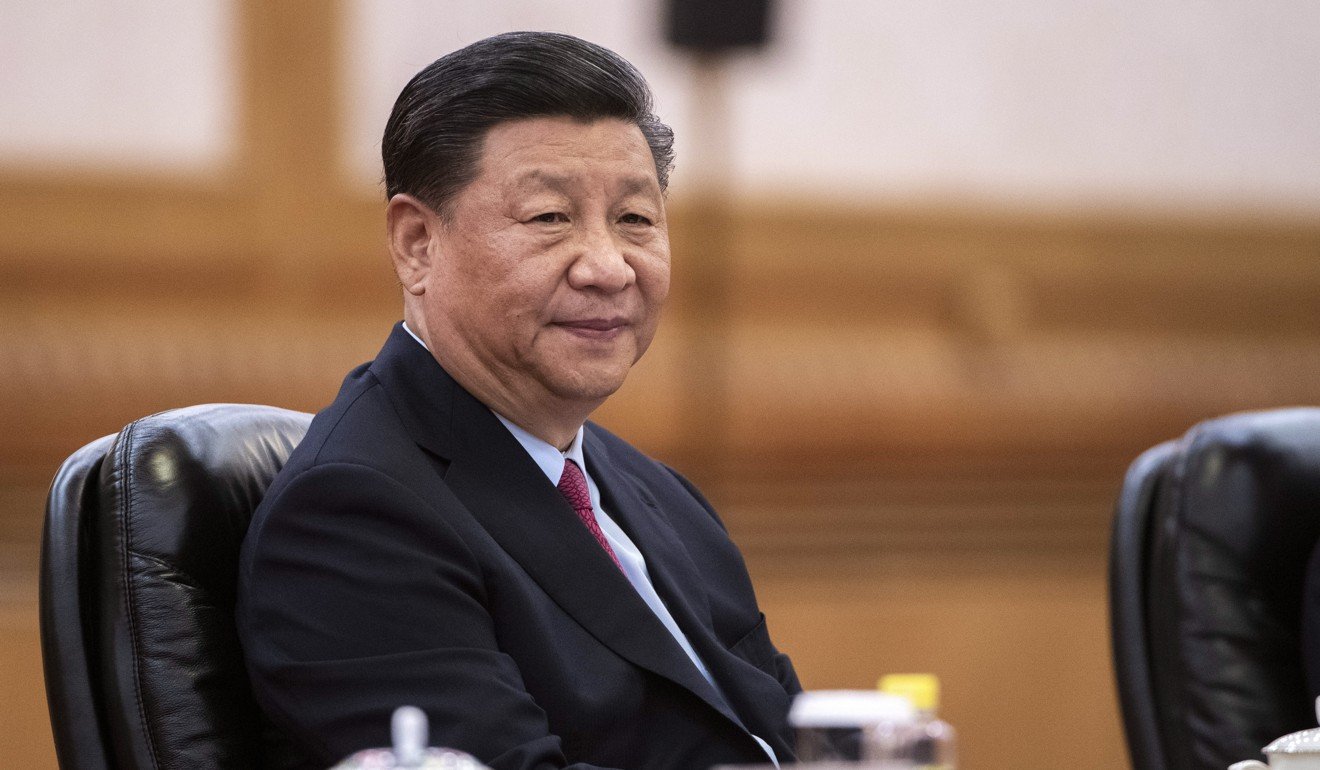
In another development Chinese state media published a speech from earlier this month in which Chinese President Xi Jinping said he said he had given instructions on 7 January on containing the outbreak.
At the time, local officials in the city of Wuhan were downplaying the severity of the epidemic.
This would suggest senior leaders were aware of the potential dangers of the virus before the information was made public.
With the government facing criticism for its handling of the outbreak, analysts suggest the disclosure is an attempt to show the party leadership acted decisively from the start.
Veterans of Sino-Japanese war – which ended 74 years ago – among those likely to be set free, state media says
Nine categories of convicts will be pardoned, but actual numbers will not be disclosed until cases have been reviewed by the courts
China’s amnesty will be no benefit to people like Bo Xilai, the former Chongqing party boss who was sentenced to life imprisonment for corruption in 2013. Photo: AFP
There will be no pardons for people jailed under President Xi Jinping’s sweeping anti-corruption campaign, Chinese state media said late Saturday after Beijing announced a prisoner amnesty as part of its celebrations for the 70th anniversary of the founding of the People’s Republic of China, which falls on October 1.
While the report did not give any indication of how many people would be set free – the cases must first be reviewed by the courts – it said the amnesties would be granted to those who fell into one of nine categories.
These include convicts aged 75 and above who are suffering from a physical disability, people who fought in the Sino-Japanese war – which ended in 1945 – or in the Chinese civil war, which ended in 1949 and led to the creation of modern-day China.
Other categories include prisoners sentenced as minors to terms of not more than three years, and those who were convicted of a crime while acting in self-defence and, again, sentenced to a maximum of three years.
The Communist Party declared a “crushing victory” in Xi’s war on corruption. Photo: EPA-EFE
Anyone convicted of a serious or violent crime, including murder, rape, kidnapping, corruption, arson and drug trafficking is ineligible for the amnesty, the report said. This group also encompasses those who refused to confess to their crimes or show remorse, and anyone deemed still a threat to society.
The amnesty is the second of Xi’s presidency and ninth in the country’s history. The previous seven were all during Mao Zedong’s leadership.
China considers prisoner amnesty for 70th anniversary
to commemorate the 70th anniversary of the end of the Sino-Japanese war, which also marked the end of World War II. Though, as will be the case this time around, none of them were serving prison terms for corruption.
A spokesperson for the National People’s Congress, which approved the amnesty, was quoted by Xinhua as saying that Beijing hoped the pardons would have a positive political, legal and social impact.
“Considering the fight against corruption remains a challenge, and in order to maintain the pressure of the crackdown, it would be inappropriate to grant amnesties to corruption convicts,” the spokesperson said.
In December, the Communist Party declared a “crushing victory” in Xi’s war on corruption, which since 2012 has seen more than 1.3 million party officials – from powerful “tigers” to low-ranking “flies” – rounded up and convicted.
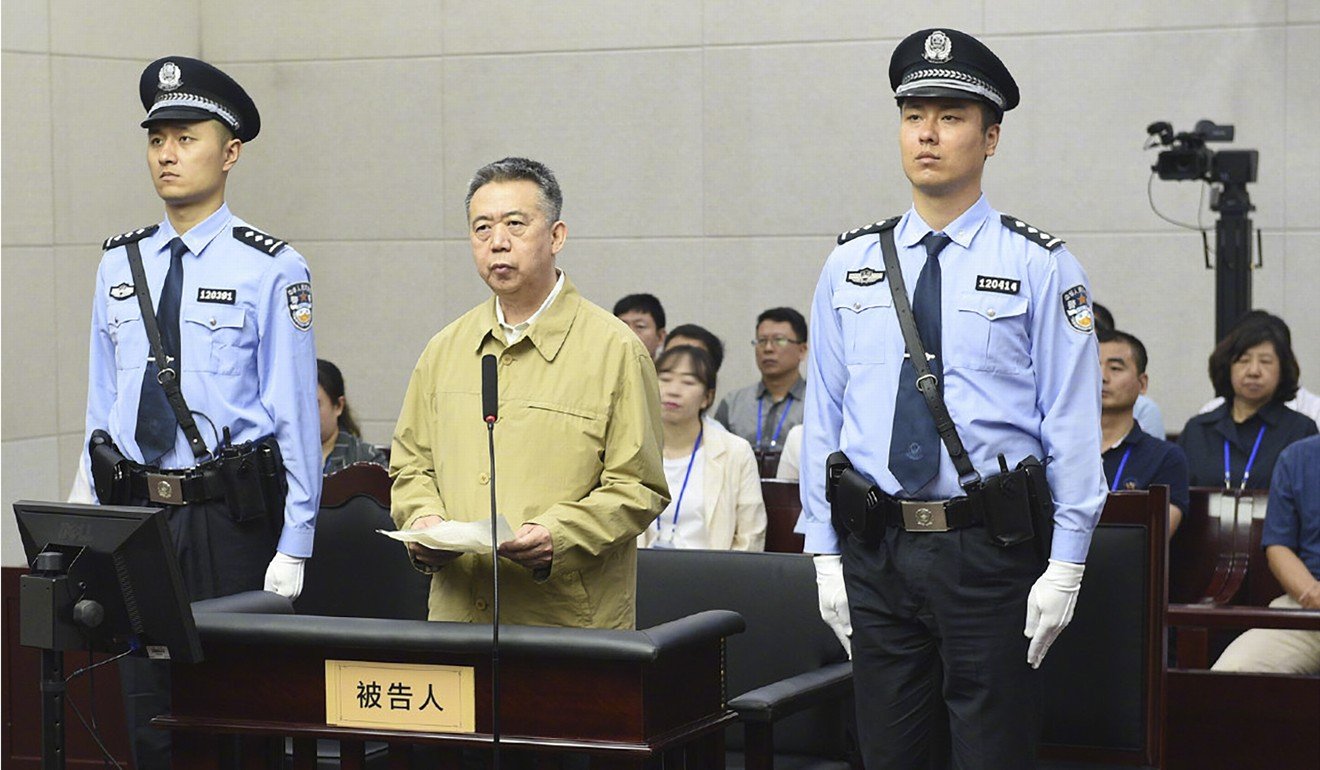
Meng Hongwei, the former president of Interpol, pleaded guilty earlier this month to taking bribes totalling more than US$2 million.
Among the most high profile officials to have been snared are former Politburo Standing Committee member and domestic security tsar
, the former president of Interpol, looks set to become the latest senior official to join the convicts’ club after pleading guilty in court earlier this month to taking bribes totalling more than 14 million yuan (US$2 million).


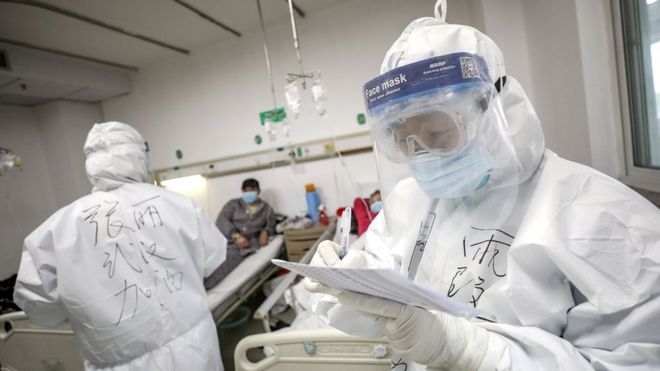 Image copyright REUTERS


 CHINDIA ALERT: You'll be living in their world, very soon