Archive for ‘China Meteorological Administration’

01/03/2020

China boosts 350 mln tonnes of man-made precipitation to lower risks of forest fires, ease drought

BEIJING, Feb. 29 (Xinhua) — China has used artificial means to boost 350 million tonnes of precipitation to lower the risks of forest fires and ease drought, sources with the China Meteorological Administration said Saturday.

The artificial precipitation was implemented from the air and the land by local meteorological departments from Wednesday to Friday, covering 292,000 square kilometers, according to the administration.

China has seen less rainfall in some regions since February. The administration has required local meteorological departments to increase man-made precipitation while following the guidance of epidemic prevention and control.

From Wednesday to Friday, 14 flights have implemented aircraft artificial precipitation in four provinces and municipalities, and artificial precipitation from the land has been done more than 450 times in 15 provinces, autonomous regions and municipalities.

Source: Xinhua

08/07/2019

Ministry dispatches work teams to assist with local flood control

BEIJING, July 7 (Xinhua) — Four work teams have been dispatched to four provincial-level regions in southern China, including Jiangxi, Hunan, Guangxi and Guizhou, to assist with local flood control efforts, according to the Ministry of Water Resources Sunday.

The National Meteorological Center earlier issued a yellow alert for heavy rains in the country’s southern regions. Characterized by wide coverage and long duration, the rainstorm would hit the regions with precipitation up to 180 mm in some areas.

Water levels of major rivers in southern China would be above the warning line, according to the weather forecast.

The ministry stresses that local governments should take targeted measures to prevent mountain torrents, ensure dam safety during floods and strengthen patrols on the levee system.

The ministry also asks local water resources departments to pay close attention to the weather conditions and raining and flood situation, issue alerts timely and move the people out of the dangerous areas in time.

China has a four-tier color-coded weather warning system, with red representing the most severe, followed by orange, yellow and blue.

The China Meteorological Administration on Sunday also issued a grade-IV response for the upcoming rains. The grade-IV response, the lowest in China’s emergency response system, means a 24-hour alert, daily damage reports, and the allocation of money and relief materials within 48 hours.

Source: Xinhua

08/07/2019

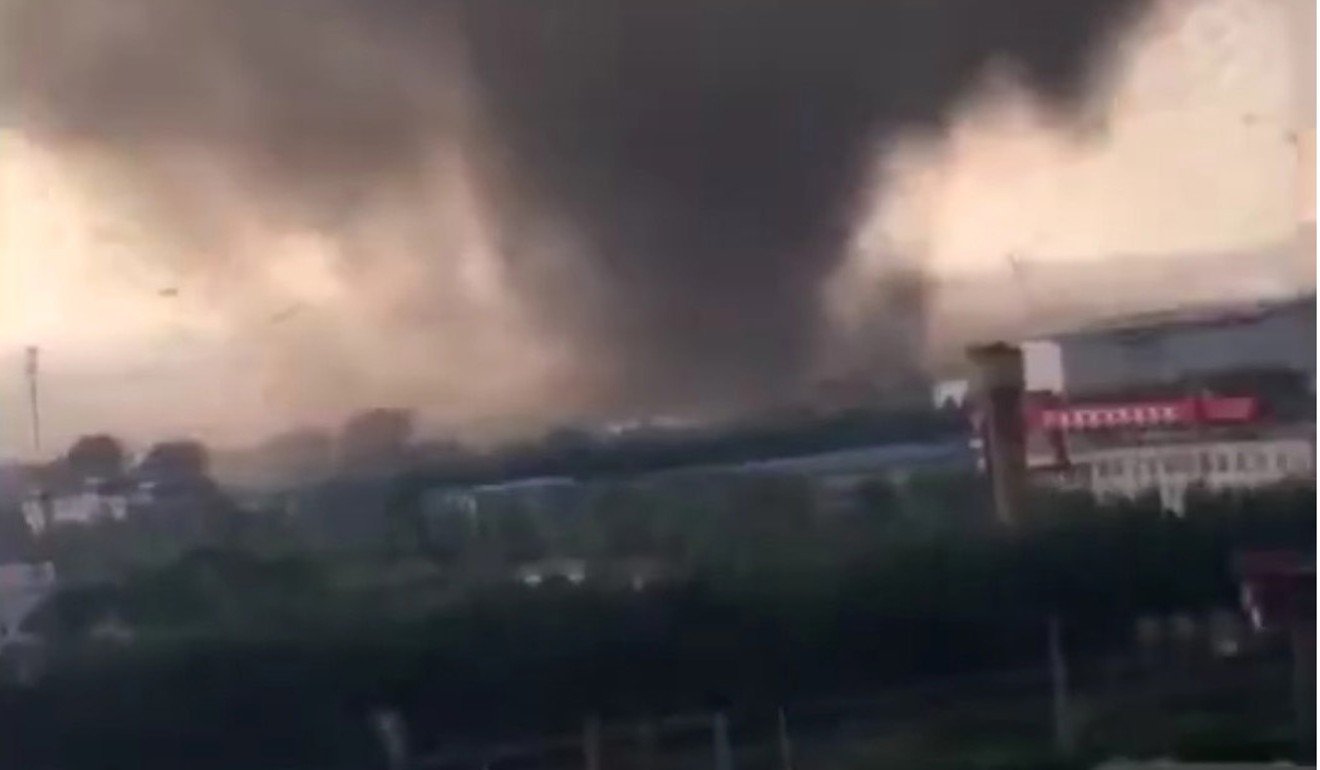
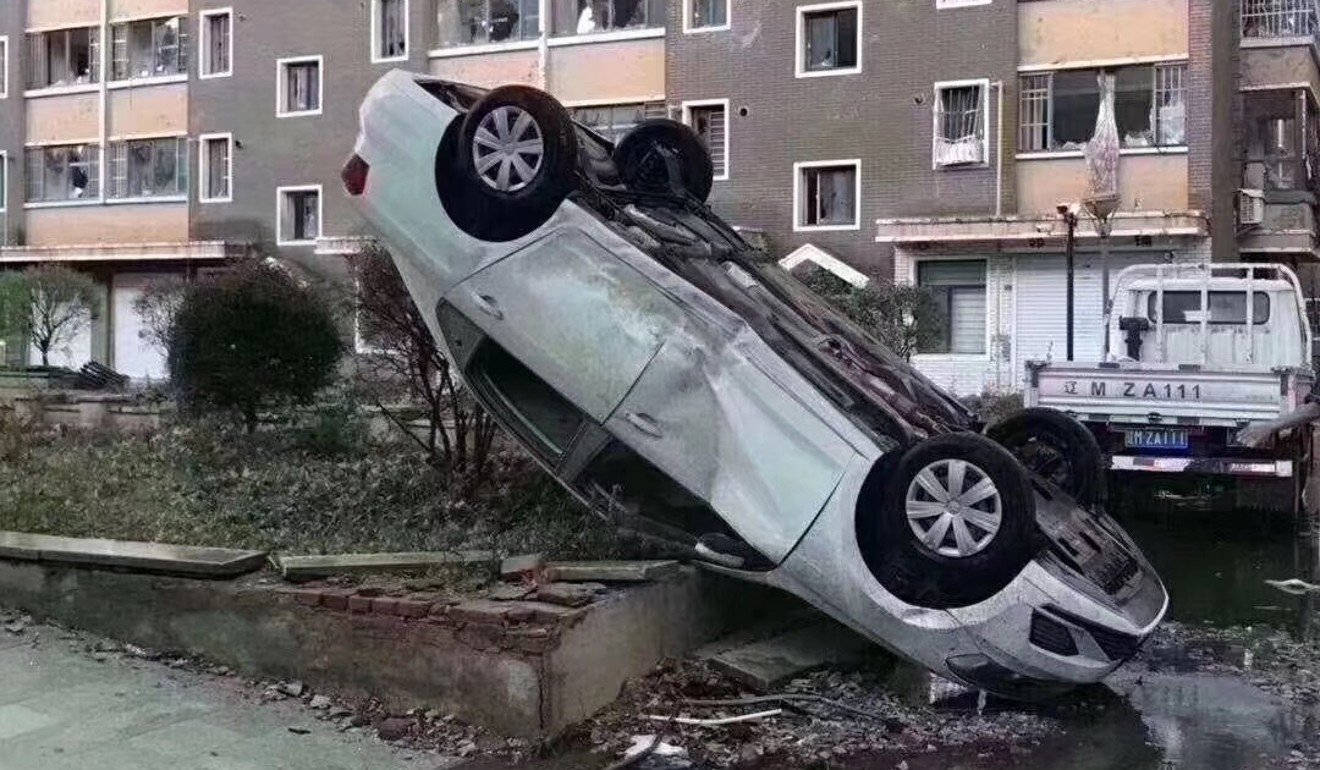
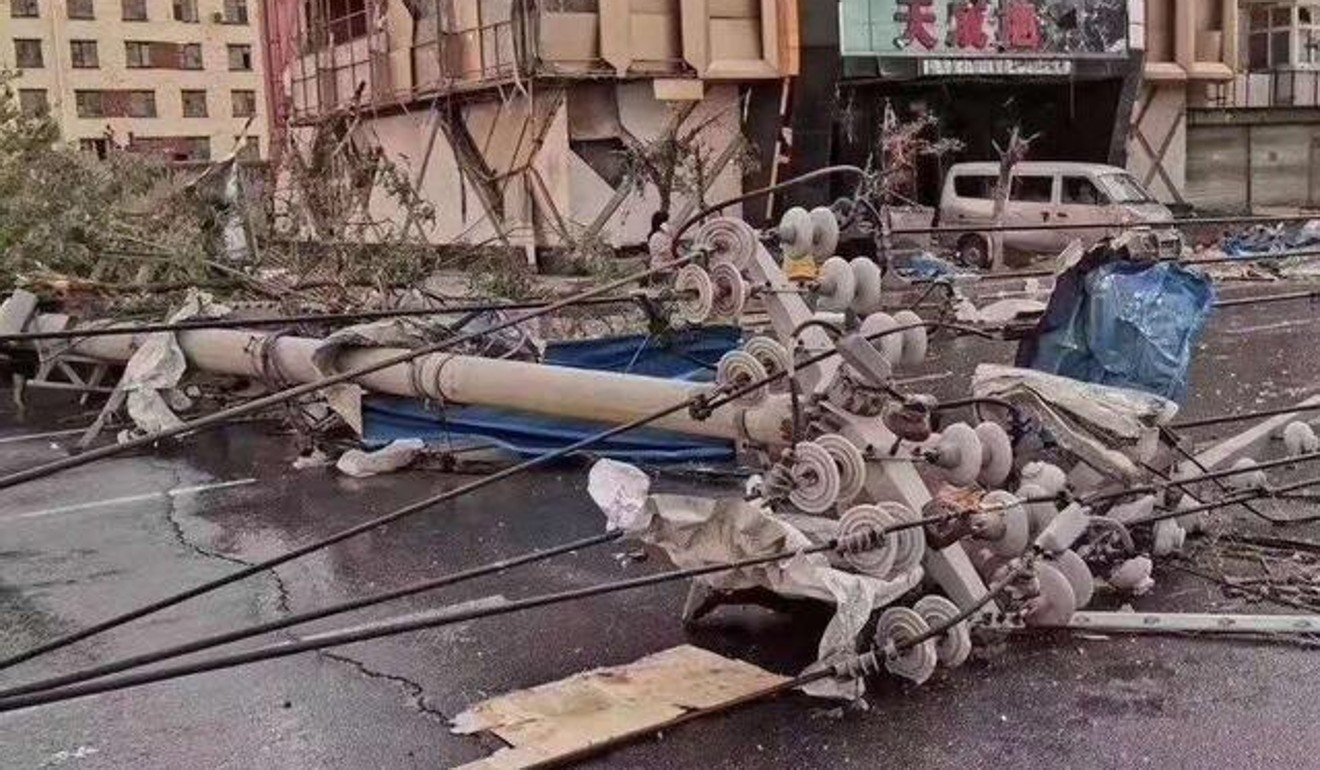
Six dead after freak tornado tears through town in northern China

  • Homes destroyed and trees uprooted as destructive forces rips area apart in 15 minutes
Residents try to pick up the pieces after a deadly tornado destroyed homes and factories in Kaiyuan, Liaoning province, on Wednesday afternoon. Photo: Weibo
At least six people died and 190 were injured when a tornado struck a city in northeastern China on Wednesday, according to police.
The freak tornado formed in Jingouzi township in Kaiyuan, Liaoning province, at about 5pm, reaching speeds of about 23 metres per second before weakening after roughly 15 minutes, state news agency Xinhua reported.
A tornado carves a path of destruction through Kaiyuan in Liaoning province on Wednesday. Photo: Xinhua
It tore through the township, demolishing homes, uprooting trees, and stripping factories of cladding in the city’s economic development zone, according to a Beijing News video posted online.
The Beijing Times website quoted a resident as saying that she saw at least one car tossed into the air and buildings smashed by the tornado.
Kaiyuan in Liaoning province is counting the toll of destruction from a deadly tornado on Wednesday. Photo: Weibo

“Power went off in surrounding areas as the tornado went by. About two or three minutes later there was thunder and then it hailed,” Red Star News quoted a high school student as saying.

Kaiyuan issued an emergency alert and sent about 800 police officers, firefighters and medical personnel to the area.

Two children killed as bouncy castle destroyed by tornado in China
By Thursday, about 210 people had been rescued and some 1,600 evacuated, The Beijing News said. About 10,000 people were also “displaced”.

“There are 63 people in hospital now with 15 in critical condition,” Beijing Times quoted Yu Shuxin, director of Kaiyuan’s emergency management bureau, as saying.

“Communication systems have recovered in most areas. Electricity infrastructure was severely damaged but we’ll try our best to get the power supply back up.”

The wild weather brought down power lines and cut communications in some areas. Photo: Weibo

Tornadoes are so rare in China, particularly the country’s north, that it does not have a specific alarm for it, according to a website backed by the China Meteorological Administration.

In 2016, 99 people died and more than 800 others were injured in a tornado in Funing county, Jiangsu province.

Source: SCMP

12/05/2019

WMO “honor day” kicks off at horticultural expo

CHINA-BEIJING-HORTICULTURAL EXPO-THEME EVENT-WMO HONORARY DAY (CN)

People make satellite models in ecological and meteorological house during the “World Meteorological Organization Honorary Day” theme event held as part of the Beijing International Horticultural Exhibition in Yanqing District in Beijing, capital of China, May 11, 2019. (Xinhua/Ju Huanzong)

BEIJING, May 11 (Xinhua) — World Meteorological Organization (WMO) “honor day” kicked off at the ongoing International Horticultural Exhibition in Beijing Saturday.

Zhang Wenjian, assistant secretary-general of the WMO, said a majority of the natural disasters in 2018 related to extreme weather and environmental degradation, which affected nearly 62 million people.

As global warming and climate change have increasing influence on the society and economy, WMO is devoted to providing operational, accessible and authoritative information and service on the changing earth system, Zhang told a press conference on the “honor day” event.

The ecological and meteorological exhibition area at the expo was supported jointly by the WMO, China Meteorological Administration and Beijing Meteorological Service, focusing on the relationship between meteorology, horticulture and life.

The exhibition area not only interpreted how climate change closely related to human civilization but also established the eco-meteorological observing station which was capable of providing real-time observation data on meteorology.

Source: Xinhua

25/04/2019

China to promote space cooperation for UN sustainable development

CHANGSHA, April 24 (Xinhua) — China will promote international space cooperation to contribute to sustainable development goals set by the United Nations, a senior official with the China National Space Administration (CNSA) said here Wednesday.

“China is to build a new type of cooperative and win-win relationship with other space agencies and international organizations around the world, to jointly enhance the role of space industries in facilitating sustainable development,” said CNSA deputy director Wu Yanhua at the United Nations/China Forum on Space Solutions: Realizing the Sustainable Development Goals.

Over the years, the use of space has been recognized as one of the key components to successfully achieve the 17 Sustainable Development Goals (SDGs) of the 2030 Agenda for Sustainable Development adopted by the UN, according to Simonetta Di Pippo, director of United Nations Office for Outer Space Affairs.

In order to quantify the impact, a dedicated study was published in early 2018 and shows that around 40 percent of the 169 targets underpinning the 17 SDGs benefit from the use of geo-location and earth observation satellites, said Simonetta at the forum.

Committed to better service for countries along the Belt and Road Initiative, especially developing countries, China is constructing a space information corridor and sharing satellite resources, according to Wu.

“China’s earth observation satellites have actively supported the construction of the Belt and Road spatial information corridor, vigorously developed space international cooperation,” said Wang Cheng, a researcher from the CNSA.

FY-2H, the meteorological satellite located over the Indian Ocean, can fill the observation gap and provide weather monitoring service to countries along the Belt and Road, said Tang Shihao from China Meteorological Administration.

The unique strength of satellites in supporting telemedicine, epidemic prevention and control, and distance education, social security services can be improved, Wu said.

Independently constructed and operated by China, the BeiDou Navigation Satellite System has been widely used in many countries and regions. “The system started to provide RNSS (Radio Navigation Satellite System) services worldwide last December,” said Gao Weiguang from China Satellite Navigation Project Center.

Wu Yanhua said that China was developing a space economy and supporting commercial space development by pushing forward the commercialization of space technologies.

As the provider of Long March launch services, the China Great Wall Industry corporation (CGWIC) has performed 48 dedicated launch services and 17 piggyback launch services for international clients with high successful rate and competitive pricing, according to Zhou Yuanying from CGWIC.

Wu said that China would undertake monitoring and research of global climate change by taking advantage of satellites, to achieve the goals outlined in the Paris Agreement.

By pushing forward international space cooperation, China is also committed to joint efforts to tackle contemporary issues with global impact including poverty, hunger, natural disasters and environmental pollution, Wu added.

Many countries, in particular developing countries, need to make the best possible use of space assets to support the SDGs. At the same time, a lot of space agencies and companies are struggling to find partners/users to which they can offer their particular space solutions, Simonetta said.

“This Forum will build on previous UN workshops and symposiums to provide a unique platform for users and space solution providers to forge partnerships and thus contribute concretely to the achievement of the SDGs.” Simonetta said.

Also on Wednesday, the CNSA inked agreements on space cooperation separately with the UN Office for Outer Space Affairs, Turkey, Ethiopia and Pakistan.

Since 2016, China has set April 24 as the country’s Space Day. Activities on Space Day have become a window for the Chinese public and the world to gain a better understanding of China’s aerospace progress.

The theme this year is to “pursue space dreams for win-win cooperation.”

Source: Xinhua

27/02/2019

Typhoon committee’s annual session opens in China

GUANGZHOU, Feb. 26 (Xinhua) — The 51st session of the Typhoon Committee, an intergovernmental body under the Economic and Social Commission for Asia and Pacific (ESCAP) and the World Meteorological Organization (WMO), opened in southern China’s Guangzhou city on Tuesday.

During the four-day session, about 180 meteorologists from the committee’s 14 members, government officials as well as representatives from international organizations will discuss how to improve typhoon monitoring and forecasting in the Asia-Pacific.

Petteri Taalas, secretary-general of WMO, said it was highly important for countries and regions to work together and share experiences with each other to face typhoon-related disasters.

“The Asia-Pacific region is one of the regions most affected by tropical cyclones. The committee’s members have collaborated to mitigate the damages caused by typhoons,” said Yu Yong, deputy director of China Meteorological Administration.

Yu added that China had played an important role in the region’s typhoon forecasting and personnel training.

“China’s Fengyun meteorological satellites now serve over 90 countries and regions,” he said. “We have also provided training programs for more than 30 people from the committee’s members.”

Guangdong provincial meteorological bureau received the Dr. Kintanar Award from the committee at the opening ceremony for its outstanding work in typhoon forecasting and disaster mitigation. The coastal province is one of the most affected by typhoons in China.

Founded in 1968, the ESCAP/WMO Typhoon Committee is dedicated to promoting regional cooperation to minimize the damages caused by typhoons in the Asia-Pacific region.

Source: Xinhua

Law of Unintended Consequences

continuously updated blog about China & India

ChiaHou's Book Reviews

continuously updated blog about China & India

What's wrong with the world; and its economy

continuously updated blog about China & India