Archive for ‘China-US trade war’

28/08/2019

China again blocks US Navy port visit as Qingdao request is denied

  • It follows Beijing’s decision earlier this month to turn down an application for two US Navy ships to visit Hong Kong
  • The countries have traded barbs about the handling of anti-government protests in the city
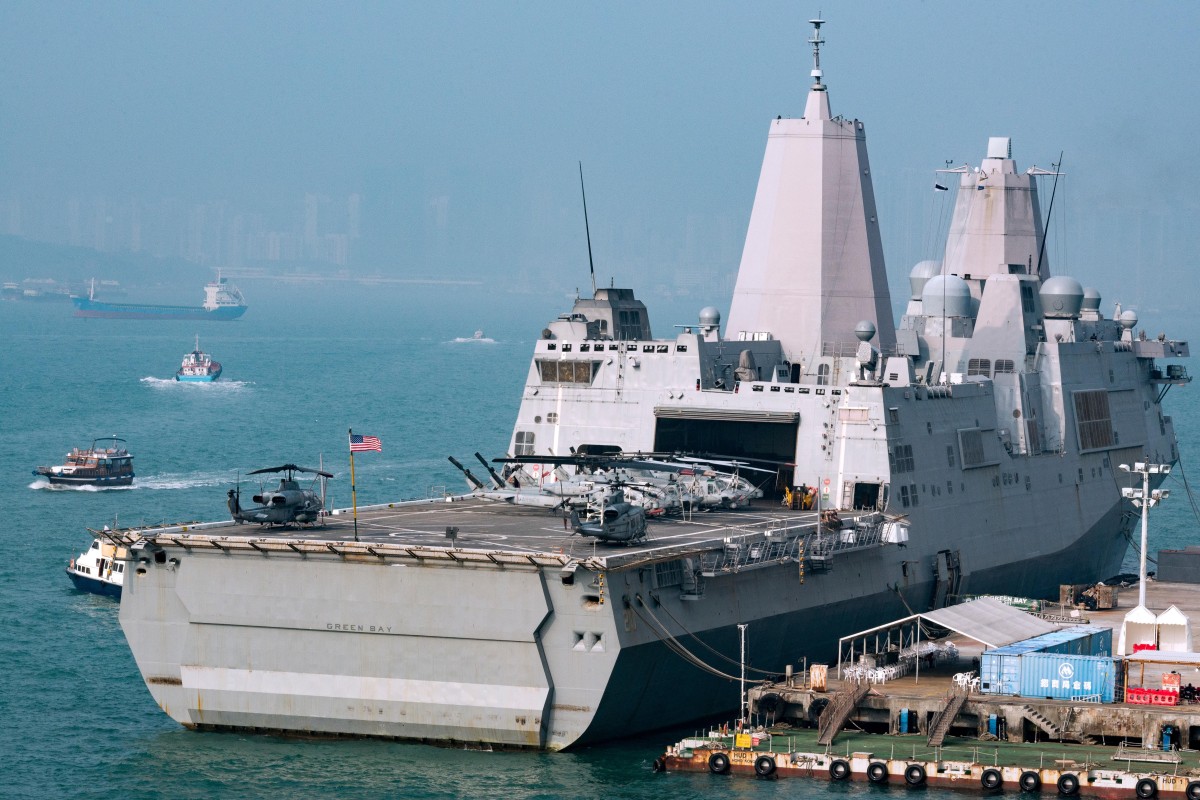
The US has had port visits denied by Chinese authorities twice this month. Photo: Alamy

A US Navy warship was denied a port visit to the eastern Chinese city of Qingdao on Sunday, the US Indo-Pacific Command said on Wednesday.

The request denial comes at a time of heightened tensions between China and the United States, with the countries engaged in a prolonged trade dispute and a war of words over anti-government protests in Hong Kong.

“The PRC [People’s Republic of China] denied the US Navy’s request to visit the Qingdao Port,” Commander Reann Mommsen, public affairs officer for the US Seventh Fleet, said in a statement on Wednesday.

Mommsen declined to name the warship denied entry or when the request was refused, referring questions about the reasons to Beijing.

The blocked visit was first reported by Reuters, which cited an anonymous US defence official as saying that China had denied the request for the destroyer before the intended visit on Sunday.

It is the second time in a month that China has prevented US Navy vessels making a port call.

On August 13, the United States Pacific Fleet said China had denied requests for two US Navy ships to visit Hong Kong.

The USS Green Bay, an amphibious dock landing ship, had been due to make a port call in Hong Kong on August 17, and the guided missile cruiser USS Lake Erie was scheduled to visit next month, according to Nate Christensen, deputy spokesman for the Pacific Fleet.

A source close to the Chinese navy confirmed the Qingdao rejection, saying it was “normal practice” based on the current China-US relationship.

“Hasn’t the [US’] application to visit Hong Kong just been rejected?” the source asked.

Hong Kong has seen 12 weeks of anti-government protests, triggered by a now-shelved

extradition bill  

that would have allowed criminal suspects to be transferred to mainland China.

Beijing has increasingly   suggested
the protests are being funded by the West, a claim the US has   called “ludicrous”
.

Zhou Chenming, a Beijing-based military expert, said the refusal was a natural result of the worsening bilateral ties between China and the US.

“Many bilateral exchanges are bound to deteriorate when countries’ ties worsen, such as during the China-US trade war. And now coupled with the Hong Kong unrest, many exchanges [between China and the US] have been downgraded,” Zhou said.

Liu Weidong, from the Chinese Academy of Social Sciences, echoed Zhou’s view and said a visit from the US warship would be meaningless at present.

“Now the US is very provocative … so China doesn’t want to welcome its warship,” Liu said.

Doubt has been cast on whether trade talks between the two countries are set to resume, with Beijing’s foreign ministry contradicting US President Donald Trump’s claim that China had sought a return to the negotiating table.

The countries had been due to speak on Tuesday, according to a previous statement from China’s Ministry of Commerce after their last telephone call on August 13. But there has been no announcement so far from either side on whether such a conversation took place.

Last week, China said it would levy retaliatory tariffs of 5 to 10 per cent on US$75 billion worth of US goods. The Trump administration responded by announcing a tariff increase from 25 to 30 per cent on US$250 billion of Chinese goods, and from 10 to 15 per cent on US$300 billion worth of Chinese products.

The US also designated Beijing as a currency manipulator, raising fears of an economic cold war between the two countries.

Source: SCMP

17/08/2019

‘Risks still too big’ for China to send in troops to quell Hong Kong unrest

  • Chinese government advisers say Beijing has not reached direct intervention point but that could change if the violence continues
  • Military action would trigger international backlash, observers say, as US expresses concern over reported paramilitary movements and ‘erosion of Hong Kong’s autonomy’
Footage of trucks from the paramilitary People’s Armed Police in Shenzhen has circulated online. Photo: Handout
The unrest in Hong Kong does not yet warrant direct intervention by Beijing despite hardening public sentiment and calls for tougher action in mainland China, according to Chinese government advisers.
Shi Yinhong, an international relations expert at Renmin University and an adviser to the State Council – China’s cabinet – said China would risk damaging its ties with the United States and other major foreign powers, upsetting its own development and losing Hong Kong’s special status if it took the matter directly into its hands.
“I don’t think we need to use troops. Hong Kong police will gradually escalate their action and they haven’t exhausted their means,” Shi said, expressing a view shared by other mainland government advisers and academics.
But he warned that if the violence and chaos continued, it “won’t be too far away from reaching that point”.

A US State Department spokeswoman said the United States was “deeply concerned” about reports of paramilitary movements along the Hong Kong border and reiterated a US call for all sides to refrain from violence.

She said it was important for the Hong Kong government to respect “freedoms of speech and peaceful assembly” and for Beijing to adhere to its commitments to allow a high degree of autonomy for Hong Kong.

She said the protests reflected “broad and legitimate concerns about the erosion of Hong Kong’s autonomy”.

“The continued erosion of Hong Kong’s autonomy puts at risk its long-established special status in international affairs,” she said.

It comes after massive anti-government protests at Hong Kong International Airport

brought the city’s air traffic to a halt and triggered a huge backlash on the mainland
, where the public feel they have been wrongly targeted by the increasingly violent protesters. Many demanded the central government take action to end the chaos.
The tension deepened after US President Donald Trump, citing intelligence sources,

tweeted that the Chinese government was moving troops

to the border with Hong Kong. Trump described the situation in the city as “tricky” and called on all sides to remain “calm and safe”.

Footage of trucks from the paramilitary People’s Armed Police rolling into Shenzhen began circulating online on Saturday.
Beijing ‘unlikely to intervene’ in Hong Kong as pressure mounts on police

But Shi and others said direct intervention would be too costly to China and would only be used when all other methods had been exhausted.

“As the trade war with the US goes on, Hong Kong’s importance to our financial system is getting bigger,” Shi said. “If Beijing intervenes with too much assertiveness, the US might revoke the preferential status of Hong Kong.”

He was referring to the US’ 1992 Hong Kong Policy Act which gives the city a special status. In June, American lawmakers introduced a bipartisan bill requiring the US government to examine Hong Kong’s autonomy annually to decide whether to extend the arrangement.

Losing that status could cripple the operations of many businesses based in Hong Kong, said Shen Dingli, a Shanghai-based international affairs expert.

A satellite image appears to show a close-up of Chinese military vehicles at Shenzhen Bay Sports Centre in Shenzhen. Photo: Maxar Technologies

Wang Yong, another specialist on international political economy with Peking University, agreed.

“There would be a lot of opposition from interest groups in the US. Hong Kong is the bridgehead for many multinational corporations and investors from Wall Street to get into the Chinese market,” said Wang, who also teaches at an academy affiliated with China’s Ministry of Foreign Affairs.

“Hong Kong and the Chinese government will need to handle this with extra care, so as not to give any ammunition to hawks in the United States.

“If Hong Kong is not handled properly, it could add tensions to the bilateral ties and ruin any prospect of a trade deal.”

China rejects requests for US warships to visit Hong Kong amid protests Pang Zhongying, an international relations specialist at Ocean University of China in Qingdao, said direct intervention could also damage China’s ties with other countries.

“The whole world is watching. Beijing has exercised restraint for two months and still hasn’t taken any clear action because this is not an easy choice,” said Pang, who is also a member of the Beijing-based Pangoal Institution, a think tank that advises several ministerial offices.

While some observers said Beijing was under political pressure to end the protests in Hong Kong before October 1 – the 70th anniversary of the founding of the People’s Republic, Shi said the central government would not lose patience so easily.

“National Day [on October 1] is an important time, but the Chinese government is not naive to believe there has to be peace under all heaven then,” he said.

“It’s only a bit more than a month from now, we can almost say for sure the trade war will still be on by then and a major turning point in Hong Kong is not likely to happen. But the celebration must go on.”

Source: SCMP

30/06/2019

China’s North-South economic divide is growing, away from the glare of the US trade war

  • China’s economic centre of gravity is shifting to the southern part of the country, home to hi-tech industries and coastal ports
  • Growing divide adds to economic pressure of trade war with the US and general slowdown in China
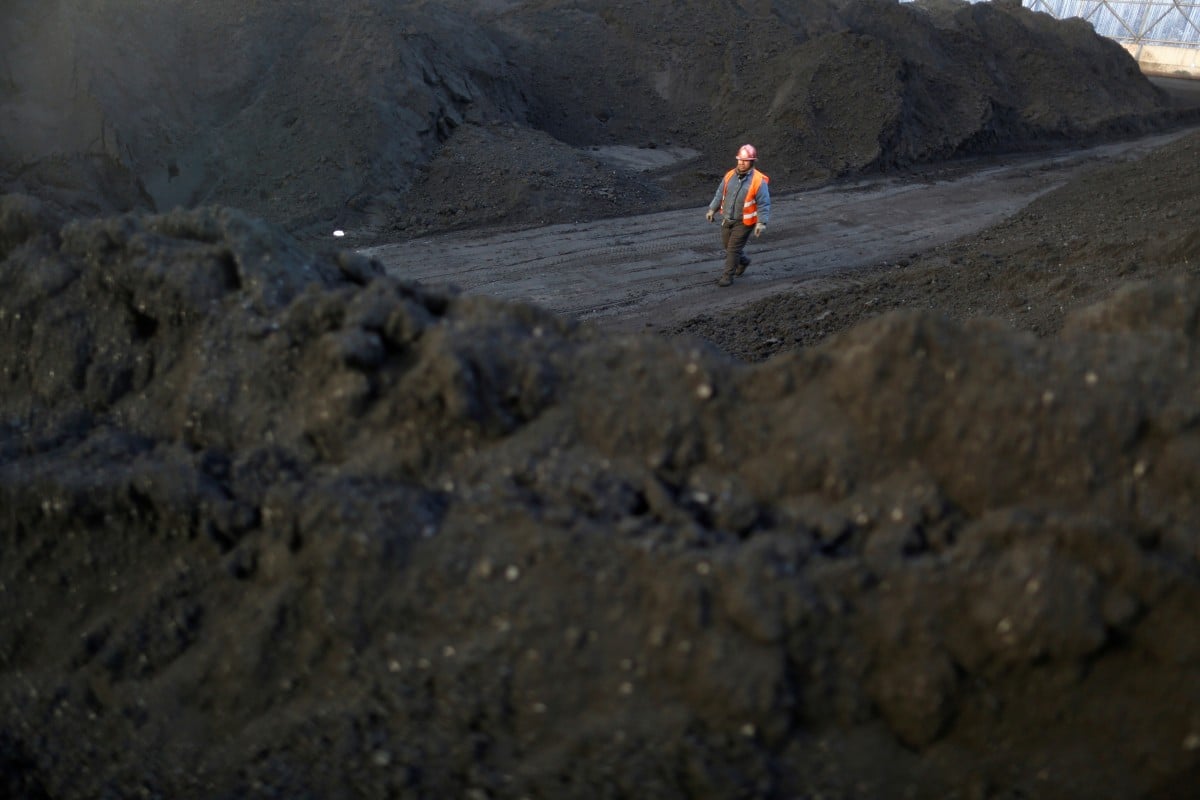
A worker walks past coal piles at a coal coking plant in Yuncheng, Shanxi province, one of China’s heavily industrial regions in the North. Photo: Reuters
Wang Le, a Beijing native, moved to Shanghai in 2016 to open a Thai boxing club. As an entrepreneur, Wang said Shanghai in China’s South is more open to new things than Beijing, in the “conservative” North.
“You do not need to worry about being niche here, no matter what types of goods, consumers can find what they need, and these types of businesses can survive,” he said.

What struck Wang as the biggest difference is the culture of doing business. In the South, he said, abiding by rules is more rooted in people’s minds than in the North, where businessmen tend to give empty promises and spend their time building close relationships with those in power to facilitate business deals.

“In general, the south has a stronger sense of service than the North, no matter if they are a vegetable salesman or a government official. In such an environment, customers [in the South] have higher demands, or are more critical [of products or services they purchase],” said Wang, who added that this can be challenging for northern entrepreneurs to get used to, but that the rewards are worth it.
View of a container terminal at the Port of Dalian in Dalian city, northeast China's Liaoning province. Photo: Handout
View of a container terminal at the Port of Dalian in Dalian city, northeast China’s Liaoning province. Photo: Handout

“As long as you do it well, they will be willing to spend money in your place,” Wang said. “‘Willingness to consume’ is also a feature of Shanghai, they are willing to spend on quality goods.”

Wang embodies the growing schism between China’s North and South, which are culturally diverse and becoming more 

economically

unbalanced.

Geographically, China is split in two by the Qinling mountain range, also known as the Sichuan Alps, and the Huai River. In recent years, these features have also served to slice the country in two economically. To the South lies China’s most affluent regions, home to most of its innovation hubs and busiest ports.

Southern China has the Pearl River and the Yangtze River Deltas, the nation’s two manufacturing hubs, and has seen its economic importance rise, with output covering 61.5 per cent of national gross domestic product (GDP) last year.

To the North lies much of its heavy industries, such as coal, which helped fuel China’s economic miracle of recent decades, but which will soon be relics of the past.

The North-South divide is growing and has become increasingly apparent since 2013 when the North’s share of economic output fell to 38.5 per cent, having previously been higher than 40 per cent. This is despite containing 15 provinces, 42 per cent of country’s population and 60 per cent of its territory.

In 2013, the average annual income in the South was lower in the North, but in 2018, the South’s per capita GDP was at least five per cent higher than the North, according to calculations made by the South China Morning Post.

The divide can be seen in their

respective attractiveness

to skilled labour. Guangdong in the South and Shandong in the North are China’s two most populous provinces, each of which has more than 100 million regular residents, however, in 2018 Guangdong attracted inflows of more than 800,000 people, while Shandong lost an estimated 400,000 people to other places.

The trend is likely to worsen as the fight for skilled workers in China escalates. Employers in the affluent South often can offer higher wages and better career prospects than the North, which has found it increasingly difficult to retain local talent.

The disparity is also apparent in the North’s reliance on government funding. As China’s economy slows and its old industries dwindle, northern governments last year generated enough revenue to cover less than half their spending. The South, in contrast, was able to fund 55 per cent of its own outlay, according to a recent study from the Chinese Academy of Fiscal Sciences, a think tank affiliated with the Ministry of Finance.

Furthermore, the infrastructure of the South, including the ports, make it a natural destination for foreign capital. This has helped it grow exponentially, as the resource rich North struggled with commodity price fluctuations.

The foreign investment helped the South become an export hub and home to hi-tech industries. Its private sector boomed, with firms able to react more quickly to market forces than the state-owned enterprises in the North.

Liu Qingfeng is a businessman from Liaoning, a northeastern Chinese province bordering North Korea and the Yellow Sea. Liu spent a decade in Shanghai and four years in Shenzhen, before moving to Beijing three years ago. He said that while businesspeople he dealt with from both China’s North and South are pragmatic and fast learners, those in the South are more “collegiate”. This attitude lends itself better to growing a private business, he thought.

“This means small and medium-sized family businesses in the south can expand to a bigger scale. The North cannot compete with that. If you read the story of successful entrepreneurs in the North, many of them are lonely heroes, fighting on their own,” Liu said.

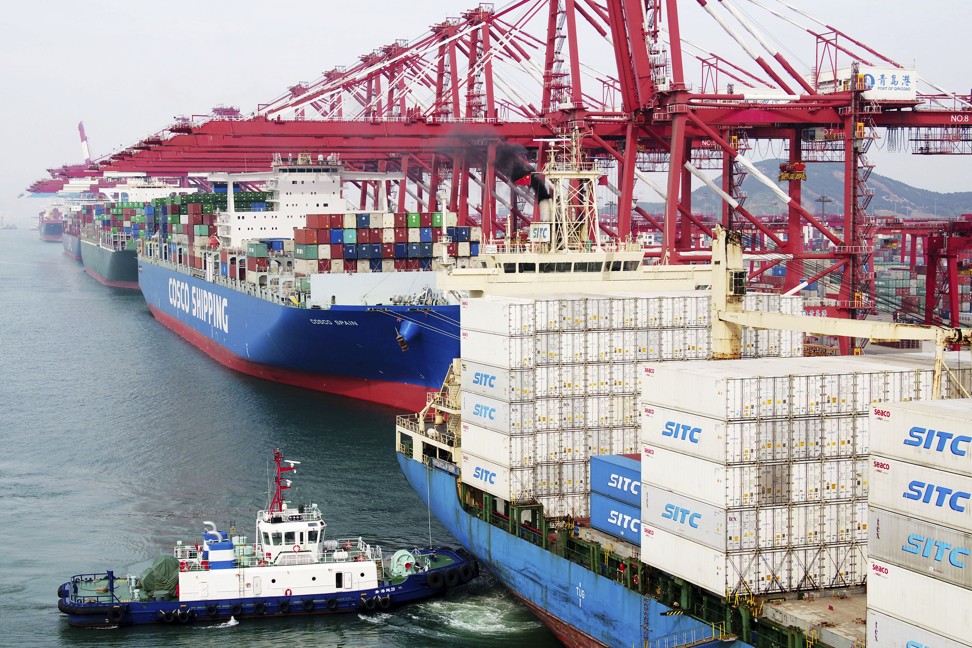
A barge pushes a container ship to the dockyard in Qingdao in eastern China's Shandong province. Qingdao is one of the North’s most important cities, economically, but Shandong province as a whole is losing people to economic migration at an alarming rate. Photo: AP
A barge pushes a container ship to the dockyard in Qingdao in eastern China’s Shandong province. Qingdao is one of the North’s most important cities, economically, but Shandong province as a whole is losing people to economic migration at an alarming rate. Photo: AP

Reforms in China’s economy are serving to accentuate this generalisation, strengthening private enterprise in the South, while hollowing out the heavy industry in the North.

By 2018, close to two thirds of the 579 special districts set up by Beijing across the country as test beds for opening to foreign investment were in the South, according to a study by Tsinghua University.

“[Government] supply-side structural reforms, including cutting excessive industrial capacity, are a tough test for many provincial economies. But for the northern provinces, the test is more profound,” said Chen Shu, an analyst from the Atlantis Finance Research Institute.

In an interview in May with Qiushi, a political journal run by the Communist Party, Liu Shijin, former vice-president of the Development Research Centre under the State Council, said the development imbalance is not all negative.

“China is a very large country and its development has been unbalanced in the past. It is often seen as a shortcoming, but in some respects, we found it could also be an advantage,” Liu said. “For example, when [consumers] start to buy television sets and computers, orders come from areas with high income levels first, then from low-income areas. In this way, the manufacturer’s production and sales periods can be extended and the economy continues to grow.”

Most analysts, however, feel the North-South gap should be urgently addressed, but not in the way that China addressed the East-West gap in the past. Lu Ming, a professor of economics at Shanghai Jiao Tong University, said much of the central funding and subsidies for western and central China have been wasted on building new cities and industrial zones, which people are now leaving.

“I suggest we conduct an investment return assessment for high-speed rail projects that have been planned in the central and western regions, and consider replacing them with airports, which are more suitable for areas with low population densities and complex terrain,” Lu said.

He added that those regions experiencing an exodus of human capital should not be judged by economic growth, but per capita income, which he considers a more fair metric.

This would be a small step in addressing an economic imbalance, which is threatening to get wider.

Source: SCMP

31/05/2019

China’s middle class growing desperate and anxious about US trade war impact

  • Fears of trade war impact also appear to be affecting willingness to spend and prompting moves to safeguard wealth in foreign currencies and gold
  • Rising food prices and unemployment levels adding to concerns despite state and social media urging nation to stand strong in face of adversity
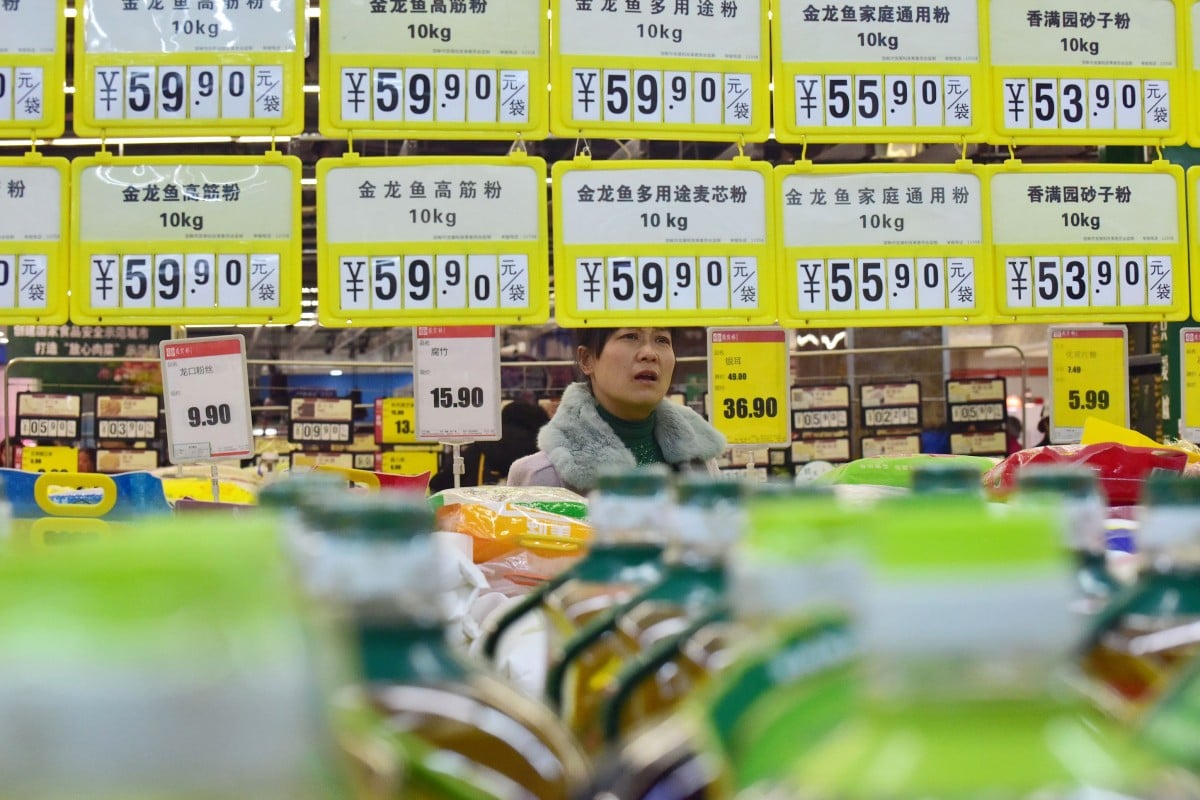
Food prices jumped 6.1 per cent in April due to higher pork and fruit prices, with pork price increases accelerating to 14.4 per cent from 5.1 per cent in March. Photo: Reuters
China’s middle class, particularly better-educated white collar workers, are growing increasingly confused and anxious over how the trade war with the United States will affect the lives of ordinary citizens, in contrast to official press and social media which have been dominated by messages urging the country to stand strong in face of the adversity.
Concerns about the impact of the trade war, combined with rising food prices, are already affecting consumers’ willingness to spend, which could cause a further deceleration in Chinese economic growth.
These concerns may also increase efforts by the upper and upper middle classes to safeguard their wealth by buying gold or foreign currency and moving their wealth abroad.

For China’s urban middle class, who have benefited from the country’s economic boom in the last few decades and may have taken it for granted that life would be better, the intensified rivalry between China and the US is bringing a strong sense of uncertainty about their future, pushing citizens to scramble for any information about the trade war away from the official propaganda rhetoric.

“Please tell me the proper understanding of what the impact of the trade war will be on the lives of ordinary people like us. Thanks!” wrote Su Gengsheng, a popular online writer and blogger with more than 300,000 followers on China’s largest social media platform Weibo, four days after the 

US raised tariffs

on US$200 million of Chinese imports.

The post was unusual for Su’s extremely non-political account after she rose to popularity with cosmetics recommendations and make-up tips. However, the trade war question seemed to speak to the heart of the concerns shared by many of Su’s followers, and rapidly attracted thousands of replies and likes as well as more than 10,000 shares. Comments on the post were soon blocked because they “violated relevant laws and regulations”, although the original post was still visible.

Despite a lack of access to uncensored news, the adverse effects of the trade war have started to be felt and are rapidly becoming known throughout Chinese society. This is especially true for those who now have things to lose, including the value of their stocks and real estate, the chances of sending their children to study in the US, or even just being able to watch the final season of Game of Thrones on television.

The government’s nationalistic rallying cry, asking people to tighten their belts and to prepare for prolonged hardships, has further amplified concerns among those citizens who have worked hard to earn a comfortable lifestyle.

We used to think [a trade war] used to be absolutely impossible. Now I start to fear there will be a devaluation of the [yuan] in the near future, and even a more horrible situation aheadUnnamed Guangzhou-based exporter

“Recently, I often chat with my classmates and clients who live and work abroad. We talk very carefully as we are afraid of our WeChat account being blocked because of any sensitive content related to trade war news. But I really need to know more about what is really happening in the trade war and what will come next,” said a Guangzhou-based exporter in his 40s, who asked not to be named.
“In just two weeks, the mentality of my friends around me has changed. We used to think [a trade war] to be absolutely impossible. Now I start to fear there will be a devaluation of the [yuan] in the near future, and even a more horrible situation ahead if the two sides engage in a full-scale war, not only in trade and technology, but also in finance and the currency market.
“I would love it if all my fears were unnecessary, but I can’t help but have them. I think I might need to make a contingency plan, like keeping a certain amount of either yen, US dollars or Australian dollars in cash at home, only for emergencies in extreme situations. A problem may not arise, but now I really need to be aware of the possibility because of my family.”
The latest news on the economy and on the government’s response to the trade war has been unsettling for some, and came as a fresh blow to Chinese middle-class confidence on top of growing risks of inflation and unemployment.
Food prices jumped 6.1 per cent in April due to higher pork and fruit prices, with 
pork price

increases accelerating to 14.4 per cent from 5.1 per cent in March. Last week, Beijing set up a

special task force,

the State Council Employment Work Leading Group, to monitor the country’s employment situation, underscoring the government’s increasing concern over unemployment due to the continuing escalation of the trade war with the US and in the wake of recent high-profile lay-offs by the likes of Sony Mobile, Cisco Systems and Oracle.

“The yuan is sliding towards 7 to the US dollar, a 500-gram package of grapes has soared to 30 yuan (US$4.3) at the wet market, and Vice-Premier Hu Chunhua will head the group watching job market stress. There is more and more news on the effects of the trade war and how it is starting to impact our daily life,” said Yan Chao, a 30-year-old operations manager at a Shanghai-based advertising company.
“My job is very important for me as my wife is a housewife and we have a daughter who is just two years old. My parents are retired doctors and pay most of the mortgage for me. My wife and I are going to buy a new car through a car loan, but maybe it’s better to delay that plan until maybe next year when the economic situation becomes certain.”

The exchange rate with the US dollar hovered around 6.9 last week, but Li Yue, a veteran Shenzhen-based electronics engineer, has been converting some of his yuan savings at exchange rates of around 6.3, 6.5, and 6.7.

“It was very difficult to search for foreign technical information via the internet in the 1990s, and now I look longingly to that time. As a technologist, I have a full understanding that if Sino-US relations continue to deteriorate, or if China loses more orders from Western countries, many of the industrial supply chains developed in the past will soon be scrapped,” said Li Yue.

Other Chinese citizens are taking steps to safeguard their wealth due to fears of the effects of the trade war.

There is more and more news on the effects of the trade war and how it is starting to impact our daily lifeYan Chao
“I even heard some wealthy people are going to banks in Hong Kong to buy gold bars and keeping them in the bank for safety,” said Li Zhenbiao, a Guangzhou-based agent helping wealthy Chinese citizens emigrate and buy property overseas. “It’s a good choice if you are not optimistic about the [outlook for the] economy and the value of the yuan … but it’s a very new [practice] and just emerging. Not many people have acted yet to buy gold bars. After all, the investment threshold is high. Buying and stockpiling some dollars is the easiest thing to do for ordinary people.”
The high levels of debt held by many individuals is also of particular concern if the economy slows down further.
Eli Mai, a sales manager in Guangzhou, owns two flats with a total market value of 7 million yuan (US$1 million), with around 2 million yuan outstanding on the mortgages.

Mai, 35, spends most of his monthly salary, about 15,000 yuan (US$2,200), on his mortgage, while the family uses his wife’s income for daily expenses. At the beginning of last year, Mai felt that his career was stagnant and that his expenses were greater than his income. Therefore, he borrowed 300,000 yuan (US$43,400) from a local bank, with an average interest rate of over 5 per cent, and used the money to invest in a friend’s travel agency.

“The business is not profitable yet. I just pray that the trade war will end as soon as possible,” Mai said. “But on the other hand, I think it will be far from a happy ending.”

Source: SCMP

13/05/2019

China’s top diplomat Yang Jiechi to visit Japan ahead of possible Xi Jinping trip

  • Three-day visit comes ahead of Chinese President’s planned attendance at G20 summit in Osaka next month
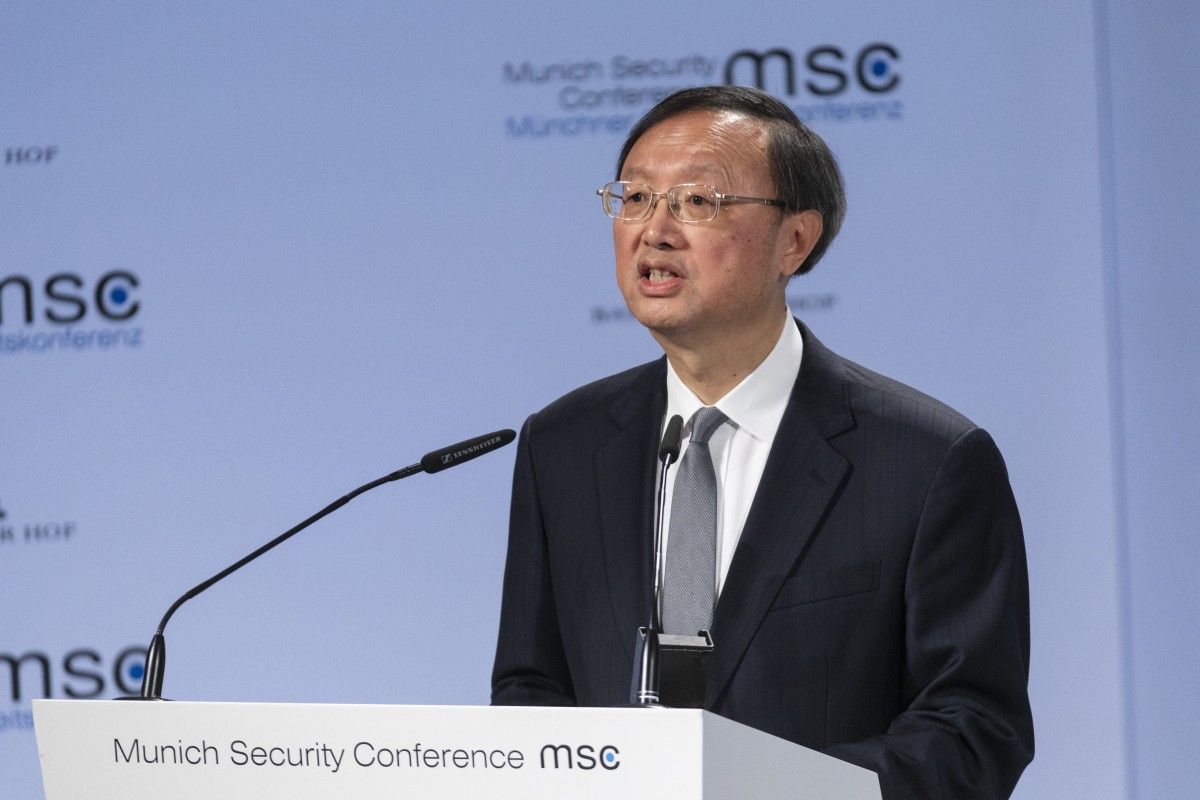
Yang Jiechi’s three-day visit to Japan starts on Thursday. Photo: Bloomberg
China’s top diplomat Yang Jiechi will visit Japan for three days from Thursday, the Chinese Foreign Ministry said on Monday.
The visit is likely to work out details of President Xi Jinping’s planned visit to Japan for this year’s summit of the Group of 20 major economies in Osaka in late June, sources familiar with bilateral relations had said last week.
Yang, a member of the Political Bureau of the Chinese Communist Party’s Central Committee, is likely to meet the country’s national security adviser Shotaro Yachi on Thursday and Prime Minister Shinzo Abe the following day, according to the sources.
Xi’s visit, if it goes ahead, would be his first since he came to power in 2013 and the first by a Chinese head of state since Hu Jintao in November 2010.
Yang and Yachi will also hold the sixth China-Japan high-level political dialogue.
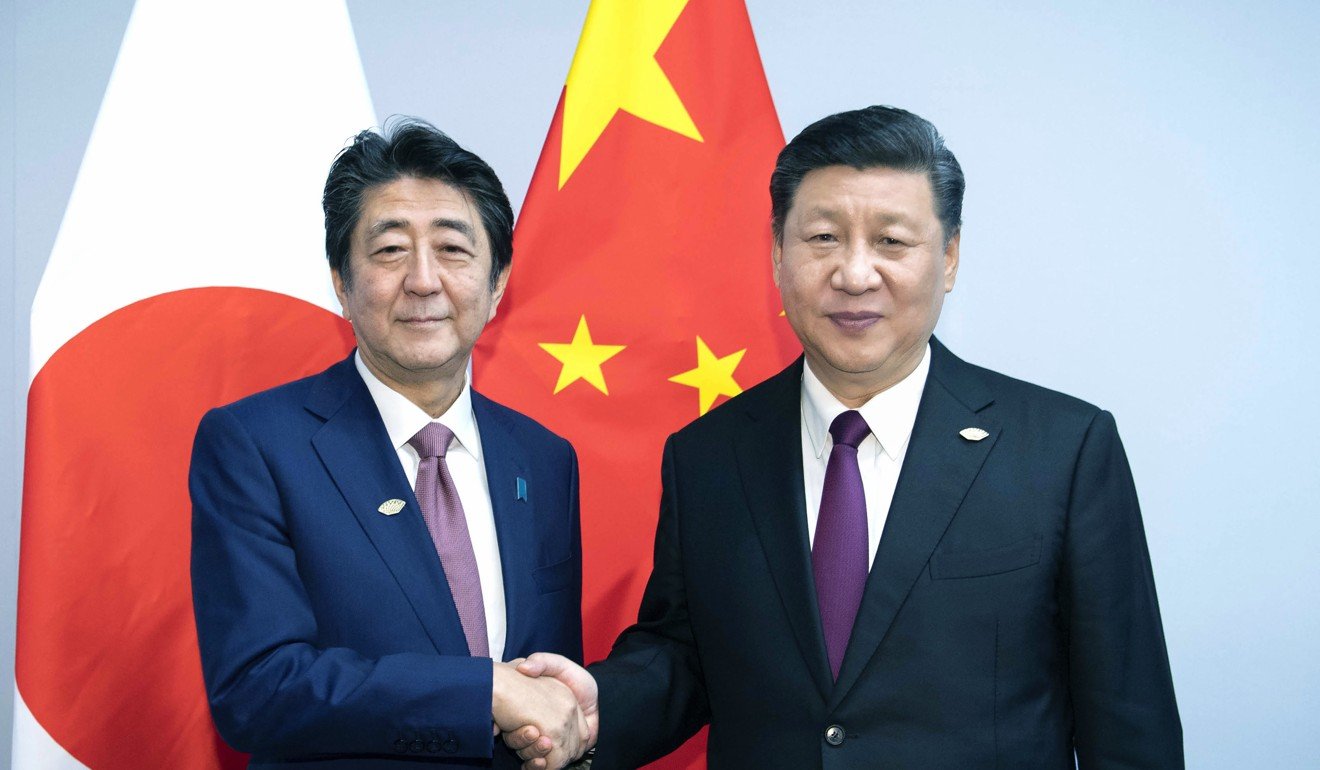
Chinese President Xi Jinping and Japanese Prime Minister Shinzo Abe pictured at the G20 summit in Argentina last year. Photo: AP

At this dialogue, which is an annual consultation plan agreed on by the two sides, the two sides will exchange views on China-Japan relations and issues of common concern, Chinese Foreign Ministry spokesperson Geng Shuang said at a regular press briefing.

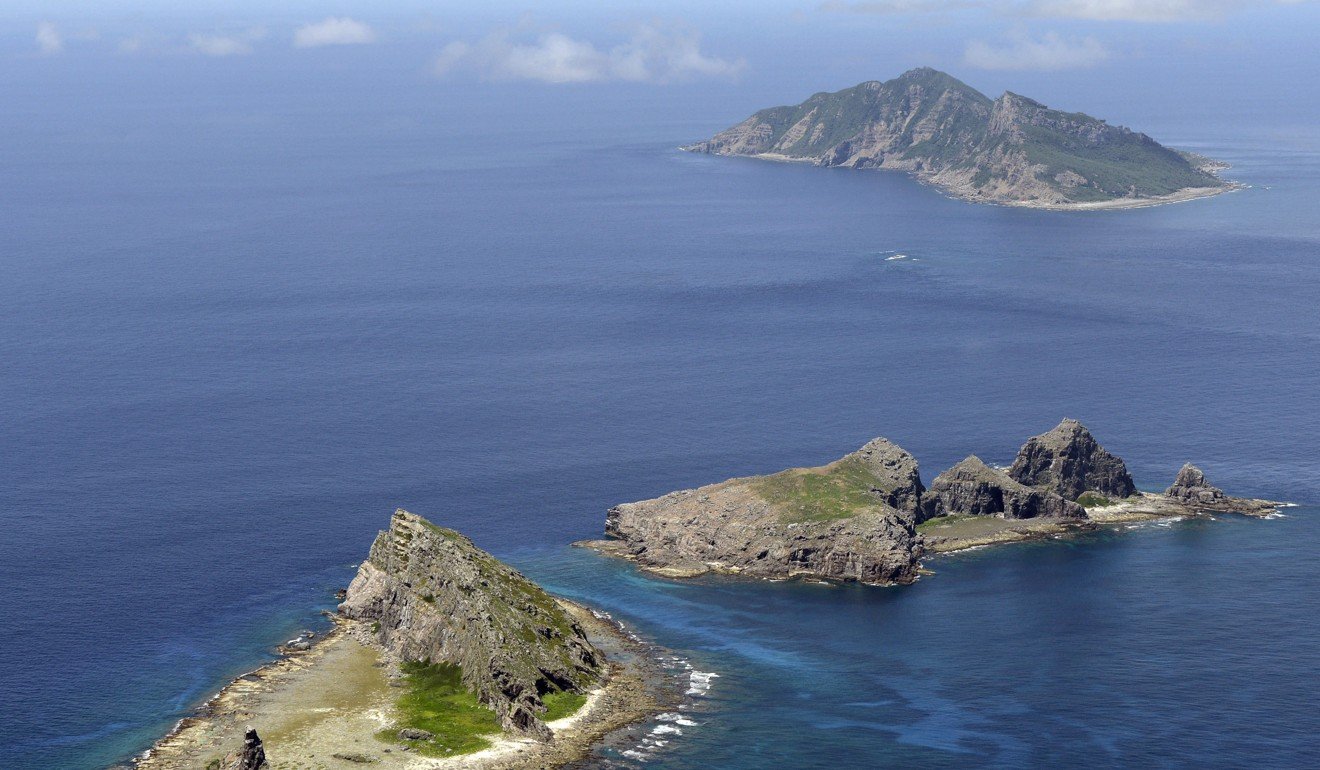
For years, the two neighbours have been mired in a territorial dispute over the Senkaku Islands in the East China Sea. The group of uninhabited islets, which are called Diaoyu in Chinese, are controlled by Japan but claimed by China.

But Sino-Japanese ties have been markedly improving recently, with 2018 – the 40th anniversary of the signing and entering into force of the bilateral Treaty of Peace and Friendship – serving as an incentive to forge better relations.

The dispute over the Senkaku – or Diaoyu – Islands is a long-standing barrier to better relations. Photo: Kyodo

In an interview with Japanese media, Chinese vice foreign minister Kong Xuanyou said the relationship between China and Japan has just returned to normal after going through ups and downs over the years, and both sides need to treasure the development.

“China is willing to work with Japan to further promote China-Japan relations,” he was quoted as saying in a Chinese foreign ministry transcript.

Kong also rejected suggestions that ties between China and Japan have become closer because of the China-US trade war – which pushed Beijing to seek support from its neighbours.

“Putting the relations between China, Japan and the US at opposite from each other is a zero-sum game and cold war mentality. China does not agree with it,” he said. “The friendly relationship among these two nations can be developed in parallel. This is welcomed by the region and the world”.

Source: SCMP

Law of Unintended Consequences

continuously updated blog about China & India

ChiaHou's Book Reviews

continuously updated blog about China & India

What's wrong with the world; and its economy

continuously updated blog about China & India