Archive for ‘China’

05/03/2020

Special Report – Before coronavirus, China bungled swine epidemic with secrecy

(Reuters) – When the deadly virus was first discovered in China, authorities told the people in the know to keep quiet or else. Fearing reprisal from Beijing, local officials failed to order tests to confirm outbreaks and didn’t properly warn the public as the pathogen spread death around the country.

All this happened long before China’s coronavirus outbreak, which has claimed more than 3,000 lives worldwide in less than three months. For the past 19 months, secrecy has hobbled the nation’s response to African swine fever, an epidemic that has killed millions of pigs. A Reuters examination has found that swine fever’s swift spread was made possible by China’s systemic under-reporting of outbreaks. And even today, bureaucratic secrecy and perverse policy incentives continue undermining Chinese efforts to defeat one of the worst livestock epidemics in modern history.

Beijing’s secretive early handling of the coronavirus epidemic has troubling similarities to its missteps in containing African swine fever, but with the far higher stakes of a human infection. After the coronavirus was found in December 2019 in Wuhan, the capital of Hubei province, local and national officials were slow to sound the alarm and take actions disease experts say are needed to contain deadly outbreaks. Beijing continues to gag negative news and online postings about the disease, along with criticism of the government’s response.

With swine fever, Beijing set a tone of furtiveness across government and industry by denying or downplaying the severity of a disease that the meat industry estimates has shrunk China’s 440-million-hog herd by more than half. The epidemic has taken a quarter of the world’s hogs off the market, hurt livelihoods, caused meat prices to spike globally and pushed food inflation to an eight-year high. (For a graphic on soaring China pork prices, click here)

Cover-ups across China – coupled with underfinancing of relief for devastated pig farmers and weak enforcement of restrictions on pork transport and slaughter – have enabled the spread of the livestock virus to the point where it now threatens pig farmers worldwide, according to veterinarians, industry analysts and hog producers. Since the China outbreak, African swine fever has broken out in 10 countries in Asia.

The vacuum of credible information has made it impossible for farmers, industry and government to tell how and why the disease spread so quickly, making preventive measures difficult, said Wayne Johnson, a Beijing-based veterinarian who runs Enable Ag-Tech Consulting.

“To get it under control, you have to know where it is,” Johnson said.

China’s Ministry of Agriculture and Rural Affairs said in a statement to Reuters that it has repeatedly communicated to all regions the importance of timely and accurate reporting of African swine fever outbreaks and had zero tolerance for hiding and delaying the reporting of cases.

Interviews with farmers, industry analysts and major suppliers to China’s pork sector indicate otherwise. More than a dozen Chinese farmers told Reuters they reported disease outbreaks to local authorities that never made it into Beijing’s official statistics. Those infections are going unreported to central authorities in part because counties lack the cash to follow a separate requirement from Beijing to compensate farmers for pigs killed to control the disease.

Local officials have also avoided reporting outbreaks out of fear of the political consequences. And they have routinely refused to test pigs for the virus when mass deaths are reported, according to interviews with farmers and executives at corporate producers.

A farmer surnamed Zhao, who raises a herd in Henan province, said local officials told him as much when they resisted recording the outbreak he reported on his farm, which wiped out his herd.

“‘We haven’t had a single case of African swine fever. If I report it, we have a case,’” Zhao recalled an official telling him. The local officials could not be reached for comment and a fax seeking comment went unanswered.

When the coronavirus hit, Chinese authorities reacted with a push to reassure the public that all was well. The first reported death from the virus, also known as SARS-CoV-2, came on Jan. 9 – a 61-year-old man in Wuhan. In the following days, Chinese authorities said that the virus was under control and not widely transmissible.

The assurances came despite a lack of reliable data and testing capacity in Wuhan. Testing kits for the disease were not distributed to some of Wuhan’s hospitals until about Jan. 20, an official at the Hubei Provincial Centre for Disease Control and Prevention (Hubei CDC) told Reuters. Before then, samples had to be sent to a laboratory in Beijing for testing, a process that took three to five days to get results, according to Wuhan health authorities.

During that gap, city hospitals reduced the number of people under medical observation from 739 to 82, according to data from Wuhan health authorities compiled by Reuters, and no new cases were reported inside China.

China’s top leadership has dramatically ramped up the public-health response since its early missteps. Beijing built new hospitals in days to treat the sick and launched an unprecedented blockade of the disease epicentre on Jan. 23, first quarantining Wuhan’s 11 million residents at home, then suspending transport in all major cities of Hubei province, home to about 60 million people.

Still, the initial attempts to tightly control information left many people unaware of the risks and unable to take precautions that might have prevented infection – and the suppressing of news and commentary continues today. Wuhan authorities reprimanded eight people they accused of spreading “illegal and false” information about the disease. One of them, 34-year-old doctor Li Wenliang, later died from coronavirus, triggering an angry backlash on social media.

Some critical posts were allowed during a brief and unusual period of online openness in late January. But Beijing’s censors – the Cyberspace Administration of China (CAC) – have since cracked down on posts about Li and other information that authorities deem negative, according to CAC censorship orders sent to online news outlets and seen by Reuters. One CAC notice ordered online outlets to guard against “harmful information.” Another ordered them not to “push any negative story.”

The CAC did not respond to a request for comment sent by fax.

UNREPORTED OUTBREAKS

Beijing had years to prepare for African swine fever. Veterinarians have frequently warned Chinese authorities of the risks since the disease started spreading through the Caucasus region in 2007.

Pigs infected by the virus initially suffer high fever, loss of appetite and diarrhoea. Then their skin turns red as internal haemorrhaging starts and their organs swell, leading to death in as little as a week.

With no vaccine or cure available for the disease, experts recommend that infected pigs and others housed in the same barn are culled, with the carcasses either burned or buried to prevent further infection. Farms, equipment and vehicles that could be contaminated need to be thoroughly cleaned and disinfected.

The first case in China was discovered on Aug. 1, 2018, on a farm near Shenyang, in the northeastern province of Liaoning. Just two weeks later, the virus was found more than 1,000 kilometres to the south in pigs bought by the country’s top pork processor, WH Group(0288.HK), from another northeastern province, Heilongjiang. It took Beijing another two weeks to block pig exports from the whole region, and that and other transport restrictions were poorly enforced, said Johnson and other industry experts. WH Group declined to comment.

One factor behind the epidemic: Chinese consumers prefer fresh pork – straight from the slaughterhouse, rather than chilled. This means hundreds of thousands of live pigs are moved long distances every day to supply processors in major cities. That mass movement spread the disease relentlessly.

Over the first four months of the outbreak, Beijing reported swine-fever cases almost daily as the virus spread from the northeast down through central China, west into Sichuan, and to the huge province of Guangdong by year-end. Veterinarians believe the virus spread quickly because it can survive for weeks on dirty farm equipment or livestock trucks.

And yet gaps in counting and tracking the pig disease have been routine across China. Reuters found a striking absence of reported outbreaks in some of the nation’s most productive pork regions.

For instance, almost none of the reported outbreaks have come from the major hog-raising provinces of Hebei, Shandong and Henan. The three contiguous northern provinces were the source of some 20% of the 700 million pigs China slaughtered in 2017. Many came from backyard farms, which make up a large part of China’s industry and have proven fertile breeding grounds for the disease. Yet each of the three provinces has reported just a single case of African swine fever, despite widespread anecdotal reports of outbreaks there that industry sources believe killed millions of pigs.

Neither Shandong nor Henan authorities responded to requests for comment. Hebei’s department of agriculture said it had “strictly reported and verified the epidemic” and that the disease situation was currently “stable.”

Six Henan farmers told Reuters they reported outbreaks during late 2018 and the first half of 2019. In some cases, local authorities helped deal with dead pigs, they said, but never tested for the virus.

That’s what happened when Wang Shuxi, a farmer in Henan’s Gushi County, lost more than 400 pigs in March 2019. Wang said he had no doubt that his pigs had African swine fever, even though authorities never tested them – and he couldn’t test them himself, because Beijing did not permit the commercial sale of disease test kits at the time.

His pigs showed telltale symptoms of the disease.

“The whole body went red,” he said. He injected the animals with an anti-fever medication to no avail. “At the start, they didn’t eat, and even after injections, it kept returning,” he said. “If you can’t cure it, you know it’s swine fever.”

Provincial and county governments had strong incentives to avoid verifying and reporting outbreaks because of Beijing’s rules on compensating farmers, said Huang Yanzhong, specialist in health governance with the Council on Foreign Relations in New York.

Under an African swine fever contingency plan drawn up in 2015, Beijing ordered the culling of all pigs on farms where the disease is found and on every farm within a three-kilometre radius. The central government raised compensation from 800 yuan ($115) to 1,200 yuan for every pig culled in 2018. Beijing typically promised to provide between 40% and 80% of the money, depending on the province. Localities would fund the rest.

In April 2019, the national agriculture ministry said the central government had allocated 630 million yuan to cull 1.01 million pigs to contain the disease. But that money either wasn’t sufficient or regularly did not get paid out, farmers told Reuters. None of about a dozen farmers who told Reuters they tried to report outbreaks said they had received the promised 1,200 yuan for each pig.

Many got nothing. Wang, the Gushi County farmer, said that almost a year after his pigs died, he has received no recompense. Gushi County officials could not be reached for comment.

Many farmers, eager to salvage value from their herds, have resorted to sending their pigs to slaughter at the first sign of illness – thereby thrusting the virus into the human food supply. The swine fever virus does not threaten people. But its presence in meat – where it can survive for weeks – creates a cycle of infection because many backyard farmers feed pigs with restaurant scraps that include pork.

Garbage feeding caused 23 outbreaks in 2018, Huang Baoxu, deputy director of the China Animal Health and Epidemiology Center, told reporters at a briefing in November that year. His remarks were a rare instance where the central government revealed findings about the spread of the hog virus. The centre declined to comment for this story.

Farmers visiting slaughterhouses dealing in sick pigs also likely picked up the virus on their trucks or equipment, spreading it back to their farms, Johnson said.

In the southern province of Guangxi, the disease raged through the spring of 2019 and early summer, several farmers told Reuters last year. Bobai County was hit hard.

A Bobai farmer surnamed Huang said she lost almost 500 pigs during April and May. She said she tried to report the diseased pigs to the local government but was ignored. The official she spoke to by phone never came to her farm. He told Huang that her pigs could not be saved – but that they didn’t have African swine fever. His advice, she said: “hurry and sell the pigs while they could be sold.”

Huang said she sold more than 30 pigs that she believed had the virus. They looked healthy when she sold them, she said. Others sold obviously sick pigs at very low prices. “Traders took all the pigs, including the sick ones – as long as they could walk to the trucks,” she said.

Huang buried her dead pigs daily for weeks on a relative’s land. Others simply dumped their dead pigs on the roadside or in the mountains, she said. The government provided no help.

Eventually, in late May, Bobai County reported one pig dead from the disease, official statistics show.

Authorities in Guangxi did not respond to a request for comment, and officials in Bobai county’s agriculture bureau could not be reached.

Beijing’s agriculture ministry said in a statement that it had issued an August 2019 order requiring punishments in situations where localities failed to report outbreaks. The ministry said it meted out unspecified discipline to more than 600 local personnel for what it called failures to manage the disease that were uncovered in its investigations of problem areas.

The practice of processing infected hogs has persisted despite new rules from Beijing in July that required slaughterhouses to test all batches of pigs for the virus. The agriculture ministry said in January that 5% of the more than 2,000 samples taken from slaughterhouses in November tested positive for the disease.

An Australian study in September found 48% of meat products confiscated from Asian travellers arriving at its ports and airports contained the virus.

“It showed there’s an awful lot of unrevealed infection not being reported to the authorities,” said Trevor Drew, director of the Australian Animal Health Laboratory.

One such information gap is at the top of the industry – China’s large corporate pig producers. They have also been hit hard by the disease, despite taking more extensive measures than backyard farms to disinfect trucks and require workers to change clothes and shower before and after shifts.

None of China’s top publicly traded producers have publicly announced any swine fever outbreak, but executives of major hog producers acknowledged in interviews with Reuters that their herds were hit by the disease.

Thai conglomerate C.P. Pokphand(0043.HK), one of China’s leading pig producers, has had swine-fever outbreaks on farms in Liaoning, Shandong, Henan and Jiangsu provinces, Bai Shanlin, chief executive of China operations, told Reuters in a rare admission by a listed firm. Executives at three other listed companies, also among China’s top pig producers, acknowledged outbreaks at several farms but declined to be identified.

None of the outbreaks that these large companies have confirmed to Reuters were reported by Beijing, according to a Reuters review of the agriculture ministry’s data on outbreaks.

By August 2019, a year after the first case was found in China, pork prices had passed a record set back in 2016. And they were still climbing rapidly. With a crucial national celebration approaching in October – the 70th anniversary of the founding of the People’s Republic – China’s top leaders took note. Pork is a staple of Chinese cuisine, and rising meat production has been among the many signature achievements in the Communist Party’s decades-long drive to bring prosperity to China.

In a video conference that month with officials from all 34 provinces and regions, Vice Premier Hu Chunhua issued a warning: Sufficient pork was vital to people’s lives and the country’s stability. He called for the urgent recovery of the herd as a key “political task.”

A raft of new production policies and incentives emerged from Beijing. And as the provinces rallied to replenish the nation’s herd, reports of African swine fever grew even more rare. Disease outbreaks reported by the agriculture ministry have tailed off since August. In January, Agriculture Minister Han Changfu said the situation has stabilized.

The government’s statistics are rife with contradictions, however. The ministry has reported 163 outbreaks of African swine fever since August 2018 and said 1.19 million pigs have been culled, a fraction of 1% of China’s total herd. Separate ministry data tracking the herd monthly show that, by September 2019, the herd had shrunk by 41% from the prior year. (For a graphic on the decline in China’s pig herd, click tmsnrt.rs/38lkOcx )

These official estimates of the decline are far too low, three major industry suppliers told Reuters.

“It’s at least 60%,” said Johan de Schepper, managing director of Dutch feed ingredients firm Agrifirm International. His assessment, based on sales to about 100 large pig producers, echoed those of others in the industry.

The virus is still killing pigs nationwide and the herd may still be shrinking, say farmers and industry suppliers. “Half of the herd was gone before this winter, and I think half of the rest will be gone by the end of the season,” said Johnson, the veterinarian, citing conversations with clients from across China.

The problem: Some areas were hit with a second wave of the disease.

Henan province is among them, farmers told Reuters. Last year, about 60% of Henan’s herd was wiped out, mainly in the densely farmed areas in the south and west of the province, analysts at Guotai Junan Securities wrote in an internal memo seen by Reuters. Recently, the memo noted, the virus has moved through east Henan, taking out another 20%.

The vicious disease ruined Zhao, the farmer in central China’s Henan province. The virus struck in October, causing high fever, internal bleeding, vomiting and diarrhoea in his pigs. Just two survived. The other 196 died in a week.

When Zhao tried to report the outbreak to the county veterinary authority, he said, officials strongly encouraged him to keep quiet. A local official reminded him of the national mandate to cull all pigs within three kilometres of an infected farm. That could spell disaster for his neighbours if Zhao spoke up.

“If it’s found to be African swine fever, people nearby will have to stop raising pigs,” Zhao recalled a local official telling him. Zhao decided against filing a report to protect his neighbours, he told Reuters on a recent visit to his farm.

Further up the political hierarchy, the deputy governor of Henan province was quoted by the provincial agriculture bureau as saying in December that Henan had been free of the disease for 14 months, after a single reported case in September 2018. The provincial government did not respond to requests for comment.

The disinformation game continues. Zhao says that when county officials came by his farm in January, they recorded that he still had 180 pigs. In fact, he said, he had just the two hogs that survived the October outbreak.

“The country is being kept in the dark,” he said.

Source: Reuters
04/03/2020

China to optimize network services for online education amid epidemic

BEIJING, March 3 (Xinhua) — China will provide better internet services for online education amid the fight against the novel coronavirus, according to the Ministry of Industry and Information Technology (MIIT).

Because of the epidemic, online education has become more necessary and popular in the country.

The ministry urged local communication departments and basic telecom operators to strengthen network coverage and provide discounts on internet charges.

Local administrations and enterprises should also pledge efforts to promote the construction of networks and base stations to enhance network conditions of schools, while online education platforms should continuously optimize their online services, the MIIT said.

The MIIT will carry out monitoring toward performances of the platforms at all levels such as download speeds and provide them to the public.

In the meantime, the ministry encouraged telecom operators to implement preferential measures for impoverished students to ease their pressure of internet charges.

Source: Xinhua

04/03/2020

Sanitisers get priority over South Korea’s soju drink in virus crisis

SEOUL (Reuters) – Makers of soju, South Korea’s national drink and one of the world’s best selling spirits, are jumping into the fight on the largest outbreak of coronavirus outside China by sharing their stockpiles of alcohol with makers of sanitisers.

Disinfectants, such as hand sanitisers, are flying off the shelves, along with medical-grade masks, as infections in South Korea have surged past 5,000 in just over a month since its first patient was diagnosed.

South Korean soju makers have responded to soaring ethanol demand for sanitisers by donating the alcohol that goes into the drink, a distilled spirit with 17% to 20% alcohol by volume traditionally based on rice, but now often wheat or potatoes.

“Ethanol demand for disinfection has grown while supply is limited…we have decided to provide it,” an official of Daesun Distilling, based in the southeastern city of Busan, told Reuters.

To banish the virus, the company has pledged to donate 32 tonnes of ethanol for use in disinfecting buildings and public places in Busan and southeastern Daegu, the city at the centre of South Korea’s outbreak.

“We plan to keep donating until the coronavirus outbreak is stabilised and to donate 50 tonnes more,” added the official, who sought anonymity as he was not authorised to speak to media.

South Koreans drink an average of about 12 shots of soju each week, media say, citing industry figures. Ethanol for alcoholic drinks can be produced by fermentation or distillation, typically from grains and plants.

The chemical can also be made from petrochemical feedstock.

Whether used for liquor or disinfection, both have the same chemical structure and can break apart the virus particle, said Lee Duckhwan, a chemistry professor at Sogang University in Seoul, the capital.

“If there’s any difference, that is the liquor tax imposed on ethanol produced by liquor makers,” Lee said.

The virus fears boosted February sales of soaps and hand sanitisers, including those with an alcohol base, to four times the level a year ago, data from a major retailer Lotte Mart shows. Shares of ethanol producers also jumped.

Following Daesun Distilling, Hallasan Soju, based on the resort island of Jeju, also provided 5 tonnes of ethanol to authorities on Tuesday, a company official said.

Source: Reuters

04/03/2020

Indian PM Narendra Modi ‘scares’ millions of social followers

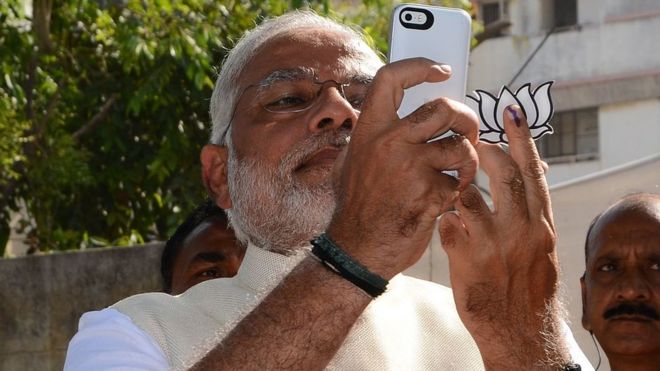
Indian Prime Minister Narendra Modi takes a 'selfie' after casting his vote at a polling station in AhmedabadImage copyright STRDEL
Image caption Prime Minister Modi is the third most followed leader on Twitter after Donald Trump

The world’s second most popular leader – when it comes to social media, at least – sent shockwaves through the internet on Monday, after announcing he was considering leaving the platforms.

After all, Indian Prime Minister Narendra Modi is the only politician to even come close to challenging US President Donald Trump’s online dominance.

And so it was somewhat unsurprising that the hashtag #ModiQuitsSocialMedia began trending in India, with users quick to share a heady cocktail of conspiracy theories, memes and desperate pleas.

However, Mr Modi, who has 54 million followers on Twitter, 35.2 million followers on picture sharing platform Instagram and 44 million followers on Facebook, soon revealed the true reason behind his abandonment of social media.

On Tuesday, he said that he would “give away my social media accounts to women whose life & work inspire us”.

But the “big reveal” came only after his first tweet generated an absolute social media storm.

Some theories suggested he was quitting social media platforms as they were being controlled by his opponents. Others speculated that he would launch an indigenous social platform, to match Twitter and Facebook, something similar to social media platforms like WeChat and Weibo in China.

“Expect SM companies stock to crash,” wrote one confident user.

Apart from the theories, there were desperate pleas from his fans. One wrote: “Please Sir, You can’t leave social media now for the sake of your fans!” Another added: “Modi Ji if you leave social media , they will use it against you and nation interest.”

“For me he is not only PM of India but also emotion. You’re king of social media. Don’t go sir.”

Some users suggested that his account had been hacked.

Soon, #Iwillalsoleavetwitter started trending.

Arun Yadav, the head of Haryana state IT and social media for BJP, tweeted asking the PM to not quit the platform as it was one way Indians could communicate with him.

But there were also jokes.

“Spare a thought for Twitter, Facebook & their stocks. PM Modi is all set to demonetise social media,” wrote one user, referring to the overnight decision to ban high value currency notes in November.

One user suggested that the prime minister was quitting all other platforms in order to make his TikTok debut.

“Modi ji is a typical Indian boyfriend after breakup,” quipped one Twitter user.

“Modiji should be awarded Nobel Peace Prize for bringing peace in the digital world,” said another.

#NoModiNoTwitter is at the top of India twitter trends after PM Modi's tweet
Image caption #NoModiNoTwitter was a India trend on Twitter after PM Modi’s tweet yesterday

There were political reactions too.

In a cheeky response, Rahul Gandhi, former president of the main opposition Congress party, tweeted: “Give up hatred, not social media accounts.”

Congress leader and MP Shashi Tharoor followed suit, writing: “The PM’s abrupt announcement has led many to worry whether it’s a prelude to banning these services throughout the country too.”

Mr Modi’s eventual tweet which clarified matters was seen by some as an anti-climax.

But for the millions who were pleading with him to reconsider, this is surely a big relief.

Source: The BBC

03/03/2020

Feature: China’s contribution to global IP governance “remarkable”

BEIJING, March 3 (Xinhua) — When talking about the development of intellectual property (IP) in China, World Intellectual Property Organization (WIPO) Director General Francis Gurry said “it’s a remarkable journey and a remarkable story.”

Born at the start of reform and opening-up, China’s IP cause has taken only decades to accomplish what the western IP system took hundreds of years to develop. While developing and improving its IP system, China has been active in international cooperation to boost global IP governance.

ACTIVE IN INT’L COOPERATION

Starting from zero at the beginning of its reform and opening-up, China has established a relatively complete IP legal system in line with prevailing international rules, joined almost all major related international treaties, and developed cooperative relations with over 80 countries and international or regional organizations in a relatively short period of time.

China has always been a follower, participant and upholder of the international rules of IP, Shen Changyu, commissioner of the National Intellectual Property Administration, told Xinhua in a recent interview.

China is an active participant in multilateral and bilateral affairs within the framework of WIPO to promote and improve global IP governance, Shen added.

In recent years, international cooperation with China on IP protection has has continuous innovative progress. IP cooperation under the Belt and Road Initiative has in particular achieved practical results.

In 2019, China and the European Union (EU) completed an eight-year negotiation on an agreement to protect geographical indications (GI), which included 275 GI from each of the two sides in the appendix, such as EU’s Irish whiskey and traditional Chinese Shaoxing wine.

With the ratification of Indonesia on Jan. 28, the Beijing Treaty on Audiovisual Performances will take effect for its 30 contracting parties on April 28.

The Beijing treaty, adopted by WIPO member states in 2012, fills a gap in the international treaty on the comprehensive protection of performers in audiovisual performance.

PROTECTION WITHOUT DISCRIMINATION

IP is not only an important strategic resource of a country, but also a booster of technological innovation and a bridge of trade globalization. China is a protector and creator of IP.

Statistics show that by the end of 2019, China had led the world in patent and trademark applications for several years running.

According to data from the WIPO for 2017 and 2018, China was the second largest applicant for international patent applications submitted through the Patent Cooperation Treaty, and the third largest for trademark registration under the Madrid System.

After about 40 years of development, China’s IP governance capability is in line with that of the international community and its IP protection has reached the international standard, which is fully recognized by the world, said Shan Xiaoguang, dean of Shanghai International College of IP at Tongji University.

In the process of advancing the development of its IP system, China has made great efforts to enhance protection and optimize policies, insisting on providing effective protection without discrimination for both domestic and foreign enterprises.

Foreign plaintiffs are able to win and receive injunctions in patent infringement cases brought in China according to the law, Patently-O, a U.S. leading patent law blog, wrote, adding that China’s IP protection practice is fair and just.

China’s effective protection brings huge benefits to foreign IP holders every year. Statistics show that the country paid 34 billion U.S. dollars for IP royalties in 2019.

China has strengthened IP protection with an open attitude, making it a magnet for global trade and innovative activities.

Global innovative activities occur mostly in metropolitan hotspots in China, Germany, Japan, South Korea and the United States, according to the 2019 edition of WIPO’s “World Intellectual Property Report.”

According to Doing Business 2020, an annual report published by the World Bank, China jumped to 31st in its ranking for ease of doing business and is among the top 10 improvers for a second consecutive year.

CHINESE WISDOM

Advanced experience accumulated during the rapid growth of the IP cause in China over the past decades has attracted worldwide attention.

China places IP at a strategic high level, pays attention to IP protection in all economic fields, and has shown its determination of long-term policy for decades, which set up examples for other countries, said Gurry.

Renata Righetti Pelosi, president of the International Association for the Protection of Intellectual Property, pointed out two reasons for the rapid development of the IP cause in China.

On the one hand, the needs of economic operators in China have increasingly overlapped with those in the world, and the two sides have reached more consensuses on IP protection, Pelosi said.

On the other, China has many IP talents with a global vision, who are leading the rapid growth of this sector, she added.

Through academic exchanges and personnel training, China is also actively contributing its wisdom to global IP governance and is more confident about joining global IP cooperation.

The first batch of students from countries that joined the Belt and Road construction successfully graduated from China with master’s degrees in IP in 2018, bringing the knowledge and experience of IP protection they learned from China to the world.

As global IP governance is facing new challenges posed by a new phase of development and a new round of scientific and technological revolution has brought great changes to the industry, many industries spawned by new technologies have gone beyond the scope of protection of the original IP system.

In the new round of scientific and technological revolution and industrial transformation, countries should learn from each other with a more open and inclusive attitude, said Shan, adding that China has led the world in such technological fields as artificial intelligence, big data and life science, and accumulated valuable experience on IP protection in related industries, which is conducive to solving global challenges.

Source: Xinhua

03/03/2020

Coronavirus: China orders travellers quarantined amid outbreak

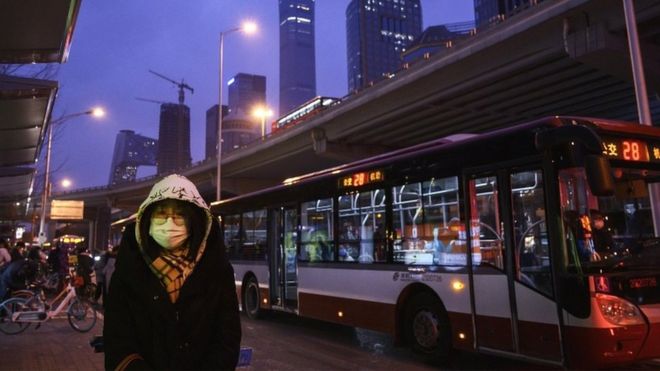
A Chinese office worker wears a protective mask as she waits to take a public bus after leaving work on 2 March 2020 in Beijing, ChinaImage copyright GETTY IMAGES
Image caption Authorities are also asking overseas Chinese to reconsider travel plans

Travellers from countries with severe coronavirus outbreaks who arrive in some parts of China will have to undergo a 14-day quarantine, state media say.

Travellers from the virus hotspots of South Korea, Japan, Iran and Italy arriving in the capital will have to be isolated, a Beijing official has said.

Shanghai and Guangdong announced similar restrictions earlier.

Authorities are worried the virus might be imported back into the country.

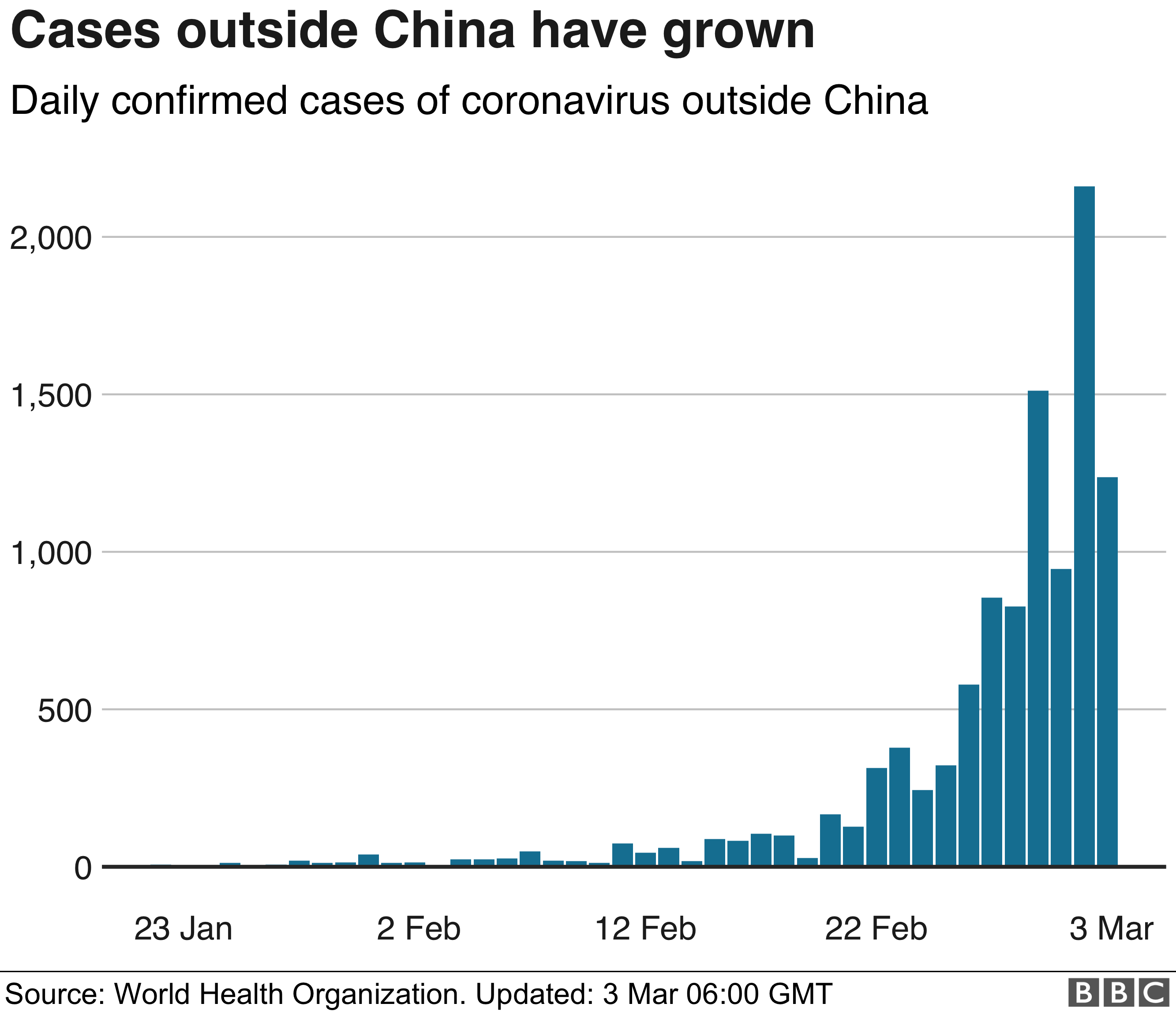
Although most virus deaths have been in China, Monday saw nine times more new infections outside China than in.

Presentational grey line

What do I need to know about the coronavirus?

Presentational grey line

Shanghai said it would require new arrivals from countries with “relatively serious virus conditions” to be isolated, without naming the countries.

Authorities are also asking overseas Chinese to reconsider travel plans.

“For the sake of your family’s health and safety, please strengthen your precautions, carefully decide on your travel plans and minimise mobility,” officials in one southern Chinese province said.

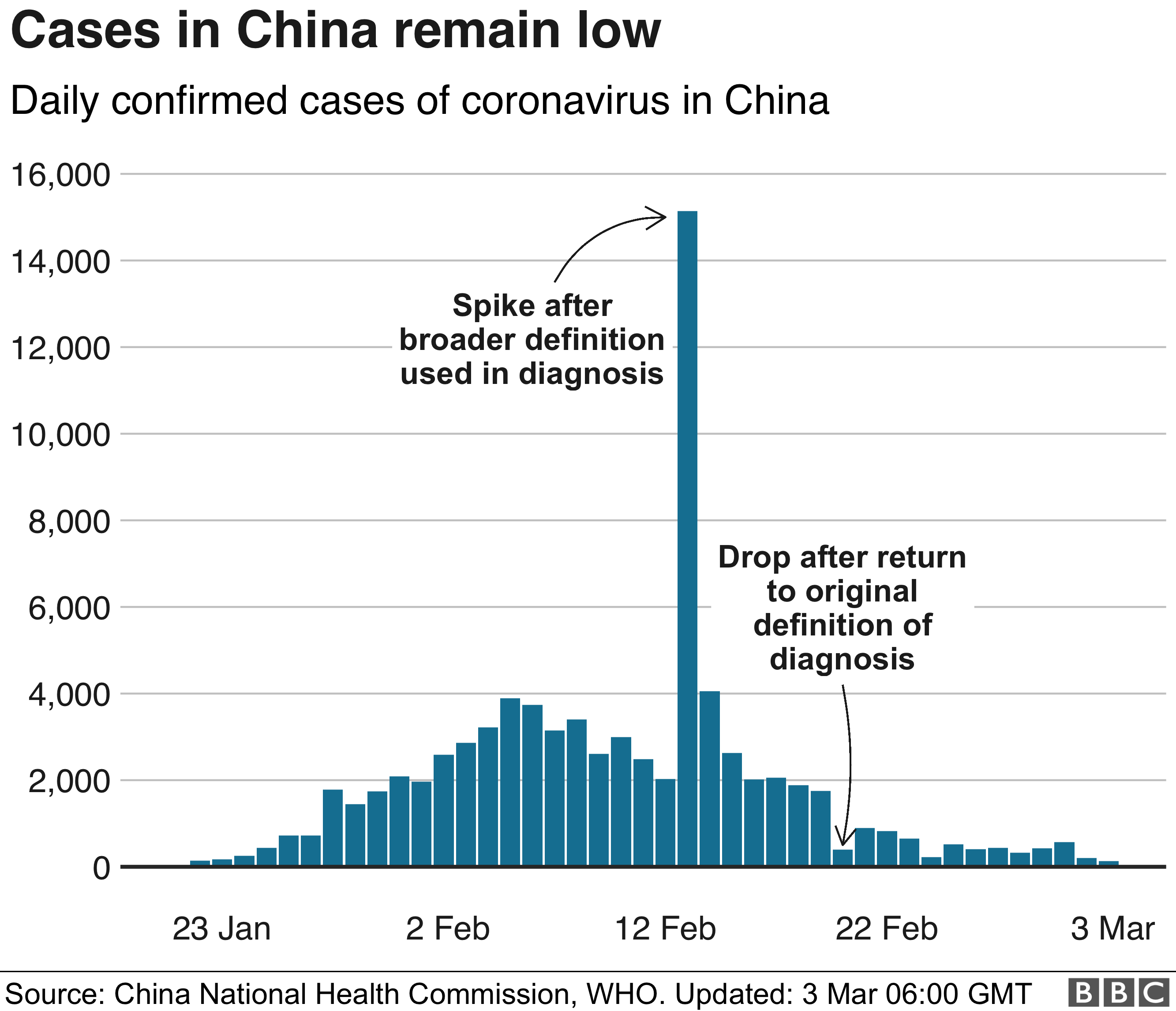
China reported 125 new virus cases on Tuesday – the lowest number of new daily infections in six weeks. There were also 31 more deaths – all in Hubei province, where the virus emerged.Presentational white space

Coronavirus chart 3 March 2020
Presentational white space

In other developments:

  • Finance ministers from the G7 countries have said they are “ready to take action”, including fiscal measures to aid the response to the virus and support the global economy
  • The Pope, who had cancelled a Lent retreat for the first time in his papacy because he was suffering from a cold, has tested negative for the virus, Italian media report
  • South Korean President Moon Jae-in has put the country into a “state of war” and ordered all government departments to shift to a 24-hour emergency system
  • Jailed British-Iranian woman Nazanin Zaghari-Ratcliffe is in good health, Iran’s judiciary has said. She was assessed after her husband said she was showing symptoms of Covid-19
  • Japan’s Olympic minister says the Tokyo 2020 Games could be postponed until later in the year. BBC Sport is keeping track of all events that are affected
  • In the UK, where there are 39 confirmed cases, the government has warned that up to a fifth of the workforce may be off sick during the peak of a coronavirus epidemic
Media caption Julie, who lives in Singapore, was diagnosed with coronavirus and then put into isolation

How are different countries affected?

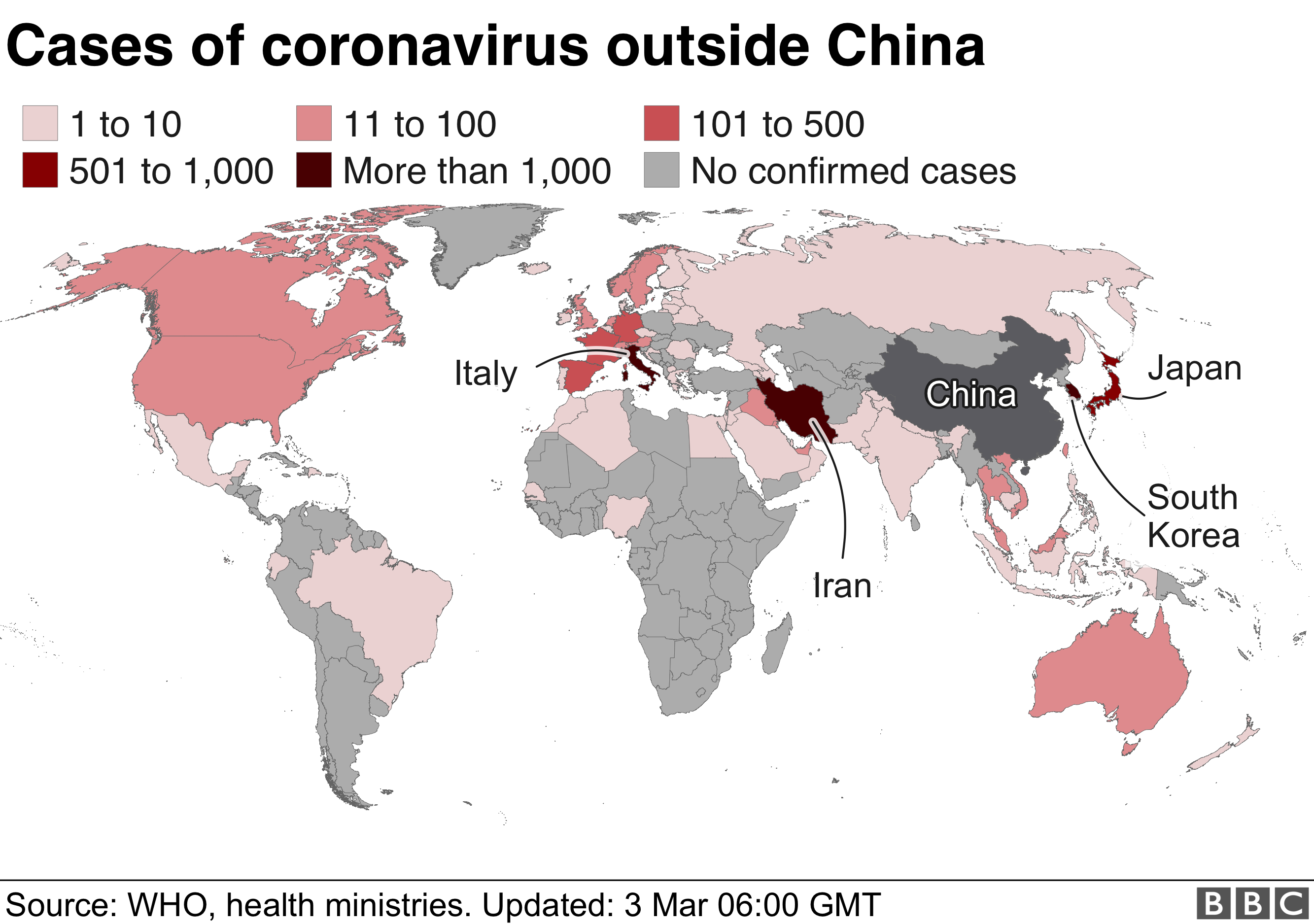
There are now almost 90,000 cases worldwide in about 70 countries, although the vast majority – just under 90% – remain in China, and most of those are in Hubei province where the virus originated late last year.

Of the nearly 8,800 cases outside China, 81% are in four countries – Iran, South Korea, Italy and Japan.

Coronavirus chart 3 March 2020

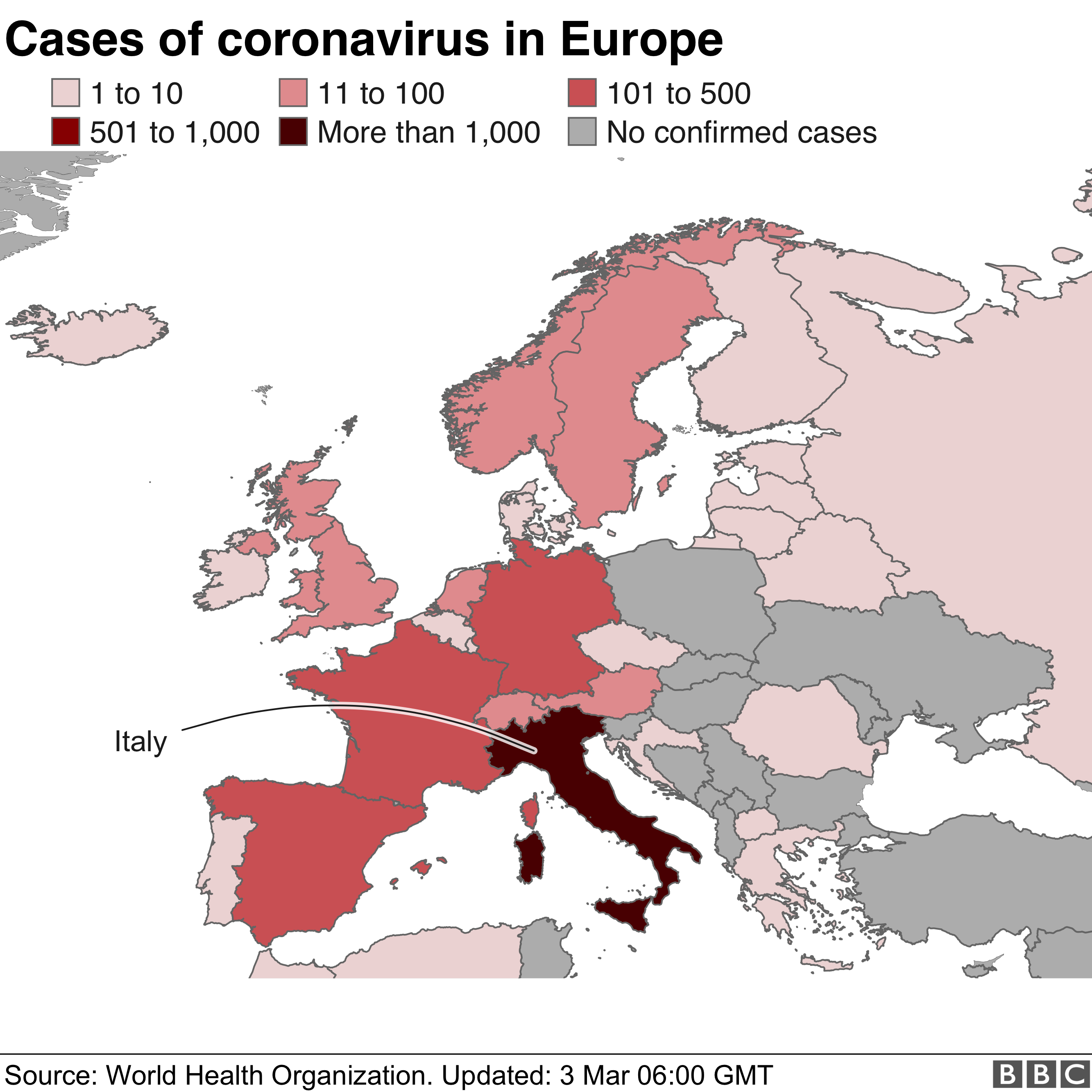
One of the countries worst affected outside China – Italy – said on Monday that the death toll there had risen by 18 to 52. There are 1,835 confirmed cases, most of them in the Lombardy and Veneto areas of the north. Nearly 150 people are said to have recovered.

However, the country is seeing a slowdown in new cases. On Monday, the authorities said there were 258 new cases of the virus – a 16% increase on the previous day – after new cases spiked by 50% on Sunday.

European coronavirus map 3 March 2020
Presentational white space

On Tuesday, Iran said the latest death toll from the virus was 77 – although the real figure is believed to be much higher. More than 2,300 people are said to be infected, including senior political figures. The head of Iran’s emergency medical services, Pirhossein Kolivand, was one of them, the Ilna news agency reported on Tuesday.

Some 23 MPs are also reported to have tested positive for the virus, and an official close to the Supreme Leader, Ayatollah Ali Khamenei, was reported on Monday to have died of the disease.

Health officials in the US state of Washington said on Monday that four more people had died, bringing the total there to six. They are the only deaths in the US so far. Local officials say they are buying a hotel to convert it into an isolation hospital.

On Tuesday, Ukraine confirmed its first case of coronavirus, while Portugal, Iceland, Jordan, Tunisia, Armenia, Latvia, Senegal, Morocco and Andorra confirmed their first cases on Monday.

Coronavirus global map

How deadly is Covid-19?

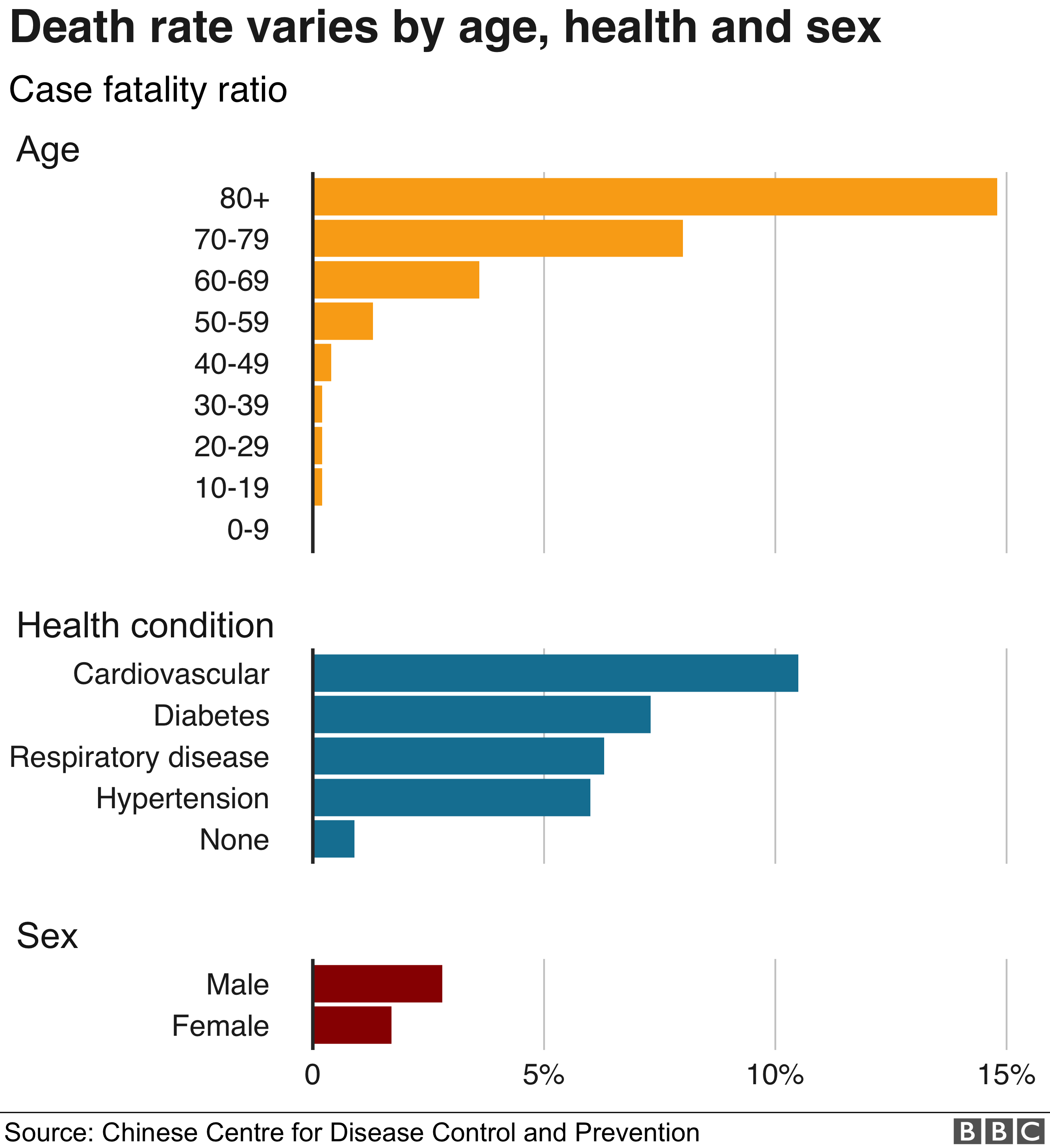
The WHO says the virus appears to particularly affect those over 60, and people already ill.

In the first large analysis of more than 44,000 cases from China, the death rate was 10 times higher in the very elderly compared to the middle-aged.

Most patients have only mild symptoms and the death rate appears to be between 2% and 5%, the WHO said.

By comparison, seasonal flu has an average mortality rate of about 0.1%, but is highly infectious – with up to 400,000 people dying from it each year.

Other strains of coronavirus, such as Severe Acute Respiratory Syndrome (Sars) and Middle East Respiratory Syndrome (Mers), have much higher death rates than Covid-19.

Death rates for different groups

Source: The BBC

03/03/2020

European auto industry’s plans to cut costs and jobs

(Reuters) – Europe’s auto industry is facing a slowdown in demand for new cars, as well as disruption from the coronavirus epidemic and import tariffs between China and the United States. As a result, several companies have announced plans to cut costs and jobs.

Here is a summary of the steps announced so far:

AUTOMAKERS:

VOLKSWAGEN GROUP (VOWG_p.DE)

Volkswagen said in March 2019 it would cut up to 7,000 positions and aim to deliver 5.9 billion euros ($6.7 billion) of annual savings at its core VW brand by 2023.

Volkswagen’s luxury car unit Audi (NSUG.DE) said in November it would cut one in ten jobs by 2025, up a total of 9,500, to fund its shift towards electric vehicle production.

PSA GROUP (PEUP.PA), FIAT CHRYSLER (FCHA.MI)

PSA’s German unit Opel said in February it was ruling out forced redundancies until July 2025, but would reopen a voluntary leave programme for older employees.

Unions at Fiat Chrysler, which is planning a merger with PSA, said management promised to avoid redundancies and get all group employees off special furlough arrangements and back to work by 2022.

The merger aims to achieve annual savings of 3.7 billion euros.

BMW (BMWG.DE)

In November, BMW management and its German labour representatives reached an agreement on changes to payout schemes and bonuses to reduce costs in Germany while avoiding “drastic measures”. BMW has said it will keep headcount stable, as hiring in software development will offset voluntary staff reductions in other areas.

DAIMLER (DAIGn.DE)

In February, German business daily Handelsblatt reported Daimler (DAIGn.DE) was intensifying its cost-cutting measures and planning to cut up to 15,000 jobs. Daimler declined to comment.

Daimler Chief Executive Ola Kaellenius said in February the company would cut 1,100 leadership positions worldwide, or about 10% of its management over the next three years.

The company also said it would revamp the management of its portfolios to remove duplicate layers between Mercedes-Benz and Daimler AG.

VOLVO CARS

In July 2019, Volvo Cars announced plans to cut fixed costs by 2 billion Swedish crowns ($214 million), adding the savings drive – on which it did not provide details – would come into effect in the second half of 2019 and run into the first half of 2020.

JAGUAR LAND ROVER

In February, Britain’s biggest carmaker Jaguar Land Rover (TAMO.NS) said it would reduce or stop production on certain days at two of its British factories as it was pursuing cost-cutting measures in response to falling demand.

A month earlier, the company said it would cut around 10% of the workforce at its northern English Halewood factory, which has about 4,500 employees, as it was changing shift patterns to boost efficiency at the site.

RENAULT (RENA.PA)

After Renault’s first full-year loss in a decade, the French automaker said it would cut costs by 2 billion euros over the next three years and did not exclude job cuts during a performance review across its factories.

BOSCH

In January, German engineering company Bosch said it would make staff changes via shorter working hours, voluntary redundancy and severance packages, but declined to provide a global figure for headcount reductions.

CONTINENTAL (CONG.DE)

German automotive supplier Continental said in November it would pare back its engine manufacturing activities, which could result in around 5,040 job losses by 2028.

Source: Reuters

02/03/2020

China ramps up efforts to help small businesses tide over tough time

BEIJING, March 1 (Xinhua) — China rolled out a raft of measures on Sunday to provisionally defer loan payments for small businesses to tide them over the difficulties amid the epidemic, according to the country’s top banking and insurance regulator.

For virus-striken micro-, small- and medium-sized companies, financial institutions shall defer their loan principal repayments that have matured since Jan. 25, said a document released by five central departments including the China Banking and Insurance Regulatory Commission (CBIRC).

Meanwhile, their interest payments between Jan. 25 and June 30 can be deferred to June 30, with penalty interest payments exempted, the document said.

Apart from enjoying the deferment policy, enterprises in the hardest-hit Hubei Province shall be given special credit quota, so as to lower the comprehensive financing cost in 2020 by over 1 percentage point from last year for inclusive small and micro enterprises.

The CBIRC also stressed to bolster eligible companies with temporary liquidity difficulty in the epidemic, forbid one-size-fits-all practices and promote information sharing in offering credit support.

Source: Xinhua

02/03/2020

China promotes online vocational skills training

BEIJING, March 2 (Xinhua) — China has issued a circular to encourage online vocational skills training to improve workers’ professional skills from 2020 to 2021.

The circular was released by the Ministry of Human Resources and Social Security and the Ministry of Finance.

The goal for 2020 is to choose more than 50 high-quality online vocational skills training platforms and provide training for about 1 million people with digital training resources covering over 100 types of work.

The goal for 2021 is to further optimize the management mechanism for online vocational skills training, expand the scale and boost the quality.

Source: Xinhua

02/03/2020

Think-tank report on Uighur labor in China lists global brands

BEIJING (Reuters) – Tens of thousands of ethnic Uighurs were moved to work in conditions suggestive of “forced labor” in factories across China supplying 83 global brands, and Australian think tank said in a report released on Sunday.

The Australian Strategic Policy Institute (ASPI) report, which cited government documents and local media reports, identified a network of at least 27 factories in nine Chinese provinces where more than 80,000 Uighurs from the western region of Xinjiang have been transferred.

“Under conditions that strongly suggest forced labor, Uighurs are working in factories that are in the supply chains of at least 83 well-known global brands in the technology, clothing and automotive sectors, including Apple, BMW, Gap, Huawei, Nike, Samsung, Sony and Volkswagen,” the think-tank said in the introduction to its report.

The ASPI report said the transfers of labor were part of a state-sponsored program.

It says the workers “lead a harsh, segregated life,” are forbidden to practice religion, and are required to participate in mandarin language classes.

It also says the Uighurs are tracked electronically and restricted from returning to Xinjiang.

China’s Foreign Ministry on Monday said reports the government had violated the Uighurs’ rights were untrue.

“This report is just following along with the U.S. anti-China forces that try to smear China’s anti-terrorism measures in Xinjiang,” spokesman Zhao Lijian at a regular press briefing on Monday.

The United Nations estimates over a million Muslim Uighurs have been detained in camps in Xinjiang over recent years as part of a wide-reaching campaign by Chinese officials to stamp out terrorism.

The mass detentions have provoked a backlash from rights groups and foreign governments, which say the arbitrary nature of the detentions violates human rights.

China has denied the camps violate the rights of Uighurs and say they are designed to stamp out terrorism and provide vocational skills.

“Those studying in vocational centers have all graduated and are employed with the help of our government,” said the Foreign Ministry’s Zhao, “They now live a happy life.”

The 83 global brands mentioned in ASPI’s report either work directly with the factories or source materials from the factories, it said, citing public supplier lists and the factories’ own information.

One of the factories, O-Film Technology Co Ltd, which has manufactured cameras for Apple Inc’s (AAPL.O) iPhones, received 700 Uighur laborers as part of the program in 2017, a local media article cited by the report said.

Apple referred Reuters to an earlier statement that said “Apple is dedicated to ensuring that everyone in our supply chain is treated with the dignity and respect they deserve. We have not seen this report but we work closely with all our suppliers to ensure our high standards are upheld.”

The other companies mentioned in the introduction to ASPI’s report – BMW (BMWG.DE), Gap Inc (GPS.N) , Huawei Technologies Co Ltd, Nike Inc (NKE.N), Samsung and Sony Corp (6758.T) did not respond to requests for comment on Monday.

O-Film Technology did not respond to a request for a comment either.

Volkswagen told Reuters in a statement that none of the listed companies is a direct supplier. It said the company holds “direct authority” in all parts of its business and “respects minorities, employee representation and social and labor standards.”

The report said a small number of the brands, including Abercrombie & Fitch Co [ANF.N], advised vendors to terminate their relationships with these companies in 2020, and others denied direct contractual relationships with the suppliers.

ASPI describes itself as an independent think-tank whose core aim is to provide insight for the Australian government on matters of defense, security and strategic policy.

Source: Reuters

Law of Unintended Consequences

continuously updated blog about China & India

ChiaHou's Book Reviews

continuously updated blog about China & India

What's wrong with the world; and its economy

continuously updated blog about China & India