Archive for ‘China alert’

18/02/2016

Apple Pay takes on China’s internet kings in mobile payments | Reuters

Apple Inc launched its mobile payment system in China on Thursday in a bid to convince the hundreds of millions of users of the country’s entrenched, dominant services to switch.

Photo

“We think China could be our largest Apple Pay market,” Jennifer Bailey, vice president of Apple Pay, told Reuters in an interview in Beijing.

In an early boost, China’s biggest lender, Industrial and Commercial Bank of China Ltd (ICBC), was among the banks that said earlier this week that customers would be able to use Apple Pay from Thursday.

However, Apple Pay has not had an easy ride so far in China, the fifth country to get the service. Even in its U.S. home market, Apple has faced skeptical retailers in its effort to develop a new revenue stream.

China is not likely to prove any easier to crack.

“People switch applications for significantly better experiences, it (Apple) has to deliver not just a little bit more secure, or a little bit easier to use,” said Mark Natkin, founder of Marbridge Consulting.

Greater China is Apple’s second-largest market by revenue, and the world’s biggest smartphone market. By the end of 2015, 358 million people, more than the U.S. population, had already taken to buying goods and services by mobile phone, according to the China Internet Network Information Center.

The vast majority are using payment services from China’s two biggest Internet companies that have existed for years.

Social networking and gaming firm Tencent Holdings Ltd operates WeChat Payment, and e-commerce company Alibaba Group Holding Ltd, through its Internet finance affiliate Ant Financial Services Group, runs Alipay.

“With 100 percent saturation of local payment systems, no one in China is clamoring for Apple Pay,” said one retailer who declined to be named for fear of harming business prospects. “Today, everyone has a local payment option on their phone, so Apple Pay is a solution in need of a problem.”

Source: Apple Pay takes on China’s internet kings in mobile payments | Reuters

17/02/2016

Free Speech in China Gets an Unlikely State-Media Backer – China Real Time Report – WSJ

China’s ruling Communist Party is cracking down on internal criticism, and the editor of one of the country’s most nationalist tabloids isn’t going to take it anymore.

In a post on his Weibo microblog over the weekend, Hu Xijin, editor in chief of the Global Times, called on Chinese authorities to show greater tolerance for dissenting opinions.

“China should open up more channels for criticism and suggestions and encourage constructive criticism,” Mr. Hu wrote on Sunday. “There also should be a certain amount of tolerance for unconstructive criticism.”

While allowing greater freedom of speech can lead to some problems, it brings greater benefits, he wrote, adding that recent Chinese history since the beginning of Communist rule in 1949 shows that freedom of speech “is inseparably linked to the vitality of society.”

“As for the problems it causes, the state has ample capacity to respond,” Mr. Hu wrote, without elaborating.

The message had received more than 2,000 comments and 1,500 “likes” as of Wednesday afternoon, on par with some of Mr. Hu’s other recent posts.

The posting comes as the Communist Party is doubling down on its efforts to stifle dissent among cadres. The sacking last November of Zhao Xinyu, an editor at a state-run newspaper, drew attention to a new tool in the party’s repertoire: the punishment of members for “groundlessly commenting” on official policies.

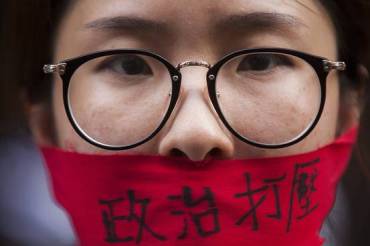
Introduced in a set of party rules last October, the prohibition against speaking out on national policies – known in Chinese as 妄议中央, wangyi zhongyang – is likely to have a chilling effect on political discussion within China, experts say.

It wasn’t clear whether Mr. Hu’s posting was in reaction to the new regulation – although some of the comments on his post indicated that the issue is on Chinese Internet users’ minds. “Aren’t you afraid of [being fired for] groundlessly commenting on official policies?” one user wrote.

Source: Free Speech in China Gets an Unlikely State-Media Backer – China Real Time Report – WSJ

16/02/2016

First train from China to Iran stimulates Silk Road revival – Xinhua | English.news.cn

First cargo train from China to Iran arrived in Tehran on Monday, indicating a milestone in reviving the “Silk Road,” which has opened a new chapter of win-win cooperation between China and Iran.

English: the Silk Road in Central Asia

English: the Silk Road in Central Asia (Photo credit: Wikipedia)

silk road

The train, also referred to as Silk Road train, has passed through Kazakhstan and Turkmenistan to Iran, travelling a distance of 10,399 kilometers. It had left Yiwu city in east China’s Zhejiang Province on January 28.

This train was carrying dozens of cargo containers, according to the deputy of Iran’s Road and Urbanism Minister, Mohsen Pour-Aqaei, who made a welcome speech after the arrival of the cargo train at Tehran Train Station on Monday.

As known to all, ancient Silk Road trade route had served as an important bridge for East-West trade and brought a close link between the Chinese and Persian civilizations.

The “Belt and Road” initiative was raised by Chinese President Xi Jinping in 2013, which refers to the New Silk Road Economic Belt, linking China with Europe through Central and Western Asia, and the 21st Century Maritime Silk Road, connecting China with Southeast Asian countries, Africa and Europe.

“To revive the Silk Road Economic Belt, the launch of the train is an important move, since about 700 kilometers of trip has been done per day,” said Pour-Aqaei, who was present at the welcome ceremony of the train in Tehran’s Railway Station.

“Compared to the sea voyage of the cargo ships from China’s Shanghai city to Iran’s Bandar Abbas port city, the travel time of the train was 30 days shorter,” he said.

Pour-Aqaei, also the Managing Director of Iran’s Railway Company, added that according to the plan, there would be one such a trip from China to Iran every month.

The travel of cargo train from China to Iran is part of a Chinese initiative to revive the ancient Silk Road used by the traders to commute between Europe and East Asia.

Tehran will not be the final destination of these kinds of trains from China, the Iranian deputy minister said, adding that in the future, the train will reach Europe.

This will benefit Iran as the transit course for the cargo trains from the east Asia to Europe, he said.

Chinese ambassador to Iran Pang Sen told Xinhua that as one of the cooperation projects after Chinese President Xi Jinping’s state visit to Iran, the cargo train is playing a important role to promote construction of the “Belt and Road” initiative.

Meanwhile, the railway line from Yiwu to Tehran provides the two countries an express and efficient cargo trade transportation method, Pang said, adding that the countries along the railway line will furthur upgrade rail technology with the aim to make its transportation ability faster and better.

Source: First train from China to Iran stimulates Silk Road revival – Xinhua | English.news.cn

16/02/2016

India and China Have Most Deaths From Pollution – China Real Time Report – WSJ

More than half of the 5.5 million deaths related to air pollution in 2013 happened in India and China, according to a new study.

About 1.4 million people in the South Asian nation and 1.6 million in its northern neighbor died of illnesses related to air pollution in 2013, researchers at the University of British Columbia in Canada said.

The Indian and Chinese fatalities accounted for 55% of such deaths worldwide, the study said.

Researchers studied risk factors for death and disease around the world and found that air pollution, both indoors and outdoors, was one of the leading contributors to global fatalities.

The inhalation of emissions from power plants, vehicles, the burning of crop stubble before replanting, and wood or open fires in homes are some of the leading causes of deaths from air pollution, the report said.

The number of premature deaths linked to air pollution worldwide will increase over the next two decades unless more aggressive targets are set to curb it, researchers studying India and China’s air said at a meeting Friday in Washington D.C.

A major contributor of poor air quality in India is linked to the burning of wood and cow dung for cooking and keeping warm, particularly in the winter months. These methods are popular among India’s rural and urban poor, who don’t have access to electricity or cleaner fuels.

Household air pollution from cooking with wood “is primarily a problem in rural areas of developing countries of the world,” said Michael Brauer, a professor at the University of British Columbia’s School of Population and Public Health, in Canada.

Over the past few months, levels of tiny insidious particles, known as PM 2.5, in the Indian capital New Delhi have often exceeded amounts deemed safe by the United Nations World Health Organization.

Taking their lead from Beijing, Indian authorities in January experimented with restricting cars on roads for two weeks in New Delhi to reduce emission levels. Delhi Chief Minister Arvind Kejriwal said Thursday the city would revive the restrictions for 15 days, starting April 15.

Scientists said vehicle emissions contribute only 20% to 40% of pollution in Delhi, saying other sources of the particulate matter include the burning of dung, rubbish and leaves and the use of diesel backup generators, which kick in when Delhi’s patchy electricity supply cuts out, as well as emissions from small-scale industries such as brick kilns.

A federal environmental court in New Delhi said Feb. 4 it wanted officials to improve air quality by asking authorities to reduce the number of traditional cremations that use wood to burn bodies, a widespread practice in majority Hindu India.

In China, outdoor air pollution from burning coal was found to be the biggest contributor to poor air quality, causing an estimated 366,000 deaths in the country in 2013. Scientists predict 1.3 million premature deaths will take place in China by 2030 if coal combustion remains unchecked.

“One of the unique things about air pollution is you cannot run, you cannot hide from it. We know that if you improve air quality everybody benefits, so from a health perspective reducing levels of air pollution is actually an incredibly efficient way to improve the health of the entire population,” Mr. Brauer said.

Source: India and China Have Most Deaths From Pollution – China Real Time Report – WSJ

15/02/2016

Home on the Range, Chinese Style – China Real Time Report – WSJ

It’s a small step in the right direction, driven more by necessity than enlightened policy.

That’s the view from economists on China’s move this year to put forward a range for its economic growth target rather than a single number. The head of the National Development and Reform Commission, China’s top economic planning agency, said early this month that the 2016 target is likely to be “6.5% to 7%,” the first time in recent memory that China has used such a band. The target is set to be officially released early next month when China’s parliament convenes.

For decades, Beijing beat its annual growth targets without breaking a sweat. More recently, as growth decelerated faster than expected, it has faced growing difficulty hitting its number, so a range provides more wiggle room.

This follows Beijing’s decision to add an “about” to both its 7.5% target in 2014 and its 7% target last year. The adjective proved handy when the actual growth figures wound up falling short both times.

The risk this year, economists say, is that even a 6.5% to 7% target may be too high, heaping pressure on local officials to artificially stimulate growth in ways that increase debt and blunt reform initiatives.

This is also the year that China sets a growth target for the coming five years that’s expected to be 6.5%, in line with a Communist Party goal of doubling per capita income by 2020 over 2010 levels. This benchmark also may be high, analysts said, given China’s many structural problems and so-far limited appetite for reform.

“If they really stick to the 6.5% target by adopting unsustainable policies, throwing up more credit, they face a bigger problem with debt down the road,” said Fitch Ratings Inc. analyst Andrew Colquhoun. “Many emerging market problems in the past have happened when countries veer off and start to believe their own hype on what growth is possible.”

Source: Home on the Range, Chinese Style – China Real Time Report – WSJ

10/02/2016

U.S. and India consider joint patrols in South China Sea – U.S. official | Reuters

The United States and India have held talks about conducting joint naval patrols that a U.S. defence official said could include the disputed South China Sea, a move that would likely anger Beijing, which claims most of the waterway.

An Indian Navy personnel gestures on the deck of the newly built INS Kochi, a guided missile destroyer, during a media tour at the naval dockyard in Mumbai, India September 28, 2015. REUTERS/Shailesh Andrade/Files

Washington wants its regional allies and other Asian nations to take a more united stance against China over the South China Sea, where tensions have spiked in the wake of Beijing’s construction of seven man-made islands in the Spratly archipelago.

India and the United States have ramped up military ties in recent years, holding naval exercises in the Indian Ocean that last year involved the Japanese navy.

But the Indian navy has never carried out joint patrols with another country and a naval spokesman told Reuters there was no change in the government’s policy of only joining an international military effort under the United Nations flag.

He pointed to India’s refusal to be part of anti-piracy missions involving dozens of countries in the Gulf of Aden and instead carrying out its own operations there since 2008.

The U.S. defence official said the two sides had discussed joint patrols, adding that both were hopeful of launching them within the year. The patrols would likely be in the Indian Ocean where the Indian navy is a major player as well as the South China Sea, the official told Reuters in New Delhi on condition of anonymity.

The official gave no details on the scale of the proposed patrols.

There was no immediate comment from China, which is on a week-long holiday for Chinese New Year.

China accused Washington this month of seeking maritime hegemony in the name of freedom of navigation after a U.S. Navy destroyer sailed within 12 nautical miles of a disputed island in the Paracel chain of the South China Sea in late January.

The U.S. Navy conducted a similar exercise in October near one of China’s artificial islands in the Spratlys.

Source: Exclusive: U.S. and India consider joint patrols in South China Sea – U.S. official | Reuters

08/02/2016

Gong Xi Fa Cai! What to expect in China’s Year of the Monkey – SCMP

The Year of the Monkey is expected to be another turbulent year for the world’s second largest economy. Here, SCMP reporters gaze into their crystal balls for what might lie ahead.

An installation celebrates the Year of the Monkey at Ditan Park in Beijing. Photo: EPA

POLITICS: Political jockeying and more crackdowns

The Communist Party will be focused on preparations for a new leadership team, to be unveiled at the 19th Party Congress next year. Apart from President Xi Jinping (習近平) and Premier Li Keqiang (李克強), the rest of the Politburo Standing Committee will have reached retirement age. The new appointments will be keenly observed for clues as to who Xi intends to succeed him.

Two of Xi’s signature campaigns – the drives against corruption and in favour of frugality in public life – are likely to continue to reshape the nation.

– Cary Huang

DIPLOMACY: Conflicts and tensions to escalate

Following Xi’s maiden presidential visit to the Middle East, Beijing is expected to increase its role as a broker in the region’s conflicts. Beijing has already hosted representatives from Syria and Afghanistan for talks. But other than calling for dialogue, China’s options are limited, partly because it does not want to be seen as interfering in the internal affairs of other nations.

With the Beijing-led Asian Infrastructure Investment Bank having just started operations, China is expected to boost its economic diplomacy by funding infrastructure projects overseas.

Tensions in the South China Sea are also expected to rise, as China is likely to continue building structures in the disputed waters. How the United States and China handle the issue – especially the Pentagon’s deployment of warships within 12 nautical miles of Chinese-controlled islands – will be the biggest concern.

– Teddy Ng

DEFENCE: Band(s) of Brothers?

The top priority of the military will be to rebuild morale and its integrity following its restructuring into five theatre commands. Xi set the tone this month by visiting Jinggangshan, the cradle of the communist revolution in China. The Eastern Theatre Command’s land force quickly followed his lead and visited Gutian in Fujian (福建) province, where the Red Army pledged obedience to the party in 1929, and saluted the party flag. Other commands are expected to make similar displays of fidelity.

It will be a bumpy road: the old ways of managing operations, carrying out orders through personal connections and using favoured contractors, has been upended. Xi wants to turn the PLA into a fighting force that meets international standards, with all the efficiencies and accountability that entails.

– Minnie Chan

ECONOMY: Pandora’s Box to open?

There’s actually little disagreement between billionaire investor George Soros and Beijing decision-makers over China’s economic prospects in 2016 – both agree growth will be lower in 2016 than that of 2015. Where they disagree is on how much and how quickly.

One thing is for sure, China will never admit an economic “hard-landing”, though investors may find plenty of evidence for one – from factory closures to rising unemployment and financial strains.

– Zhou Xin

UNEMPLOYMENT: What’s the real picture?

Of all of China’s official economic indicators, the registered urban jobless rate is possibly the least reliable. The rate, released quarterly, has barely ever moved from 4.1 per cent in recent years, regardless of the economic cycle. Another jobless rate compiled by the statistics agency, which is increasingly being cited by the premier, claims a level of about 5 per cent.

Neither of these official rates are likely to change much throughout 2016.

– Zhou Xin

A-shares: Beware the bear!

The mainland’s stock market, after witnessing a sharp fall at the beginning of 2016, is expected to continue a bear run in the Year of Monkey amid a crisis of confidence.

A depreciating yuan, the imminent launch of the new initial public offering (IPO) mechanism and a bleak outlook for corporate earnings are set to exacerbate weak sentiment with millions of retail investors suffering paper losses following a market rout last year.

Local investors are increasingly betting on a further downturn in the A-share market.

Corporate earnings are likely to stay flat in 2016 despite Beijing’s increased efforts to navigate a transition to a consumer-led growth.

– Daniel Ren

Consumption: Bittersweet for retailers

Online stores are continuing to take business from their brick-and-mortar counterparts.

While overall consumption growth is expected to further slow in 2016, bringing problems for both sectors, shopping malls and big stores face their own particular woes.

Hypermarkets could see custom slow, but business at smaller formats such as mini-marts and convenience stores should remain stable.

People will continue to spend more on tourism, leisure, food and health-related products.

Domestic brands will continue to gain ground on foreign ones.

Women will continue to take a greater role in driving spending. Consulting firm Mintel found more than half of Chinese mothers control the family budget and that women are more willing to try new products and experiences than men.

– Mandy Zuo

E-commerce: Click, click, click to buy, buy, buy

The personal computer era is over. Mobile-commerce, which enables people to buy everything from anywhere via the internet, is dominating the online sector and this trend shows no sign of stopping.

Retail on WeChat, the most popular social media platform, is expected to grow steadily. The mobile platform is also becoming an important tool of advertising and communication for businesses.

Online to offline (O2O) business will continue to boom as mainlanders show growing interest and loyalty in professional home services such as home cleaning and massage.

With growing demand from mainland consumers for prime goods overseas, fiercer competition is expected in cross-border business. Internet giants, entrepreneurs and small businesses will flock to the sector, which the Ministry of Commerce projects will grow an average 30 per cent in the next few years.

– Mandy Zuo

P2P lending: More closures, collapses and runaway owners

The long-awaited regulations reining in peer-to-peer lending are expected to bring an industry shakeup that will knock out a significant number of players.

Industry data showed the number of P2P lending platforms dropped a second consecutive month to 2,566 at the end of January from 2,595 in December.

The draft rules, released by the China Banking Regulatory Commission at the end of 2015, define P2P lending platforms as internet financing intermediaries and forbid them from selling wealth management and other financial products that attract investors with promises of high returns.

– Kwong Man-ki

Tourism: Slowdown, what slowdown?

Despite the economic slowdown, the depreciation of the yuan and turmoil in the stock markets, Chinese tourists passed a milestone last year – making a record 120 million outbound trips and spending US$104.5 billion to make China the world’s leading source of tourists.

The boom is expected to continue this year, thanks to a relaxation in visa policies in more countries as well as a strong yuan against the euro and yen.

– Laura Zhou

Childbirth: More buns in the oven

The Year of the Monkey is traditionally regarded an auspicious year for giving birth, so it will prove popular with people planning families. Some of those may have delayed their plans from the Year of the Goat, which is decidedly inauspicious.

More of the newborns are likely to be second children, as parents seek to benefit from the new policy allowing all couples to have two children.

– Zhuang Pinghui

URBANISATION: Millions to relocate

Urbanisation will maintain its pace with millions relocating, most of them rural residents.

They will continue to move to cities near rivers, railway lines and coastlines and more of them will be migrating with spouses and children.

The policy of issuing residence permits to migrants and granting urban household registrations to rural residents are helping them to access public services and integrate in urban life.

– Zhuang Pinghui

ENVIRONMENT: More smoggy days?

As the new five-year plan period (2016-2020) begins, cities will need to set targets on how to improve water and air quality. But whether much can be done to reduce smog problems – especially in heavily polluted city clusters near Beijing and Shanghai – depends largely on how determined local governments are to slash overcapacity in heavy industries.

At the end of 2015, Beijing’s persistent smog pushed the city authorities to pledge better management of small-scale coal burning. If other cities follow suit, the move could impact China’s environmental footprint.

– Li Jing

http://www.scmp.com/news/china/policies-politics/article/1910019/kung-hei-fat-choy-what-expect-chinas-year-monkey

03/02/2016

China’s new wind power capacity hits record high – Xinhua | English.news.cn

China‘s newly installed wind power capacity reached a record high in 2015 amid increasing efforts from the government to boost clean energy.

The new wind power capacity jumped to 32.97 gigawatts last year, more than 60 percent higher than 2014, the National Energy Administration (NEA) said on Tuesday.

Wind power generated 186.3 terawatt hour of electricity in 2015, or 3.3 percent of the country’s total electric energy production, data showed.  (Editor’s note: worldwide average is 4% – https://en.wikipedia.org/wiki/Wind_power)

Promoting non-fossil energy including wind power, China is in the middle of an energy revolution to power its economy in a cleaner and sustainable manner. The government aims to lift the proportion of non-fossil fuels in energy consumption to 20 percent by 2030 from present around 11 percent.

China’s energy mix is currently dominated by coal.

However, the NEA warned of the suspension of wind farms in Inner Mongolia, Xinjiang and Jilin. The phenomenon occurs in the early stage of wind power capacity construction due to the mismatching of new installation and local power grid.

Source: China’s new wind power capacity hits record high – Xinhua | English.news.cn

01/02/2016

Another Type of Factory-Gate Indicator: Dumpling Sales – China Real Time Report – WSJ

Whether it is the cold drizzle, factory economics or the annual exodus of migrant laborers ahead of Lunar New Year, Lin Xinge is selling fewer dumplings.

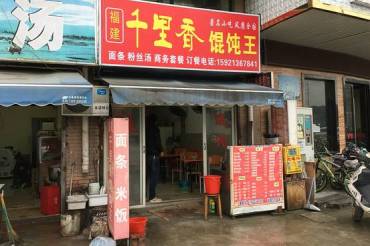
Ms. Lin is chief dumpling wrapper, waitress, cashier and dishwasher for Fujian One Thousand Li Fragrant, a tiny restaurant she owns with her husband in an industrial zone of Shanghai. Just over a fence, her neighbors include iPhone maker Foxconn Technology Group and other giant industrial groups that employ legions of workers she counts as customers.

“The workers earn less salary so fewer people come here and our restaurant isn’t doing well,” says Ms. Lin. She says that during the three years she has run One Thousand Li Fragrant, she’s had periods when every seat at her eight tables has been filled. Not lately.

Like her customers who come for $1.50 bowls of noodles and dumplings, Ms. Lin is a migrant worker. On a recent day she was sitting on an orange chair in the restaurant gripping a hand-warmer and thinking of her native Fujian province, where as a young woman she sang opera in the local dialect.

“Our Putian is more comfortable,” she says referring to the ancient city in Fujian where she was born. Though only 34 years old, Ms. Lin said singing in a traveling opera troupe is for the young and made less sense for someone like her, a mother of two.

In the Shanghai factory zone called Songjiang, One Thousand Li Fragrant was among the few restaurants that remained open ahead of the Feb. 8 Lunar New Year. Wind and cold rain whipped across tables placed on the sidewalk that would have been inviting in balmier times. Ms. Lin said the other dozen or so restaurants, also run by migrants and for migrants, had shut a few days before, as their owners departed for the holidays.

China’s mass people movement for Lunar New Year officially began a week ago. Beijing predicts 2.91 billion trips between January 24 and March 3. Ms. Lin’s family will join the throng in coming days.

Economists will be watching how China’s slowdown affects the mass migration. During past years of economic boom in China, until the mid-2000s, cash-rich factory workers returned to interior villages for the holidays, but quickly flooded back to the industrialized east, often along with family members willing to work for low pay. But in more recent years, the monotony of factory work has proved less of a draw, leaving employers to scramble to hold workers, with higher salaries or benefits. This year, jobs themselves are the concern.

Migrants interviewed outside factories in southern Shanghai and northern Zhejiang province this past week provided a mixed picture. Some suggested the economic slowdown is hitting factories. Some noted that workers were sometimes being encouraged to leave for holidays earlier this year while some factories shut outright. Truck traffic in the zones appeared light and some facilities were shut.

Speaking outside some factories, many veteran workers used the word for nothing special, “chabuduo,” to dismiss any suggestion they see dramatic changes this holiday season.

As heavy rain fell in the Zhejiang province industrial city Jiaxing on Friday, a group jostled and pushed an assortment of fancy suitcases, canvas bags and industrial buckets into the hold of a bus. The group was embarking on a 10-hour drive back home to the Henan province city of Nanyang. The mood was upbeat.

One woman, who works in a garment factory, said she was toting gifts for her family, including 100 rice balls. A worker, who said he drives on a construction site, reported he had a pretty good year. They said bonuses had been paid as usual.

Source: Another Type of Factory-Gate Indicator: Dumpling Sales – China Real Time Report – WSJ

30/01/2016

China set to participate in India’s smart city mission starting from Solapur – Xinhua | English.news.cn

Solapur, which bore witness to Sino-Indian friendship in history, will soon see a new chapter of cooperation between both countries as China will get actively involved in the city’s smart city mission.

From January 27 to 28, a group of Chinese delegates led by Chinese Consul General Zheng Xiyuan, including representatives from two Chinese high-tech companies, paid a visit to this city.

They saw different projects including sewage treatment plants, textile mills, and sugar mills, and held meetings with local officials and entrepreneurs, exchanging ideas on the smart city planning and progress of Solapur and sharing experiences of both sides in sewage treatment.

The Chinese delegates received warm welcome from the Solapur people. Officials of Solapur showed great interest in the technology of the Chinese companies, and invited them to participate in the sewage treatment projects.

Jiang Konghua, marketing director of Guangdong Sino-Israeli Water Treatment Innovative Industrial Park Co., said he is determined to conduct a comprehensive survey based on the projects he has seen in Solapur, and find the best solution for the development of this city.

Solapur is a city located in the southeastern region of Indian state of Maharashtra. It is the hometown of Dr. Dwarkanath Kotnis, who fought with the Chinese people in WWII, and died in China.

On January 28, Solapur is declared as among the first group of twenty Indian cities to receive funds from the central government to start the smart city mission.

Ever since Narendra Modi took office as prime minister of India and proposed the smart city mission, the enlisted Indian cities have invited various countries to join their mission, including France, Germany, Sweden and the United States.

At the end of last year, Zhu Xiaodan, governor of China’s Guangdong Province, led a group of delegates to visit Maharashtra. During Zhu’s meeting with Devendra Fadnavis, chief minister of Maharashtra, they both agreed on the cooperation in the smart city mission, which led to this visit to Solapur.

Source: China set to participate in India’s smart city mission starting from Solapur – Xinhua | English.news.cn

Law of Unintended Consequences

continuously updated blog about China & India

ChiaHou's Book Reviews

continuously updated blog about China & India

What's wrong with the world; and its economy

continuously updated blog about China & India