Chindia Alert: You’ll be Living in their World Very Soon
aims to alert you to the threats and opportunities that China and India present. China and India require serious attention; case of ‘hidden dragon and crouching tiger’.
Without this attention, governments, businesses and, indeed, individuals may find themselves at a great disadvantage sooner rather than later.
The POSTs (front webpages) are mainly 'cuttings' from reliable sources, updated continuously.
The PAGEs (see Tabs, above) attempt to make the information more meaningful by putting some structure to the information we have researched and assembled since 2006.
NEW YORK, Sept. 7 (Xinhua) — Overseas Chinese in New York City presented a brilliant concert late Friday night in Lincoln Center to mark the 40th anniversary of the establishment of the diplomatic relations between China and the United States and to celebrate the forthcoming Mid-Autumn Festival.
The 2019 Golden Night Concert, staged by The Asian Cultural Symphony of the USA, featured a mix of well-known classical western and Chinese symphonies, operas and songs, attracting hundreds of overseas Chinese and American audience.
Young Chinese songwriter and singer Huo Zun performed three songs at the concert, including his signature song Rolled-Up Pearl Curtain, the unique pop-song One Night in Beijing, and a Peking opera excerpt Butterfly Love from The Great Concubine of Tang in cooperation with renowned Peking opera singer Li Jun, winning prolonged warm applause.
Li Jun’s Peking opera excerpt Morning Sun in Heart from Climbing Tiger Mountain and Wang Hongli’s Henan opera excerpt from Mulan enchanted the audience with the quintessence of traditional Chinese culture.
Famed female vocalist Zheng Xulan staged her classic pieces Shepherdess Song and The Sea, The Homeland, renewing old memories of overseas Chinese.
Also presented included The Toreador Song from Carmen by baritone Nigel Smith, Tambourin Chinois and Zigeunerweisen by violinist Lin Zhaoliang, and Hulunbuir Grassland by the Krliu family singers.
The concert served as a platform for overseas Chinese to convey their goodwill. Over the past 40 years, Chinese American made significant contribution in bridging China-U.S. exchange in a variety of aspects. As the center of classical music in New York City and a coveted platform by artists, Lincoln Center witnessed another wonderful cultural exchange between the East and the West.
He is expected to join a trilateral dialogue with his counterparts from Pakistan and Afghanistan, and observers say he may try to mediate in Kashmir dispute
Trip also includes a stop in Nepal that could pave way for a visit by Xi Jinping
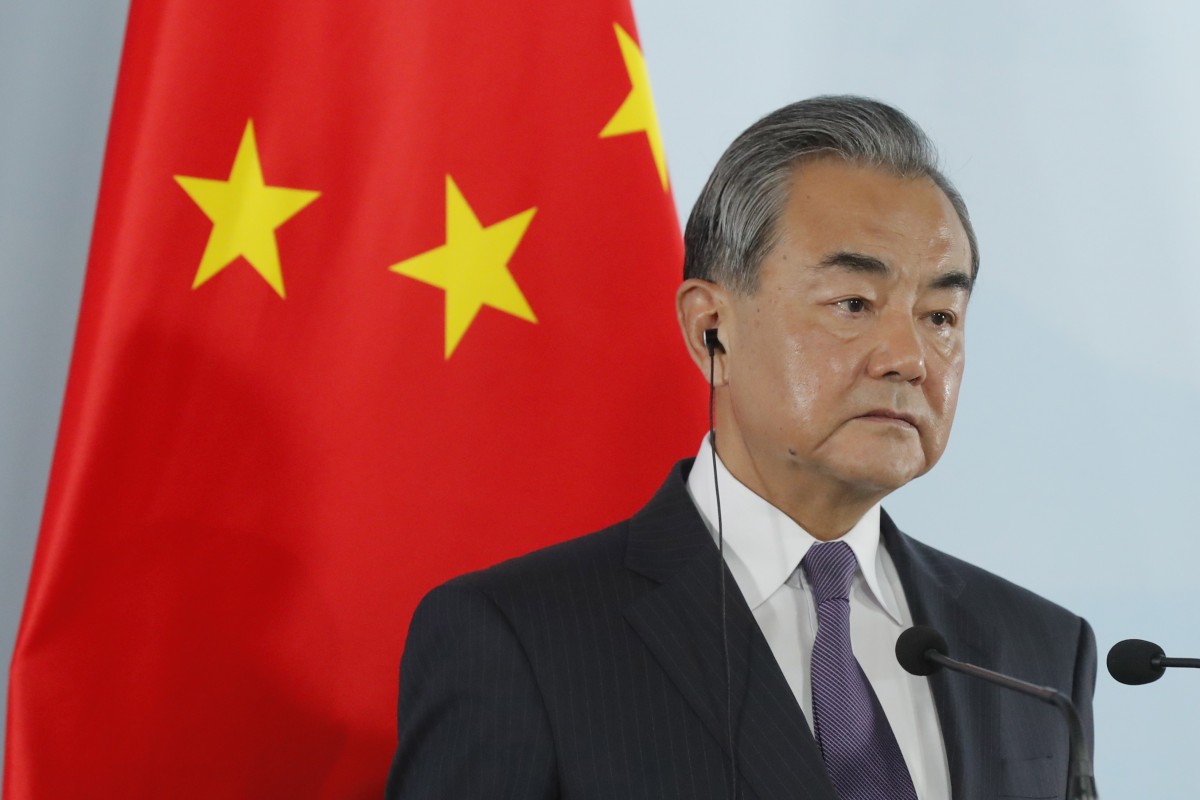
Chinese Foreign Minister Wang Yi may try to act as a negotiator in the Kashmir dispute. Photo: EPA-EFE
Chinese Foreign Minister Wang Yi began a four-day trip to Pakistan and Nepal on Saturday, amid escalating tensions between Islamabad and New Delhi over
Wang was expected to join a trilateral dialogue with the foreign ministers of Pakistan and Afghanistan in Islamabad, foreign ministry spokesman Geng Shuang said on Friday. He will also travel to Nepal.
Beijing has criticised India’s decision last month to strip the Jammu and Kashmir autonomous state of its special status and break it into two federally controlled territories, calling it “unacceptable”.
China also formally backed Pakistan’s request for the United Nations Security Council to hold “closed consultations” on the revocation of the state’s autonomy.
Meanwhile, observers say the Chinese foreign minister could attempt to act as a negotiator in the complex border dispute.
“Wang might try to play a role to mediate between the two sides to resolve the crisis,” said Wang Dehua, head of the Institute for South and Central Asia Studies at the Shanghai Municipal Centre for International Studies. “This has been China’s long-held position on the issue.”
Pang Zhongying, an international relations researcher at Ocean University of China in Qingdao, agreed.
“[Indian Prime Minister] Narendra Modi has visited China a couple of times and it is likely [Chinese President] Xi Jinping will visit India soon,” he said. “If Xi is to visit India later this year, China may try to contain its differing views with India on Kashmir.”
Modi has proposed an informal summit with Xi later this year that may be held in the religious hub of Varanasi, Modi’s parliamentary constituency. New Delhi said in May that Indian officials were working with the Chinese side to finalise the details, but Beijing has yet to confirm Xi’s visit.
India dismisses Beijing’s concerns over Kashmir because ‘it won’t have any impact on China’
Wang Yi was also due to visit India later this month for border talks, but the trip had to be postponed at the request of New Delhi because of scheduling problems, Hindustan Times reported, citing China’s foreign ministry.
The row over Kashmir has escalated in the past month. Pakistani Prime Minister Imran Khan said on Friday that Islamabad would make the fullest possible response to New Delhi’s actions in disputed Kashmir and that the global community would be responsible for any “catastrophic” aftermath.
Since Modi withdrew special rights for Indian-administered Kashmir on August 5, India has flooded the Kashmir valley with troops, restricted the movements of residents and cut off communication.
Both India and Pakistan claim the whole of Kashmir, which was partitioned between the two following the end of British rule in 1948, and they have subsequently fought wars over the territory.
China has its own territorial dispute with India over the part of Kashmir it controls. In early August, Chinese foreign ministry spokeswoman Hua Chunying
and said it was not binding. Beijing later appeared to soften its rhetoric, with Hua calling for a solution through dialogue and negotiation, without criticising either side.
The Chinese foreign minister will also visit Nepal, where he is expected to meet his counterpart, the president and prime minister. The trip could pave the way for an expected visit by Xi to Nepal.
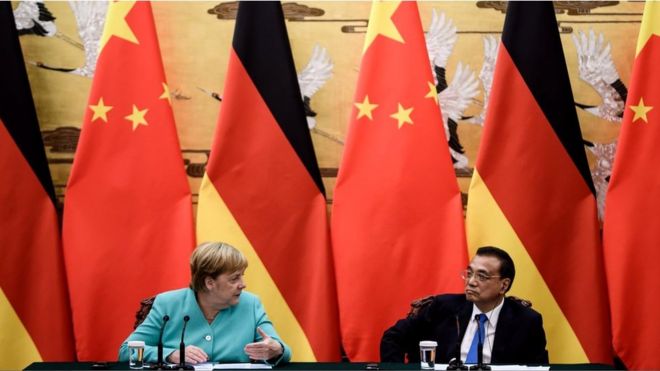
Image copyright EPAImage caption Ms Merkel calls for dialogue while Mr Li says China can handle its own matters
China’s Premier Li Keqiang has said Beijing supports the Hong Kong government “to end the violence and chaos”.
He is the most senior Chinese official to comment on the unrest which has rocked Hong Kong for months.
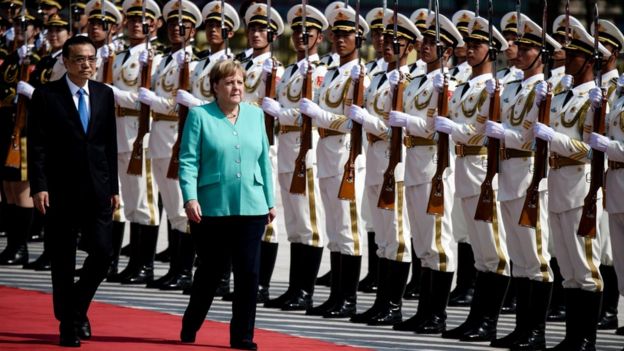
His comments came during a joint press conference with German Chancellor Angela Merkel in Beijing.
Hong Kong has seen months of often-violent protests calling for democracy and less influence from China.
The protests were sparked by changes to a law that would allow extradition to mainland China, but have since widened to include calls for an independent inquiry into police brutality and demands for greater democracy.
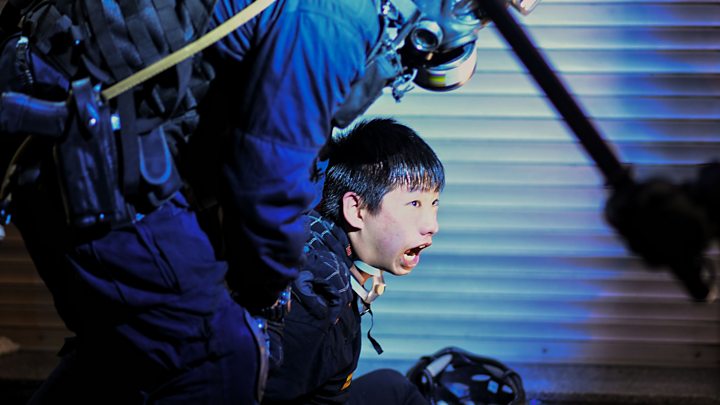
Image copyright EPAImage caption Hong Kong activists hope for Western support
Instead, protests continued on Friday evening, when clashes erupted between police and the demonstrators outside a subway station on the Kowloon peninsula.
Riot police fired both tear gas and rubber bullets at protesters before clearing the nearby streets as the crowd of protesters was forced to retreat.
What did the Chinese premier say?
In August, China had likened to protests to terrorism, warning activists not to “underestimate the firm resolve” of the Beijing government.
Li Keqiang, China’s second highest-ranking leader, told reporters on Friday: “The Chinese government unswervingly safeguards ‘one country, two systems’ and ‘Hong Kong people govern Hong Kong people’.”
He said China backed Hong Kong “to end the violence and chaos in accordance with the law, to return to order, which is to safeguard Hong Kong’s long-term prosperity and stability”.
Chinese State Councilor and Foreign Minister Wang Yi meets with Bruneian Princess Hajah Masna in Beijing, capital of China, Sept. 5, 2019. (Xinhua/Yan Yan)
BEIJING, Sept. 5 (Xinhua) — Chinese State Councilor and Foreign Minister Wang Yi met with Bruneian Princess Hajah Masna here on Thursday.
Wang said China and Brunei have been understanding, respecting and supporting each other, setting an example for the peaceful coexistence between large and small countries.
Calling the two countries important partners in the building of the Belt and Road, Wang said China supports Brunei’s economic diversification strategy and is willing to work with Brunei in promoting joint ocean development and cooperation in the East ASEAN Growth Area.
Masna said as the next year had been designated as the Year of Tourism Between Brunei and China, the Bruneian side will grasp the opportunity to expand people-to-people exchange and promote the development of the strategic cooperative partnership between the two countries.
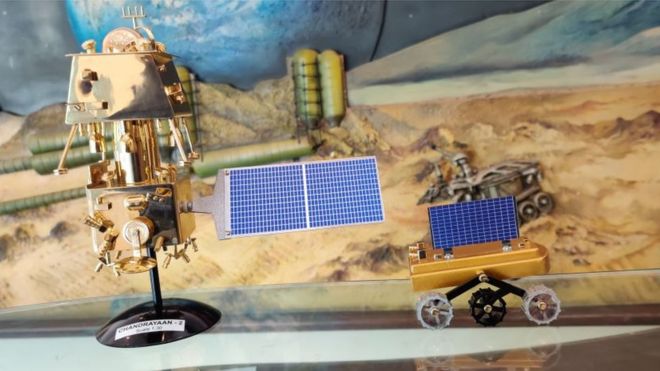
Image copyrigh tGETTY IMAGESImage caption Chandrayaan-2 is a three-in-one mission comprising an orbiter, a lander and a six-wheeled rover
India’s second Moon mission will see the country’s space agency attempt to land a rover on the lunar surface on 7 September. Science writer Pallava Bagla explains how it will reach the Moon and why it is significant.
Why is this mission unique?
Costing $150 million, Chandrayaan-2 will carry forward the achievements of its predecessor Chandrayaan-1 which was launched in 2008 and discovered the presence of water molecules on the parched lunar surface.
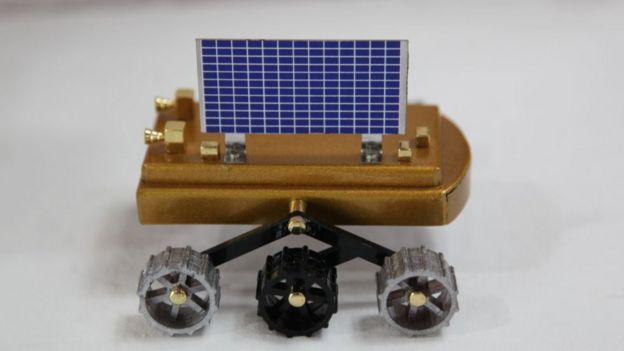
Chandrayaan-2 is a three-in-one mission comprising an orbiter, a lander named Vikram and a six-wheeled rover named Pragyaan.
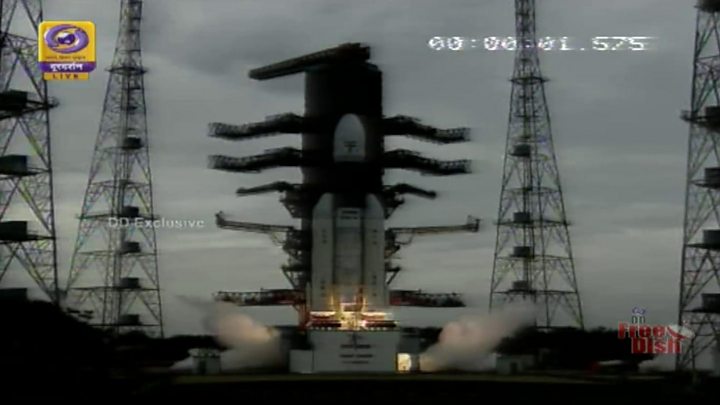
It was launched on 22 July, a week after its scheduled blast-off, which was halted due to a technical snag.
It entered the Moon’s orbit nearly a month later in a tricky operation, completing a series of manoeuvres before its lander was cut loose on 2 September.
Media caption The successful launch of India’s Moon mission
Now, on 7 September, a little after midnight India local time (1800 GMT), the lander which contains the rover will be sent hurtling down to the lunar surface where it is expected to make a landing near the South Pole of the Moon.
The last 15 minutes of the mission, when the Vikram lander will attempt to autonomously guide itself down to the lunar surface with no support from ground control, has been described as “15 minutes of terror” by the head of the Indian Space Research Organisation (Isro), Dr K Sivan.
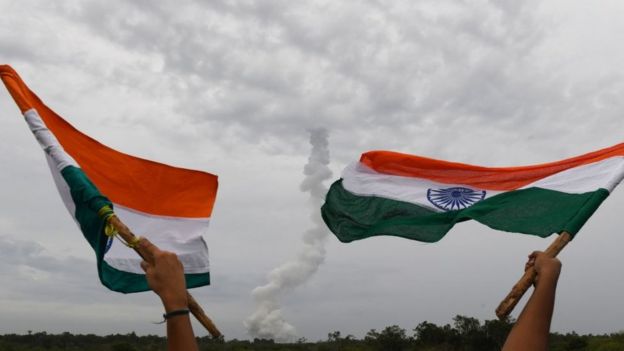
If India does succeed in touching down with the Vikram lander intact, it will become the fourth country to do so after the US, Russia and China.
More importantly for Indians, it will mean the nation’s flag will reach the Moon intact.
How will it land on the Moon?
The Moon may be Earth’s closest neighbour, but landing on it is a very tricky operation.
It has no atmosphere worthy of the name, which means parachutes cannot be used to slow the lander’s descent to the surface. The only option therefore is to go in for what is called a “powered descent”.
This means that the velocity of the lander is steadily reduced with its own rocket engines.
The lander will be moving horizontally across the surface of the Moon as it descends. The rocket engines must bring that horizontal movement to a stop whilst at the same time controlling the rate of descent to near zero just before the moment of touchdown.
This is known as a “soft landing”.
Before the final approach, both the orbiter and lander would have surveyed the Moon to find a “sweet spot” with no craters and boulders where it can land.
If the lander does not function properly it could crash land on the Moon surface, like its predecessor Chandrayaan-1 – though this was an intentional crash landing as in 2008 India had not yet mastered how to perform a soft landing.
Media caption Is India a space superpower?
Either way, once the landing happens and the lunar dust that may have been kicked up settles, the ramp opens up and the rover is very gently wheeled out.
The rover will then “Moon walk” at the princely speed of one centimetre per minute. It can travel a maximum of 500m (1,640ft) from the lander.
Both the lander and rover are powered with solar batteries and carry three instruments apiece.
What will the lander do?
The lander will, among other things, measure Moon quakes in its vicinity and do a thermal profile of the lunar “soil”. Meanwhile, the rover will further analyse the lunar soil.
The rear wheels of the rover are imprinted with the national emblem – the Ashoka Chakra – and the Isro logo, which means a permanent mark of India’s visit will be left on the surface of the Moon.
But the extreme temperatures on the Moon’s surface are a real challenge to the mission.
Image copyright GETTY IMAGESImage caption The rover will “Moon walk” at a speed of one centimetre per minute
When the Sun shines, the lunar temperature can cross 100C and when it sets the temperature can drop to -170C.
As their batteries must be recharged with sunlight, the nominal life of both the rover and lander is expected to be one lunar day, since Isro is not sure if they can survive the ultra-cold temperatures of the long cold lunar night which lasts 14 days.
Both will send back photos of each other so the first Indian “selfies” from the lunar surface are expected soon after they land.
Why is the South Pole of the Moon significant?
The South Pole of the Moon is still a largely unexplored area, and India is targeting a spot that no other landing craft has reached so far. The mission will attempt to soft land its rover and lander in a high plain between two craters – Manzinus C and Simpelius N – at a latitude of about 70° south.
Most earlier missions including the Apollo manned missions targeted the equatorial region of the Moon.
Isro says the lunar South Pole is especially interesting because the surface area that remains in shadow here is much larger than that of the Moon’s North Pole. This means that there is a possibility of water in areas that are permanently shadowed.
In addition, the South Pole region has craters that are cold traps and contain a fossil record of the early Solar System.
This unexplored region is also especially important because in the near future, possibly by 2024, the US space agency Nasa aims to place boots back on the Moon through its Artemis Mission, and wants to target landing near the South Pole.
India’s mission will therefore give the Americans much needed data of this unchartered territory.
Why will the orbiter circle the Moon for a year?
The Chandrayaan-2 orbiter is expected to circle the Moon for a further year.
During that time, it will map lunar minerals, take high resolution photos and search for water on the lunar surface in the most detailed fashion till date by any lunar craft, using an infra-red imager and radars.
Image copyright GETTY IMAGESImage caption The imprints of India’s national emblem and the Isro logo will be left on the Moon by the rover
The high resolution camera will help make a digital terrain map of the moon
It will also analyse the thin lunar atmosphere.
There is also the possibility that the orbiter may last longer than a year, as Isro says it has made suitable savings in fuel. But once its fuel runs out, the orbiter will become a long-lasting Indian-made lunar satellite.
Chinese State Councilor and Foreign Minister Wang Yi (2nd L) meets with Ri Su Yong (2nd R), member of the Political Bureau and vice-chairman of the Central Committee of the Workers’ Party of Korea (WPK) of the Democratic People’s Republic of Korea (DPRK), also the director of the International Department of the WPK Central Committee, in Pyongyang, DPRK, Sept. 4, 2019. (Xinhua/Cheng Dayu)
PYONGYANG, Sept. 4 (Xinhua) — China and the Democratic People’s Republic of Korea (DPRK) pledged on Wednesday to promote friendly cooperation between the two countries.
This year marks the 70th anniversary of the establishment of diplomatic relations between China and the DPRK, which is of great importance for both countries, visiting Chinese State Councilor and Foreign Minister Wang Yi said in a meeting here with Ri Su Yong, member of the Political Bureau and vice-chairman of the Central Committee of the Workers’ Party of Korea (WPK) of the DPRK.
Despite changes in the international arena, the traditional friendship forged by the leaders of the former generations of both countries has withstood the test of time and become a shared asset of the two countries, said Wang.
General Secretary of the Communist Party of China (CPC) Central Committee Xi Jinping and top DPRK leader Kim Jong Un have injected fresh vitality into the relations between the two parties and the two countries, Wang said.
“We should abide by the important consensus reached by the top leaders of the two countries, shoulder the responsibility to maintain, consolidate and advance the traditional China-DPRK friendship, and promote friendly cooperation between the two countries in various fields,” he added.
Under Kim’s leadership, the WPK has created a new strategic line which is in accordance with the fundamental interests of the country, the nation and the people of the DPRK, said Wang, noting that he believes that the DPRK will overcome all difficulties and achieve its strategic goal.
Speaking of China’s development, Wang said that socialism with Chinese characteristics has achieved great success and revealed promising prospects.
History will prove that China’s development and rejuvenation are an irresistable trend that cannot be stopped, he said, adding that China and the DPRK should conduct more communication and exchanges, understand each other, trust each other and support each other in safeguarding their mutual interests and legitimate rights.
Ri, also the director of the International Department of the WPK Central Committee, said that Kim and Xi have met many times in recent years and charted the course for the development of bilateral relations.
Wang’s visit to the DPRK on the occasion of the 70th anniversary of the establishment of diplomatic ties between the two countries is of great significance for the implementation of the consensus reached by the top leaders of the two countries, he said.
The DPRK is willing to join China in strengthening exchanges at different levels and push forward the practical and friendly cooperation between the two sides, he said.
Extending his congratulations on China’s achievements and the 70th anniversary of the founding of the People’s Republic of China, Ri said that the DPRK side will continue to firmly support the policies and measures of the CPC and the Chinese government on issues concerning China’s core interests, including the issues of Hong Kong and Taiwan.
The two sides also exchanged in-depth views on the Korean Peninsula situation.
Researchers will conduct tests at site in Gansu to see whether it will make a viable facility to store highly radioactive waste safely
Scientists say China has the chance to become a world leader in this field but has to find a way to ensure it does not leak
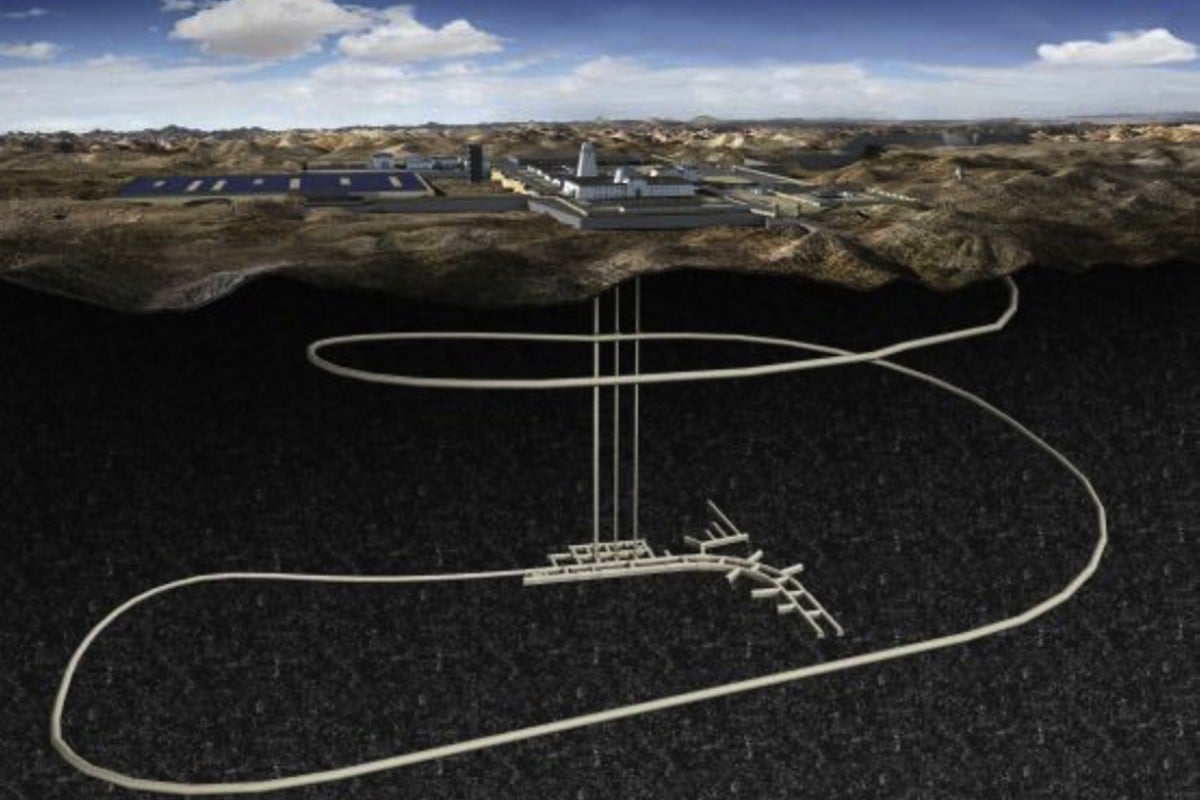
A preliminary design for the Beishan Underground Research Laboratory. Photo: Handout
China has chosen a site for an underground laboratory to research the disposal of highly radioactive waste, the country’s nuclear safety watchdog said on Wednesday.
Officials said work will soon begin on building the Beishan Underground Research Laboratory 400 metres underground in the northwestern province of Gansu.
Liu Hua, the head of the Chinese National Nuclear Safety Administration, said work would be carried out to determine whether it would be possible to build a repository for high-level nuclear waste deep underground.
“China sees radioactive waste disposal as a very important part [of the development nuclear energy],” said Liu. “To develop nuclear energy, we must have safe storage and disposal of nuclear waste.”
China condemns US blacklisting of nuclear firms and says American companies could be hurt as a result
The Chinese authorities see nuclear power an important source of energy that will help to curb carbon emissions and pollution as well as reducing its dependence on fuel imports.
But while the country has made great strides in the development of nuclear power, it needs to find a safe and reliable way of dealing with its growing stockpiles of nuclear waste.
Liu said the Gansu site had been identified as a possible location for a deep nuclear waste store after years of searching.
Once the laboratory is built, scientists and engineers will start experiments to confirm whether it will make a viable underground storage facility.
“Based on the data of the experiments, we can then decide if we are going to pick this as the final site,” he added.
China ‘actively promoting’ nuclear fuel processing plant with French Areva
Chinese officials usually stay tight-lipped about how nuclear waste is disposed of mainly because of fears that any discussion of the topic would trigger safety fears, although in recent years more efforts have been made to inform the public to win support.
Scientists say that nuclear waste can be divided into three categories depending on the level of radioactivity.
Low-level waste consists of minimally radioactive materials such as mop heads, rags, or protective clothing used in nuclear plants, while intermediate-level waste covers things such as filters and used reactor components.
High-level waste, however, is generated by the reprocessing of spent nuclear fuel and scientists generally agree that the safest way to dispose of it is to bury it deep underground in areas where the geology means it will have a minimal impact on the environment while it decays over thousands of years.
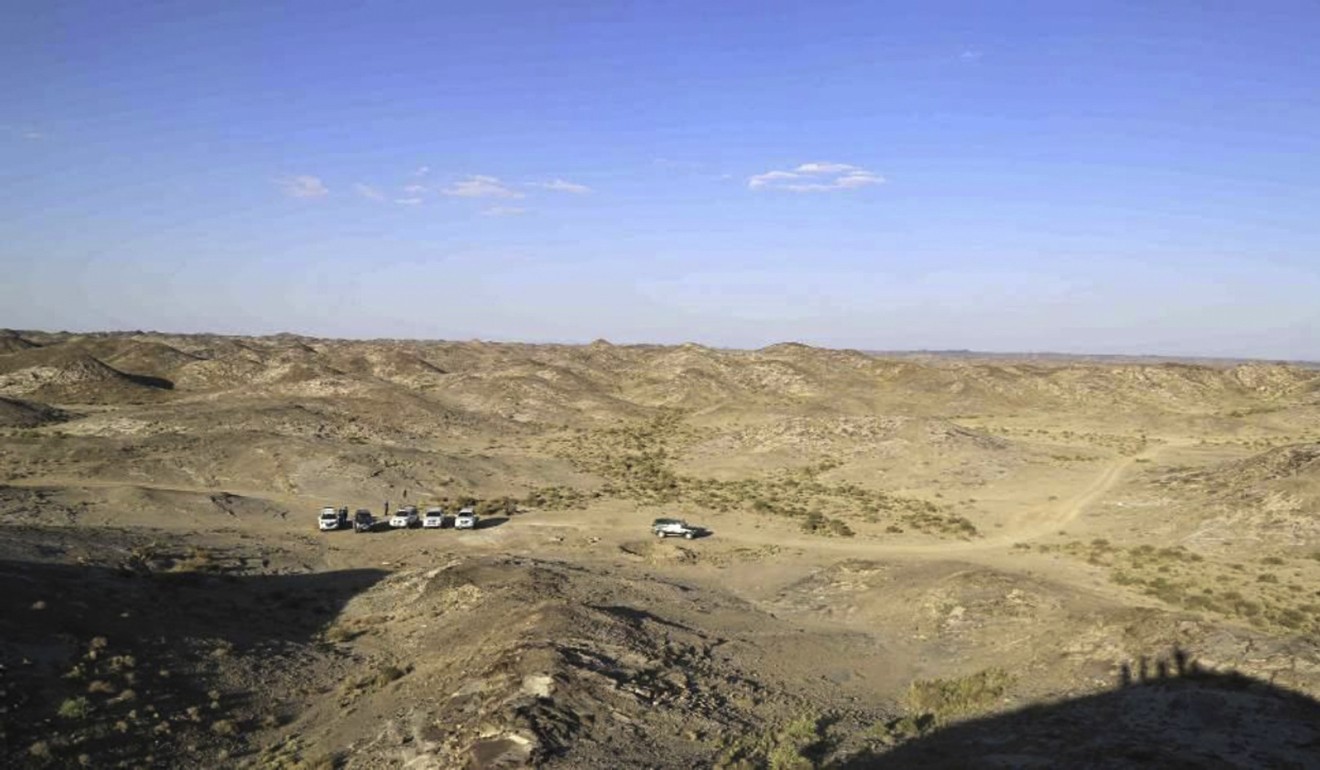
The facility will be built in a remote part of Gansu province. Photo: Handout
Some Chinese scientists said the country had the chance to lead the world in this area of research but others have expressed concerns about safety.
Jiang Kejun, a senior researcher at the Energy Research Institute of China’s National Development and Reform Commission, said that very few countries in the world are studying this form of nuclear waste disposal.
“It gives China an opportunity to be a leader in research in this area, plus China has the technology and financial means,” he said.
About a dozen countries including France, Switzerland, Japan, and the United States have carried out research in this area, but in recent years most have abandoned or scaled back their programmes.
At present there are storage sites operating in Finland and the US, but other countries such as Germany have abandoned plans to build similar facilities.
Washington blacklists Chinese nuclear firms for ‘helping military acquire US technology’
But despite broad scientific support for underground disposal, some analysts and many members of the public remain sceptical about whether it is really safe.
Lei Yian, an associate professor at the School of Physics at Peking University, said there was no absolute guarantee that the repositories would be safe when they are come into operation.
“Leakage has happened in [repositories] in the US and the former Soviet Union … it’s a difficult problem worldwide,” he said. “If China can solve it, then it will have solved a global problem.”
China is also building more facilities to dispose of low and intermediate level waste. Officials said new plants were being built in Zhenjiang, Fujian and Shandong, three coastal provinces that currently lack disposal facilities.
At present, two disposal sites for low and intermediate-level waste are in operation in Gansu and Guangdong provinces.
Prototype tested last month transports high-voltage power and liquefied natural gas side by side
It could cut the high cost and waste involved in sending energy from the far west to the east coast
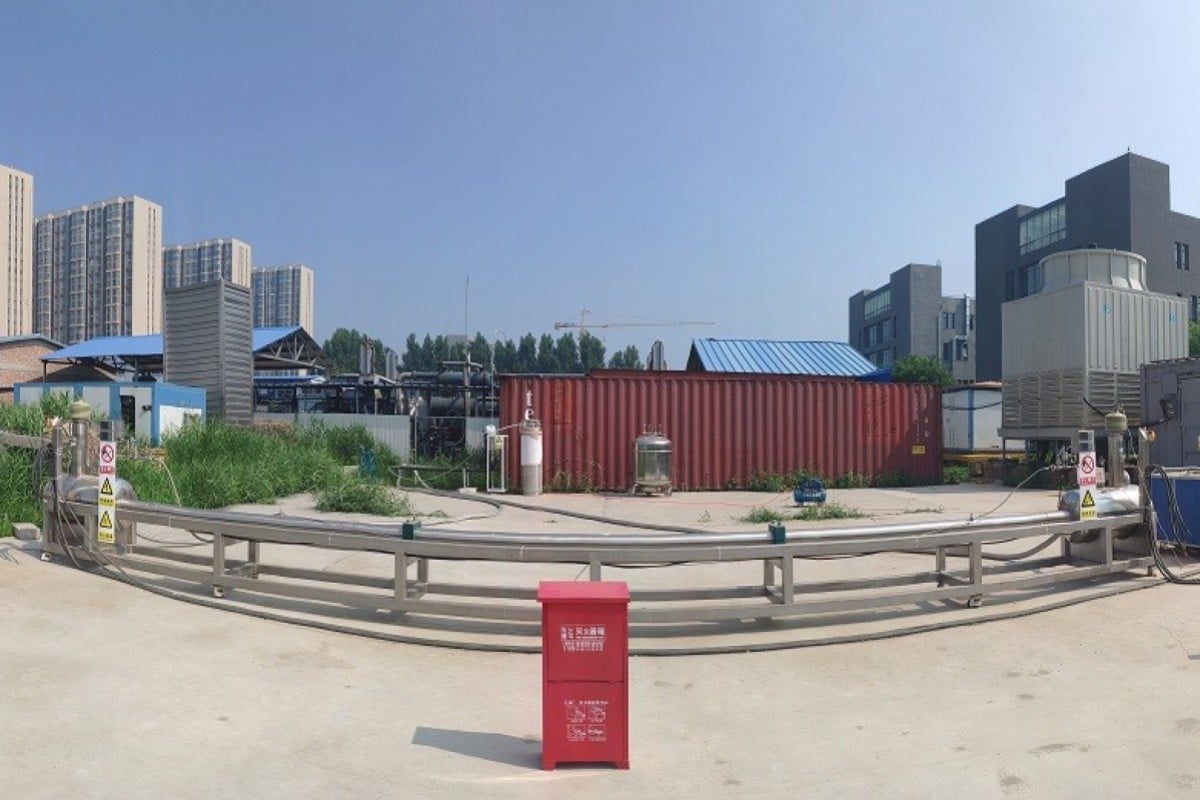
The 10-metre prototype line, combining high-voltage electricity and liquefied natural gas. Photo: Chinese Academy of Sciences
Chinese scientists have developed the world’s first prototype of a superconducting hybrid power line, paving the way for construction of a 2,000km (1,243-mile) line from energy-rich Xinjiang in the country’s far west to its eastern provinces.
The 10-metre, proof-of-concept wire and liquid natural gas hybrid transmission line was up and running at the Chinese Academy of Sciences’ Institute of Electrical Engineering in Beijing last month to show the feasibility of the technology.
The line contains a superconducting wire which can transmit nearly 1,000 amps of electric current at more than 18,000 volts with zero resistance.
In a further difference from a traditional power line, the gap between the superconducting wire and the power line’s outer shell is filled by a flow of slowly moving natural gas liquefied at low temperatures – between minus 183 and minus 173 degrees Celsius (minus 279 to minus 297 Fahrenheit). This allows the line to transfer electricity and fossil fuel at the same time.
Professor Zhang Guomin, the government research project’s lead scientist, told the South China Morning Post that the voltage and current could be much higher in its real-world applications.
“This technology can take the overall efficiency of long-distance energy transport to new heights,” he said.
Existing infrastructure to transfer energy from Xinjiang Uygur autonomous region to the developed eastern areas such as Shanghai has high operational costs because almost 10 per cent of the energy is lost in transmission, according to some studies.
That infrastructure includes the world’s most advanced high-voltage power line and four natural gas pipes, each thousands of kilometres long. One of the natural gas pipelines, from Xinjiang to Shanghai, cost 300 billion yuan (US$42 billion).
The superconductor and natural gas hybrid line offered a possible solution, Zhang said.
Loss of electricity over the superconducting wire would be almost zero because of the elimination of resistance to the movement of electrons, he said.
The transport of liquefied natural gas would also be efficient, because one cubic metre (1,000 litres) of it would be equivalent to 600 cubic metres of the same fuel in gas form.
The temperature needed for liquefaction of natural gas is almost identical to that required for occurrence of superconductivity, at about minus 163 degrees.
Wang Gengchao, professor of physics at East China University of Science and Technology in Shanghai, said the combination was a “smart idea”.
Superconducting materials are not new but their applications have been limited by the difficulty and cost of creating and maintaining the low-temperature environment.
“They are trying to kill two birds with one stone,” Wang, who was not involved in the study, said.
China is preparing to buy US liquefied gas and soybeans again
“But whether the technology can find a use in large-scale infrastructure depends on other things, such as safety. Not everyone will feel comfortable with the idea of putting a high-voltage electric line and flammable natural gas side by side.”
Zhang said another new prototype line, about 30 metres long, was being developed and the 2,000km project was awaiting government approval.
He said the team had solved some major technical obstacles, including reducing the risk of accidents from electrical sparks and gas leakage.
“Many problems remain to be solved, but we are confident this technology will work,” he said. “It will protect the environment. It will save a lot of land from being used for power and gas lines.”
Xinjiang has more energy resources than any other Chinese province or region. It has nearly half of the nation’s coal reserves, a third of its oil and gas, and some of the largest wind and solar farms, according to government statistics.
Two classrooms on Nanjing campus were chosen for pilot project
Camera automatically captures students’ faces without their cooperation
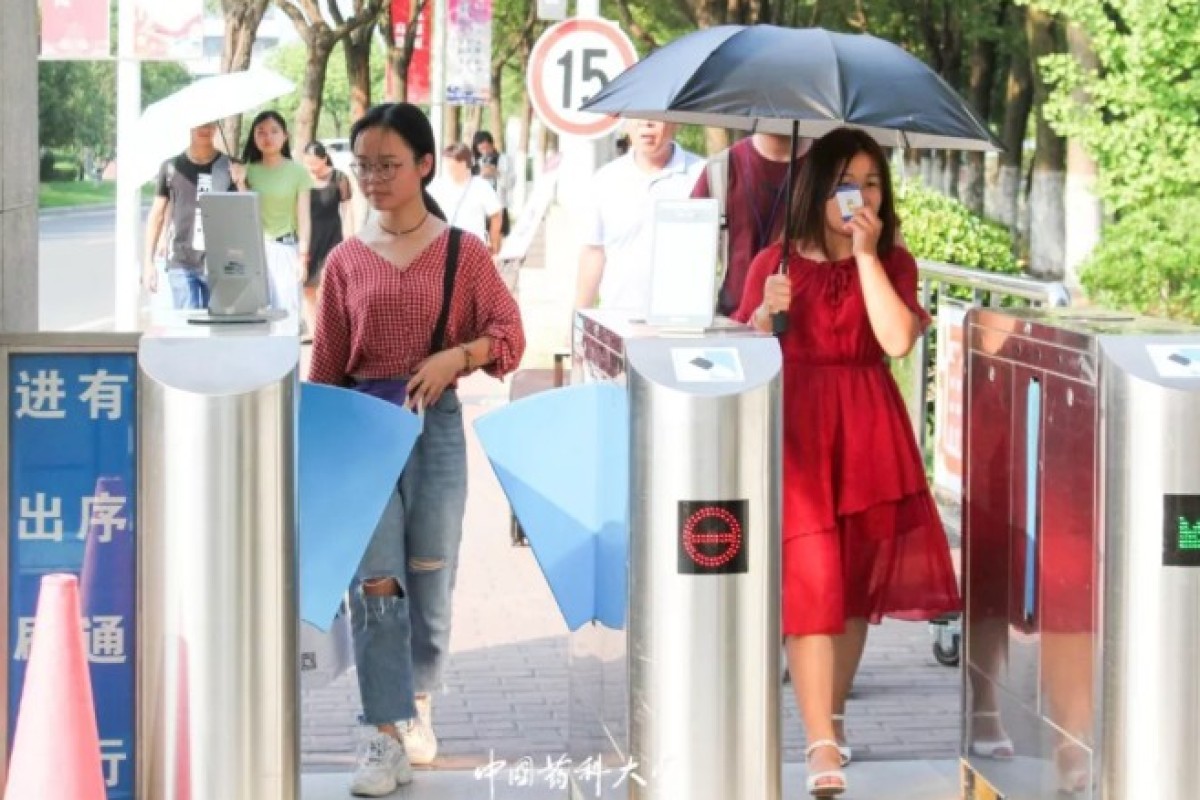
Students pass through a facial recognition turnstile at China Pharmaceutical University in Nanjing. Photo: Weibo
A university in eastern China has installed a facial recognition system at its entrance and in two classrooms to monitor the attendance and behaviour of students.
China Pharmaceutical University in Nanjing, Jiangsu province, announced on its website on Thursday that it was one of the first higher education institutions in the country to put such a system in place.
“It can effectively solve the management difficulties and low efficiencies in a traditional attendance system, and make it easier for managers to track their students,” Xu Jianzhen, director of the university’s library and information centre, told news website Thepaper.cn
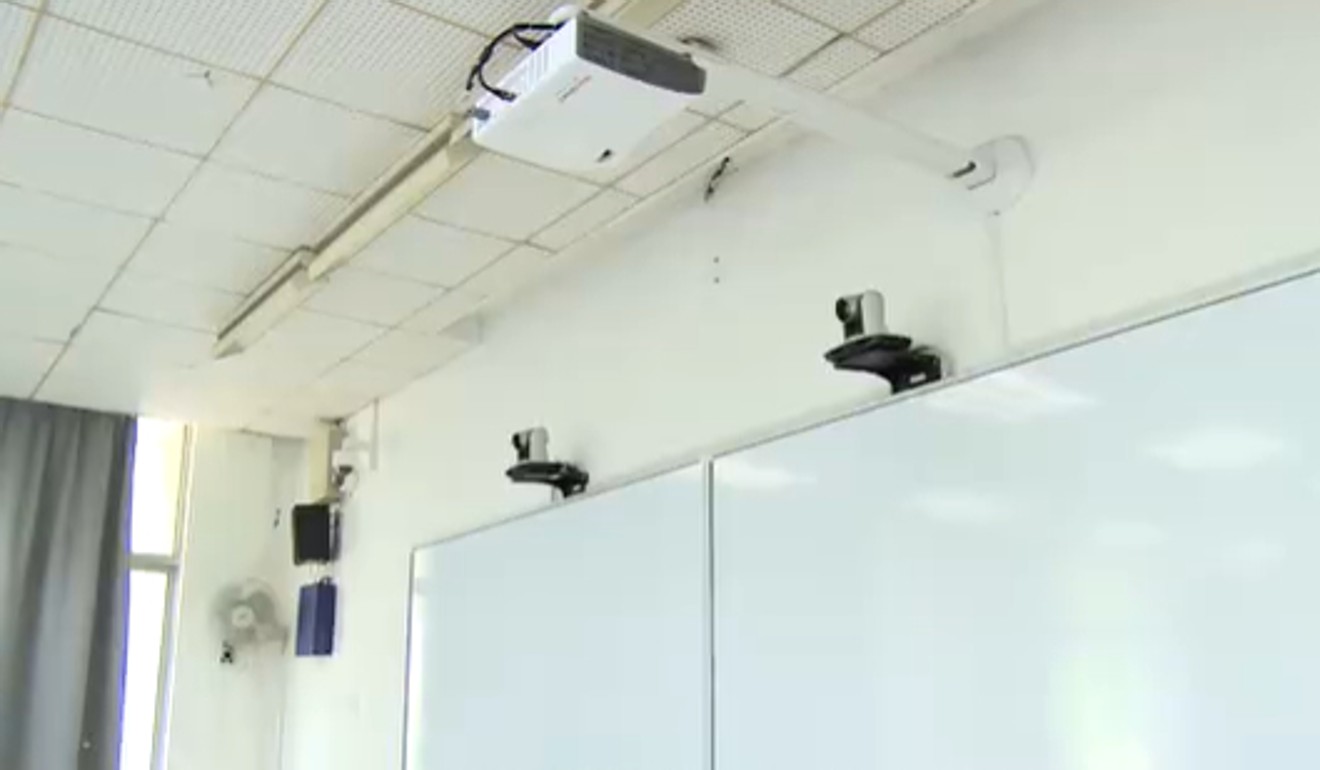
In a pilot project, two classrooms were equipped with an attendance system using facial recognition software, with a camera that automatically captured the faces of students in class without their cooperation, the university said.
“Besides attendance, the system installed in the classroom can provide surveillance of the students’ learning, such as whether they are listening to the lectures, how many times they raise their heads, and whether they are playing on their phones or falling asleep,” Xu told the news website.
“The school is taking action to cut down on students skipping class, leaving classes early, paying for a substitute to attend classes for them and not listening in class,” he said.
The plan was not well received online, with some critics raising privacy concerns for staff and students.
Why are Hong Kong protesters targeting lamp posts?
“What kind of talent are they trying to cultivate?” a user of the Twitter-style Weibo network asked. “I’ve never seen such a method.”
Another wrote: “If this system was being installed in Europe or America, they’d be sued and the school would have to close down.”
But Xu said the university had consulted the police and sought legal advice, and was told the system would not be considered an invasion of privacy as classrooms were public spaces.
“You are complaining about [a system] that’s meant to urge you to learn? Are you a student?” he told the news website.
A spokesman said China Pharmaceutical University was using a facial recognition system to improve class attendance. Photo: Weibo
The university would seek feedback from teaching staff before deciding whether to install facial recognition systems in all of its classrooms, according to the report.
In May last year, a school in Hangzhou, Zhejiang province, installed cameras to monitor pupils’ facial expressions and attentiveness in class as part of a “smart classroom behaviour management system” to give teachers real-time information on their students.
Elsewhere, facial recognition has been used to catch unlicensed drivers in the southern technology hub of Shenzhen, jaywalkers in Shanghai, and criminal suspects at public events across China.
YINCHUAN, Sept. 2 (Xinhua) — China and Arab states are seeking to boost cooperation in tourism along the Belt and Road at an upcoming conference in Yinchuan, capital of northwest China’s Ningxia Hui Autonomous Region.
As part of the fourth China-Arab States Expo, the 2019 China-Arab States Tour Operators Conference will be held on Sept. 4-7.
More than 100 representatives from 13 countries including Egypt, and a dozen Chinese provinces, autonomous regions and municipalities are expected to hold discussions on tourism exchanges.
The conference will focus on the future development of tourism along the Belt and Road through promotional events, project signings and tour routes explorations, according to the regional department of culture and tourism.
“Ningxia is reaching out to the world under the Belt and Road Initiative,” said Zhao Mingxia, deputy head of the department.
As a pivot along the ancient Silk Road, Ningxia astonishes tourists with its picturesque landscape, a combination of both the beauty of Chinese southern canal towns and the magnificent scenery of the north







 CHINDIA ALERT: You'll be living in their world, very soon