25/08/2019
- A recent joint exercise in Tajikistan is the latest example of Beijing’s growing security and economic interests in the former Soviet republic
- Analysts say Moscow may not be happy about China’s growing reach in the lawless, mountainous area and will be keeping an eye on the situation
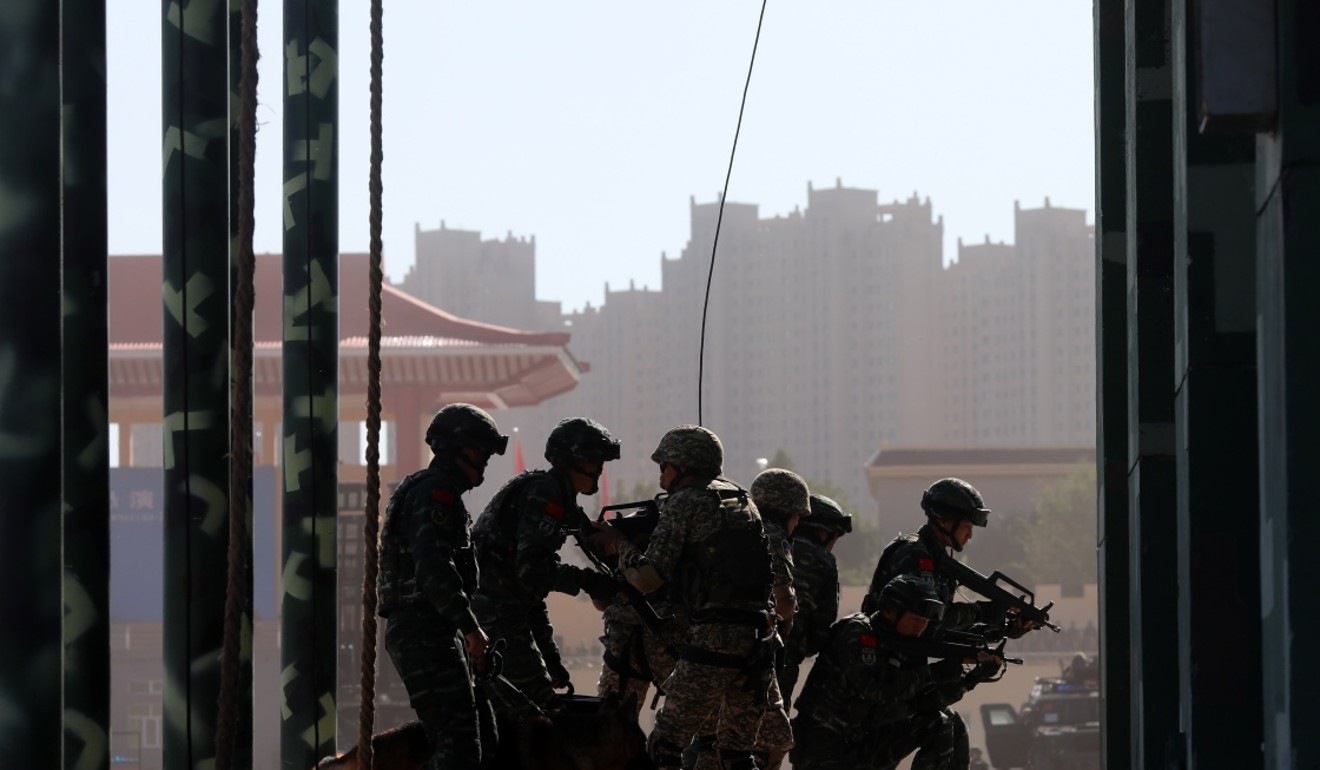
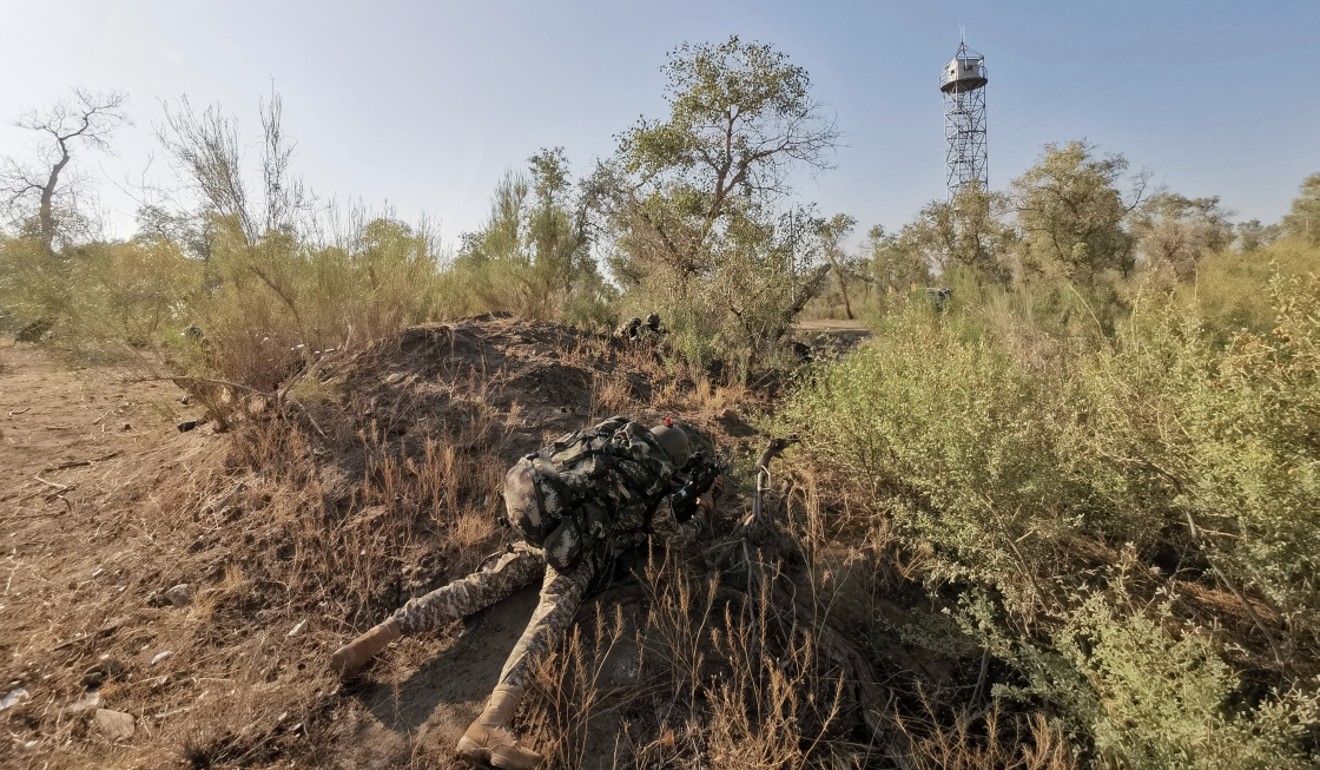
Chinese and Tajik troops completed a joint exercise earlier this month in the mountainous region of Gorno-Badakhshan. Photo: Xinhua
China is increasing its military and economic presence in parts of central Asia that Russia has traditionally considered its sphere of influence – a development some analysts believe could cause concern in Moscow.
While Russia’s influence remains strong in many former Soviet republics, China is steadily building up its military and economic influence in Tajikistan, particularly in the remote, mountainous areas on its western borders where central government authority is weak.
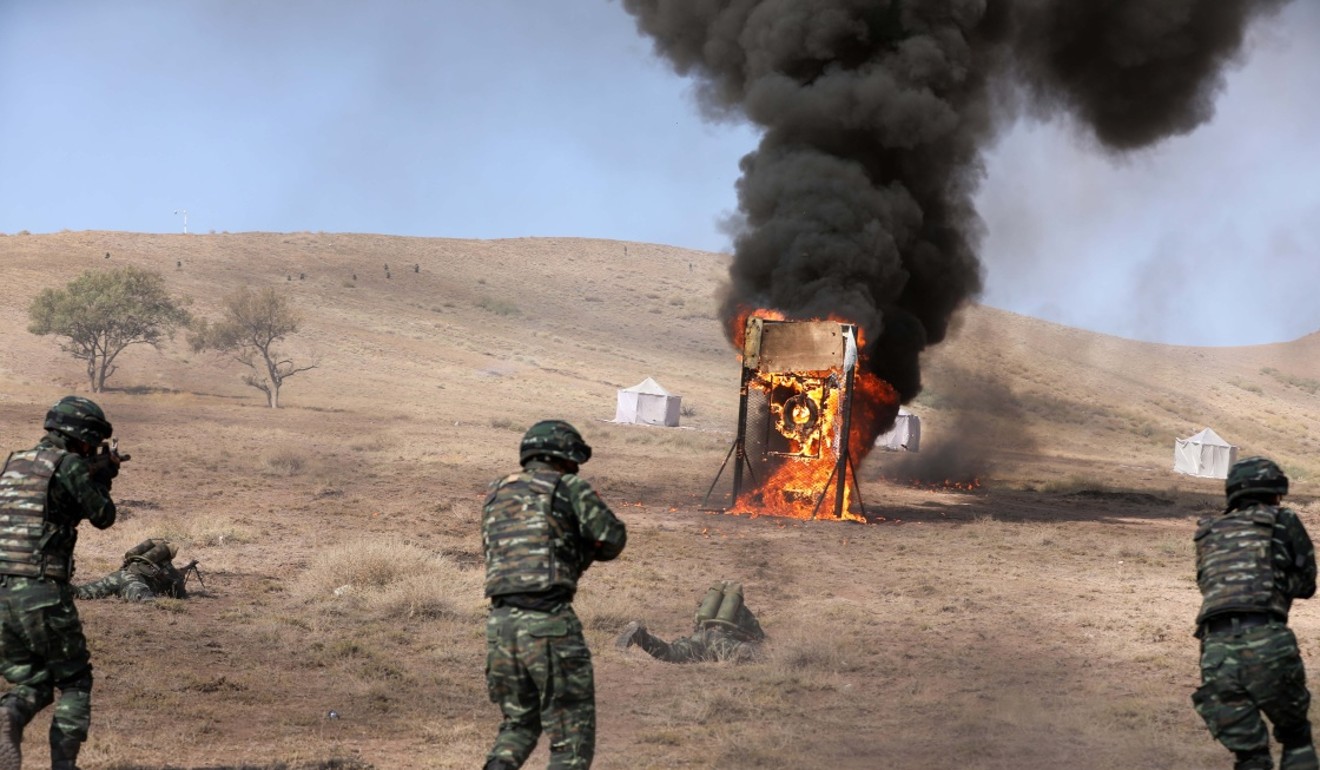
Chinese troops recently concluded a joint drill in eastern Tajikistan involving 1,200 troops from both countries.
The eight-day exercise that finished on August 13 was conducted in the autonomous Gorno-Badakhshan autonomous region, a sparsely populated territory in the high Pamir mountains, which borders China’s Xinjiang region and Afghanistan.
China has been increasing its security presence in the strategically sensitive region. Photo: Xinhua
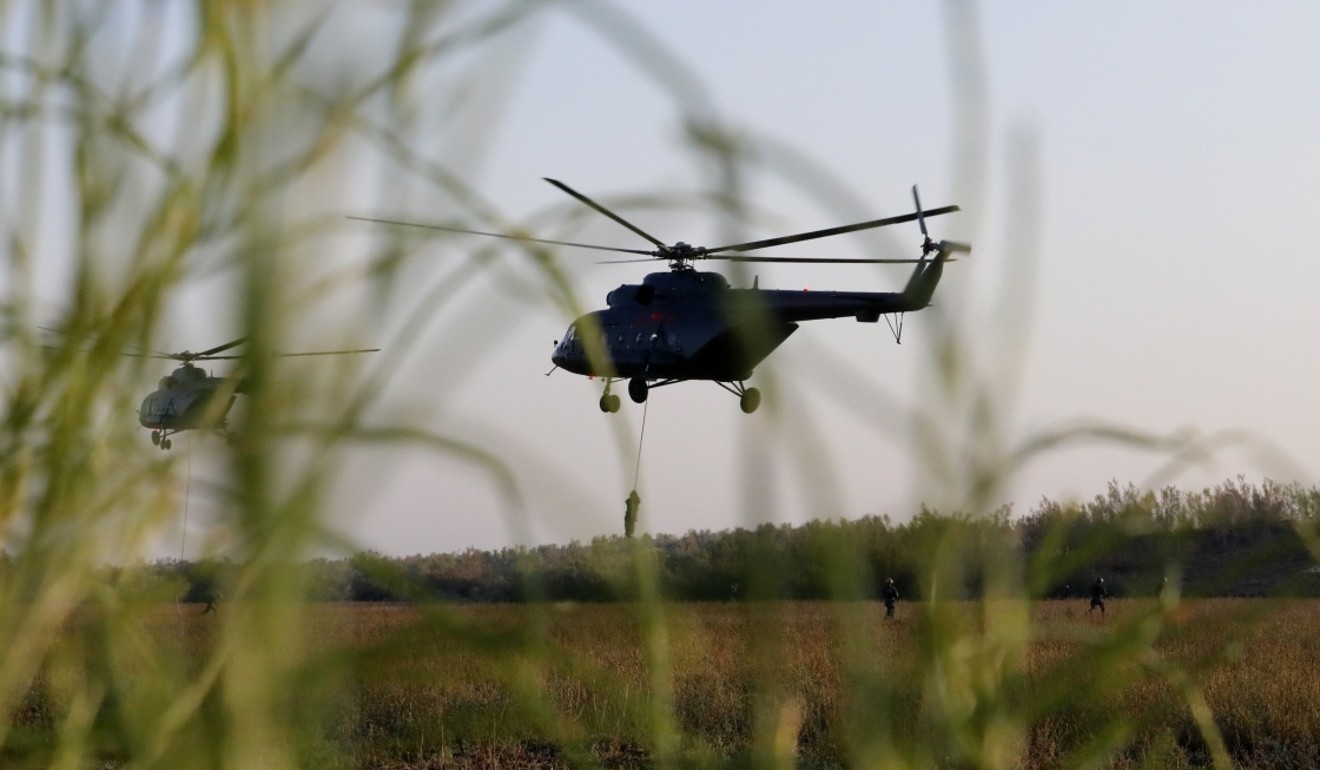
Although this year’s exercise involved fewer troops than the 10,000 involved in a previous drill three years ago, it tested the use of advanced aerial vehicles and ground reconnaissance technology to monitor the area.
The landlocked country is strategically important for China, which is worried that the porous borders will serve as an entry point for drugs and Islamic militants into Xinjiang, where its deradicalisation strategy has led to the detention of a million Muslim minorities in reeducation camps.
It also sits along the trade routes China hopes to develop under the Belt and Road Initiative – Beijing’s flagship plan to expand its global influence through infrastructure, trade and investment – but the area has long been plagued by lawlessness and outbreaks of violence.
The recent exercise tested aerial surveillance techniques. Photo: Xinhua
Artyom Lukin, a professor of international politics at Far Eastern Federal University in Vladivostok, said Russia was not happy about the deployment of Chinese forces in Tajikistan.
“Russia has traditionally considered Central Asia, including Tajikistan, as its sphere of political-military influence,” he said.
Observers said other Central Asian republics – such as Kazakhstan, Uzbekistan and Kyrgyzstan – are likely to stay within Moscow’s orbit, but China is steadily building closer security ties with Tajikistan.
In February, China’s defence ministry denied that it was building a base and stationing troops in the country, but defended its closer military cooperation with Tajikistan.
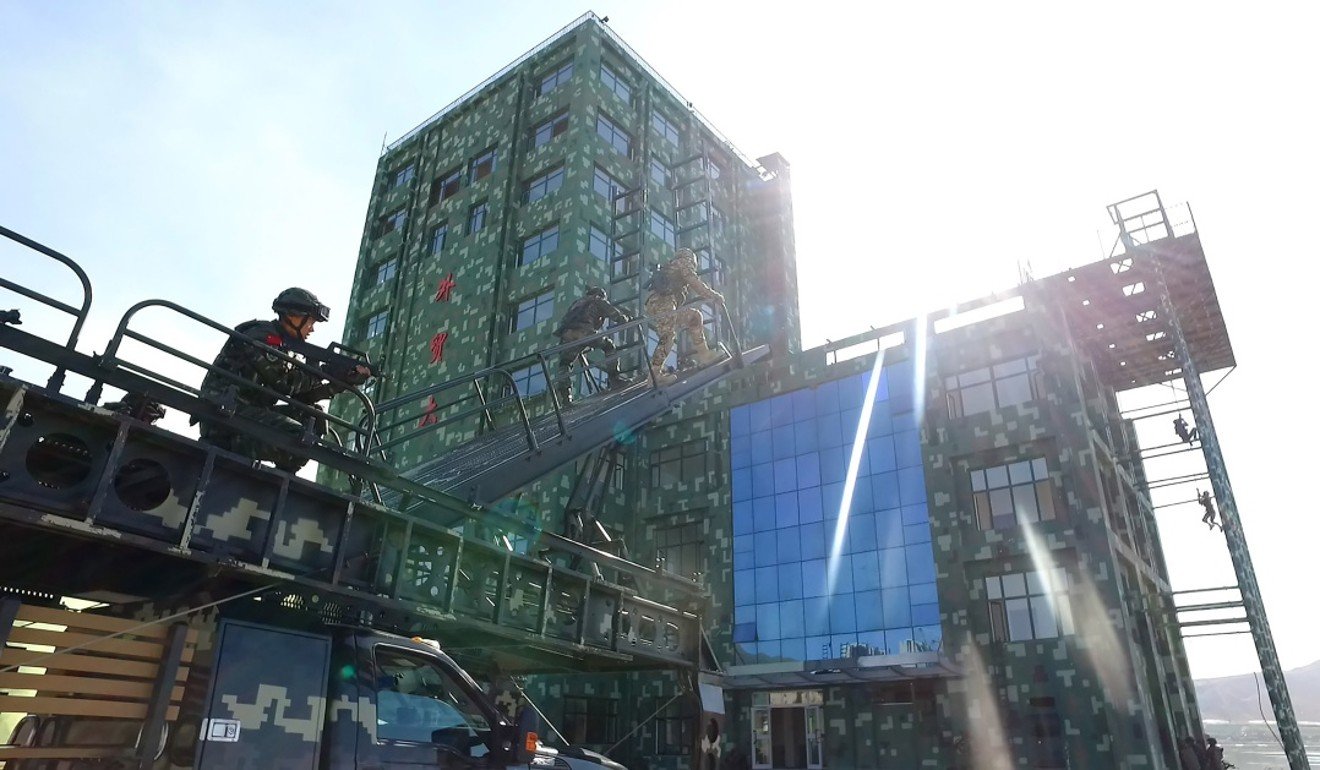
The recent training exercise was conducted in an area Russia has long seen as part of its sphere of influence. Photo: Xinhua
China has long-standing security interests in the country and in 2016 it agreed to finance 11 border outposts and a training centre for guards along the Afghan border.
This was part of a deal Beijing made through the Quadrilateral Cooperation and Coordination Mechanism – which also involves Pakistan, Afghanistan and Tajikistan – to strengthen cooperation in combating terrorism and improving security.
China has also overtaken Russia economically, becoming the largest foreign investor in Tajikistan in 2016, accounting for 30 per cent of Tajikistan’s total direct accumulated investments, state news agency Xinhua reported.
Banned Muslim political party blamed for deadly attack on tourists in Tajikistan
China’s direct investment in Tajikistan was worth US$95 million in 2017, according to the latest available figures. China has also grown to become the country’s third largest trading partner with bilateral trade reaching around US$1.5 billion in 2018.
A recent opinion piece published by the Russian state-owned news agency Sputnik suggested China may be “getting carried away” by its investments in the region.
The article suggested that China’s growing presence in the country could lead to a “partial loss” of Tajikistan’s sovereignty and argued that Beijing may want to take control of the border with Afghanistan.
China also has economic interests to protect. Photo: Xinhua
But Lukin said even though this growing involvement may be an irritant for Russia, the strategic partnership between China and Russia will remain strong.
The two countries remain the key players in the Shanghai Cooperation Organisation, an economic and security alliance that includes the Central Asian republics and India and Pakistan.
The two are also keen to cooperate more closely due to their tense relationship with the United States. This year Russian and Chinese armed forces have stepped up their cooperation, and last week used a UN Security Council debate to criticise the US for pulling out of the Intermediate-Range Nuclear Forces Treaty. Washington defended the move as necessary response to Beijing and Moscow’s build up of arms.
Why Chinese investors are struggling to gain a foothold in Tajikistan
Lukin said: “Moscow no doubt understands that in terms of security, Tajikistan’s border, adjacent to China’s Xinjiang and Afghanistan, is truly a vital concern for Beijing.
“The presence of Chinese troops could actually benefit Russia, because it will be China bearing the costs of policing Tajikistan’s mountainous border areas.”
Stephen Blank, a former professor at the US Army War College and a specialist in Eurasian security, said that while Russia has mostly stayed silent about China’s presence in Tajikistan, it was closely watching the situation.
“What happens in the long run depends on how far China goes to extend its military presence in Central Asia. And if it keeps extending, it may well provoke some expression of concern in Russia beyond the silence that has hitherto been the case,” Blank said.
Chinese troops could play an increasing role in policing the area in future. Photo: Xinhua
“[The recent drills] look like conventional war-fighting exercises as much as anti-terrorist operations and suggest that China may have bigger contingencies than anti-terrorism in mind.”
Mathieu Duchatel, director of the Asia programme at the Institut Montaigne, a French think tank, said both Russia and China share similar concerns about terrorism and drug trafficking in Central Asia.
He said Russia had not objected to the security pact with Pakistan, Afghanistan and Tajikistan because there are more important strategic priorities in China-Russia relations.
“Overall, Russia’s acceptance of a security role for China in Central Asia shows how Russia realistically adjusts to the changing balance of power with China, and is able to avoid a zero-sum game on issues where parallel efforts by China and Russia can serve Russian security interests,” he said.
Source: SCMP
Posted in aerial surveillance techniques, aerial vehicles, Afghan border, Afghanistan, backyard, Beijing, Belt and Road Initiative, Belt and Road Initiative (BRI), Central Asia, Central Asian, Central Asian republics, China alert, China-Russia relations, Chinese armed forces, combating terrorism, drug trafficking, former, French think tank, Gorno-Badakhshan, ground reconnaissance technology, improving security, increases, India alert, Infrastructure, Institut Montaigne, Intermediate-Range Nuclear Forces Treaty, Investment, Islamic militants, Kazakhstan, Kyrgyzstan, lawlessness, Moscow, Muslim minorities, outbreaks of violence, Pakistan, Pamir Mountains, presence, Quadrilateral Cooperation and Coordination Mechanism, reeducation camps, Russia, Russian armed forces, security and economic interests, Shanghai Cooperation Organisation (SCO), Soviet republic, Tajikistan, terrorism, Trade, UN Security Council debate, Uncategorized, United States, US Army War College, Uzbekistan, Washington, Xinjiang, zero-sum game |
Leave a Comment »
24/08/2019
HANOI (Reuters) – A Chinese survey vessel on Saturday extended its activities to an area closer to Vietnam’s coastline, ship tracking data showed, after the United States and Australia expressed concern about China’s actions in the disputed waterways.
The Haiyang Dizhi 8 vessel first entered Vietnam’s exclusive economic zone (EEZ) early last month where it began a weeks-long seismic survey, triggering a tense standoff between military and coastguard vessels from Vietnam and China.
The Chinese vessel continued to survey Vietnam’s EEZ on Saturday under escort from at least four ships and was around 102 kilometres (63 miles) southeast of Vietnam’s Phu Quy island and 185 kilometres (115 miles) from the beaches of the southern city of Phan Thiet, according to data from Marine Traffic, a website that tracks vessel movements.
The Chinese vessel group was followed by at least two Vietnamese naval vessels, according to the data.
Vietnam’s foreign ministry did not immediately respond to a request from Reuters for comment.
A country’s EEZ typically extends up to 200 nautical miles (370 kilometres or 230 miles) from its coastline, according to an international UN treaty. That country has sovereign rights to exploit any natural resources within that area, according to the agreement.
Vietnam and China have for years been embroiled in a dispute over the potentially energy-rich stretch of waters and a busy shipping lane in the South China Sea.
China’s unilaterally declared “nine-dash line” marks a vast, U-shaped, expanse of the South China Sea that it claims, including large swathes of Vietnam’s continental shelf where it has awarded oil concessions.
On Friday, Vietnamese Prime Minister Nguyen Xuan Phuc and his Australian counterpart expressed their concern about China’s activities in the South China Sea, known in Vietnam as the East Sea.
Earlier in the week, the United States said it was deeply concerned about China’s interference in oil and gas activities in waters claimed by Vietnam, and that the deployment of the vessels was “an escalation by Beijing in its efforts to intimidate other claimants out of developing resources in the South China Sea”
Chinese Foreign Ministry spokesman Geng Shuang, in response to the U.S. statement, said Washington was “sowing division and had ulterior motives”.
“The aim is to bring chaos to the situation in the South China Sea and damage regional peace and stability. China is resolutely opposed to this,” Geng told a daily news briefing on Friday.
Source: Reuters
Posted in Australia, Beijing, China alert, Chinese ship, coastguard vessels, East Sea, exclusive economic zone (EEZ), Haiyang Dizhi 8, inches closer, international UN treaty, Marine Traffic, military vessels, Nguyen Xuan Phuc, Phan Thiet, Phu Quy island, seismic survey, South China Sea, standoff, survey vessel, tensions, triggering, Uncategorized, United States, Vietnam, Vietnam coastline, Vietnamese Prime Minister, Washington |
Leave a Comment »
21/08/2019
Chinese State Councilor and Foreign Minister Wang Yi meets with Japanese Foreign Minister Taro Kono, who is here to attend the upcoming ninth meeting of foreign ministers of China, Japan and the Republic of Korea (ROK), in Beijing, capital of China, Aug. 20, 2019. (Xinhua/Zhang Ling)
BEIJING, Aug. 20 (Xinhua) — Chinese State Councilor and Foreign Minister Wang Yi met here Tuesday with Japanese Foreign Minister Taro Kono, who was here to attend the upcoming ninth meeting of foreign ministers of China, Japan and the Republic of Korea (ROK).
Wang said recently China and Japan saw the improvement of ties and the achievement should be cherished as it did not come easily. He called closer communication between the two sides to create necessary conditions and a good atmosphere for high-level political exchanges in the next stage.
Wang said the two sides should strengthen cooperation in the multilateral arena and jointly oppose all forms of protectionism and unilateralism.
He clarified China’s principles and positions on sensitive issues between China and Japan, stressing that both sides should strengthen risk prevention and control, and handle differences in a constructive manner.
Kono said that Japan is willing to work closely with China to ensure positive results of high-level political exchanges in the next stage.
Wang also clarified China’s opposition to the U.S. attempt to deploy land-based intermediate-range missiles in the region. Kono reiterated that Japan will continue to adhere to the “purely defensive defense” strategy.
The meeting of the three countries’ foreign ministers is scheduled for Wednesday.
Source: Xinhua
Posted in China alert, Chinese State Councilor and Foreign Minister Wang Yi, foreign ministers, Japan, Japanese Foreign Minister, Republic of Korea (ROK), Taro Kono, Uncategorized |
Leave a Comment »
19/08/2019
LONDON (Reuters) – Crude oil prices rose on Monday following a weekend attack on a Saudi oil facility by Yemeni separatists and as traders looked for signs that U.S.-China trade tensions could ease.
Price gains were, however, capped to some degree by an unusually downbeat OPEC report that stoked concerns about growth in oil demand.
Brent crude LCOc1, the international benchmark for oil prices, was up 65 cents, or about 1.1%, at $59.29 a barrel at 1024 GMT,
U.S. West Texas Intermediate (WTI) crude futures CLc1 were up 61 cents, or 1.1%, at $55.48 a barrel.
A drone attack by Yemen’s Houthi group on an oilfield in eastern Saudi Arabia on Saturday caused a fire at a gas plant, adding to Middle East tensions, but state-run Saudi Aramco said oil production was not affected.
“The oil market seems to be pricing in again a geopolitical risk premium following the weekend drone attacks on Saudi Arabia, but the premium might not sustain if it does not result in any supply disruptions,” said Giovanni Staunovo, oil analyst for UBS.
Tensions around Iran appeared to ease after Gibraltar released an Iranian tanker it seized in July though Tehran warned the United States against any new attempt to seize the tanker in open seas.
Concerns about a recession also limited crude price gains, as traders looked for signs of progress in U.S.-China trade talks.
Meanwhile, China’s announcement of key interest rate reforms over the weekend has fueled expectations of an imminent reduction in corporate borrowing costs in the struggling economy, boosting share prices on Monday.
U.S. energy firms this week increased the number of oil rigs operating for the first time in seven weeks despite plans by most producers to cut spending on new drilling this year.
“WTI in recent weeks has performed relatively better than Brent… Pipeline start ups in the United States have been supportive for WTI, while the ongoing trade war has had more of an impact on Brent,” said Warren Patterson, head of commodities strategy at Dutch bank ING.
The Organization of the Petroleum Exporting Countries (OPEC) cut its forecast for global oil demand growth in 2019 by 40,000 barrels per day (bpd) to 1.10 million bpd and indicated the market would be in slight surplus in 2020.
It is rare for OPEC to give a bearish forward view on the market outlook.
“Such a bearish prognosis will heap more pressure on OPEC to take further measures to support the market,” said Stephen Brennock of oil broker PVM.
Source: Reuters
Posted in Brent Crude, China alert, drone attack, Gibraltar, Houthi group, Iranian tanker, Middle East tensions, Oil, oil facility, OPEC report, Organization of the Petroleum Exporting Countries (OPEC), rises, Saudi Arabia, Saudi Aramco, Saudi field, Tehran, U.S. West Texas Intermediate (WTI), U.S.-China trade tensions, UBS AG., Uncategorized, United States, Yemeni separatists |
Leave a Comment »
18/08/2019
Students carry school bags with panda images during the ceremony for the 2019 Panda Pack donation and the 4th anniversary of China Foundation for Poverty Alleviation (CFPA) Myanmar Office in Yangon, Myanmar, Aug. 17, 2019. China Foundation for Poverty Alleviation (CFPA) Myanmar Office donated 100,000 school bags and stationeries to Myanmar students under Panda Pack Project for 2019-2020 academic year in Yangon on Saturday. (Xinhua/U Aung)
YANGON, Aug. 17 (Xinhua) — China Foundation for Poverty Alleviation (CFPA) Myanmar Office donated 100,000 school bags and stationeries to Myanmar students under Panda Pack Project for 2019-2020 academic year in Yangon on Saturday.
Under the Panda Pack project, Saturday’s donation of school bags which include stationeries called panda packs covers 15 townships in Myanmar’s states and regions.
Since 2017, panda packs have been donated to 37,760 primary school students in six states and regions including Shan, Rakhine, Kachin states, Yangon, Bago and Sagaing regions.
“CFPA, the first Chinese non-governmental organization registered in Myanmar, has done many contributions in collaboration with Myanmar’s Education Ministry for education sector development in four years since when its Myanmar Office was opened in 2016,” said Counselor Yang Shouzheng of Chinese Embassy in Myanmar, expressing belief that such cooperation could benefit Myanmar people and promote bilateral friendship between the two countries.
CFPA’s panda packs donation really support Myanmar students’ academic life, said Thet Su Htwe, a representative teacher from schools.
“Internationally, we help children on six sustainable development goals — no poverty, zero hunger, good health and well-being, quality education, clean water and sanitation and decent work and economic growth,” said Wang Xingzui, executive vice president of CFPA.
For Myanmar’s education sector, CFPA has launched projects including Paukphaw scholarship, Panda Pack, Computer Lab, China-Myanmar Friendship Scholarship, School infrastructure and others which cover 12 states and regions.
Source: Xinhua
Posted in Bago, China alert, China Foundation for Poverty Alleviation (CFPA) Myanmar Office, China-Myanmar Friendship Scholarship, Chinese embassy, Computer Lab, donates, Education Ministry for education sector development, Kachin, Myanmar, Myanmar students, Panda Pack Projec, Panda Pack Project, Paukphaw scholarship, Rakhine, Sagaing, school bags, School infrastructure, Shan, stationeries, Uncategorized, YANGON |
Leave a Comment »
18/08/2019
BEIJING, Aug. 17 (Xinhua) — The central government has offered financial support of 920 million yuan (about 131 million U.S. dollars) to local governments to help counter typhoon, flood control and drought relief.
An emergency relief fund of 600 million yuan has been offered to 11 provincial regions including Henan, Sichuan and Gansu to help them control flood and deal with drought, according to the Ministry of Finance and the Ministry of Emergency Management.
Another fund worth 320 million yuan was used to support Hebei, Liaoning, Jilin and Heilongjiang provinces in flood control and typhoon relief.
Typhoon Lekima landed in east China’s Zhejiang on Aug. 10, wreaking havoc as a super typhoon. About 13 provincial regions have been affected by the typhoon.
China announced the second-highest level in China’s four-level typhoon emergency response system to deal with Typhoon Lekima and minimize casualties and losses.
Source: Xinhua
Posted in Beijing, Central government, China alert, control flood, drought, emergency relief fund, financial support, flood, flood control, Gansu Province, Hebei province, Heilongjiang province, Henan province, Jilin, Liaoning province, local governments, Ministry of Emergency Management, Ministry of Emergency Management (MEM), Ministry of Finance, sichuan province, Typhoon, Typhoon Lekima, typhoon relief, Uncategorized, wreaking havoc, zhejiang province |
Leave a Comment »
18/08/2019
- Beijing will be watching as leaders of African nations and international organisations gather for development summit in Yokohama later this month
- Tokyo is expected to use the conference to articulate how its approach to aid and infrastructure is different from Chinese projects
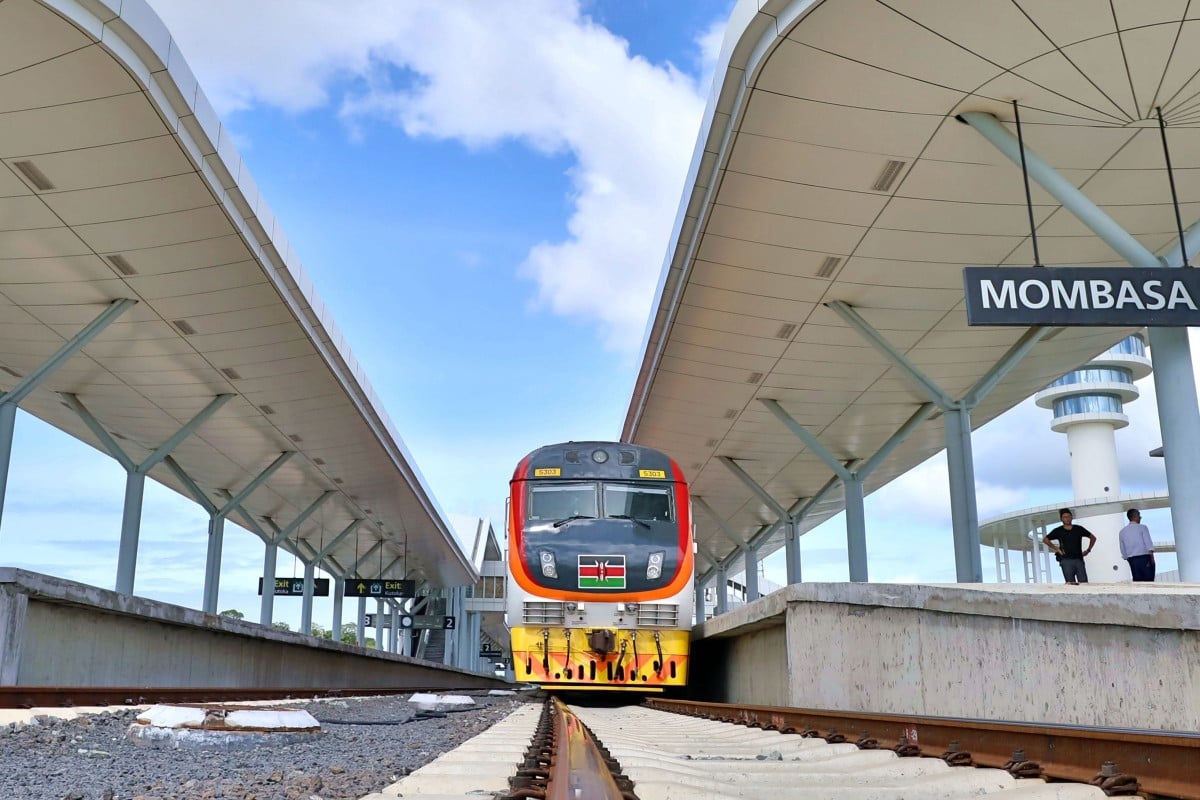
The Mombasa-Nairobi Standard Gauge Railway, funded by China, opened in 2017. Japan has criticised Chinese lending practices in Africa. Photo: Xinhua
The long rivalry between China and Japan is again playing out in Africa, with Tokyo planning to pour more aid into the continent and invest in infrastructure projects there.
Beijing – which has for decades funnelled money into the continent – will be watching as the leaders of 54 African countries and international organisations descend on Yokohama later this month for the seventh Tokyo International Conference on African Development (TICAD).
Japan reportedly plans to pledge more than 300 billion yen (US$2.83 billion) in aid to Africa during the conference. While that might not be enough to alarm China – which in recent years has been on a spending spree in the continent – it will be paying close attention.
Japan has in the past used the meetings to criticise Chinese lending practices in Africa, saying it was worried about the “unrealistic” level of debt incurred by African countries – concerns that China has dismissed.
This year, analysts expect Tokyo will use the conference to articulate how its approach to African development is substantively different from that of the Chinese.
“So, look for the words ‘quality’, ‘transparency’ and ‘sustainability’ to be used a lot throughout the event,” said Eric Olander, managing editor of the non-partisan China Africa Project.
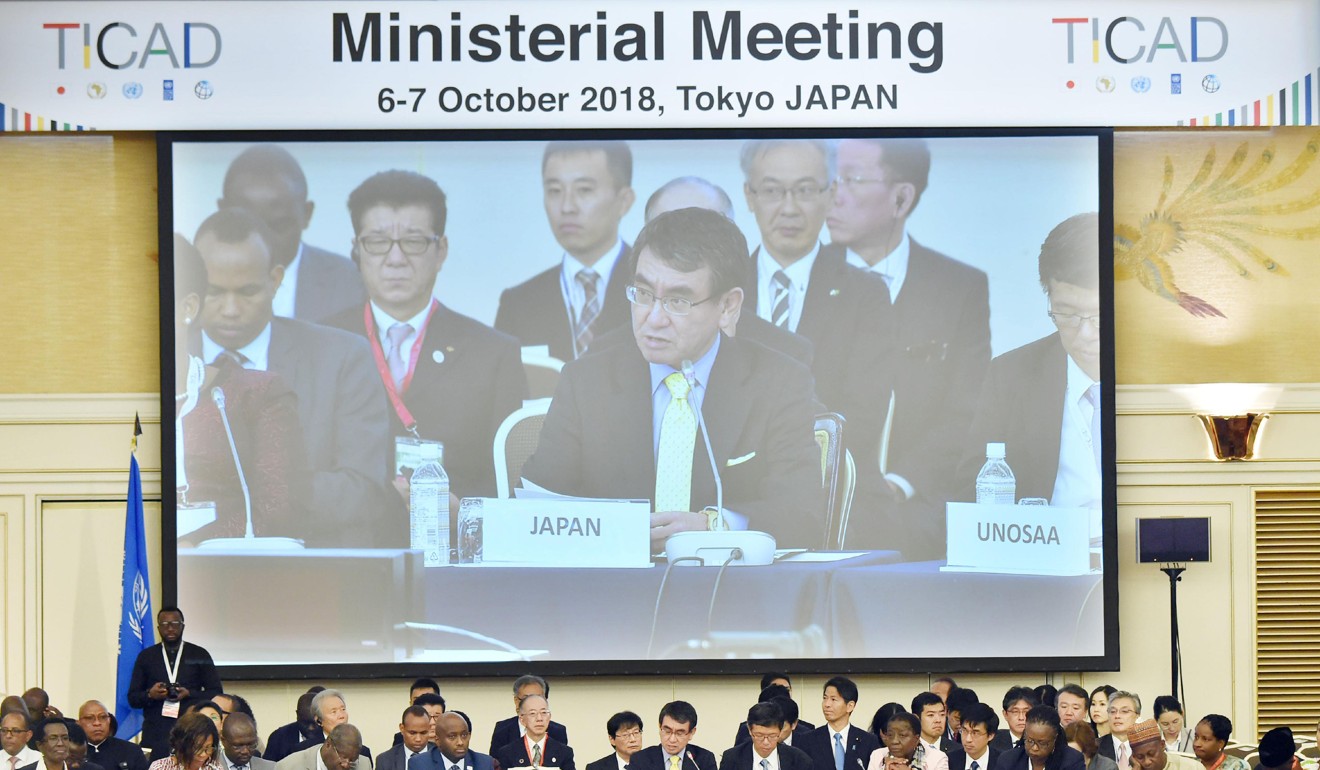
Japanese Foreign Minister Taro Kono gives a speech at the TICAD in Tokyo in October. Japan will reportedly pledge US$2.83 billion in aid to Africa this year. Photo: The Yomiuri Shimbun
Olander said Japan often sought to position its aid and development programmes as an alternative to China’s by emphasising more transparency in loan deals, higher-quality infrastructure projects and avoiding saddling countries with too much debt.
“In some ways, the Japanese position is very similar to that of the US where they express many of the same criticisms of China’s engagement strategy in Africa,” Olander said.
But the rivalry between China and Japan had little to do with Africa, according to Seifudein Adem, a professor at Doshisha University in Kyoto, Japan.
“It is a spillover effect of their contest for supremacy in East Asia,” said Adem, who is from Ethiopia.
“Japan’s trade with Africa, compared to China’s trade with Africa, is not only relatively small but it is even shrinking. It is a result of the acceleration of China’s engagement with Africa.”
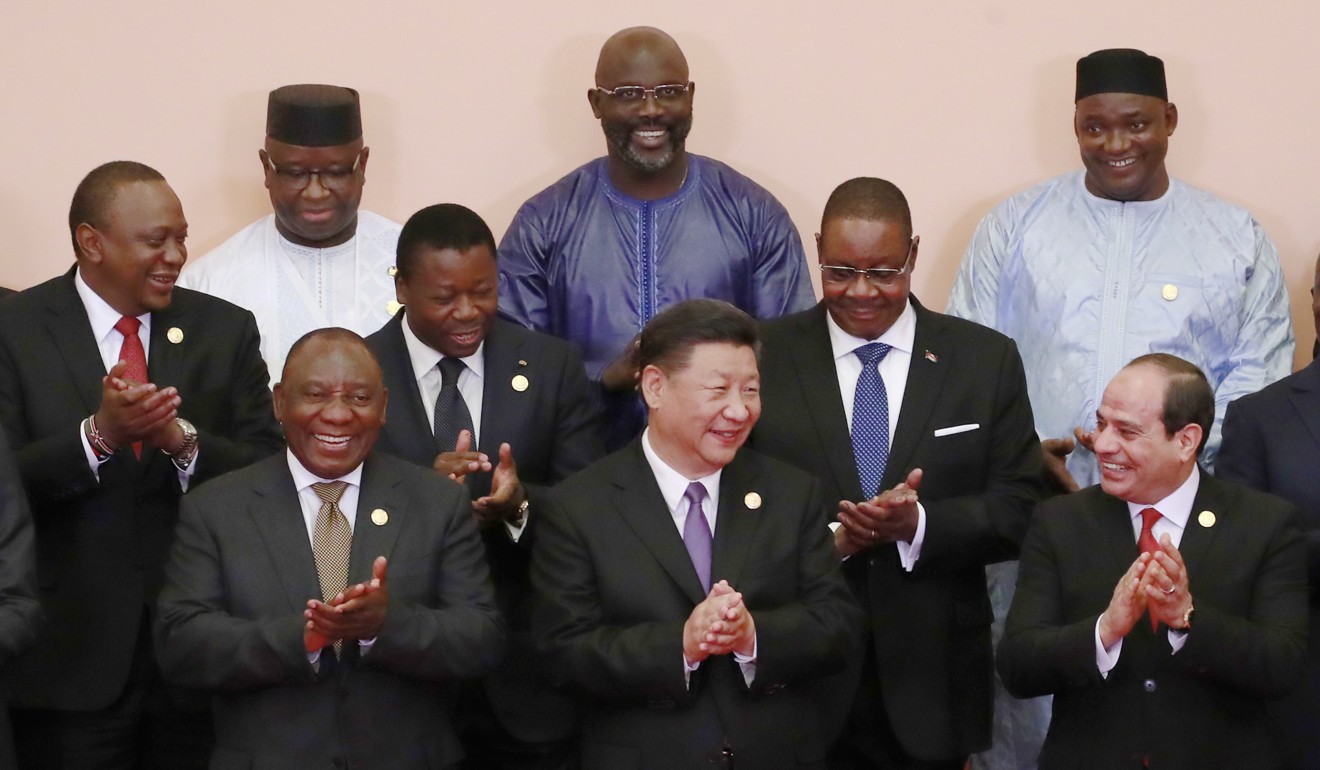
Chinese President Xi Jinping attends a group photo session with African leaders during the Forum on China-Africa Cooperation in Beijing last year. Photo: AP
Japan launched the TICAD in 1993, to revive interest in the continent and find raw materials for its industries and markets for products. About a decade later, China began holding a rival event, the Forum on China-Africa Cooperation.
It is at heart an ideological rivalry unfolding on the continent, according to Martin Rupiya, head of innovation and training at the African Centre for the Constructive Resolution of Disputes in Durban, South Africa.
“China cast Japan as its former colonial interloper – and not necessarily master – until about 1949. Thereafter, China’s Mao [Zedong] developed close relations, mostly liberation linkages with several African nationalist movements,” Rupiya said.
Beijing had continued to invoke those traditional and historical ties, which Japan did not have, he said.
“Furthermore, Japan does not command the type of resources – call it largesse – that China has and occasionally makes available to Africa,” Rupiya said.
Although both Asian giants have made inroads in Africa, the scale is vastly different.
While Japan turned inward as it sought to rebuild its struggling economy amid a slowdown, China was ramping up trade with African countries at a time of rapid growth on the continent.
That saw trade between China and Africa growing twentyfold in the last two decades. The value of their trade reached US$204.2 billion last year, up 20 per cent from 2017, according to Chinese customs data. Exports from Africa to China stood at US$99 billion last year, the highest level since the 1990s. Meanwhile, through its Belt and Road Initiative that aims to revive the Silk Road to connect Asia with Europe and Africa, China is funding and building Kenya’s Standard Gauge Railway and the Addis Ababa-Djibouti Railway. Beijing is also building major infrastructure projects in Zambia, Angola and Nigeria.
Japan’s trade with Africa is just a small fraction of Africa’s trade with China. In 2017, Japan’s exports to the continent totalled US$7.8 billion, while imports were US$8.7 billion, according to trade data compiled by the Massachusetts Institute of Technology.
How speaking with one voice could help Africa get a better deal from China
But Japan now appears eager to get back in the game and expand its presence in Africa, and analysts say this year’s TICAD will be critical – both in terms of the amount of money Tokyo commits to African development and how it positions itself as an alternative to the Chinese model.
Ryo Hinata-Yamaguchi, a visiting professor at Pusan National University in South Korea, said the continent was “economically vital to Japan, both in trade and investments”.
“Moreover, Japan has established some strong links with African states through foreign aid,” Hinata-Yamaguchi said.
“Japan’s move is driven by both economic and political interests. Economically, Japan needs to secure and maintain its presence in, and linkages with, the African states while opening new markets and opportunities,” he said.
To counter China’s belt and road strategy, Japan has launched the Asia-Africa Growth Corridor project, an economic cooperation deal, with India and African countries.
Tokyo meanwhile pledged about US$30 billion in public-private development assistance to Africa over three years at the 2016 TICAD, in Nairobi. But China offered to double that amount last year, during its Forum on China-Africa Cooperation in Beijing.
Still, Japan continues to push forward infrastructure projects on the continent. It is building the Mombasa Port on the Kenyan coast, while Ngong Road, a major artery in Nairobi, is being converted into a dual carriageway with a grant from Tokyo.
Japan is also funding the construction of the Kampala Metropolitan transmission line, which draws power from Karuma dam in Uganda. In Tanzania, it provided funding for the Tanzania-Zambia Railway Authority (Tazara) flyover. And through the Japan International Cooperation Agency, Tokyo also helps African countries improve their rice yields using Japanese technology.
There are nearly 1,000 Japanese companies – including carmakers like Nissan and Toyota – operating in Africa, but that is just one-tenth the number of Chinese businesses on the continent.
Are Chinese loans putting Africa on the debt-trap express?
Olander said Japan’s construction companies were among the best in the world, albeit not necessarily the cheapest, and that Tokyo was pushing its message about “high-quality” construction.
XN Iraki, an associate professor at the University of Nairobi School of Business, said Japan wanted to change its approach to Africa on trade, which had long been dominated by cars and electronics.
“[It has] no big deals like China’s Standard Gauge Railway. But after China’s entry with a bang – including teaching Mandarin through Confucius Institutes – Japan has realised its market was under threat and hence the importance of the TICAD, which should remind us that Japan is also there.”
Source: SCMP
Posted in Addis Ababa-Djibouti railway, africa, African Centre for the Constructive Resolution of Disputes, aid and infrastructure, alternative, Angola, Asia, Beijing, Belt and Road Initiative, Belt and Road Initiative (BRI), best in the world, carmakers, cars, cheapest, China Africa Project, China alert, Chinese President Xi Jinping, Chinese projects, colonial interloper, Confucius Institutes, construction companies, continent, counter, debt-trap express, development summit, different, Doshisha University in Kyoto, dual carriageway, Durban, East Asia, Electronics, Ethiopia, Europe, flyover, Forum on China-Africa Cooperation, Forum on China-Africa Cooperation (FOCAC), Forum on China–Africa Cooperation, high-quality development, ideological rivalry, Japan, Japanese Foreign Minister, Japanese technology, Kampala Metropolitan transmission line, Karuma dam, Kenya’s Standard Gauge Railway, Kenyan coast, largesse, leaders of African nations organisations, leaders of international organisations, Mandarin, Mao Zedong, Massachusetts Institute of Technology, master, Mombasa Port, Mombasa-Nairobi Standard Gauge Railway, Nairobi, Nigeria, Nissan, Pusan National University, quality, resources, rice yields, rivalry, seeks, Silk Road, South Africa, South Korea, Standard Gauge Railway, Sustainability, Tanzania, Tanzania-Zambia Railway Authority (Tazara), Taro Kono, TICAD, Tokyo, Tokyo International Conference on African Development (TICAD), Toyota, Transparency, Uganda, Uncategorized, University of Nairobi School of Business, watching, Yokohama, Yomiuri Shimbun, Zambia |
Leave a Comment »
17/08/2019
- Chinese government advisers say Beijing has not reached direct intervention point but that could change if the violence continues
- Military action would trigger international backlash, observers say, as US expresses concern over reported paramilitary movements and ‘erosion of Hong Kong’s autonomy’
Footage of trucks from the paramilitary People’s Armed Police in Shenzhen has circulated online. Photo: Handout
The unrest in Hong Kong does not yet warrant direct intervention by Beijing despite hardening public sentiment and calls for tougher action in mainland China, according to Chinese government advisers.
Shi Yinhong, an international relations expert at Renmin University and an adviser to the State Council – China’s cabinet – said China would risk damaging its ties with the United States and other major foreign powers, upsetting its own development and losing Hong Kong’s special status if it took the matter directly into its hands.
“I don’t think we need to use troops. Hong Kong police will gradually escalate their action and they haven’t exhausted their means,” Shi said, expressing a view shared by other mainland government advisers and academics.
But he warned that if the violence and chaos continued, it “won’t be too far away from reaching that point”.
A US State Department spokeswoman said the United States was “deeply concerned” about reports of paramilitary movements along the Hong Kong border and reiterated a US call for all sides to refrain from violence.
She said it was important for the Hong Kong government to respect “freedoms of speech and peaceful assembly” and for Beijing to adhere to its commitments to allow a high degree of autonomy for Hong Kong.
She said the protests reflected “broad and legitimate concerns about the erosion of Hong Kong’s autonomy”.
brought the city’s air traffic to a halt and triggered
a huge backlash on the mainland
, where the public feel they have been wrongly targeted by the increasingly violent protesters. Many demanded the central government take action to end the chaos.
The tension deepened after US President Donald Trump, citing intelligence sources,
to the border with Hong Kong. Trump described the situation in the city as “tricky” and called on all sides to remain “calm and safe”.
Footage of trucks from the paramilitary People’s Armed Police rolling into Shenzhen began circulating online on Saturday.
Beijing ‘unlikely to intervene’ in Hong Kong as pressure mounts on police
But Shi and others said direct intervention would be too costly to China and would only be used when all other methods had been exhausted.
“As the trade war with the US goes on, Hong Kong’s importance to our financial system is getting bigger,” Shi said. “If Beijing intervenes with too much assertiveness, the US might revoke the preferential status of Hong Kong.”
He was referring to the US’ 1992 Hong Kong Policy Act which gives the city a special status. In June, American lawmakers introduced a bipartisan bill requiring the US government to examine Hong Kong’s autonomy annually to decide whether to extend the arrangement.
Losing that status could cripple the operations of many businesses based in Hong Kong, said Shen Dingli, a Shanghai-based international affairs expert.
A satellite image appears to show a close-up of Chinese military vehicles at Shenzhen Bay Sports Centre in Shenzhen. Photo: Maxar Technologies
Wang Yong, another specialist on international political economy with Peking University, agreed.
“There would be a lot of opposition from interest groups in the US. Hong Kong is the bridgehead for many multinational corporations and investors from Wall Street to get into the Chinese market,” said Wang, who also teaches at an academy affiliated with China’s Ministry of Foreign Affairs.
“Hong Kong and the Chinese government will need to handle this with extra care, so as not to give any ammunition to hawks in the United States.
“If Hong Kong is not handled properly, it could add tensions to the bilateral ties and ruin any prospect of a trade deal.”
China rejects requests for US warships to visit Hong Kong amid protests Pang Zhongying, an international relations specialist at Ocean University of China in Qingdao, said direct intervention could also damage China’s ties with other countries.
“The whole world is watching. Beijing has exercised restraint for two months and still hasn’t taken any clear action because this is not an easy choice,” said Pang, who is also a member of the Beijing-based Pangoal Institution, a think tank that advises several ministerial offices.
While some observers said Beijing was under political pressure to end the protests in Hong Kong before October 1 – the 70th anniversary of the founding of the People’s Republic, Shi said the central government would not lose patience so easily.
“National Day [on October 1] is an important time, but the Chinese government is not naive to believe there has to be peace under all heaven then,” he said.
“It’s only a bit more than a month from now, we can almost say for sure the trade war will still be on by then and a major turning point in Hong Kong is not likely to happen. But the celebration must go on.”
Source: SCMP
Posted in 70th anniversary, American, autonomy, backlash, Beijing, bipartisan bill, celebration, China alert, China's cabinet, China-US trade war, China’s State Council, concern, direct intervention, financial system, foreign powers, Hong Kong, international, lawmakers, Mainland China, military action, Ministry of Foreign Affairs, Ministry of Foreign Affairs (MFA), National Day, Ocean University of China, Pangoal Institution, paramilitary, peace under all heaven, People's Armed Police, People’s Republic, preferential status, Qingdao, quell, Renmin University, Risks, Risks still too big, send in troops, Shenzhen, Shenzhen Bay Sports Centre, trade war, trigger, Uncategorized, United States, unrest, US, US President Donald Trump, US warships, US’ 1992 Hong Kong Policy Act |
Leave a Comment »
16/08/2019
Photo taken on April 20, 2017 shows Chengdu railway container center station in the Qingbaijiang railway port of China (Sichuan) pilot free trade zone in Chengdu, southwest China’s Sichuan Province. China has released an overall plan about the country’s new western sea-land transportation channel to deepen the sea-land two-way opening-up and the development of western China, according to the National Development and Reform Commission. The plan covers the period from 2019 to 2025 with an outlook extended to 2035. (Xinhua/Xue Yubin)
BEIJING, Aug. 15 (Xinhua) — China has released an overall plan about the country’s new western sea-land transportation channel to deepen the sea-land two-way opening-up and the development of western China, according to the National Development and Reform Commission.
The plan covers the period from 2019 to 2025 with an outlook extended to 2035.
The new western sea-land transportation channel is located in the hinterlands of the western regions, connecting the Silk Road Economic Belt from the north, the 21st Century Maritime Silk Road from the south and the Yangtze River economic belt.
According to the plan, the new western sea-land transportation channel is strategically positioned to support the country’s western regions in participating in international economic cooperation and promote the deep integration of transportation, logistics and the economy.
Source: Xinhua
Posted in 21st Century Maritime Silk Road,, channel, China alert, economy, hinterlands, international economic cooperation, logistics, National Development and Reform Commission, new, North, overall plan, releases, sea-land, Silk Road Economic Belt, South, transportation, Uncategorized, Western, Western China, Yangtze River Economic Belt |
Leave a Comment »
16/08/2019
SEOUL (Reuters) – Top diplomats of South Korea and Japan plan to meet their Chinese counterpart in Beijing next week amid a flare-up in tension over trade and history, Seoul’s foreign ministry said on Friday.
Foreign ministers Kang Kyung-wha of South Korea, Taro Kono of Japan and Wang Yi of China will meet from Tuesday to Thursday, the ministry said. The last such gathering was three years ago.
Kang and Kono are also expected to meet separately on the sidelines of the event, for the first time since South Korean President Moon Jae-in on Thursday urged dialogue to mend ties. The ministry said the two-way talks had not yet been finalised.
Ties between the neighbors are arguably at their lowest ebb since their relationship was normalized in 1965, hit by a heated feud over the issue South Korean forced labor during World War Two which spilled over into a bitter tit-for-tat trade row.
In a speech marking Korea’s independence from Japan’s 1910-45 rule, Moon toned down his recent stringent rhetoric regarding Japan, saying Seoul would “gladly join hands” if Tokyo chose dialogue and cooperation.
At the meeting, the ministers are also expected to prepare for a summit planned later this year.
From 2008, the three countries had agreed to hold a summit every year to foster regional cooperation. But bilateral tension, including that between China and Japan, has often intervened.
“We expect the meeting will help reinforce the institutionalization and substantiate the foundation of the three-way cooperative scheme,” the ministry said in a statement.
Relations between South Korea and Japan worsened sharply after the South’s Supreme Court last year ordered Japanese companies to compensate some wartime forced laborers. Tokyo says the matter was settled by the 1965 treaty normalizing ties.
The talks come at a sensitive time ahead of the Aug. 28 date when Japan’s decision to end South Korea’s fast-track trade status takes effect, a move that prompted South Korea to follow suit.
As a countermeasure, Seoul has also warned it could consider scrapping an intelligence-sharing pact usually automatically renewed on Aug. 24 every year.
The accord, the General Security of Military Information Agreement (GSOMIA), eases three-way intelligence gathering with Washington which is pivotal in dealing with North Korea’s nuclear and missile threats.
In a separate statement, the South Korean foreign ministry expressed concern over Kono’s reported remarks that Moon should “exert his leadership” to resolve the dispute, saying they were unhelpful for stable management of two-way ties.
Source: Reuters
Posted in Beijing, China alert, foreign minister, General Security of Military Information Agreement (GSOMIA), history tensions, hold talks, Japan, missile threats, North Korea, nuclear threats, President Moon Jae-in, Seoul, South Korea, trade tensions, Uncategorized, Washington |
Leave a Comment »







 CHINDIA ALERT: You'll be living in their world, very soon