Archive for ‘China alert’

09/07/2019

Xi Jinping says China, Russia and India should take ‘global responsibility’ to protect interests

  • Chinese president also called for the three nations to uphold multilateralism in talks with Vladimir Putin and Narendra Modi in Osaka
  • In a separate meeting with other BRICS leaders, he said Beijing opposed ‘illegal and unilateral sanctions’ and ‘long-arm jurisdiction’
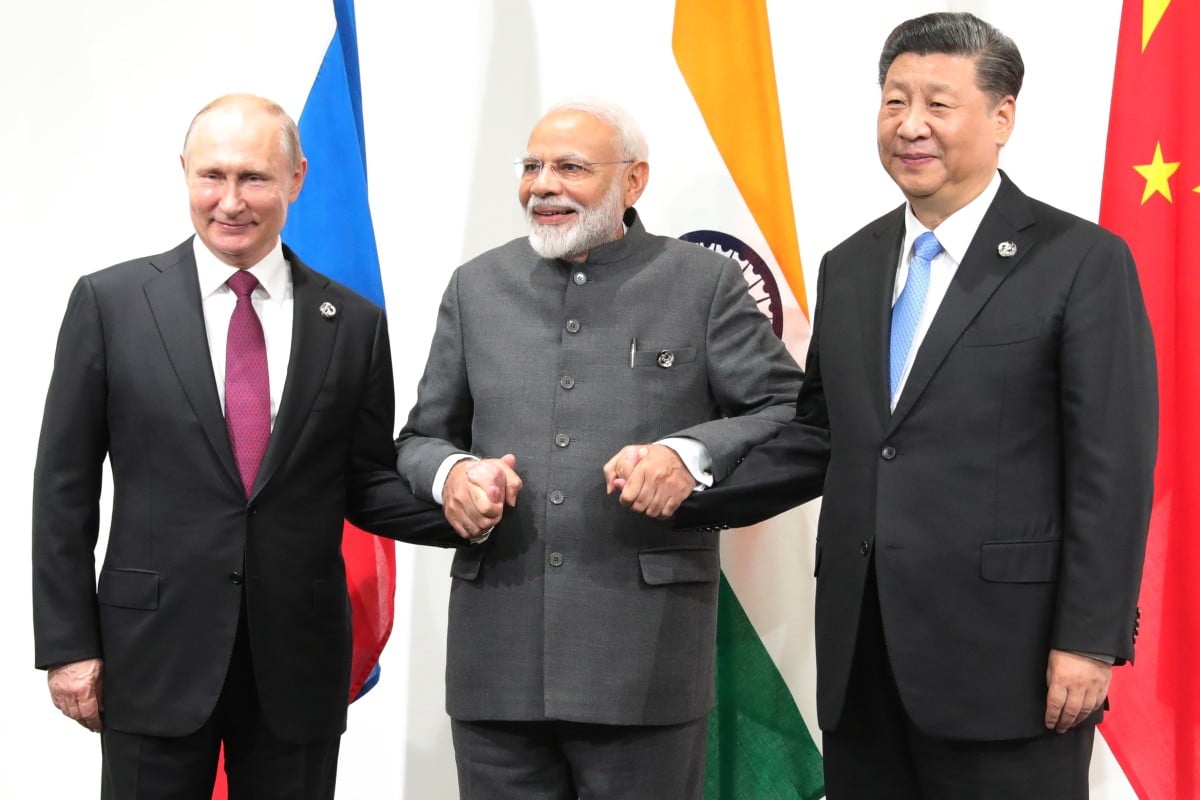
(From left) Russian President Vladimir Putin, Indian Prime Minister Narendra Modi and Chinese leader Xi Jinping meet on the sidelines of the G20 summit in Osaka, Japan, on Friday. Photo: EPA-EFE
Chinese President Xi Jinping on Friday called on the leaders of Russia and India to take “global responsibility” to safeguard the three countries’ interests and uphold multilateralism, as Beijing seeks to rally support amid its protracted trade war with Washington.
Xi made the remarks during a trilateral meeting with Vladimir Putin and Narendra Modi on the sidelines of the annual 
Group of 20

summit of world leaders in Osaka, Japan.

The trilateral meeting was part of the Chinese leader’s efforts to marshal international support ahead of his 
high-stakes meeting

with US President Donald Trump, seeking to reach a truce on the year-long trade conflict between the world’s two biggest economies.

“The rise of protectionism and unilateralism has severely affected global stability and economic growth, as well as the existing international order which emerging economies and developing countries have relied on,” Xi was quoted as saying by state broadcaster CCTV.

“China, Russia and India should take on global responsibility to safeguard the fundamental and long-term interests of these three countries and the world,” he said.

Xi also called for the nations to promote “a more multipolar world and the democratisation of international relations” – meaning with less reliance on a US-led world order.

During a meeting with leaders of the other BRICS countries – major emerging economies Brazil, Russia, India, China and South Africa – Xi also said Beijing opposed what it saw as “illegal and unilateral sanctions” and “long-arm jurisdiction”.

The efforts to forge closer ties among China, Russia and India come as all three nations are locked in disputes with the United States.

New Delhi, a key strategic ally in Washington’s Indo-Pacific policy to contain China’s rise, has been upset over tariffs imposed on Indian goods by the Trump administration. Meanwhile, geopolitical rivalry and the Kremlin’s alleged meddling in US elections has strained relations between Moscow and Washington.

Beneath the smiles and handshakes, tensions simmer as world leaders meet for G20

Wu Jianghao, director general of the Chinese foreign ministry’s Asian affairs department, said the trilateral meeting laid out a framework for future cooperation.

“The three countries have spoken with one voice on some major global issues, helping stability and injecting positive energy to the current international situation – which is filled with instability and uncertainties,” Wu said at a briefing on Friday.

Wu said that the leaders did not talk about Huawei Technologies or 5G networks, but that the three countries had maintained good communication on telecoms issues and would continue to cooperate.

Washington has banned US companies from selling American technology to Huawei and put pressure on its allies to block the Chinese tech firm over security concerns.
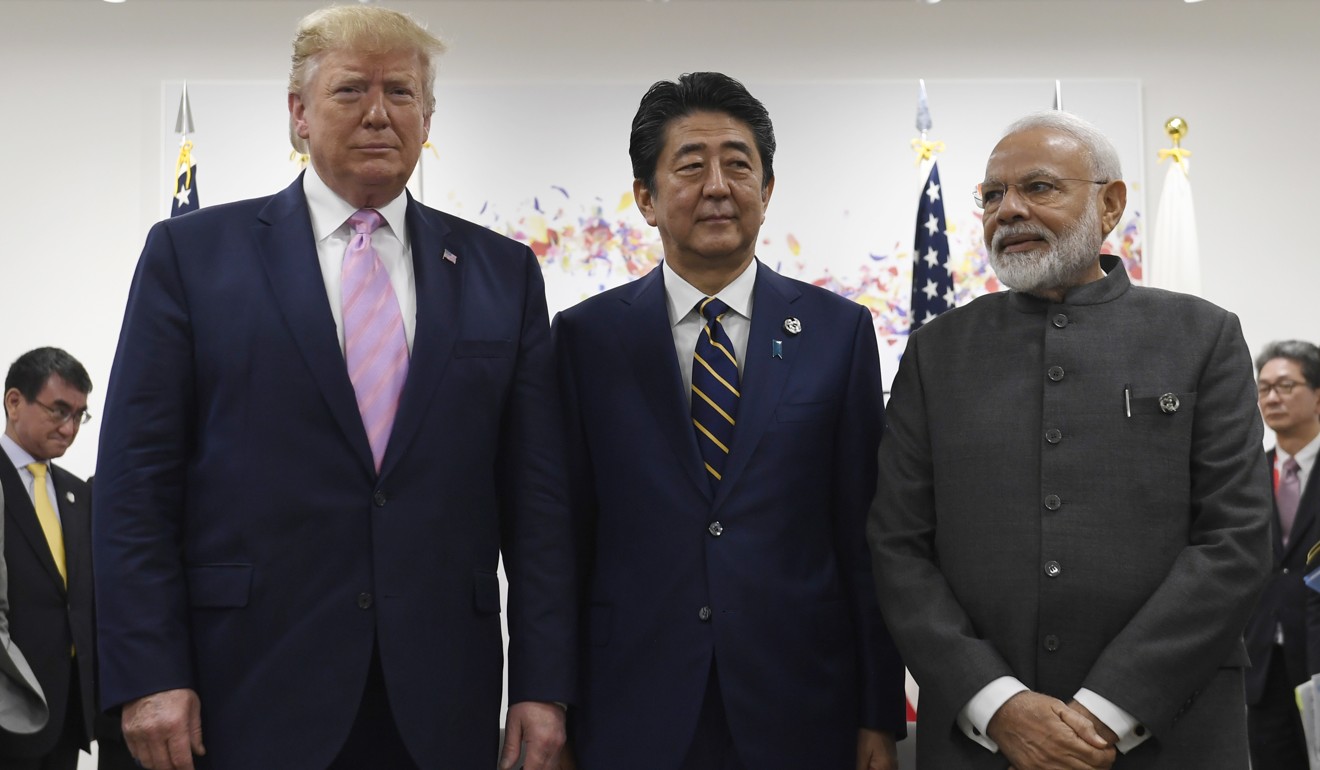
(From left) US President Donald Trump, Japanese Prime Minister Shinzo Abe and Indian Prime Minister Narendra Modi pose for a photo before their meeting. Photo: AP

Meanwhile, the United States is also seeking to build ties with India, with Trump holding trilateral talks with Modi and Japanese Prime Minister Shinzo Abe on Friday.

Indian Foreign Secretary Vijay Gokhale described that trilateral meeting as “very good”, saying it was “short but very productive”.

“The main topic of discussion was the Indo-Pacific, about how the three countries could work together in terms of connectivity, infrastructure and ensuring that peace and stability is maintained, and working together to build upon this new concept so that it would benefit the region as a whole and the three countries,” Gokhale said.

On the Modi-Trump bilateral meeting, he said the two leaders had “a very warm discussion”. They also briefly discussed 5G, with the focus on business cooperation between the two countries to leverage their technology and the potential of the Indian market, according to Gokhale.

He said the discussion of how to develop 5G networks was “in terms of business, not in terms of governments”. “It’s an exciting new area that India and the US can work together [on],” he said.

Source: SCMP
07/07/2019

China says briefed by U.S. on latest Trump-Kim meeting

BEIJING (Reuters) – China has received a briefing from the United States on the latest meeting between U.S. President Donald Trump and North Korean leader Kim Jong Un, China’s Foreign Ministry said on Saturday, in a call between two senior diplomats.

Trump became the first sitting U.S. president to set foot in North Korea on Sunday when he met Kim in the Demilitarized Zone (DMZ) at Panmunjom between the two Koreas and agreed to resume stalled nuclear talks.

Chinese Vice Foreign Minister Luo Zhaohui and U.S. Special Representative for North Korea Stephen Biegun discussed that meeting in a telephone call on Friday, China’s Foreign Ministry said in a short statement.

“Biegun introduced the meeting between the U.S. and North Korean leaders at Panmunjom, and said the U.S. side is willing to strengthen communication and coordination with the Chinese side on the peninsula issue,” the ministry added.

Luo told Biegun the recent “positive interactions” on the North Korean issue by all parties had important meaning for the peace talks process, the ministry said.

“China supports U.S.-North Korea exchanges and dialogue and hopes that the two sides will meet each other halfway and follow the consensus of the leaders of the two countries to resume consultations at the working level as soon as possible,” it added.

Trump’s meeting with Kim came around a week after Chinese President Xi Jinping met Kim himself during a state visit to Pyongyang.

While China has not officially announced it, Luo is likely China’s new special envoy for the North Korea issue, after predecessor Kong Xuanyou became China’s new ambassador in Tokyo in late May.

Luo was also involved in a briefing to Chinese reporters on Xi’s visit to North Korea before Xi went, according to state media.

Luo is an urbane career diplomat who speaks good English, according to diplomats who have met him.

He previously served as China’s ambassador in Canada, Pakistan and India, and also worked in the Chinese embassy in Washington from 1996-2000.

Source: Reuters

06/07/2019

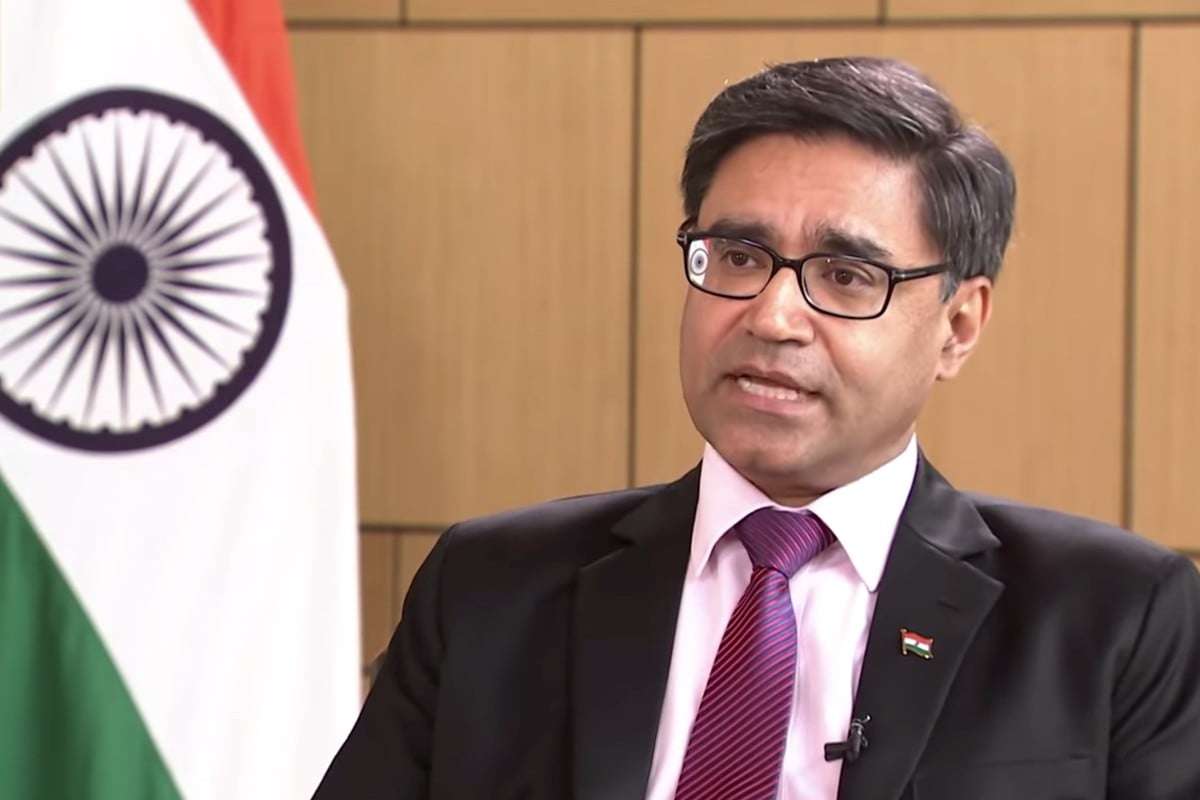
New Delhi and Beijing cannot let differences turn into disputes: India’s ambassador to China

  • Ambassador Vikram Misri has called on China to balance its US$60 billion trade deficit with India ‘before the issue becomes politically sensitive’
  • He also says India will not take sides over its use of US-blacklisted Huawei, as ‘any decision taken over this will only be taken in our national interest’
Indian ambassador to China Vikram Misri says that while the countries’ differences will not derail ties, there are still thorny issues to grapple with. Photo: CGTN
India and China must actively manage their differences

so they do not get in the way of the Asian superpowers working together for global stability, India’s top diplomat in China said on Friday.

To emphasise his point, Ambassador Vikram Misri listed eight long-standing and new bilateral issues that required attention, including 
India

’s almost US$60 billion trade deficit with China, cooperation on counterterrorism and a

peaceful resolution to their border dispute

.

“This trade imbalance is not economically sustainable in the long run,” said Misri at an Asia Society event in Hong Kong. “It is in our mutual interest to find workable solutions before the markets react in unpredictable ways and the issue becomes politically sensitive.”
Frosty ties between two of the world’s largest economies have thawed in the past year following a 73-day 
military stand-off in the Himalayas

in 2017, with Beijing seeking to forge closer ties with New Delhi amid its ongoing trade and tech war with the United States.

Ivanka Trump, the unlikely messenger of India-US relations
In May, Beijing dropped its long-held objections towards United Nations sanctions on

Masood Azhar

, the founder and leader of terrorist group Jaish-e-Mohammed, which was behind the suicide bombing of Indian soldiers that brought India and Pakistan to the brink of war earlier this year.

Analysts said this would pave the way for a better relationship between India and China.
Misri said both countries enjoyed a “full-spectrum relationship” of economic, commercial and people-to-people ties, and this was reinforced by the “strong personal bond” Indian Prime Minister

Narendra Modi

and Chinese President

Xi Jinping

had, despite the “elements of competition”.

The leaders of the two nations met four times last year and twice in 2019, with Xi set to visit India later this year. Both men share an understanding that “our rise can be mutually reinforcing” and a mutual interest in “preventing differences from turning into disputes”, the ambassador added.

But while Misri, a career diplomat posted to Beijing at the start of this year, stressed that differences would not derail ties, he made no bones about the thorny issues both sides are grappling with.

Will Modi’s snub of Xi’s belt and road derail China-India ties?
Both nations are still engaged in the second of a three-stage process to settle their border dispute – the world’s largest in terms of area, he said.
The first stage was an agreement on the political parameters for a boundary settlement in 2005. The current stage involves agreeing on a framework for a boundary settlement, which Misri said would be translated “into a delineated and demarcated boundary” in the final stage.
Communication over water and shared rivers has also been a key area of cooperation for the two nations.
Indian ambassador to China Vikram Misri speaking at the Asia Society in Hong Kong. Photo: Asia Society

They have established channels for information sharing on cross-frontier rivers, which last year enabled the Chinese side to warn the relevant Indian authorities of a landslide which would send a large amount of water to India. While in this instance the two sides were able to avert a loss of life, they can do more to broaden cooperation, Misri said.

He alluded to how China and India are vying for influence in the Indian Ocean, saying it was an area where both had “contiguous zones of maritime interest”.

The two sides need to work together to preserve peace and stability in the Indo-Pacific region – which stretches from the Indian Ocean to the central Pacific Ocean – and ensure transparent economic and commercial cooperation, infrastructure and connectivity, he said.

As China, India and Russia draw close, has Trump overplayed his hand?

Misri, who served as the private secretary to Modi as well as former prime ministers Manmohan Singh and I.K. Gujral, said there were three areas of mutual interest for India and China.

Besides a “peaceful periphery”, they should cooperate to ensure there are open international systems regarding trade and technology, and that global governance is reformed so the voices of nations such as theirs can be heard.

The Russia-India-China trilateral meeting on the sidelines of last month’s 

G20

summit in Osaka, where leaders discussed issues ranging from energy security to climate change, was an opportunity to discuss alternative viewpoints on changing international issues.

This was crucial amid the economic instability caused by 
US-China trade tensions

, that were causing “generalised damage” to the global economy, Misri said.

In the question and answer session with the event’s 112 attendees, Misri was asked if India was feeling the pressure to choose in the face of US efforts to get its allies to reconsider using or ban Chinese tech firm 
Huawei

from their superfast 5G networks.

Washington says Huawei equipment could be used by Beijing for spying and the US Commerce Department has placed the company on its entity list, effectively banning US companies from selling equipment and components to it.
When US President 
Donald Trump

and Xi met at the G20 summit, Trump announced American companies could resume sales to Huawei as long as the products involved did not threaten national security.

Misri referred to this, and said: “Let’s see how it shapes up.”
He added the issue was far from decided for India as it had only achieved 4G connectivity recently and was not yet ready to build out its 
5G

infrastructure.

Still, he said, “there’s no question on taking sides over this”. “Our leadership is very clear that any decision taken over this will only be taken in our national interest.”
Source: SCMP
04/07/2019

China, Bulgaria lift ties to strategic partnership

CHINA-BEIJING-XI JINPING-BULGARIAN PRESIDENT-TALKS (CN)

Chinese President Xi Jinping (2nd R) and his wife Peng Liyuan (1st R) pose for photos with Bulgarian President Rumen Radev (2nd L) and his wife in Beijing, capital of China, July 3, 2019. Chinese President Xi Jinping held talks with Bulgarian President Rumen Radev here Wednesday. (Xinhua/Huang Jingwen)

BEIJING, July 3 (Xinhua) — Chinese President Xi Jinping on Wednesday held talks with Bulgarian President Rumen Radev in the Great Hall of the People in Beijing, and they decided to lift state-to-state ties to a strategic partnership.

Bulgaria was one of the first countries to establish diplomatic relations with New China, Xi noted, hoping that the two countries take the strategic partnership as a new starting point, work together to cope with the test of international changes and inject new impetus into bilateral cooperation.

Xi stressed that the two sides should respect and trust each other and strengthen exchanges between the two governments, legislative bodies and political parties while maintaining mutual support on issues involving each other’s core interests and major concerns.

“The two countries share many of the same or similar views on the international situation and should jointly safeguard the international system based on multilateralism and the international law,” said Xi.

Bulgaria is also one of the first Central and Eastern European countries to sign intergovernmental cooperation documents with China on the Belt and Road Initiative. Xi said China is willing to strengthen the synergy between the two countries’ development strategies, promote infrastructure connectivity, expand trade and investment and cement people-to-people exchanges.

Xi reiterated China’s firm support for the European integration process, EU’s unity and growth and Europe’s more important role in international affairs, saying that China’s upholding such stances is not an expedient measure.

“It is hoped that the new EU institutions will maintain the stability and continuity of their China policy,” said Xi, who also expected the new EU institutions to work with China to promote the building of partnership on the basis of mutual respect, fairness and justice, cooperation and win-win result.

“Bulgaria is a good friend and partner of China in the EU and an important participant and advocate of the cooperation between China and the Central and Eastern European countries. It is hoped that the Bulgarian side will continue to play a constructive role in this regard,” said Xi.

Radev said he was very happy to visit China on the occasion of celebrating the 70th anniversary of the establishment of bilateral diplomatic ties.

Lifting the bilateral ties to a strategic partnership will further strengthen the foundation of bilateral relations, said Radev.

Radev said the Bulgarian side is ready to deeply participate in the Belt and Road Initiative by giving full play to its advantages of location in the region and trying to become a gateway and hub connecting Europe and Asia.

The Bulgarian side is willing to expand cooperation with the Chinese side in such areas as trade, transportation, aviation, logistics, finance, innovation, local areas and people-people exchanges, and welcomes Chinese enterprises to increase investment in Bulgaria, said Radev.

While expressing Bulgaria’s support for multilateralism and the World Trade Organization, the Bulgarian president said his country stands ready to step up communication and work for advancing Europe-China relations and cooperation between the Central and Eastern European countries and China.

Source: Xinhua

04/07/2019

Sri Lanka could help Chinese manufacturers offset trade war impact

  • Development minister leads high-level investment forum in Beijing
  • Points to free trade agreements and preferential duty deals to offset trade war pressures for Chinese factories
Sri Lankan Minister for Development Strategies and International Trade Malik Samarawickrama at the Sri Lanka Investment Forum in Beijing on Wednesday. Photo: Simon Song
Sri Lanka is wooing Chinese manufacturers, urging them to make use of its preferential duty-free treatment by the US and Europe as a way to offset the growing tariff pressure of the trade war.
The country’s development minister, Malik Samarawickrama, was in Beijing on Wednesday as part of an investment forum at the Sri Lankan embassy attended by dozens of Chinese businesspeople.
“China has invested heavily in infrastructure and they are assisting us to invest in ports, roads, railways, water supplies and so on. Now we would like China to get involved in setting up their manufacturing plants in Sri Lanka, primarily for the purpose of exports,” he said.
“They can make use of the preferential market access we have – we have duty free access to the European Union countries and we have free trade agreements with Pakistan, Singapore and India. And, since the cost of manufacturing in China is going up, we would like the Chinese to look at Sri Lanka for their manufacturing and we want it to be exported back to China.”
Sri Lanka, bruised from Easter bombings, seeks US$1 billion loan from China
Along with trade officials and diplomats, Samarawickrama, one of Sri Lanka’s most senior government ministers, was also keen to boost investor confidence following the deadly Easter Sunday bombings in Colombo which killed 253 people.
“Let me assure you, absolutely, Sri Lanka is safe for investment,” he told the dozens of representatives from Chinese state-owned and private companies who attended the forum.

“We must bring to your notice that none of the industries have been affected as a result of the bombings and none of the export orders were cancelled or delayed. This is a testament to the resilience of the economy.”

China is one of Sri Lanka’s largest trading partners and – sometimes controversially – the largest financier of its booming new infrastructure. Other big lenders to the island nation are the Asian Development Bank and Japan.

Earlier this year the Sri Lankan government signed a US$989.5 million loan agreement with China’s Export-Import Bank for a major new motorway project. And last month Sri Lanka’s finance ministry confirmed it was in talks with the China-led Asian Infrastructure Investment Bank (AIIB) for a further loan of nearly US$1 billion for energy and motorways.

Did Japan and India just launch a counter to China’s Belt and Road?
The surge of Chinese investment has raised concerns that Sri Lanka could become caught up in the rivalry between China and India as Beijing seeks to expand its influence in South Asia and the Indian Ocean.
Last month, Sri Lanka signed an agreement with India and Japan to jointly develop the East Container Terminal at the Port of Colombo, which some observers said could become a competitor to the China-funded Hambantota Port, and was perhaps a sign that the island nation was seeking to neutralise the growing influence of China.
Samarawickrama denied claims the involvement of Japan and India in Sri Lanka’s biggest port project was to counter China’s influence.
Under the agreement, he said, the terminal was owned by Sri Lanka Port Authority, with a 51 per cent stake, while Japan and India would develop the remaining 49 per cent.
“We need the expertise from Japan,” Samarawickrama said. “We need the Indians to get involved in the operation because 75 per cent of the transshipment cargoes in the Colombo port come from India and India is extremely important to us.
“They are the operators of the terminal and they are not building any ports.”
Source: SCMP
03/07/2019

Xi, Turkish president hold talks, agreeing to deepen strategic cooperation

CHINA-BEIJING-XI JINPING-TURKISH PRESIDENT-TALKS (CN)

Chinese President Xi Jinping holds a welcome ceremony for Turkish President Recep Tayyip Erdogan before their talks in Beijing, capital of China, July 2, 2019. Xi held talks with Erdogan at the Great Hall of the People in Beijing on Tuesday. (Xinhua/Yin Bogu)

BEIJING, July 2 (Xinhua) — Chinese President Xi Jinping held talks with his Turkish counterpart Recep Tayyip Erdogan at the Great Hall of the People on Tuesday, pledging more efforts to promote strategic cooperation between the two sides and work for sound bilateral ties.

Noting China and Turkey are both major emerging markets and developing countries, Xi said enhancing strategic cooperation is of great significance.

He called on the two sides to deepen political mutual trust, beef up strategic communication, respect each other’s core interests and major concerns on issues pertaining to national sovereignty, independence and territorial integrity, and consolidate the political foundation underlying the development of China-Turkey strategic cooperative relationship to keep bilateral ties on a healthy and stable track.

On anti-terrorism security cooperation, Xi said China appreciates Erdogan’s reiteration on many occasions about not allowing anti-China separatist activities instigated by any force in Turkey, and highly values the repeated emphasis by the Turkish side on supporting China’s anti-terrorism efforts, noting that China is ready to strengthen cooperation with Turkey in the field of international anti-terrorism.

Speaking of synergizing development strategies and expanding pragmatic cooperation, Xi called Turkey an important partner in jointly building the Belt and Road.

“China is willing to move faster in dovetailing the Belt and Road Initiative with the Middle Corridor project, steadily promote cooperation on trade, investment, science and technology, energy, infrastructure and major projects and actively seek cooperation in small and medium-sized programs and those that benefit the people, to deliver concrete benefits to more enterprises and the people,” the Chinese president said.

Xi also called for expanding people-to-people exchanges and tourism cooperation for better mutual understanding between the two peoples, to solidify the popular support for China-Turkey friendship.

In the face of major shifts in the international situation, China and Turkey should firmly uphold the international system with the United Nations at the core and the international law as the basis, safeguard multilateralism and international fairness and justice, as well as the multilateral trading regime with World Trade Organization at the core, Xi said.

He urged the two sides to deepen the strategic cooperative relationship, guard the common interests of China and Turkey as well as developing countries at large and jointly forge a new type of international relations featuring mutual respect, fairness and justice, and win-win cooperation.

“We should keep in contact and coordination in regional affairs and jointly advance political settlements for hotspot issues, to contribute to regional peace, stability and development,” Xi said.

Noting that the time-honored Turkey-China friendship which can be traced back to the time of ancient Silk Road is consolidated today, Erdogan said the close bilateral ties are significant for regional peace and prosperity.

Turkey stays committed to the one-China policy, Erdogan said, stressing that residents of various ethnicities living happily in Xinjiang Uygur Autonomous Region thanks to China’s prosperity is a hard fact, and Turkey will not allow anyone to drive a wedge in its relations with China. He also expressed the readiness to deepen political mutual trust and strengthen security cooperation with China in opposing extremism.

Voicing firm support for the Belt and Road Initiative, the Turkish president said he hopes the two sides can step up cooperation in areas such as trade, investment and 5G networks as well as exchanges in educational, cultural and scientific research sectors.

Prior to the talks, Xi held a welcoming ceremony for Erdogan.

Source: Xinhua

29/06/2019

‘Back on track’: China and U.S. agree to restart trade talks

OSAKA (Reuters) – The United States and China agreed on Saturday to restart trade talks with Washington holding off new tariffs on Chinese exports, signalling a pause in the trade hostilities between the world’s two largest economies.

Commenting on a long-running dispute over China’s Huawei, President Donald Trump said U.S. firms would be able to sell components to the world’s biggest telecoms network gear maker where there was no national security problem.
The truce offered relief from a nearly year-long trade standoff in which the countries have slapped tariffs on billions of dollars of each other’s imports, disrupting global supply lines, roiling markets and dragging on global economic growth.
“We’re right back on track and we’ll see what happens,” Trump told reporters after an 80-minute meeting with Chinese President Xi Jinping on the sidelines of a summit of leaders of the Group of 20 (G20) major economies in Osaka, western Japan.
Trump said while he would not lift existing import tariffs, he would refrain from slapping new levies on an additional $300 billion worth of Chinese goods – which would have effectively extended tariffs to everything China exports to the America.
“We’re holding back on tariffs and they’re going to buy farm products,” he said at a news conference, without giving any details of China’s future agricultural product purchases.

“If we make a deal, it will be a very historic event.”

He gave no timeline for what he called a complex deal but said he was not in a rush. “I want to get it right.”

HUAWEI HOPES

On Huawei, Trump said the U.S. commerce department would meet in the next few days on whether to take it off a list of firms banned from buying components and technology from U.S. companies without government approval.

China welcomed the step.

“If the U.S. does what it says, then of course, we welcome it,” said Wang Xiaolong, the Chinese foreign ministry’s envoy for G20 affairs.

U.S. microchip makers also applauded the move.

“We are encouraged the talks are restarting and additional tariffs are on hold and we look forward to getting more detail on the president’s remarks on Huawei,” John Neuffer, president of the U.S. Semiconductor Association, said in a statement.

Huawei has come under mounting scrutiny for over a year, led by U.S. allegations that “back doors” in its routers, switches and other gear could allow China to spy on U.S. communications.

While the company has denied its products pose a security threat, the United States has pressed its allies to shun Huawei in their fifth generation, or 5G, networks and has also suggested it could be a factor in a trade deal.

RELIEF AND SCEPTICISM

In a lengthy statement on the two-way talks, China’s foreign ministry quoted Xi as telling Trump he hoped the United States could treat Chinese companies fairly.

On the issues of sovereignty and respect, China must safeguard its core interests, Xi was cited as saying.

“China is sincere about continuing negotiations with the United States … but negotiations should be equal and show mutual respect,” the foreign ministry quoted Xi as saying.

Trump had threatened to extend existing tariffs to almost all Chinese imports into the United States if the meeting brought no progress on wide-ranging U.S. demands for reforms.

Source: Reuters

Slideshow (4 Images)

Financial markets are likely to breathe a sigh of relief on news of the resumption in U.S.-China trade talks.

“Returning to negotiations is good news for the business community and breathes some much needed certainty into a slowly deteriorating relationship,” said Jacob Parker, a vice-president of China operations at the U.S.-China Business Council.

“Now comes the hard work of finding consensus on the most difficult issues in the relationship, but with a commitment from the top we’re hopeful this will put the two sides on a sustained path to resolution,” he said.

Some, however, warned the pause might not last.

“Even if a truce happens this weekend, a subsequent breakdown of talks followed by further escalation still seems likely,” Capital Economics said in a commentary on Friday.

The United States says China has been stealing American intellectual property for years, forces U.S. firms to share trade secrets as a condition for doing business in China, and subsidizes state-owned firms to dominate industries.

ADVERTISEMENT

China has said the United States is making unreasonable demands and must also make concessions.

Talks collapsed in May after Washington accused Beijing of reneging on reform pledges. Trump raised tariffs to 25% from 10% on $200 billion of Chinese goods, and China retaliated with levies on U.S. imports.

The U.S.-China feud had cast a pall over the two-day G20 gathering, with leaders pointing to the threat to global growth.

In their communique, the leaders warned of growing risks to the world economy but stopped short of denouncing protectionism, calling instead for a free, fair trade environment after talks some members described as difficult.

28/06/2019

China, Russia to lift military relations to new high: defense ministry

BEIJING, June 27 (Xinhua) — China and Russia will bring their military relations to a new high under the strategic guidance of leaders of both countries, a spokesperson for the Chinese military said Thursday.

The two sides will enhance their mutual support on their respective core interests, and improve exchange and cooperation mechanisms at all levels and in different fields, Ren Guoqiang, spokesperson of the Ministry of National Defense, said at a press conference.

The two militaries will deepen cooperation in high-level exchanges, practical training, equipment and technology development and counter-terrorism, and promote strategic cooperation, Ren said.

Source: Xinhua

28/06/2019

China calls for more practical cooperation with the Netherlands

CHINA-BEIJING-LI KEQIANG-DUTCH PM-TALKS (CN)

Chinese Premier Li Keqiang holds talks with Dutch Prime Minister Mark Rutte in Beijing, capital of China, June 27, 2019. (Xinhua/Wang Ye)

BEIJING, June 27 (Xinhua) — Chinese Premier Li Keqiang held talks with visiting Dutch Prime Minister Mark Rutte Thursday in Beijing, calling for more mutually beneficial cooperation.

Noting that the Netherlands is China’s second-largest trade partner in the European Union, Li said the two countries enjoy broad cooperation prospects, and China will work with the Netherlands to enhance exchanges at all level, consolidate political mutual trust, tap the potential of cooperation, communicate and coordinate closely on international and regional affairs, and continuously upgrade bilateral relations.

In face of increasing instabilities and uncertainties in the world, China is ready to enhance the synergy of development strategies with the Netherlands, expand two-way opening-up, provide an open, transparent, and non-discriminatory business environment for enterprises from both countries, to contribute to the world economic growth, Li said.

He called for enhanced cooperation in key areas including trade, investment, innovation, clean energy, agriculture, and third-part markets, for win-win results.

Li said China attached great importance to relations with EU, and firmly supported the process of European integration.

China will work with the EU to implement the outcomes of the China-EU leaders’ meeting, accelerate the investment agreement negotiation, reach a geographical indication agreement as scheduled, jointly safeguard multilateralism and free trade, promote inclusive development, and maintain peace and stability, Li said.

Rutte said Premier Li’s visit to the Netherlands last year had injected new impetus to the development of bilateral relations.

Faced with the downward pressure of global economy and trade, the Netherlands is willing to make joint efforts with China to enhance cooperation, champion multilateralism and maintain international orders, Rutte said.

Source: Xinhua

28/06/2019

Japan’s Abe and China’s Xi Jinping meet amid trade war fears

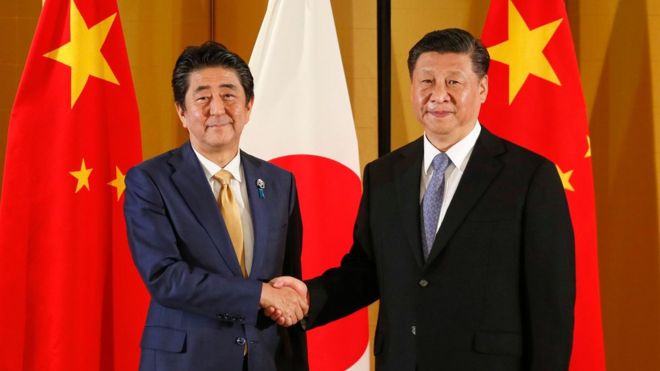
Japanese Prime Minister Shinzo Abe (R) shakes hands with Chinese President Xi JinpingImage copyright AFP

Chinese President Xi Jinping has met Japanese Prime Minister Shinzo Abe at a time of warming ties between the two nations.

Relations have historically been strained, but concerns over US trade policy and North Korea’s nuclear programme have shifted them closer.

The two leaders met on the sidelines of the forthcoming G20 summit in Japan.

“I want to open up a new age of Japan-China relations hand in hand with President Xi,” Mr Abe told reporters.

The pair agreed to work together to promote “free and fair trade” following a “very frank exchange”, a Japanese official said.

It is the first official visit Mr Xi has made to Japan since becoming president in 2013. At the outset of their talks on Thursday, Mr Abe invited him to return on a state visit next year.

“Around the time of the cherry blossoms next spring, I would like to welcome President Xi as a state guest to Japan,” he said. “[I] hope to further elevate ties to the next level.”

What did the leaders discuss?

Japan and China are by far Asia’s largest economies and the talks on Thursday focused strongly on business.

Last year, the two sides signed a deal to maintain annual dialogue and to co-operate on innovation. This time around, officials say, they pledged to develop a “free and fair trading system” in a “complicated” global economic landscape.

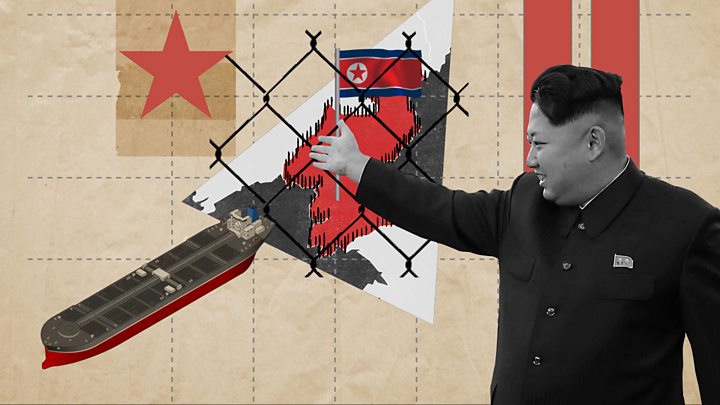
Media caption North Korea has been called out for evading UN sanctions

Another topic on the schedule would probably have been North Korea. While China is North Korea’s biggest trading partner, both Tokyo and Beijing want it to abandon its nuclear programme.

Mr Abe has only very limited leverage on the matter and will try to sway both the US and China to keep Tokyo’s interests in mind in any negotiations.

The G20 summit will begin on Saturday, but the main meeting is likely to be overshadowed by the many bilateral talks that are set to happen on the sidelines.

For example, Mr Xi will meet President Trump as China and the US try to resolve their trade dispute.

Do Japan and China get along?

In the past, relations have been tense. While the two countries do have close trade ties, politically things have been much more fragile.

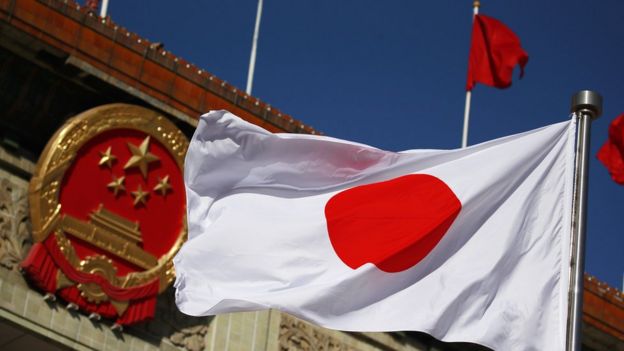
Japanese and Chinese flagsImage copyright EPA
Image caption Japan and China have not always had warm relations

Japan’s World War Two occupation of parts of China remains a very emotional issue. There are also several ongoing territorial disputes between Tokyo and Beijing.

But tensions with Washington over its protectionist trade policy have driven Japan and China into an unlikely friendship.

In 2018, Mr Abe hailed his high-profile visit to Beijing as an historic turning point. Both leaders have since promised to establish positive, constructive, relations.

Source: The BBC

Law of Unintended Consequences

continuously updated blog about China & India

ChiaHou's Book Reviews

continuously updated blog about China & India

What's wrong with the world; and its economy

continuously updated blog about China & India