Archive for ‘China alert’

26/02/2019

Chinese vice premier stresses environmental protection, support for real economy

CHINA-YUNNAN-HAN ZHENG-INSPECTION (CN)

Chinese Vice Premier Han Zheng (2nd R), also a member of the Standing Committee of the Political Bureau of the Communist Party of China Central Committee, inquires about production of Yunan Baiyao Group in southwest China’s Yunnan Province, Feb. 26, 2019. Han Zheng made an inspection tour to southwest Yunnan Province from Sunday to Tuesday, where he examined protection of Erhai Lake and visited local companies. (Xinhua/Wang Ye)

KUNMING, Feb. 26 (Xinhua) — Chinese Vice Premier Han Zheng has called for continued efforts on environmental protection and support for the real economy to ensure a good start for this year’s economic and social development.

Han, also a member of the Standing Committee of the Political Bureau of the Communist Party of China Central Committee, made the remarks during an inspection tour to southwest Yunnan Province from Sunday to Tuesday, where he examined protection of Erhai Lake and visited local companies.

Efforts should be made to ensure sustainable and healthy development of the economy and maintain overall social stability, Han said.

He recognized the outcomes the country has achieved in the protection and pollution treatment of the lake, and urged consistent efforts to win the lake’s pollution battle.

During a tour to a biotech company, Han urged it to use the unique natural resources of the province and independent innovation to explore the global market.

He also underlined efforts to push forward state-owned enterprise (SOE) reform, foster internationally competitive national brands, increase input in research and development, and enhance mixed ownership reform of SOEs.

Source: Xinhua

26/02/2019

China has 2.9 million teachers in rural areas

BEIJING, Feb. 26 (Xinhua) — China had over 2.9 million teachers in rural areas by the end of 2018, the Ministry of Education said Tuesday.

Close to 2.5 million rural teachers work at primary and secondary schools, while 420,000 teachers work at kindergartens, according to the ministry.

The ministry is striving to build a high-quality team of rural teachers and dispatched a great number of college graduates to the rural areas, especially the poverty-stricken regions, said Liu Jiantong, an official with the ministry’s department of teachers.

The central budget financed 4.5 billion yuan (670 million U.S. dollars) last year as an allowance for 1.27 million teachers from over 80,000 rural schools in China’s central and western regions, said Liu.

In 2018, 1,800 retired teachers in good health registered to teach at rural schools. In addition, 19 provincial-level regions dispatched 4,000 teachers to support education in Tibet and Xinjiang, said the ministry.

Source: Xinhua

26/02/2019

Trump: US and China ‘very very close’ on deal

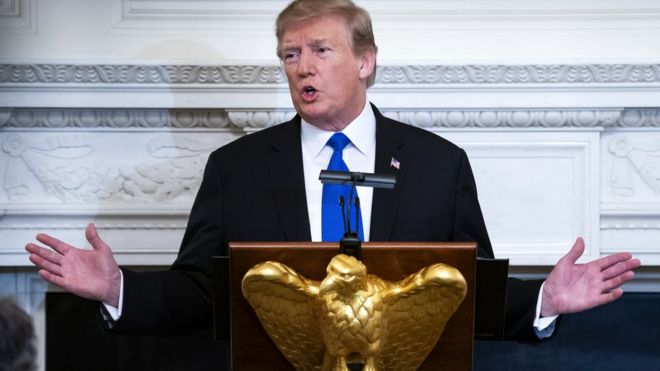
US President Donald Trump addresses US governors at the White HouseImage copyrightAFP

President Donald Trump has said that the US and China are “very very close” to signing a trade agreement, potentially ending the long-running feud between the two countries.

Mr Trump told US governors on Monday that both nations “are going to have a signing summit”.

“Hopefully, we can get that completed. But we’re getting very, very close,” he said.

It follows a decision to delay imposing further trade tariffs on Chinese goods.

At the weekend, Mr Trump said both sides had made “substantial progress” in trade talks following a summit in Washington last week.

The rise in import duties on Chinese goods from 10% to 25% was due to come into effect on 1 March.

Instead, Mr Trump said the US is now planning a summit with Chinese Premier Xi Jinping at the US President’s Mar-a-Lago resort in Florida.

US shares rose on the decision to delay tariffs, with the Dow Jones Industrial Average closing 0.23% higher at 26,091.9.

The S&P 500 and the Nasdaq also finished trading in positive territory.

As he prepared to meet North Korean leader Kim Jong-un in Vietnam, Mr Trump also tweeted that a China trade deal was in “advanced stages”.

Mr Trump’s decision to delay tariff increases on $200bn (£153bn) worth of Chinese goods was seen as a sign that the two sides were moving ahead in settling their damaging trade war.

Last week, Mr Trump noted progress in the latest round of negotiations in Washington, including an agreement on currency manipulation, though no details were disclosed.

Sources told CNBC on Friday that China had committed to buying up to $1.2 trillion in US goods, but there had been no progress on the intellectual property issues.

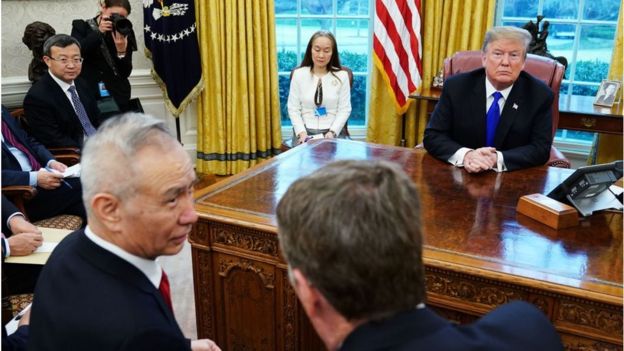
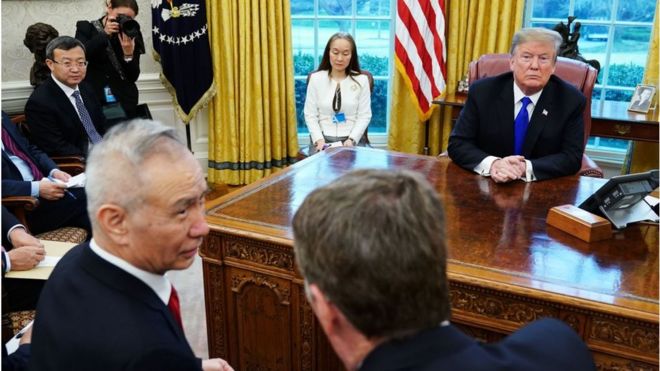
Donald Trump and China's Vice Premier Liu He in the Oval OfficeImage copyrightAFP
Image captionPresident Trump met China’s Vice Premier Liu He on Friday

Gregory Daco, chief US economist at Oxford Economics, said: “We had anticipated such a delay and believe a handshake agreement in which China will promise to import more agricultural products, work towards a stable currency and reinforce intellectual property rights protection will be achieved in the coming weeks.

“However, we don’t foresee a significant rollback of existing tariffs, and see underlying tensions regarding China’s strategic ambitions, its industrial policy, technological transfers and ‘verification and enforcement’ mechanisms remaining in place.”

What has happened in the trade war so far?

Mr Trump initiated the trade war over complaints of unfair Chinese trading practices.

That included accusing China of stealing intellectual property from American firms, forcing them to transfer technology to China.

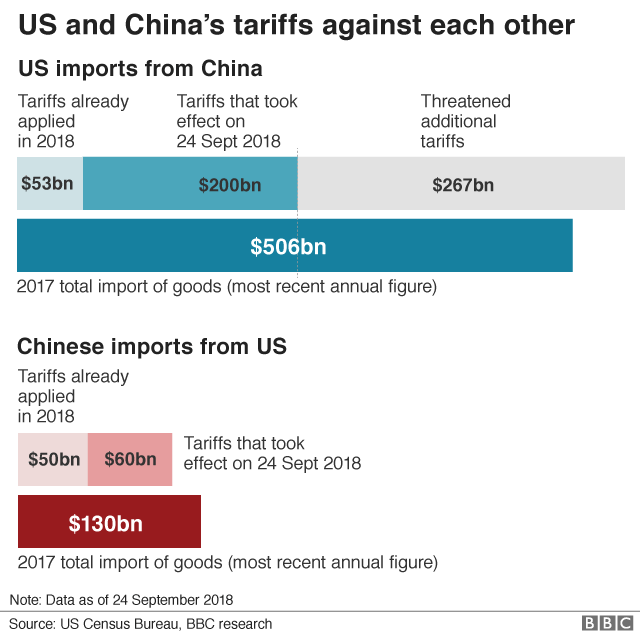
The US has imposed tariffs on $250bn worth of Chinese goods, and China has retaliated by imposing duties on $110bn of US products.

Mr Trump has also threatened further tariffs on an additional $267bn worth of Chinese products – which would see virtually all of Chinese imports into the US become subject to duties.

US and China's tariffs against each other

The trade dispute has unnerved financial markets, risks raising costs for American companies and is adding pressure to a Chinese economy that is already showing signs of strain.

It has also stoked fears about the impact on the global economy.

Last year, the International Monetary Fund warned the trade war between the US and China risked making the world a “poorer and more dangerous place”.

Source: The BBC

26/02/2019

Exercise restraint, says China after strike on Jaish’s biggest terror camp

The IAF strike on Jaish camp in Balakot deep across LoC comes a day before the foreign ministers of Russia, India, and China (RIC) are expected to meet in the eastern China town of Wuzhen under the RIC mechanism.

INDIA Updated: Feb 26, 2019 15:56 IST

Sutirtho Patranobis
Sutirtho Patranobis
Hindustan Times, Wuzhen (China)
China on Jaish,Masood Azhar,Indian Air force
China has urged India and [pakistan to exercise restrain after the Indian Air Force hit a Jaish camp in Balakot acro(AP file photo)

China on Tuesday urged India to fight terrorism through “international cooperation” hours after the Indian air force carried out a targeted strike on a Jaish-e-Mohammed (JeM) camplocated across the Line of Control (LoC).

India should create “favourable” conditions internationally to fight terrorism, China added possibly in an oblique reference to New Delhi’s failure to convince Beijing to allow Jaish-e-Mohammed chief, Azhar Masood to be designated as a terrorist at the UN Security Council.

Follow live updates here

The strike comes a day before the foreign ministers of Russia, India, and China (RIC) are expected to meet in the eastern China town of Wuzhen under the RIC mechanism.

Responding to a question on the air strike, the foreign ministry spokesperson, Lu Kang said both India and Pakistan — one of China’s closest allies — should maintain restraint.

“We have taken note of relevant reports. I want to say that India and Pakistan are both important countries. A sound relationship and cooperation serve the interests of peace and stability in South Asia. Both parties (should) remain restrained and do more to improve bilateral relations,” Lu Kang said.

Read: Nation in safe hands, says PM Modi

“As for India’s claims on taking action against terrorism, fighting terrorism is a global practice. It needs to be dealt with international cooperation. And India needs to create a favourable condition internationally for the same,” Lu said.

The Chinese foreign ministry’s reaction came soon after foreign secretary, VK Gokhale confirmed that Indian forces carried out a strike on the biggest camp of the terror group Jaih e Mohammed in Balakot area early on Tuesday.

“Credible intelligence was received that JeM was attempting another suicide terror attack in various parts of the country, and the fidayeen jihadis were being trained for this purpose. In the face of imminent danger, a preemptive strike became absolutely necessary,” the foreign secretary said.

The Chinese foreign ministry reacted carefully, keeping in mind its close ties with Pakistan and the fact that India’s decision to carry out the strike was triggered by JeM-planned Pulwama attack that killed 40 CRPF personnel.

Read: After IAF strike on terror camp, Army tweets poem on power and peace

Interestingly, Chinese foreign minister, Wang Yi and his Pakistani counterpart, Shah Mehmood Qureshi spoke over phone about the Pulwama attack and its aftermath over the phone on Monday evening.

“Qureshi informed Wang of Pakistan’s stance on and measures to deal with the attack, reaffirming the country’s sincerity and resolution to communicate with India and find out the truth of the incident,” a report by China’s official news agency, Xinhua, said.

“Qureshi said Pakistan’s position on maintaining regional peace and fighting terrorism will remain unchanged and it is willing to join hands with other countries to cooperate in this area,” it added.

In the phone conversation, Wang said China supports Pakistan and India to resolve the issue through dialogue as soon as possible and avoid an escalation of the situation.

“He called on both sides to collaborate on fighting terrorism and jointly safeguard the security and stability of South Asia,” the report said.

Meanwhile, the Pulwama terrorist attack and the listing of Azhar as a global terrorist by the UN is expected to prominently figure at the 16th RIC foreign ministers’ meeting being held here on Wednesday.

Besides attending the annual trilateral meeting, external affairs minister Sushma Swaraj would also hold bilateral talks with Chinese FM Wang and Russian counterpart, Sergei Lavrov on the sidelines of the meeting.

Swaraj’s meeting with Wang assumes significance as it will be the first high-level interaction between the two countries after the Pulwama terror attack and Tuesday’s air strike.

China, a veto-wielding member of the UNSC, has consistently blocked India, the US, the UK and France’s efforts to list Azhar as a global terrorist since 2016 but endorsed a scathing statement issued by UN Security Council on February 21 on the Pulwama attack.

Source: Hindustan Times

25/02/2019

Smog continues in north and east China, snow to hit west

BEIJING, Feb. 24 (Xinhua) — China’s national observatory on Sunday forecast that some northern and eastern parts of the country would be shrouded in smog in the coming days while snow will hit western regions.

Thick smog will envelop northern and eastern areas including Hebei and Shandong provinces until Thursday, according to the National Meteorological Center (NMC).

From Sunday night to Monday morning, thick fog will be seen in the provinces of Henan, Anhui, Jiangsu, Shanghai and Hubei, reducing visibility in some areas to less than 200 meters, the NMC said.

From Sunday night to Tuesday, snow will hit west China’s Tibet, Qinghai and Gansu, while rain will soak the south from Tuesday to Wednesday.

Bad weather could disrupt traffic after the Spring Festival holiday when many people are returning to work after the break.

China’s Spring Festival travel rush started from Jan. 21 and will last till March 1.

Source: Xinhua

25/02/2019

Railway trips hit record high in China Saturday

BEIJING, Feb. 24 (Xinhua) — Railway trips in China hit a record high as travelers returned to work after the Spring Festival break, data from the national railway operator showed.

On Saturday, some 13.17 million passenger trips were made by rail, a daily record for the travel rush, up 38.8 percent year on year, according to the China Railway Corporation (CRC).

On Sunday, 12.2 million railway trips are expected to be made as the travel rush continues, the CRC said.

Hundreds of millions of Chinese went back to their hometowns to celebrate the Chinese Lunar New Year with their families.

The annual travel rush around the festival (chunyun) often puts the transport system to the test.

As more trains have been put into operation, railway transport capacity improved by 5.3 percent this year during the travel rush, according to the CRC.

The Spring Festival travel rush started from Jan. 21 and will last till March 1, with railway trips expected to hit 413 million in total, up 8.3 percent.

Source: Xinhua

25/02/2019

Continuing relief efforts made to help people in blizzard-hit Yushu

CHINA-QINGHAI-YUSHU-BLIZZARD (CN)

Local herdsmen roll packaged fodders in Zhiduo Village, Zhaduo Township of Yushu Tibetan Autonomous Prefecture in northwest China’s Qinghai Province, Feb. 23, 2019. Around 80 tonnes of donated fodders arrived at the blizzard-ravaged village Friday night and were distributed to local herdsmen in time to prevent livestock from starving. Yushu has been hit by a number of blizzards since December last year. (Xinhua/Wu Gang)

Source: Xinhua

25/02/2019

Chinese kidnap victim reunited with parents after 31 years

  • Tears of joy as hundreds turn out to welcome home the lost boy of their village
  • DNA samples crack the case after decades of heartache

Chinese kidnap victim reunited with parents after 31 years

25 Feb 2019

16 Feb 2019

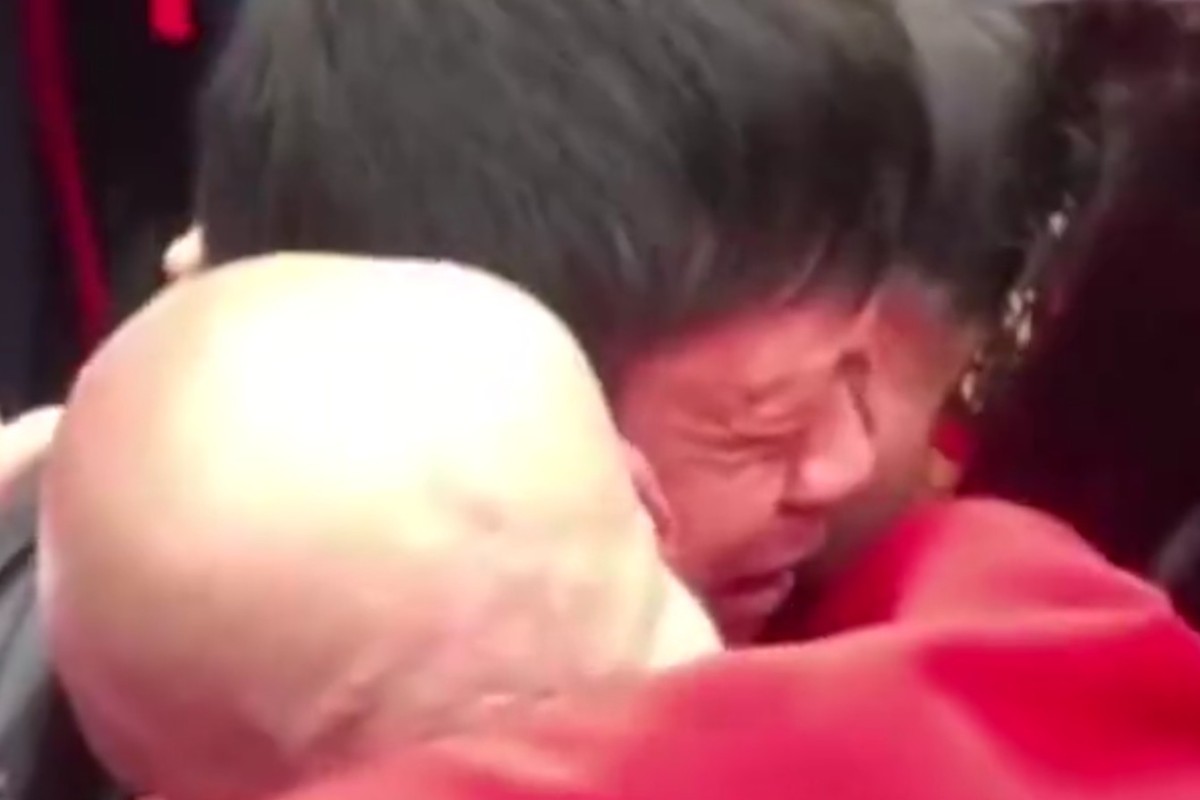
The tearful moment a man is finally reunited with his parents 31 years after he was abducted as a three-year-old. Photo: Weibo

A man who was abducted as a child 31 years ago was finally reunited with his parents in a celebration which included hundreds of people from surrounding villages in Sichuan province, southwest China.

Qin Yujie – whose given name was Cheng Xueping – knelt and sobbed as he hugged his long-lost parents in Chengjiawan village, surrounded by “Welcome Home” banners and the noise of firecrackers.

“I have been looking for you for years and couldn’t find a clue,” Qin told his weeping parents Cheng Jiguang and Gaolingzhen at their reunion on Friday, according to the Western China City Daily newspaper.

As well as the joy of seeing their son again, the Chengs were also able to meet Qin’s wife and children for the first time as hundreds of people gathered around them, many of them in tears.

Qin was three years old in 1988 when he was snatched from a construction site in Guizhou province, southern China, where his parents were working. They searched frantically for their son over many hours that day and, since then, have spent their life savings and borrowed money to travel all over China looking for traces of their son.

Eventually they provided DNA samples to a national database established by the police to assist in the search for China’s many abducted children.

In 2018, a DNA sample Qin provided to his employers yielded an unexpected result. Sichuan police were alerted to a match between Qin’s DNA sample and Cheng’s, his birth father.

Police tracked him down and contacted the Chengs to provide another DNA sample to be sure of the results and, in February this year, the new test confirmed that Cheng and Gao were indeed Qin’s biological parents.

A video of their emotional reunion has been making the rounds on Chinese social media.

The abduction of women and children is a common crime in China. In December 2018 two child traffickers, Zhang Weiping and Zhou Rongping, were sentenced to death for their role in eight separate cases, involving the sale of nine children between 2003 and 2005.

In one particularly brutal case, their gang broke into a rented home, tied up a woman and took away her son to be sold through a middleman, police said. Zhang, Zhou and the other gang members were finally detained in 2016.

In recent years, there have been several official as well as grassroots efforts to help abducted children find their parents. The Ministry of Public Security established an official system called Tuanyuan in 2016 which sends alerts of missing children’s information through social media platforms and mobile phone texts, similar to the “Amber Alert” system in the US.

As of May 2018, Chinese media reported the system had published information about 3,053 missing children and helped find 2,980 of them.

On Baobeihuijia, a grassroots website run by volunteers, there are still 43,858 families looking for their children and 39,446 people looking for their families.

Source: SCMP

25/02/2019

Trump to delay further tariffs on Chinese goods

Donald Trump and China's Vice Premier Liu He in the Oval OfficeImage copyrightAFP
Image captionPresident Trump met China’s Vice Premier Liu He on Friday

President Donald Trump has announced that the US will delay imposing further trade tariffs on Chinese goods.

The rise in import duties on Chinese goods from 10% to 25% was due to come into effect on 1 March.

Mr Trump said both sides had made “substantial progress” in trade talks, which sent Chinese stocks up nearly 5%.

He added that he was planning a summit with Chinese President Xi Jinping in Florida to cement the trade deal if more progress was made.

A report from China’s official news agency Xinhua also noted “substantial progress” on specific issues such as technology transfer, intellectual property protection and agriculture.

Mr Trump’s decision to delay tariff increases on $200bn (£153bn) worth of Chinese goods was seen as a sign that the two sides are making progress on settling their damaging trade war.

Last week, Mr Trump noted progress in the latest round of negotiations in Washington, including an agreement on currency manipulation, though no details were disclosed.

Sources told CNBC on Friday that China had committed to buying up to $1.2 trillion in US goods, but there had been no progress on the intellectual property issues.

What has happened in the trade war so far?

Mr Trump initiated the trade war over complaints of unfair Chinese trading practices.

That included accusing China of stealing intellectual property from American firms, forcing them to transfer technology to China.

The US has imposed tariffs on $250bn worth of Chinese goods, and China has retaliated by imposing duties on $110bn of US products.

Mr Trump has also threatened further tariffs on an additional $267bn worth of Chinese products – which would see virtually all of Chinese imports into the US become subject to duties.

US and China's tariffs against each other

The trade dispute has unnerved financial markets, risks raising costs for American companies and is adding pressure to a Chinese economy that is already showing signs of strain.

It has also stoked fears about the impact on the global economy.

Last year, the International Monetary Fund warned the trade war between the US and China risked making the world a “poorer and more dangerous place”.

Source: The BBC

25/02/2019

Huawei says Trump ‘clear and correct’ on 5G as trade deadline looms

(This Feb. 24 story corrects paragraph 12 to show Huawei was world’s third-largest smartphone vendor last year, not second largest)

BARCELONA (Reuters) – China’s Huawei welcomed comments from President Donald Trump about the future of U.S. mobile communications on Sunday and asserted its position as a world-leading smartphone producer as Washington and Beijing seek a trade war ceasefire.


At the center of the imbroglio is Huawei Technologies, accused by Washington of sanctions busting, intellectual property theft and facilitating Chinese state espionage operations.

Speaking ahead of the mobile industry’s biggest global event which begins in Barcelona on Monday, Huawei Chairman Guo Ping reiterated his company’s position that it has never and would never allow any country to spy through its equipment.

Guo, who holds Huawei’s rotating chairmanship, said Trump’s recent assertion that the United States needed to get ahead in mobile communications through competition rather than seeking to block technology was “clear and correct”.


Trump’s tweets on Thursday did not specifically mention Huawei, the world’s largest producer of mobile network equipment, but appeared to soften earlier U.S. statements that it should be barred from Western networks on security grounds.

“I have noticed the president’s Twitter, he said that the U.S. needs faster and smarter 5G, or even 6G in the future, and he has realized that the U.S. is lagging behind in this respect, and I think his message is clear and correct,” Guo said, speaking through an interpreter.

He said the United States did not represent the whole world and called for equipment makers, network operators and governments to work together to devise trustworthy standards to manage cyber security risks.

The Huawei logo is displayed ahead of the Mobile World Congress (MWC 19) in Barcelona, Spain, February 24, 2019. REUTERS/Sergio Perez

“We need to have unified standard that should be verifiable. It should not be based on politics,” Guo said.

FOLDING PHONE, RIGID PRICE TAG

Huawei also sought to reaffirm its position as one of the world’s leading technology companies, unveiling a folding 5G smartphone to an audience of media and analysts in Barcelona.

Huawei, the world’s third-largest smartphone vendor after Samsung and Apple, said it had taken the lead in developing phones for 5G – which promises super-fast internet speeds – because it was also involved in developing the networks.

Folding phones?
Makers pray you’ll want one
The new Huawei Mate X will have two back-to-back screens which unfold to become an eight-inch tablet display, and goes on sale later this year priced at 2,299 euros ($2,607), setting a new upper limit for consumer smartphones.
Samsung had unveiled its own folding smartphone last week, priced at nearly $2,000, as part of a bid to top the technology of Chinese rivals and Apple Inc.
Thomas Husson, principal analyst at Forrester Research, said the Mate X showed Huawei was an innovative technology company and no longer trailing American and Korean competitors.
“The fact that Huawei is not just a network equipment provider but also a smartphone manufacturer … gives them a competitive advantage for 5G. It is also a double-edge sword as some argue the security risks are higher,” Husson said.
China’s Xiaomi, the world’s fourth-largest smartphone maker, also unveiled a 5G handset on Sunday, but without the folding screen or high price tags touted by the Huawei and Samsung devices. Xiaomi’s offering will start at 599 euros ($679) when it hits the market in May.
Source: Reuters
Law of Unintended Consequences

continuously updated blog about China & India

ChiaHou's Book Reviews

continuously updated blog about China & India

What's wrong with the world; and its economy

continuously updated blog about China & India