Chindia Alert: You’ll be Living in their World Very Soon
aims to alert you to the threats and opportunities that China and India present. China and India require serious attention; case of ‘hidden dragon and crouching tiger’.
Without this attention, governments, businesses and, indeed, individuals may find themselves at a great disadvantage sooner rather than later.
The POSTs (front webpages) are mainly 'cuttings' from reliable sources, updated continuously.
The PAGEs (see Tabs, above) attempt to make the information more meaningful by putting some structure to the information we have researched and assembled since 2006.
BEIJING, Feb. 14 (Xinhua) — Parts of north China including Beijing, Hebei Province and Inner Mongolia Autonomous Region saw heavy snow on Thursday.
The snow started at around 5 a.m. in Beijing Thursday, following snow on Tuesday.
It started from the western and northern mountain areas, and gradually reached most parts of the city. It is expected to last until Thursday night, with a maximum precipitation of 4 mm in the western and northern mountain areas, and an average precipitation of 1 mm in downtown areas, according to the Beijing meteorological bureau.
The bureau has issued an alert for icy roads as of this morning.
More than one hundred bus lines were affected, and flights have been delayed and canceled at Beijing International Airport due to the snow.
According to the National Meteorological Center, north China is experiencing this winter’s largest and heaviest snow on Thursday, with estimated accumulations of as much as 2.5 centimeters.
Snow and low temperatures have hit most parts of the neighboring Hebei Province since Wednesday. The provincial government has issued emergency notices to require departments of heating, transportation, public security and city management to make preparations for the lingering snow and low temperatures in the following days.
Local power supply companies have strengthened patrols to ensure stable power supply.
Many parts of Inner Mongolia also saw snow early Thursday morning. The capital city Hohhot was covered with snow by 8:00 a.m.
“Although the heavy snow is inconvenient, it is very exciting. Only snow can make the winter feel real,” said Wei Qiang, a resident of the city.
The region has embraced a dry winter with the capital city receiving no prior snowfall. But a round of snow, strong winds and cool weather will continue to batter most parts of the region until Friday, according to the local meteorological observatory.
So far, local traffic and agricultural facilities have been affected by the snowy weather. Relevant departments have been ordered to take precautionary measures and solve problems in a timely manner.
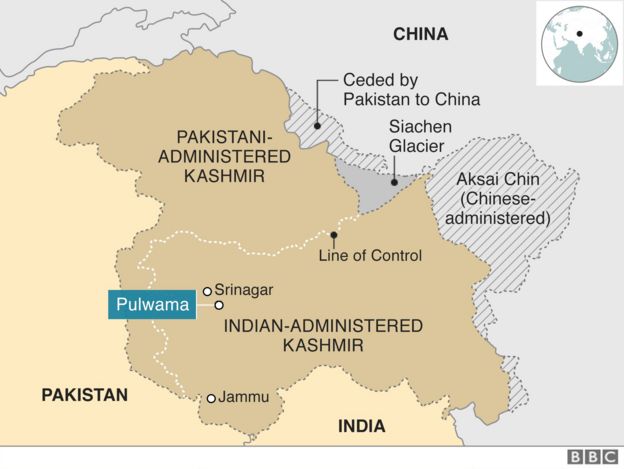
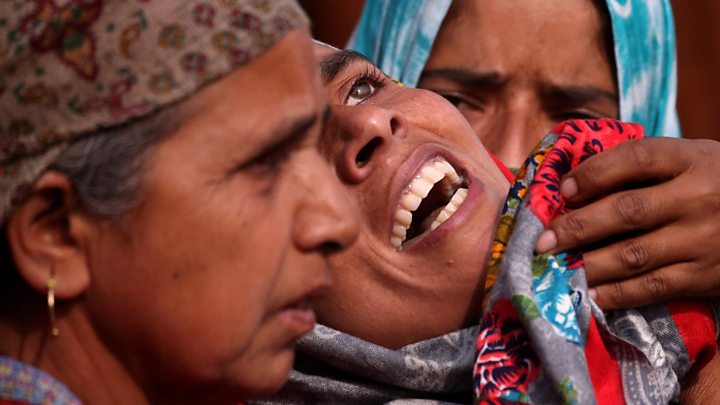
India has said it will ensure the “complete isolation” of Pakistan after a suicide bomber killed 46 soldiers in Indian-administered Kashmir.
Federal Minister Arun Jaitley said India would take “all possible diplomatic steps” to cut Pakistan off from the international community.
India accuses Pakistan of failing to act against the militant group which said it carried out the attack.
This is the deadliest attack to hit the disputed region in decades.
Both India and Pakistan claim all of Muslim-majority Kashmir but only control parts of it.
An insurgency has been ongoing in Indian-administered Kashmir since the late 1980s and there has been an uptick in violence in recent years.
How will India ‘punish’ Pakistan?
India says that Jaish-e-Mohammad, the group behind the attack, has long had sanctuary in Pakistan and accuses its neighbour of failing to crack down on it.
It has called for global sanctions against the group and has said it wants its leader, Masood Azhar, to be listed as a terrorist by the UN security council.
Although India has tried to do this several times in the past, its attempts were repeatedly blocked by China, an ally of Pakistan.
Mr Jaitley set out India’s determination to hold Pakistan to account when speaking to reporters after attending a security meeting early on Friday.
He also confirmed that India would revoke Most Favoured Nation status from Pakistan, a special trading privilege granted in 1996.
Pakistan said it was gravely concerned by the bombing but rejected allegations that it was in any way responsible.
But after Prime Minister Narendra Modi said in a speech that those behind the attack would pay a “heavy price”, many analysts expect more action from Delhi.
After a 2016 attack on an Indian army base that killed 19 soldiers, Delhi said it carried out a campaign of “surgical strikes” in Pakistan-administered Kashmir, across the de facto border. But a BBC investigation found little evidence militants had been hit.
However analysts say that even if the Indian government wants to go further this time, at the moment its options appear limited due to heavy snow across the region.
How did the attack unfold?
The bomber used a vehicle packed with explosives to ram into a convoy of 78 buses carrying Indian security forces on the heavily guarded Srinagar-Jammu highway about 20km (12 miles) from the capital, Srinagar.
“A car overtook the convoy and rammed into a bus,” a senior police official told BBC Urdu.
It stands as the deadliest militant attack on Indian forces in Kashmir since the insurgency began in 1989.
The bomber is reported to be Adil Dar, a high school dropout who left home in March 2018. He is believed to be between the ages of 19 and 21.
Soon after the attack Jaish-e-Mohammad released a video, which was then aired on the India Today TV channel. In it, a young man identified as Adil Dar spoke about what he described as atrocities against Kashmiri Muslims. He said he joined the banned group in 2018 and was eventually “assigned” the task of carrying out the attack in Pulwama.
He also said that by the time the video was released he would be in jannat (heaven).
Dar is one of many young Kashmiri men who have been radicalised in recent years. On Thursday, main opposition leader Rahul Gandhi said that the number of Kashmiri men joining militancy had risen from 88 in 2016 to 191 in 2018.
India has been accused of using brutal tactics to put down protests in Kashmir – with thousands of people sustaining eye injuries from pellet guns used by security forces.
What’s the reaction?
“We will give a befitting reply, our neighbour will not be allowed to de-stabilise us,” said Prime Minister Modi.
Mr Gandhi and two former Indian chief ministers of Jammu and Kashmir all condemned the attack and expressed their condolences.
The attack has also been widely condemned around the world, including by the US and the UN Secretary General.
The White House called on Pakistan to “end immediately the support and safe haven provided to all terrorist groups operating on its soil”.
Pakistan said it strongly rejected any attempts “to link the attack to Pakistan without investigations”.
What’s the background?
There have been at least 10 suicide attacks since 1989 but this is only the second suicide attack to use a car.
Prior to Thursday’s bombing, the deadliest attack on Indian security forces in Kashmir this century came in 2002, when militants killed at least 31 people at an army base in Kaluchak near Jammu, most of them civilians and relatives of soldiers.
The latest attack also follows a spike in violence in Kashmir that came about after Indian forces killed a popular militant, 22-year-old Burhan Wani, in 2016.
More than 500 people were killed in 2018 – including civilians, security forces and militants – the highest such toll in a decade.
India and Pakistan have fought three wars and a limited conflict since independence from Britain in 1947 – all but one were over Kashmir.
Who are Jaish-e-Mohammad?
Started by cleric Masood Azhar in 2000, the group has been blamed for attacks on Indian soil in the past, including one in 2001 on the parliament in Delhi which took India and Pakistan to the brink of war.
Most recently, the group was blamed for attacking an Indian air force base in 2016 near the border in Punjab state. Seven Indian security personnel and six militants were killed.
It has been designated a “terrorist” organisation by India, the UK, US and UN and has been banned in Pakistan since 2002.
However Masood Azhar remains at large and is reportedly based in the Bahawalpur area in Pakistan’s Punjab province.
India has demanded his extradition from Pakistan but Islamabad has refused, citing a lack of proof.
SHANGHAI, Feb. 13 (Xinhua) — China’s C919 large passenger aircraft project will see an overall accelerative test flight phase with the test fleet reaching six in 2019, according to its developer on Wednesday.
In 2019, three new airplanes will conduct their first test flights and then join the test fleet. The batch production ramp-up is also underway, said the Commercial Aircraft Corp. of China (COMAC).
The C919, China’s first self-developed trunk jetliner, conducted a successful maiden flight on May 5, 2017, at Shanghai Pudong International Airport.
By the end of 2018, three C919 airplanes have completed their test flights.
To date, another three are now in the final assembly, part assembly or large parts manufacturing phases respectively and are expected to join the fleet by the end of the year.
The flight test is a key verification phase for an aircraft model to validate its design and performance, especially the safety aspects.
The C919 airplanes will fly to various airports to undergo rigorous testing in complex weather conditions and a series of high-risk test flights, according to COMAC.
To date, COMAC has received 815 orders for the C919 from 28 customers worldwide.
Chinese Vice Premier Han Zheng, also a member of the Standing Committee of the Political Bureau of the Communist Party of China Central Committee, presides over a meeting of China National Committee for Biodiversity Conservation in Beijing, capital of China, Feb. 13, 2019. (Xinhua/Wang Ye)
BEIJING, Feb. 13 (Xinhua) — Chinese Vice Premier Han Zheng on Wednesday stressed solid efforts to further protect biological diversity.
Han, also a member of the Standing Committee of the Political Bureau of the Communist Party of China Central Committee, made the remarks when presiding over a meeting of China National Committee for Biodiversity Conservation.
Despite the substantial progress that has been made, more needs to be done to stop the current decline in biodiversity, he said.
In order to offer the highest level of protection for biodiversity, Han stressed establishing a management system for protected nature areas by establishing a network of national parks, nature reserves and parks.
He urged stepping up protection of wild fauna and flora with strengthened oversight and cracking down on related illegalities, adding that biodiversity should be supported with the optimal institutional and legal framework.
Han also called for making preparations to host the 15th meeting of the Conference of the Parties to the Convention on Biological Diversity in China next year.
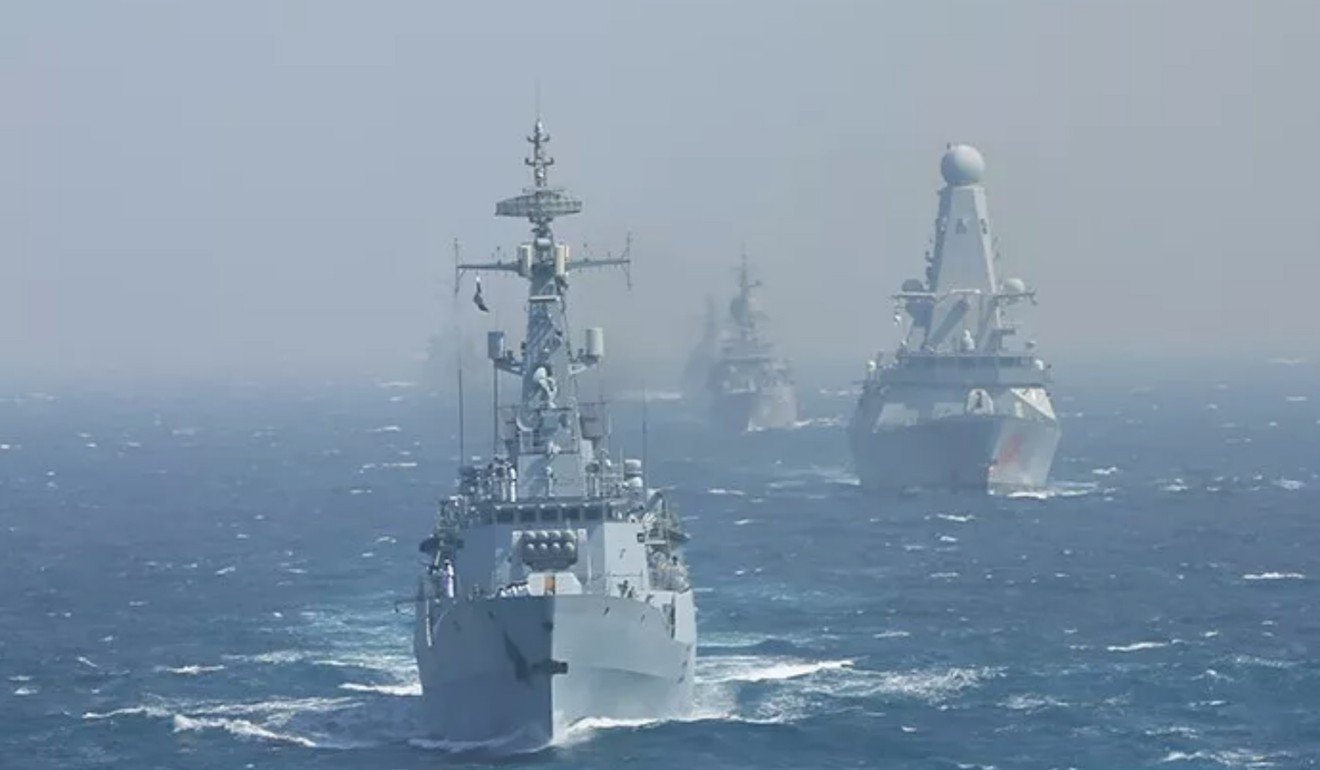
Pakistan’s multinational naval drill involving 46 nations has wrapped up in the Indian Ocean and, once again, India was not invited.
The Pakistan Navy has hosted the Aman – which means “peace” – exercises every two years since 2007 to promote regional cooperation and stability. India has never been invited, in a sign of the long history of strained ties between the neighbours.
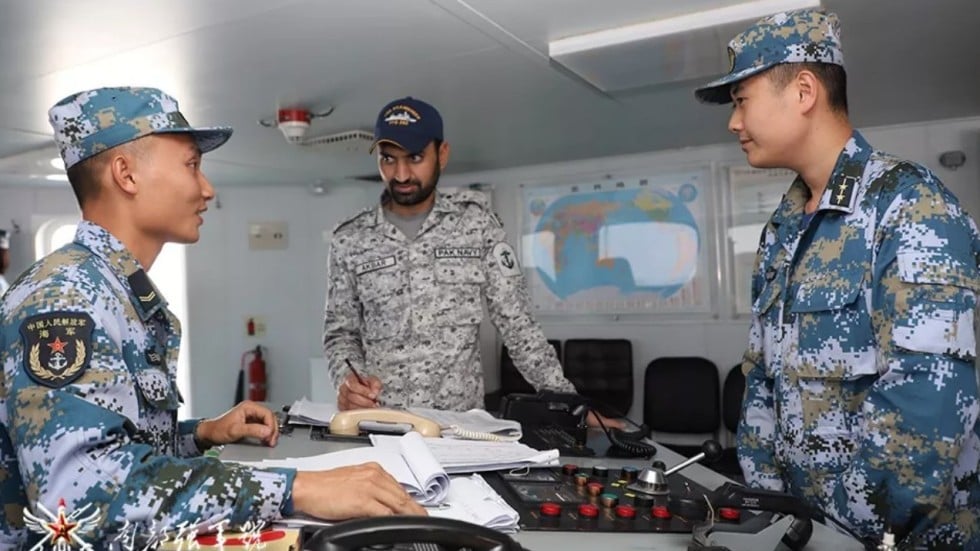
China, Japan and the United States were among the countries taking part in Aman-19, from February 8 to 12, which included maritime conferences, seminars and cross-ship visits, as well as 23 sea operations with main-gun firing, formation movement and replenishment-at-sea.
Shao Shuguang, commander of the People’s Liberation Army Navy’s 998 Fleet, was quoted on a Chinese military social media account as saying the exercise had strengthened mutual understanding and trust between the participating navies.
China sent one of its biggest warships, the Kunlun Shan amphibious landing vessel, to the exercise, signalling its close relationship with Pakistan and the key role both nations hold in the Indian Ocean, according to analysts.
“The Pakistan-China relationship is very strong, and this is one more illustration of the strength of the Pakistan-China relationship,” said Madhav Das Nalapat, honorary director of the department of geopolitics and international relations at Manipal University in India.
“China is also now becoming an important maritime power, especially in the Indo-Pacific. By aligning with China, Pakistan hopes to get the synergy of that.
“India by itself cannot have any primacy in the Indian Ocean. But along with the United States, the two countries together can have primacy in the Indian Ocean. India is positioning itself to be allied with the US, but has not yet reached there.”
Tridivesh Singh Maini, assistant professor with the Jindal School of International Affairs in India, said the exercises should be a cause for alarm for India. “They will keep an eye on what’s going on, but they don’t need to be too concerned,” he said.
The military exercise also centred on maritime security to protect strategic economic projects such as the China-Pakistan Economic Corridor, as well as sea lanes from the Persian Gulf.
The US$62 billion China-Pakistan Economic Corridor (CPEC) is designed to connect China’s far west region of Xinjiang with Gwadar Port in Pakistan via a network of motorways, railways, oil pipelines and trading hubs.
The project is expected to be finished by 2030, and will provide China with an important trading route to the Middle East and Africa.
“India has very strenuously objected to the name CPEC being given to the part that goes through Pakistan-occupied Kashmir, but so far nothing has been done,” Nalapat said.
Kashmir has long been a hotbed for competing territorial claims between India and Pakistan. The two countries have fought three wars against each other since their independence from Britain in 1947, and two of those conflicts have centred on the Kashmir territorial dispute.
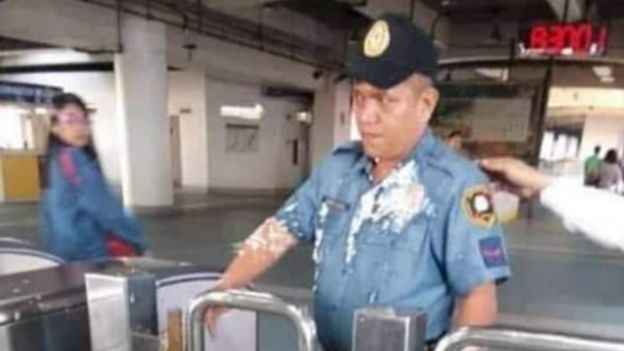
Image copyrightMANDALUYONG POLICE/FACEBOOKImage captionPhotos of Ms Zhang at a train station in Manila later went viral
A Chinese student who threw her cup of soybean pudding at a police officer in the Philippines has been charged with assault and disobedience.
Zhang Jiale was at a train station in Manila when she was stopped and told she had to finish her dessert before she could enter the station.
She responded by throwing the treat at the officer, and was later detained.
Ms Zhang could face deportation and eventual blacklisting from the Philippines.
‘I was in a bad mood’
The incident took place on 9 February at the Metro Rail Transit (MRT) in the Philippines’ capital of Manila.
The 23-year-old is currently a fashion design student in the Philippines.
According to local media outlets, she was stopped by police officer William Cristobal from going onto the MRT station in Manila as she was holding a cup of “taho” – a local dessert of soybean pudding.
Image copyrightJAY DIRECTOImage captionTaho is a popular sweet dessert in the Philippines
Bottled drinks, water and liquid substances are banned from MRT stations in Manila.
Mr Cristobal told her she would have to finish her dessert or throw it away before she would be allowed to enter the platform.
Image copyrightMANDALUYONG POLICE/FACEBOOKImage captionMr Cristobal had a cup of taho thrown at him
Ms Zhang was later charged by the Mandaluyong City prosecutor’s office for direct assault, disobedience to an agent of a person in authority and unjust vexation.
The Mandaluyong City Police told the BBC that they were unable to comment on what punishment Ms Zhang would face if found guilty.
She posted bail but was later detained again by the Bureau of Immigration on a separate charge of violating immigration laws. She now remains in detention in Manila.
Image copyrightMANDALUYONG POLICE/FACEBOOKImage captionMs Zhang was later brought in by Mandaluyong police
“The incident showed her disrespect towards persons of authority which in turn shows her disrespect to the country.”
Ms Sandoval said Zhang may face deportation and eventually be blacklisted from the country altogether, adding that the court case would run “independent” from her immigration case.
“If found deportable, we will wait for the resolution of her court case before implementing the deportation.”
STOCKHOLM (Reuters) – Sweden said on Thursday it had replaced its ambassador to China after her “incorrect” handling of unauthorized meetings intended to help free dissident bookseller Gui Minhai.
The Hong Kong-based, Swedish publisher of books critical of China’s communist leaders was abducted in Thailand in 2015 and later appeared in custody in mainland China.
His daughter Angela Gui said this week she had met ambassador Anna Lindstedt and two businessmen in Stockholm in January, where she was advised to keep quiet about her father’s case while negotiations were proceeding.
Sweden’s Foreign Ministry said that was not an official meeting, and Lindstedt had now returned to Sweden with an interim envoy sent to Beijing during an inquiry.
“Neither the Foreign Ministry nor the Foreign Minister were informed until after the event,” ministry spokesman Rasmus Eljanskog said in an emailed statement.
“As a consequence of the incorrect manner in which the said meetings were handled, we are now conducting an internal investigation.”
Gui, 54, became a Swedish citizen after studying there in the 1980s. After the abduction, he was released in October 2017, but his whereabouts were unclear until January last year when his daughter said he was seized by Chinese agents on a Beijing-bound train in the presence of Swedish diplomats.
China later confirmed it had detained him again.
In her blog, Angela Gui said Lindstedt invited her to Stockholm to meet two businessmen who could help secure her father’s release.
“OUTRAGEOUS SCANDAL”
“The businessman said, ‘you care about Anna (Lindstedt), right? If you keep talking to the media it’ll damage her career. You don’t want her to come to any harm, do you?’”, she said in the post on blog portal Medium.
“In order for this to happen (negotiations), I was told I needed to be quiet. I wasn’t to tell anyone about this, or say anything publicly about the case,” she added.
“I’m not going to be quiet in exchange for … an arbitrary promise that my father ‘might’ be released. Threats, verbal abuse, bribes, or flattery won’t change that.”
China’s Foreign Ministry declined comment, with spokeswoman Hua Chunying saying she knew nothing about Gui’s latest situation. On its website, China’s embassy in Stockholm said it had not authorized anyone to “engage” with Gui’s daughter.
“The Chinese side handles the Gui Minhai case in accordance with law and legal procedure,” it said.
Gui’s original abduction – along with four others in the Hong Kong book trade – fed worries about interference from Beijing despite guarantees of wide-ranging freedoms for the former British colony which returned to Chinese rule in 1997.
The four others have since returned to Hong Kong. The United States and European Union have urged Gui’s release.
Sweden said it was continuing to seek Gui’s freedom, as Lindstedt faced scathing criticism for what the leader of Sweden’s Left Party called an “outrageous scandal”.
“A Swedish ambassador has done the bidding of a dictatorship and tried to silence the daughter of a Swedish political prisoner in China,” Jonas Sjostedt told local TV.
“I don’t think we have seen a worse scandal in Swedish foreign administration for decades.”
Lindstedt could not immediately be reached for comment.
FRANKFURT (Reuters) – An escalation of tariff wars between China and the United States could dampen growth in international container shipping as operators pre-emptively brought forward business in the second half of last year, Germany’s Hapag Lloyd said.
“Many customers tried to get their goods through to the U.S. ahead of time in second half 2018, creating additional growth,” Rolf Habben Jansen, chief executive of the company that is the world’s fifth biggest shipping liner, told reporters in Hamburg on Tuesday.
“That points to some business having been brought forward,” he added.
However, with European activities being relatively stable, a direct crisis was not on the horizon, and only later this year would it be clear whether there would be sustained damage to business, he said.
Shipping is only slowly recovering from an oversupply of vessels that plunged the sector into an almost decade-long slump, forcing some players out of business and others to combine forces to seek economies of scale.
Elsewhere, freight rates were stable for the time being and further direction for the remainder of the year would emerge in the period from now up to the middle of May, Habben Jansen said.
On vessel supply, he said order books were low, representing 10 percent of the global fleet, with some scrapping activity being noticeable.
Preliminary results for 2018, due on Feb. 25, were likely to reflect growth in transport volumes above the market average and results should be “satisfactory”, Habben Jansen said.
The company in November said a later peak season in 2018 was likely to lift full year earnings.
It targets earnings before interest and tax (EBIT) in a corridor of 200-450 million euros ($226.4-509.4 million).
Hapag Lloyd is introducing a surcharge mechanism this year to account for cleaner fuel rules starting in 2020 under the watch of the International Maritime Organisation.
It was important to have “the right bunker clauses in all contracts”, Habben Jansen said.
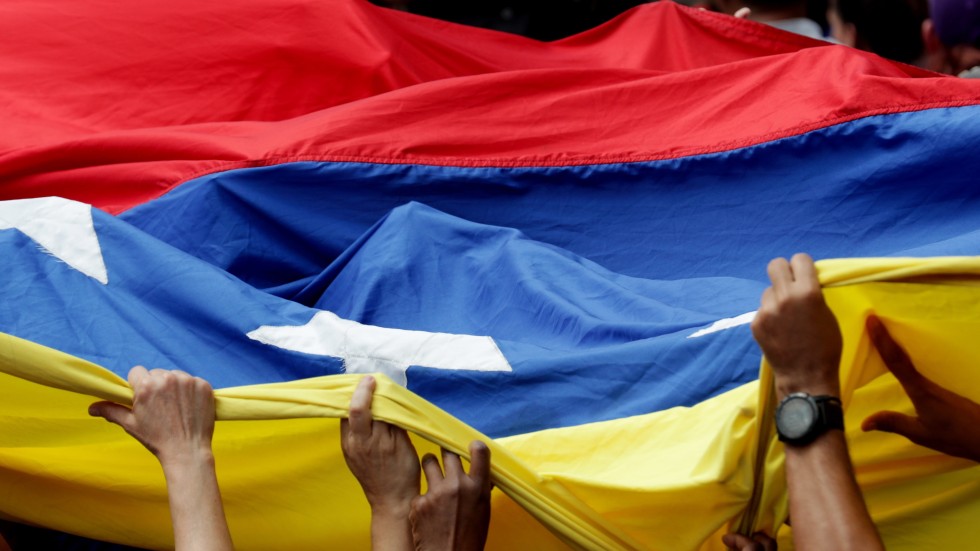
China has dismissed a newspaper report that its diplomats held talks with the political opposition in Venezuela to protect its investments in the Latin American country as “fake news”.
The Wall Street Journal said the diplomats, concerned about oil projects in Venezuela and almost US$20 billion that Caracas owes Beijing, had held talks in Washington with representatives of Juan Guaido, the opposition leader heading US-backed efforts to oust President Nicolas Maduro.
“In fact the report is false. It’s fake news,” Hua Chunying, spokeswoman for the Chinese Foreign Ministry, told reporters on Wednesday when asked about the article.
Venezuela’s “affairs” should be resolved via dialogue, Hua said, reiterating China’s previous stance.
Guaido invoked a constitutional provision to assume the presidency three weeks ago, arguing that Maduro’s re-election last year was a sham.
Most Western countries, including the United States, have recognised Guaido as Venezuela’s legitimate head of state, but Maduro retains the backing of Russia and China as well as control of state institutions including the military.
China has lent more than $50 billion to Venezuela through oil-for-loan agreements over the past decade, securing energy supplies for its fast-growing economy.
A change in government in Venezuela would favour the country’s two main foreign creditors, Russia and China, Guaido said in an interview last month.
NEW YORK, Feb. 12 (Xinhua) — Bill Gates, co-chair of the Bill & Melinda Gates Foundation, said Tuesday that exciting progress against poverty and disease around the world has been made in 2018, and China has been a major contributor to this progress.
In a video speech exclusively broadcast via Xinhua, Gates said over the past four decades, China lifted over 800 million people out of poverty and became the second largest economy in the world. Now, it’s stepping up its efforts to help solve some of the toughest challenges in the rest of the world.
He said during his recent visit to China, he attended the Reinvented Toilet Expo and once again saw China’s innovation capacity, with companies showcasing game-changing products that will benefit billions who today do not have access to safe sanitation.
He met Chinese scientists who are developing new drugs to tackle infectious diseases like tuberculosis that affect the poor, and talked with Chinese partners who are sharing lessons from China’s own development, so that African countries can make progress on vital priorities such as strengthening health systems and controlling deadly diseases like malaria, and also improving agricultural transformation.
“I believe in China’s ability to help hundreds of millions of young people in the world’s poorest countries fulfil their potential. As we usher in the New Year, our foundation is committed, as always, to supporting China in building a better future for all,” he said.
The video coincides with the release of Bill and Melinda Gates 2019 Annual Letter, in which they focussed on nine surprises and what can be learned from them.
“Some surprises help people see when the status quo needs to change. Others underscore that needed transformation is already happening,” he said.
“In 2018, we continued to see exciting progress against poverty and disease around the world. But as many nations turn inward, we risk losing sight of crucial global priorities, especially the need to invest in the health and education of young people,” Gates said.
He said one surprise they share in the letter is how much Africa is the world’s youngest continent. Between now and the end of the century, an increasing proportion of young people will come from countries on the African continent.
“Whether we ensure that these people (who) grow up healthily and well-educated and have the opportunity to thrive will determine the future trajectory of the whole globe,” he stressed. “We hope observations like these will prod readers to take action to accelerate the progress the world has been making.”







 CHINDIA ALERT: You'll be living in their world, very soon
COMMENTS: 3