Archive for ‘China alert’

08/01/2019

Senegal hopes to further advance cooperation with China: president

SENEGAL-DAKAR-CHINA-WANG YI-MEETING

Senegalese President Macky Sall (L) meets with Chinese State Councilor and Foreign Minister Wang Yi in Dakar, Senegal, on Jan. 6, 2019. (Xinhua/Wang Teng)

DAKAR, Jan. 7 (Xinhua) — The dynamic and practical relations between Senegal and China are a fine example for other countries, and Senegal hopes to further cooperation with China in various fields, President Macky Sall said on Sunday.

He made the remarks during talks with visiting Chinese State Councilor and Foreign Minister Wang Yi.

Sall extended congratulations upon the successful soft landing of China’s Chang’e-4 lunar probe on the far side of the moon, saying that his country is willing to strengthen cooperation with China in such fields as science, technology and innovation.

The successful Beijing Summit of the Forum on China-Africa Cooperation (FOCAC) in 2018 shows China’s strategic vision to develop China-Africa ties, the president said.

In the hearts of the African people, they know who is a true friend to them, Sall said, adding that Africa and China share a relationship featuring mutual respect, mutual benefit, win-win cooperation and common development.

Sall said Senegal is willing to push forward the comprehensive strategic cooperative partnership with China and will support China’s rightful stance on international affairs.

For his part, Wang said Chinese President Xi Jinping’s successful and historic visit to the West African country in 2018 has injected strong impetus into the two countries’ relations.

The solid political trust between China and Senegal consolidates the foundation for the two countries’ high-quality cooperation in various areas, Wang said.

China is willing to be an enduring and reliable partner for Senegal, the Chinese foreign minister said. He called for closer coordination between China and Senegal, the co-chairs of the FOCAC, to jointly implement the results of the summit and build a closer community with a shared future for China and Africa.

07/01/2019

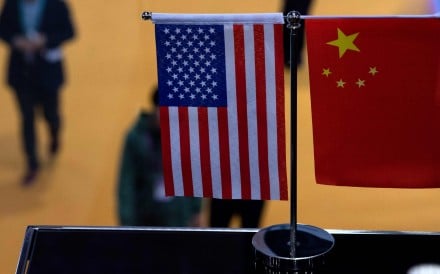
US warship sails near disputed Paracels in South China Sea as trade talks under way in Beijing

  • USS McCampbell sailed within 12 nautical miles of the island chain ‘to challenge excessive maritime claims’
  • But Pacific Fleet say ‘freedom of navigation’ operation was not about any one country or to make political statement
PUBLISHED : Monday, 07 January, 2019, 3:58pm
UPDATED : Monday, 07 January, 2019, 4:17pm
Reuters

A US guided-missile destroyer sailed near the disputed Paracel Islands in the South China Sea claimed by China as US officials join talks in Beijing during a truce in a bitter trade war.

The USS McCampbell carried out a “freedom of navigation” operation, sailing within 12 nautical miles of the Paracel Island chain, “to challenge excessive maritime claims”, Pacific Fleet spokeswoman Rachel McMarr said in a statement.

The operation was not about any one country or to make a political statement, McMarr said.

China lodged “stern representations” with the United States over the action, its foreign ministry said on Monday.

Ministry spokesman Lu Kang told a regular briefing that the US operation in the region violated China’s law and urged the United States to stop such actions.

It comes as trade talks between China and the United States are under way in Beijing, the first round of face-to-face discussions since both sides agreed to a 90-day truce in a trade war that has roiled international markets.

China claims almost all of the strategic waters, and frequently lambasts the United States and its allies for freedom of navigation naval operations near Chinese-occupied islands.

Vietnam, the Philippines, Brunei, Malaysia, Indonesia and Taiwan have competing claims in the region.

US President Donald Trump and Chinese President Xi Jinping in December agreed to put on hold a spiralling trade dispute of tit-for-tat import tariffs on hundreds of billions worth of goods.

Trump has imposed tariffs to pressure Beijing to change its practices on issues ranging from corporate espionage to market access and industrial subsidies. China has retaliated with tariffs of its own.

Fears have grown in recent months that the dispute is just one vector in a bilateral relationship that is fast cooling across the board, with top administration officials sharply criticising Beijing for everything from human rights abuses and its influence operations in the United States.

The two countries are also at odds over regional security issues, including Washington’s overtures to the self-ruled island of Taiwan, which Beijing claims as its own.

China and the United States have in the past repeatedly traded barbs over what Washington says is Beijing’s militarisation of the South China Sea by building military installations on artificial islands and reefs.

China defends its construction as necessary for self-defence and says that it is rather Washington that is responsible for ratcheting up tensions in the region by sending warships and military plans close to islands Beijing claims.

07/01/2019

China says UN officials can visit Xinjiang as long as they ‘avoid interfering in domestic matters’

United Nations experts are welcome to visit China’s Xinjiang as long as they follow the proper procedures, Beijing said on Monday amid concerns over its internment and de-radicalisation programme in the far west region.

The statement, made during a foreign ministry press briefing, came after selected foreign media recently visited the internment facilities as part of an official tour.

A Pakistan-based news outlet reported over the weekend that Xinjiang’s chairman Shohrat Zakir told the visiting journalists that UN experts were also welcome to visit, so they could “know the real situation”.

When asked if Beijing had invited UN experts to the region, foreign ministry spokesman Lu Kang said that all parties, including UN officials, were welcome as long as they respected the appropriate travel procedures, Reuters reported.

UN officials should also “avoid interfering in domestic matters”, and adopt an objective and neutral attitude, he said.

07/01/2019

More freight trains travel between Chongqing, Europe in 2018

CHONGQING, Jan. 6 (Xinhua) — A total of 1,442 freight trains traveled between Chongqing and European countries last year, an increase of 117 percent compared with the previous year, the YUXINOU (Chongqing) Logistics Co., Ltd announced on Saturday.

The number of trains traveling from Europe back to Chongqing reached 728, surpassing the number of outbound trains for the first time, according to the company.

Chongqing launched more cargo train routes last year, connecting the city with Belarus, Vietnam and Iran, said Qi Dan, general manager of the company.

Currently, the outbound train reaches over 30 European countries, and the goods brought back can be transferred to other Chinese cities and Southeast Asia, Qi said.

In May 2011, a rail route was opened between Chongqing and Duisburg in Germany, marking the start of the China-Europe cargo train service.

The varieties of goods transported via the trains have expanded to electronic products, cars, mechanical products, coffee beans and clothes, Qi added.

07/01/2019

China’s office workers consider further education, training essential

BEIJING, Jan. 6 (Xinhua) — More than 90 percent of China’s office workers consider on-the-job training and continuing education to be essential in improving their capabilities and skills, with nearly 73 percent saying they have further education and training plans, a survey has shown.

A total of 1,996 office workers were interviewed in the survey co-conducted by the China Youth Daily’s survey center. A total of 54.4 percent of the interviewees say for new, young hires the most desirable quality is “studiousness,” while 52.8 percent believe a sense of responsibility is a must.

Fifty-eight percent of the interviewees value excellent team management ability as the top factor for office workers to get a promotion or pay rise, followed by interpersonal communication skills (56.8 percent), project management ability (53.4 percent), professional skills (51.0 percent) and creativity (38.7 percent), according to the survey.

In the survey, 35.9 percent of the interviewees were from the so-called “first-tier” cities, a term usually referring to major cities of Beijing, Shanghai, Guangzhou and Shenzhen, and 49.8 percent from smaller “second-tier” cities.

07/01/2019

China Focus: Relay satellite Queqiao plays key role in exploring moon’s far side

CHINA-CHANG'E-LUNAR PROBE-ROVER YUTU-2-MOON FIRST FOOTPRINT (CN)

Photo provided by the China National Space Administration on Jan. 3, 2019 shows Yutu-2, China’s lunar rover, leaving a trace after touching the surface of the far side of the moon. China’s lunar rover, Yutu-2, or Jade Rabbit-2, left the first ever “footprint” from a human spacecraft on the far side of the moon late at night on Thursday, after it separated from the lander smoothly. The process was recorded by the camera on the lander and the images were sent back to the Earth via the relay satellite “Queqiao”, the China National Space Administration (CNSA) announced. Launched on Dec. 8, 2018, China’s Chang’e-4 lunar probe, comprising a lander and a rover, landed on the far side of the moon on Thursday morning. (Xinhua)

BEIJING, Jan. 6 (Xinhua) — China’s Chang’e-4 probe has started the exploration on the far side of the moon thanks to the relay satellite that provides a communication link with ground control.

The relay satellite, named Queqiao, meaning Magpie Bridge, after a Chinese legend, was launched on May 21, 2018, and became the first communication satellite operating in the halo orbit around the second Lagrangian (L2) point of the earth-moon system, nearly 500,000 km from the earth.

The maximum distance between the satellite and the Chang’e-4 probe on the far side of the moon is 79,000 km. The satellite processes data from the probe and transmits it to earth, said Sun Ji, a designer of the satellite from the China Academy of Space Technology.

The satellite can stay in its orbit for a long time due to its relatively low fuel consumption, as the earth’s and moon’s gravity balances its orbital motion, said Zhang Lihua, chief designer of the satellite.

While in orbit, it can “see” both the earth and the far side of the moon. From earth, the orbit looks like a halo on the moon, said Zhang.

The concept of deploying a relay satellite in the halo orbit was first put forward by U.S. space experts in the 1960s, but was realized by Chinese space engineers.

“We will let Queqiao work as long as possible. It could also provide communication for probes from other countries if they intend to explore the moon’s far side within the lifetime of the satellite,” said Ye Peijian, an academician of the Chinese Academy of Sciences and a senior space expert.

“And that will be a Chinese contribution made to the world,” Ye said.

The relay satellite will also be used for scientific and technological experiments.

It has a low-frequency radio spectrometer, jointly developed by Dutch and Chinese scientists, to help astronomers “listen” to the deeper reaches of the cosmos.

It also carries a reflector developed by the Sun Yat-sen University, in south China’s Guangdong Province, to conduct the world’s longest laser-ranging test between the satellite and an observatory on the ground.

Researchers hope to use the cameras on the satellite to capture asteroids hitting the far side of the moon, said Sun Ji.

“It’s extremely difficult, but we hope to try,” Sun said.

To control the cost of the Chang’e-4 mission, the relay satellite was designed to be relatively small, weighing about 400 kg.

Chinese experts designed several antennas for it, including one shaped like an umbrella with a diameter of almost 5 meters.

“We learned from textile technologists and watchmakers in the development of the metal mesh and ribs on the antenna,” Zhang said.

“It must endure temperature changes of more than 300 degrees centigrade. We conducted countless experiments for that.”

His team had just 30 months to develop the satellite, putting them under tremendous pressure.

To promote public interest in space exploration, the China National Space Administration invited people to write down their wishes for lunar and space exploration, and the relay satellite carries the names of tens of thousands of participants and their messages.

07/01/2019

China’s express delivery sector expands fast in 2018

BEIJING, Jan. 6 (Xinhua) — China’s express delivery sector has handled 50.5 billion parcels in 2018, up 25.8 percent year on year, data from the State Post Bureau (SPB) showed.

Gross business revenue of the sector increased 21.2 percent year on year to hit 601 billion yuan (about 88 billion U.S. dollars) last year, according to the SPB.

The express delivery sector supported annual e-commerce sales of nearly 6.9 trillion yuan and cross-border e-commerce businesses of over 350 billion yuan while creating more than 200,000 new jobs in 2018.

“There are about 100 billion parcel deliveries worldwide each year. China accounts for half of them,” said Ma Junsheng, head of the SPB.

In rural areas, 92.4 percent of towns have been covered by express services, said Ma.

A total of 12 billion parcels were delivered in rural areas last year, supporting a total value of more than 700 billion yuan of goods transactions between urban and rural areas.

07/01/2019

China-Gambia relations see rapid development on all fronts: Chinese FM

GAMBIA-BANJUL-WANG YI-TANGARA-MEETING

Chinese State Councilor and Foreign Minister Wang Yi (L) meets with his Gambian counterpart Mamadou Tangara in Banjul, capital of Gambia, Jan. 5, 2019. (Xinhua/Lyu Shuai)

BANJUL, Jan. 5 (Xinhua) — China and Gambia have seen rapid development on all fronts in their relations since the resumption of diplomatic ties more than two years ago, said visiting Chinese State Councilor and Foreign Minister Wang Yi on Saturday.

During the meeting with his Gambian counterpart Mamadou Tangara, Wang said China and Gambia have restored exchanges in various fields and achieved notable results in cooperation on major infrastructure projects, enabling the bilateral friendship to take root among the two peoples.

Facts have proved that resuming bilateral diplomatic relations fully conforms with the fundamental interests of Gambia and its people, the universal consensus on the one-China principle and the common aspiration for unity and cooperation by the Chinese and African peoples, Wang said.

The Chinese foreign minister said Gambia’s reaffirmed commitment to the one-China policy will help lay a firm political foundation for a comprehensive and healthy development of bilateral ties. He said the two countries should further increase mutual trust as well as mutual support on issues concerning each other’s core interests.

China and Gambia should step up communication and coordination to implement the major consensus between leaders of the two countries and the results from the Forum on China-Africa Cooperation (FOCAC) Beijing Summit, Wang said.

In this respect, he suggested that Gambia combine the China-Africa cooperation initiatives proposed at the FOCAC Beijing Summit with its national development plans and find priorities, so as to push for progress in various fields of bilateral cooperation to benefit both sides.

Wang noted that China-Africa cooperation in essence is South-South cooperation, and the China-Africa efforts towards common development and prosperity will help promote equality and peace in the world.

China is willing to do everything within its power to help with the economic and social development in Gambia and other African countries based on Africa’s realities and actual needs, he said.

For his part, Tangara thanked China for its help in Gambia’s economic development and improvement of people’s livelihood while voicing the hope that Wang’s visit would lead to a closer bilateral relationship.

The Gambian foreign minister said Gambia firmly adheres to the one-China policy, and will support China on various international occasions as well as on issues of core interest, pushing further development of bilateral ties on the right track.

He said Gambia is ready to strengthen communication with China at various levels, enhance mutual trust and promote cooperation in fields like economy, energy and technology.

Tangara said the major cooperation initiatives proposed at the FOCAC Beijing Summit showed China truly addresses the concerns of African countries and supports their efforts to enhance their own capabilities in national development.

While praising China as a leader in defending multilateralism and the interests of developing countries amid the headwinds of unilateralism in the world, the minister said his country is willing to strengthen coordination and cooperation with China in various international affairs.

06/01/2019

China says pace of Xinjiang ‘education’ will slow, but defends camps

URUMQI/KASHGAR/HOTAN, China (Reuters) – China will not back down on what it sees as a highly successful de-radicalisation programme in Xinjiang that has attracted global concern, but fewer people will be sent through, officials said last week in allowing rare media access there.

January 4, 2019. PREUTERS/Ben Blanchard

Beijing has faced an outcry from activists, scholars, foreign governments and U.N. rights experts over what they call mass detentions and strict surveillance of the mostly Muslim Uighur minority and other Muslim groups who call Xinjiang home.

In August, a U.N. human rights panel said it had received credible reports that a million or more Uighurs and other minorities in the far western region are being held in what resembles a “massive internment camp.”

Last week, the government organised a visit to three such facilities, which it calls vocational education training centres, for a small group of foreign reporters, including Reuters.

In recent days, a similar visit was arranged for diplomats from 12 non-Western countries, including Russia, Indonesia, India, Thailand, Kazakhstan, according to Xinjiang officials and foreign diplomats.

Senior officials, including Shohrat Zakir, Xinjiang’s governor and the region’s most senior Uighur, dismissed what they called “slanderous lies” about the facilities.

Speaking in Xinjiang’s capital, Urumqi, Shohrat Zakir said the centres had been “extremely effective” in reducing extremism by teaching residents about the law and helping them learn Mandarin.

“As time goes by, the people in the education training mechanism will be fewer and fewer,” he said.

Shohrat Zakir said he could not say exactly how many people were in the facilities.

“One million people, this number is rather frightening. One million people in the education mechanism – that’s not realistic. That’s purely a rumour,” he said, stressing they were temporary educational facilities.

Dilxat Raxit, spokesman for the Munich-based exile group the World Uyghur Congress, told Reuters the Chinese government was using extremism as an excuse to lock people up.

“What they are trying to do is destroy Uighur identity,” he said.

INSIDE THE CENTRES

Human rights groups and former detainees have said that conditions in the camps are poor, with inmates subject to abuse. They said detainees did not receive vocational training.

Seeking to counter that narrative, the government took reporters to three centres, in Kashgar, Hotan and Karakax, all in the heavily Uighur-populated southern part of Xinjiang, where much of the violence has taken place in recent years.

In one class reporters were allowed to briefly visit, a teacher explained in Mandarin that not allowing singing or dancing at a wedding or crying at a funeral are signs of extremist thought.

The students took notes, pausing to look up as reporters and officials entered the room. Some smiled awkwardly. Others just looked down at their books. All were Uighur. None appeared to have been mistreated.

In another class, residents read a Chinese lesson in their textbook entitled “Our motherland is so vast.”

There was plenty of singing and dancing in other rooms reporters visited, including a lively rendition in English of “If You’re Happy and You Know It, Clap Your Hands,” that seemed to have been put on especially for the visit.

Several residents agreed to speak briefly to reporters, though all in the presence of government officials. Reporters were closely chaperoned at all times.

All the interviewees said they were there of their own accord after learning of the centres from local officials.

Many answers used extremely similar language about being “infected with extremist thought.”

Pazalaibutuyi, 26, told reporters at the Hotan centre that five years ago she had attended an illegal religious gathering at a neighbour’s house, where they were taught that women should cover their faces.

“At that time I was infected with extremist thought so I wore a face veil,” she said, speaking clear Mandarin after a year at the centre.

Government officials came to her village to talk to the villagers and after that, she said, “I discovered my mistake.”

In the Kashgar centre, Osmanjan, who declined to give his age, said he had incited ethnic hatred, so village police suggested he go for re-education.

“Under the influence of extremist thought, when non-Muslims came to my shop I was unwilling to serve them,” he said in unsteady Mandarin.

It was not possible to independently verify their stories. All the interviewees said they had not been forewarned of the visit.

Residents said they can “graduate” when they are judged to have reached a certain level with their Mandarin, de-radicalisation and legal knowledge. They are allowed phone calls with family members, but no cell phones. They are provided halal food.

Only minimal security was visible at any of the three centres.

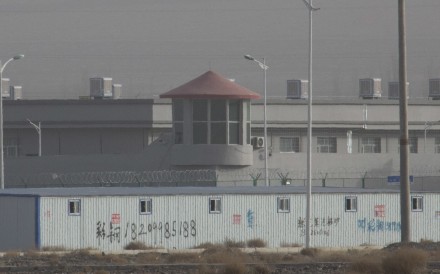
Reuters last year reported on conditions inside the camps and took pictures of guard towers and barbed wire surrounding some. (tinyurl.com/y9zzouss)

‘A GOOD LIFE’

The situation in Xinjiang has stirred concern in Western capitals.

At least 15 Western ambassadors wrote to Xinjiang’s top official, Communist Party chief Chen Quanguo, late last year seeking a meeting to discuss their concerns. [nL4N1XQ2UR] Chen did not meet reporters on the trip.

Diplomatic sources told Reuters the ambassadors did not get a response.

The United States has said it is considering sanctions against Chen, other officials and Chinese companies linked to allegations of rights abuses in Xinjiang. [nL2N1VZ1WU]

Maya Wang, a Hong Kong-based Human Rights Watch researcher, said international pressure needs to increase.

“The fact that they feel they need to put on a show tour is a sign that this pressure is working,” she told Reuters.

Both Wang and Dilxat Raxit noted that the tight control over the visits and interviews showed China’s concern about their true nature.

Over a lunch of lamb kebabs, horse meat and naan, Urumqi party boss Xu Hairong told Reuters that “all of the reports are fake” when it comes to foreign coverage of Xinjiang. He dismissed worries about U.S. sanctions.

“We, including Party Secretary Chen, are working all out for the people of Xinjiang to have a good life,” Xu said. “If the U.S. won’t allow me to go, then I don’t want to go there. That’s the truth.”

The government says its goal is for Uighurs to become part of mainstream Chinese society. Shohrat Zakir said in parts of southern Xinjiang people couldn’t even say hello in Mandarin.

Officials point to a lack of violence in the past two years as evidence of programme’s success.

Urumqi’s Exhibition on Major Violent Terrorist Attack Cases in Xinjiang, normally closed to the public, displays graphic images and footage from what the government says are attacks.

“Only with a deeper understanding of the past can you understand the measures we have taken today,” Shi Lei, Xinjiang’s Communist Party committee deputy propaganda chief, told reporters.

One member of the Chinese armed forces, who has served in Kashgar, said the security situation had improved dramatically.

“You can’t imagine what it was like there in 2014 and 2015. There were attacks all the time, bombings, stabbings. It was chaos,” he said, speaking on condition of anonymity because he was not authorised to speak to the media.

In Kashgar, Hotan and Karakax, petrol stations are still surrounded by barbed wire and heavy security barriers. Residential areas are dotted with small police stations.

The stations have broader public service in mind, Zhang Yi, commander of one of the stations, told reporters. The one reporters visited provided pamphlets on a wide range of subjects, including how to legally change your sex.

Kashgar deputy party chief Zark Zurdun, a Uighur from Ghulja in northern Xinjiang, where many ethnic Kazakhs live, told Reuters that “stability is the best human right.”

“The West should learn from us” on how to beat extremism, he said, dismissing concerns Uighur culture was under attack.

“Did Kazakh vanish in the USSR when they all had to learn Russian?” he said. “No. So Uighur won’t vanish here.”

Source: Reuters

06/01/2019

Chinese police pull the plug on Dyson hairdryer pirates

  • Two manufacturing bases raided and 36 people arrested in joint action across southern and eastern China
  • Company made US$1.5 million in sophisticated operation
PUBLISHED : Sunday, 06 January, 2019, 6:29pm
UPDATED : Sunday, 06 January, 2019, 6:29pm

A Chinese company which made and sold fakes of a popular British brand of hairdryers has been shut down by police and 36 people have been placed in criminal detention.

About 400 counterfeit Dyson hairdryers, 1,500 half-finished products and 200,000 components were seized in a joint action carried out by officers from Shanghai, Guangdong and Fujian in the middle of December.

The fakes were selling for as low as half the price of the genuine hairdryers, according to Shanghai Public Security, which said two manufacturing bases were raided in the operation.

The investigation began in August last year after police received tip-offs from consumers who complained after buying the fake hairdryers from major shopping websites.

Police said the ringleaders were a man, surnamed Yang, and his wife who had established a company in the southern province of Guangdong a year ago and bought some Dyson products under the guise of a legitimate trading businesInstead, they hired technicians to dismantle and analyse the appliances and established their own assembly lines for the copycat plan.

The couple also hired workers and set up departments in component procurement, production, storage and logistics, and wholesale and retail businesses.

Their fake hairdryers were sold at discounts of between 10-50 per cent of the 2,990 yuan (US$435) selling price for the Dyson product on the mainland.

Police found the pirated appliances on sale in regions like Shanghai, Guangdong, Fujian, Zhejiang and Jiangsu, with the company making more than 10 million yuan (US$1.5 million).

According to police, the fakes were hard to identify by visual inspection alone but were not up to standard and could destroy users’ hair, as well as causing a fire risk.

The police authority said Shanghai police had investigated 500 cases involving intellectual property right infringement throughout 2018.

Source: SCMP

Law of Unintended Consequences

continuously updated blog about China & India

ChiaHou's Book Reviews

continuously updated blog about China & India

What's wrong with the world; and its economy

continuously updated blog about China & India