Archive for ‘India alert’

29/08/2012

* India riots: Court convicts 32 over Gujarat killings

BBC News: “A court in India has convicted 32 people for involvement in the 2002 religious riots in Gujarat state.

Rioting in Gujarat in 2002

The court acquitted 29 others in the case known as the Naroda Patiya massacre.

Among those convicted were former minister Maya Kodnani and Babu Bajrangi, a former leader of the militant Hindu group Bajrang Dal.

A total of 95 people were killed in the rioting on 28 February in the Naroda Patiya area of Ahmedabad city.

Most of the convicted, including Ms Kodnani and Mr Bajrangi, were found guilty of murder and criminal conspiracy, reports said.

The trial began in August 2009 and charges were framed against 62 people. One of the accused died during the trial.

Ms Kodnani was the junior minister for women and child development in the Gujarat government when she was arrested in connection with the incident in 2009.

More than 1,000 people, mostly Muslims, were killed when riots erupted after 60 Hindu pilgrims died in a train fire in 2002.

It was one of India’s worst outbreaks of religious violence in recent years.”

via BBC News – India riots: Court convicts 32 over Gujarat killings.

See also: Indian ethnic – religious tensions

28/08/2012

* One killed in fresh Assam violence

BBC News: “One man has been killed and five others have been injured in fresh violence in India’s Assam state, police said.

An Indian riot refugee woman sleeps as her child reads a book at a relief camp during India’s ruling Congress party President Sonia Gandhi visit in Deborgaon in Kokrajhar, India, Monday, Aug. 13, 2012

In the first incident, a man was killed and four others were wounded, while the second incident left one man injured. Both clashes occurred in Kokrajhar.

At least 87 people have died in fighting between indigenous Bodo tribes and Muslim settlers in Assam since last month.

More than 300,000 people fled their homes after the fighting.

Most of them are still living in relief camps.

There has been tension between indigenous groups and Muslim Bengali migrants in Assam for many years.

Last week, police arrested a local politician, Pradeep Brahma, for his alleged involvement in the recent ethnic violence.

Kokrajhar, Dhubri and Chirang were some of the districts worst affected by the clashes.

An indefinite curfew has been enforced in Kokrajhar and the army has marched through the streets of some of the troubled neighbourhoods.”

via BBC News – India: One killed in fresh Assam violence.

27/08/2012

* Is a Youth Revolution Brewing in India?

NY Times: “Among the world’s major countries, India has the youngest population, and the oldest leaders. A startling four-decade gap between the median age of India’s people and that of its government officials most recently reared its head with a heavy-handed and widely-maligned crackdown on free speech on the Internet.

A protester jumped over a police barricade during a demonstration near the prime minister's residence, led by India Against Corruption member Arvind Kejriwal, in New Delhi, Aug. 26, 2012.

History shows us that generations with an exceptionally high youth ratio create political movements that shake up their systems and leave a profound impact on history. America’s baby boomers – the 79 million people born between 1946 and 1964 – led the charge in the civil rights movement and the sexual revolution.

In China, out of the stormy Cultural Revolution emerged the country’s current crop of leaders, who have taken it to remarkable heights of prosperity and power. More recently, in the Arab Spring there is evidence of a strong correlation between the ratio of the population under 25 and the urge to overthrow unresponsive governments.

Whether India will follow the same path may become apparent in the very near future.

There are some signs that the beginnings of India’s own youth revolt are stirring – the “India Against Corruption” protests, which swept Delhi on Sunday, involved a about a thousand protesters, mostly young men, who broke through barricades meant to protect their elder politicians’ homes and battled with the police.

The India Against Corruption political movement unleashes youth disenchantment against the establishment, using new means of communication like Twitter and Facebook as its fuel. Still, it is headed by an iconic 75-year-old Gandhian – call it shades of a youth movement, with the structure of a traditional Indian family.

India now has around 600 million people who are younger than 25, and nearly 70 percent of its 1.2 billion population is under 40. It is an unprecedented demographic condition in the history of modern India, and in absolute numbers it is unprecedented anywhere in the world. It also comes at a time when much of the developed world and China have aging populations.

The country’s median age of 25 is in sharp contrast to the average age of its cabinet ministers, 65, which is a far bigger gap than in any other country – Brazil and China are next with age gaps just under 30 years. In the United States the gap is 23 years, and in Germany it is less than 10.

Beyond the Internet crackdown, there are other disturbing signs that the age and thought gap between the majority of India’s citizens and their aging leaders is stifling India’s teeming youth.

We see this at play when the chairwoman of the National Commission for Women tells women to “be careful about how you dress,” after a young woman was sexually assaulted in public by a group of men in Guwahati.

We see it when a police officer wielding a hockey stick cracks down on Mumbai’s buzzing night life, and is defended by the state’s home minister. We see it in the inability to overhaul the country’s jaded bureaucracy that stifles fresh ideas.

Most tellingly, perhaps, we see it in the lack of political will to open up key sectors of the economy like retail to foreign competition, under the populist pretense of protecting existing jobs. This protectionism is far removed from the economic realities of the past two decades – India has been one of the clear winners of globalization. But as one writer put it, “The decision-makers in the Indian political class are still stuck in the mental framework of the 1970s, which is when they were blooded in politics.””

via Is a Youth Revolution Brewing in India? – NYTimes.com.

27/08/2012

* China keen to boost mutual investments with India

The Hindu: “Calls to reshape ‘increasingly unsustainable’ trade model amid growing imbalance

China has called for a move to boost mutual investments with India as a measure to strengthen trade ties and reshape what officials have acknowledged is an increasingly unbalanced and strained business relationship, as trade talks between both countries begin in New Delhi on Monday.

The Chinese Commerce Ministry told The Hindu in a written interview ahead of the visit of Commerce Minister Chen Deming, who will lead the Chinese delegation in Monday’s talks, that the relatively strong foreign exchange reserves of both countries and an increasing desire of businesses to go overseas should drive the future of trade ties.

“There is great space for China and India to cooperate in mutual investment,” the Commerce Ministry said.

Both countries will hold the ninth round of the Joint Economic Group (JEG) dialogue in New Delhi on Monday. India’s trade deficit and Chinese concerns about the investment environment in India, particularly in the power and telecom sectors, is expected to be at the focus of the talks.

In an apparent attempt to ease concerns about strains in the trade relationship, Chinese officials have suggested a new approach. Boosting mutual investments would be one way of shifting the relationship from the current model. Trade over the past decade, which has grown from a few billion dollars to US$ 74 billion last year when China became India’s biggest trade partner, has largely been driven by Chinese appetite for Indian ores and Indian need for Chinese machinery.”

via The Hindu : News / National : China keen to boost mutual investments with India.

26/08/2012

* India coal scandal: Hundreds protest against PM Singh

BBC News: “Police in the Indian capital Delhi have baton-charged hundreds of anti-corruption protesters angered by the government’s sale of coalfields without open bidding.

An auditors’ report last week said the mis-selling cost India $33bn (£20bn).

Police also used water cannon and tear gas to turn back protesters trying to reach the house of Indian Prime Minister Manmohan Singh

Opposition calls for Mr Singh to resign have deadlocked parliament.

In the report last week, government auditors said private companies had made “windfall gains” by the allocation of coal mining rights from 2005-9 in a process that “lacked transparency”. India is one of the largest producers of coal in the world.

The main opposition Bharatiya Janata Party (BJP) says Mr Singh should quit because he was head of the coal ministry at the time of the sales.

The call has left parliament deadlocked since Tuesday. The Congress-led government insists there was no wrongdoing.”

via BBC News – India coal scandal: Hundreds protest against PM Singh.

12/08/2012

* Cleaning up after Pranab Mukherjee leaves finance ministry

Reuters:”Pranab Mukherjee’s reign as Indian finance minister was stained by economic meddling and political favouritism. Now he is gone, and some of his excesses are being reversed. An enemy has been pardoned and a friend has not received a plum job. This could be the beginning of a better era.

Imagine if Tim Geithner had been accused of putting pressure on the securities regulator to protect some political friends. The U.S. Treasury Secretary would be in serious hot water. But when the former number two at the Securities and Exchange Board of India (SEBI) accused Mukherjee of something similar – putting pressure on the SEBI chairman to “manage” some high-profile corporate cases – there was little attention.

Rather, in a move that was all too typical of the Mukherjee regime, the finance ministry countered with allegations against the whistle-blower, K.M. Abraham. But the post-Mukherjee government is different. Prime Minister Manmohan Singh has cleared Abraham.

In another development, the board of UTI, Asia’s oldest asset management company, is set to appoint a new chief executive. The position has been vacant for the past year and a half as the finance minister put pressure on the company, 26 percent owned by U.S. fund manager T. Rowe Price, to appoint the brother of one of Mukherjee’s most powerful advisors. The former political favourite, Jitesh Khosla, hasn’t made the new shortlist.

India’s new finance minister, P. Chidambaram, is also shaking up his own team. On Sunday he announced that the top officials in the revenue and expenditure departments would swap jobs. That seems to be a signal of a shift in the tax department’s priorities. It might pave the way for a reversal of Mukherjee’s damaging retrospective tax grabs.”

via India Insight.

12/08/2012

* Pakistani Hindu pilgrims allowed to cross into India after detention

BBC News: “Pakistan officials have allowed a group of Hindu pilgrims who were detained at the border to cross into India.

More than 200 Pakistani Hindus were held at the Wagah crossing near Lahore after local media reported that they intended to emigrate.

Although the group had valid pilgrimage visas, it was rumoured they planned to remain in India because of growing attacks against minorities in Pakistan.

They were allowed to pass after they assured officials they would return.

A spokesperson for the pilgrims, Santosh Puri, told the BBC the group had assured the authorities that “this is a pilgrimage” and no one intends to emigrate.

Pakistani rights activists say dozens of Pakistani Hindu families have moved to India to escape killings, abductions and forced conversions in recent years.

According to Indian officials, Pakistani Hindus have often entered India on visit visas, only to settle there permanently.”

via BBC News – Pakistani Hindu pilgrims allowed to cross into India after detention.

10/08/2012

* India can win gold for corruption, Guru Ramdev says

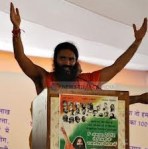
Times of India: “If the Olympics gave a medal for corruption, India could have won a gold, yoga guru Baba Ramdev said on Friday as thousands poured into the Ramlila Grounds here for day two of his fast.

Calling on all of India to support his agitation against black money and graft, Ramdev said: “India could have won gold if there was a competition for corruption in the Olympics.

The crowds, which had started gathering since 8am, cheered and clapped enthusiastically, to which Ramdev said, “This is not a matter to applaud.””

via India can win gold for corruption, Ramdev says – The Times of India.

Both India and China are in the middling levels of Transparency International index of corruption, though amongst the top of the larger economies.  However, whereas China appears to be trying to tackle it at the national level, it is far from obvious that India is trying to do so.

See also:

09/08/2012

* Agni-II successfully test-fired

the Hindu: “India successfully test-fired nuclear weapons capable strategic ballistic missile, Agni-II, for its full range of more than 2,000 km from Wheeler Island off the Odisha Coast on Thursday.

The launch was carried out by Strategic Force Command personnel from a mobile launcher. The Intermediate Range Ballistic Missile, which carried a dummy payload of 1,000 kg, was fired at 8.46 a.m. from a rail mobile launcher. Agni-II has already been inducted into the services and belongs to the group of Agni class of strategic missiles which form the bulwark of India”s nuclear deterrence policy.

Top Defence Research and Development Organisation (DRDO) officials told The Hindu from Wheeler Island that the two-stage solid-propelled missile followed a text-book trajectory and zeroed in on to a pre-determined target point in the Bay of Bengal with a single to two digit accuracy after a 700-second flight.

They said the re-entry systems worked well and all other systems functioned perfectly.The electro-optical systems and telemetry stations tracked and monitored the missile’s flight path. Two ships stationed in the vicinity of the target point witnessed the terminal event.

The SFC personnel conducted the trial as part of regular user exercise. Agni-II is 20 metres long and capable of carrying a nuclear warhead weighing one ton.

It was the third success in a row for Agni variants following the launch of Agni-V in April and Agni-1 recently.”

via The Hindu : News / National : Agni-II successfully test-fired.

09/08/2012

* Indian Govt to pick up medical tab for poor

Times of India: “It’s raining sops for the poor. The government is making treatment of people below the poverty line suffering from mental disorders and diabetes free at government or public super speciality hospitals like AIIMS.

Yesterday, TOI had reported the government’s plan to gift cell phones to the poor.

In the maiden endorsement of India’s swelling burden of patients suffering from mental disorders, the ministry has included it under the Rashtriya Arogya Nidhi (RAN) — the scheme that till now provided financial assistance to only those BPL patients suffering from major life-threatening diseases like cancer.

All BPL patients suffering from mental disorders like depression, anxiety, adjustment and personality disorders will be given a free one-time grant of upto Rs 1 lakh for treatment.

In cases where the quantum of financial assistance is likely to exceed Rs 1.5 lakh, they will be referred to an expert committee headed by the DGHS for consideration.”

via Govt to pick up medical tab for poor – The Times of India.

Law of Unintended Consequences

continuously updated blog about China & India

ChiaHou's Book Reviews

continuously updated blog about China & India

What's wrong with the world; and its economy

continuously updated blog about China & India