Archive for ‘India alert’

16/06/2016

India Makes It Easier for Local Airlines to Fly Overseas – India Real Time – WSJ

India’s federal government on Wednesday relaxed the criteria for domestic airlines to fly overseas as part of a new civil-aviation policy aimed at driving growth in the sector.

Local carriers will no longer be restricted by the number of years they have operated domestically to fly abroad, Civil Aviation Minister Ashok Gajapathi Raju said.

Until now, they were required to complete five years of domestic service and have at least 20 planes in operation before being permitted to fly overseas. The government scrapped the time requirement but carriers must still reach the same criterion for planes or deploy 20% of their fleet on domestic routes.

Newer carriers such AirAsia India Pvt.—the local joint venture of Malaysia-based AirAsia Bhd.—and Vistara—the Indian airline venture of Singapore Airlines Ltd., have been pushing for a relaxation of the rules.

The new National Civil Aviation Policy was welcomed by Amar Abrol, CEO of AirAsia India, which started operating in India in June 2014. “The NCAP gives us clear direction to ramp up our operations in India and grow our business in the domestic segment before we scale our operations to fly international,” he said in a statement.

Both AirAsia and Vistara will need to increase their fleets significantly to qualify for starting international flights. AirAsia now has six planes and Vistara has 11.

Source: India Makes It Easier for Local Airlines to Fly Overseas – India Real Time – WSJ

15/06/2016

India Police Probe Trade in Human Organs – India Real Time – WSJ

Police in India’s capital Delhi have uncovered a complex network illegally trading in kidneys. Suryatapa Bhattacharya report.

Earlier this month, a woman marched into a police station in India’s capital to file a domestic-abuse complaint and then made another allegation: that her husband was involved in illegal organ-trafficking.

Police said that accusation sparked a probe that had yielded 12 arrests as of Tuesday after authorities said they uncovered a complex nationwide network that was illegally trading in kidneys.

Donors, mostly poor residents of rural areas, were paid about $6,000 to give their kidneys to wealthier people in need of transplants, police said. The recipients paid more than $37,000. Traffickers produced counterfeit documents to make it appear as though the donors and recipients were related, police said. A 1994 law outlawed organ sales but permitted donations between family members.

The suspects—including five middlemen and four people who allegedly sold their own kidneys—were held on suspicion of trafficking in human organs and forgery, police said. They were in custody and couldn’t be reached for comment. It was unclear if they had legal representation.

Most countries prohibit organ selling, in part because of fears the poor and sick will be exploited by unscrupulous brokers.

Source: India Police Probe Trade in Human Organs – India Real Time – WSJ

12/06/2016

Indian Home Ministry Rejects Google Street View Proposal – India Real Time – WSJ

Virtually roaming through India’s streets using Google Street View may not be possible anytime soon, after a government official said the company had been blocked from rolling out its street-mapping feature.

A spokesman for the Home Ministry said Friday that it has rejected a plan from Alphabet Inc.’s Google to expand its maps feature that provides 360-degree panoramic images in the country, citing security concerns.

The spokesman didn’t elaborate on the worries but noted that the final decision on whether to permit Street View in India could come, “hopefully during this year,” once other governmental bodies have had their say.

A Google spokesman declined to comment.

Source: Indian Home Ministry Rejects Google Street View Proposal – India Real Time – WSJ

10/06/2016

For India’s surging economy, small is beautiful | Reuters

For Rohan Sharma, business has never been better. Sales at his autoparts company in Gujarat are booming and the order book has almost doubled in the past year.

His Bhagirath Coach & Metal Fabricators has just invested nearly $120,000 in new machinery and plans to spend up to $1.2 million this year to expand capacity.

That’s an encouraging sign for Asia’s third-largest economy, where stressed balance sheets at big firms and heavy reliance on bank credit, which has dried up following a surge in troubled loans, have stymied efforts to revive private investment.

Sharma does not face such constraints. He says his firm is debt-free and relies mainly on internal resources to fund capacity expansion.

A survey from the Reserve Bank of India shows he is not alone. The annual study of nearly 240,000 unlisted small- and medium-sized enterprises (SMEs) found they are saving their way to growth, helping transform India into the world’s fastest-growing large economy in the past two years.

India has more than 45 million SMEs, accounting for nearly 40 percent of gross domestic product. Most are unlisted, and their earnings growth has outpaced listed companies for the past three years.

“We never allowed exuberance to get the better of hard business logic,” Sharma said.

Sales at smaller private firms grew 12 percent in 2014/15, the central bank survey showed. Sales at listed big companies rose 1.4 percent over the same period.

Operating profit of the unlisted firms grew an annual 16.6 percent in the year, three times the pace at listed companies, and they increased their gross savings.

While higher expenses halved net profit growth at private firms, they still grew at double-digit pace. In contrast, listed companies struggled with shrinking profits.

Debt-laden big listed firms, meanwhile, are still reluctant to undertake new investments, and foreign firms can find India’s labyrinthine regulations overwhelming.

Also, infrastructure and resources needed for complex manufacturing, like roads, skilled labour and consistent power supply, is often lacking.

That led to a contraction in capital spending in the January-March quarter. Despite that, strong consumer spending helped power economic growth of 7.9 percent, the fastest rate among the world’s major economies.

Source: For India’s surging economy, small is beautiful | Reuters

10/06/2016

Indian men given life for gang-rape of Danish tourist | Reuters

Five Indian men were sentenced to life in prison on Friday for raping a Danish tourist in the heart of New Delhi‘s tourist district in 2014, in a case that reignited worries about sexual violence against women in India.

The men, all in their twenties, were found guilty by a Delhi court on Monday for robbing and raping the 52-year old Dane at a secluded spot close to New Delhi railway station.

“All the five convicts have been sentenced to rigorous life imprisonment for their offences,” additional public prosecutor Atul Shrivastava, told Reuters at the court. The Dane was walking through an area of narrow lanes near Delhi’s Paharganj district, a tourist area packed with backpacker hotels, on the evening of Jan. 14, 2014, when she asked a group of men for directions to her hotel.

The men then lured the woman to an area near New Delhi railway station where they raped her and robbed her at knife-point, the prosecution said in its chargesheet.

India was shaken into deep soul-searching about entrenched violence against women after the fatal gang-rape in December 2012 of a female student on a bus in New Delhi.

The crime, which sent thousands of Indians onto the streets in protest against what many saw as the failure of authorities to protect women, encouraged the government to enact tougher jail sentences for rapists.

Police accused nine men of attacking the Danish woman in 2014. Three are juveniles being tried in a separate court while a fourth died during the trial.

Lawyer D.K. Sharma, representing the five convicted men, said his clients would appeal against the verdict.

Source: Indian men given life for gang-rape of Danish tourist | Reuters

10/06/2016

Is China Rattled By the India-U.S. Love-In? – India Real Time – WSJ

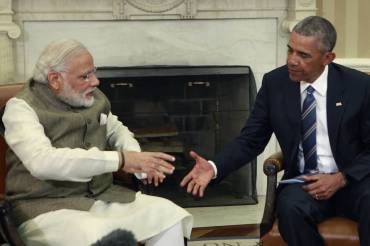
Indian Prime Minister Narendra Modi has made strengthening ties with the U.S. one of his key foreign-policy objectives, as the two countries seek to counterbalance China’s growing footprint in Asia.

In a speech to a joint meeting of the U.S. Congress Wednesday, the conclusion of a three-day trip to the country, Mr. Modi didn’t directly mention China, but said: “In Asia, the absence of an agreed security architecture creates uncertainty.

”A strong India-U.S. partnership can “help ensure security of the sea lanes of commerce and freedom of navigation on seas,” he added.

So is the beefed-up alliance between the two countries making Beijing uncomfortable? The country’s press provides some clues.

Source: Is China Rattled By the India-U.S. Love-In? – India Real Time – WSJ

10/06/2016

17 People Die on India’s Roads Every Hour, Report Says – India Real Time – WSJ

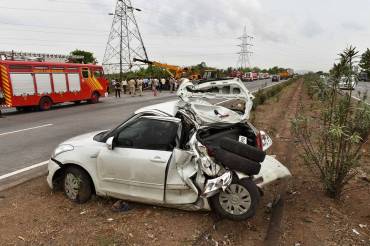
India’s roads are getting more dangerous, with 17 people dying in accidents every hour, a new government report shows.

“Much more needs to be done,” to make India’s roads safe, Sanjay Mitra, secretary of the Ministry of Roads and Transport said in the report.

The data is pretty damning. The total number of road accidents in India increased 2.5% in 2015, to 501,423. The number of people killed climbed 4.6% to 146,133. Injuries rose by 1.4%.

Road accidents also got more severe. The total number of people killed per 100 accidents was up 2.1% at 29.1 in 2015.

The Ministry of Roads and Transport said it had identified 700 “black spots” on roads, where more than five people died in the past year, and that it has earmarked 6 billion rupees ($89.9 million) to fix defects.

Source: 17 People Die on India’s Roads Every Hour, Report Says – India Real Time – WSJ

09/06/2016

China leads resistance to India joining nuclear export club | Reuters

China is leading opposition to a push by the United States and other major powers for India to join the main club of countries controlling access to sensitive nuclear technology, diplomats said on Thursday as the group discussed India’s membership bid.

Other countries opposing Indian membership of the Nuclear Suppliers Group (NSG) include New Zealand, Ireland, Turkey, South Africa and Austria, diplomats said.

The 48-nation NSG aims to prevent the proliferation of nuclear weapons by restricting the sale of items that can be used to make those arms.

India already enjoys most of the benefits of membership under a 2008 exemption to NSG rules granted to support its nuclear cooperation deal with Washington, even though India has developed atomic weapons and never signed the nuclear Non-Proliferation Treaty (NPT), the main global arms control pact.

Opponents argue that granting it membership would further undermine efforts to prevent proliferation. It would also infuriate India’s rival Pakistan, which responded to India’s membership bid with one of its own and has the backing of its close ally China.

“By bringing India on board, it’s a slap in the face of the entire non-proliferation regime,” a diplomatic source from one of a handful of countries resisting India’s push said on condition of anonymity.

A decision on Indian membership is not expected before an NSG plenary meeting in Seoul on June 20, but diplomats said Washington had been pressuring hold-outs, and Thursday’s closed-door meeting was a chance to see how strong opposition is.U.S. Secretary of State John Kerry wrote to members asking them “not to block consensus on Indian admission to the NSG” in a letter seen by Reuters and dated Friday.

China, however, showed no sign of backing down from its opposition to India joining unless Pakistan becomes a member. That would be unacceptable to many, given Pakistan’s track record — the father of its nuclear weapons program sold nuclear secrets to countries including North Korea and Iran.

“China, if anything, is hardening (its position),” another diplomat said.

Most of the hold-outs oppose the idea of admitting a non-NPT state such as India and argue that if it is to be admitted, it should be under criteria that apply equally to all states rather than under a “tailor-made” solution for a U.S. ally.

Mexico’s president said on Wednesday his country supports India’s membership bid, but one Vienna-based diplomat said it still opposed the idea of it joining under conditions that did not apply equally to all.

Source: China leads resistance to India joining nuclear export club | Reuters

09/06/2016

India plans expanded missile export drive, with China on its mind | Reuters

India has stepped up efforts to sell an advanced cruise missile system to Vietnam and has at least 15 more markets in its sights, a push experts say reflects concerns in New Delhi about China’s growing military assertiveness.

Selling the supersonic BrahMos missile, made by an Indo-Russian joint venture, would mark a shift for the world’s biggest arms importer, as India seeks to send weapons the other way in order to shore up partners’ defenses and boost revenues.

The government of Prime Minister Narendra Modi has ordered BrahMos Aerospace, which produces the missiles, to accelerate sales to a list of five countries topped by Vietnam, according to a government note viewed by Reuters and previously unreported.

The others are Indonesia, South Africa, Chile and Brazil.The Philippines is at the top of a second list of 11 nations including Malaysia, Thailand and United Arab Emirates, countries which had “expressed interest but need further discussions and analysis”, the undated note added.

A source familiar with the matter would only say the note was issued earlier this year.New Delhi had been sitting on a 2011 request from Hanoi for the BrahMos for fear of angering China, which sees the weapon, reputed to be the world’s fastest cruise missile with a top speed of up to three times the speed of sound, as destabilizing.

Indonesia and the Philippines had also asked for the BrahMos, which has a range of 290 km and can be fired from land, sea and submarine. An air-launched version is under testing.

Source: India plans expanded missile export drive, with China on its mind | Reuters

08/06/2016

This Is How Many Years Air Pollution Will Cut From Your Life Expectancy in India – India Real Time – WSJ

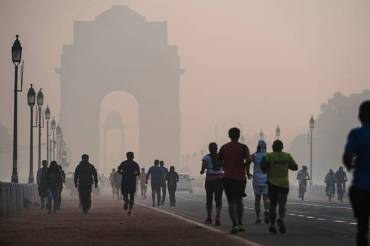
Living in India’s capital city New Delhi could shorten your life by six years because of the intensity of the air pollution there, a new report says.

Inhaling tiny air pollutants reduces the life expectancy of Indians by an average of 3.4 years, with Delhi residents losing 6.3 years, the most of all states, according to a new study by the Indian Institute of Tropical Meteorology.

Those living in West Bengal and Bihar, which have high levels of air pollution, face a reduction in life expectancy of 6.1 years and 5.7 years respectively.

The study, which used data from the latest population census of 2011, found that exposure to particulate matter 2.5 results in 570,000 premature deaths each year with an additional 12,000 caused by exposure to ozone.PM 2.5 is tiny particulate matter that is smaller than 2.5 micrometers in diameter. The air pollutants, originating from dust, soot and smoke, can penetrate deep into the lungs, increasing the risk of heart and lung diseases.

Source: This Is How Many Years Air Pollution Will Cut From Your Life Expectancy in India – India Real Time – WSJ

Law of Unintended Consequences

continuously updated blog about China & India

ChiaHou's Book Reviews

continuously updated blog about China & India

What's wrong with the world; and its economy

continuously updated blog about China & India