Archive for ‘India alert’

27/05/2016

Southern comfort | The Economist

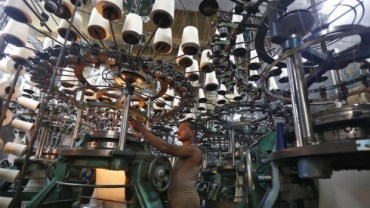
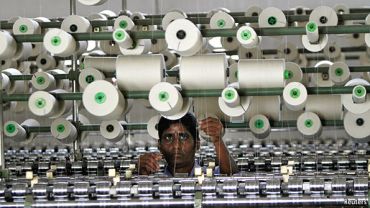
MAHATMA GANDHI would not have enjoyed Texfair 2016 in Coimbatore in the southern state of Tamil Nadu. The man hated machines and factories, and promoted Indian independence by urging every household to spin its own cotton yarn. But on display at the textile fair were bobbins, rollers, waste balers, quality-control sensors and much, much more.

Indeed, India is vying with China to be the world’s biggest producer of yarn, with over 45m spindles twirling around the clock. But what is striking about the trade fair is how so much of the modern wizardry on show is made not in better-known industrial centres around the world but in Coimbatore itself, a city of just 1.6m some 500 kilometres (310 miles) south-west of Chennai, the Tamil Nadu capital. In this section Pull the other one Taliban reshuffled Southern comfort Reprints Related topics Bharatiya Janata Party Tamil Nadu Kerala India

The fast-growing city is an inelegant sprawl stretching into groves of coconut palms. It teems with technical institutes, bustling factories and civic spirit. Earnest and ambitious, Coimbatore evokes the American Midwest of a century ago. A regional manufacturers’ group that was founded in 1933 during Gandhi’s homespun campaign has now designed, built and marketed a hand-held, battery-operated cotton picker that it claims is six times more efficient than human fingers.

Gandhi would have been appalled. But the gadget says something about the quiet success of parts of India’s deep south. Mill owners worry that with day wages in Tamil Nadu and neighbouring Kerala to the west now far higher than those in northern India, local cotton may grow uncompetitive. Tea planters in the hills west of Coimbatore are already squeezed. One landowner, in Kerala’s Wayanad region, where silver oaks shade trim ranks of tea bushes, says that his pickers get 300 rupees (about $4.50) a day, nearly three times the wage in Darjeeling in India’s north.

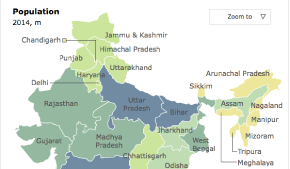
It may not sound like much, but it is also more than the average Indian earns. And as a whole, GDP per person in Tamil Nadu and Kerala is 68% and 41% higher respectively than the national average of $1,390 a year. With the south’s booming new industries, better education and higher wages contrasted with declining industries in the north and east, India is undergoing a shift a bit like the American one from the rustbelt to the sunbelt in the 1980s. Kerala shares in this new industrialisation less than Tamil Nadu, but that is balanced by another source of prosperity: remittances from abroad. As many as one in ten of Kerala’s 35m people work in the rich Arab countries of the Persian Gulf. Their remittances boost local incomes, property prices and demand for better schools. Kerala, under leftist governments for the past six decades, already has India’s best state education and its highest literacy rate. Its school district has again topped nationwide exams for 17-year-olds, followed by Chennai region, covering the rest of southern India.

Yet India’s deep south has not transmuted growing prosperity into greater political clout. It remains largely aloof from broader political trends, including a slugging match between the Bharatiya Janata Party (BJP), in office nationally under Narendra Modi, the prime minister, and Congress, the once-dominant centre-left party that worships Gandhi. In elections across four Indian states that wrapped up on May 19th, attention elsewhere focused largely on the fortunes of those two parties. The BJP’s capture from Congress of Assam in the north-east was seen as a big boost for Mr Modi. Congress’s failure to take any state was seen as a sign of decay.
Source: Southern comfort | The Economist

27/05/2016

India Inc shows growth spreading by end of Modi’s sophomore year | Reuters

Indian companies are posting their best earnings results since Prime Minister Narendra Modi swept to power two years ago, giving the clearest sign yet that India’s fast, but patchy, economic growth is becoming more broad-based.

Though headline growth figures make India one of the world’s fastest growing economies, weak private investment and low capacity utilization rates have painted a less rosy picture.

Going by India Inc’s surge in profit growth in the first three months of the year, however, the outlook really does seem to be brightening, as benefits feed through from lower interest rates and government spending in infrastructure and defense.

On Tuesday, India will release gross domestic product data for the January-March quarter. Year-on-year growth of 7.5 percent is forecast by a Reuters survey economists, slightly faster than the previous quarter’s 7.3 percent.

“Macro indicators are suggesting that at the ground level the economy is gaining momentum,” said Dhiraj Sachdev, a fund manager at HSBC Asset Management in Mumbai.

“That has also been validated in terms of better corporate earnings in many of the sectors.”

Operating profits for 289 companies that have reported results so far leapt 25.5 percent year-on-year in the March quarter, compared with 1.7 percent growth in the previous quarter, according to Thomson Reuters data.

It is Indian firms’ best showing since the April-June quarter in 2014.

Put alongside the 6.8 percent decline in earnings that data provider Factset reckons companies in the S&P 500 suffered during the same quarter, India’s corporates have some things going in their favor.

India’s broader National Stock Exchange share index .NSEI has surged around 17 percent from a near 2-year low on Feb. 29, outperforming a 7 percent gain by the Asia-Pacific MSCI index excluding Japan .MIAPJ0000PUS.

This week, Morgan Stanley upgraded Indian equities to “overweight” from “equalweight” citing rising dividends, and prospects of a simpler country-wide sales tax, lower interest rates and benign monsoon among its reasons.

Source: India Inc shows growth spreading by end of Modi’s sophomore year | Reuters

27/05/2016

Why It Could Be a While Before Apple Can Open Stores in India – India Real Time – WSJ

India’s finance ministry has rejected a government-panel recommendation to exempt Apple Inc. from local sourcing requirements, two government officials said, in a decision that could effectively block the technology company’s plan to open its own retail stores in the country.

“We are sticking to the old policy,“ said one of the officials. “We want local sourcing for job creation. You can’t have a situation where people view India only as a market. Let them start doing some manufacturing here.”

An Apple spokeswoman didn’t immediately respond to a request for comment.

India is a crucial market for Apple as it holds huge sales potential. Like China, which for years fueled the Cupertino, Calif., company’s growth, India is a large, developing economy in which more people can afford its high-end gadgets every year.

India wants to use the company’s interest in its market to attract investment and create the manufacturing facilities and jobs the country needs to sustain long-term growth.

Source: Why It Could Be a While Before Apple Can Open Stores in India – India Real Time – WSJ

24/05/2016

Unholy woes | The Economist

AT THE dawn of time Lord Vishnu made gods and demons join in churning the milky oceans to extract an elixir of eternal life. After cheating the demons of their share, Vishnu spilled four drops of the precious nectar. Where they fell sprang up sacred rivers whose waters wash away sins, now sites for mass Hindu pilgrimages called Kumbh Mela.

For a lunar month every 12 years it falls to Ujjain, a town in the central Indian state of Madhya Pradesh, to host the Kumbh Mela by the revered Shipra, whose waters meander north into the mighty Ganges and eventually eastward to the Bay of Bengal. By the time the full moon reappears on May 21st tens of millions of bathers, among them thousands of bearded ascetics known as sadhus (pictured), will have worshipped on Ujjain’s teeming riverbanks.

What few are aware of is that the water is no longer the Shipra’s. Urbanisation, rising demand and two years of severe drought have shrivelled the sacred river. Its natural state at this time of year, before the monsoon, would be a dismal sequence of puddles dirtied by industrial and human waste. But the government of Madhya Pradesh, determined to preserve the pilgrimage, has built a massive pipeline diverting into the Shipra the abundant waters of the Narmada river, which spills westward into the Arabian Sea. Giant pumps are sucking some 5,000 litres a second from a canal fed by the Narmada, lifting it by 350 metres and carrying it nearly 50 kilometres to pour into the Shipra’s headwaters. To ensure clean water for the festival, the Shipra’s smaller tributaries have been blocked or diverted, and purifying ozone is being injected into the reconstituted waters in Ujjain itself.

The pilgrims and merchants of Ujjain are happy. But down in the Narmada valley there is little cheer. “They are wasting water on sadhus…while our farms go dry,” says Rameshwar Sitole, a farmer in the hamlet of Kithud. Since March the canal, which feeds his 2.5 hectares of maize and okra along with the farms of 12 other hamlets, has been bone dry. Mr Sitole’s crops have withered and died: a loss, he reckons, of some 50,000 rupees ($750). The government insists the water will return once Ujjain’s pilgrimage ends, but he is not so sure. “They turn it on when we protest, and then take it away again,” Mr Sitole shrugs. Meanwhile, over the hills, industrial users near Ujjain are lobbying loudly to exploit the fancy new water sources.

Poor monsoons are not unusual, but the back-to-back shortfalls, linked to the El Niño effect, which India has experienced in the past two years are very rare. Ten out of 29 states, with a population of some 330m, have been badly hit, with the worst-affected areas in the centre of the country. India is suffering its gravest water shortage since independence, says Himanshu Thakkar, a water expert in Delhi, the capital. Every day brings news of exhausted rivers and wells, destitute farmers migrating to the cities or even committing suicide, water trains being dispatched to parched regions—and of leopards venturing into towns in search of a drink.

The central government has responded with make-work programmes for afflicted areas, emergency shipments of water, and many promises. In February Narendra Modi, the prime minister, pledged to double farm incomes by 2022. Other ministers speak of massive irrigation projects, and have dusted off an ambitious water-diversion scheme for parched regions that is priced at $165 billion and involves no fewer than 37 links between rivers. Most links would be via canals—some 15,000km of artificial waterways in all.

Source: Unholy woes | The Economist

19/04/2016

Will Delhi’s Extreme Traffic Restrictions Have an Impact on Air Pollution This Time? – India Real Time – WSJ

Delhi has implemented severe restrictions on which cars are allowed on the road again in hopes of combating the megacity’s horrendous air-pollution problem.

Volunteers remind commuters the reason for restriction placed on vehicle movement in New Delhi, India, Friday, April 15, 2016.

Similar air-clearing measures had mixed results during the peak Winter smog season but this time citizens are hoping for better results.

For the two weeks starting April 15, most cars in the Indian capital will only be allowed on the roads every other weekday. In the so-called odd-even program, cars with license plate numbers that end in odd numbers are allowed on the roads on odd-numbered days and Sundays while cars with even license plate numbers are allowed on even days and Sundays. For the first few days of the plan most offices and schools were closed for a string of national holidays and the weekend, so Monday is the true test of whether the restrictions are working.

Delhi to Revive Odd-Even Restrictions to Battle Pollution “Today is the litmus test for the odd-even plan. Like the last time, we all need to cooperate to make it a success,” Delhi’s Transport Minister Gopal Rai tweeted from his verified account on Monday. There are 2.6 million private cars and almost 5 million motorcycles and scooters registered in Delhi, according to the latest figures from the capital’s Transport Ministry.

There are many exceptions to the regulations, meaning the number of cars on the streets will not be slashed by half. Women driving alone or with children, disabled drivers, emergency services, cars with diplomatic plates and motorcyclists are all exempt from the restrictions as are military vehicles and taxis.

Source: Will Delhi’s Extreme Traffic Restrictions Have an Impact on Air Pollution This Time? – India Real Time – WSJ

22/03/2016

Indians Have the Worst Access to Safe Drinking Water in the World – India Real Time – WSJ

India has the highest number of people in the world without access to safe water, a report released to mark World Water Day showed Tuesday.

The country has 75.8 million people, at least 5% of its 1.25 billion population, without access to clean water, the report by WaterAid, a water and sanitation nonprofit headquartered in London, says.

The majority of those people come from impoverished communities–living on around $4.31 a day–and are forced to collect dirty water from open ponds and rivers or spend most of what they earn buying water from tankers, the report  says.

Source: Indians Have the Worst Access to Safe Drinking Water in the World – India Real Time – WSJ

18/03/2016

We’re not gonna take it | The Economist

DELHI found itself under siege last month. Young men blocked roads and canals that feed people and water into the city. They looted, set fires and dragged women out of cars to rape them. The protesters, from a relatively privileged group of land-owning peasants called Jats, were agitating to be included in India’s list of “other backward classes”, which guarantees university places and government jobs.

Faced with dry taps, Narendra Modi’s government was eventually forced to concede to the demand.

This is the fury to which Somini Sengupta refers in the subtitle of her sharply observed study of India’s young, “The End of Karma: Hope and Fury Among India’s Young”. The median age in India is 27. Every month between 2011 and 2030, nearly 1m Indians will turn 18. Those coming of age this month were born well after the country started opening up its markets in 1991; they have spent their formative years in a world of optimism and rapid economic growth. But Ms Sengupta calls India “a democracy that makes promises it has no intention of keeping”. Advertisement

By 2030 the majority of Indians will be of working age. This could be what economists call a “demographic dividend”, creating a high worker-to-dependent ratio—or it could be a time bomb. India is producing nowhere near enough jobs for the tens of millions of young people joining the workforce every year.

The argument running through Ms Sengupta’s book, made of seven richly detailed portraits of young Indians, is both simple and beguiling. For centuries Indians born into wretched circumstances have accepted their lot as karma—punishment for misdeeds in past lives. This belief explains the persistence of the caste system, and the remarkable fact that a country that is home to one in three of the world’s poor has not come apart at the seams. But young people no longer accept karma, argues Ms Sengupta. Ideas of aspiration and free will have entered the Indian consciousness. Young Indians today demand the right to shape their own futures. If fury is in ample supply, so is hope.

Yet at every step the young are thwarted. It starts in the womb. A traditional preference for boys means that India has one of the most skewed sex ratios in the world: 1.13 boys for every girl, second only to China. (The ratio in America is 1.05.) One in three children under five is underweight. Nearly two-thirds of food meant for early-childhood feeding programmes is pilfered. A rare bright spot is education: in 2013, 96% of primary-school-age children were enrolled. But here, too, India fails its young. By the age of ten, only 60% of students can complete work at the level of a five-year-old. More than half cannot subtract.

Source: We’re not gonna take it | The Economist

18/03/2016

How Modi’s Social Media Skills Earned Him a Spot on Time’s Internet Influencers List – India Real Time – WSJ

Since Narendra Modi took office nearly two years ago, his social media might has helped cultivate his international profile as an Indian prime minister who receives rockstar welcomes at concert venues and sports arenas overseas, shares smiling selfies with other heads of state and boasts among the biggest banks of Twitter followers of world political leaders.

This week, he burnished that image by winning a spot for a second consecutive year on Time magazine’s list of the 30 most influential people on the Internet.

The roundup of online luminaries describes Mr. Modi as an “Internet star,” noting that the prime minister, unlike other world leaders, uses social media to break news and conduct diplomacy. With 18.7 million followers, Mr. Modi ranks second only to President Barack Obama among political leaders.

The magazine’s picks of Internet A-listers also includes U.S. presidential hopeful Donald Trump, who has nearly 7 million Twitter followers, artist Kanye West and the author of the Harry Potter series, J.K. Rowling.

Mr. Modi used Twitter to announce Mr. Obama’s visit to India last year as the guest of honor at India’s Republic Day parade, and signaled a breakthrough in tense relations with neighboring Pakistan by tweeting that India’s foreign secretary would travel to that country. He tweets in several languages, shouting out to other world leaders on their birthdays and congratulating them on election victories.

The digital-savvy leader and his Bharatiya Janata Party’s social media team runs a full-time, data-driven operation. It coins hashtags and uses what one member called “online volunteers”–a digital army to retweet and comment on posts relating to the prime minister and his policies–to keep him trending.

They also use specialized software to study social media behavior and track the ebbs and flows of online sentiment to Mr. Modi’s speeches and actions, funneling their analysis to help craft his message–and to tweak it when traffic turns unfavorable.

Mr. Modi appears to have become a regular on Time’s rankings. Last year, he was on its “100 Most Influential People” list where Mr. Obama called him India’s “reformer-in-chief.”

Source: How Modi’s Social Media Skills Earned Him a Spot on Time’s Internet Influencers List – India Real Time – WSJ

02/03/2016

Indians Are Among the Most Satisfied at Work, Says a Study. Here’s Why – India Real Time – WSJ

Indians are among the most highly stimulated and satisfied at work, a new report claims.

Some 28% of workers in the South Asian nation reported being highly engaged and fulfilled in the office, a full 15% above the global average, in a survey of workers in 17 countries conducted by Ipsos for furniture and workspace systems company Steelcase Inc.

Other nations with the largest proportions of satisfied workers were Mexico, at 22%, the UAE and South Africa, where around one in five people described themselves in that way and Saudi Arabia, with 18%.

American offices came sixth. About 14% of those surveyed there reported being highly engaged and satisfied at work.

Only 4% of Indian workers were highly dissatisfied and disengaged, compared with 11% on average globally.

Indians also provided the second-highest average score, of 7.4, when they rated their quality of life at work out of 10. Only Mexico scored higher with 7.5.

The authors of the report said the secret to the happiness of Indian workers could be to do with the fact the country’s employers haven’t yet embraced open-plan work spaces and also a result of  the hectic pace of life outside the office walls.

Only 14% of the offices the employees worked in were open plan. Meanwhile, 70% of the workers surveyed sat in a private or shared private office at work.

“Culturally, having a workspace of one’s own, even if it is compact and modest, is a signal of belonging and importance, which may explain the overall high degree of workplace satisfaction,” the report said.

In densely populated countries like India, the workplace can be a haven, the report said.

Indians are much more likely to say, for instance, that their work environment allows them to feel relaxed and calm. A total of 73% agreed with that in the survey, much higher than most other countries, the report said.

Workers in Indian offices are also likely to have access to shared spaces like meeting rooms, cafeterias and canteens. They also have the most access to sport or exercise facilities.

Indians’ enthusiasm about their office spaces might be relative. The most highly engaged employees came from emerging economies, the report said.

“Many Indian employees’ expectations may be shaped by their comparatively modest living conditions,” the report said.

And they are more likely to say that they work remotely–55% said they sometimes work away from the office, and 20% said they did so every day.

They also believed that their employer took a genuine interest in employees, with 79% agreeing with the statement.

All of this might reflect employers’ efforts to keep their workers happy, the report said. “In India’s highly competitive and fluid job market, providing a desirable workplace can be a powerful strategy for attracting, retaining and engaging the talent that can help an organization thrive,” the report said.

Source: Indians Are Among the Most Satisfied at Work, Says a Study. Here’s Why – India Real Time – WSJ

29/02/2016

India unveils fire-fighting budget to placate voters, sustain growth | Reuters

The government unveiled a fire-fighting budget on Monday that seeks to win back support among rural voters for Prime Minister Narendra Modi‘s government and sustain growth against a grim global backdrop – all without borrowing more.

Finance Minister Arun Jaitley‘s third budget marked a strategic shift by addressing rural distress in a country of 1.3 billion, where two-fifths of families rely on farming and are reeling from two years of drought.

At the same time it hiked public investment in India’s woeful infrastructure by 22.5 percent, while taking further steps to revive corporate investment that Modi needs to create new jobs for India’s burgeoning workforce.

“We have a shared responsibility to spend prudently and wisely for the people, especially for the poor and downtrodden,” the 63-year-old finance minister told lawmakers in his 100-minute address.

India holds several state elections this year, including in the farming state of West Bengal, with the country’s most populous state, Uttar Pradesh, going to the polls in 2017. A strong showing will be vital to Modi’s chances of a second term.

Despite commanding a large majority in parliament’s lower house, Modi’s government has failed to pass several key measures since sweeping to power almost two years ago, raising doubts over the impact of its reform agenda.

Jaitley called Asia’s third-largest economy a bright spot in a gloomy global landscape, and reiterated a forecast that it would grow by 7.6 percent in the fiscal year that is drawing to a close.

Source: India unveils fire-fighting budget to placate voters, sustain growth | Reuters

Law of Unintended Consequences

continuously updated blog about China & India

ChiaHou's Book Reviews

continuously updated blog about China & India

What's wrong with the world; and its economy

continuously updated blog about China & India