Archive for ‘Chindia Alert’

27/07/2016

China’s Fosun to sign agreement for $1.4 billion Gland Pharma buy – paper | Reuters

Shanghai Fosun Pharmaceutical (Group) Co (2196.HK) will sign a definitive agreement on Wednesday to buy a controlling stake in India’s Gland Pharma in a $1.4 billion deal, the Economic Times newspaper reported, citing a source with direct knowledge.

In May, Shanghai Fosun had made a non-binding proposal to buy Gland Pharma, which is backed by KKR & Co (KKR.N), to boost its drug manufacturing and research and development capacity.

Fosun did not immediately comment, when contacted by Reuters. Gland Pharma made no immediate comment on the report.

The paper said KKR declined to comment.

Source: China’s Fosun to sign agreement for $1.4 billion Gland Pharma buy – paper | Reuters

27/07/2016

Parliament passes controversial child labour bill | Reuters

Parliament on Tuesday approved a controversial law that would allow children to work for family businesses, despite widespread concern by the United Nations and other rights advocates that it will push more children into labour.

A week after the bill was passed by the Rajya Sabha, the Lok Sabha approved the measure that brings a raft of changes to a three-decade-old child labour prohibition law. The bill now goes for the President’s assent before becoming law.

The U.N. Children’s Agency (UNICEF) as well as many others have raised alarm over two particular amendments – permitting children to work for their families and reducing the number of banned professions for adolescents.

A 2015 report by the International Labour Organization (ILO) put the number of child workers in India ages 5 to 17 at 5.7 million, out of 168 million globally.

More than half of India’s child workers are employed in agriculture and more than a quarter in manufacturing – embroidering clothes, weaving carpets or making match sticks. Children also work in restaurants, shops and hotels and as domestic workers.The new legislation extends a ban on child labour under 14 to all sectors. Previously, only 18 hazardous occupations and 65 processes such as mining, gem cutting and cement manufacturing were outlawed.

It also stiffens penalties for those employing children, doubling jail terms to two years and increasing fines to 50,000 rupees ($740) from 20,000 rupees ($300).

While child rights groups have welcomed such changes, there has been concern over other amendments proposed by Prime Minister Narendra Modi‘s government.

For example, children will be allowed to work in family businesses, outside of school hours and during holidays, and in entertainment and sports if it does not affect their education.

Also, children 15 to 18 will be permitted to work, except in mines and industries where they would be exposed to inflammable substances and hazardous processes.

The government says the exemptions aim to strike a balance between education and India’s economic reality, in which parents rely on children to help with farming or artisanal work to fight poverty or pass on a family trade.

“The purpose of this very act is that we should be able to practically implement it,” Labour and Employment Minister Bandaru Dattatreya told parliament. “That’s why we are giving some exemptions.”UNICEF had urged India to exclude family work from the proposed law and include an “exhaustive list” of hazardous occupations.

“To strengthen the Bill and provide a protective legal framework for children, UNICEF India strongly recommends the removal of ‘children helping in family enterprises’,” it said in a statement on Monday.

“This will protect children from being exploited in invisible forms of work, from trafficking and from boys and girls dropping out of school due to long hours of work,” it said.

Source: Parliament passes controversial child labour bill | Reuters

27/07/2016

India orders 4 more maritime spy planes from Boeing worth $1 billion | Reuters

India has signed a pact with Boeing Co for purchasing four maritime spy planes at an estimated $1 billion, defence and industry sources said, aiming to bolster the navy as it tries to check China’s presence in the Indian Ocean.

India has already deployed eight of these long-range P-8I aircraft to track submarine movements in the Indian Ocean and on Wednesday exercised an option for more planes, a defence ministry source said.

“It has been signed,” the source familiar with the matter told Reuters. An industry source confirmed the contract, saying it was a follow-on order signed in New Delhi early on Wednesday.

Source: India orders 4 more maritime spy planes from Boeing worth $1 billion | Reuters

27/07/2016

Why India’s Lack of Toilets Is Hurting Its Children’s Development – India Real Time – WSJ

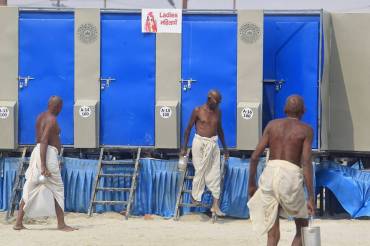
India’s lack of toilets and poor access to sanitation are holding back its children, causing stunted growth and curbing their development, a new report says.

Is India Winning the Fight Against Childhood Malnutrition?

Why Is Indian Children’s Growth So Stunted? It’s Not Why You ThinkT

he country has more than 48 million under fives with impaired growth, the largest number in the world, the report from London-based international development charity WaterAid said.

India also has 774 million people without access to adequate sanitation, and 76 million without safe water, the report said.

Children who are stunted because of malnutrition tend to be shorter and lag behind their peers cognitively. Poor access to clean water, sanitation and hygiene cause diarrhea and expose children to other intestinal infections during the crucial first two years of life.

Around 140,000 under-fives die in India every year because of diarrhea and other diseases caused by lack of access to these basic services, the report said.

Indian Prime Minister Narendra Modi has said in the past that he would rather build toilets than temples — setting a goal for every home in the country to have a place to go to the bathroom by 2019. But the program has suffered challenges: some Indians prefer to relieve themselves outdoors.

India is making some progress, however. The report said the percentage of its children who were stunted reduced from 48% in 2006 to 39% in 2014, the year Mr. Modi came to power.

Pakistan, India’s closest neighbor, ranked third with more than 9.8 million children who are stunted, according to the WaterAid study.

Source: Why India’s Lack of Toilets Is Hurting Its Children’s Development – India Real Time – WSJ

26/07/2016

Could India Become a Cashless Economy? – India Real Time – WSJ

Cash is set to lose currency in India, as an explosion in smartphone usage drives a digital payments boom, according to a new report.

By year 2020, nearly $500 billion worth of transactions in India will happen digitally, using online wallets and other digital-payment systems, 10 times the level currently, according to a report by Google India and The Boston Consulting Group.

Indians traditionally prefer to save and spend in cash, and a vast majority of the more-than 1.2 billion population doesn’t have a bank account.

Last year, 78% of all consumer payments in India were made by cash, whereas in developed countries like the U.S. and U.K., only 20% to 25% of such payments were made that way, the report said.

But the reliance on notes and coins in India is likely to diminish, as spending habits change and financial services reach more people, said the Google-BCG report. It expects cash-based consumer payments to fall to 40% to 45% by 2025.

A sharp increase in the use of mobile phones with internet connectivity will help drive the move to digital payments, said the report.

India has more than 1 billion mobile subscribers, a quarter of whom use smartphones, according to the report. By 2020, the number of smartphone users in the country will likely be 520 million, and the number of internet users 650 million, twice the number currently, according to the report.

Personal internet banking has become more popular in India over the past few years along with digital payment options that allow users to settle mobile phone, electricity and even taxi bills.

The recent spurt of growth has come from non-bank companies offering payment services. Cellphone companies like Airtel and Vodafone offer facilities to transfer money using phones, while “wallet” companies like One97 Communications’ Paytm unit, and MobiKwik, allow users to store money digitally and pay through their systems.

The next level of growth will come when local mom-and-pop grocery stores start accepting digital payments, said the report.However, there are plenty of consumers and merchants who still feel skeptical of digital payments, or find them too complicated, said the report. And others just don’t want to give up using cash, it added.

Source: Could India Become a Cashless Economy? – India Real Time – WSJ

25/07/2016

India urges security forces to exercise restraint in Kashmir | Reuters

India has asked its security forces to exercise restraint in responding to protests in disputed Kashmir and replace pellet guns with non-lethal weapons, its home affairs minister said on Sunday.

Forty six people have been killed and more than 5,000 wounded, including security forces, since protests erupted after the killing of Hizbul Mujahideen commander Burhan Wani on July 8.

Normal life remains paralysed because of the curfew imposed by the government and calls for a shutdown by separatist leaders.

“I appeal to the youth not to resort to stone pelting and I also want to appeal to the security forces not to use pellets. I have told security forces to use maximum possible restraint,” Rajnath Singh said, winding up his two-day visit to Kashmir.

Kashmir has been at the centre of a tussle between New Delhi and Islamabad for decades, as both claim the region in full but rule it in part.

“We don’t need the involvement of a third party to address the situation in Jammu and Kashmir. I want to tell my neighbour that you are yourself a victim of terrorism,” said Singh.

Since they split some 67 years ago, India and Pakistan have fought each other in three wars, two over Kashmir. There has not been a full-blown war since they both tested nuclear weapons in 1998.

Singh on Thursday told lawmakers that India would set up a panel to look for an alternative to pellet guns.More than 300 people have suffered because of pellet guns, including 171 with eye injuries, Kaisar Ahmad, principal of the Government Medical College in Srinagar, told Reuters.

Source: India urges security forces to exercise restraint in Kashmir | Reuters

25/07/2016

ASEAN breaks deadlock on South China Sea, Beijing thanks Cambodia for support | Reuters

Southeast Asian nations overcame days of deadlock on Monday when the Philippines dropped a request for their joint statement to mention a landmark legal ruling on the South China Sea, officials said, after objections from Cambodia.

China publicly thanked Cambodia for supporting its stance on maritime disputes, a position which threw the regional block’s weekend meeting in the Laos capital of Vientiane into disarray.

Competing claims with China in the vital shipping lane are among the most contentious issues for the Association of Southeast Asian Nations, with its 10 members pulled between their desire to assert their sovereignty while finding common ground and fostering ties with Beijing.

In a ruling by the U.N.-backed Permanent Court of Arbitration on July 12, the Philippines won an emphatic legal victory over China on the dispute.

The Philippines and Vietnam both wanted the ruling, which denied China’s sweeping claims in the strategic seaway that channels more than $5 trillion in global trade each year, and a call to respect international maritime law to feature in the communique.

Backing China’s call for bilateral discussions, Cambodia opposed the wording on the ruling, diplomats said.

Manila agreed to drop the reference to the ruling in the communique, one ASEAN diplomat said on Monday, in an effort to prevent the disagreement leading to the group failing to issue a statement.

The communique referred instead to the need to find peaceful resolutions to disputes in the South China Sea in accordance with international law, including the United Nations’ law of the sea, to which the court ruling referred.

Source: ASEAN breaks deadlock on South China Sea, Beijing thanks Cambodia for support | Reuters

25/07/2016

Ways India Has Changed Since Liberalization 25 Years Ago – WSJ

Twenty-five years ago this week, India unshackled private industry and embraced foreign investment, ending four decades of socialist self-reliance and making a major bid to reclaim its place as an economic power.

The finance minister at the time, Manmohan Singh, had a keen sense of the moment’s place in history. Presenting the budget before Parliament on July 24, 1991, he framed the new economic policies as a means of eliminating “the scourge of poverty, ignorance and disease,” and of realizing the full potential of the Indian people. In the famous closing flourish of his speech, he invoked Victor Hugo: “No power on Earth can stop an idea whose time has come.”

But even Mr. Singh, who later served a decade as the country’s prime minister, could not have foreseen all the changes that this set of ideas would bring about.

1 Economic Liftoff

By every measure, India has grown more economically prosperous. National output last year was nearly five times what it was in 1991. Indians sell more to the world, and enjoy more of the outside world’s products and services, know-how and technology. A country that was once a byword for famine is today one of the planet’s biggest exporters of rice, cotton and other agricultural products.Not all sections of Indian society have risen as much as others: The country is still home to more of the world’s poorest people than any other nation. And much of the growth has been in the informal economy, where companies don’t pay taxes or have access to large-scale finance, and where workers don’t receive benefits or protection from unfair treatment. That suggests the deterrents to doing business above-board, such as government regulations and enforcement, are still too many.ANUPAM

2 People Power

Indians are living longer, and fewer are dying at or shortly after birth. More are literate, more receive schooling and more go to college. Still, the nation badly lags its neighbors on many of these human indicators. Women fare worse than men. And despite recent government sanitation campaigns, more people in India have cellphones than have access to decent toilets, according to the United Nations.

3 Consumer Explosion

In 1991, Indians had two television channels to choose from, and both of them were produced by Doordarshan, the state broadcaster. In much else, too, from sweets to cosmetics to butter, autarky meant the choices for the average consumer were very limited. Today’s riot of options makes pre-liberalization India seem, as the writer Mukul Kesavan wrote recently, like “another country.

4 Car Crazy

It isn’t quite true that Indians had only one car available to them, the Hindustan Motors Ltd. Ambassador, before 1991. But their options have certainly multiplied since then. Almost every major international maker has tried to enter the market; not all have succeeded. The industry in India churned out nearly 24 million vehicles in the year that ended in March.

5 A Flailing State

Over the last quarter-century, as India’s economy has grown more complex, it has arguably loped ahead of the government’s capacity to manage it and provide essential services. That’s why the Harvard economist Lant Pritchett in 2009 called India a “flailing state”: The top institutions of government are sound, but they don’t deliver reliably on the ground.Public health facilities are understaffed and underfunded. Schoolteachers don’t show up for their own classes. Unlike in 1991, “India’s problem is not what the state does wrong now,” says Manish Sabharwal, chairman of TeamLease Services Ltd., a Bangalore-based staffing company. “It is what the state does not do.”

Source: Ways India Has Changed Since Liberalization 25 Years Ago – WSJ

25/07/2016

More Than 100 Chinese Firms on Global Fortune 500, but Not Alibaba – China Real Time Report – WSJ

More than 100 Chinese companies made the Fortune Global 500 list this year, with the U.S. the only country with more names on the list.

China power giant State Grid jumped from seventh place last year to the No. 2 spot, after Wal-Mart Stores Inc., followed by oil giants China National Petroleum Corp. and Sinopec Group, in third and fourth place, respectively.

Dubbed “the world’s most profitable lender,” Industrial & Commercial Bank of China–China’s biggest bank by assets–was No. 15 on the list, up from 18th last year even after a year of nearly flat profit.

Among the 13 Chinese companies that made their debuts on the list were three home builders: China Vanke Co.(356th), Dalian Wanda Group (385th) and Evergrande Real Estate Group (496th), which all benefited from the property-market recovery in China last year after the government loosened restrictions on home purchases.

Ranked at 366th, China’s second-largest online retailer, JD.com Inc., also entered the list for the first time.

One notable absence: China’s perhaps most famous company, e-commerce giant Alibaba Group Holding Ltd., which as an online platform doesn’t have massive revenue, the basis for the list’s rankings.Investors and analysts have focused on a different metric to chart its growth — gross merchandise volume, or the total value of third-party sellers’ transactions on its platforms — because it shows how fast an e-commerce company is growing relative to competitors.

Earlier this year, Alibaba said that transaction volume on its sites hit 3 trillion yuan ($463 billion) in the fiscal year ended in March, which it said meant that by that measure it had overtaken Wal-Mart to become the world’s biggest retail network.

Source: More Than 100 Chinese Firms on Global Fortune 500, but Not Alibaba – China Real Time Report – WSJ

25/07/2016

China Unveils ‘World’s Largest Amphibious Aircraft’ – China Real Time Report – WSJ

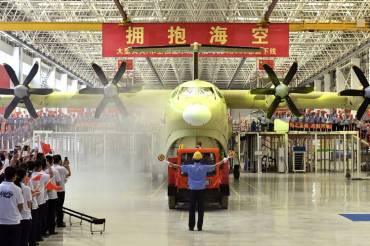
Chinese media said the AG600 giant aircraft, which rolled off a production line in Zhuhai in southern China on Saturday, will be used for marine rescue missions and forest fire fighting.

Source: Video: China Unveils ‘World’s Largest Amphibious Aircraft’ – China Real Time Report – WSJ

Law of Unintended Consequences

continuously updated blog about China & India

ChiaHou's Book Reviews

continuously updated blog about China & India

What's wrong with the world; and its economy

continuously updated blog about China & India