Archive for ‘Chindia Alert’

07/08/2014

One lakh children go missing in India every year: Home ministry – The Times of India

On February 5, 2013, a Supreme Court bench, angry over 1.7 lakh missing children and the government’s apathy towards the issue, had remarked: “Nobody seems to care about missing children. This is the irony.”  (Ed note: 1 lakh = 100,000)

English: Children in Raisen district (Bhil tri...

English: Children in Raisen district (Bhil tribe), MP, India. Français : Enfants dans le district de Raisen (tribu Bhil), M.P., Inde. (Photo credit: Wikipedia)

Close to one and a half years later, government data show over 1.5 lakh more children have gone missing, and the situation remains the same with an average of 45% of them remaining untraced.

Data on missing children put out by the home ministry last month in Parliament show that over 3.25 lakh children went missing between 2011 and 2014 (till June) at an average of nearly 1 lakh children going missing every year.

Compare this to our trouble-torn neighbour Pakistan where according to official figures around 3,000 children go missing every year. If population is an issue, then one could look at China, the most populous nation, where official figures put the number of missing children at around 10,000 every year.

National Crime Records Bureau, in fact, deciphers missing children figures in India in terms of one child going missing in the country every eight minutes.

More worryingly, 55% per cent of those missing are girls and 45% of all missing children have remained untraceable as yet raising fears of them having been either killed or pushed into begging or prostitution rackets.

Maharashtra is one of the worst states in terms of missing children with over 50,000 having disappeared in the past three and half years. Madhya Pradesh, Delhi and Andhra Pradesh are distant competitors with all recording less than 25,000 missing children for the period.

Worryingly, however, all these states have more missing girls than boys. In Maharashtra, 10,000 more girls went missing than boys. In Andhra Pradesh, the number of girls missing (11,625) is almost double of boys (6,915). Similarly, Madhya Pradesh has over 15,000 girls missing compared to around 9,000 boys. Delhi, too, has more girls (10,581) missing compared to boys (9,367).

via One lakh children go missing in India every year: Home ministry – The Times of India.

07/08/2014

These ten historical monuments earn India the most revenue

As airfares become cheaper and the world gets more adventurous, India’s tourism sector has been reaping the benefits. Revenues are expected to rise by 7.9% over the next decade. In 2012, according to the World Travel and Tourism Council, tourism accounted for 6.6% of India’s GDP.

Here’s a list of India’s most lucrative historical sites, based on the revenues they earned in 2013-2014.

1) Taj Mahal, Agra

Revenue: Rs. 21,84,88,950

Mughal emperor Shah Jahan’s marble tribute to third wife, Mumtaz Mahal, the Taj is by far the most iconic structure in India, as well as the country’s biggest-earning monument.

2) Qutab Minar complex, Delhi

Revenue: Rs 10,16,05,890

The Qutub Minar was built in the early 13th century and is the second-tallest tower in India (after Mohali’s Fateh Burj). It is made out of red and buff sandstone and is a UNESCO World Heritage Site.

3) Agra Fort, Agra

Revenue: Rs 10,22,56,790

Agra Fort, another UNESCO World Heritage site, was constructed under the third Mughal emperor Akbar over the remains of the ancient site known as Badalgarh.

4) Humayun’s Tomb, Delhi

Revenue: Rs 7,12,88,110

The tomb of the Mughal emperor Humayun was built in 1572 by his widow, Bega begum.

5) Red Fort, Delhi

Revenue: Rs 6,15,89,750

The Red Fort was originally built as the fortified palace of Shahjahanabad under Shah Jahan. It was the residence of the Mughal emperors for nearly 200 years.

6) Group of monuments, Fatehpur Sikri

Revenue: Rs 5,62,14,640

The city of Fatehpur Sikri was founded in 1569 by the Mughal emperor Akbar. It served as his capital from 1571 until 1585.

7) Group of monuments at Mahabalipuram

Revenue: Rs 2,72,93,480

The sculpted temples and buildings in this town, 60 kms south of Chennai, are the remains of a port from where ancient Indian traders travelled to South East Asia.

8) Sun Temple, Konarak

Damien Roué/Flickr

Revenue: Rs 2,43,52,060

This 13th-century temple in Odisha was conceived of as a gigantic solar chariot with 12 pairs of exquisitely-ornamented wheels pulled by seven rearing horses.

9) Group of temples, Khajuraho

Revenue: Rs 2,24,47,030

Khajuraho, in Madhya Pradesh, is synonymous with this large group of medieval Hindu and Jain temples, some of which have erotic sculptures.

10) Ellora Caves

Revenue: Rs 2,06,72,820

Ellora Caves are among the largest rock-hewn monastic-temple complexes in the entire world. The site includes one of the world’s largest monolithic structures, the Kailash temple.

via Scroll.in – News. Politics. Culture..

06/08/2014

Air India Loses Money to Dodge Giant Billboards in Mumbai – Businessweek

In the legion of problems that can beset an airline, here’s a novel one: gigantic billboards.

Super-sized advertisements stand in the flight path of Mumbai’s main airport, forcing departures to climb rapidly on takeoff. But Air India’s daily 15-hour flight to Newark, N.J., which requires a full load of fuel, would be too heavy to clear the billboard with its full load of passengers.

As a result, Air India now leaves 51 passengers off the Boeing (BA) 777-300ER. Flying 15 percent under capacity means losing 100 million rupees ($1.6 million) per month on the route, an Indian aviation minister told legislators on Monday, according to my Bloomberg News colleague, Anurag Kotoky.

Photograph by Dhiraj Singh for Businessweek.com

Airport officials at Chhatrapati Shivaji International have so far removed 13 of the 15 offending billboards in flight paths.

Air India has not reported a profit for eight years and required a government-funded rescue in 2012. United Airlines (UAL) uses a smaller 777-200 for the same route and has not experienced similar problems on departures, a spokeswoman told Bloomberg News.

via Air India Loses Money to Dodge Giant Billboards in Mumbai – Businessweek.

06/08/2014

China Investigates Microsoft, Symantec – Businessweek

For years, U.S. politicians have been calling Chinese telecom-equipment makers Huawei Technologies and ZTE (000063:CH)threats to American security. But making charges about national security is a game that China can play, too. Following Edward Snowden’s disclosures of U.S. spying, the Chinese government seems eager to show American companies that they will pay a price for U.S. government actions.

Why China Is Investigating Microsoft and Symantec

That’s a lesson that Microsoft (MSFT) and Symantec (SYMC) are learning now. An antivirus company from Silicon Valley, Symantec competes in China against local favorites such as Beijing-based Qihoo 360 Technology (QIHU). According to reports by Bloomberg News and the Chinese media, China has instructed government departments to stop buying antivirus software by Symantec and its Moscow-based rival, Kaspersky Lab. Symantec software has back doors that could allow outside access, according to an order from the Public Security Ministry. Not coincidentally, Qihoo’s New York-traded shares rose 2.7 percent on Monday, following reports of the move against Symantec and Kaspersky.

Symantec is trying to contain the damage. Although the official People’s Daily newspaper reported on Sunday that the government had banned both Symantec and Kapersky, Cupertino (Calif.)-based Symantec says the action is more limited. “It is important to note that this list is only for certain types of procurement and Symantec products are not banned by the Chinese government,” the China Daily reported Symantec commenting in a statement. “We are investigating this report and will continue to bid for and win government projects in China.”

via China Investigates Microsoft, Symantec – Businessweek.

06/08/2014

Insurance Bill Struggle Pokes Another Hole in the Notion of Modi Magic – India Real Time – WSJ

The new government in New Delhi is struggling this week to get an insurance-industry liberalization bill— an important part of its campaign to revamp the economy—to the floor of the upper house of Parliament.

Opening up the insurance business to more foreign investment was one of the main deregulation measures unveiled in Prime Minister Narendra Modi’s first budget last month.

But already it is bogged down. Mr. Modi’s Bharatiya Janata Party does not control the upper house and other parties want to stall a vote on the bill.

The legislative tussle is a sign of the challenges Mr. Modi faces, despite his party’s landslide electoral victory and the BJP’s lower-house majority, as he tries to push through even modest changes in the way India manages its economy.

Mr. Modi swept to power this spring on a surge of anti-incumbency sentiment and hope that the BJP could break the policy deadlock in the capital. Supporters expected Mr. Modi bring the “achche din,” or good days, back to Asia’s third-largest economy.

But India’s complicated national politics, its decentralized federal system and Mr. Modi’s own desire not to get too far ahead of public opinion in a country long used to large-scale welfare schemes and a heavy state hand in the economy, is likely to slow any change.

The new administration’s national budget, announced in July, was bland and disappointing to many. It did not include the kind of big-bang reforms many optimists had anticipated.

In response to criticism of the budget, India’s new Finance Minister Arun Jaitley told a television news channel that the government is waiting for the right time to implement some changes.

“You don’t do reforms in a manner that the political system is unwilling to accept them,” Mr. Jaitley said during a July interview on Headlines Today. “The more challenging ones, you go on that course in times to come.”

Last week, Mr. Modi’s government blocked an important trade agreement that all 160 members of the World Trade Organization—including India—had agreed to in December. India demanding more freedom ratchet up market-distorting food subsidies.

“This is an inauspicious start for the new Modi government,” said Orrin Hatch, a Republican U.S. senator from Utah and member of the Senate Finance Committee in response to India’s decision.

M. J. Akbar, a BJP spokesman, says the party is happy with its progress. He said the government has focused on dealing with inflation, encouraging growth and reaching out to neighboring countries.

“On the insurance bill, the government has shown complete firmness in pushing it through,” and will use a joint-session of Parliament to vote on it if the upper house refuses, he said.

Still, the gradual deflation of the Modi bubble can be seen in the stock and currency markets. The benchmark Sensex index, has basically been going sideways for the last two months, after a sharp run up as the scale of Mr. Modi’s election win became clear.

The rupee has also been giving up some of this year’s gains against the dollar.

Of course the less excitable analysts and executives have always said the complexity of running the world’s largest democracy means that decision making will remain a slow and often painful process, even with a majority in the lower house of Parliament.

Many of the biggest challenges to improving the lives for India’s 1.2 billion citizens—such as reducing corruption, building modern infrastructure and providing hundreds of millions of good jobs–will take years, if not decades, surmount, even with the right policies and a charismatic leader.

“If a handful of people decide that (the progress so far) is insufficient, we have to ignore them and recognize that the majority of India is both relieved that the return of governance as well as the return of hope,” said the BJP’s Mr. Akbar. “Files are being cleared after ages of stagnation.”

–Prasanta Sahu contributed to this story.

via Insurance Bill Struggle Pokes Another Hole in the Notion of Modi Magic – India Real Time – WSJ.

06/08/2014

China Tells Quake Volunteers: Stay Home, Please – China Real Time Report – WSJ

Feeling charitable? That’s fine—but please stay at home.

That’s the message from China’s State Council, which in the wake of an earthquake in southwest China that killed at least 589 people has urged eager volunteers to stay away from the disaster zone.

In the immediate aftermath of the quake, hundreds of volunteers from across the country traveled swiftly to the site of the quake with the goal of doing good works. One major effect of their presence, though, was car-clogged roads, some of which had already been blocked or reduced to muddy swirls of broken rubble in the aftermath of the quake, which felled tens of thousands of buildings and left more than 2,400 injured.

On Wednesday, state broadcaster CCTV echoed the State Council’s message, saying that authorities needed to dissuade “non-professional rescue organizations, volunteers, tourists etc. from going to the disaster zone.” Doing so, CCTV said, would support the work of quake rescuers.

State media has urged those wanting to assist with the quake relief effort to consider making monetary contributions instead of rushing to Yunnan. Similar outpourings of volunteerism have been blamed for hindering relief efforts in China in the past, notably during the 2008 Sichuan earthquake, which killed some 87,000 people. In addition to traffic jams, such volunteers also need food and water and can sometimes be a burden on already stretched supplies of the same.

Still, according to official figures, at least 650 volunteers have flooded the disaster zone since the quake struck on Sunday afternoon, includingmany decked out with their own uniforms and equipment.

via China Tells Quake Volunteers: Stay Home, Please – China Real Time Report – WSJ.

06/08/2014

Scramble for Dalit votes is sparking increased communal violence in UP

The key force driving the increasing communal polarisation in Uttar Pradesh is the scramble for Dalit votes in an attempt to weaken the Bahujan Samaj Party and deter Muslims from rallying behind it.

This strategy was evolved, and implemented, during the last Lok Sabha elections. But the competition to woo Dalits has gathered momentum ahead of bypolls to 12 assembly seats, five of which are in the western section of the state, which is often billed as the “wild west” of the Hindi heartland.

As the Indian Express reported, more than 600 incidents of communal violence have taken place in the state since May.

The Bharatiya Janata Party’s stake in the bypolls, which have yet to be scheduled, is enormous. Eleven of the 12 constituencies here had BJP MLAs, all of whom were elected to the Lok Sabha, as was the party’s ally, Apna Dal leader Anupriya Patel. The results will help measure the durability of the Modi wave, and its possible impact on the UP assembly elections in early 2017.  The verdict from UP could well determine the chances of Prime Minister Narendra Modi winning a second successive term in the 2019 polls.

The need to cobble together an electoral majority is driving political parties to resort to communal mobilisation. Local disputes over land, civic amenities, and exploitative gender relations have been given a communal hue and magnified to portray a monolith Hindu community arrayed against the Muslims.

via Scroll.in – News. Politics. Culture..

06/08/2014

Key questions that have been lost in the din of protests against the civil services exam

In the midst of protests against the new format of the civil services examination, several key issues have gone unaddressed. An opportunity for meaningful debate about the exam has quickly turned into a slanging match.
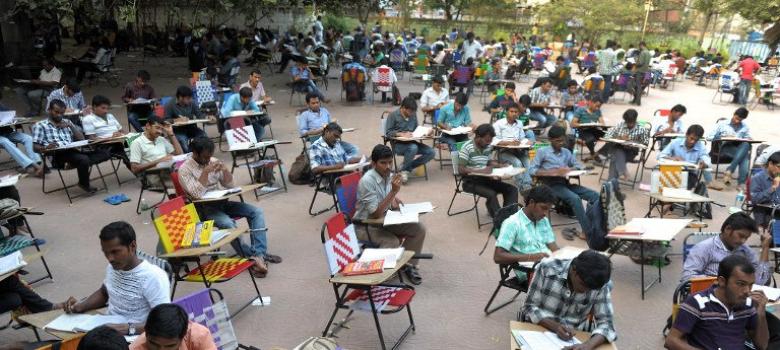
The matter has assumed an unnecessarily adversarial tone, with English pitted against other Indian languages. But the issues are far more complex and far less binary than politicians believe. Here are some key questions that have got lost in the din.

Should the Civil Services Aptitude Test be scrapped altogether?

The answer is a clear no. The CSAT gauges logical reasoning, problem-solving skills, analytical abilities, basic numeracy and English proficiency up to class 10 level. To argue that an administrator can do without any of these skills is unrealistic. An administrator has to deal with huge amounts of quantitative and qualitative information and any deficiency in these skills would mean a sub-par performance on the job.

Does the CSAT discriminate against students doing the exam in Hindi or regional languages?

No, but it does employ very poor translation software. The Union Public Service Commission, which conducts the exam, must acquire competent translators or purchase translation software that is up to the mark. This should do the trick.

Is there a grain of truth in what the protestors are alleging?

At the heart of the uproar lies the allegation that the exam is biased towards those who take the exam in English. Since the revised format came into force in 2011, the number of students who take the exam in Hindi has steadily fallen. (However, to really judge whether this is significant, one would have to look not at the absolute numbers of successful candidates who do the exam in Hindi, but the percentage of such candidates out of all those who take the exam in Hindi. But data about the number of test takers in each language is not available).

There may be a kernel of truth to this claim. But the blame lies to a large extent with the coaching and publishing industry. There is simply not enough study material available in Hindi and other regional languages. It is this paucity of study material that hurts students from vernacular backgrounds in the long run.

Surely, pelting stones and burning vehicles is not acceptable behaviour?

Some protestors, by resorting to violence, have demonstrated their unsuitability for the job. It is safe to say that many students have spent hundreds of hours preparing for the exam in its current format. What about their efforts? Do they count for nothing? By taking to the streets and letting political players into the mix, the protestors have probably done more harm than good.

Does the civil services exam in its current format select the best and the brightest?

Opinions differ considerably. An IAS probationer who did not want to be named told this writer: “The civil service exams, in its existing format, put less emphasis on rote learning and that is a good thing. The less this examination focuses on retention of information, the better.”

The civil services exam in its current format has three key components. The prelims, the mains and the interview. The first stage of the exam is the prelims, which has two parts, of which the second is the dreaded CSAT. As argued earlier, however, the CSAT is essential for ensuring that only candidates who possess minimum competencies and skill sets make it through to the far more difficult second round, the mains.

The Union Public Service Commission, with its recent revision in format for the mains, has reduced much of the burden on students. Earlier, a student had to master two subjects of their choice (neither of which he or she may have studied before). But now a student just has to choose just one subject of his or her choice. By emphasising general studies and critical thinking, the UPSC has levelled the playing field to a large degree.

How about allowing lateral entry?

The UPSC could also perhaps increase the number of vacancies in the civil services. It is a fact that we don’t have enough administrators for the population. According to various media reports, Right to Information applications and 2011 census figures, India has slightly more than 1,600 government servants for every 100,000 residents, which many studies say is a low ratio.

If quality of candidates is an issue, then the UPSC could look into the lateral entry of specialists, and even pay them market wages, a system used in the developed world. India’s political establishment must separate policy functions from service delivery and stop interference in operational matters. Simultaneously, the political class must establish uniform standards and guidelines across the country.

via Scroll.in – News. Politics. Culture..

06/08/2014

Why Modi’s reference to Buddha’s birthplace was among the highest points of his Nepal visit

Nepal has long been irked by the common misconception that Buddha was from India, even though his accepted birthplace, Lumbini, is across the border.

The Nepalese are so outraged about the Indian appropriation of Buddha, some cable operators blocked Zee TV in the country last year for misidentifying the Enlightened One‘s birthplace.  To correct the record, the country has issued special Rs 100 currency notes proclaiming, “Lumbini: The Birthplace of Lord Buddha.” The controversy has even led a musician named Dhiraj Rai to record an overwrought pop song on the subject.

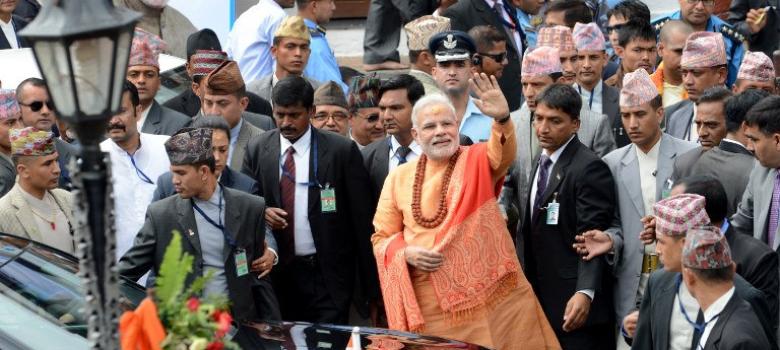
So for many residents of the mountain-kingdom, the highest point of Indian Prime Minister Narendra Modi‘s two-day state visit to their country came during his address to parliament on Sunday, when he referred to Nepal as “the birthplace of Lord Buddha”.

Though the Indian prime minister’s speech to lawmakers included the announcement of a $1 billion line of credit to Nepal and suggested how energy cooperation could be enhanced, the country’s Telegraph Weekly reported the address under the headline, “Indian PM Modi admits Lord Buddha was born in Nepal.”

The Khatmandu Post added more details. “Nepali lawmakers gave a thunderous applause when he mentioned that Buddha was born in Nepal – an issue that rouses deep passion in the country when various quarters of India claim that the former was born in India,” it wrote. “He uttered the word Buddha five times.”

Many Nepalese Twitter users expressed their delight at Modi’s statement.

via Scroll.in – News. Politics. Culture..

05/08/2014

Ex-Panbassadors enjoy homeland[1]- Chinadaily.com.cn

Giant pandas born overseas learn to adapt back in China, reports Huang Zhiling in Dujiangyan, Sichuan province.

Ex-Panbassadors enjoy homeland

At the foot of Mount Qingcheng in Dujiangyan, Sichuan province, a Chinese keeper speaks to giant panda Tai Shan in its den.

Welcome home, Tai Shan  They are using English to communicate.

The 9-year-old male panda charmed millions of Americans during his stay at the Smithsonian’s National Zoo in Washington DC for four and a half years.

Since his return to China in February 2010, Tai Shan has lived in the two bases of the China Conservation and Research Center for the Giant Panda.

The center designated a keeper who is proficient in English to take care of Tai Shan because his US keeper Nicole Meese had communicated with him when he was just 1 month old. Tai Shan has not yet learned the southwestern Sichuan dialect.

“Tai Shan is one of the center’s nine pandas born overseas and returned to the base,” said Wang Yongyao, an official with the administrative bureau of the Wolong National Nature Reserve, which oversees the center.

The male bear is one of a special group of China’s giant pandas that have to adapt back home after being born overseas.

The center is the world’s largest giant panda conservation and research organization. It started loaning pandas to other countries and regions in 1996. Its pandas have given birth to a total of 12 cubs overseas since.

Under an agreement for global giant panda preservation, giant pandas born overseas belong to China and must be returned to the country after they turn 2.

China agreed to extend Tai Shan’s loan to the US because of the bear’s huge popularity there.

A pair of adult pandas can also be loaned overseas for 10 years under an agreement between China and the host.

“Everyone loves pandas and they are like citizens and residents of their host country or region. China is also often asked to extend the loan of the bears,” said Zhang Hemin, chief of the administrative bureau of the Wolong National Nature Reserve.

“As a result, only their cubs born overseas have returned home.”

Of the 12 cubs born overseas, only three aged under 2 have yet to return home. The other nine bears live in the Dujiangyan and Ya’an bases in Sichuan.

via Ex-Panbassadors enjoy homeland[1]- Chinadaily.com.cn.

Law of Unintended Consequences

continuously updated blog about China & India

ChiaHou's Book Reviews

continuously updated blog about China & India

What's wrong with the world; and its economy

continuously updated blog about China & India