Chindia Alert: You’ll be Living in their World Very Soon
aims to alert you to the threats and opportunities that China and India present. China and India require serious attention; case of ‘hidden dragon and crouching tiger’.
Without this attention, governments, businesses and, indeed, individuals may find themselves at a great disadvantage sooner rather than later.
The POSTs (front webpages) are mainly 'cuttings' from reliable sources, updated continuously.
The PAGEs (see Tabs, above) attempt to make the information more meaningful by putting some structure to the information we have researched and assembled since 2006.
FUZHOU, Dec. 7 (Xinhua) — Chinese and foreign experts have marveled at the archaeological and anthropological value of the Wanshouyan Paleolithic Relics in east China’s Fujian Province.
Dozens of archaeological experts from China, Malaysia, Poland, Russia and Japan gathered in Sanming City on Friday and Saturday for a visit to the relics and academic exchanges.
“I have never seen such a thing,” said Lucyna Domanska, a professor with the Institute of Archaeology at the University of Lodz from Poland, pointing to a 120-square-meter space floored with pebbles inside a cavern.
The artificial floor, built about 40,000 years ago, is part of the Wanshouyan Paleolithic Relics, a habitat of human ancestors dating back as early as 200,000 years ago.
“This site is very exciting,” Domanska said. “It is important not only for Asia but for the whole world.”
Some of the relics are “unusual,” said Evgeny Rybin, a senior researcher at the Institute of Archaeology and Ethnography at the Siberian branch of the Russian Academy of Sciences, noting that “it could be a source of scientific advancements.”
Standing inside a cavern named Lingfeng where ancient stone choppers, scraping devices and hammering tools were unearthed, Rybin said the relics from this site broadened their understandings about the capabilities of ancient people.
“The relics show that ancient people not only used caves but also changed them to fit their lifestyles,” he said.
It is a contribution to the world, said Mohd Mokhtar Saidin, a professor and director of Malaysia’s Center for Global Archaeological Research.
“This is very important. Not every country has evidence of human activities 200,000 years ago, and not every region has this type of cave,” he added.
Inside the limestone hill of Wanshouyan, archaeological remains of the Paleolithic Age have been found in several caverns, which provide important evidence for studying human life as early as hundreds of thousands of years ago.
In 2000, the Wanshouyan Paleolithic Relics was listed as one of China’s top 10 archaeological discoveries of the year.
Myanmar President U Win Myint (R) meets with visiting Chinese State Councilor and Foreign Minister Wang Yi in Nay Pyi Taw, Myanmar, Dec. 7, 2019. (Xinhua/U Aung)
NAY PYI TAW, Dec. 7 (Xinhua) — Myanmar President U Win Myint met here Saturday with visiting Chinese State Councilor and Foreign Minister Wang Yi with both sides pledging to strengthen high-level exchanges to push bilateral ties to a new high.
The Myanmar president expressed gratitude to China for its long-term support for Myanmar’s sovereignty, dignity and socio-economic development.
He hoped that both sides will seize the 70th anniversary of the establishment of their diplomatic relations next year as an opportunity to consolidate and deepen mutual political trust, speed up the joint construction of the Belt and Road, comprehensively press forward the building of the China-Myanmar Economic Corridor, expand cooperation in sectors including economy and trade, education, health, and enhance cooperation and coordination in regional and international issues so as to further advance the comprehensive strategic cooperative partnership between the two countries.
The president also hoped that China would continue to support Myanmar in pressing forward the ongoing national reconciliation and peace process.
For his part, the Chinese state councilor said China and Myanmar are neighbors linked by rivers and mountains enjoying a “baobo” (brothers and relatives) friendship. Both countries advocate and practise the Five Principles of Peaceful Coexistence, setting an example of equality and mutually beneficial cooperation between countries.
He pledged that China will continue to firmly support Myanmar’s efforts in pursuing a development path suited to its own national conditions, protecting its legitimate rights and national integrity in the international arena and maintaining its overall development and stability. China also appreciates Myanmar’s firm support for China on issues bearing on its core interests and major concerns, he said.
As the two countries will celebrate 70 years’ diplomatic ties next year, China is willing to join hands with Myanmar to sum up experiences in bilateral cooperation in the past years while planning for future development of bilateral ties and carrying out a series of celebration activities, Wang said.
The Chinese state councilor said China is ready to strengthen high-level exchanges with Myanmar in the new year to push the bilateral comprehensive strategic cooperative partnership to a new high.
Chinese Vice President Wang Qishan meets with the head of Japan’s national security council Shigeru Kitamura in Beijing, capital of China, Dec. 6, 2019. (Xinhua/Huang Jingwen)
BEIJING, Dec. 6 (Xinhua) — Chinese Vice President Wang Qishan on Friday met with the head of Japan’s national security council Shigeru Kitamura.
Not only close neighbors, China and Japan are also major economies in Asia and the world, said Wang, pointing out that the two countries both face huge tasks of domestic development and bear important responsibilities for world peace and development.
Wang said the two sides should use the important consensus of the leaders of the two countries as a guide, and move the bilateral relationship forward with wisdom and vision.
He called on the two countries to learn from history, take the overall situation into consideration, gain a clear understanding of common interests, and maintain the focus in developing ties with a long-term perspective.
Wang also encouraged the two sides to work together to create a favorable environment for the two countries’ high-level exchanges in the next stage.
Kitamura said that since last year, bilateral relations have developed positive momentum and seen close high-level contacts. Japan is ready to make full preparations for future exchanges between the two countries’ leaders.
BEIJING, Dec. 2 (Xinhua) — China has selected 30 outstanding grass-roots police officers, plus five awardees of special respect and 35 for nomination awards.
The list was selected in a campaign jointly launched by the Publicity Department of the Communist Party of China Central Committee and the Ministry of Public Security in August this year.
The campaign was aimed at encouraging police across the country to work hard to maintain political security and social stability and to improve public understanding of the police work, according to a joint statement by the two departments.
The five awardees of special respect include a group of police officers in east China’s Zhejiang Province who risked their own lives in evacuating vehicles and personnel trapped in a tunnel after fire broke out.
They also include police officers who died on duty – one of them was guiding vehicles on an icy road in Fujian Province, southeast China, but was hit by an out-of-control heavy truck while trying to save passengers nearby.
The 30 outstanding police officers include criminal police, police with special duties, anti-drug police, police who remove explosives, plainclothes police, among others, who have worked diligently for years under dangerous circumstances.
They also include officers who have worked seemingly ordinary jobs but have demonstrated extraordinary perseverance or devotion in serving the public. Officers who have worked in difficult situations for a long time, such as the gobi desert and prisons with criminals living with HIV/AIDS, have also been selected.
Also on the list are some officers who actively seek innovations to incorporate the Internet, satellite and other new technologies into police work.
In addition, several female officers who have worked at a prison or as a forensic expert have received the award.
BEIJING, Dec. 2 (Xinhua) — The Chinese government has decided to suspend reviewing applications to visit Hong Kong by U.S. military ships and aircraft starting Monday, foreign ministry spokesperson Hua Chunying said.
China will also take sanctions against some U.S. non-governmental organizations (NGOs) for their role in the disturbances in Hong Kong, Hua said at a press conference.
The NGOs include the National Endowment for Democracy, National Democratic Institute for International Affairs, International Republican Institute, Human Rights Watch and Freedom House.
A lot of facts and evidence have shown that the aforementioned NGOs supported anti-China rioters in Hong Kong in various ways, abetted their extreme and violent criminal behavior and incited separatist activities for “Hong Kong independence”, Hua said, adding that these organizations bear major responsibilities for Hong Kong’s chaotic situation and should be sanctioned and pay their price.
The spokesperson said the United States has seriously violated the international law and basic norms governing international relations, and interfered in China’s internal affairs by signing the so-called Hong Kong Human Rights and Democracy Act of 2019 into law despite China’s firm opposition.
“China urges the U.S. to correct its mistake and stop meddling in Hong Kong affairs or interfering in China’s other internal affairs by any word and act,” Hua said.
China will take further necessary actions in accordance with the development of the situation to firmly defend the stability and prosperity of Hong Kong and safeguard national sovereignty, security and development interests, she said.
(Reuters) – Asian companies dominate the market for electric vehicle (EV) batteries and they are expanding their production capacity in Europe, China and the United States in a fight to win lucrative contracts from global automakers.
Some carmakers worry, however, there won’t be enough batteries for all the EVs they plan to launch in the coming years and a bitter row between South Korea’s SK Innovation and LG Chem risks exacerbating the potential shortfall.
Below are details of the world’s leading EV battery makers with details of their customers and expansion plans:
CATL
China’s Contemporary Amperex Technology (CATL), the world’s biggest EV battery maker, counts BMW (BMWG.DE), Volkswagen (VOWG_p.DE), Daimler (DAIGn.DE) – which makes Mercedes cars – Volvo, Toyota Motor Corp (7203.T) and Honda Motor Co (7267.T) among its customers.
The company emerged as a major force partly thanks to Beijing’s policy of only subsidising vehicles equipped with Chinese batteries in the world’s biggest EV market. Beijing is phasing out EV subsidies next year.
CATL, which operates factories in China, is building its first overseas plant in Germany and is considering a U.S. factory.
Japan’s Panasonic, a supplier of U.S. EV pioneer Tesla (TSLA.O), said it has installed equipment to ramp up production at Tesla’s Nevada plant to 35 GWh from its current production of around 30 GWh as of late October. Panasonic has said it is investing about $1.6 billion in the factory.
Panasonic also produces EV batteries in Japan, China and plans to shift some of its plants to a new joint venture with Toyota. Panasonic’s clients also include Honda and Ford Motor Company (F.N).
China’s BYD, which is backed by U.S. investor Warren Buffett, is also one of the world’s biggest EV battery makers. It mainly uses them in-house for its own cars and buses. BYD said last year it is was considering cell production in Europe.
The South Korean firm was an early industry mover, winning a contract to supply General Motor’s (GM.N) Volt in 2008. It also supplies Ford, Renault (RENA.PA), Hyundai Motor (005380.KS), Tesla, Volkswagen and Volvo.
It is investing 3.3 trillion won ($2.8 billion) to build and expand production facilities near Tesla’s plant in Shanghai. It has a joint venture (JV) in China with Geely Automobile Holdings (0175.HK), which makes Volvos, and is in talks with other carmakers about JVs in major markets.
The firm is considering building a second U.S. factory in addition to its facility in Michigan and is expanding its plant in Poland.
SAMSUNG SDI CO LTD (006400.KS) Samsung SDI an affiliate of South Korean tech giant Samsung Electronics (005930.KS), has EV battery plants in South Korea, China and Hungary, which supply customers such as BMW (BMWG.DE), Volvo and Volkswagen. Samsung SDI is investing about 1.2 billion euros ($1.3 billion) to expand its factory in Hungary though the EU is investigating whether Budapest’s financial support complies with the bloc’s state aid rules.
Samsung started production last year on the Hungary plant, which will produce batteries for 50,000 EVs a year.
SK INNOVATION CO LTD (096770.KS) LG Chem’s cross-town rival SK Innovation supplies batteries to Volkswagen, Daimler and Kia Motors (000270.KS), as well as Jaguar Land Rover [TAMOJL.UL] and Ferrari (RACE.MI).
An oil refiner that came to the battery industry late, SKI is investing about $3.9 billion to build three plants in the United States, China and Hungary, with a goal of expanding its annual production capacity to 33 GWh by 2022.
SKI currently operates one battery factory in South Korea, with a capacity of 4.7 GWh annually.
It set up a joint venture with Beijing Automotive Industry Corporation (BAIC) of China in August 2018 and another Chinese partner. It is in talks with Volkswagen about another battery JV and is building a $1.7 billion factory in the U.S. state of Georgia, not far from Volkswagen’s Chattanooga plant.
NEW DELHI (Reuters) – India will unveil a series of infrastructure projects this month as part of a plan to invest 100 trillion rupees ($1.39 trillion/£1.08 trillion) in the sector over the next five years, the finance minister said on Saturday, in a push to improve the country’s economy.
Nirmala Sitharaman’s comments, as cited in local newspapers, followed data released on Friday that showed India’s economic growth slowed to 4.5% in the July-September quarter – its weakest pace since 2013 – upping the pressure on Prime Minister Narendra Modi’s government to speed reforms.
“A set of officers are looking into the pipeline of projects that can be readied so that once the fund is ready, it could be front-loaded on these projects,” Sitharaman said at a business summit in Mumbai, the newspapers reported.
“That task is nearly completed. Before December 15, we will be able to announce frontloading of at least ten projects,” she said.
Modi came to power in 2014 on the promise to improve India’s economy and boost foreign investments, but he has struggled to meet those aims due to a lack of structural reforms. Modi won a second term in May and has taken various measures since 2014 to spur growth, including cutting the corporate tax and speeding up privatisation of state-run firms.
But several economic indicators show domestic consumption is weak, and many economists expect the current slowdown could persist for another two years.
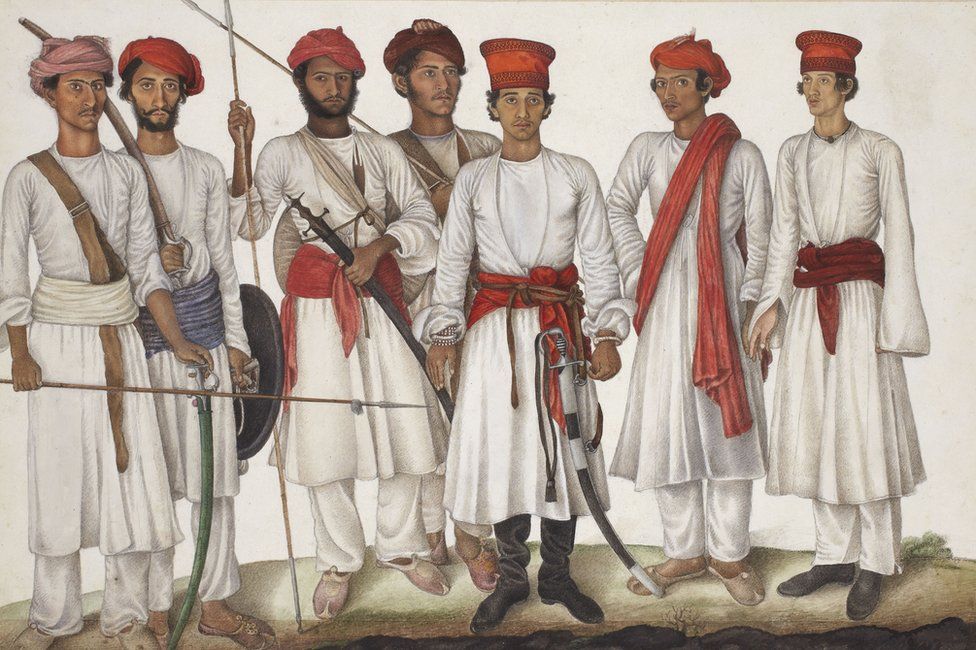
Image copyright PEMILLE KLEMPImage caption A group of Indian troopers who fought for the English, Ghulam Ali Khan, 1815-16
The English East India Company, founded in 1600, was established for trading. But as the powerful multinational corporation expanded its control over India in the late 18th Century, it commissioned many remarkable artworks from Indian painters who had previously worked for the Mughals. Writer and historian William Dalrymple writes about these hybrid paintings which explore life and nature.
Calcutta in the late 1770s was Asia’s biggest boom town: known as the City of Palaces, the East India Company’s bridgehead in Bengal had doubled in size to 400,000 inhabitants in a decade.
It was now unquestionably the richest and largest colonial city in the East – though certainly not the most orderly.
“It would have been so easy to turn it into one of the most beautiful cities in the world,” wrote the Count de Modave, a friend of Voltaire who passed through at this time. “One cannot fathom why the English allowed everyone the freedom to build in the most bizarre taste, with the most outlandish planning.”
Nor were visitors much taken by its English inhabitants. Most had come East with just one idea: to amass a fortune in the quickest possible time.
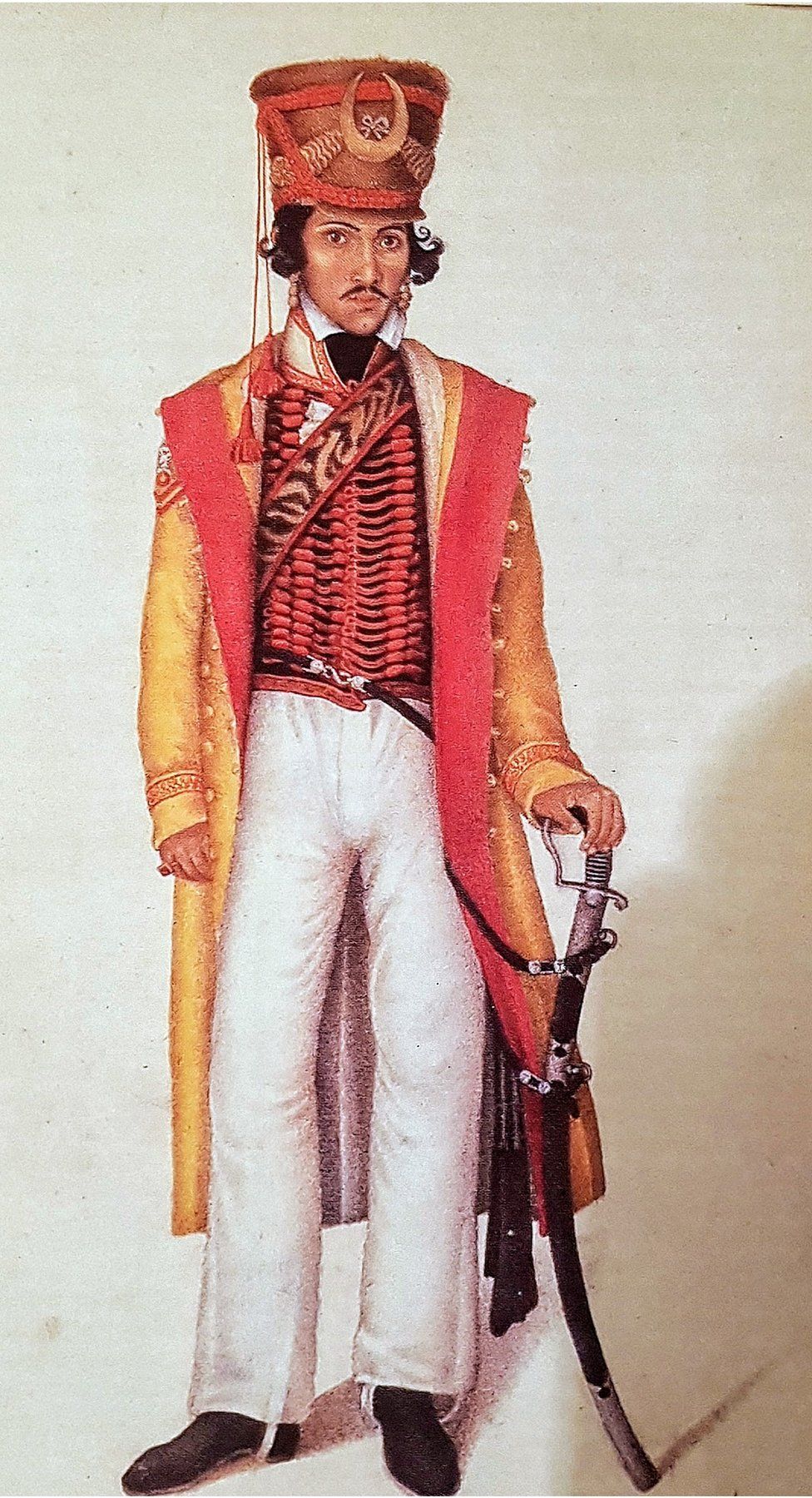
Image caption An Indian trooper who fought for the English, Ghulam Ali Khan, 1819Calcutta (now Kolkata) was a city where great wealth could be accumulated in a matter of months, then lost in minutes in a wager or at the whist table. Death, from disease or excess, was a commonplace, and the constant presence of mortality made men hard and callous.
Rising with Olympian detachment above the mercantile bawdiness of his contemporaries was the rotund figure of the chief justice of the new Supreme Court, Sir Elijah Impey.
A portrait of him by Johan Zoffany still hangs, a little lopsidedly, in the Kolkata High Court. It shows him pale and plump, ermine gowned and dustily bewigged.
Impey was, however, a serious scholar and unusual in taking a serious interest in the land to which he had been posted.
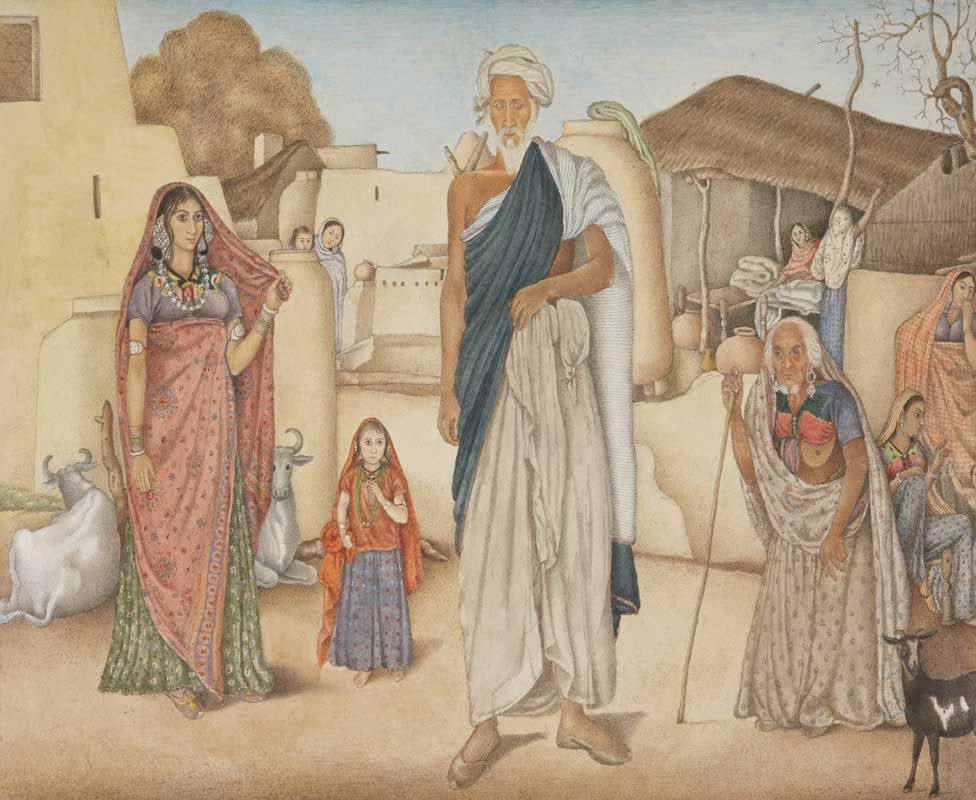
Image copyright PEMILLE KLEMPImage caption Indian villagers by Ghulam Ali Khan, 1815-16
On the journey out to India, a munshi (administrator) had accompanied him to teach him Bengali and Urdu, and on arrival the new chief justice began to learn Persian and collect Indian paintings. His house became a meeting place where the more cultured elements of Calcutta society could discuss history and literature.
Impey and his wife Mary were also greatly interested in natural history and began to collect a menagerie of rare Indian animals.
At some stage in the mid-1770s, the Impeys decided to bring a group of leading Mughal artists – Sheikh Zain ud-Din, Bhawani Das and Ram Das – to paint their private zoo.
It was probably not the first commission of Indian artists by British patrons. “The Study of Botany is of late Years become a very general Amusement,” noted one enthusiast, and we know that the Scottish nurseryman James Kerr was sending Indian-painted botanical drawings back to Edinburgh as early as 1773.
But the Impeys’ albums of natural history painting remain among the most dazzlingly successful of all such commissions: today, a single page usually reaches prices of more than £330,000 ($387,000) at auctions, and the 197 images from the Impey Album are now widely recognised as among the very greatest glories of Indian painting.
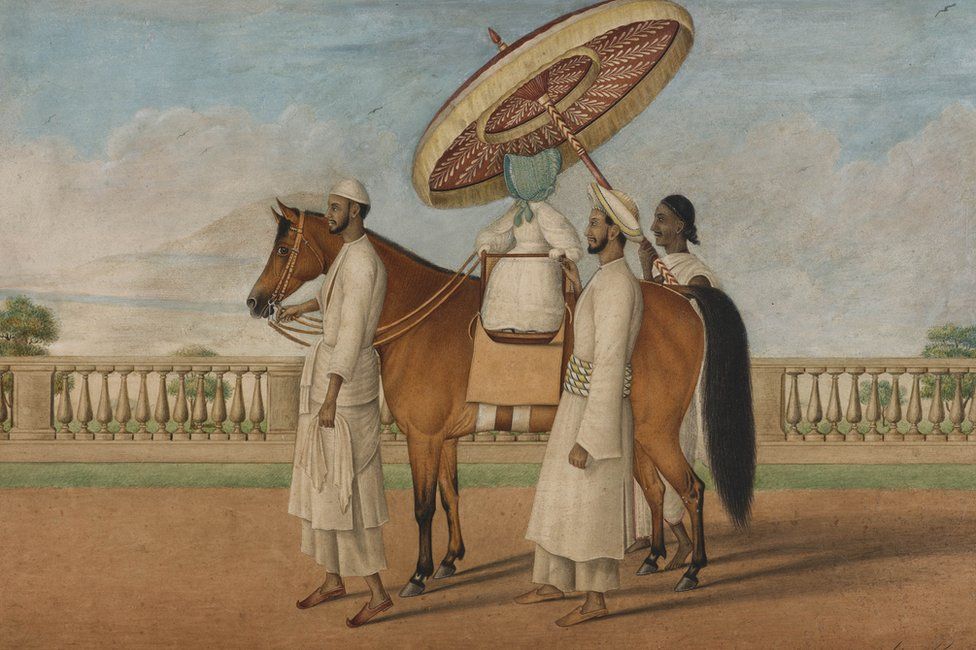
Image copyright FRANCIS WAREImage caption English child seated on a pony and surrounded by three Indian servants by Shaikh Muhammad Amir
This month, for the first time since the Impey Album was split up in the 18th Century, around 30 of its pages will be reassembled for a major exhibition in the Wallace Collection in London.
Forgotten Masters: Indian Painting for the East India Company celebrates some of the extraordinary work which resulted from commissions made by East India Company patrons from master Indian artists between the 1770s and 1840s.
It will be a unique chance to see some of the finest Indian paintings which are now scattered in private collections around the world.
The three artists who Impey summoned to his fine classical house in Middleton Street were all from Patna, 200 miles (320km) up the Ganges.
The most prolific was a Muslim, Shaikh Zain-al-Din, while his two colleagues, Bhawani Das and Ram Das, were both Hindus.
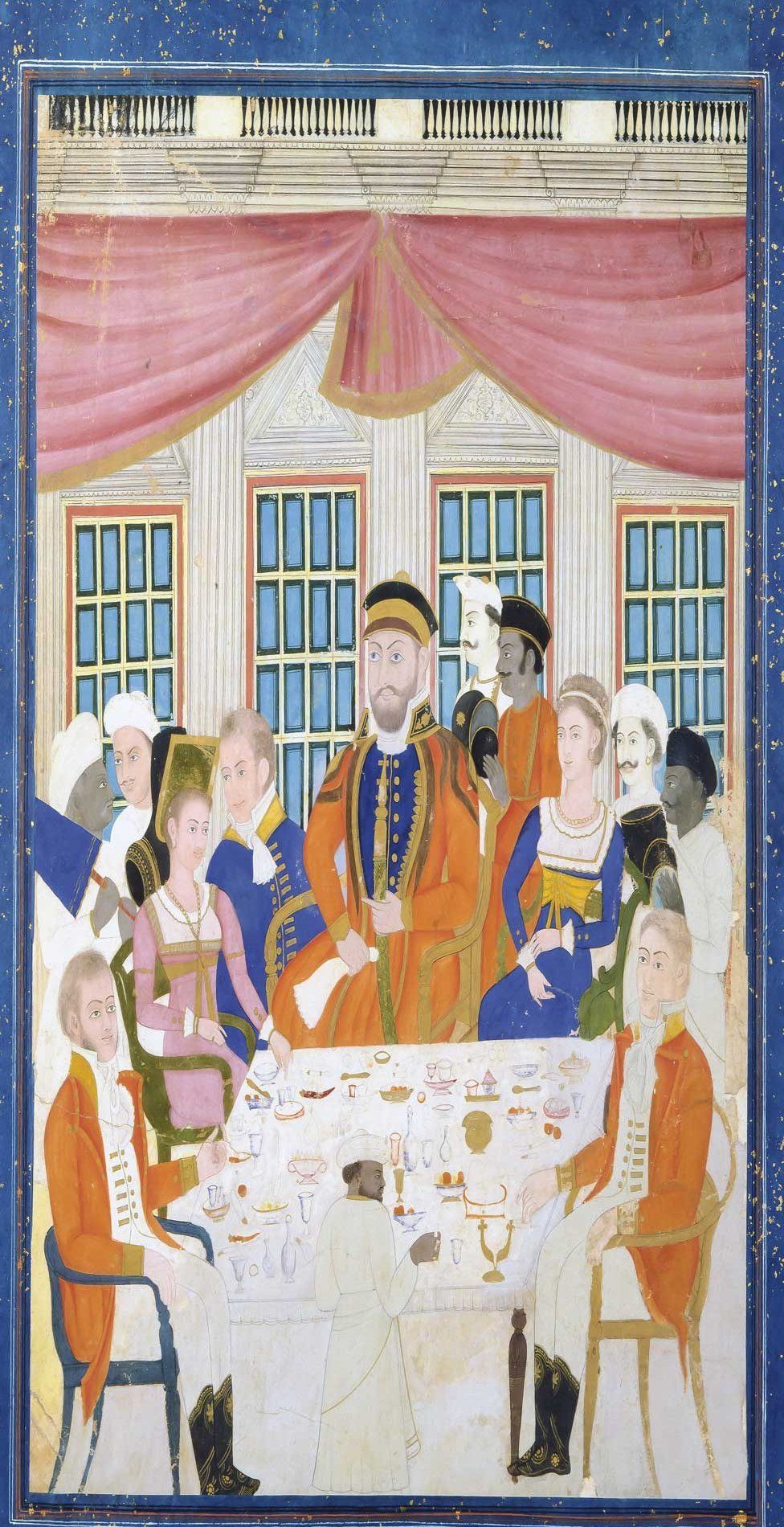
Image caption A finely painted miniature depicting four British officers with their wives taking refreshments at a table, artist unknown
Trained in the late Mughal style and patronised by the Nawabs of Murshidabad and Patna, they quickly learned to use English watercolours on English Watman watercolour paper, and take English botanical still lives as their models. In this way an extraordinary fusion of English and Mughal artistic impulses took place.
Zain ud-Din’s best works reveal a superb synthesis between a coldly scientific European natural history specimen illustration, warmed with a profoundly Indian sensibility and vital feeling for nature.
At his best – whether by instinct or inherited knowledge and training – he channels the outstanding Mughal achievement in natural history painting of 150 years earlier, when the great Mughal artist Mansur painted animals and birds for the Emperor Jahangir.
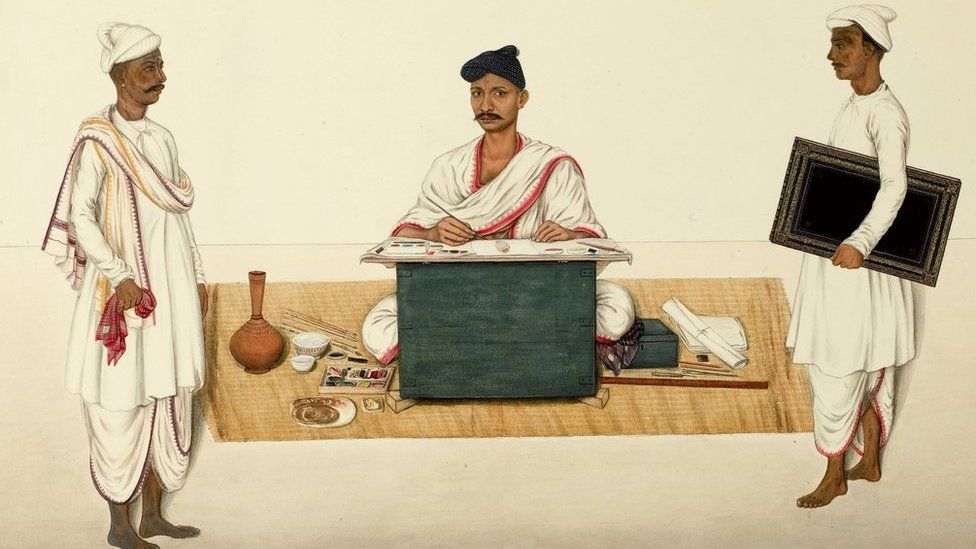
Image caption Portrait of a Mughal artist, by Yellapah Of Vellore, 1832-1835
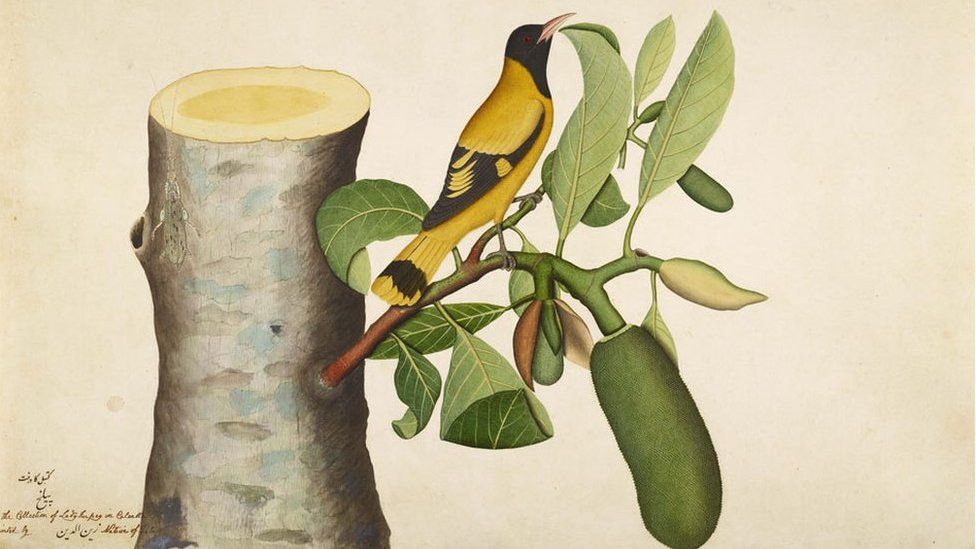
Nowhere are the merits of Company Painting better illustrated than in Zain ud-Din’s astonishing portrait of a Black Headed Oriole (No. 27).
At first glance, it could pass for a remarkably skilful English natural history painting. Only gradually does its hybrid origins become manifest.
The brilliance and simplicity of the colours, the meticulous attention to detail, the gem-like highlights, the way the picture seems to glow, all these point unmistakably towards Zain ud-Din’s Mughal training.
Image caption Portrait of a black headed oriole by Zain ud-Din
An idiosyncratic approach to perspective also hints at this background: the tree trunk is rounded, yet the grasshopper which sits on it is as flat as a pressed flower, with only a hint of outline shading to give it depth – the same technique used by Mansur.
Yet no artist working in a normal Mughal atelier would have placed his bird detached from a landscape against a white background, with the jackfruit tree on which its sits cut into a perfect, scientific cross-section.
Equally no English artist would have thought of painting the bark of that cross section the same brilliant yellow as the oriole; the tentative washes of a memsahib’s watercolour are a world away.
The two traditions have met head on, and from that blinding impact an inspirational new fusion has taken place.
Bhawani Das, who seems to have started off as an assistant to Zain ud-Din, is almost as fine an artist as Zain ud-Din.
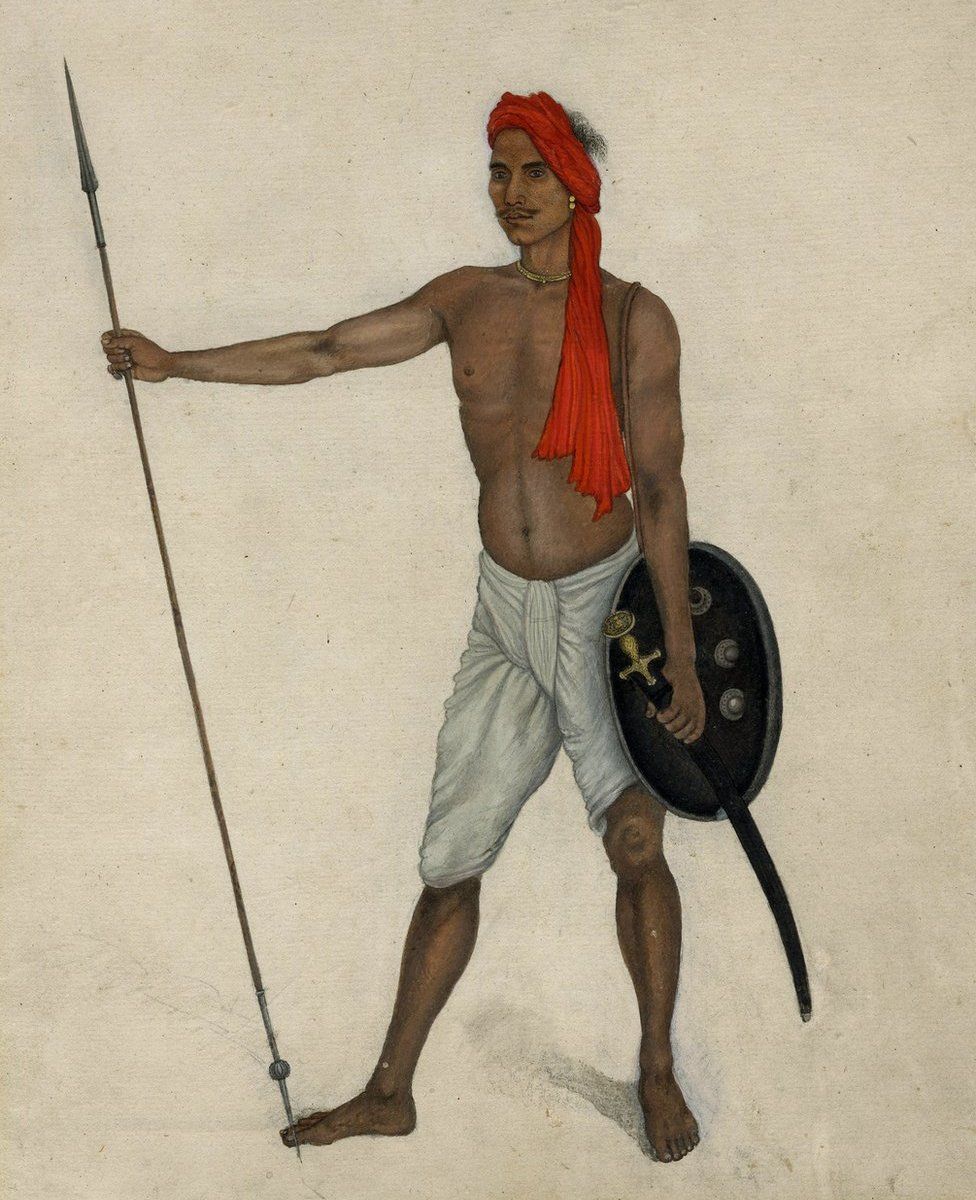
Image caption Indian trooper holding a spear by Ghulam Ali Khan, 1815-186
He is acutely sensitive to shape, texture and expression, as for example in his celebrated study of a great fruit bat with the contrast between its soft, furry body with the angular precision of its blackly outstretched wings, as if it were some caped Commendatore ushering a woman into a Venetian opera rather than a creature in a colonial menagerie.
Now, for the first time, the work of these great Indian artists painting in this brilliantly hybrid Anglo-Indian style are beginning to get the attention they deserve.
The first-ever museum show of this work in the UK aims to highlight and showcase the work of a series of extraordinary Indian artists, each with their own style and tastes and agency. Indeed the greatest among them – such as Zain ud-Din- deserve to be remembered as among the most remarkable Indian artists of all time.
William Dalrymple is the author, most recently, of The Anarchy: The Relentless Rise of the East India Company and Forgotten Masters: Indian Painting for the East India Company (Bloomsbury)
BEIJING, Nov. 28 (Xinhua) — China has started the design of Fengyun-5 meteorological satellites and the third generationpolar orbit meteorological satellite observation system, according to the Science and Technology Daily Thursday.
The new satellites and observation system will conduct high-precision global 3D atmospheric detection, the report quoted Zhang Peng, deputy director of National Satellite Meteorological Center (NSMC) as saying.
China has launched a total of 17 Fengyun meteorological satellites, with seven currently in orbit. With an increasing demand for meteorological satellite data, China plans to launch another nine Fengyun satellites before 2025.
Fengyun-5 satellites will be low-orbit meteorological satellites with a network of comprehensive observation satellites, special-purpose observation satellites and constellations for extreme weather monitoring.
They will be the successor of the Fengyun-3 satellites currently in service and are expected to completely replace them by 2035.
The planned meteorological satellites, including Fengyun-5 satellites in polar orbit and Fengyun-6 satellites in geostationary orbit, will better support meteorological disaster prevention and enhance global meteorological services, the report quoted Yang Jun, director of NSMC as saying.
BEIJING, Nov. 28 (Xinhua) — A spokesperson for China’s Ministry of National Defense on Thursday slammed U.S. warships and military aircraft’s willful and repeated trespassing into the adjacent waters and airspace of China’s islands and reefs in the South China Sea.
The trespassing hurts regional peace and stability, harms China’s sovereignty and security, and endangers the lives of frontline officers and soldiers of both sides, spokesman Ren Guoqiang said at a press conference, calling it “a highly dangerous provocation.”
“We demand that the United States immediately stop such infringement upon China’s interests,” Ren said, adding that the Chinese military is always on high alert and will take all necessary measures to resolutely safeguard national sovereignty, security and development interests.




 CHINDIA ALERT: You'll be living in their world, very soon