Chindia Alert: You’ll be Living in their World Very Soon
aims to alert you to the threats and opportunities that China and India present. China and India require serious attention; case of ‘hidden dragon and crouching tiger’.
Without this attention, governments, businesses and, indeed, individuals may find themselves at a great disadvantage sooner rather than later.
The POSTs (front webpages) are mainly 'cuttings' from reliable sources, updated continuously.
The PAGEs (see Tabs, above) attempt to make the information more meaningful by putting some structure to the information we have researched and assembled since 2006.
Heavy industry among companies fined up to US$1 million amid fears economic slowdown is undermining war on pollution
Environment ministry fines business for exceeding limits and says some regions have used slowing economy as excuse to backslide on curbs
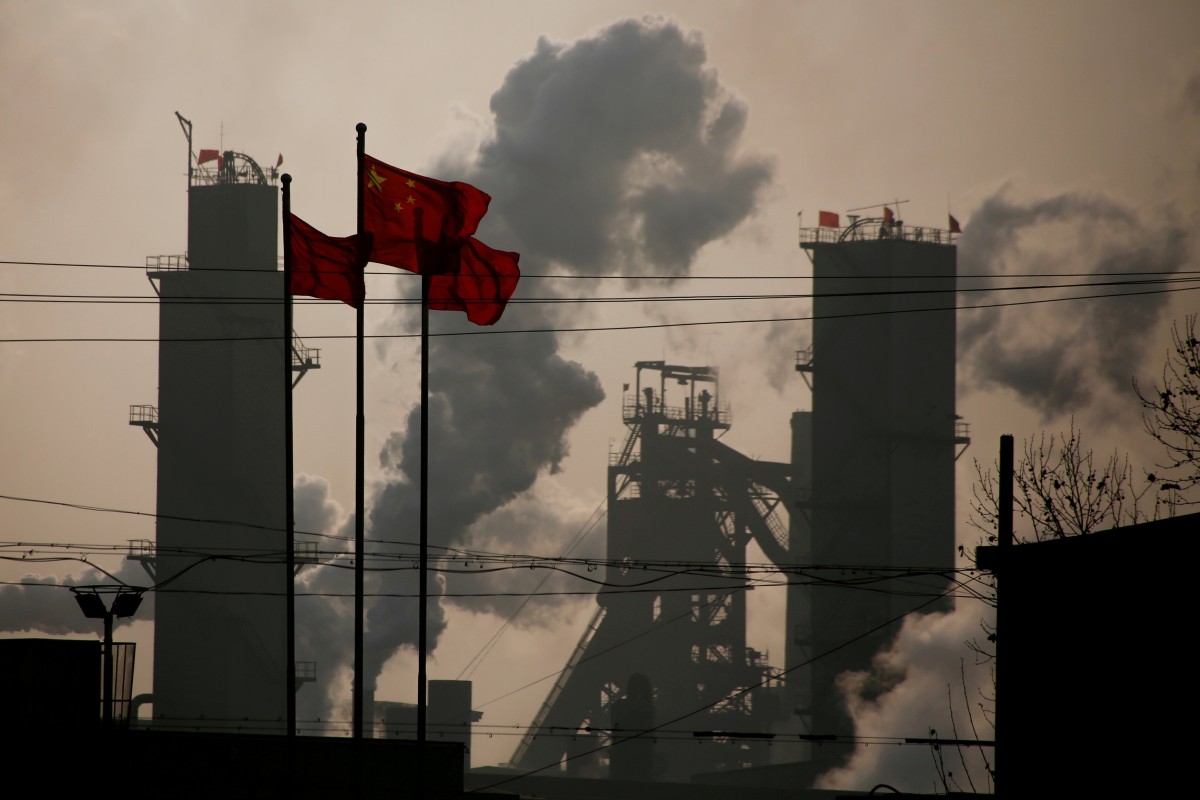
Pollution levels in some parts of China worsened this winter. Photo: Reuters
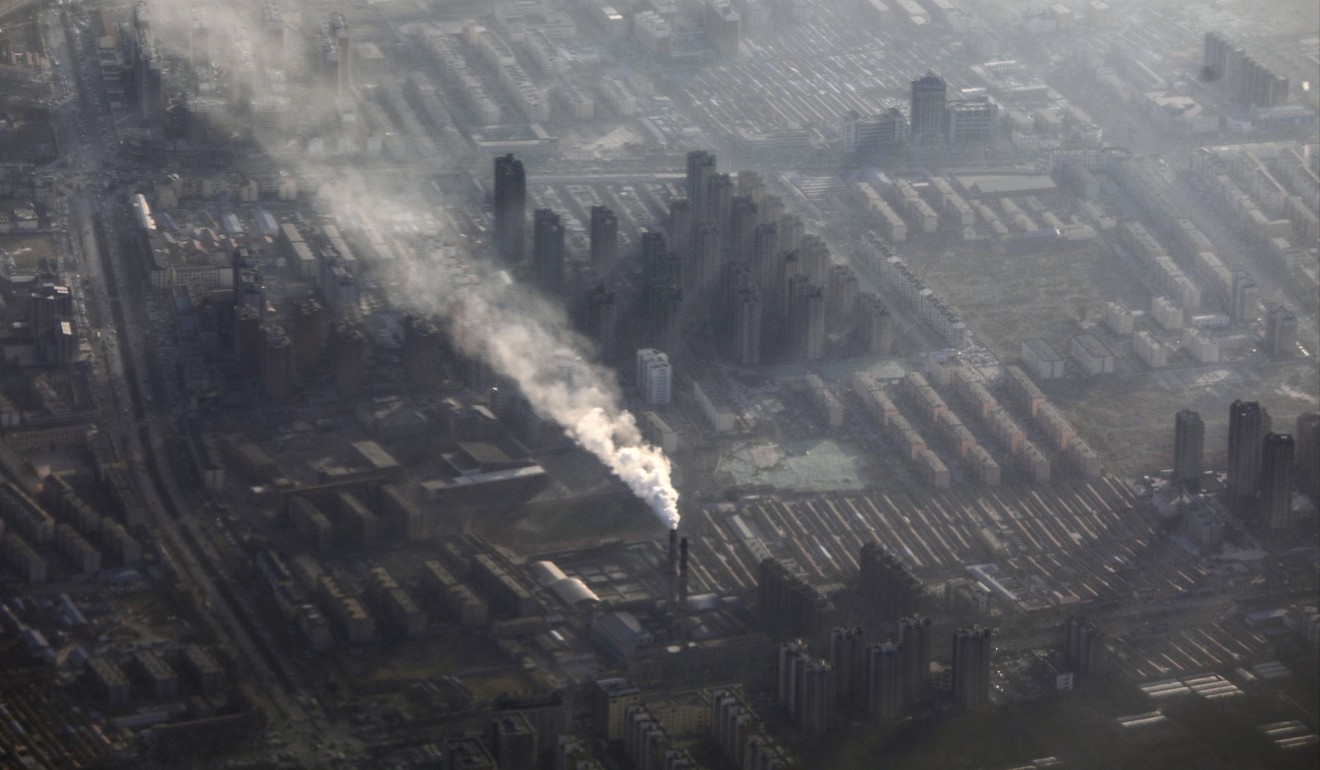
China has publicly accused dozens of firms, including some of its largest state enterprises, of exceeding pollution limits and breaching monitoring standards, as concerns grow that the slowing economy is undermining a five-year war on pollution.
In lists published by the Ministry of Ecology and Environment over the past week, subsidiaries of state giants such as China Baowu Steel Group and the Aluminium Corporation of China were cited and fined for breaching emissions standards among other violations.
China has been stepping up its supervision capabilities and has plugged thousands of factories into a real-time emissions monitoring system, but enforcement remains one of its biggest challenges.
The ministry has continued to warn that China’s slowing economy had given some regions an excuse to “loosen their grip” on environmental protection.
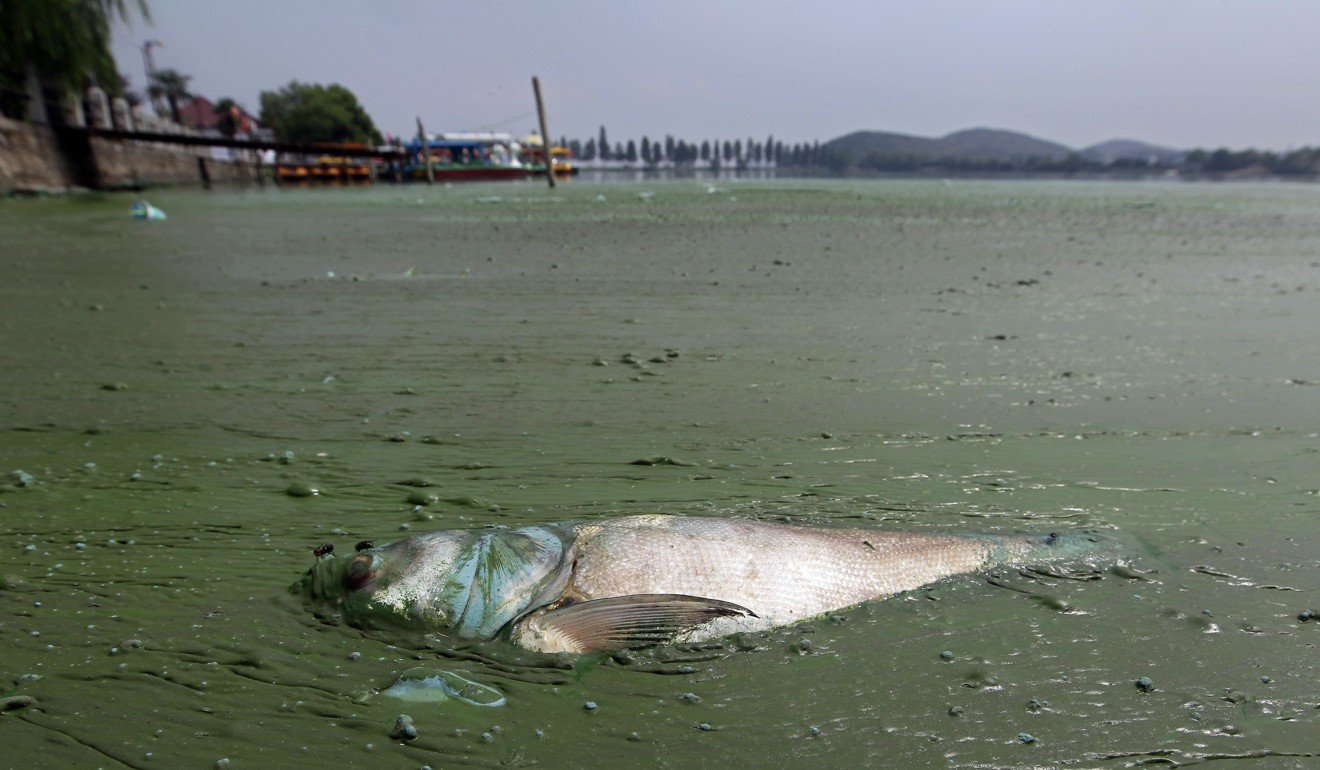
In the first quarter of this year, air quality in smog-prone northern regions fell compared with last year, and some regions also saw pollution readings in major lakes and rivers rise over the period.
Pollution levels in some lakes or rivers have also worsened. Photo: Reuters
A notice published last Friday said as many as 82 Chinese enterprises exceeded waste water emissions standards in the fourth quarter of 2018, including 44 sewage treatment plants and six waste water treatment facilities.
A unit of the Aluminium Corporation of China in Shanxi province was named as one of five “serious offenders”.
China’s green efforts hit by fake data and grass-roots corruption
It said the unit had exceeded emissions restrictions for a total of 92 days during the period. The firm did not respond to requests for comment.
As well as being fined, the companies cited were told to restrict operations until problems were resolved.
China has a five-year plan for fighting pollution. Photo: Simon Song
The biggest fine was meted out to a waste water treatment plant in Liaoning province, which was ordered to pay 7.2 million yuan (US$1 million).
In a separate review of monitoring standards in the Yangtze River Delta and the Fenwei plain regions, the ministry identified more than 300 firms for equipment quality violations and exceeding waste water discharge restrictions. It found only 22 per cent of equipment was of the required standard.
The list included a special steel producing unit of Baosteel, China’s biggest steelmaker. Baosteel did not respond to a request to comment.
Image copyright KOREA FUTURE INITIATIVEImage caption The trade of North Korean women in China is said to be worth $100m a year for criminal organisations
Thousands of North Korean women and girls are being forced to work in the sex trade in China, according to a new report by a London-based rights group.
They are often abducted and sold as prostitutes, or compelled to marry Chinese men, says the Korea Future Initiative.
The trade is worth $100m (£79m) a year for criminal organisations, it says.
The women are often trapped because China repatriates North Koreans, who then face torture at home, it says.
“Victims are prostituted for as little as 30 Chinese yuan ($4.30; £3.40), sold as wives for just 1,000 yuan, and trafficked into cybersex dens for exploitation by a global online audience,” the report’s author Yoon Hee-soon said.
They are coerced, sold, or abducted in China or trafficked directly from North Korea. Many are sold more than once and are forced into at least one form of sexual slavery within a year of leaving their homeland, it adds.
Many are enslaved in brothels in districts in north-east China with large migrant worker populations.
The girls – some as young as nine – and women working in the cybersex industry are forced to perform sex acts and are sexually assaulted in front of webcams. Many of the subscribers are thought to be South Korean.
Women forced into marriage were mostly sold in rural areas for 1,000 to 50,000 yuan, and were raped and abused by their husbands.
Media caption North Korean defectors who had to escape twice
The group collected its information from victims in China and exiled survivors in South Korea.
One woman, named as Ms Pyon from Chongjin City, North Korea, is quoted as saying in the report:
“I was sold [to a brothel] with six other North Korean women at a hotel. We were not given much food and were treated badly…After eight months, half of us were sold again. The broker did bad things to me.”
“When I arrived [at the new brothel] I had bruises on my body. [The broker] was beaten then stabbed in the legs by some members of the gang.”
Another, Ms Kim, said: “There are many South Koreans [in Dalian, China]…We put advertising cards under their doors [in hotels]…The cards are in the Korean-language and advertise what we offer…We are mostly taken to bars [by the pimp].
“South Korean companies want [North Korean prostitutes] for their businessmen…Prostitution was my first experience of meeting a South Korean person.”
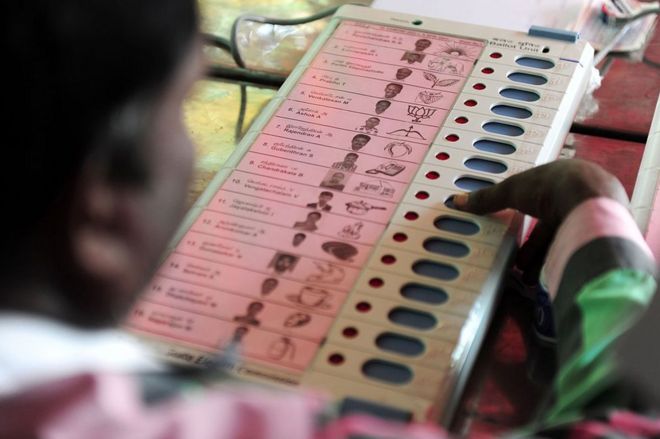
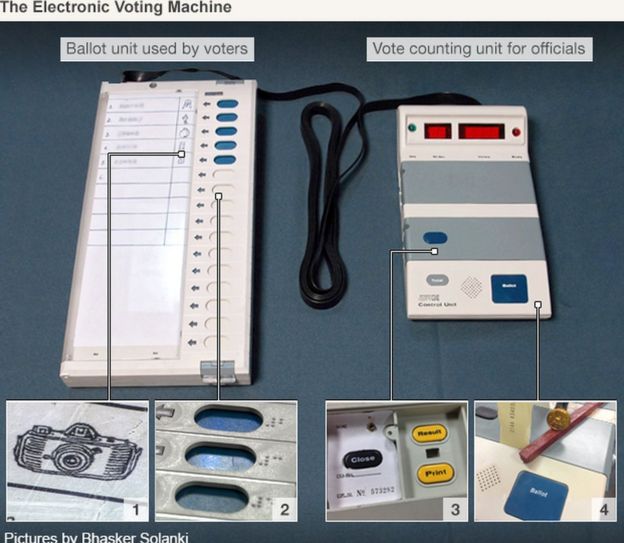
Image copyright AFPImage caption More than 1.5 million e-voting machines will be used in the summer elections
India’s election is nearly over: voting began on 11 April, and the final ballot was cast on 19 May with results out on 23 May. Every day, the BBC will be bringing you all the latest updates on the twists and turns of the world’s largest democracy.
What happened?
India’s Election Commission has denied allegations that voting machines had been tampered with in parts of India.
India’s opposition parties are meeting the election watchdog on Tuesday to demand more transparency in counting of votes on 23 May (Thursday).
Opposition leaders said the EC had to ensure that there was no possibility of anybody manipulating the Electronic Voting Machines (EVMs) which were used to record votes in the general election that concluded on Sunday.
In Uttar Pradesh’s Ghazipur constituency, a candidate belonging to the opposition Bahujan Samaj Party held a protest outside a room where the machines have been stored ahead of the counting. The candidate alleged that attempts were being made to take out the machines from the storage room.
Local officials have said the allegations are baseless.
The apprehensions regarding EVMs are baseless. EVMs are in strong room with 24×7 CISF security. And candidates have been allowed to post their agents to monitor the strong room.
In Chandauli constituency, supporters of Samajwadi Party have circulated a mobile phone clip, alleging that some machines were being brought to the counting station on Monday, a day after the election.
Local officials have said the machines shown in the video are reserve machines which had been brought from another part of the constituency because of logistical reasons.
The Election Commission has insisted that “proper security and protocol” was maintained in storing the electronic voting machines.
Why does this matter?
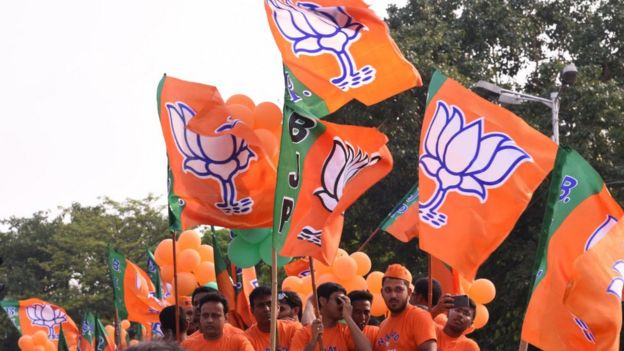
The move comes after a slew of exit polls predicted that the governing Bharatiya Janata Party (BJP) would get a comfortable majority in parliament to form a government.
Sitaram Yechury from the Left Front said the EC was “yet to come out with a mechanism” to deal with a mismatch between an EVM result and the corresponding paper trail.
During voting, EVMs are connected to a Voter-Verifiable Paper Audit Trail (VVPAT) machine, which dispenses a slip of paper with the symbol of the party the voter selected.
The Supreme Court has ordered the EC to tally the results from five EVMs with VVPAT receipts in at least five polling stations in every assembly seat. A parliamentary constituency comprises several assembly seats.
But opposition parties say that the tally should done for the entire constituency in case of a mismatch.
“On VVPATs and the EVM tally, the EC is yet to come out with a procedure in case there is a mismatch. Even if there is one mismatch in the EVMs or VVPAT samples picked for counting, to maintain the integrity of the electoral process, all VVPATs in that Assembly segment must be counted. This is important to maintain integrity of the electoral process,” Mr Yechury said.
If this were to happen however, it would considerably slow down the counting process and declaration of results.
PM Modi tweets tribute to former PM Rajiv Gandhi
What happened?
Prime Minister Narendra Modi has tweeted on the occasion of the death anniversary of former PM Rajiv Gandhi.
Mr Modi has repeatedly attacked Mr Gandhi on the campaign trail and his slurs have prompted widespread criticism.
He called Mr Gandhi the “number one corrupt man in the country” at a rally earlier this month in the northern state of Uttar Pradesh. A few days later, he went after Mr Gandhi again – accusing him of using a naval aircraft carrier to take him and his family to an island for a “family holiday”.
Mr Gandhi was assassinated by a suicide bomber in 1991 during a campaign rally.
Why does this matter?
Mr Modi’s tweet marking Mr Gandhi’s death anniversary is customary – but it has garnered attention because he attacked the former prime minister repeatedly while campaigning and didn’t back down when challenged.
Many were taken aback by Mr Modi’s criticism of Mr Gandhi. It elicited condemnation not just from the main opposition Congress party, but other regional opposition leaders, political commentators and even former political opponents of Mr Gandhi.
Analysts said the comments were a sign of “desperation” and showed that Mr Modi “knew” his party was not going to perform as well as expected in the election.
Now that campaigning is over and the election is nearly at an end, Mr Modi seems to be abandoning acerbic rhetoric for something more conciliatory.
On Monday, opposition rejects exit poll results
Image copyrightGETTY IMAGES
What happened?
Opposition leaders have dismissed the exit polls, which suggest that the governing Bharatiya Janata Party (BJP) is on course to win the general election.
I don’t trust Exit Poll gossip. The game plan is to manipulate or replace thousands of EVMs through this gossip. I appeal to all Opposition parties to be united, strong and bold. We will fight this battle together
A slew of exit polls released on Sunday predict big wins for the BJP-led National Democratic Alliance (NDA). The highest poll prediction for the NDA is 365 seats, and the lowest is 242.
An average of all exit polls gives the NDA 295 seats. Any party or coalition needs at least 272 seats to secure a majority in parliament and form a government.
The BJP welcomed the prediction and many of its leaders congratulated party workers’ efforts on social media.
Why does this matter?
Exit polls have to be taken with caution because they have been wrong in the past – a fact that opposition leaders were quick to point out.
I believe the exit polls are all wrong. In Australia last weekend, 56 different exit polls proved wrong. In India many people don’t tell pollsters the truth fearing they might be from the Government. Will wait till 23rd for the real results.
Time and again exit polls have failed to catch the People’s pulse. Exit polls have proved to be incorrect and far from ground reality in many instances. While undoubtedly TDP govt will be formed in AP, we are confident that non-BJP parties will form a non-BJP govt at the center.
The BJP is locked in a fierce electoral battle with the Congress and a clutch of regional parties in various states. But the trends suggest that the opposition’s strategy may have failed.
The most surprising prediction has come from the bellwether state of Uttar Pradesh (UP), which sends 80 MPs to parliament – more than any other.
So the state always holds the key to who forms the government – in 2014, the BJP won 71 seats.
Analysts had predicted that powerful regional parties would comfortably defeat the BJP this time around. But most of the exit polls suggest the party will perform much better than expected in UP – winning anything between 38 to 68 seats.
Only two polls – Nielsen-ABP and NewsX-Neta – have predicted that the BJP would lose at least 40 seats in UP to regional parties. Nielsen-ABP says the NDA will win 22 seats in the state, while NewsX-Neta gives the coalition only 33 seats.
These are the the only two polls which predict that the BJP-led alliance could fall short of an outright majority.
BEIJING, May 19 (Xinhua) — China will launch mass activities to celebrate the 70th anniversary of the founding of the People’s Republic of China (PRC).
The activities will take multiple forms across the country with patriotism at the core, according to a circular jointly issued by the General Office of the Communist Party of China Central Committee and the General Office of the State Council.
The activities will include touring urban and rural areas to fathom changes in the country, story-telling by citizens about endeavors to realize their dreams, thematic book reading, cherishing the memory of revolutionary martyrs, and national defense education activities, according to the circular.
The slogans of the 70th anniversary celebration were also unveiled in the circular.
WASHINGTON (Reuters) – U.S. Ambassador to China Terry Branstad was due to begin visiting Tibet on Sunday for official meetings and visits to religious and cultural sites, according to a news report on Sunday.
Branstad was scheduled to visit the Tibet Autonomous Region and Qinghai Province, a historic region of Tibet known to Tibetans as Amdo, from Sunday to Saturday, Radio Free Asia said in a report.
RELATED COVERAGE
U.S. Ambassador to China visiting Tibet this week
The State Department did not immediately comment on the story.
Radio Free Asia said it would be the first visit to Tibet by a U.S. official since the U.S. Congress approved a law in December that requires the United States to deny visas to Chinese officials in charge of implementing policies that restrict access to Tibet for foreigners. The U.S. government is required to begin denying visas by the end of this year.
In December, China denounced the United States for passing the law, saying it was “resolutely opposed” to the U.S. legislation on what China considers an internal affair, and it risked causing “serious harm” to their relations.
Since then, tensions have been running high between the two countries over trade. China struck a more aggressive tone in its trade war with the United States on Friday, suggesting a resumption of talks between the world’s two largest economies would be meaningless unless Washington changed course.
On Saturday, China’s senior diplomat Wang Yi told U.S. Secretary of State Mike Pompeo that recent U.S. words and actions had harmed the interests of China and its enterprises, and that Washington should show restraint.
While the Trump administration has taken a tough stance towards China on trade and highlighted security rivalry with Beijing, the administration has so far not acted on congressional calls for it to impose sanctions on China’s former Communist Party chief in Tibet, Chen Quanguo, for the treatment of minority Muslims in Xinjiang province, where he is currently party chief.
A State Department report in March said Chen had replicated in Xinjiang, policies similar to those credited with reducing opposition to Chinese rule in Tibet.
Beijing sent troops into remote, mountainous Tibet in 1950 in what it officially terms a peaceful liberation and has ruled there with an iron fist ever since.
BEIJING, May 19 (Xinhua) — China has allocated 47 billion yuan (6.8 billion U.S. dollars) for building 1,390 county-level hospitals since 2016, in a bid to ensure that every county and urban district has at least one county-level hospital, Health News reported.
This is part of the country’s efforts to narrow the gap in health services between urban and rural areas.
Traditional Chinese service centers have been set up in more than 30,000 health centers in towns, townships and communities, according to the newspaper.
The standard for the per capita basic public health service subsidy has raised from 25 yuan in 2011 to 55 yuan in 2018, and the number of free services provided by the national basic public health service program has been increasing over the period.
The health inequality index rated by urban and rural residents dropped by 32.5 percent from 2006 to 2016, according to the newspaper.
“The achievement is attributed to the national reforms in the medical and health care system aiming to ensure every citizen has the access to basic health services,” Miao Yanqing, a researcher with the health development research center under the National Health Commission, was quoted as saying.
Ma Zhaoxu (C, front), China’s permanent representative to the United Nations (UN), hosts a briefing on the U.S.-China trade relations at the UN headquarters in New York, May 17, 2019. Cooperation is the only right choice for China and the United States, said Ma Zhaoxu on Friday. (Xinhua/Ma Jianguo)
UNITED NATIONS, May 18 (Xinhua) — Cooperation is the only right choice for China and the United States, said China’s Permanent Representative to the United Nations (UN) Ma Zhaoxu on Friday.
The economic and trade relations between China and the United States are the “ballast” and “propeller” of this important bilateral relationship, said the Chinese envoy when hosting a briefing on the U.S.-China trade relations at the UN headquarters in New York, adding that it is not only about U.S.-China bilateral relations but also world peace and prosperity.
Representatives from more than 100 UN member states and international agencies attended the meeting.
Referring to the consultations between the two countries since the United States unilaterally provoked the frictions in March 2018, Ma said that China will resolutely defend its core interests and will never give in on major issues of principle.
China strongly opposes the U.S. practice of imposing additional tariffs, said the Chinese envoy, while expressing the hope that the United States and China could work together, meet each other in the halfway, address each other’s concern based on mutual respect and equality, and strive for a mutually beneficial agreement.
“The agreement between the two sides must be equal-footed and mutually beneficial,” he said, noting that China’s three core concerns — remove all the additional tariffs, work out a realistic amount of purchases, and improve the balance of the wording of the text — must be addressed.
The Chinese economy has maintained steady growth and has shown positive momentum, Ma told the audience. “The trade protectionist measures of the United States will have an impact on the Chinese economy, but it can be overcome.”
“The Chinese economy is a sea, not a small pond,” he added. “We will continue to promote reform and opening up according to our own pace, and promote high-quality development of the economy according to our own timetable and road map, to realize the long-term stability and growth of the Chinese economy.”
According to Ma, paying mutual respect to each other’s core concerns, and making mutual concessions on the basis of mutual respect, equality and mutual benefit are the premises of expanding cooperation, and only in such a way, the trade issues between the two sides could be resolved.
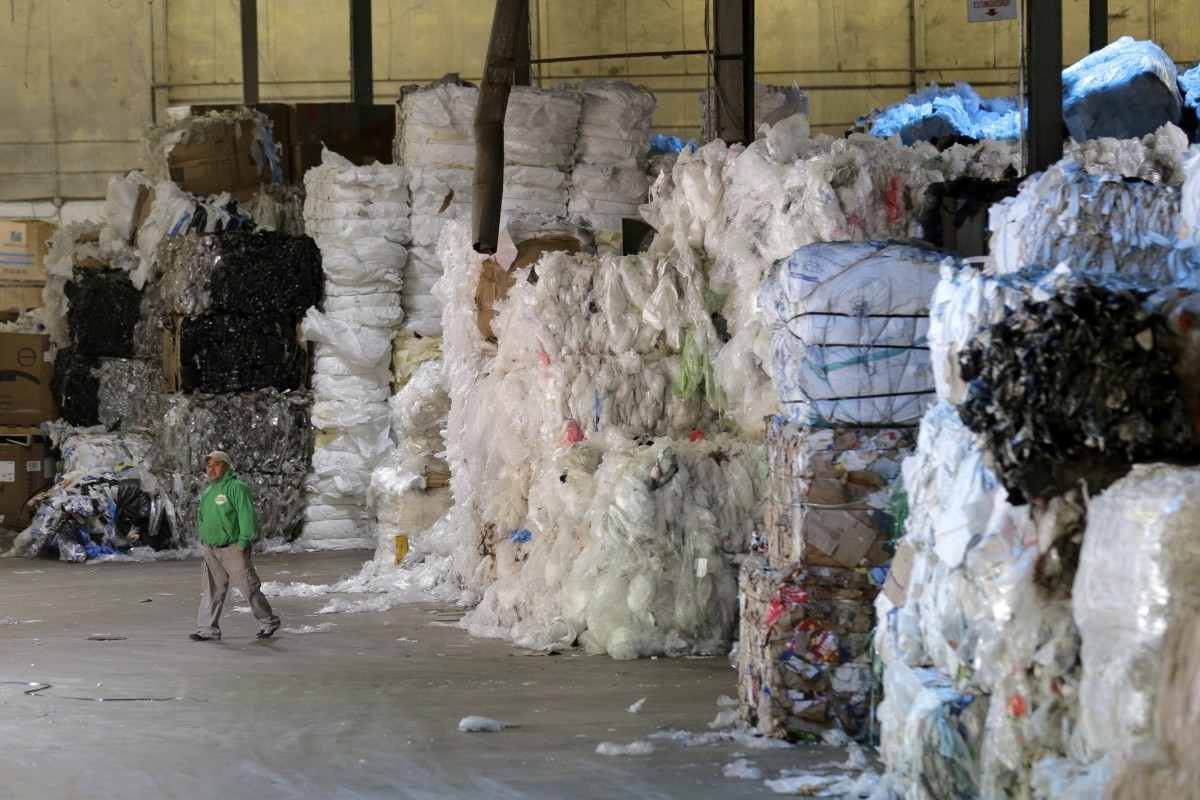
US paper mills are expanding capacity to take advantage of a glut of cheap waste materials
Some facilities that previously exported plastic or metal to China have retooled so they can process it themselves
China phased in import restrictions on scrap paper and plastics in January last year. Photo: AP
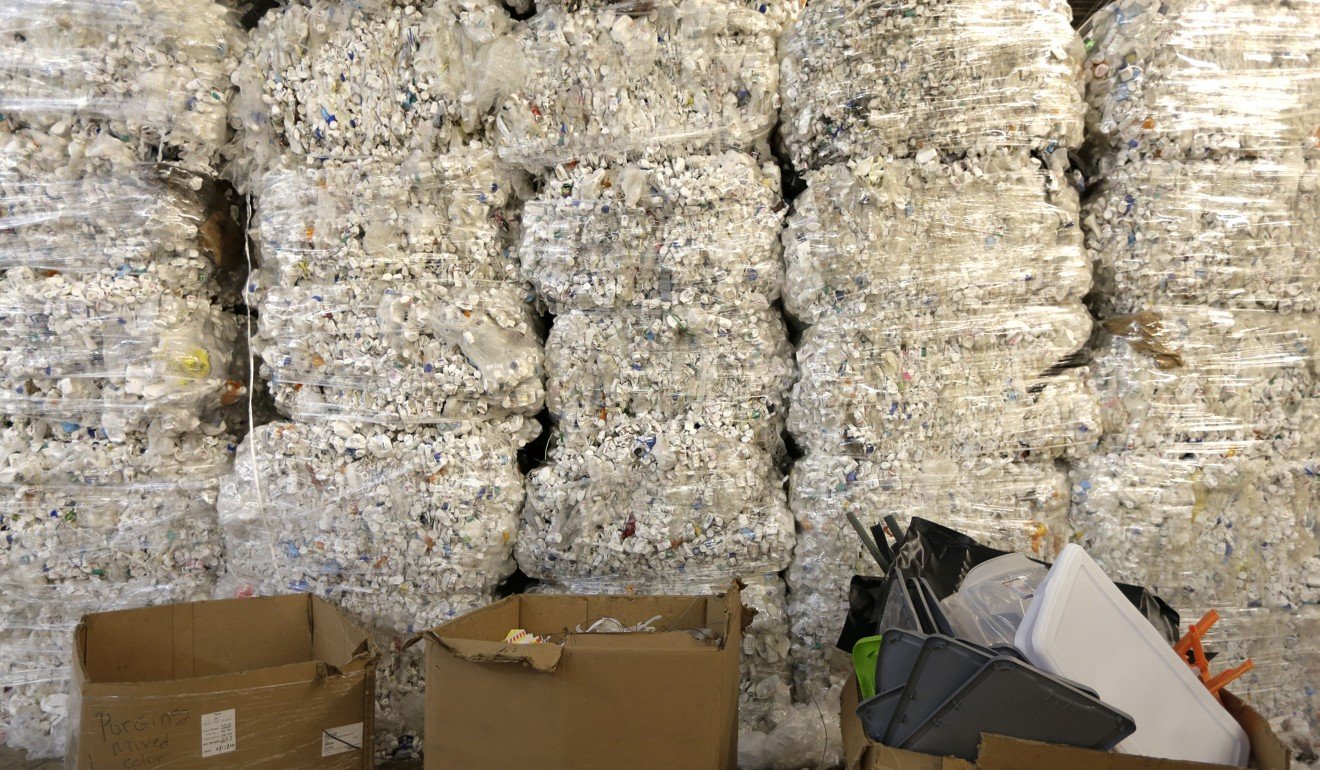
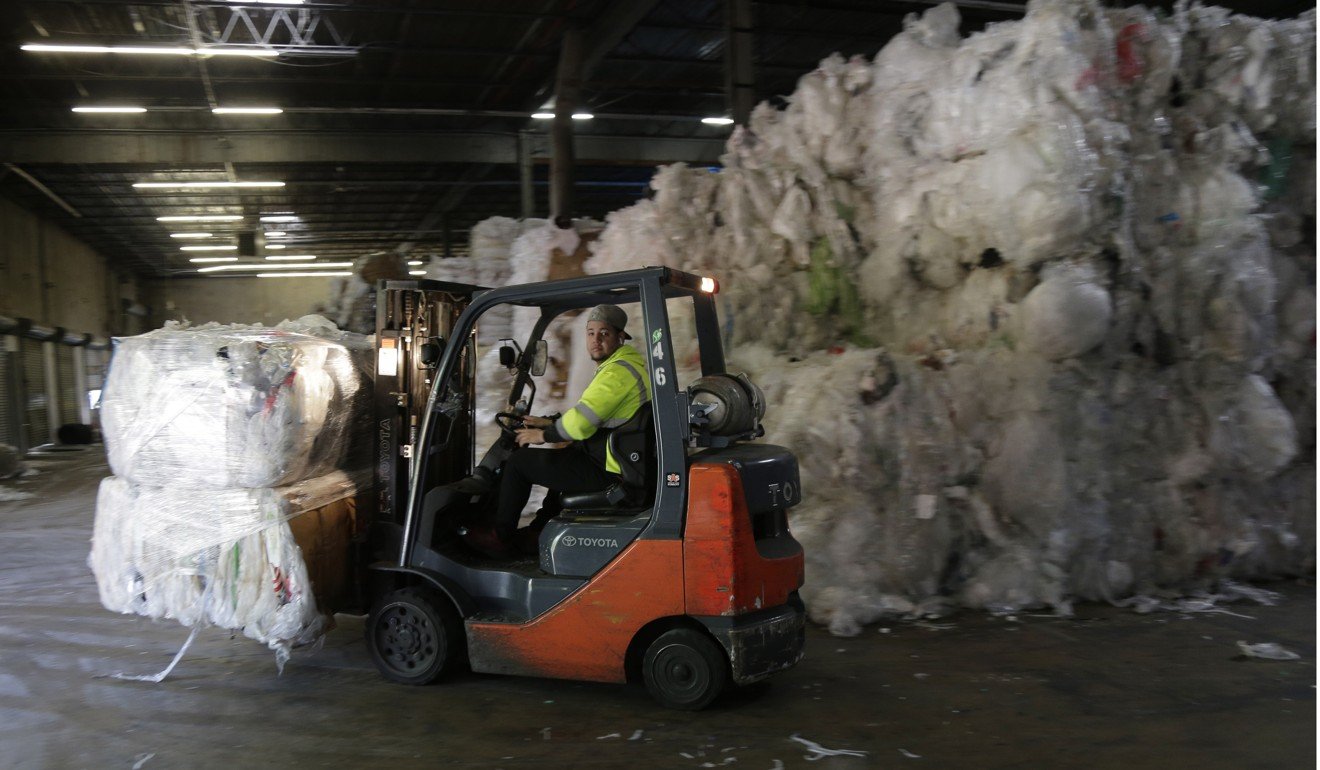
The halt on China’s imports of waste paper and plastic that has disrupted US recycling programmes has also spurred investment in American plants that process recyclables.
US paper mills are expanding capacity to take advantage of a glut of cheap scrap. Some facilities that previously exported plastic or metal to China have retooled so they can process it themselves.
And in a twist, the investors include Chinese companies that are still interested in having access to waste paper or flattened bottles as raw material for manufacturing.
“It’s a very good moment for recycling in the United States,” said Neil Seldman, co-founder of the Institute for Local Self-Reliance, a Washington-based organisation that helps cities improve recycling programmes.
Global scrap prices plummeted in the wake of China’s ban. Photo: AP
China, which had long been the world’s largest destination for paper, plastic and other recyclables, phased in import restrictions in January last year.
Global scrap prices plummeted, prompting waste-hauling companies to pass the cost of sorting and baling recyclables on to municipalities. With no market for the waste paper and plastic in their blue bins, some communities scaled back or suspended kerbside recycling programmes. But new domestic markets offer a glimmer of hope.
How China’s ban on plastic waste imports became an ‘earthquake’
About US$1 billion in investment in US paper processing plants has been announced in the past six months, according to Dylan de Thomas, a vice-president at The Recycling Partnership, a non-profit organisation that tracks and works with the industry.
Hong Kong-based Nine Dragons, one of the world’s largest producers of cardboard boxes, has invested US$500 million over the past year to buy and expand or restart production at paper mills in Maine, Wisconsin and West Virginia.
Brian Boland, vice-president of government affairs and corporate initiatives for ND Paper, Nine Dragons’ US affiliate, said that as well as making paper from wood fibre, the mills would add production lines turning more than a million tonnes of scrap into pulp to make boxes.
“The paper industry has been in contraction since the early 2000s,” he said. “To see this kind of change is frankly amazing. Even though it’s a Chinese-owned company, it’s creating US jobs and revitalising communities like Old Town, Maine, where the old mill was shuttered.”
Hong Kong-based Nine Dragons has invested US$500 million in paper mills in Maine, Wisconsin and West Virginia. Photo: Handout
:
The Northeast Recycling Council said in a report last autumn that 17 North American paper mills had announced increased capacity to handle recyclable paper since the Chinese cut-off.
Another Chinese company, Global Win Wickliffe, is reopening a closed paper mill in Kentucky. Georgia-based Pratt Industries is constructing a mill in Wapakoneta, Ohio that will turn 425,000 tonnes of recycled paper per year into shipping boxes.
Plastics also had a lot of capacity coming online, de Thomas said, noting new or expanded plants in Texas, Pennsylvania, California and North Carolina that turned recycled plastic bottles into new bottles.
Chinese companies were investing in plastic and scrap metal recycling plants in Georgia, Indiana and North Carolina to make feedstocks for manufacturers in China, he said.
GDB International processes bales of scrap plastic film into pellets to make garbage bags and plastic pipe. Photo: AP
In New Brunswick, New Jersey, the recycling company GDB International exported bales of scrap plastic film such as pallet wrap and grocery bags for years. But when China started restricting imports, company president Sunil Bagaria installed new machinery to process it into pellets he sells profitably to manufacturers of garbage bags and plastic pipe.
The imports cut-off that China called “National Sword” was a much-needed wake-up call to his industry, he said.
“The export of plastic scrap played a big role in easing recycling in our country,” Bagaria said. “The downside is that infrastructure to do our own domestic recycling didn’t develop.”
China to suspend checks on US scrap metal shipments, halting imports
That was now changing, but he said far more domestic processing capacity would be needed as a growing number of countries restricted scrap imports.
“Ultimately, sooner or later, the society that produces plastic scrap will become responsible for recycling it,” he said.
It has also yet to be seen whether the new plants coming on line can quickly fix the problems for municipal recycling programmes that relied heavily on sales to China to get rid of piles of scrap.
About US$1 billion in investment in US paper processing plants has been announced in the past six months, according to a non-profit group that tracks the industry. Photo: AP
“Chinese companies are investing in mills, but until we see what the demand is going to be at those mills, we’re stuck in this rut,” said Ben Harvey, whose company in Westborough, Massachusetts, collects trash and recyclables for about 30 communities.
He had a car park filled with stockpiled paper a year ago after China closed its doors, but eventually found buyers in India, Korea and Indonesia.
China to collect applications for scrap metal import licences from May
Keith Ristau, chief executive of Far West Recycling in Portland, Oregon, said most of the recyclable plastic his company collected used to go to China but now most of it went to processors in Canada or California.
To meet their standards, Far West invested in better equipment and more workers at its material recovery facility to reduce contamination.
In Sarepta, Louisiana, IntegriCo Composites is turning bales of hard-to-recycle mixed plastics into railroad ties. It expanded operations in 2017 with funding from New York-based Closed Loop Partners.
“As investors in domestic recycling and circular economy infrastructure in the US, we see what China has decided to do as very positive,” said Closed Loop founder Ron Gonen.
General will spend five days meeting top Chinese leaders including President Xi Jinping
Mission seeks to patch up wounds caused by Brazilian President Jair Bolsonaro’s anti-China rhetoric
Hamilton Mourao favours maximising engagement with China. Photo: EPA-EFE
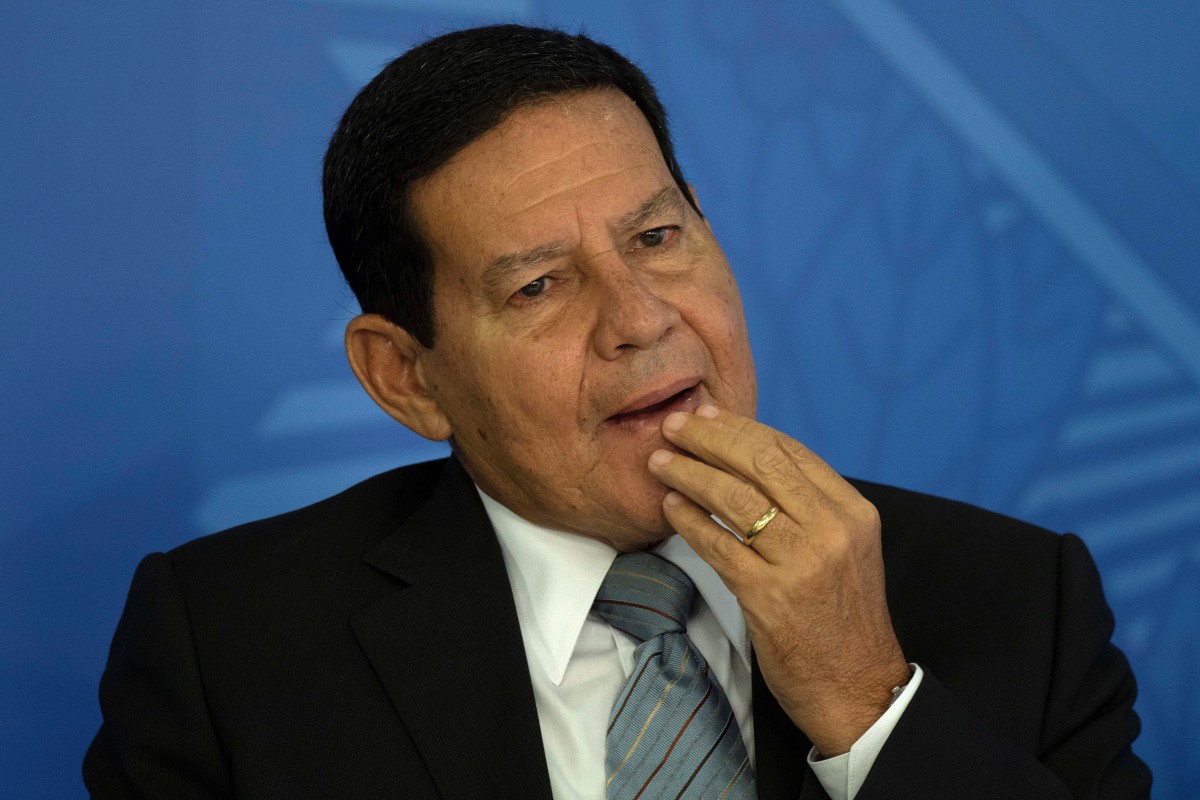
Brazil’s vice-president is expected to land in Beijing on Sunday on a mission to patch up wounds caused by President Jair Bolsonaro’s lacerating anti-China rhetoric.
General Hamilton Mourao will spend five days in China rubbing shoulders with some of the country’s most powerful leaders, culminating in an audience with President Xi Jinping, in an effort to shore up the relationship between the two emerging market giants. Bolsonaro himself is due to visit later this year, while Xi is due to visit Brasilia in November for the BRICS summit.
China – Brazil’s most important trading partner for the past decade – remains a sensitive subject in the Bolsonaro administration. While Mourao and the other business-oriented members of government favour maximising engagement with the Asian giant, Bolsonaro and his more radical appointees view China with a high degree of suspicion, as a predatory economy that wishes not merely to invest in Brazil, but to own it.
“The Chinese can buy in Brazil, but they can’t buy Brazil,” the president said at a breakfast with journalists last month.
Brazilian President Jair Bolsonaro said last month that the “Chinese can buy in Brazil, but they can’t buy Brazil”. Photo: AFP
Still, in comparison with his pre-election criticism of China as “heartless”, Bolsonaro in office has dialled down his anti-Beijing sentiment. Mourao’s visit is part of an effort to reset that relationship.
“The Chinese understand that Mourao plays a central role in toning down Bolsonaro’s rhetoric,” said Oliver Stuenkel, a specialist on BRICS – an association of five major emerging economies, namely Brazil, Russia, India, China and South Africa – at the FGV business school. “They know that the Mourao-China relationship will be fundamental.”
Should China be worried about Bolsonaro’s bromance with Trump?
Speaking to reporters recently, Mourao recognised the need to balance the Bolsonaro administration’s desire to pivot towards the United States with practical considerations of China’s economic significance.
“The US are the champions of democracy and freedom and our government has left it very clear what this represents,” the vice-president said. “But on the other side we have to be sufficiently pragmatic to understand the importance of China for Brazil’s economic development.”
Chinese investment in Brazil reached almost US$134 billion between 2003 and 2018, Brazilian government figures showed.
Chinese President Xi Jinping is expected to meet the visiting Brazilain vice-president. Photo: AP
While the trade war between the US and China may offer Brazil some short-term gains, particularly for its agricultural sector, the downsides outweigh the benefits, according to Renata Amaral, a foreign trade analyst at Barral MJorge consultancy.
“In truth this war is no good for anyone,” she said.
Mourao said that Brazil was monitoring the situation “critically and cautiously”.
Why US-China trade war could be good for Brazil
From the Chinese perspective, Beijing is looking for Brazil’s formal support for its “Belt and Road Initiative” – Chinese President Xi Jinping’s signature global infrastructure megaproject. Asked whether Brazil might sign up to the programme, Mourao said that any agreement would have to be approved by Bolsonaro in the second half of the year.
After trips to the Great Wall of China and the Shanghai Stock Exchange, Mourao will meet Xi, in a clear sign of Brazil’s importance to China. “The visit of vice-president Mourao will reinforce mutual political confidence, deepen our friendly cooperation and add new dimensions to our strategic partnership,” according to Chinese foreign ministry spokesman Geng Shuang.
With Beijing both uncertain about the direction of Brazilian foreign policy under Bolsonaro and eager to strike deals on infrastructure and food security, it makes sense for the Chinese to roll out the red-carpet for Mourao, according to Hussein Kalout, a specialist in foreign policy and a researcher at Harvard.
China trade vs economic growth: the dilemma for Brazil’s president
While the federal government remains ambivalent about its relationship with China, some of Brazil’s powerful state governors are seeking to develop their own relationship with the Asian country. One of them is Carlos Massa Ratinho Junior, the governor of the southern state of Parana, who travelled to China recently to discuss agriculture and railroad projects.
“We’re open to talk with any country that wants to and understands that the state of Parana is the best to place to invest in Brazil,” the governor said in an interview, adding that his actions did not conflict with the federal government’s stance towards Beijing.
But in a sign of the domestic pressure Bolsonaro is under not to abandon entirely his sceptical attitude to China, Luiz Philippe de Orleans e Braganca, the vice-president of the lower house’s foreign affairs committee and a lawmaker from Bolsonaro’s own party, said the government should set limits to the partnership.
“It’s good to talk to China, but it depends what is being discussed,” he said. “For example, the 5G network set up by China is dangerous because it will give the Chinese more information about Brazilian citizens than the Brazilian government.”
BEIJING (Reuters) – China’s housing regulator has urged four more cities to prevent their residential property markets from overheating in the latest sign that authorities are not about to relax their grip on the real estate business in order to spur the economy.
The cities of Suzhou, Foshan, Dalian and Nanning have been told by the Ministry of Housing and Urban-Rural Development to stabilize land and housing prices as well as market expectations, the official Xinhua news agency reported late on Saturday.
Six other cities were warned by the ministry last month to monitor the growth of home prices in their markets, after some cities, including, Foshan quietly started to relax some curbs since December to spur demand.
China’s home property market is a key plank of the economy, influencing tens of related sectors such as construction and financial services.
The sector has held up well despite a slowdown in growth in the world’s second-biggest economy, with policymakers walking a fine line between preserving stability and hurting market sentiment.
Renewed tensions between China and the United States over trade have also added pressure on Chinese policymakers to keep the domestic economy on a stable footing, while continuing to fend off risks such as housing bubbles.
Average new home prices in China’s 70 major cities rose 0.6% in April, unchanged from the pace of growth in March, according to a monthly official survey.
Most of the 70 cities surveyed by the National Bureau of Statistics still reported monthly price gains for new homes. The number increased to 67 in April from 65 in March, signaling a slight strengthening in the market.
The housing ministry reiterated that “houses are for living in, not for speculation”, according to the Xinhua news agency on Saturday.
Even before the ministry’s latest warning, the prosperous city of Suzhou, just northwest of Shanghai, had already rolled out new property curbs.
On May 11, Suzhou said it would restrict buyers of new homes in some districts from selling their property within three years.












 CHINDIA ALERT: You'll be living in their world, very soon