Archive for ‘Chindia Alert’

23/07/2012

* Twisted road to Raisina Hill

Times of India: “The mood was light as Pranab Mukherjee unwound at his residence on Thursday after polling ended. “Well sir, every time we send a Bill to Rashtrapati Bhavan for your approval, please don’t correct the commas, language and grammar,” joked a senior minister.


The compliment to Mukherjee’s reputation for reading the fine print raised a laugh. He could afford to be expansive with ministers Pawan Bansal and V Narayanasamy reporting that voting had gone to plan. But his journey to Rashtrapati Bhawan was not smooth. The last leg began about two months ago when Sonia Gandhi initiated discussions on who should replace Pratibha Patil. Given the unpredictable nature of allies like Mamata Banerjee and Mulayam Singh Yadav, the task wasn’t easy. Some in the Congress argue Sonia could have preferred Hamid Ansari, others feel Mukherjee was on equal footing. PM Manmohan Singh pointed to his utility in government.”

via Twisted road to Raisina Hill – The Times of India.

23/07/2012

* Chariots of Fire’s Eric Liddell is Chinese ‘hero’

BBC News: “The story of Scottish athlete Eric Liddell – a devout Christian who refused to take part in an Olympic race because it took place on a Sunday – became famous after being told in the Oscar-winning film Chariots of Fire. But almost a century later, why is the athlete regarded as a hero in China?

In the corner of a quiet Chinese courtyard, 5,000 miles from Scotland, stands a memorial in Isle of Mull granite. The stone commemorates Eric Liddell – one of Scotland’s greatest Olympians – who is buried nearby. The stone was gifted by Edinburgh University after a Scottish engineer, Charles Walker, rediscovered his grave in the Chinese city of Weifang.

Eric Liddell won a gold medal at the 1924 Olympics in Paris

Liddell, the son of Christian missionaries, had been born in China in 1902 and lived there until he was five when he returned to Britain to be educated. While he was at Edinburgh University, Liddell excelled at athletics and also played rugby for the Scottish national team – as well as being a noted evangelist preacher.

At the 1924 Olympics in Paris, he famously refused to run on a Sunday, ruling him out of the 100 metres race to which he was best suited. Instead, he took part in the 400 metres race and, against the odds, still won a gold medal.

Soon after his Olympic triumph, Liddell finished his studies and returned to China to become a missionary. As well as religious duties, he worked as a science and sports teacher at the Anglo/Chinese College in Tianjin.

After the Japanese invasion in 1937, Liddell carried on his missionary work even when it became dangerous to do so. Liddell’s wife and children left China for Canada in 1941 but he stayed to help in any way he could.

In 1943 he was interned at Weifang and he died of a brain tumour just months before the end of World War II, at the age of 43.

Liddell’s achievements are taught at the school on the site of the prison camp

The prisoner-of-war camp which held about 2,000 Westerners is now a place of learning for 2,000 Chinese teenagers. Every new pupil at the school is taught about the camp and Eric Liddell’s achievements on and off the track

“This part of history is a great treasure for our school,” said head teacher, Zhao Guixia.

“We can see the great value of humanity, especially in Eric Liddell’s stories.”

In the camp, Liddell was affectionately known as “Uncle Eric” because he spent most of his time teaching children, organising sports and helping others.

via BBC News – Chariots of Fire’s Eric Liddell is Chinese ‘hero’.

20/07/2012

* China’s health reforms for all

China Daily: “Vice-Premier Li Keqiang on Thursday urged the country to push forward with medical reform.

The basic public health insurance system has covered both urban and rural areas, but the system to insure people with acute diseases and serious chronological diseases has not yet been established, Li said. He said a person who suffers from such an illness is likely to impose a major financial burden on their whole family.

Li asked medical reformers to cover such diseases under the current public health insurance system.

He also suggested that the insurance industry and the government work together to help people combat such diseases. He said government, individuals and insurance companies can together share the burden of chronic disease.

China is set to build a “relatively sound” public service system and achieve “equalization” in public service supply by 2020, according to the country’s first national plan for public services.

The State Council issued the plan, which covers the 12th Five-Year Plan period (2011-15), on Thursday. It specifies the scope of public services and defines standards and operating mechanisms for the provision of services.

The basic public services listed cover eight major sectors — public education, labor and employment services, social security, social services, healthcare, population and family planning services, and housing services, as well as culture and sports.

“It establishes a future trend that each Chinese citizen, regardless of gender, social status, wealth or place of residence, is equally entitled to basic social services, which will be detached as an ultimate goal from the household registration system,” Hu Zucai, vice-minister of the National Development and Reform Commission, said at a news conference.

Also, “it will help accelerate the transformation of the country’s economic growth pattern and boost domestic consumption”, he said.

“Promoting the equalization of basic public services is necessary to build a harmonious society and safeguard social fairness and justice,” he said.

At present, there are huge gaps in public service supply and access between urban and rural areas, different population groups and regions, Hu said.

For instance, the number of doctors serving every 1,000 people in urban areas is more than twice that in rural areas, according to the Ministry of Health.

To address discrepancies, the government will channel more social resources toward rural areas, poor regions and vulnerable social groups in order to ensure that all people have equal access to basic public services, Hu said.”

via China’s health reforms for all |Politics |chinadaily.com.cn.

20/07/2012

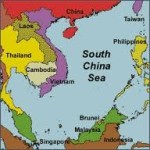
* ASEAN to claim common ground on South China Sea, but no communiqué

Reuters: “Southeast Asian states have reached a “common position” on the disputed South China Sea, but will not resurrect a joint communiqué aborted after unprecedented discord over the issue at a summit last week, Indonesia’s Foreign Minister said on Friday.

Marty Natalegawa sought to put a positive gloss on two days of shuttle diplomacy that failed to rally members of the Association of Southeast Asian nations (ASEAN) behind a belated, face-saving communiqué.

They had failed to agree the customary end-of-summit joint statement last Friday for the first time in the bloc’s 45-year history. The divisions follow a rise in incidents of naval brinkmanship involving Chinese vessels in the oil-rich waters that has sparked fears of a military clash.

Natalegawa told Reuters the 10 members had agreed on the components of an ASEAN “instrument” that would be issued by chair Cambodia later on Friday and would detail what was agreed upon during last week’s ASEAN Regional Forum in Phnom Penh, including the maritime dispute.

“We are trying so that other decisions made by the foreign ministers will be formulated in a different instrument for follow up,” Natalegawa told Reuters.

“The non-existence of a joint communiqué is behind us,” he said, adding that the customary communiqué was aborted last week because one of the four paragraphs relating to the South China Sea in the 132-paragraph draft could not be agreed on.

Disputes over how to address the increasingly assertive role of China – an ally of several ASEAN states – in the strategic waters of the South China Sea has placed the issue squarely as Southeast Asia’s biggest potential military flashpoint.

China has territorial claims over a huge area covering waters that Vietnam and the Philippines say they also have sovereignty over. All three countries are eager to tap possibly huge offshore oil reserves.

The failure to issue the communiqué and the bitter rows behind closed doors over what words to use and what to exclude have been a huge embarrassment for a 10-member bloc planning to form an EU-style economic community by 2015.

The row illustrated how Southeast Asian nations have been polarized by China’s rapidly expanding influence in the region and the economic dependence on Beijing that some of ASEAN’s poorer states now have, among the Cambodia, this year’s chair.”

via ASEAN to claim common ground on South China Sea, but no communiqué | Reuters.

20/07/2012

* Rural Chinese get online as mobile overtakes desktop

BBC News: “Mobile phones are now the most common way for people to connect to the internet in China, a report has said.

For the first time, desktop computers are no longer the leading method for the country’s 538 million connected citizens to get online.

The report from the China Internet Network Information Center (CINIC) said over 50% of the year’s new internet users were from rural areas.

A fall in smartphone costs has been the key cause of growth, experts said. “Mobile phones are a cheaper and more convenient way to access the internet for [residents in] China’s vast rural areas and for the enormous migrant population,” said the report from the state-linked CINIC.

Mobile internet users now number 388 million, up almost 10% since the start of the year. “Mobile phone prices continued to drop,” the report said.

“The emergence of smartphones under 1,000 yuan [$157, £100] sharply lowered the threshold for using the devices and encouraged average mobile phone users to become mobile web surfers.”

The total number of those online has risen 5% since the end of last year, many of whom are very active in cyberspace.”

via BBC News – Rural Chinese get online as mobile overtakes desktop.

See also: https://chindia-alert.org/economic-factors/information-technology/

20/07/2012

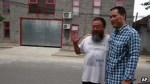
* China artist Ai Weiwei’s tax evasion appeal rejected

BBC News: “A court in China has rejected an appeal by Chinese artist and dissident Ai Weiwei against a tax evasion fine, his lawyer says.

Police barred Mr Ai from attending court in Beijing’s Chaoyang district to hear the verdict delivered.

Tax authorities imposed a 15m yuan ($2.4m, £1.5m) fine on Mr Ai’s firm for tax evasion in 2011. Supporters say the fine is politically motivated and Mr Ai wanted the court to overrule the penalty.

”We will keep appealing, until the day comes when we have nothing to lose,” Mr Ai said via Twitter. His lawyer Pu Zhiqiang, who was in court for the verdict, told reporters that the ruling was ”totally without reason”.

The artist, a outspoken critic of the government, was detained for almost three months without charge last year. “This country has once again proved to the world that law and justice don’t exist here” said Ai Weiwei on Twitter.

Outside his door witnesses counted up to 32 police cars.

His lawyers told the court the police were acting illegally preventing a free man from hearing the verdict in his own case. The entire case they say is illegal, from the secret detention of Mr Ai to the fact there’s no real evidence of tax evasion.

Ai Weiwei’s fame, his adept use of social media, his refusal to stay silent, and his persistent, sometimes impudent, criticisms of the Communist Party’s rule have all made this a litmus test for the way the party deals with dissent.

But, with the transfer of power to a new generation of leaders looming, China’s huge security apparatus appears determined to put ”stability” and ”harmony” first, and, critics will say, due process second.

After he was released, he was accused of tax evasion and the fine imposed.”

via BBC News – China artist Ai Weiwei’s tax evasion appeal rejected.

20/07/2012

* India now top migrant source for Australia

BBC News: “India has become Australia’s largest source of permanent migrants for the first time, with six other Asian nations in the top 10, a report says.

Indian migrants comprised 15.7%, or 29,000, of Australia’s total migrants based on the 2011-12 Migration Programme report. China came in second, with 25,500, and then Britain with 25,275.

Most were skilled professionals, with accountants, cooks and software engineers topping the list.

China was top last year, with the UK top for the two years before that.

Of the almost 185,000 permanent migrants arriving in Australia during the June 2011- June 2012 period, more than 125,000 were from the skilled migrant programme.

————————————–

Australia migration 2011-2012

Total: 184,998

India: 29,018

China: 25,509

UK: 25,274

Philippines: 12,933

South Africa: 7,640

Source: Department of Immigration and Citizenship

====================================

Most of the new arrivals came from Asian nations. Aside from India and China, other source countries included the Philippines, Sri Lanka, Malaysia, South Korea and Vietnam.”

via BBC News – India now top migrant source for Australia.

19/07/2012

* In China, wait leads to standoff with officials

San Jose Mercury News: “The Chinese sometimes display a remarkable tolerance for those who cut in line but such forbearance apparently has its limits when queue-jumpers are government officials.

Thousands of people threw water bottles and blocked traffic at a popular nature preserve in northeastern China on Sunday after word spread that the arrival of top Communist Party leaders was causing an hours-long wait to visit a scenic lake. It was one of a string of brash confrontations in recent months between the authorities and Chinese citizens.

The infuriated crowd surrounded the vehicles carrying the government entourage and refused to let them pass, according to scores of microblog posts sent out by those waiting to ascend Changbai Mountain in Jilin Province. The three-hour standoff drew police officers and soldiers, some of whom reportedly beat recalcitrant protesters.

According to one witness, thousands of people chanted for a refund of the $20 entry tickets and later demanded that the officials leave their besieged vehicles and apologize. “Fight privilege!” the witness wrote.

The accounts, posted on Sina Weibo, a Twitter-like service, were later deleted by the company’s in-house censors but many postings were saved and reposted on overseas websites like Ministry of Tofu and China Digital Times whose servers cannot be reached by Chinese censors.”

via In China, wait leads to standoff with officials – San Jose Mercury News.

See also:

19/07/2012

* ONGC to Continue Exploration in South China Sea

WSJ: “India’s state-run Oil & Natural Gas Corp. will continue to explore for oil and gas offshore Vietnam in the South China Sea, ignoring objections from China.

ONGC Videsh Ltd., the overseas investment arm of ONGC, has accepted Vietnam’s proposal to stay invested in Block 128 as Hanoi has offered additional data that can help to make future exploration economically feasible and discovering hydrocarbons commercially viable, a senior executive with the company said Thursday.”

via ONGC to Continue Exploration in South China Sea – WSJ.com.

See also: https://chindia-alert.org/prognosis/and-india/

19/07/2012

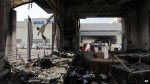
* India arrests after riot at Maruti plant leave one dead

BBC News: “At least 80 people have been arrested after violent clashes between workers and managers at a Maruti Suzuki factory near the Indian capital, Delhi.

One person died and more than 85 were injured, including two Japanese nationals, in the riot at the Manesar plant on Wednesday evening.

Maruti, India’s biggest carmaker, has halted production at the factory.

Managers and workers blame each other for starting the clashes, which follow months of troubled labour relations.

The violence at the vast factory in Haryana state is believed to have erupted after an altercation between a factory worker and a supervisor.

Workers reportedly ransacked offices and set fires at the height of the riot. A charred body was found afterwards in a damaged conference room – the identity of the person who died has not yet been established.

Dozens of staff, both management and shop-floor workers, were taken to a nearby hospital.

Security has now been tightened at the plant, which employs more than 2,000 people and produces more than 1,000 of Maruti’s top-selling cars each day, and accounts for about a third of its annual production.

Maruti Suzuki, a joint venture between Maruti and Japan’s Suzuki Motor Corporation, has a 50% share of India’s booming car market.

It has been hit by a series of strikes since June 2011, when workers went on a 13-day strike demanding the recognition of a new union.”

via BBC News – India arrests after riot at Maruti plant leave one dead.

Law of Unintended Consequences

continuously updated blog about China & India

ChiaHou's Book Reviews

continuously updated blog about China & India

What's wrong with the world; and its economy

continuously updated blog about China & India