From China Daily Mail blog: Apple CEO wants to make less products in China.

Related posts:
continuously updated blog about China & India

You will be living in their world, very soon

Beware the Waking Dragon
A finding of cancer-causing chemicals on children’s clothes sparked public fear yesterday, after a report aired on national state broadcaster China Central Television(CCTV).
The station’s Weekly Quality Report investigative programme carried the report, claiming that a recent Beijing Consumer Association test of 63 samples of children’s clothes sold on the mainland revealed that nearly a third failed to meet quality and safety standards.
The association said that problems included excessive levels of formaldehyde and other carcinogenic chemicals.
The investigation began after consumers started complaining that their children had developed skin rashes after wearing the clothes.
From China Daily Mail blog: Tainted children’s clothes scandal in China.
WSJ: “A debt-laden Spanish construction firm became the latest European company to unload assets onto eager Chinese buyers, as Europes debt woes force firms to look to China for cash.
State Grid Corp., China’s government controlled power-grid operator, said Tuesday it would buy high-voltage electricity transmission assets in Brazil from Spain’s Actividades de Construccion y Servicios SA for 1.86 billion reais ($938.2 million), including debt. The deal is State Grid’s second investment in Brazil and its fourth major investment overseas, and is the most recent in a string of deals in which a European company has looked to exit an investment amid financial troubles facing the region. ACSs standing has weaken because of its debts and the falling value of investments made during Spain’s boom years. Chairman Florentino Pérez, who is also the president of Spain’s soccer club Real Madrid CF, led ACS’s expansion when liquidity was abundant and Spain’s economy was booming on the back of a real-estate bubble that imploded about five years ago. As credit dried up, ACS began to cut down on debt by shedding assets. ACS currently has more than €9.33 billion ($11.70 billion) in debt, about a half of what it had a few years ago.
Other southern European companies have also been selling their crown jewels abroad to raise cash. Portugal, for example, is attracting significant investments from China because of its presence in former colonies that are resurfacing as high-growth markets, rich in natural resources. In December, fellow state-controlled power giant China Three Gorges Corp. won a 21% stake in EDP-Energias de Portugal SA— which has significant Brazil operations—with a €2.69 billion bid.
via China State Grid to Buy Brazilian Assets – WSJ.com.
Related post: https://chindia-alert.org/2012/02/13/pattern-of-chinese-overseas-investments/
Hong Kong’s Singtao Daily reports: According to South Korea’s “Korean Daily”, the Chinese government is issuing work visas to allow 20,000 North Koreansto work in the three Northeast provinces.
The Korean paper cites diplomatic sources in Seoul, that in order to ease the labour shortage in the three Northeast provinces, the authorities have decided to let in 20,000 North Korean labourers to work as “industrial study students”. An enterprise in Tulin, Jilin Province has recently employed 29 North Korean women and another batch of 160 North Korean women will be sent to that area. Sources say the monthly pay for a North Korean worker exceeds US$150.
In my previous posts on Sino-North Korean and US-North Korean relations, I said that China would be benefited from North Korea’s isolation in exploiting North Korea’s cheap labour and rich natural resources. It seems this process has now begun on quite a large scale.
From China Daily Mail blog: First batch of 20,000 North Korean workers in China.
China has a secret: It owes American investors hundreds of billions of dollars.
The Chinese government doesn’t like to talk about it and the U.S. government doesn’t want to raise it. But decades ago, Beijing defaulted on debt owed to Americans, as well as investors and governments around the world. In one case, it was paid. In the rest it was not. More than 20,000 American investors own this debt. The U.S. government may also own Chinese war debt, unpaid since World War II.
With the simple stroke of an executive proclamation, President Barack Obama can begin the process of addressing this issue. A 1930s-era law has established a quasi-public agency within the Securities and Exchange Commission, known as the Corporation of Foreign Securities Holders, which can arbitrate this dispute, much as a predecessor agency did for decades. China can both afford and benefit from this solution; it will afford goodwill at a time when relations between the world’s two superpowers are strained.
The story begins nearly 100 years ago, in 1913, when the government of China began issuing bonds to foreign investors and governments for infrastructure work to modernise the country. As the country fell into civil war in 1927, paying these debts became increasingly difficult and the government fell into default. Even so, in April 1938, the Nationalist government of China began to issue U.S.-dollar denominated bonds to finance the war against Japan’s brutal invasion.
Locked in a pitched battle for survival, the government issued these bonds into 1940. As part of its wartime financial aid, the U.S. government further provided a $500 million credit to China in March 1942, shipping gold there and helping to stabilise the currency. In return, it appears that the U.S. government redeemed some of these dollar-denominated bonds. But China doesn’t appear to have repaid this debt either, according to State Department records, and the declaration of the People’s Republic of China in 1949 ended decades of political, military and financial cooperation.
While successor governments are usually bound by the debts of predecessor governments, the new Communist government refused to pay any of these claims. The issue lay dormant for decades, just as the bilateral relationship did. Then, in 1979, as part of normalising relations, Washington released government financial claims regarding the expropriation of American property and appears to have dropped the matter of the war debt entirely. However, it is one thing for government decision-makers to let go of government debt, however questionable that is.
And it is entirely another thing for individual citizens to press their claims. Some U.S. investors tried to sue the Chinese government in the 1980s and 1990s. However, the Foreign Sovereign Immunities Act makes it very hard for any U.S. citizen to sue a foreign government in U.S. courts because the law generally says that U.S. courts do not have jurisdiction.
The law usually only allows the jurisdiction of U.S. courts if a foreign government waives its immunity, commits a tort or seizes property. Recent additional exceptions have been added for terrorism. China lost an initial summary judgement for failing to appear in court but, with the urging of the U.S. State Department, later appeared in court and successfully argued that U.S. courts did not have jurisdiction.
Today, the Chinese bonds held by U.S. investors may be worth as much as $750 billion, according to Jonna Bianco, president of the American Bondholders Foundation, who estimates the value of bonds held by investors worldwide may be $10 billion, including interest and penalties for default.
China Daily Mail blog: “China could owe America one trillion dollars.”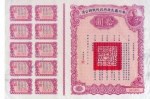
Xinhua: “Japan and China will begin direct yen- yuan trading on June 1, Japanese Finance Minister Jun Azumi said Tuesday, abandoning the existing system that determines yen-yuan rates via their U.S.dollar values.

Image used to convey the idea of currency conversion (Photo credit: Wikipedia)
The move is broadly seen as a way to boost trade and investment between the world’s second- and third- largest economies, and as part of measures China took to internationalize its currency.”
via Japan, China to begin direct currency trading on June 1 – Xinhua | English.news.cn.
The writing is on the wall for the US as the world’s only currency acting as a reserve and exchange currency. This is another sign that the supremacy of the US as the world leader is also beginning to wane. But Americans can relax – for now. It took the Roman Empire over 500 years to decline and the British Empire over 100 years.
Xinhua: “The average annual salaries of urban Chinese workers at non-private companies hit 42,452 yuan (6,717 U.S. dollars) in 2011, up 14.3 percent year on year, statistical authorities announced Tuesday. After taking inflation into account, wages actually grew by about 8.5 percent, according to data from the National Bureau of Statistics NBS.
Meanwhile, the annual salaries of workers at privately-owned businesses in urban regions grew 12.3 percent after deducting factor of inflation to 24,556 yuan in 2011, NBS data showed. The data was based on a survey of 1.48 million non-privately owned organizations and 620,000 private companies, the NBS said.
Wages for workers in the nation’s more developed eastern regions and major cities were the highest, while the central provinces of Anhui, Henan and Hubei ranked lowest, according to the NBS. The finance, telecommunication, computer service and software development sectors offered the highest salaries, the NBS said.”
via Chinese wages see double-digit growth – Xinhua | English.news.cn.
Chinese wages have risen higher than GDP consistently for over five years. The accusation of low-wages beating foreign competition is becoming less true each year. So much so that reverse outsourcing is beginning to happen for some companies and countries.
Related posts:
China Daily: “Liu Zhijun violated discipline and will face judicial investigationLiu Zhijun, former railway minister, was expelled from the Communist Party of China due to serious disciplinary violations, according to a decision by the Central Commission for Discipline Inspection announced on Monday.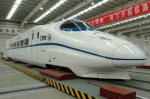
Liu, 59, was also blamed for fostering corruption throughout the railway system. The disciplinary watchdog said Liu had taken advantage of his position to help Ding Yuxin, board chairwoman of Beijing Boyou Investment Management Corp, make huge illicit gains. He was also charged with accepting a large number of bribes and leading a corrupt life. His illicit gains have been confiscated and he will be handed over to the judicial department for further investigation. His disciplinary violations may include criminal acts, the watchdog said.
Lin Zhe, a professor at the Party School of the Central Committee of the CPC who specializes in fighting corruption, said Liu will probably face severe punishment. “Expelling Liu from the Party means his political life has ended,” she said, adding such punishment for an official is very heavy. However, Lin added Liu’s case will not be brought to court any time soon, “because the case is complicated”, and more time is needed to investigate. No matter what achievements an official has made, no matter how high his position was, the authority will deal with corruption without fear or favor, Lin added.
Li Chengyan, head of Peking University’s clean government research center, said the case is being treated seriously. “Lius punishment, after a one-year investigation, shows our government attaches great importance to the case.” The announcement on Monday is the latest development in the investigation.
Liu was appointed vice-minister of railways in 1996 and minister in 2003. He was removed from his post in February last year. At least eight senior officials at the Ministry of Railways have been sacked in the past two years and placed under investigation. They include, Zhang Shuguang, former deputy chief engineer at the ministry, Luo Jinbao, former board chairman of China Railway Container Transport Co and Su Shunhu, former deputy chief of the ministrys transport bureau.”
via Former rail minister expelled from Party |Politics |chinadaily.com.cn.
BBC News: “China’s biggest microblogging service has introduced a code of conduct explicitly restricting the type of messages that can be posted. Weibo – which resembles Twitter – took the action after local authorities criticised “unfounded” rumours posted by some users.
Reports suggest a credit score system will also be introduced with points deducted for rule breaches. Repeat offenders face having their accounts deleted. The services parent, Sina Corp, says it has more than 300 million registered users. Users are reported to start with 80 points – they gain more by taking part in promotional activities, but lose points if they break any of the rules. It is reported that if a subscribers points fell below 60 a “low credit” warning would appear on their microblog, leading to the possible cancellation of their account if it hit zero. If they “behaved” for two consecutive months their score is reported to return to 80.”
This is a sign of the authorities trying to restrain the internet in China, but a hardcore group of people will still find ways to get round the restraints,” Dr Kerry Brown, head of the Asia Programme at the Chatham House think tank, told the BBC. “There is a tradition of indirect criticism in which people make points using coded references. I very much doubt these rules will change anything.””
via BBC News – Chinas Weibo microblog introduces user contracts.
BBC News: “Manmohan Singh has held talks with Burmese President Thein Sein as he makes the first official visit to Burma by an Indian prime minister since 1987. The two sides signed 12 agreements to strengthen trade and diplomatic ties. During his three-day trip, Mr Singh will meet opposition leader Aung San Suu Kyi, whose mother once served as Burma’s ambassador to India.
The two nations share a 1,600km (1,000 mile) border, but relations have often been uneasy. On Monday, they signed agreements on border area development, air services, cultural exchanges, a $500m credit line between India’s Export-Import Bank and Myanmar [Burma] Foreign Trade bank, and establishment of a joint trade and investment forum, the BBC’s Sanjoy Majumder reports from the Burmese capital, Nay Pyi Taw.
Delhi cold-shouldered Burma’s military rulers during the 1990s, infuriating the generals by openly supporting Ms Suu Kyi. But Mr Singh, who arrived in the Burmese capital on Sunday, has overseen a dramatic turnaround in Delhi’s policy, and hosted former ruler Than Shwe on a state visit in 2010. Earlier, on his arrival in Burma, Mr Singh said: “I am coming here after 25 years when the last prime minister of India visited here. We have centuries-old ties of religion, culture and civilisation with the people of Myanmar. He had earlier said he wanted “stronger trade and investment links, development of border areas, improving connectivity between our two countries and building capacity and human resources”.”
via BBC News – India PM Manmohan Singh in historic Burma visit.

continuously updated blog about China & India
continuously updated blog about China & India
continuously updated blog about China & India
 CHINDIA ALERT: You'll be living in their world, very soon