Archive for ‘Chindia Alert’

09/04/2019

China’s bridge to North Korea opens 3 years after it was built – but why now?

  • Buses from the North make return trip to China on Monday, according to South Korean media
  • Opening of Jian-Manpo border crossing had been delayed during heightened tension over sanctions on the North
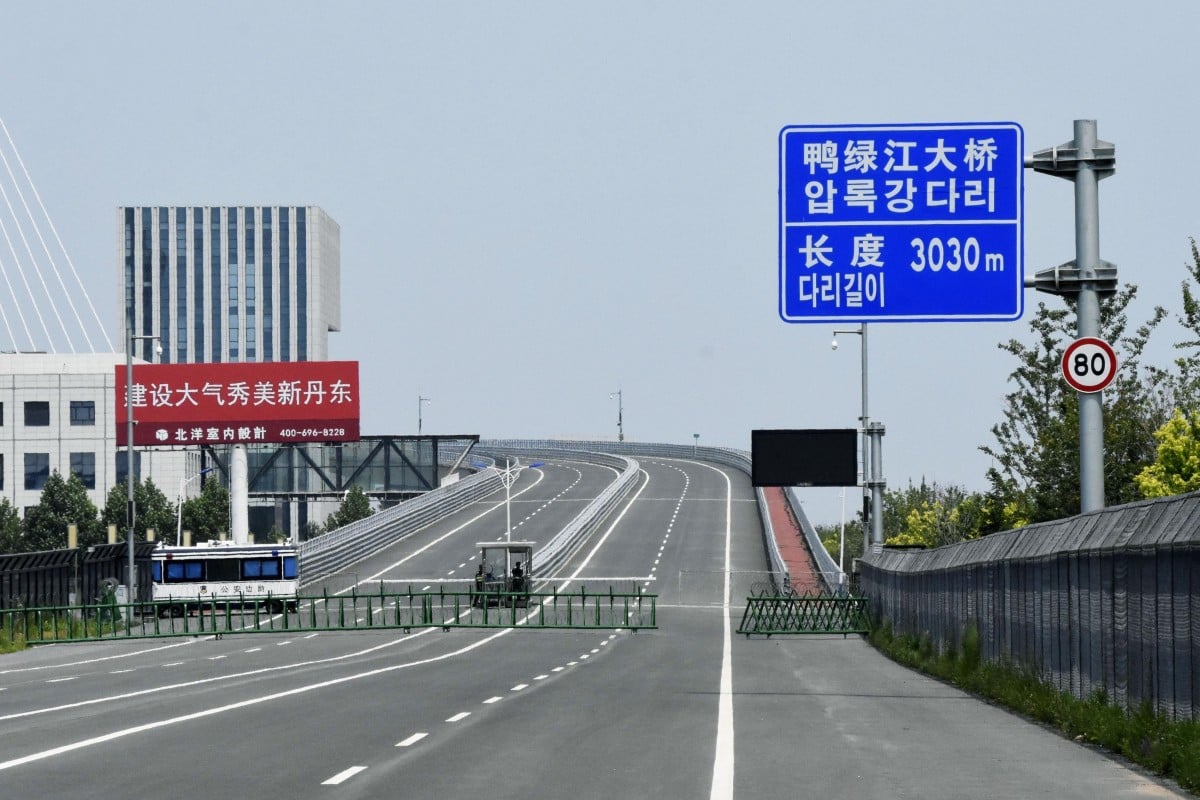
The bridge crosses the Yalu River on the border between China and North Korea. Photo: Kyodo
China and North Korea have finally opened a border bridge built between the two countries in 2016, in a potential boost to the North’s economy as Beijing tries to balance its concerns about its neighbour against ongoing international pressure for it to denuclearise.
A border checkpoint and bridge connecting the Chinese city of Jian with North Korea’s Manpo were open on Monday, following three years of delays since they were built.

Four buses crossed the border from North Korea in the morning and returned to the hermit kingdom about an hour later carrying about 120 people, who included tourists, according to South Korean media. It was not known whether the people travelled from North Korea or boarded the buses in China.

The bridge had remained closed on its completion in 2016, with Beijing taking a cautious approach at a time when it faced international scrutiny of whether it was fully implementing UN Security Council sanctions on the North.

to enforce the sanctions after a UN committee accused it and South Korea of being reluctant to enforce a ban on coal exports from the North.

But there has been a change in the status of the Jian-Manpo border crossing – built near to where Kim’s father, the former leader Kim Jong-il, was reported to have crossed the border in 2010 in a rare trip outside his country.

Kim’s second summit with Trump in February collapsed against a backdrop of continued economic struggles for North Korea. Beijing is wary of instability around the North Korean regime posing a threat to the security of China’s northeast, fearing an influx of refugees into one of its poorest regions.

North Korea’s trade has suffered to the extent that the Korea Development Institute said in February it had almost collapsed.

The North’s exports to China – which accounts for the bulk of its trade – plunged 87 per cent year-on-year in 2018, according to data compiled by South Korea’s Korea

International Trade Association, while there have been myriad other economic problems at a time when Kim has vowed to deliver on the economy.

In April last year, Kim announced that Pyongyang was moving away from its twin-track “byungjin” policy of developing nuclear weapons and the economy simultaneously to focus exclusively on rebuilding the economy.

Boo Seung-chan, adjunct professor at the Yonsei Institute for North Korean Studies in Seoul, said the bridge’s primary use would be to boost tourism in North Korea, which is not restricted by the UN sanctions.

“Tourism is the only sector left for the North Koreans to earn foreign revenue,” Boo said. “Besides, China can only offer its financial help through the tourism sector as it does not wish to violate UN sanctions.

“China’s Korean peninsula policy is to maintain the stability of the region. It may also be drawing a road map for when sanctions may be lifted, finding its means to accelerate its economic engagement to increase its sphere of influence.”

Source: SCMP

08/04/2019

China’s booming middle class creates opportunities for culture, entertainment industry: business leaders

NEW YORK, April 6 (Xinhua) — Boosted by a growing middle class population, China’s culture and entertainment industry enjoys broader prospect and is creating enormous opportunities, a group of business leaders from the United States and China said here Saturday.

Chinese society today has a growing appetite for the intellectual strength of art and music, Joseph Polisi, president emeritus and chief China officer at the Juilliard School, a renowned performing arts conservatory in the United States, said at a panel in New York.

Themed “The human connection: China and America in culture and entertainment,” the panel is part of the ongoing annual conference held by the Committee of 100 (C100), a premier U.S. organization of Chinese-American leaders from different fields.

The demand of “Chinese audiences are growing in size for western music,” he said, adding that Chinese parents have a greater request for orchestral musical training programs resulting in Chinese children being able to engage in sophisticated musical works at a young age.

Polisi, who is also an accomplished bassoonist, said that Juilliard is establishing a campus in Tianjin. Slated to open in fall 2019, the Tianjin campus offers audition-based programs on pre-college and graduate levels.

U.S. businesses have much to gain by accessing the Chinese market with the growth of the Chinese middle class and the emergence of dynamic forces including the nation’s Generation Z, small-town and rural dwellers, noted the panelists.

Their growing demand for a better life and high-quality goods will create new business opportunities.

Ben Wood, founder of Studio Shanghai Architectural Firm, who has spent 22 years in China, said bringing popular culture to China through the rapid rise of the middle class is among others behind his business success.

Gong Yu, founder and CEO of China’s leading online entertainment platform iQiyi, said his company delivers content to 200 to 300 million users daily, a remarkable achievement made in a span of only nine years thanks to the broader picture of China’s rapid development. He is confident that there will be more Chinese culture and entertainment production going global since more Chinese young people are willing to be dedicated in the industry.

Now China is home to the world’s biggest middle-income group comprised of some 400 million people, and the number is still on the rise. The country is evolving from the world’s workshop to becoming a major consumer of goods and services instead.

ource: Xinhua

08/04/2019

China sees 112 mln domestic tourist trips during tomb-sweeping holiday

BEIJING, April 7 (Xinhua) — China saw 112 million domestic tourist trips during the three-day tomb-sweeping holiday, up 10.9 percent from last year’s holiday, according to the Ministry of Culture and Tourism.

The tourism revenue reached 47.9 billion yuan (about 7.1 billion U.S. dollars) during the holiday which lasts from Friday to Sunday, up 13.7 percent, according to the ministry.

While tourists still favor sites of natural scenes, an increasing number of people chose to visit history museums, martyrs’ memorial halls and memorial sites of revolution during the holiday, the ministry said in a report, adding that the online ticket sales at such spots across the country saw a year-on-year increase of 55.2 percent.

The Tomb-sweeping Day, or Qingming Festival, is an important occasion for Chinese people to honor their ancestors. Many also spent the three-day holiday on leisure travel.

Source: Xinhua

08/04/2019

China to avoid debt burden for BRI participating countries: envoy

AMMAN, April 7 (Xinhua) — Li Chengwen, ambassador for China-Arab States Cooperation Forum Affairs of China’s Foreign Ministry, refuted on Sunday the criticism that China’s Belt and Road Initiative (BRI) will create so-called “debt trap” for some participating countries.

“China is trying to find mechanisms to avoid the ‘debt trap,'” Li said during a session on the second day of the World Economic Forum on the Middle East and North Africa 2019 held in the Dead Sea area of Jordan.

The Chinese envoy was responding to the criticism directed at the BRI by some people in the United States and Europe ahead of the second Belt and Road Forum for International Cooperation, due to be hosted by China later this month in Beijing.

The initiative, proposed by China in 2013, aims at building a trade and infrastructure network connecting Asia with Europe and Africa along the ancient trade routes of the Silk Road to seek common development and prosperity.

As of July 2018, more than 100 countries and international organizations had signed Belt and Road cooperation documents with China, extending the initiative’s scope from the Eurasian continent to Africa, Latin America and the Caribbean, and the South Pacific region.

Li pointed out that no participating country has complained of falling into the so-called “trap” of Chinese loans.

“The Belt and Road Initiative aims to increase the economic prosperity of a country. It does not aim at expanding the political and geographical authority of China in the world,” he said.

Many participants at the forum in Jordan agreed with Li’s comments.

“If you keep your interest first, you will not find China an unfair partner,” said Shandana Gulzar Khan, Pakistan’s parliamentary secretary for commerce. “But it depends on how well you do your homework.”

In Pakistan, a major BRI participating country, the China-Pakistan Economic Corridor has created tens of thousands of jobs and revived the economy of an entire region, Khan noted.

Speaking at the session, He Wenping, a research fellow of the Institute of West-Asian and African Studies, Chinese Academy of Social Sciences, echoed Li’s remarks.

“The biggest worry on the ‘debt-trap diplomacy’ should come from China’s side, not from outside. It is tax payers’ money,” the Chinese professor said.

“China is not waving the ‘China First’ flag,” she said.

The upcoming Belt and Road forum to be held in Beijing later this month could be an opportunity to kickstart a “second phase” of the initiative, she added.

Source: Xinhua

08/04/2019

Tea planting helps alleviate poverty in central China’s Hunan

#CHINA-HUNAN-TEA-POVERTY ALLEVIATION (CN)

Aerial photo taken on April 7, 2019 shows a villager selecting tea leaves at a tea planting base in Baogai Town of Hengnan County, central China’s Hunan Province. Tea planting bases are built in Baogai to provide jobs for local villagers as a method of poverty alleviation in recent years. (Xinhua/Cao Zhengping)

Source: Xinhua

08/04/2019

China pledges to remove ‘unreasonable barriers and restrictions’ to help SMEs amid trade war

  • The mainland government will also seek to create a level playing field for businesses, most of which are privately-owned, in terms of market entry and regulation
  • Small and medium-sized firms are vulnerable to trade disputes and an economic slowdown even though they contribute the majority of growth and employment
China plans to make it easier and cheaper for businesses to access credit through subsidies and certain bank loans, according to a comprehensive policy guidelines jointly released by the Central Committee and the State Council on Sunday. Photo: Alamy
China will “remove all sorts of unreasonable barriers and restrictions” to help small and medium-sized enterprises which are seen as vital to help employment and economic growth amid the trade war with the United States.
Beijing plans to make it easier and cheaper for businesses to access credit through subsidies and certain bank loans, according to a comprehensive policy guidelines jointly released by the Central Committee of the Communist Party of China and the State Council on Sunday.
The mainland government will also seek to create a level playing field for businesses, most of which are privately-owned, in terms of market entry and regulation.

“Small and medium-sized enterprises is an dynamic power for national economic and social important and is critical for expanding employment, improving people’s livelihood, and to foster innovation,” the guidelines said. “For now, they are facing problems of rising production costs, difficulty in obtaining credit and insufficient capabilities to innovate – these issues demand high attention.”

China will “remove all sorts of unreasonable barriers and restrictions, trying to ensure fair competition and provide sufficient market in terms of market entry, licensing, bidding and the military-civil infusion,” it added.

While most of the policies are not completely new, the move to pull them together into a larger policy document, which will serve as a guideline for local authorities, shows China’s intention to stabilise the domestic economic situation as its trade disputes with the US continues.

Beijing has also designed a variety of financial policy tools, including targeted required reserve ratio cuts and the use of small and medium-sized enterprise loans as collateral for medium-term lending facilities granted by the central bank, meaning banks will have more incentives to offer financing.

To further boost lending, it will also offer some exemptions for interest received from value added tax, while also providing tax breaks for small firms and start-ups, a lower social security contribution ratio and an increase in government procurement, according to the guidelines.

Small and medium-sized enterprises is an dynamic power for national economic and social important and is critical for expanding employment, improving people’s livelihood, and to foster innovation.New guidelines

The need for the Chinese government to support small businesses became even more obvious last summer when it began its trade was with the US. Small private businesses are more vulnerable to trade disputes and an economic slowdown than state-owned enterprises, which are often bigger and enjoy favourable treatments from the government and banks, even though they contribute the majority of growth and employment.
Employment is the top priority on the agenda of Premier Li Keqiang this year, as shown in his government work report revealed last month. China has vowed to create 11 million new urban jobs this year and cap the surveyed urban unemployment rate at 5.5 per cent.
Morgan Stanley economists noted that China’s real gross domestic product growth may slow to 6.2 per cent in the first quarter.
“The main drag is slower investment growth, led by property construction and manufacturing [capital expenditure] amid still-subdued export and business sentiment,” Morgan Stanley economists Robin Xing, Jenny Zheng and Zhipeng Cai said.
The National Bureau of Statistics is due to release the first quarter economic data on April 17.
Source: SCMP
08/04/2019

Fears over Hong Kong-China extradition plans

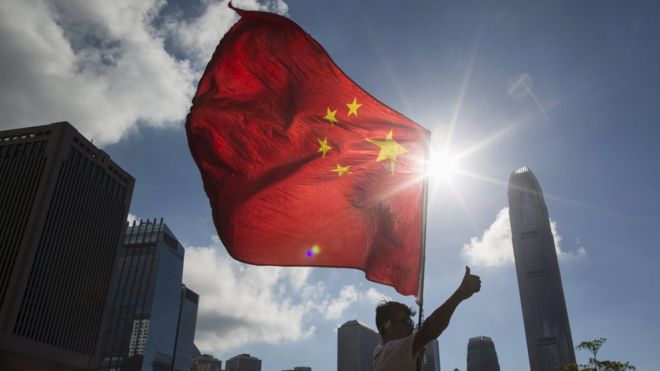
Chinese flag in front of Hong Kong skylineImage copyrightREUTERS
Image captionHong Kong is part of China but has its own judicial system

The Hong Kong government has proposed changes to extradition laws that could allow transferring suspects to mainland China for trial. The move has further fuelled fears of erosion of the city’s judicial independence amid Beijing’s increasing influence.

The Hong Kong government will also consider extradition requests from Taiwan and Macau after the new changes.

Officials say the change is needed so that a murder suspect can be extradited to Taiwan for trial, and that mainland China and Macau must be included in the change to close a “systematic loophole”.

Hong Kong’s leader Carrie Lam has pushed for the amendments to be passed before July.

What are the changes?

The changes will allow for extradition requests from authorities in mainland China, Taiwan and Macau for suspects accused of criminal wrongdoings, such as murder and rape.

The requests will then be decided on a case-by-case basis.

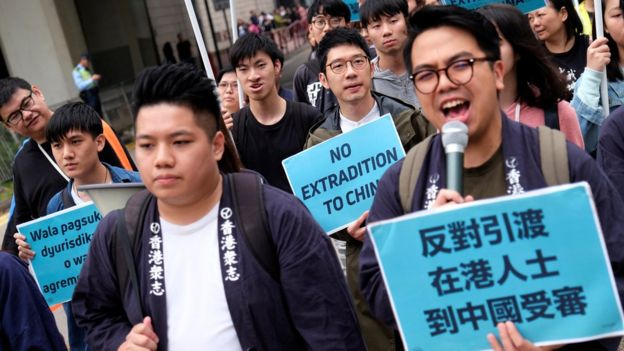
Demonstrators march during a protest to demand authorities scrap a proposed extradition bill with China, in Hong KongImage copyrightREUTERS
Image captionOver 100,000 protesters took to Hong Kong streets to rally against the government’s proposal.

Several commercial offences such as tax evasion have been removed from the list of extraditable offences amid concerns from the business community.

Hong Kong officials have said Hong Kong courts will have the final say whether to grant such extradition requests, and suspects accused of political and religious crimes will not be extradited.

Why is this controversial?

There has been a lot of public opposition, and critics say people would be subject to arbitrary detention, unfair trial and torture under China’s judicial system.

“These amendments would heighten the risk for human rights activists and others critical of China being extradited to the mainland for trial on fabricated charges,” Sophie Richardson of Human Rights Watch said in a statement.

Lam Wing Kee, a Hong Kong bookseller said he was abducted and detained in China in 2015 for selling books critical of Chinese leaders and charged with “operating a bookstore illegally”.

During a recent protest against the government proposal, Mr Lam said he would consider leaving the territory before the proposal was passed.

“If I don’t go, I will be extradited,” he said. “I don’t trust the government to guarantee my safety, or the safety of any Hong Kong resident.”

Though some pro-Beijing politicians eager to defend China, dispute the criticism of its judicial system.

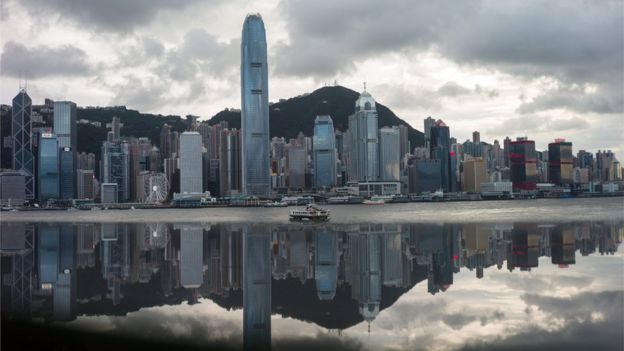
Hong Kong skylineImage copyrightEPA
Image captionHong Kong and China – one country, two systems

The changes have also attracted opposition from the Hong Kong business community over concerns they may not receive adequate protection under Chinese law.

The proposal has already sparked a legal challenge from Hong Kong tycoon Joseph Lau, who was convicted in absentia in a corruption case in Macau in 2014.

Macau’s government has not been able to have Mr Lau extradited because of a lack of extradition agreement between Hong Kong and Macau, but that will become possible if Hong Kong’s legislature decides to amend the extradition laws.

His lawyers argue in a 44-page submission to Hong Kong’s courts that the Macau trial was marred by “serious procedural irregularities that rendered the trial incompatible with internationally mandated standards of fairness”.

Every citizen can request a judicial review like Mr Lau has done, but it’s the High Court that decides whether this will be granted. Most observers say there is little chance Mr Lau’s request will be successful.

Why the change now?

The latest proposal has come after a 19-year-old Hong Kong man allegedly murdered his 20-year-old pregnant girlfriend, while holidaying in Taiwan together in February last year. The man fled Taiwan and returned to Hong Kong last year.

Taiwanese officials have sought help from Hong Kong authorities to extradite the man, but Hong Kong officials say they cannot comply because of a lack of extradition agreement with Taiwan.

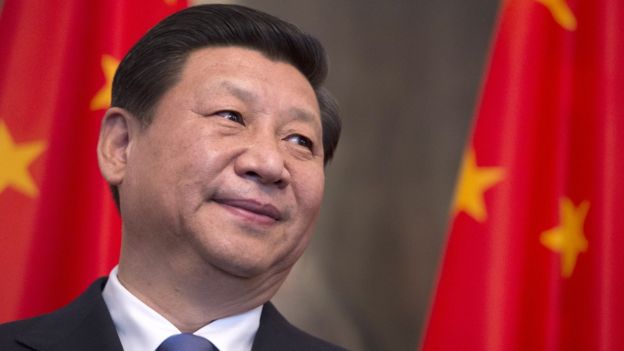
Xi JinpingImage copyrightGETTY IMAGES
Image captionUnder Xi Jinping, Beijing is seeking increasing control over Hong Kong

“Are we happy to see a suspect that has committed a serious offence staying in Hong Kong and we’re unable to deliver justice over the case?” Mrs Lam said on 1 April while responding to media questions.

She added that mainland China and Macau were included in the proposed change to address a “loophole” in current laws.

Isn’t Hong Kong part of China anyway?

A former British colony, Hong Kong is semi-autonomous under the principle of “one country, two systems” after it returned to Chinese rule in 1997.

The city has its own laws and its residents enjoy civil liberties unavailable to their mainland counterparts.

Hong Kong has entered into extradition agreements with 20 countries, including the UK and the US, but no such agreements have been reached with mainland China despite ongoing negotiations in the past two decades.

Critics have attributed such failures to poor legal protection for defendants under Chinese law.

Source: The BBC

08/04/2019

Shell enters China’s shale oil scene with joint study with Sinopec

SINGAPORE (Reuters) – Royal Dutch Shell has entered China’s shale oil sector, signing an agreement with state-owned Sinopec to study an East China block, part of the nation’s early efforts to unlock the potentially massive unconventional resource.

China is already in the initial stages of developing its vast shale gas resources, with production last year making up just 6 percent of total gas output after more than a decade of work. China’s shale oil is at an even more basic phase due to challenging geology and hefty development costs, experts said.

Shale oil makes up less than 1 percent of China’s crude output after several years of development, according to Angus Rodger, research director of Asia-Pacific upstream at Wood Mackenzie.

“China’s shale oil has very low permeability, which means very low per well output that makes the economics hard to work,” said an oil and gas official with China’s Ministry of Natural Resources (MNR). The official declined to be named because he’s not authorized to speak with the press.

Sinopec said on Monday it had agreed with Shell to study the Dongying trough of Shengli in China’s eastern province of Shandong, without giving further details.

Shell confirmed the joint study agreement, but did not offer further comment.

That makes Shell one of the few international oil and gas explorers venturing into China’s shale oil sector, and follows the Anglo-Dutch company’s exit from shale gas drilling in Sichuan province in the southwest after spending at least $1 billion (766.22 million pounds) and getting unsatisfactory results.

Unlike shale gas resources, which are highly concentrated in Sichuan, most of China’s shale oil is trapped in eastern regions such as the Songliao and Bohai Rim basins. North China’s Ordos and Junggar basins are also believed to hold large shale oil resources, the experts said.

The Dongying trough is part of the Bohai Rim basin, where top Chinese oil and gas group China National Petroleum Corp (CNPC) said in February that it is developing another small shale oil field with an annual output of 50,000 tonnes this year.

In 2013, U.S. energy firm Hess Corp signed a production-sharing contract with PetroChina, CNPC’s listed arm, to develop the Malang block of Santanghu basin in the northwest region of Xinjiang, China’s first shale oil deal.

Hess quit the block around late 2014 due to poorer-than-expected drilling prospects and as global oil prices plunged, said the MNR official.
“The understanding of geology, resource and the best recovery techniques (for shale oil) has only just begun,” said Woodmac’s Rodger.
Sinopec is hoping Shell’s expertise in shale oil exploration could help the Chinese state major turn around its fortunes at Shengli oilfield as the reserves at the giant conventional oilfield are depleting rapidly, said Rodger.
Source: Reuters
08/04/2019

India election 2019: Are India’s farmers receiving what they were promised?

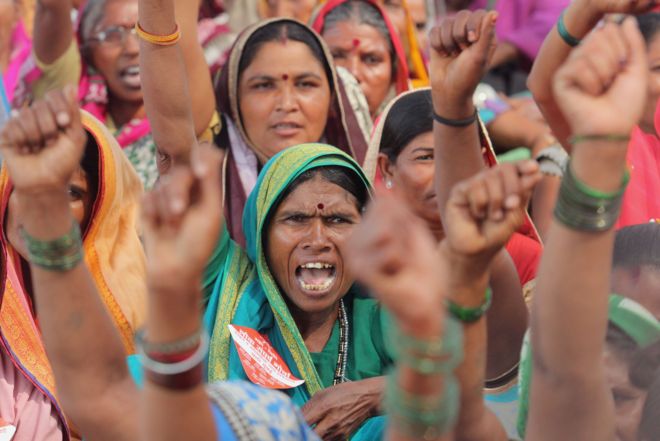
Farmers near Mumbai protesting for better compensationImage copyrightGETTY IMAGES

The plight of India’s farmers has been a major theme in the campaigns ahead of national elections, which get under way on 11 April.

Angry farmers have regularly taken to the streets demanding a better financial deal.

Many find themselves in debt and burdened by other liabilities they’ve taken on to buy seed, fertilisers and equipment.

Thousands of farmers commit suicide every year in India, although the reasons are often complex.

Presentational grey line

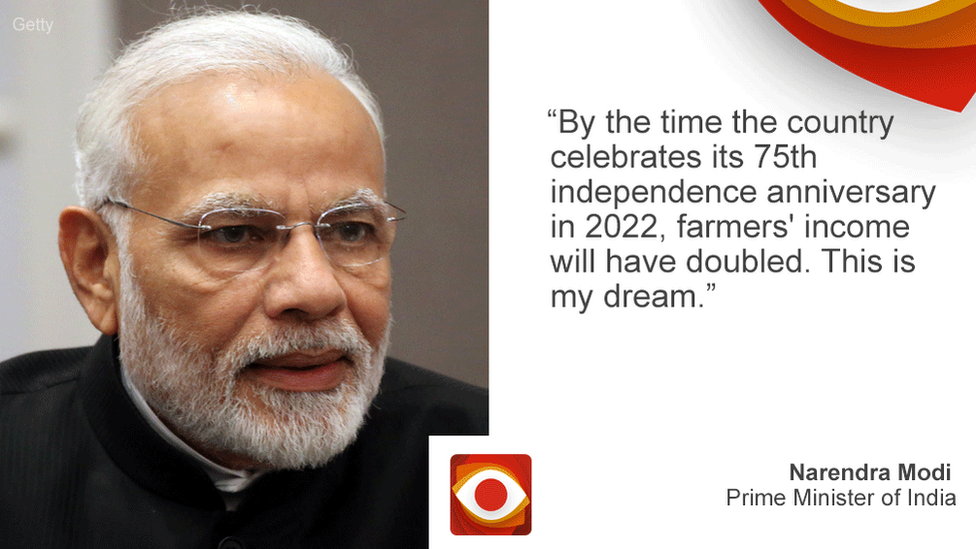
Pledge: Speaking in 2016, India’s Prime Minister, Narendra Modi, said farmers’ incomes would double by 2022.

Verdict: Official data shows farmers’ incomes were rising between 2013 and 2016. Income data for the past two years is not available but there are signs the rural economy is depressed. Unless there is a significant upturn, the doubling of farm incomes by 2022 is unlikely.

Modi quote card
Presentational grey line

The government has now pledged to pay 6,000 Indian rupees (£64) a year to help farmers with holdings of less than two hectares (20,000 sq m), in a bid to reach that goal.

These moves have been criticised by opposition parties as vote-buying ahead of the elections.

The agricultural sector employs more than 40% of the workforce in India, despite its shrinking contribution to the country’s gross domestic product (GDP), the total value of goods and services produced.

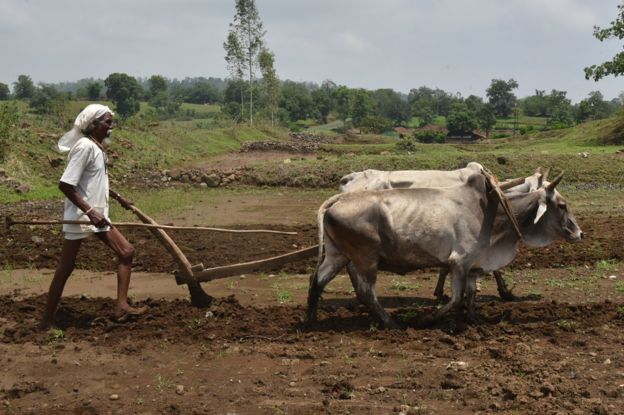
Farmer ploughing field near Jabalpur, India

What’s happened to farming incomes?

In 2016, the average monthly income of a farming household was about 9,000 Indian rupees (£100), according to a survey conducted by the National Bank for Agriculture and Rural Development.

This report also found that farmers’ income had increased by 40% in the three years up to 2016, the latest year for which data is available.

However, there is evidence of a more recent slowdown in the rural economy.

According to one estimate, farm income, which had grown by more than 14% in the year to 2017, slumped to just over a 2% growth rate between 2017 and 2018.

And in several state elections in December 2018, the ruling BJP fared poorly – something put down to growing discontent in rural areas.

What problems do farmers face?

Droughts, bad weather and a lack of modern equipment have plagued Indian agriculture for decades.

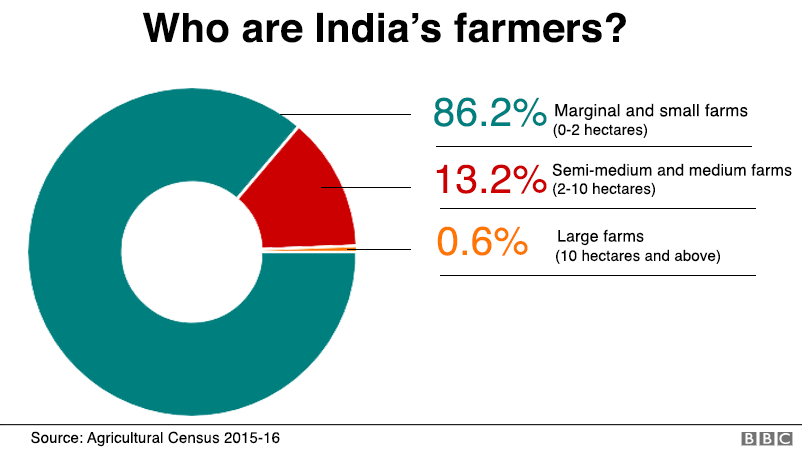
In addition, many of India’s farmers work on vulnerable small or marginal holdings.

Pie chart showing size of farm holdings

The current administration has introduced pro-farming policies that include:

  • a crop insurance scheme
  • a soil health card scheme to improve productivity
  • an online trading platform for agricultural produce

But it’s also faced criticism for other policies that have negatively affected farmers – such as the sudden decision to 2016 withdraw the 500 and 1,000 rupee notes from circulation in a bid to tackle the black economy.

Boy sorting tomato cropImage copyrightGETTY IMAGES
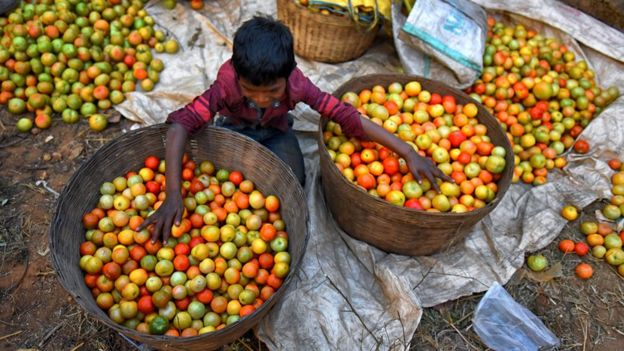
Image captionThere are issues with storage and processing

Why aren’t farmers earning more?

A very good harvest in any year will result in a sharp fall in the price of a commodity.

This helps keep food prices in check for urban consumers but is not so good for rural producers.

To counter this, the government sets a minimum purchase price for major agricultural products each year.

However, a recent official report pointed out serious shortcomings of these price controls.

It cited a lack of awareness among farmers, delays in payments and insufficient facilities to enable farmers to store produce at government-controlled warehouses.

At various times over the years, national and state governments have also announced loan waivers for farmers to write off their debts.

These schemes are expensive and not everyone qualifies for help.

Source: The BBC

08/04/2019

BJP vows to strip Kashmir of special rights

NEW DELHI (Reuters) – India’s Hindu nationalist ruling party vowed on Monday to strip decades-old special rights from the people of Jammu and Kashmir, making an election promise that could provoke a backlash in the country’s only Muslim-majority state.

Prime Minister Narendra Modi’s Bharatiya Janata Party (BJP)is widely expected to retain power after a general election that starts on Thursday, though with a much smaller mandate, hit by concerns over a shortage of jobs and weak farm prices.

Pollsters say its re-election campaign got a boost from recent hostilities with arch-rival Pakistan, after a militant group based there claimed a February suicide bombing that killed 40 Indian security forces in the Himalayan region.

“Nationalism is our inspiration,” Modi said after releasing the BJP’s election manifesto at its headquarters in New Delhi, as supporters chanted “Modi, Modi”.

The BJP has consistently advocated an end to Kashmir’s special constitutional status, which prevents outsiders from buying property there, arguing that such laws have hindered its integration with the rest of India.

“We believe that Article 35A is an obstacle in the development of the state,” the party said, referring to a constitutional provision dating from 1954, and reiterated its long-held desire to abolish Kashmir’s autonomous status by scrapping another law known as Article 370.

BJP supporters have demanded the removal, expressing anger at many Kashmiris’ resistance to rule by India, which has spent three decades battling an armed insurgency in the region also claimed by Pakistan.

“The BJP’s campaign is largely around nationalism, national security and this is what is getting echoed in their manifesto,” said Sanjay Kumar, director of thinktank the Centre for the Study of Developing Societies.

Repeal would bring widespread unrest, Kashmiri political leaders warned.

“Let them do it and it will pave the way for our azadi,” Farooq Abdullah, president of Kashmir’s National Conference party, told an election rally, referring to freedom for the region. “They are wrong. We will fight against it.”

Mohammad Yousuf Tarigami, the leader of a left party in Kashmir, warned of “disastrous and unimaginable repercussions”.

Voting in the general election reut.rs/2KhaQlG begins on Thursday, but with about 900 million eligible voters, will be spread across several weeks, with ballots counted on May 23.

INCREASED INVESTMENT, TAX REFORM

In its manifesto last week, the main opposition Congress party pledged to create more jobs, hand money to India’s poorest and change a law on special powers for troops in Kashmir.

It dismissed the BJP manifesto as anti-farmer, despite its pledge of a pension scheme for small and marginal farmers who make up more than 80 percent of India’s estimated 263 million farmers, with landholdings smaller than 2 hectares (5 acres).

“Remember the good old days before 2014 when Indians had jobs and a PM that didn’t lie to them,” Congress said on Twitter, with a hashtag calling the BJP manifesto a gimmick.

The BJP also promised capital investment of 100 trillion rupees ($1.44 trillion) in infrastructure by 2024, to help create jobs for millions entering the workforce each year.

It pledged to simplify the goods and services tax, which disrupted businesses and hurt growth when Modi introduced it in 2017.

The party will work to cut tax and boost credit to small businesses to 1 trillion rupees ($14.4 billion) by 2024, it added.

Source: Reuters

Law of Unintended Consequences

continuously updated blog about China & India

ChiaHou's Book Reviews

continuously updated blog about China & India

What's wrong with the world; and its economy

continuously updated blog about China & India