Archive for ‘Chindia Alert’

01/03/2019

China Focus: Foreigners anticipate a more open China at “two sessions”

BEIJING/GUANGZHOU, March 1 (Xinhua) — The world’s attention is on China as the country is to open its most important annual political meetings next week, known as the “two sessions.”

Foreign business leaders, observers and China watchers have expressed high hopes of seeing a more open China during the meetings and look forward to greater opportunities its development will bring to the world.

Harley Seyedin, president of American Chamber of Commerce in South China, said foreign businesses in China would keep a close eye on the discussion of the draft of foreign investment law, as it will “create a level playing field where everyone can participate,” once it is adopted and enforced.

“It will help China open up more,” Seyedin said.

A draft of China’s foreign investment law will be submitted to the upcoming plenary session of the National People’s Congress (NPC), which is scheduled to open on March 5.

Seyedin noted that foreign businesses in China have already sensed a positive signal last year, with the shortened negative list, and have confidence investing in China, fueled by the country’s efforts to protect intellectual property rights.

Mizumoto Shinji, president of Hitachi Elevator (China), said the anticipated adoption of the foreign investment law will help build a more law-based business environment in China.

“China’s business environment has greatly improved in recent years,” said Mizumoto. “We hope that China will further ease its management of foreign capital, so as to create a more stable, transparent and predictable investment environment.”

Once adopted, the unified foreign investment law will become a basic law in the field, replacing three existing laws on Chinese-foreign equity joint ventures, non-equity joint ventures (or contractual joint ventures) and wholly foreign-owned enterprises.

Pablo Rovetta Dubinsky, general manager of Spanish firm Tecnicas Reunidas’s China branch, said the law would help dispel misgivings among some foreign businesses over China’s determination to open up further.

“The foreign investment law to be discussed at the annual legislative session will mark a new beginning in China’s opening-up to the world,” Rovetta said. “It is a clear demonstration of China’s resolve to open up.”

In an interview with Xinhua ahead of the “two sessions,” Argentine ambassador to China Diego Ramiro Guelar hailed China’s spirit of cooperation as the country has been expanding its presence in commerce and investment across the globe.

“Compared to some western countries, China has a much more open attitude toward sharing and transferring its technology, which, in my opinion, is the core spirit of the Belt and Road Initiative,” Guelar said.

The ambassador added that as a region, Latin America had established a close association and mutual trust with China, and was keen to maintain the robust cooperation.

Khalifa Mohammed Alkhorafi, the consul-general of the State of Kuwait in the southern Chinese city of Guangzhou, expressed hope that the upcoming “two sessions” would send more positive signals on the Chinese economy. He added that Kuwait, which is strategically situated in the Persian Gulf region, would provide a lot of business opportunities for Chinese companies.

“There is a very strong relationship between China and Kuwait. There will be many big projects coming soon,” he said.

Lusa news agency reporter Joao Pimenta said that China’s economic achievements and its efforts on poverty alleviation had impressed the world.

“More and more Chinese families are enjoying a relatively comfortable life. China has also made remarkable achievements in poverty reduction in the process of reform and opening-up,” Pimenta said.

Diego Garcia, a Brazilian expert with China Radio International, believes that the international community is paying more attention to China’s diplomacy in global affairs.

“China is playing a constructive role on international issues, especially those concerning developing countries,” Garcia said. “In particular, the Belt and Road Initiative and the China International Import Expo have served the interests of many developing countries.”


Source: Xinhua
01/03/2019

China’s commerce ministry comments on WTO report on U.S. complaint about agricultural subsidies

BEIJING, March 1 (Xinhua) — An official with China’s Ministry of Commerce on Friday commented on a World Trade Organization (WTO) panel report regarding the complaint from the United States about Chinese agricultural subsidies.

The WTO panel report, released Thursday Geneva time, ruled against the United States in terms of China’s corn subsidy policies. “The Chinese side welcomes this [ruling],” the unidentified official said.

China regrets that the panel did not support China’s proposition on calculating the subsidy levels in its minimum procurement price policies for wheat and rice, the official said.

Agriculture is a basic industry that concerns the national economy and people’s wellbeing. It is a common practice for governments to support agriculture, ensure farmers’ incomes and safeguard grain security, and such practices are allowed under WTO rules.

China consistently respects WTO rules and will seriously evaluate the panel report and properly handle the case following WTO dispute settlement procedure, safeguard the stability of the multilateral trade mechanism and continue to push ahead with its agricultural development in lines with WTO rules, the official said.

Source: Xinhua

01/03/2019

China’s 40-day Spring Festival travel rush concludes

CHINA-SPRING FESTIVAL TRAVEL RUSH-ENDING (CN)

Passengers walk to board a train at Liuzhi Railway Station in Liuzhi, southwest China’s Guizhou Province, March 1, 2019. China’s 40-day Spring Festival travel rush concluded on Friday. (Xinhua/Tao Liang)

01/03/2019

Chinese navy’s 70th birthday parade set to showcase country’s rising sea power

  • Next month’s nautical spectacle will allow country to show off its most advanced warships to an international audience
  • More than a dozen foreign navies are expected to join in, including the United States

Chinese navy’s 70th birthday parade showcases rising sea power

1 Mar 2019

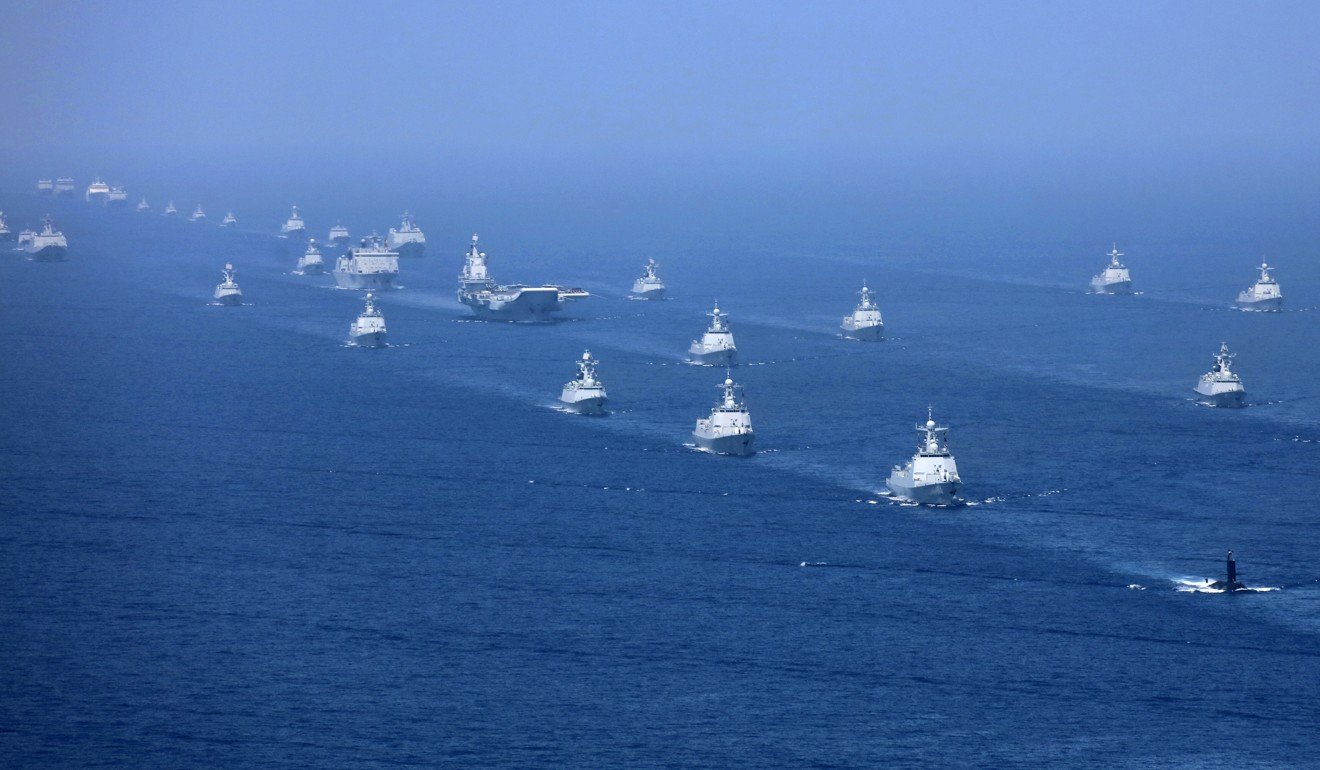
Chinese warships pictured at the end of joint exercise with the Russian navy in 2016. Photo: Xinhua
China will hold a naval parade next month to mark the 70th anniversary of the founding of the People’s Liberation Army Navy and will invite more than a dozen of foreign navies to participate.
The parade will take place on April 23 in the Yellow Sea off the coast of Qingdao in Shandong province, Ren Zhiqiang, a spokesman for the Ministry of National Defence, said on Thursday.
Ren did not provide further details of the parade but military analysts said the exercise would give the navy the opportunity to display its rapidly growing strength and show how that has increased in the past 12 months.

In April last year a naval review in the South China Sea featured a total of 48 vessels and 76 planes, including China’s first aircraft carrier, the Liaoning, its Type 094A and 095 nuclear submarines, 052D guided missile destroyers and J-15 fighter jets.

The experts expect that next month’s event will provide a showcase for several new and more powerful vessels including its home-grown aircraft carrier Type 001A, the Type 055 – Asia’s most powerful destroyer – and several nuclear submarines.

“The fact that China is holding the naval parade just one year after the South China Sea review shows the great importance [the leadership] attaches to the development of China’s maritime interests, the navy and its expansion,” navy expert Li Jie said.

Chinese President Xi Jinping joined the crew on the deck of the cruiser Changsha following last year’s naval review. Photo: Xinhua

China also held a major naval parade in 2009 to mark the navy’s 60th anniversary.

It was smaller in scale than the upcoming extravaganza with 25 PLA vessels and 31 fighter jets taking part.

Fourteen foreign navies sent ships to the 2009 parade, including the USS Fitzgerald from America and the guided-missile cruiser Varyag from Russia. France, Australia, South Korea, India and Pakistan also joined in the event.

More foreign countries are expected to join the party this year as the PLA has become more active internationally and China has sold more warships to foreign navies.

China’s new veterans’ law to be reviewed at National People’s Congress next week

“The parade is more like a birthday party for the PLA Navy and the participation of foreign navies is a matter of diplomatic courtesy with few military implications,” said Yue Gang, a former PLA colonel.

Yue said the US and its allies would attend despite the rising tensions between the two sides.

Since 2015 the US and Chinese navies have engaged in a series of confrontations in the South China Sea as China strengthens its military presence in the region and the US has sought to challenge Beijing’s claims to the waters by conducting what it describes as “freedom of navigation” operations.

“I don’t expect they will send any of the warships that have taken part in such operations [to the parade],” Yue said.

China has greatly expanded its naval capabilities in recent years. Photo: AP

It has been reported that the Japanese Maritime Self-Defence Force has expressed an interest in joining the parade and the Philippines – which has a rival claim to the South China Sea – is planning to send a vessel to the event for the first time.

Li said militaries such as the US and Japan would not want to miss the chance to observe the PLA Navy closely.

“In addition, greater transparency [through the parade] will also help reassure smaller regional partners such as the Philippines that China is a friendly power despite its growing military strength,” he said.

China held its first naval parade in 1957 and April’s display will be the sixth such event.

Sailors also took part in the parade through Tiananmen Square to mark the foundation of the People’s Republic on October 1 1949.

Source: SCMP

01/03/2019

China’s envoy says Turkish Uighur criticism could hit economic tie

ANKARA (Reuters) – Turkey risks jeopardising economic ties with China if it keeps criticising Beijing’s treatment of Uighur Muslims, China’s envoy to Ankara warned, just as Chinese firms are looking to invest in Turkish energy and infrastructure mega-projects.

Last month Turkey broke a long silence over the fate of China’s Uighurs, saying more than one million people faced arbitrary arrest, torture and political brainwashing in Chinese internment camps in the country’s northwestern Xinjiang region.

Turkey’s Foreign Minister Mevlut Cavusoglu repeated Ankara’s concern at a United Nations meeting this week, calling on China to respect human rights and freedom of religion.

China has denied accusations of mistreatment and deems criticism at the United Nations to be interference in its sovereignty. Beijing says the camps are re-education and training facilities that have stopped attacks previously blamed on Islamist militants and separatists.

For now, Deng said that many Chinese companies were looking for investment opportunities in Turkey including the third nuclear power plant Ankara wants to build.

Several Chinese firms including tech giant Alibaba, are actively looking at opportunities in Turkey after the lira’s sell-off has made local assets cheaper.

In addition to Alibaba, which last year purchased Turkish online retailer Trendyol, other companies holding talks included China Life Insurance and conglomerate China Merchants Group, Deng said.

GAPING DEFICIT

Deng said Chinese banks wanted to invest in Turkey, following the lead of Industrial and Commercial Bank of China (ICBC) which bought Tekstilbank in 2015.

Chinese investment in Turkey would help narrow Ankara’s gaping current account deficit, which stood at $27.6 billion last year. Turkey’s trade deficit with China alone stood at $17.8 billion last year, according to Trade Ministry data.

In January, Turkey’s Finance Minister Berat Albayrak said it was “impossible” for Turkey to maintain such a trade deficit with China and other Asian countries, saying the government was considering taking measures.

Deng said he did not expect Turkey to take protectionist steps. “Both countries are strictly against such policies, and both economies need an open world economy,” he said.

He also called on Turkey to adopt Chinese payment platforms such as WeChat and AliPay. “People don’t want to pay in cash and the population here is very young so they wouldn’t have trouble adapting to new technologies,” Deng said.

Good diplomatic and political ties, however, would remain crucial for developing economic ties and attracting more Chinese investment, he said, adding that he had raised the issue with Cavusoglu on Tuesday, a day after the foreign minister’s intervention at the United Nations.

“The most important issue between countries are mutual respect,” he said. “Would you stay friends if your friend criticized you publicly every day?

Source: Reuters

28/02/2019

HKSAR gov’t sees Greater Bay Area development as golden opportunity

HONG KONG, Feb. 27 (Xinhua) — The financial secretary of China’s Hong Kong Special Administrative Region (HKSAR) government delivered Hong Kong’s annual budget on Wednesday, saying the Guangdong-Hong Kong-Macao Greater Bay Area offers golden opportunities for Hong Kong to explore new directions and open up new horizons.

To support implementation of various measures, the budget, themed “supporting enterprises, safeguarding jobs, stabilizing the economy, strengthening livelihoods,” provides new resources ready for use of about 150 billion HK dollars (about 19.1 billion U.S. dollars), with additional resources earmarked for various purposes.

“This demonstrates our determination to enhance public services, support enterprises, relieve people’s burden and invest for the future,” Financial Secretary of the HKSAR government Paul Chan said.

Under mounting external pressures, Hong Kong’s economic growth moderated from 4.1 percent in the first half of 2018 to 2.1 percent in the second half of the year, with growth for the fourth quarter at a mere 1.3 percent, the lowest since the first quarter of 2016, he said.

Overall, Hong Kong’s economy grew by 3 percent in 2018, at the lower end of the range projected in last year’s Budget but still higher than the trend growth rate of 2.8 percent over the past decade, he added.

Chan forecast a surplus of 58.7 billion HK dollars for 2018-19. Fiscal reserves are expected to reach 1,161.6 billion HK dollars by March 31, 2019; economic growth of 2 to 3 percent in real terms for Hong Kong in 2019.

He said the development of innovation and technology (I&T) will bring huge economic benefits to Hong Kong, adding that sufficient resources, with a commitment of over 100 billion HK dollars has been allocated in this area so far.

More efforts will be made to support scientific research and I&T sectors by developing I&T infrastructure, promoting research and development (R&D), pooling talent, supporting enterprises and promoting reindustrialization.

Talking about national development strategy, Chan emphasized that the Greater Bay Area development and the Belt and Road Initiative are providing rare opportunities for Hong Kong.

Chan said that the outline development plan for the Greater Bay Area, promulgated last week, is a milestone setting out the development directions for the Greater Bay Area up to 2035.

Hong Kong, positioned as international financial, transportation and trade centers as well as an international aviation hub in the Greater Bay Area, will strengthen its roles as a global offshore Renminbi business hub and an international asset and risk management center; and will devote great efforts to develop I&T industries as well as international legal and dispute resolution services, the financial chief said.

Meanwhile, the Belt and Road Initiative will create greater room for Hong Kong’s economic and social development. There has been positive outcomes in areas such as supporting industries in exploring markets, establishing business matching platforms for enterprises and encouraging Hong Kong’s professional services sector to participate in Belt and Road projects.

As for land supply, Chan said, the HKSAR government will ensure that adequate resources are provided to support fully the short, medium and long-term measures to increase land and housing supply.

The estimated public housing production for the next five years is about 100,400 units and the supply of first-hand private residential units is expected to remain at a relatively high level in the coming three to four years at about 93,000 units, according to Chan. (1 U.S. dollar = 7.84 HK dollars)

Source: Xinhua

28/02/2019

Lawmakers brainstorm methods to seal victory over poverty

BEIJING, Feb. 27 (Xinhua) — Chinese lawmakers have met at a bimonthly legislative session to discuss a research report on poverty relief, and brainstormed methods to seal the country’s victory against poverty.

The report was based on the investigation led by three National People’s Congress (NPC) Standing Committee vice chairpersons into poverty alleviation efforts in 16 provinces and regions last year.

It was reviewed at the two-day committee session, which ended Wednesday.

Delivered at the session by Wu Weihua, vice chairperson of the NPC Standing Committee, the report said that “decisive progress” had been made in the anti-poverty fight but circumstances remained challenging.

Support for extremely impoverished regions should be continuously strengthened, according to Li Yuefeng, a member of the standing committee, who said that areas in abject poverty still posed the most difficult tasks in the battle against poverty, and called for consistent efforts to make sure they did not lag behind.

Fellow lawmaker Liu Yuankun believes the problems for extremely poor areas are rooted in their economy and society, and suggested poverty relief in such areas be integrated with local economic and social development.

“As soon as transportation works, everything will work,” he said, stressing the construction of infrastructure, which allows funds, talent and industries to flow into impoverished areas.

Another member Zheng Gongcheng said that only by building inner faith and hope could the endogenous power to defeat poverty be long-lasting, and suggested prioritizing efforts in education and employment to enhance the capacity of people in poverty.

In 2018, China lifted 13.86 million people in rural areas out of poverty, with the number of impoverished rural residents dropping from 98.99 million in late 2012 to 16.6 million by the end of last year.

The number is still high, however, and many of the impoverished are long suffering from illnesses, disabled, or elderly people with no family, according to the report.

“A long-term and effective mechanism to prevent people from falling back into poverty due to illness is significant,” said Li Xueyong, a member of the NPC Standing Committee, who asked for more measures to cut major illnesses at the root.

Source: Xinhua

28/02/2019

All 56 ethnic groups part of big family of Chinese nation: Chinese ambassador

SWITZERLAND-GENEVA-UNHRC SESSION

Yu Jianhua, head of the Chinese Mission to the UN Office in Geneva, attends the 40th session of the UN Human Rights Council (UNHRC) in Geneva, Switzerland, Feb. 27, 2019. The 56 ethnic groups in China, living together like brothers and sisters, are all parts of the big family of the Chinese nation, Yu Jianhua told the UNHRC session. “The people of all ethnic groups are tightly held together like pomegranate seeds, and together they are making arduous efforts for the great rejuvenation of the Chinese nation where they can all live a happy life,” Yu said, when elaborating on China’s human rights propositions and expounding achievements of the human rights undertakings in Xinjiang Uygur Autonomous Region in northwest China. (Xinhua/Xu Jinquan)

GENEVA, Feb. 27 (Xinhua) — The 56 ethnic groups in China, living together like brothers and sisters, are all part of the big family of the Chinese nation, a Chinese envoy said Wednesday at the ongoing UN Human Rights Council (UNHRC) session in Geneva.

“The people of all ethnic groups are tightly held together like pomegranate seeds, and together they are making arduous efforts for the great rejuvenation of the Chinese nation where they can all live a happy life,” said Yu Jianhua, head of the Chinese Mission to the UN Office at Geneva, when elaborating on China’s human rights propositions and expounding achievements of the human rights undertakings in Xinjiang Uygur Autonomous Region in northwestern China, during the UNHRC’s 40th session.

Yu said that as unilateralism and protectionism are on the rise in today’s world, coupled with the still outstanding problem of unbalanced, uncoordinated and unsustainable development, it’s particularly important for countries to firmly practise multilateralism and to jointly build a community with a shared future for mankind.

To that end, Yu put forward China’s propositions on advancing undertakings for human rights internationally. Firstly, mutual respect should be taken as a premise, by which all countries should respect their peoples’ choice of development path for human rights.

Secondly, all countries should adhere to the principle of fairness and justice, abide by the purposes and principles of the UN Charter, respect the sovereignty and territorial integrity of each country, and oppose interference into other countries’ internal affairs under the pretext of human rights.

Thirdly, all countries should aim for win-win results through cooperation; and lastly, all countries should champion a people-centered vision and promote human rights through development.

On the topic concerning China’s Xinjiang Uygur Autonomous Region, the Chinese ambassador said that the stance adopted by some countries is biased and entirely based on misjudgment, which runs counter to facts.

He said that the Chinese government has adopted a series of anti-terrorism and de-extremization measures in Xinjiang, including the establishment of vocational training facilities, which aim to help the few people who have been influenced by extremism to get rid of their terrorist and extremist thoughts and reintegrate them into the society as soon as possible.

These measures, carried out in full accordance with the law, have greatly improved the security situation in Xinjiang and effectively safeguarded the human rights of the people of all ethnic groups and thus received sincere support from the people, Yu said.

Source: Xinhua

28/02/2019

Shock as Chinese girl goes on television to accuse teacher of four years of beatings and sexual assaults

  • Teenager alleges man filmed his attacks and threatened her into silence
  • Victim’s mother says she never knew reason for daughter’s suicide attempts

Chinese girl accuses teacher of four years of beatings and sexual assault

28 Feb 2019

A 17-year-old girl alleges a teacher sexually assaulted her over four years and blackmailed her with video of the assaults. Photo: Weibo
A teenage girl from northwestern China has created shock waves by publicly accusing a schoolteacher of four years of rape, physical abuse and blackmail.
The girl, now 17, told the City and Youth Channel of Shaanxi Television on Wednesday that the teacher at Chenggu County No 4 Middle School in Shaanxi province forced her into a sexual relationship and threatened her with violence if she spoke about the attacks.

Authorities began an investigation into allegations against a 42-year-old man about a week ago after the girl was found beaten up on a country road. A man identified by the surname Ni was taken into police custody in connection with the attacks. The county’s education bureau has also launched an inquiry, Shaanxi Television reported.

The interview with the girl was widely reported by Chinese newspapers and had been viewed more than 18 million times on Weibo by Thursday afternoon.

China’s #MeToo claim costs university professor his job
The student claimed she was first raped in 2015, when she was summoned by Ni to a classroom on the pretext of teaching her to draw.

“He grabbed me from behind after I entered the room,” she told Shaanxi Television. “I struggled and screamed, but he covered my mouth with his hand.”

Ni repeatedly raped her over the years, she claimed, and filmed the assaults. He would often hit her and threaten to make the videos public, she said.

The alleged assaults began when the girl, then 13, was summoned to an art class at school. Photo: Weibo

They last met on February 18, when the girl tried to persuade Ni to delete the videos but she was beaten again, she said. “He slapped my face and seized me by the throat in his car. He then held me down, sat on me and continued to hit me.”

The attacks stopped when passers-by witnessed the man beating the teenager and called police, the report said.

“The girl has suffered a trauma in the past couple of years. She has tried to kill herself several times, but I did not know the real reason,” the girl’s mother said in the report. “I thought it was the pressure at school.”

For some on social media, the story was an indictment of Chinese society’s treatment of sexual assault victims.

“Such an experience would be ‘humiliating’ in China,” one commenter said. “People around her would not really feel sorry for her. They would avoid her because she was ‘dirty’.”

Teenage sexual assault survivor demands right to be heard

“All girls who have come forward in an environment with such a patchy rule of law and pressure from the public are brave,” another said.

Students at schools and colleges began to speak out last year in the wake of the international #MeToo movement and a national campaign against sexual harassment that spread across schools and college campuses.

A year ago, Luo Qianqian, a former student at Beihang University in Beijing, alleged that she and at least five other women had been sexually harassed by one of their professors.

The professor was fired after an inquiry found his behaviour “was a breach of administrative discipline and the norms of being a teacher”.

Source: SCMP

28/02/2019

Taiwan game ‘Devotion’ upsets China with Winnie the Pooh reference

Devotion game screengrabImage copyrightRED CANDLE GAMES/DEVOTION
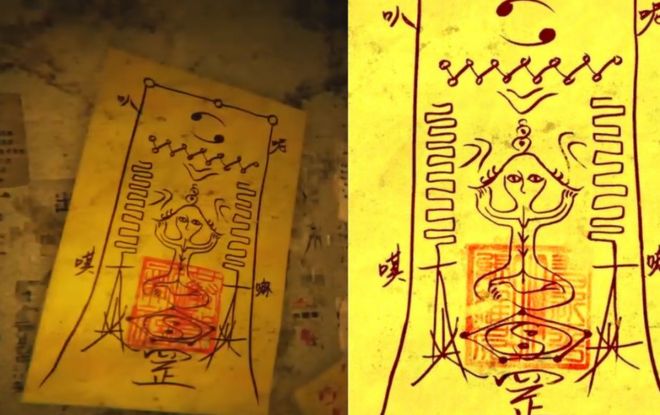
Image captionWhen players interact with the poster (L), the poster (R) appears – with the words “Winnie the Pooh” and “Xi Jinping”

A Taiwanese games company has had its latest release pulled from mainland China, after players noticed subtle references mocking Chinese President Xi Jinping, including comparing him to Winnie the Pooh.

Red Candle Games released Devotion, a first-person horror game set in 1980s Taiwan, on games platform Steam on 19 February.

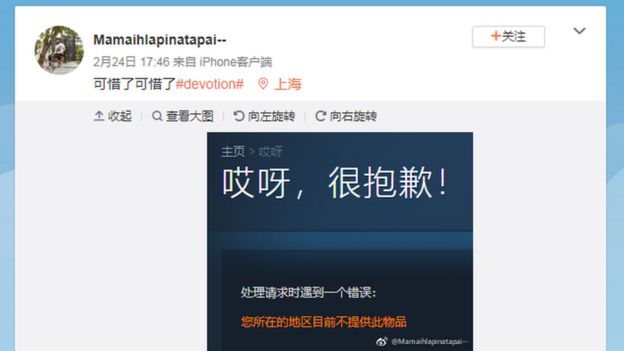
The game quickly went viral after players spotted so-called “easter eggs” and publicised them. However online discussion has since been censored.

An “easter egg” is a hidden message or joke in a computer game, normally only picked up by some players paying close attention.

Red Candle Games has apologised, saying it will refund offended users.

Taiwan is an island that is for all practical purposes independent, but China sees it as a rebel region and insists that other countries should not have diplomatic relations with it.

Taiwan’s current president has sparred with Beijing over the island’s political future. In January, Xi Jinping said Taiwan “must and will be” reunited with China.

Hidden messages

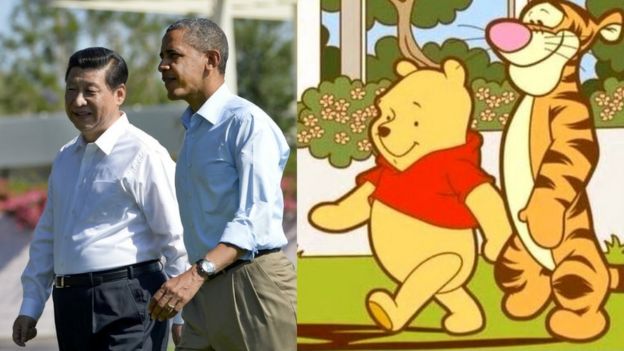
One of the easter eggs in Devotion is a poster containing the words “Xi Jinping” next to “Winnie the Pooh”, in an ancient style of writing. Winnie the Pooh has been censored on Chinese search engines and social media since 2017, after bloggers began comparing Mr Xi to the children’s story book and film character.

Gamers have also spotted an old newspaper in Devotion that refers to an individual who has received a prison sentence, nicknamed “baozi” or “steamed bun”.

Composite picture of Xi Jinping, Barack Obama and Winnie the Pooh charactersImage copyrightAFP/WEIBO
Image captionThis meme showing Xi Jinping and former US President Barack Obama began circulating in 2013

“Steamed bun” is another sensitive term in China, as social media users have used it to refer to the president and evade government censors.

‘Awfully unprofessional’

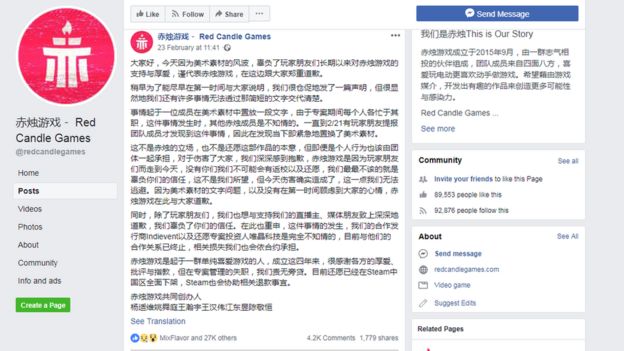
Red Candle Games confirmed that Devotion had been removed from Steam China on 23 February, and issued an apology, saying the poster with the Winnie the Pooh reference had made it into the game by accident due to a technical issue.

It said that it was aware some players may have been offended by the images, and said that it was in touch with Steam to ensure that such players could obtain a full refund.

“The whole team of Red Candle Games bears the responsibility of this awfully unprofessional mistake,” a statement on Monday said. “It is not Red Candle’s vision to secretly project extensive ideology, nor is it to attack any person in the real world.

“We sincerely hope that this ends with Red Candle, and please do not take it out on all of our innocent partners.”

Taiwanese Vice Premier Chen Chi-mai has praised the game, saying: “Only in countries with democracy and freedom can creation be free from restrictions.”

Red Candle Games' apologyImage copyrightFACEBOOK
Image captionRed Candle Games apologised and confirmed the game had been removed from Steam China

Chinese online censors, meanwhile, are trying to scrub references to the game and its hidden messages.

Searches for both “Red Candle Games” and “Devotion” in Chinese on Weibo are showing no results.

What’s On Weibo, which tracks content on the site, said that over the weekend posts containing the hashtag #Devotion were racking up hundreds of millions of views.

But on Monday, a search of the hashtag #Devotion showed only four posts, none of which refer to the game.

Posts that mention the game’s title in English, which the censors are often lax in censoring, show that China-based users are receiving messages on Steam saying that the game is “no longer available” to play in their country.

Meanwhile Red Candle’s account on China’s Twitter-like Sina Weibo service has been suspended, preventing the company from publicising its game in the mainland.

A Weibo user shares a post saying Devotion is no longer available to playImage copyrightSINA WEIBO
Image captionWeibo users shared posts saying they were no longer able to play the game

In Taiwan, where social media is not government-controlled, thousands of social media users are joking about the easter eggs.

Some on Facebook are posting pictures and gifs of Winnie the Pooh, and others are showing printouts of the offending poster.

Gaming in China

The episode has raised questions as to whether Steam will be the latest overseas online platform to be blocked in mainland China.

Technically, Steam has not gained official approval to operate in the country, but it remains accessible. Some 30m people are estimated to use it in China.

The platform allows China-based users to download and play games that have not received official authorisation.

Over the last decade, the government has banned games if their content is considered to be violent, or anti-Beijing. However many recent releases have never made it to China anyway because of a years-long backlog of games that regulators are yet to examine.

The top media regulator has also just announced that it will not be granting any new licences to gaming companies until the backlog is cleared.

The result is that wildly popular games such as PlayerUnknown’s Battlegrounds and Fortnite, both of which were released in 2017, remain neither banned, nor authorised in the country.

Source: The BBC

Law of Unintended Consequences

continuously updated blog about China & India

ChiaHou's Book Reviews

continuously updated blog about China & India

What's wrong with the world; and its economy

continuously updated blog about China & India