Archive for ‘Chinese migrants’

02/11/2019

Why Chinese farmers have crossed border into Russia’s Far East

A farm worker in Maksimovka, Amur Region
Image caption Chinese farmers are trying to bring workers across the border into Russia

The farm in Maksimovka is surrounded by high metal fences. The Chinese migrants who work there only leave the site to go shopping. At the centre of this village in Russia’s Far East sits an old abandoned building – there is no lock on the door and inside, the floor is littered with papers dating back to the 1980s and 90s.

Here lie clues to why a farm that once provided work to some 400 Russians was unable to survive.

Like many of the collective farms in rural Russia, the Mayak farm collapsed with the old Soviet Union.

That is when the Chinese workers arrived, in five border regions, and Russians have not always been happy to welcome their new neighbours.
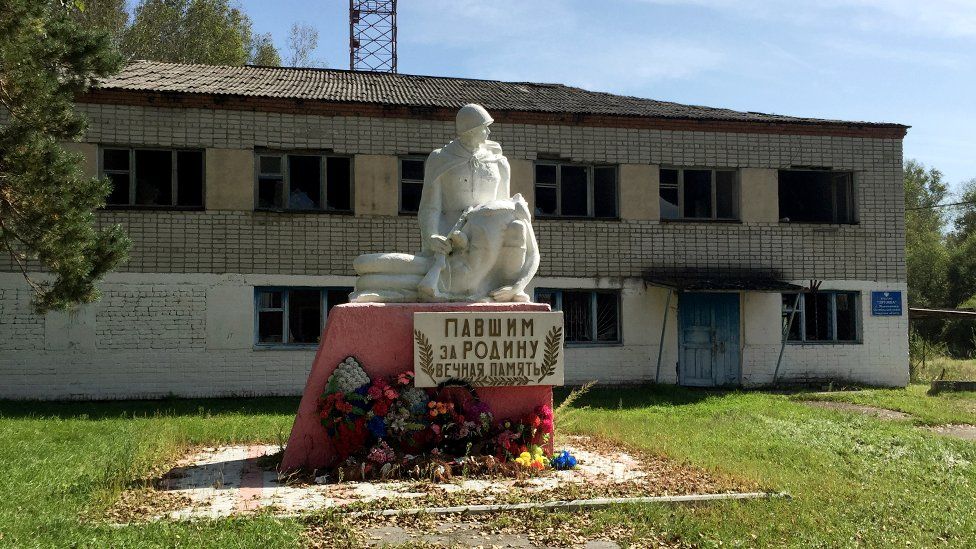
Little remains of the old collective farm at Mayak, apart from a monument to those killed in World War Two
Image caption Little remains of the old farm at Mayak, apart from a monument to those killed in World War Two

“Working in Russia is much the same as in China. You get up in the morning and go to work,” says Chom Vampen.

He is one of thousands of Chinese who have moved to this vast, under-populated part of Russia since the early 1990s.

Most seek work at Russian- or Chinese-owned farms or buy the lease on the land to develop their own agricultural enterprises.

As Russia’s relations with the West have deteriorated, President Vladimir Putin has welcomed China’s growing footprint here.
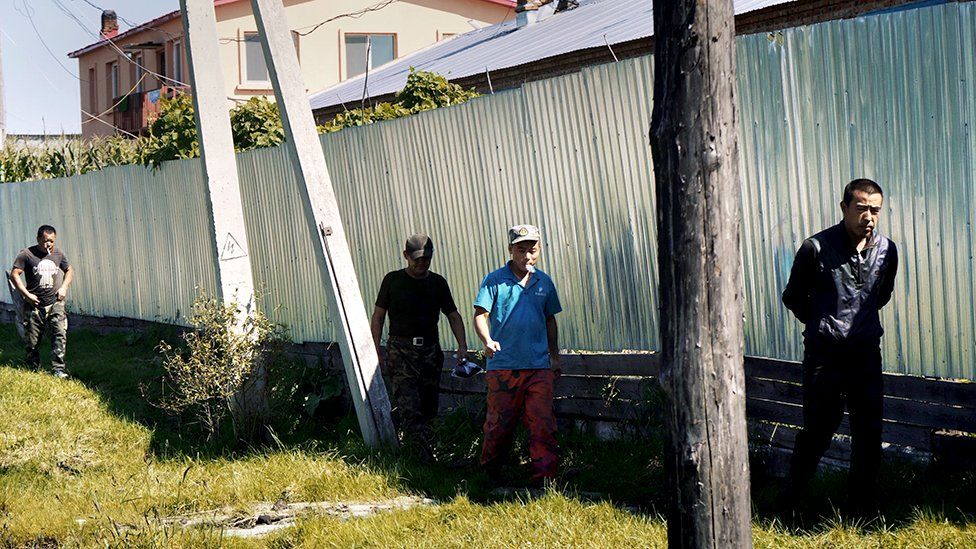
Chinese farm workers from Maksimovka
Image caption Chinese farm workers from Maksimovka

Mayak’s chairman, Yevgeny Fokin, leased thousands of hectares to Chinese entrepreneurs, attracted by low rents and large farms.

“We gave the shares to Fokin, thinking it would be better if the land belonged to the collective. But he gave it all to the Chinese and left, and we lost everything,” a local resident of Maksimovka village, Tatyana Ivanovna, said.

“No way,” says Mr Fokin. “There was nothing unusual about it.”
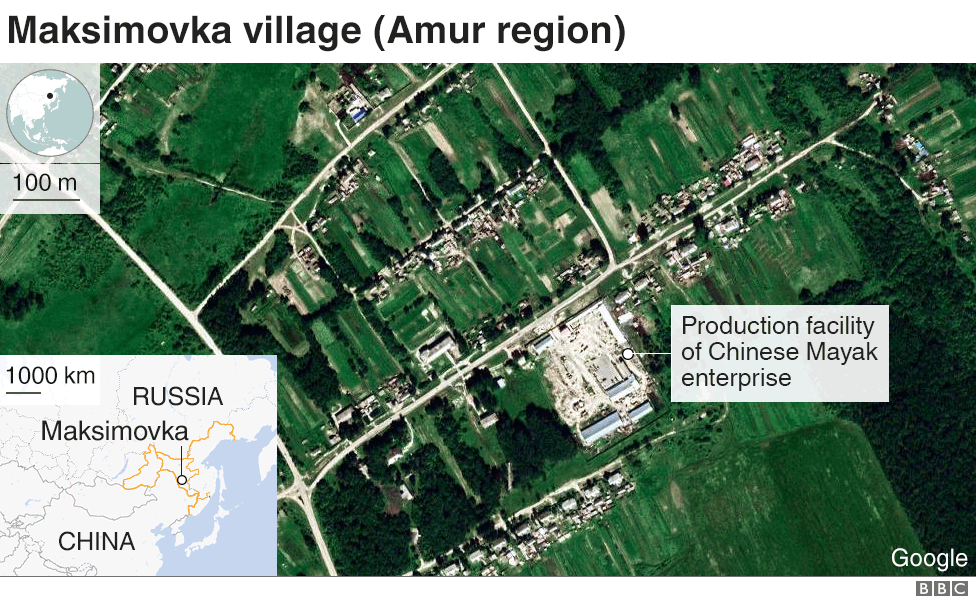
Map of Maksimovka

How Chinese companies took over

Chinese companies first appeared in Russia’s Far East in the early 2000s, but Beijing’s interest in the region increased after the global financial crisis of 2008.

“There was panic, [the Chinese] were looking at where to invest,” the head of a Chinese-owned farm told BBC Russian, preferring not to give his name.

Chinese investment was followed by an influx of Chinese migrants.

“We have little land and a lot of people,” said one Chinese farmer.

Presentational white space

Based on data released by the state land register, BBC Russian calculated that Chinese citizens either owned or leased at least 350,000 hectares (3,500 sq km) of Far Eastern land in Russia. In 2018, around 2.2 million hectares of Russian land in the region was used for agricultural purposes.

The actual proportion could be higher, the BBC has learned

Chinese farmers are, according to BBC research, represented in 40% of the Far East, most significantly in the Jewish autonomous region of Birobidzhan.

Regional governor Alexander Levintal said that in many cases land officially leased by Russians was in reality managed by Chinese nationals.

“Almost all the land that belonged to collectives was handed over to the Chinese,” said the head of the Jewish autonomous region’s peasant association, Alexander Larik.

Why relations are uneasy

Most of the farms run by Chinese migrants resemble fortresses. At Babstovo, a half-hour drive from the Chinese border, lies Friendship farm, which is surrounded by a high fence and a red flag.
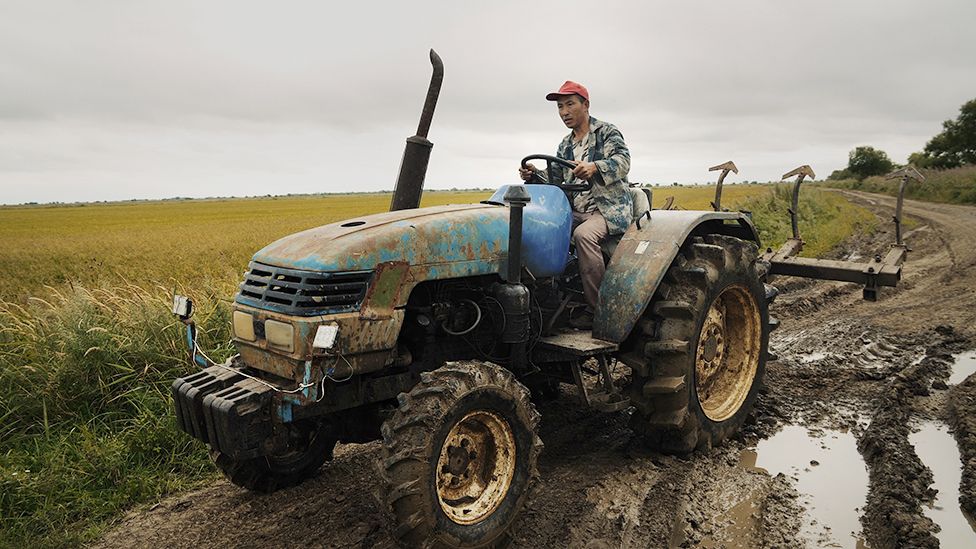
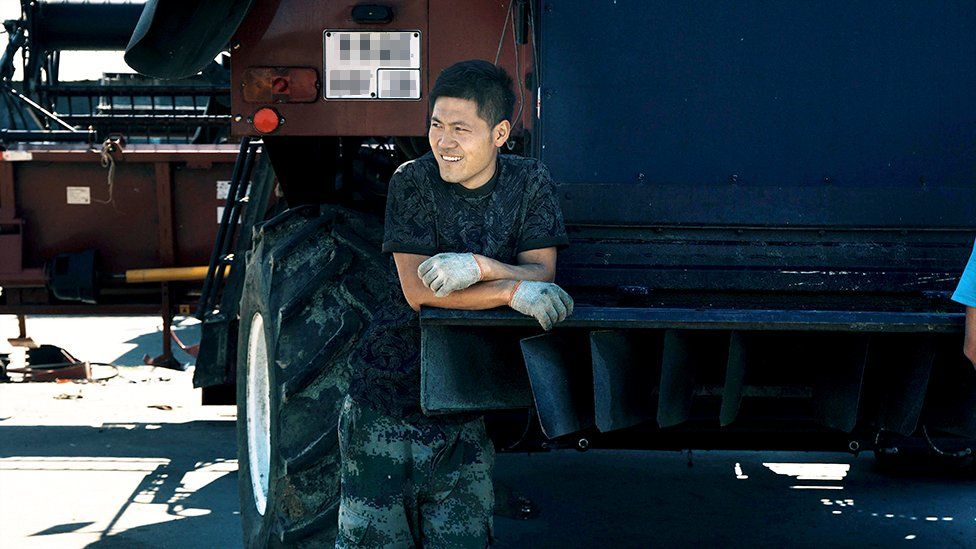
A Chinese tractor driver
Image caption Chinese workers here are main seasonal and rarely settle in Russia

But things are different in the village of Opitnoye Polye, where Xin Jie employs Russian as well as Chinese workers.

Like many Chinese here, he adopted a Russian name and is now known as Chinese Dima.

Chinese Dima moved to Russia in the 1990s and leased more than 2,500 hectares of land to develop a soya plantation. He is actively involved in the community, buying presents for nursery school children and sending his tractor to help clear the snow in remote villages in the winter.

Few have integrated quite as well.
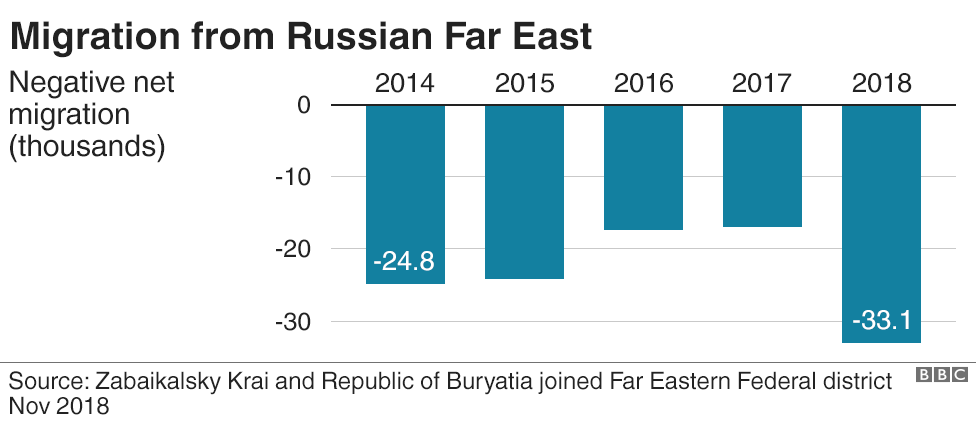
Migration from Russia's Far East

Conflicts between Russians and Chinese are not uncommon. In 2015, three Russians entered a Chinese factory in the Far Eastern Amur region and threatened a Chinese guard with a stick, demanding he give them food.

A few days later, when they returned to steal a tractor engine, they were confronted by the same Chinese guard who this time carried an axe.

They were given prison sentences ranging from five to nine years.

Most Chinese cross the border for seasonal work, for sowing or harvesting, and then return home.

But many Russians are unhappy with the Chinese influx. More than one in three people said they viewed China’s Russia policy as expansion, according to a poll conducted in 2017 by the Russian Academy of Sciences.

Almost half said that China threatened Russia’s territorial integrity, while a third believed that it endangered their country’s economic development.
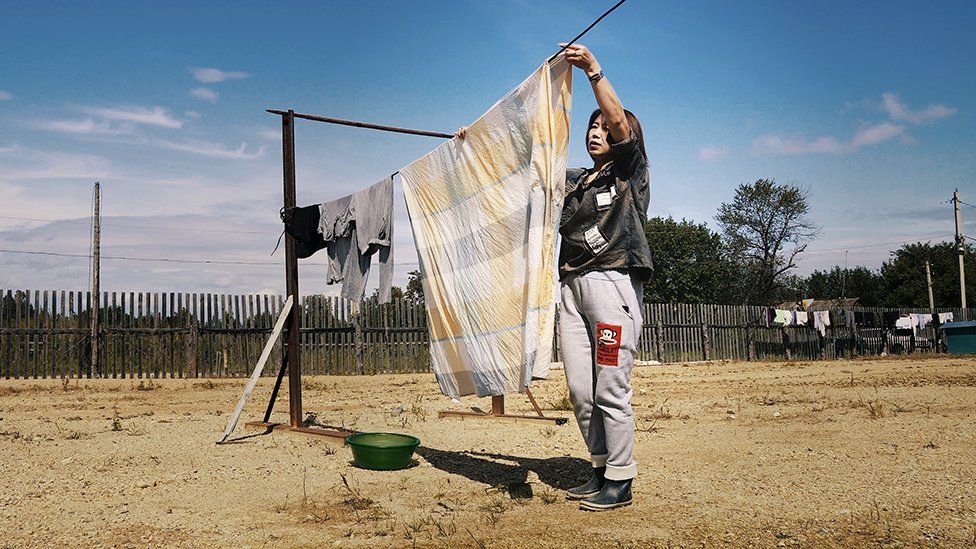
A Chinese woman hangs out the washing on a farm at Dimitrovo
Image caption A Chinese woman hangs out the washing on a farm at Dimitrovo

“They leave at seven in the morning and return after dark. I don’t see them and they don’t see me,” says Ivanovich of his Chinese neighbours in the village of Dimitrovo.

But some Russians have struck up friendships with the Chinese.

“They bring beer, we drink. I give them eggs and honey,” says Alexander.

Why Russian workers struggle to compete

Chinese farm workers in Russia’s Far East often have a better reputation than their Russian counterparts.

“The Chinese do not drink and they have nowhere to run; they come here for the season. Our citizens come to work for a week, plead for money and then go on a bender,” complained one Russian agricultural boss who declined to give his name.

Mr Larik, of the peasant association in the Jewish autonomous region, said Chinese farm owners generally preferred hiring Chinese migrants and gave Russian nationals low-skilled jobs.

A Chinese farmer who asked to stay anonymous complained about the drinking habits of Russian employees.

“All Russians drink. Today you pay them, tomorrow they do not show up. There are problems with discipline,” he said.
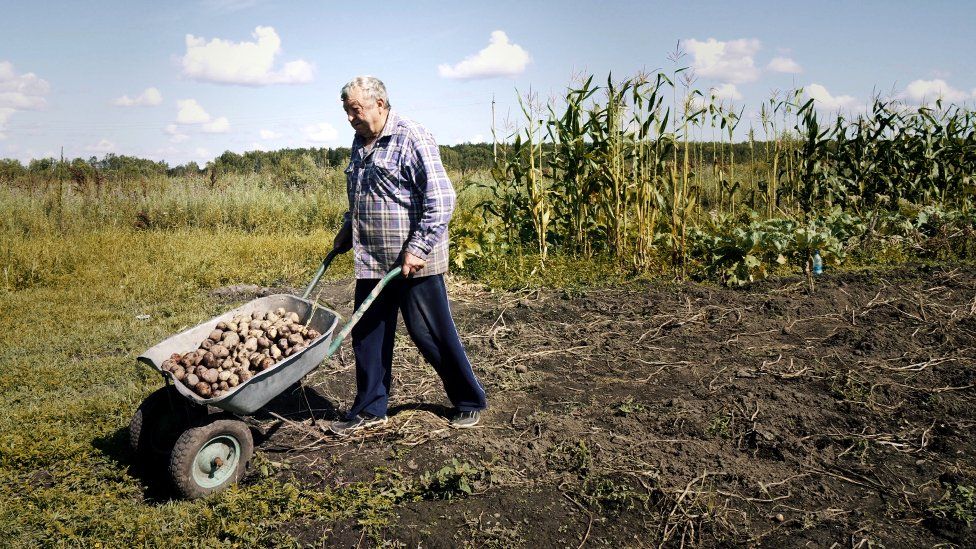
Residents in Maksimovka complain that young people tend to head to the cities, leaving only pensioners behind
Image caption Residents in Maksimovka complain that young people tend to head to the cities, leaving only pensioners behind

Russia has a poor record of protecting workers’ rights, especially in the agriculture industry, which is generally low paid.

Not everyone here has a low opinion of local workers.

“What is the difference between Russian and Chinese workers? Russian workers are smarter than the Chinese,” says Chom Vampen.

Source: The BBC

24/10/2019

Essex lorry deaths: 39 found dead ‘were Chinese nationals’

The 39 people found dead in a refrigerated trailer in Essex were Chinese nationals, it is understood.

Police are continuing to question lorry driver Mo Robinson, 25, who was arrested on suspicion of murder.

Officers in Northern Ireland have raided two houses and the National Crime Agency said it was working to identify “organised crime groups who may have played a part”.

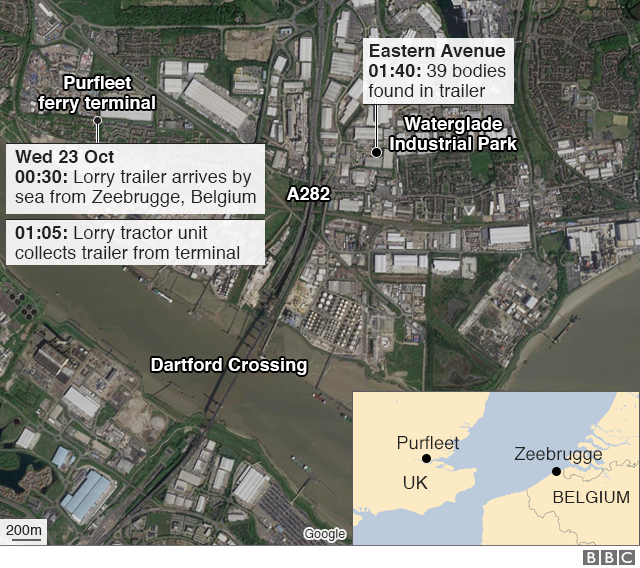
The trailer arrived in Purfleet on the River Thames from Zeebrugge in Belgium.

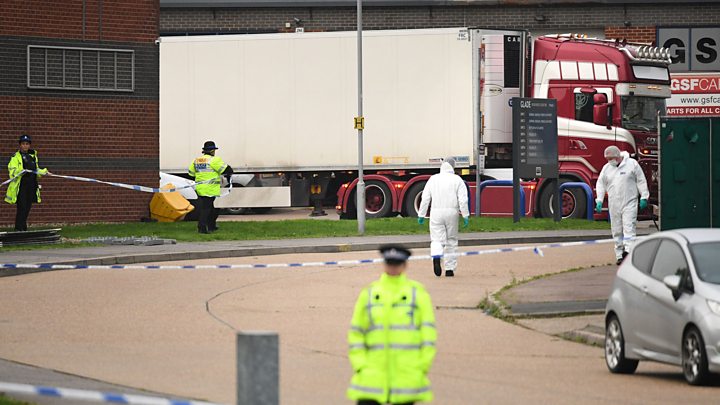
Ambulance staff discovered the bodies of the 38 adults and one teenager in the container at Waterglade Industrial Park in Grays just after 01:30 BST on Wednesday.

The lorry and trailer left the port at Purfleet shortly after 01:05.

Police said the tractor unit – the front part of the lorry – came from Northern Ireland and picked up the trailer from Purfleet.

Mo RobinsonImage copyright FACEBOOK
Image caption The lorry driver has been named locally as Mo Robinson, from County Armagh

Councillor Paul Berry said the village of Laurelvale in County Armagh, where the Robinson family live, was in “complete shock”.

He said he had been in contact with Mr Robinson’s father, who had learned of his son’s arrest on Wednesday through social media.

“The local community is hoping that he [Mo Robinson] has been caught up innocently in this matter but that’s in the hands of Essex Police, and we will leave it in their professional hands to try to catch the perpetrators of this,” he said.

The Belgian Federal Public Prosecutor’s Office said it had opened a case which would focus on the organisers and others involved in the transport.

A spokesman said the container arrived in Zeebrugge at 14:29 on Tuesday and left the port later that afternoon before arriving in Purfleet in the early hours of Wednesday.

It was not clear when the victims were placed in the container or if this happened in Belgium, he said.

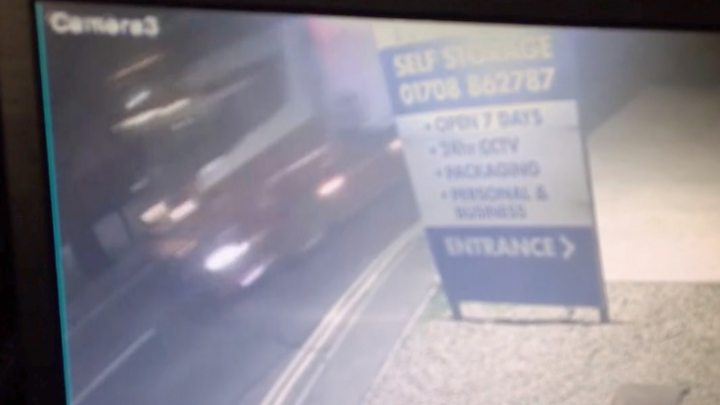
Media caption Essex lorry deaths: CCTV shows arrival at industrial park

St Peter and St Paul’s Church in Grays will be open for people to light candles and say prayers between 12:00 and 14:00.

A vigil is being held at 18:00 outside the Home Office to “call for urgent action to ensure safe passage” for people fleeing war and poverty.

The lorry was moved to a secure site at Tilbury Docks on Wednesday so the bodies could be “recovered while preserving the dignity of the victims”.

Essex Police initially suggested the lorry could be from Bulgaria, but later said officers believed it entered the UK from Belgium.

The force said formal identification of the 39 bodies “could be a lengthy process”.

A spokesman for the Bulgarian foreign affairs ministry said the truck was registered in the country under the name of a company owned by an Irish citizen.

He said it was “highly unlikely” the deceased were Bulgarians.

Graphic of Purfleet ferry channel

Shaun Sawyer, the National Police Chiefs Council lead for modern slavery and human trafficking, said while forces had prevented thousands of deaths, “tragically, for 39 people that didn’t work yesterday”.

He told BBC Radio 4’s Today programme even if there were routes perceived as easier to get through, organised criminals would still exploit people who could not access those.

“You can’t turn the United Kingdom into a fortress,” added Mr Sawyer, who is the Chief Constable of Devon and Cornwall Police.

Media caption I’ve seen people running out of a lorry’

Thurrock’s Conservative MP Jackie Doyle-Price said there needed to be an international response.

“We have partnerships in place but those efforts need to be rebooted, this is an international criminal world where many gangs are making lots of money and until states act collectively to tackle that it is going to continue,” she said.

Richard Burnett, chief executive of the Road Haulage Association, said temperatures in refrigerated trailers could be as low as -25C.

He described conditions for anyone inside as “absolutely horrendous”.

Prime Minister Boris Johnson said it was an “unimaginable tragedy and truly heartbreaking”.

Presentational grey line

How many migrants have died in transit?

The number of migrants who die in transit has been recorded by the UN since 2014.

Since then, five bodies of suspected migrants had been found in lorries or containers in the UK before this tragedy.

Data was not collected in the same way before the migrant crisis began in 2014, but such deaths are not new.

In 2000, 58 Chinese migrants were found suffocated to death in a lorry at Dover.

In 2015, the bodies of 71 people were found in an abandoned lorry on an Austrian motorway. Police suspected the vehicle was part of a Bulgarian-Hungarian human trafficking operation.

Source: The BBC

Law of Unintended Consequences

continuously updated blog about China & India

ChiaHou's Book Reviews

continuously updated blog about China & India

What's wrong with the world; and its economy

continuously updated blog about China & India