Chindia Alert: You’ll be Living in their World Very Soon
aims to alert you to the threats and opportunities that China and India present. China and India require serious attention; case of ‘hidden dragon and crouching tiger’.
Without this attention, governments, businesses and, indeed, individuals may find themselves at a great disadvantage sooner rather than later.
The POSTs (front webpages) are mainly 'cuttings' from reliable sources, updated continuously.
The PAGEs (see Tabs, above) attempt to make the information more meaningful by putting some structure to the information we have researched and assembled since 2006.
SEOUL (Reuters) – South Korean and Chinese officials on Tuesday cast doubt on reports North Korean leader Kim Jong Un was ill after media outlets said he had undergone a cardiovascular procedure and was in “grave danger”.
Daily NK, a Seoul-based speciality website, reported late on Monday, citing one unnamed source in North Korea, that Kim was recovering after undergoing the procedure on April 12. The North Korean leader is believed to be about 36.
CNN cited a U.S. official with direct knowledge of the matter as saying Washington was “monitoring intelligence” that Kim was in grave danger after surgery. Bloomberg quoted an unnamed U.S. official as saying the White House was told that Kim took a turn for the worse after the surgery.
However, two South Korean government officials rejected the CNN report without elaborating on whether Kim had undergone surgery. The presidential Blue House said there were no unusual signs coming from the reclusive, nuclear-capable state.
Kim is the unquestioned leader of North Korea and the sole commander of its nuclear arsenal. He has no clear successor and any instability in the country could be a major international risk.
RELATED COVERAGE
Factbox: Questions hang over North Korea succession amid reports on Kim health
The state KCNA news agency gave no indication of the whereabouts of Kim in routine dispatches on Tuesday, but said he had sent birthday gifts to prominent citizens.
An official at the Chinese Communist Party’s International Liaison Department, which deals with North Korea, told Reuters the source did not believe Kim was critically ill. China is North Korea’s only major ally.
Chinese foreign ministry spokesman Geng Shuang said Beijing was aware of reports about the health of Kim, but said it does not know their source, without commenting on whether it has any information about the situation.
South Korean shares exposed to North Korea tumbled and the Korean won fell on the reports. The won traded down more than 1% against the dollar even as South Korean government sources said Kim was not gravely ill.
U.S. stock futures were trading 0.5% lower, but it was not clear how much of that weakness was owing to the collapse in U.S. oil prices and consequent concerns over global demand.
Daily NK said Kim had been admitted to hospital on April 12, just hours before the cardiovascular procedure, as his health had deteriorated since August due to heavy smoking, obesity and overwork.
It said he was now receiving treatment at a villa in the Mount Myohyang resort north of the capital Pyongyang.
“My understanding is that he had been struggling (with cardiovascular problems) since last August but it worsened after repeated visits to Mount Paektu,” a source was quoted as saying, referring to the country’s sacred mountain.
Accompanied by senior North Korean figures, Kim took two well-publicised rides on a stallion on the snowy slopes of the mountain in October and December.
KIM’S HEALTH KEY TO STABILITY
An authoritative U.S. source familiar with internal U.S. government reporting on North Korea questioned the CNN report that Kim was in “grave danger”.
“Any credible direct reporting having to do with Kim would be highly compartmented intelligence and unlikely to leak to the media,” a Korea specialist working for the U.S. government said on condition of anonymity.
Japan’s top government spokesman, Yoshihide Suga, declined to comment on the reports of Kim’s health.
“We are regularly gathering and analysing information about North Korea with great concern,” he said. “We will keep gathering and analysing information regarding North Korea by collaborating with other countries such as the U.S.”
Kim’s potential health issues could fuel uncertainty over the future of the reclusive state’s dynastic rule and stalled denuclearisation talks with the United States, issues in which Kim wields absolute authority.
With no details known about his young children, analysts say his sister and loyalists could form a regency until a successor is old enough to take over.
Speculation about Kim’s health first arose following his absence from the anniversary of the birthday of its founding father and Kim’s grandfather, Kim Il Sung, on April 15.
On April 12, North Korean state media reported that Kim Jong Un had visited an airbase and observed drills by fighter jets and attack aircraft.
Two days later North Korea launched multiple short-range anti-ship cruise missiles into the sea and Sukhoi jets fired air-to-surface missiles as part of military exercises.
The missile launches were part of the celebrations for Kim’s grandfather, Seoul officials said, but there was no North Korea state media report on his attendance or the tests.
Reporting from inside North Korea is notoriously difficult, especially on matters concerning the country’s leadership, given tight controls on information. There have been false and conflicting reports in the past on matters related to its leaders.
Kim is a third-generation hereditary leader who rules North Korea with an iron-fist, taking over the titles of head of state and commander in chief of the military since late 2011.
In recent years Kim has launched a diplomatic offensive to promote both himself as a world leader and his hermit kingdom, holding three meetings with U.S. President Donald Trump, four with South Korean President Moon Jae-in and five with China’s President Xi Jinping.
He was the first North Korean leader to cross the border into South Korea to meet Moon in 2018. Both Koreas are technically still at war, as the Korean War of 1950-53 ended in an armistice, not a peace treaty.
Kim has sought to have international sanctions against his country eased, but has refused to dismantle his nuclear weapons programme, a steadfast demand by the United States.
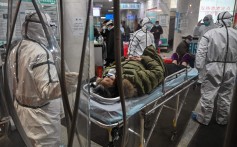
Image copyright GETTY IMAGESImage caption The Chinese city of Wuhan recently lifted its strict quarantine measures
The Chinese city of Wuhan, where the coronavirus originated last year, has raised its official Covid-19 death toll by 50%, adding 1,290 fatalities.
Wuhan officials attributed the new figure to updated reporting and deaths outside hospitals. China has insisted there was no cover-up.
It has been accused of downplaying the severity of its virus outbreak.
Wuhan’s 11 million residents spent months in strict lockdown conditions, which have only recently been eased.
The latest official figures bring the death toll in the city in China’s central Hubei province to 3,869, increasing the national total to more than 4,600.
China has confirmed nearly 84,000 coronavirus infections, the seventh-highest globally, according to Johns Hopkins University data.
What’s China’s explanation for the rise in deaths?
In a statement released on Friday, officials in Wuhan said the revised figures were the result of new data received from multiple sources, including records kept by funeral homes and prisons.
Deaths linked to the virus outside hospitals, such as people who died at home, had not previously been recorded.
Media caption Learn how Wuhan dealt with the lockdown
The “statistical verification” followed efforts by authorities to “ensure that information on the city’s Covid-19 epidemic is open, transparent and the data [is] accurate”, the statement said.
It added that health systems were initially overwhelmed and cases were “mistakenly reported” – in some instances counted more than once and in others missed entirely.
A shortage of testing capacity in the early stages meant that many infected patients were not accounted for, it said.
A spokesman for China’s National Health Commission, Mi Feng, said the new death count came from a “comprehensive review” of epidemic data.
In its daily news conference, the foreign ministry said accusations of a cover-up, which have been made most stridently on the world stage by US President Donald Trump, were unsubstantiated. “We’ll never allow any concealment,” a spokesman said.
Why are there concerns over China’s figures?
Friday’s revised figures come amid growing international concern that deaths in China have been under-reported. Questions have also been raised about Beijing’s handling of the epidemic, particularly in its early stages.
In December 2019, Chinese authorities launched an investigation into a mysterious viral pneumonia after cases began circulating in Wuhan.
China reported the cases to the World Health Organization (WHO), the UN’s global health agency, on 31 December.
But WHO experts were only allowed to visit China and investigate the outbreak on 10 February, by which time the country had more than 40,000 cases.
The mayor of Wuhan has previously admitted there was a lack of action between the start of January – when about 100 cases had been confirmed – and 23 January, when city-wide restrictions were enacted.
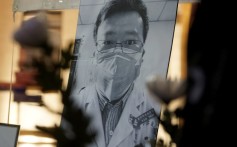
Around that time, a doctor who tried to warn his colleagues about an outbreak of a Sars-like virus was silenced by the authorities. Dr Li Wenliang later died from Covid-19.
Wuhan’s death toll increase of almost exactly 50% has left some analysts wondering if this is all a bit too neat.
For months questions have been asked about the veracity of China’s official coronavirus statistics.
The inference has been that some Chinese officials may have deliberately under-reported deaths and infections to give the impression that cities and towns were successfully managing the emergency.
If that was the case, Chinese officials were not to know just how bad this crisis would get in other countries, making its own figures now seem implausibly small.
The authorities in Wuhan, where the first cluster of this disease was reported, said there had been no deliberate misrepresentation of data, rather that a stabilisation in the emergency had allowed them time to revisit the reported cases and to add any previously missed.
That the new death toll was released at the same time as a press conference announcing a total collapse in China’s economic growth figures has led some to wonder whether this was a deliberate attempt to bury one or other of these stories.
Then again, it could also be a complete coincidence.
China has been pushing back against US suggestions that the coronavirus came from a laboratory studying infectious diseases in Wuhan, the BBC’s Barbara Plett Usher in Washington DC reports.
US President Donald Trump and some of his officials have been flirting with the outlier theory in the midst of a propaganda war with China over the origin and handling of the pandemic, our correspondent says.
Mr Trump this week halted funding for the World Health Organization (WHO), accusing it of making deadly mistakes and overly trusting China.
“Do you really believe those numbers in this vast country called China, and that they have a certain number of cases and a certain number of deaths; does anybody really believe that?” Mr Trump said at the White House on Wednesday.
On Thursday, UK Foreign Secretary Dominic Raab said: “We’ll have to ask the hard questions about how [coronavirus] came about and how it couldn’t have been stopped earlier.”
But China has also been praised for its handling of the crisis and the unprecedented restrictions that it instituted to slow the spread of the virus.
WHO scientists co-write letter saying December 26 data indicating Sars-like coronavirus was not passed to global health community for 17 days
Hundreds of Chinese sign petition asking legislature to protect freedom of speech, amid discontent over outbreak’s handling and anger over Dr Li Wenliang’ death
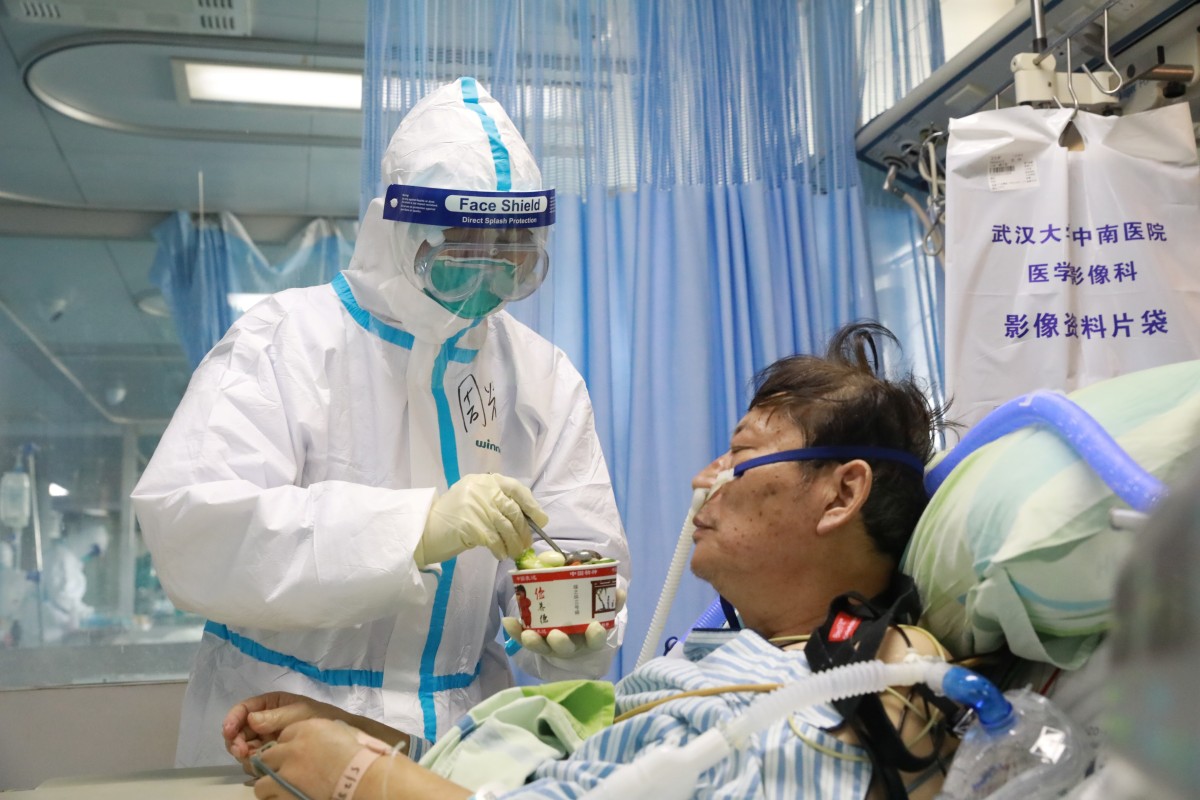
A nurse in a protective suit feeds a coronavirus patient in an isolated ward in Wuhan. Photo: Reuters
China’s health authority reported 97 new deaths caused by the coronavirus and 2,015 newly confirmed cases of infection, taking its totals to 1,113 and 44,653 respectively.
As of Tuesday, 744 recovered patients had been discharged and the total number of recovery cases stood at 4,740.
Outside Hubei province, the epicentre of the coronavirus, the rise in new infections reported by China slowed for an eighth consecutive day.
Apology for slow treatment
A district leader in Hubei’s capital of Wuhan apologised on Tuesday to critically ill patients who had not been treated in a timely manner, state media reported.
Staff in the Wuchang district who were in charge of a chaotic bus transfer of people to hospital on Sunday were ordered to apologise to patients and their families one by one by telephone.
Wuchang officials told state media that mistakes had been made and the district’s most urgent priority was to admit all patients to hospitals or other medical facilities as soon as possible.
As coronavirus cases get priority in Wuhan, other patients are losing hope
13 Feb 2020
The district leader, who visited hospitals to apologise in person, was mocked online for wasting protective suits when the city faces a shortage of medical supplies.
“Health care workers don’t have enough protective gear, why are you wearing it to apologise?” one person wrote on China’s Twitter-like Weibo. “These people are suspected cases, not confirmed ones. It’s a pity to waste the protective gear – it protects the lives of health care workers!”
“I really don’t think it’s necessary to apologise one by one, just apologise in the newspaper! Don’t waste time and protective clothing on formalities,” another person wrote.
Reporting system ‘needs update’
A group of scientists have called for changes in the way new viruses are reported, after a delay of more than two weeks between the first indication of a coronavirus strain in Hubei and the release of critical information to the global health community.
The group said in a letter to The Lancet that data indicating a Sars-related coronavirus was obtained by researchers on December 26.
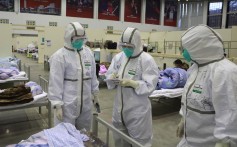
Life inside China’s rapidly built hospitals in Wuhan, the epicentre of the coronavirus outbreak
“The Chinese authorities ruled out Sars and Mers, as well as a few other non-coronaviruses, on January 5, and confirmed a novel coronavirus as a potential cause on January 9. However, the genome sequence – crucial for rapid development of diagnostics needed in an outbreak response – was not released until January 12, 17 days after the preliminary sequence data were obtained,” they wrote.
The letter mentioned the “crucial role” of doctors in detecting the outbreak in China, including “eight doctors who were wrongly accused of spreading ‘fake news’” – a reference to a group that included Li Wenliang, the doctor hailed as a whistle-blower who later succumbed to the disease.
WHO head warns ‘time is of the essence’ in limiting coronavirus spread
13 Feb 2020
“There are lessons the global health community can and should learn and act on so that we can better respond to the next EZV (emerging zoonotic virus) event, which is almost certain to happen again. These lessons are definitely not unique to China,” they wrote.
Two of the letter’s authors sit on the committee that provides the World Health Organisation (WHO) advice about when to declare a public health emergency of international concern – a status given to the coronavirus on January 30.
Hubei reports 94 new deaths
Health authorities in Hubei reported 94 new deaths attributable to the contagion on Tuesday and 1,638 newly confirmed cases, taking the province’s totals to 1,068 and 33,366 respectively. They had reported 103 fatalities and 2,097 newly confirmed cases a day earlier.
Coronavirus illness is named Covid-19 as hopes rise that cases may peak soon
13 Feb 2020
Some 1,104 of the new cases announced were confirmed in Wuhan, where the virus is believed to have originated at a seafood and meat market.
The figures from Hubei on Tuesday showed the province’s lowest number of new cases in a day since the beginning of February, and the first time it had reported fewer than 2,000 new cases in a day since February 2.
China disinfects entire cities to fight coronavirus outbreak, some twice a day
Disease can spread faster than Sars: WHO
Michael Ryan, the WHO’s head of emergency programmes, said on Tuesday in Geneva that the disease caused by the coronavirus – now officially named Covid-19 by the WHO – had the potential to spread faster than either the Ebola or Sars viruses. Earlier this week, Covid-19 exceeded the Sars outbreak of 2002-03 in terms of deaths attributed to it.
Transmission methods have been shown to include human-to-human contact, and the incubation period is believed to be up to 14 days.
In recent days, epidemiologists have said that the contagion may also spread through “aerosol transmission” – when tiny particles or droplets of the virus suspended in the air are inhaled.
At least 500 Wuhan medical staff infected with coronavirus
13 Feb 2020
Others indicated that transmissions were possible from patients who showed mild or no symptoms.
WHO officials said on Tuesday that the agency had also activated a UN crisis management team to better assess and mitigate the outbreak’s economic implications.
Petition calls for freedom of speech
Hundreds of Chinese, led by academics, have signed an online petition calling on the national legislature to protect citizens’ right to freedom of speech, amid growing public discontent over the handling of the coronavirus outbreak.
It also follows a massive outpouring of grief and anger over the death of Wuhan-based Dr Li Wenliang.
Coronavirus: hundreds in China sign petition calling for free speech
13 Feb 2020
The petition is gaining momentum online, but some of the signatories and other rights activists have already come under pressure. Addressed to the National People’s Congress (NPC), it lists five demands for Beijing.
The demands are: to protect people’s right to freedom of expression; to discuss the issue at NPC meetings; to make February 6, the day Li died, a national day for free speech; to ensure no one is punished, threatened, interrogated, censored or locked up for their speech, civil assembly, letters or communication; and to give equitable treatment, such as medical care, to people from Wuhan and Hubei province. Many have reported experiencing discrimination elsewhere in the country.
“I am so proud of him,” China’s top medical expert Zhong Nanshan mourns whistle-blower doctor’s dea
US repeats concern over China’s purchases
The outbreak could have an impact on China’s commitment to buy more US agricultural products this year under the US-China phase one trade deal, White House national security adviser Robert O’Brien said on Tuesday.
“We expect the phase one deal will allow China to import more food and open those markets to American farmers, but certainly, as we watch this coronavirus outbreak unfold in China, it could have an impact on how big – at least in this current year – the purchases are,” O’Brien told an event at the Atlantic Council, a Washington think tank.
‘No US doctors in China’
O’Brien said there were no American doctors on the ground in China so far, despite US offers to help fight the outbreak.
“We’ve offered the Chinese the opportunity to have American doctors … and other experts come to China to help them. That offer has not been accepted at this point but that is an outstanding offer,” he said.
Coronavirus outbreak exposes fallacy of the phase-one trade deal
11 Feb 2020
But US officials said on Monday that China had agreed to allow American health experts into the country.
“China has accepted the United States’ offer to incorporate a group of experts into a WHO mission to China to learn more about and combat the virus,” White House spokesman Judd Deere said.
In a tweet on Monday, WHO director general Tedros Adhanom Ghebreyesus said an advance team of WHO experts had arrived in China to “lay the groundwork for the larger international team”.
Tibet’s only patient cured
The only Covid-19 patient in Tibet was cured and discharged from hospital on Wednesday afternoon, People’s Daily reported, citing the patient’s doctor at the Third People’s Hospital of Tibet.
The patient, a 34-year-old man from Suizhou, Hubei province, spent three days on a train before reaching Lhasa on January 24. He sought medical treatment a day later and was isolated for treatment, before being confirmed as being infected on January 29.
US to test antiviral drugs in hopes of combating coronavirus
13 Feb 2020
The man tested negative for the virus on Sunday and Tuesday, and CAT scans and clinical symptoms showed he had been cured. He left Tibet by train on Wednesday afternoon, according to thePeople’s Daily report.
Iran denies report of Covid-19 death
Iran’s health ministry has denied a report that an Iranian woman has died of a suspected coronavirus infection.
The state daily newspaper Iran reported on Wednesday that a 63-year-old woman had died in a Tehran hospital on Monday and that an investigation had been ordered into the cause of her death. No sources were cited in the report.
A spokesman for Iran’s health ministry denied the report. “There have been no cases of coronavirus in Iran,” he said.
Iranian health authorities have repeatedly said there were no confirmed cases of coronavirus in the country.
Exams under threat
Chinese authorities are considering whether to postpone the country’s college entrance exams, due to take place in June.
“Those responsible for arranging college entrance exams need to put the lives and health of candidates and testing staff first,” Wang Hui, a Ministry of Education official, said at a press briefing on Wednesday. “We will closely monitor the development of the outbreak, evaluate the possible impact on the exams and carefully formulate a plan.”
Researchers will conduct tests at site in Gansu to see whether it will make a viable facility to store highly radioactive waste safely
Scientists say China has the chance to become a world leader in this field but has to find a way to ensure it does not leak
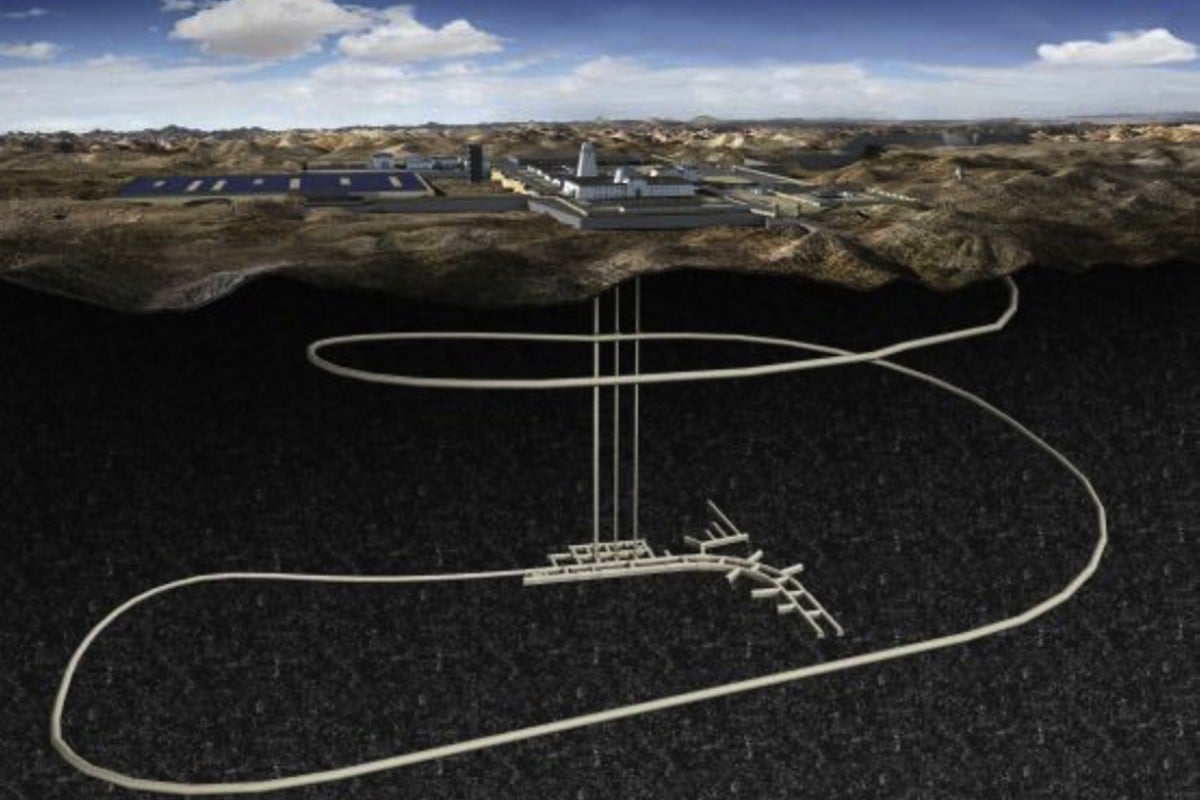
A preliminary design for the Beishan Underground Research Laboratory. Photo: Handout
China has chosen a site for an underground laboratory to research the disposal of highly radioactive waste, the country’s nuclear safety watchdog said on Wednesday.
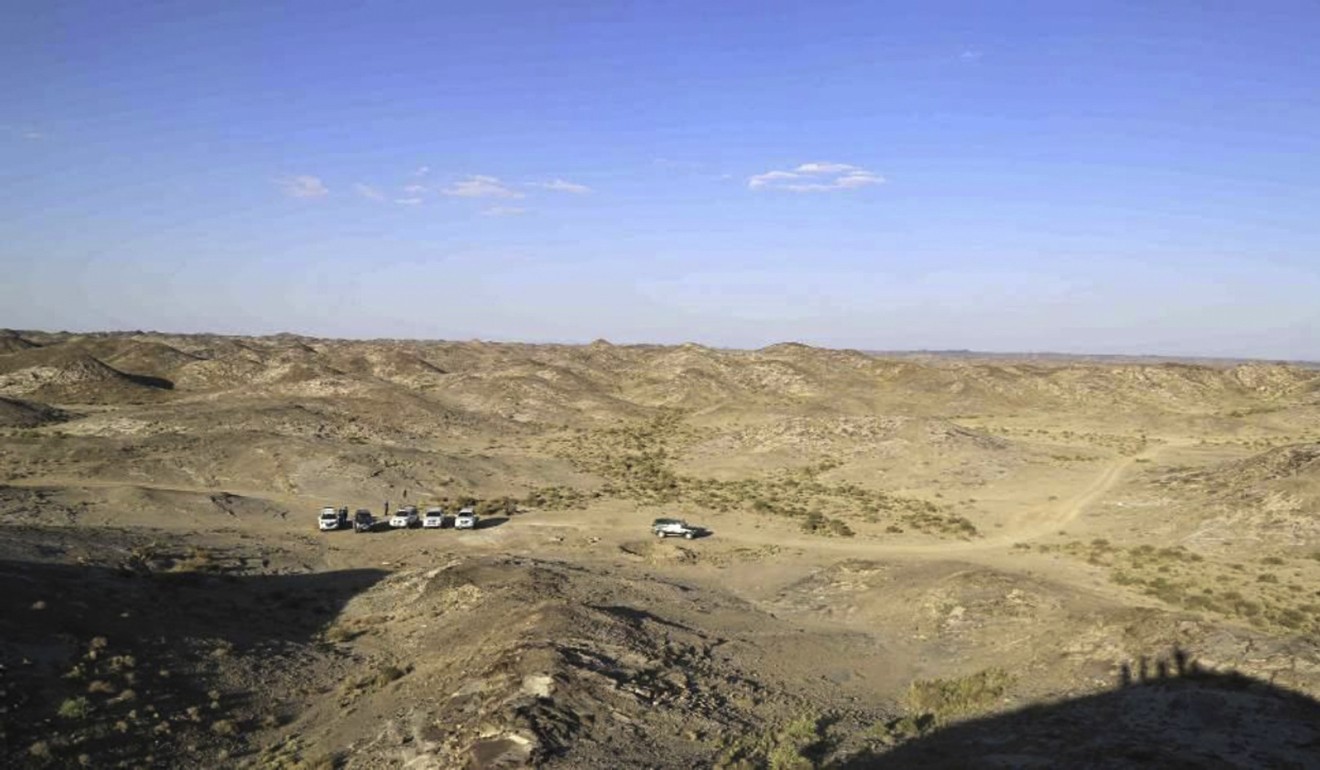
Officials said work will soon begin on building the Beishan Underground Research Laboratory 400 metres underground in the northwestern province of Gansu.
Liu Hua, the head of the Chinese National Nuclear Safety Administration, said work would be carried out to determine whether it would be possible to build a repository for high-level nuclear waste deep underground.
“China sees radioactive waste disposal as a very important part [of the development nuclear energy],” said Liu. “To develop nuclear energy, we must have safe storage and disposal of nuclear waste.”
China condemns US blacklisting of nuclear firms and says American companies could be hurt as a result
The Chinese authorities see nuclear power an important source of energy that will help to curb carbon emissions and pollution as well as reducing its dependence on fuel imports.
But while the country has made great strides in the development of nuclear power, it needs to find a safe and reliable way of dealing with its growing stockpiles of nuclear waste.
Liu said the Gansu site had been identified as a possible location for a deep nuclear waste store after years of searching.
Once the laboratory is built, scientists and engineers will start experiments to confirm whether it will make a viable underground storage facility.
“Based on the data of the experiments, we can then decide if we are going to pick this as the final site,” he added.
China ‘actively promoting’ nuclear fuel processing plant with French Areva
Chinese officials usually stay tight-lipped about how nuclear waste is disposed of mainly because of fears that any discussion of the topic would trigger safety fears, although in recent years more efforts have been made to inform the public to win support.
Scientists say that nuclear waste can be divided into three categories depending on the level of radioactivity.
Low-level waste consists of minimally radioactive materials such as mop heads, rags, or protective clothing used in nuclear plants, while intermediate-level waste covers things such as filters and used reactor components.
High-level waste, however, is generated by the reprocessing of spent nuclear fuel and scientists generally agree that the safest way to dispose of it is to bury it deep underground in areas where the geology means it will have a minimal impact on the environment while it decays over thousands of years.
The facility will be built in a remote part of Gansu province. Photo: Handout
Some Chinese scientists said the country had the chance to lead the world in this area of research but others have expressed concerns about safety.
Jiang Kejun, a senior researcher at the Energy Research Institute of China’s National Development and Reform Commission, said that very few countries in the world are studying this form of nuclear waste disposal.
“It gives China an opportunity to be a leader in research in this area, plus China has the technology and financial means,” he said.
About a dozen countries including France, Switzerland, Japan, and the United States have carried out research in this area, but in recent years most have abandoned or scaled back their programmes.
At present there are storage sites operating in Finland and the US, but other countries such as Germany have abandoned plans to build similar facilities.
Washington blacklists Chinese nuclear firms for ‘helping military acquire US technology’
But despite broad scientific support for underground disposal, some analysts and many members of the public remain sceptical about whether it is really safe.
Lei Yian, an associate professor at the School of Physics at Peking University, said there was no absolute guarantee that the repositories would be safe when they are come into operation.
“Leakage has happened in [repositories] in the US and the former Soviet Union … it’s a difficult problem worldwide,” he said. “If China can solve it, then it will have solved a global problem.”
China is also building more facilities to dispose of low and intermediate level waste. Officials said new plants were being built in Zhenjiang, Fujian and Shandong, three coastal provinces that currently lack disposal facilities.
At present, two disposal sites for low and intermediate-level waste are in operation in Gansu and Guangdong provinces.


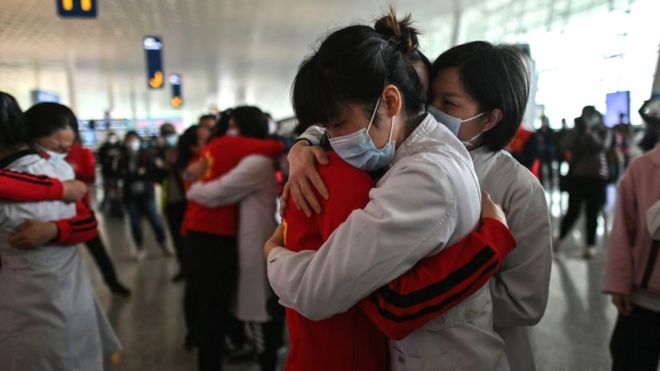 Image copyright GETTY IMAGES






 CHINDIA ALERT: You'll be living in their world, very soon
South Korea, China cast doubt on reports North Korean leader Kim gravely ill
SEOUL (Reuters) – South Korean and Chinese officials on Tuesday cast doubt on reports North Korean leader Kim Jong Un was ill after media outlets said he had undergone a cardiovascular procedure and was in “grave danger”.
Daily NK, a Seoul-based speciality website, reported late on Monday, citing one unnamed source in North Korea, that Kim was recovering after undergoing the procedure on April 12. The North Korean leader is believed to be about 36.
CNN cited a U.S. official with direct knowledge of the matter as saying Washington was “monitoring intelligence” that Kim was in grave danger after surgery. Bloomberg quoted an unnamed U.S. official as saying the White House was told that Kim took a turn for the worse after the surgery.
However, two South Korean government officials rejected the CNN report without elaborating on whether Kim had undergone surgery. The presidential Blue House said there were no unusual signs coming from the reclusive, nuclear-capable state.
Kim is the unquestioned leader of North Korea and the sole commander of its nuclear arsenal. He has no clear successor and any instability in the country could be a major international risk.
RELATED COVERAGE
The state KCNA news agency gave no indication of the whereabouts of Kim in routine dispatches on Tuesday, but said he had sent birthday gifts to prominent citizens.
An official at the Chinese Communist Party’s International Liaison Department, which deals with North Korea, told Reuters the source did not believe Kim was critically ill. China is North Korea’s only major ally.
Chinese foreign ministry spokesman Geng Shuang said Beijing was aware of reports about the health of Kim, but said it does not know their source, without commenting on whether it has any information about the situation.
South Korean shares exposed to North Korea tumbled and the Korean won fell on the reports. The won traded down more than 1% against the dollar even as South Korean government sources said Kim was not gravely ill.
U.S. stock futures were trading 0.5% lower, but it was not clear how much of that weakness was owing to the collapse in U.S. oil prices and consequent concerns over global demand.
Daily NK said Kim had been admitted to hospital on April 12, just hours before the cardiovascular procedure, as his health had deteriorated since August due to heavy smoking, obesity and overwork.
It said he was now receiving treatment at a villa in the Mount Myohyang resort north of the capital Pyongyang.
“My understanding is that he had been struggling (with cardiovascular problems) since last August but it worsened after repeated visits to Mount Paektu,” a source was quoted as saying, referring to the country’s sacred mountain.
Accompanied by senior North Korean figures, Kim took two well-publicised rides on a stallion on the snowy slopes of the mountain in October and December.
KIM’S HEALTH KEY TO STABILITY
An authoritative U.S. source familiar with internal U.S. government reporting on North Korea questioned the CNN report that Kim was in “grave danger”.
“Any credible direct reporting having to do with Kim would be highly compartmented intelligence and unlikely to leak to the media,” a Korea specialist working for the U.S. government said on condition of anonymity.
Japan’s top government spokesman, Yoshihide Suga, declined to comment on the reports of Kim’s health.
“We are regularly gathering and analysing information about North Korea with great concern,” he said. “We will keep gathering and analysing information regarding North Korea by collaborating with other countries such as the U.S.”
Kim’s potential health issues could fuel uncertainty over the future of the reclusive state’s dynastic rule and stalled denuclearisation talks with the United States, issues in which Kim wields absolute authority.
With no details known about his young children, analysts say his sister and loyalists could form a regency until a successor is old enough to take over.
Speculation about Kim’s health first arose following his absence from the anniversary of the birthday of its founding father and Kim’s grandfather, Kim Il Sung, on April 15.
On April 12, North Korean state media reported that Kim Jong Un had visited an airbase and observed drills by fighter jets and attack aircraft.
Two days later North Korea launched multiple short-range anti-ship cruise missiles into the sea and Sukhoi jets fired air-to-surface missiles as part of military exercises.
The missile launches were part of the celebrations for Kim’s grandfather, Seoul officials said, but there was no North Korea state media report on his attendance or the tests.
Reporting from inside North Korea is notoriously difficult, especially on matters concerning the country’s leadership, given tight controls on information. There have been false and conflicting reports in the past on matters related to its leaders.
Kim is a third-generation hereditary leader who rules North Korea with an iron-fist, taking over the titles of head of state and commander in chief of the military since late 2011.
In recent years Kim has launched a diplomatic offensive to promote both himself as a world leader and his hermit kingdom, holding three meetings with U.S. President Donald Trump, four with South Korean President Moon Jae-in and five with China’s President Xi Jinping.
He was the first North Korean leader to cross the border into South Korea to meet Moon in 2018. Both Koreas are technically still at war, as the Korean War of 1950-53 ended in an armistice, not a peace treaty.
Kim has sought to have international sanctions against his country eased, but has refused to dismantle his nuclear weapons programme, a steadfast demand by the United States.
Source: Reuters
Posted in 1950-53, 2018, 36, about, absence, absolute, accompanied, admitted, after, air-to-surface missiles, airbase, ally, analysts, anniversary, anonymity, anti-ship, April, armistice, arose, attack aircraft, attendance, August, authoritative, authority, aware, “grave danger”, “monitoring intelligence”, before, Beijing, believed, Birthday, birthday gifts, Bloomberg, Blue House, border, capital, cardiovascular, cardiovascular problems, cast, celebrations, China, China's President Xi Jinping, China’s, Chinese Communist Party’s International Liaison Department, chinese foreign ministry spokesman, Chinese officials, cited, citing, Citizens, clear, CNN, collaborating, collapse, coming from, commander-in-chief, comment, commenting, compartmented, concerning, concerns, condition, conflicting, consequent, controls, Country, country’s, critically ill, cross, Daily NK, deals, December, declined, demand, denuclearisation, details, deteriorated, difficult, diplomatic offensive, Direct, dismantle, dollar, doubt, drills, dynastic rule, eased, elaborating, enough, especially, exposed, false, fighter jets, fired, first, five, following, founding father, four, future, given, global demand, government officials, government spokesman, grandfather, gravely, head of state, health, heavy smoking, hereditary, hermit kingdom, himself, Hospital, hours, ill, indication, information, Instability, intelligence, international, international risk, iron-fist, issues, Japan’s, KCNA news agency, Kim, Kim Il Sung, Kim Jong Un, knowledge, Korean, Korean War, launched, leader, leadership, leak, lower, loyalists, Major, matter, matters, media, media outlets, meetings, Military, military exercises, Monday, Mount Myohyang, Mount Paektu, Mountain, multiple, North, North Korean leader, notoriously, nuclear arsenal, nuclear weapons, nuclear-capable, obesity, observed, October, Official, old, one, only, overwork, owing, part, peace treaty, President Moon Jae-in, presidential, procedure, programme, prominent, promote, Pyongyang, quoted, receiving, reclusive, recovering, refused, regency, rejected, repeated, report, reported, reports, Resort, Reuters, rides, routine dispatche, routine dispatches, rules, sacred mountain, sanctions, saying, sea, senior, sent, Seoul, shares, short-range, sister, situation, snowy slopes, sole commander, source, South Korea, South Korean, speciality, speculation, stalled, stallion, state, steadfast, still at war, struggling, succession, successor, Sukhoi jets, surgery, take over, taking, talks, technically, tests, Third-generation, Three, tight, titles, told, top, trading, treatment, Tuesday, tumbled, turn for the worse, two, U.S. official, U.S. oil prices, U.S. President Donald Trump, Uncategorized, uncertainty, undergoing, undergone, United States, unlikely, unnamed, unquestioned, unusual signs, urn for the worse, villa, visited, visits, Washington, weakness, website, well-publicised, whereabouts, whether, White House, wields, without, won, world leader, worsened, young children | Leave a Comment »