Germany’s BASF starts building $10-billion petrochemical project in China
Chinese premier meets int’l institutions leaders on world economy

Chinese Premier Li Keqiang and leaders of six major international economic and financial institutions meet the media after their fourth roundtable meeting in Beijing, capital of China, Nov. 21, 2019. The six leaders are World Bank Group President David Malpass, International Monetary Fund Managing Director Kristalina Georgieva, World Trade Organization Deputy Director-General Alan Wolff, International Labor Organization Director-General Guy Ryder, Organization for Economic Cooperation and Development Secretary-General Angel Gurria and Financial Stability Board Chairman Randal Quarles. (Xinhua/Yue Yuewei)
BEIJING, Nov. 21 (Xinhua) — Chinese Premier Li Keqiang held a roundtable meeting with leaders of six major international economic and financial institutions in Beijing on Thursday.
The six leaders are World Bank Group President David Malpass, International Monetary Fund Managing Director Kristalina Georgieva, World Trade Organization Deputy Director-General Alan Wolff, International Labor Organization Director-General Guy Ryder, Organization for Economic Cooperation and Development Secretary-General Angel Gurria and Financial Stability Board Chairman Randal Quarles.
Li expressed hope to build consensus, boost confidence and deepen cooperation through the meeting, so as to promote the sustained, healthy and stable development of world economy.
It is the fourth roundtable meeting for Li and leaders of the six institutions. This year’s meeting features the theme of “promoting openness, stability and high-quality development of the world economy.”
Source: Xinhua
Chinese premier meets World Bank chief

Chinese Premier Li Keqiang meets with World Bank President David Malpass at the Great Hall of the People in Beijing, capital of China, Nov. 20, 2019. (Xinhua/Rao Aimin)
BEIJING, Nov. 20 (Xinhua) — Chinese Premier Li Keqiang met with World Bank President David Malpass on Wednesday, expressing the willingness to deepen cooperation with the World Bank in key areas.
Li said the World Bank is a globally important multilateral development institution and China attaches importance to developing its relations with the World Bank and stands ready to deepen cooperation with the World Bank in key areas such as environmental protection, biodiversity and poverty alleviation through financial and intellectual cooperation.
At the same time, China will fulfill its international responsibilities and obligations as a large developing country to jointly promote global development, Li said.
The current international situation is complicated and grim, with the downward pressure on the world economy increasing and the economic growth of major economies slowing down, Li noted.
He said the Chinese economy has been deeply integrated into the world economy, and the country is deepening reform and expanding opening up, accelerating the building of a market-oriented, law-based and international business environment and further invigorating the market.
“China is willing to deepen mutually beneficial cooperation with all parties, uphold the rules-based free trade system, tide over difficulties and inject impetus into global economic growth and respective development,” Li added.
Malpass said the current world economy is facing severe challenges that need to be addressed by all parties.
China’s economic development has great potential and remarkable achievements have been made in opening up to the outside world, Malpass said, noting that the Chinese government is making unremitting efforts in the areas of economic growth, aging, scientific and technological innovation and environmental protection, and the World Bank is willing to strengthen cooperation with China in these areas, he added.
Source: Xinhua
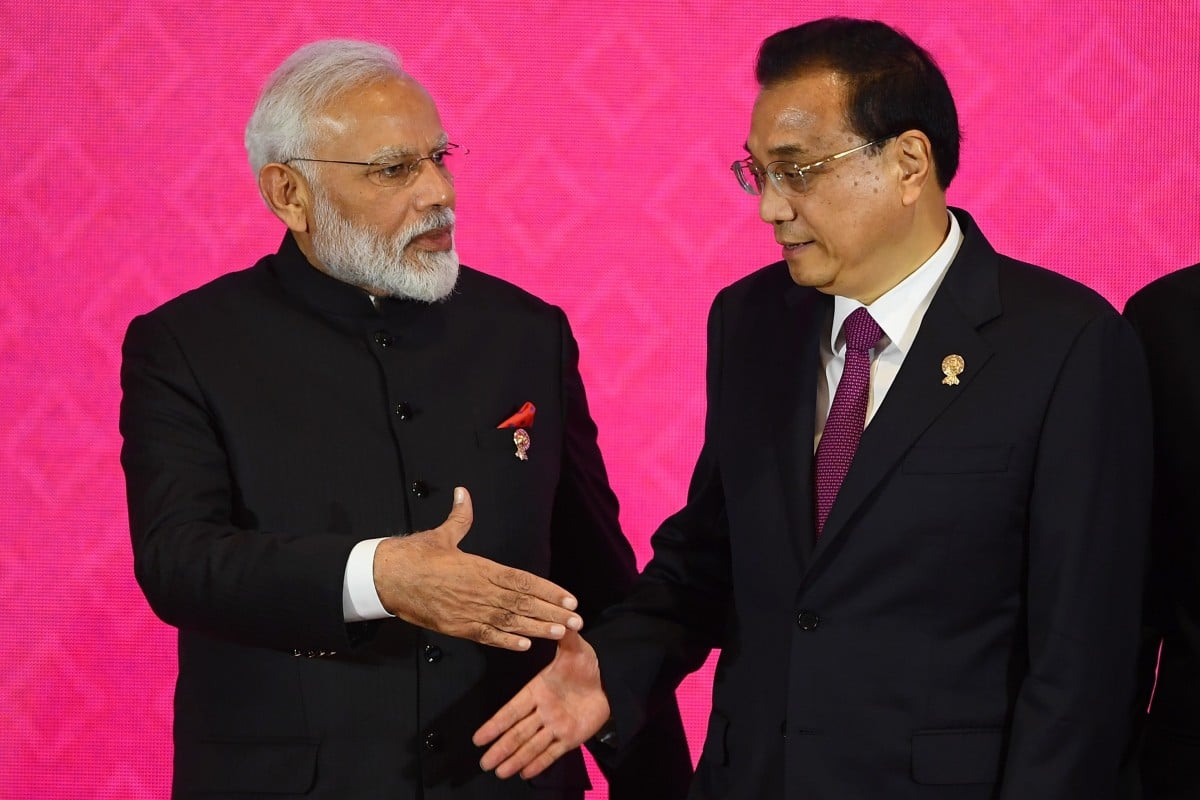
Seven years on, still no RCEP trade deal, and India pulls out
- Hopes were high a regional summit could finally wrap up negotiations on the Regional Comprehensive Economic Partnership
- But despite claims of ‘significant progress’ in the 16-nation talks, India remains a stumbling block
“When I measure the RCEP agreement, with respect to the interest of Indians, I don’t get a positive answer,” he was quoted as saying.

Henry Gao, a law professor at the Singapore Management University focusing on international trade law, said an RCEP without India would be “even more worthwhile” for the so-called RCEP-15.
He cited two reasons: India’s “low ambitions” for the pact, and the high level of integration among the countries of East and Southeast Asia which are part of the RCEP-15.
“A mega trade deal like RCEP will only further accelerate the integration process and greatly boost trade and economic growth in the region,” Gao said.
Indian media, citing government sources, said the pact’s inadequate protection against import surges, the possible circumvention of rules of origin, and a lack of “credible assurances” on market access and non-tariff barriers, proved too much for New Delhi to swallow.
facing fierce domestic criticism for being in the pact despite opposition even from
Hindu nationalist support base, last week piled on a fresh set of demands that other countries balked at, negotiators from Southeast Asian countries said over the weekend.
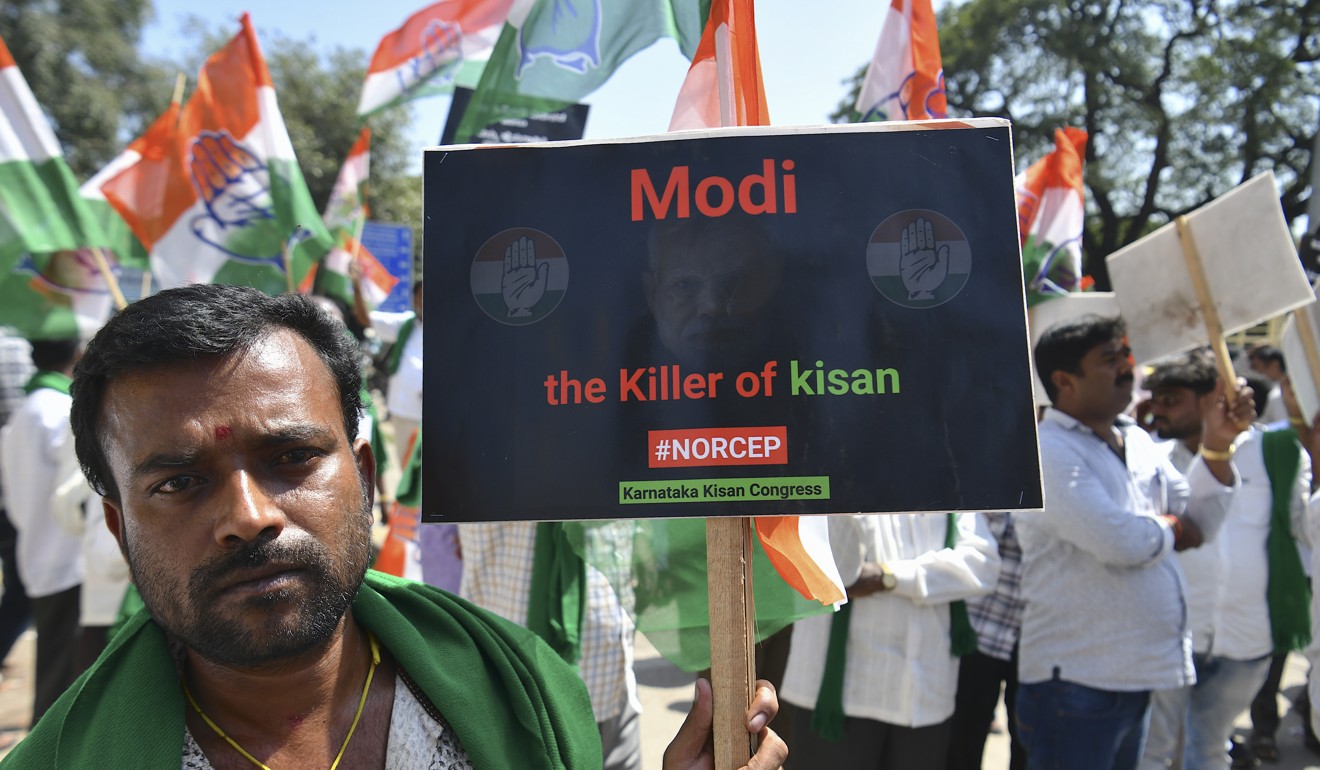
Indian critics of the RCEP say the deal will have a ruinous impact on the South Asian economy, which has trade deficits with the other 15 countries.
The biggest opposition has come from the country’s long protected industries, such as its dairy sector, which fears it could be wiped out by lower tariffs on Australian and New Zealand products that would result from the RCEP.
Indian government sources on Monday said the country had not made last-minute demands, but Southeast Asian negotiators said major demands were made as late as Thursday.
Gao, the Singapore-based law professor, said it “makes sense for India to stay out” as it would have faced “a lot of competition from Chinese manufactured products” if it were part of the deal.
“India could temporarily shield its firms from Chinese competition by staying out, but whether this will work in the long term is a different question,” he said.
Source: SCMP
Chinese premier calls for advancing South China Sea COC consultations as scheduled
BANGKOK, Nov. 3 (Xinhua) — Chinese Premier Li Keqiang said Sunday that he hopes all sides will actively carry forward consultations on the Code of Conduct (COC) in the South China Sea according to the previously agreed timetable.
Li made the comment at the 22nd China-ASEAN (10+1) leaders’ meeting in Bangkok.
The South China Sea situation has been generally stable as a result of concerted efforts between China and the Association of Southeast Asian Nations (ASEAN) member states, Li said.
“Last year, I proposed a vision that the COC talks will be completed in three years,” he said, adding that in the past year, the first reading of the single draft negotiating text of the COC in the South China Sea has been completed ahead of schedule, and the second reading has been launched.
The COC is an upgraded version of the Declaration on the Conduct of Parties in the South China Sea (DOC). Relevant sides are expected to follow the DOC principles, resist disruptions, meet each other halfway, and finish the second reading in 2020, Li said.
Li called on all sides to uphold peace, friendship, and cooperation in the South China Sea and safeguard lasting peace, stability in the region.
Source: Xinhua
Interview: Chinese premier’s visit to further deepen Thailand-China ties, says Thai PM
BANGKOK, Nov. 2 (Xinhua) — The upcoming visit by Chinese Premier Li Keqiang to Thailand will further deepen the comprehensive strategic cooperative partnership between China and Thailand, Thai Prime Minister Prayut Chan-o-cha told Xinhua recently.
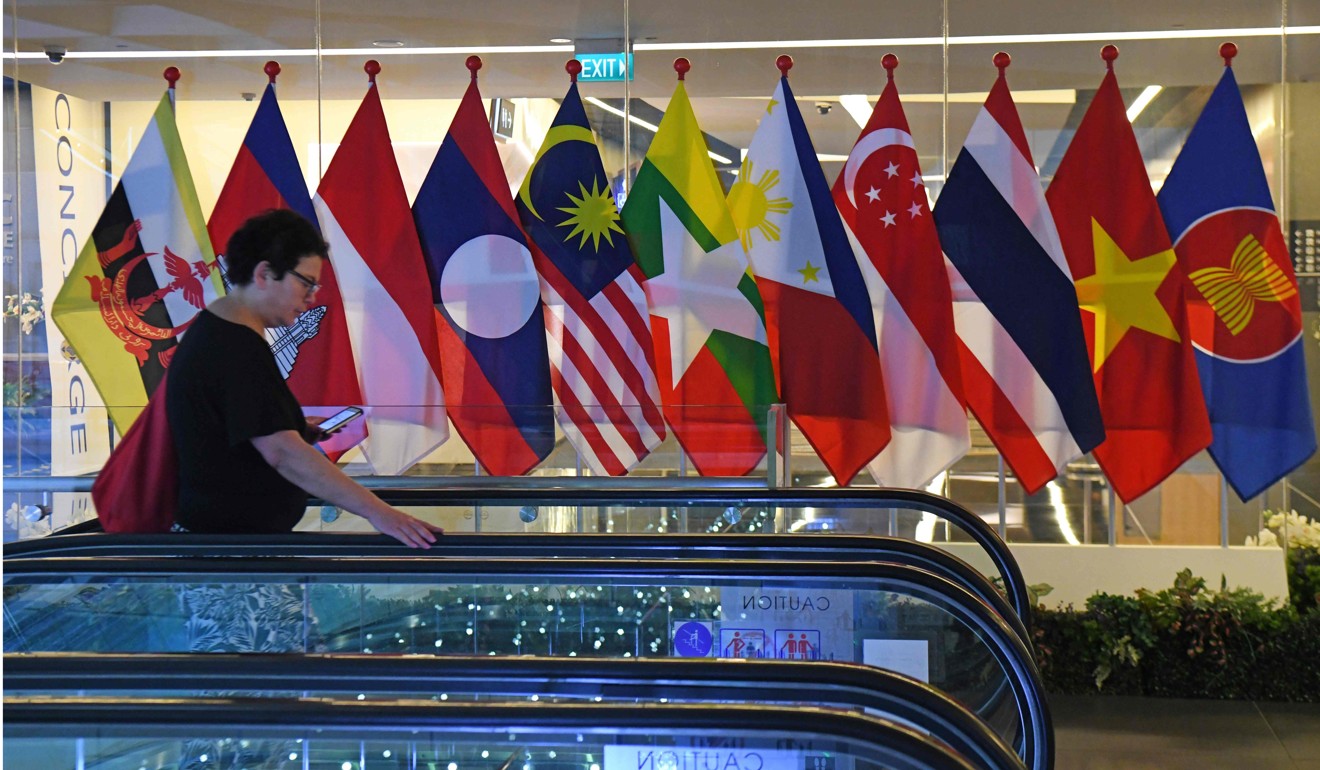
Li is scheduled to attend the 22nd China-ASEAN (10+1) leaders’ meeting, the 22nd ASEAN-China, Japan and Republic of Korea (10+3) leaders’ meeting, and the 14th East Asia Summit in the Thai capital Bangkok and pay an official visit to Thailand.
Prayut expressed his welcome to Li’s visit in the written interview, adding that in recent years, the bilateral comprehensive strategic cooperative partnership has continued to deepen on the basis of mutual respect, mutual trust, mutual-benefit and win-win cooperation.
The two sides have witnessed frequent exchange of visits by high-ranking officials and deepened communication, which were demonstrated by the rapid delivery of key connectivity projects such as the Thai-Chinese high speed rail and the high speed rail project linking three airports in Thailand, said Prayut.
Both Thailand and China attach great importance to infrastructure and connectivity construction and have achieved notable results in bilateral economic cooperation, Prayut added.
Noting that as this year’s rotating chair of ASEAN, Thailand has proposed the “Connecting the Connectivities” approach, Prayut said that Thailand has been striving to push forward the building of the Thai-Chinese high speed rail project and enhance the synergy between China’s Guangdong-Hong Kong-Macao Greater Bay Area and Thailand’s Eastern Economic Corridor (EEC).
The Thai prime minister said that he expected China and ASEAN to reach an agreement on dovetailing the Belt and Road Initiative and the Master Plan on ASEAN Connectivity 2025 during their upcoming meeting in Bangkok, adding that such move will contribute to speeding up the regional connectivity process.
He also said both countries could tap the potential of regional cooperation frameworks or initiatives such as Lancang-Mekong cooperation mechanism to strengthen cooperation.
The Thai government welcomes Chinese enterprises to invest in Thailand’s EEC, and will strongly support Thai-Chinese cooperation in technological innovation, e-commerce and other areas while learning from China’s experience in poverty-elimination, environmental protection and smog control, said the prime minister.
Prayut said the Thai side hopes that Li’s visit will further deepen the comprehensive strategic cooperative partnership between the two countries and boost the development of Thailand’s 20-year national strategy and the “Thailand 4.0” strategy, so as to help the country better deal with the ever-changing global economic and political situation.
On ASEAN-China ties, Prayut said the development of the strategic partnership between the two sides in the past decade has demonstrated that the relationship is the most fruitful one between ASEAN and its dialogue partners and also one of the important pillars in maintaining regional peace, stability, prosperity and sustainable development.
ASEAN and China have deepened cooperation and realized mutually beneficial and win-win results in various fields this year, including connectivity, smart cities, and people-to-people exchanges, which are priority areas defined in the China-ASEAN Strategic Partnership Vision 2030, he said.
Prayut said that Thailand believes that China will support ASEAN in community building, support ASEAN’s central role in regional cooperation and its bigger role in building an open and inclusive regional cooperation framework.
Source: Xinhua
China-Uzbekistan relations enter golden period of rapid development: Premier Li

Chinese Premier Li Keqiang, accompanied by Uzbek Prime Minister Abdulla Aripov, inspects the guard of honor during a welcome ceremony in Tashkent, Uzbekistan on Nov. 1, 2019. Li arrived here for the 18th meeting of the Council of Heads of Government of Member States of the Shanghai Cooperation Organization (SCO) and an official visit to Uzbekistan. (Xinhua/Huang Jingwen)
TASHKENT, Nov. 1 (Xinhua) — Chinese Premier Li Keqiang said on Friday that in recent years, relations between China and Uzbekistan have entered a golden period of rapid development under the strategic guidance of the two heads of state.
Li arrived here for the 18th meeting of the Council of Heads of Government of Member States of the Shanghai Cooperation Organization (SCO) and an official visit to Uzbekistan.
Upon Li’s arrival, Uzbek Prime Minister Abdulla Aripov and other senior Uzbek officials greeted the Chinese premier at the airport. Aripov also held a grand welcome ceremony for Premier Li.
Noting that Uzbekistan is a friendly neighbor of China, Li said this is his first official visit to the country as Chinese premier.
Li said he looks forward to having an in-depth exchange of views with Uzbek leaders on deepening bilateral relations and practical cooperation in various fields so as to lift the China-Uzbekistan comprehensive strategic partnership to a higher level and better benefit the two peoples.
Li pointed out that in the current complex international situation, the SCO is playing an increasingly prominent role in maintaining regional security and stability and promoting the development and prosperity of its member states.
He said he expects to have an in-depth exchange of views with all parties on implementing the consensus reached at the Bishkek summit this June and promoting the SCO development and multilateral cooperation.
Li said he believes that all parties will take this meeting as an opportunity to continue to carry forward the Shanghai Spirit, enhance good-neighborly friendship and mutually beneficial cooperation, expand mutual openness among member states, improve trade and investment liberalization and facilitation, and make greater contributions to the well-being of the people of all countries in the region.
During his visit to Uzbekistan, Li will meet with Uzbek President Shavkat Mirziyoyev. The Chinese premier will also hold talks with Prime Minister Aripov, and they will jointly witness the signing of cooperation documents between the two sides.
While attending the SCO meeting, Li will work with other leaders of SCO member states to plan future practical cooperation of the organization and sign cooperation documents.
Source: Xinhua
Premier Li meets South African deputy president

Chinese Premier Li Keqiang meets with South African Deputy President David Mabuza at the Great Hall of the People in Beijing, capital of China, Oct. 29, 2019. (Xinhua/Ding Haitao)
BEIJING, Oct. 29 (Xinhua) — Chinese Premier Li Keqiang met with South African Deputy President David Mabuza Tuesday in Beijing, calling on the two sides to promote bilateral relations for new development.
Noting that South Africa is an important African country, Li said the continued development of bilateral relations is beneficial to China-Africa cooperation.
China is ready to work with South Africa to consolidate mutual political trust and promote practical cooperation and people-to-people exchanges to push for new development in bilateral relations, he said.
“Both China and South Africa are developing countries and have broad common interests,” said Li, adding that China stands ready to work with South Africa to closely communicate and coordinate in international and regional affairs and enhance cooperation in multilateral mechanisms such as the UN and BRICS, to jointly safeguard developing countries’ interests and maintain regional and world peace.
Mabuza, who is on an official visit to China and will co-chair the seventh plenary session of the China-South Africa Bi-National Commission with his Chinese counterpart, offered his congratulations for the 70th anniversary of the founding of the People’s Republic of China.
He thanked China for its long-standing support for South Africa and African countries’ development and conveyed his admiration for China’s great development achievements.
Mabuza said his country is willing to learn from China’s development experience, deepen practical cooperation across the board with China and push bilateral relations to reach a new level.
Source: Xinhua