Archive for ‘Chinese President Xi Jinping’

08/07/2019

World cannot shut China out, vice president says, in jab at U.S.

BEIJING (Reuters) – China and the rest of the world must co-exist, Vice President Wang Qishan said on Monday, in an indirect jab at the United States, with which Beijing is trying to resolve a bitter trade war.

Top representatives of the world’s two biggest economies are trying to resume talks this week to try and resolve their year-long trade dispute, which has seen the two countries place increasingly harsh tariffs on each other’s imports.

The Trump administration has accused China of engaging in unfair trade practices that discriminate against U.S. firms, forced technology transfers and intellectual property rights theft. Beijing has denied all the charges.

“China’s development can’t shut out the rest of the world. The world’s development can’t shut out China,” Wang told the World Peace Forum at Beijing’s elite Tsinghua University.

He also warned against “protectionism in the name of national security”, but without mentioning the United States, and urged major powers to make greater contributions to world peace.

China has also been angered by U.S. sanctions against tech giant Huawei Technologies Co Ltd over national security concerns, and U.S. visa curbs on its students and academics.

In his speech, Wang, who is extremely close to Chinese President Xi Jinping and rarely speaks in public, reiterated China’s commitment to opening up.

“Large countries must assume their responsibilities and set an example, make more contributions to global peace and stability, and broaden the path of joint development,” he added.

“Development is the key to resolving all issues,” Wang, who became vice president last year, after having led Xi’s fight to root out corruption, told an audience that included Western diplomats based in Beijing and former European Council President Herman Van Rompuy.

“NOT A RATIONAL ACTION”

The United States should not blame China for the problems it is facing, Vice Foreign Minister Le Yucheng told the forum later.

“Viewing China as the enemy is not a rational action,” the foreign ministry quoted him as saying, adding that China would not put up “high walls” or “decouple itself from any country”.

China has been nervous that the United States is seeking to sever, or at least severely curb, economic links, in what has been called a “decoupling”.

Tariff, trade, finance and science and technology wars are “turning back the clock on history,” Le said. “The consequences will be extremely dangerous.”

The two sides have communicated by telephone since last month’s summit of leaders of Group of 20 major nations in Japan, at which U.S. President Donald Trump and Xi agreed to relaunch stalled talks.

Talks broke down in May, after U.S. officials accused China of pulling back from commitments previously made in the text of an agreement negotiators said was nearly finished.

The countries have also been at loggerheads over issues ranging from human rights to the disputed South China Sea and U.S. support of self-ruled Taiwan, which China claims as its own.

No matter how the international situation or China developed, Vice President Wang said, the country would follow the path of peace, and not seek spheres of influence or expansion.

“If there is no peaceful, stable international environment, there will be no development to talk of.”

Source: Reuters

07/07/2019

China says briefed by U.S. on latest Trump-Kim meeting

BEIJING (Reuters) – China has received a briefing from the United States on the latest meeting between U.S. President Donald Trump and North Korean leader Kim Jong Un, China’s Foreign Ministry said on Saturday, in a call between two senior diplomats.

Trump became the first sitting U.S. president to set foot in North Korea on Sunday when he met Kim in the Demilitarized Zone (DMZ) at Panmunjom between the two Koreas and agreed to resume stalled nuclear talks.

Chinese Vice Foreign Minister Luo Zhaohui and U.S. Special Representative for North Korea Stephen Biegun discussed that meeting in a telephone call on Friday, China’s Foreign Ministry said in a short statement.

“Biegun introduced the meeting between the U.S. and North Korean leaders at Panmunjom, and said the U.S. side is willing to strengthen communication and coordination with the Chinese side on the peninsula issue,” the ministry added.

Luo told Biegun the recent “positive interactions” on the North Korean issue by all parties had important meaning for the peace talks process, the ministry said.

“China supports U.S.-North Korea exchanges and dialogue and hopes that the two sides will meet each other halfway and follow the consensus of the leaders of the two countries to resume consultations at the working level as soon as possible,” it added.

Trump’s meeting with Kim came around a week after Chinese President Xi Jinping met Kim himself during a state visit to Pyongyang.

While China has not officially announced it, Luo is likely China’s new special envoy for the North Korea issue, after predecessor Kong Xuanyou became China’s new ambassador in Tokyo in late May.

Luo was also involved in a briefing to Chinese reporters on Xi’s visit to North Korea before Xi went, according to state media.

Luo is an urbane career diplomat who speaks good English, according to diplomats who have met him.

He previously served as China’s ambassador in Canada, Pakistan and India, and also worked in the Chinese embassy in Washington from 1996-2000.

Source: Reuters

05/07/2019

Chinese president appoints new ambassadors

BEIJING, July 4 (Xinhua) — Chinese President Xi Jinping has appointed six new ambassadors in accordance with a decision by the Standing Committee of the National People’s Congress, according to a statement from the national legislature Thursday.

Chen Hai was appointed ambassador to Myanmar, replacing Hong Liang.

Chang Hua was appointed ambassador to Iran, replacing Pang Sen.

Liao Liqiang was appointed ambassador to Egypt, replacing Song Aiguo.

Xu Erwen was appointed ambassador to Croatia, replacing Hu Zhaoming.

Yi Xianliang was appointed ambassador to Norway, replacing Wang Min.

Chen Xu was appointed China’s permanent representative and ambassador to the United Nations Office at Geneva and other international organizations in Switzerland, replacing Yu Jianhua.

Source: Xinhua

04/07/2019

China, Bulgaria lift ties to strategic partnership

CHINA-BEIJING-XI JINPING-BULGARIAN PRESIDENT-TALKS (CN)

Chinese President Xi Jinping (2nd R) and his wife Peng Liyuan (1st R) pose for photos with Bulgarian President Rumen Radev (2nd L) and his wife in Beijing, capital of China, July 3, 2019. Chinese President Xi Jinping held talks with Bulgarian President Rumen Radev here Wednesday. (Xinhua/Huang Jingwen)

BEIJING, July 3 (Xinhua) — Chinese President Xi Jinping on Wednesday held talks with Bulgarian President Rumen Radev in the Great Hall of the People in Beijing, and they decided to lift state-to-state ties to a strategic partnership.

Bulgaria was one of the first countries to establish diplomatic relations with New China, Xi noted, hoping that the two countries take the strategic partnership as a new starting point, work together to cope with the test of international changes and inject new impetus into bilateral cooperation.

Xi stressed that the two sides should respect and trust each other and strengthen exchanges between the two governments, legislative bodies and political parties while maintaining mutual support on issues involving each other’s core interests and major concerns.

“The two countries share many of the same or similar views on the international situation and should jointly safeguard the international system based on multilateralism and the international law,” said Xi.

Bulgaria is also one of the first Central and Eastern European countries to sign intergovernmental cooperation documents with China on the Belt and Road Initiative. Xi said China is willing to strengthen the synergy between the two countries’ development strategies, promote infrastructure connectivity, expand trade and investment and cement people-to-people exchanges.

Xi reiterated China’s firm support for the European integration process, EU’s unity and growth and Europe’s more important role in international affairs, saying that China’s upholding such stances is not an expedient measure.

“It is hoped that the new EU institutions will maintain the stability and continuity of their China policy,” said Xi, who also expected the new EU institutions to work with China to promote the building of partnership on the basis of mutual respect, fairness and justice, cooperation and win-win result.

“Bulgaria is a good friend and partner of China in the EU and an important participant and advocate of the cooperation between China and the Central and Eastern European countries. It is hoped that the Bulgarian side will continue to play a constructive role in this regard,” said Xi.

Radev said he was very happy to visit China on the occasion of celebrating the 70th anniversary of the establishment of bilateral diplomatic ties.

Lifting the bilateral ties to a strategic partnership will further strengthen the foundation of bilateral relations, said Radev.

Radev said the Bulgarian side is ready to deeply participate in the Belt and Road Initiative by giving full play to its advantages of location in the region and trying to become a gateway and hub connecting Europe and Asia.

The Bulgarian side is willing to expand cooperation with the Chinese side in such areas as trade, transportation, aviation, logistics, finance, innovation, local areas and people-people exchanges, and welcomes Chinese enterprises to increase investment in Bulgaria, said Radev.

While expressing Bulgaria’s support for multilateralism and the World Trade Organization, the Bulgarian president said his country stands ready to step up communication and work for advancing Europe-China relations and cooperation between the Central and Eastern European countries and China.

Source: Xinhua

04/07/2019

Samsung and other South Korean companies’ exodus from China sets an example to Western firms fleeing trade war tariffs

  • Lotte, Kia and Hyundai are also gradually winding down their China business due to political risks, tariffs and losing market share
  • Western companies fleeing Donald Trump’s tariffs may not have luxury of a managed exit, but should look at the South Korean case studies closely, experts say
Samsung’s last mobile phone production line remaining in China in Huizhou is winding down, implementing a voluntary retirement programme. Photo: He Huifeng
Upon landing in Australia in 2017 to attend a seminar, a senior politician with South Korea’s parliamentary defence committee was greeted by Julie Bishop, then Australia’s foreign minister, who had a burning question: “How are you dealing with the China threat?”
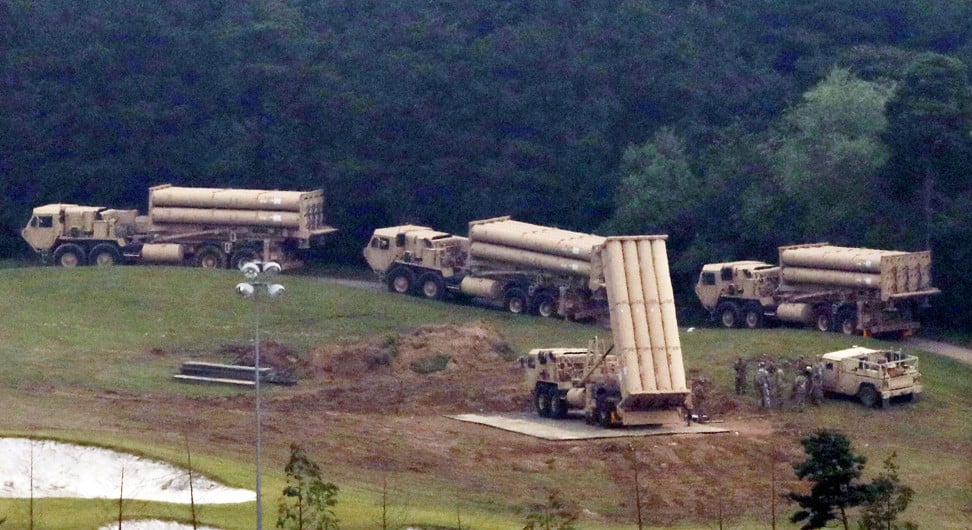
Bishop was referring to the treatment of South Korean firms in China, which escalated after Seoul agreed in 2016 to a long-standing request from the United States to allow the deployment of the Terminal High Altitude Area Defence system (THAAD) on South Korean soil.
Lotte Corporation, one of Korea’s chaebol conglomerates that dominate its economy, had sold a plot of land in Seongju county to the South Korean government, on which the system’s radar and interceptor missiles were set up. While both Washington and Seoul said it was meant to counter threats from North Korea, Beijing viewed THAAD as a security risk, since its radar had the range to monitor China’s nearby military facilities.
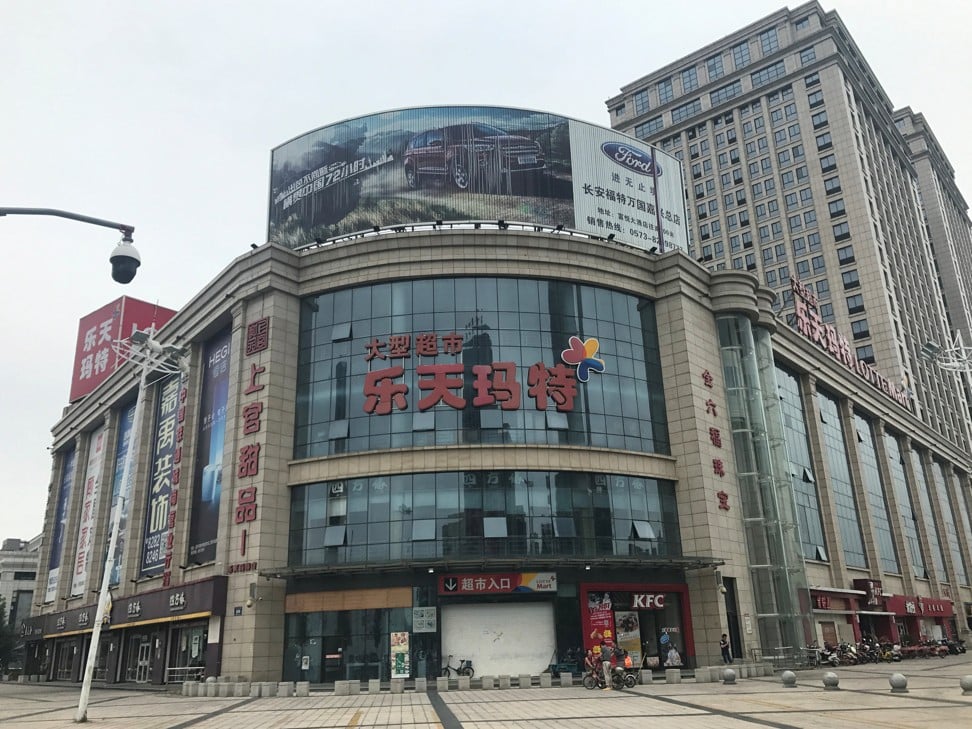
After it was deployed in 2017, THAAD triggered widespread boycotts of Lotte’s retail operations in China, with the state-owned media acting as aggressive cheerleaders. The company was sanctioned by Beijing, with its expansion plans in China grinding to a halt on the orders of the Chinese government.
The Terminal High Altitude Area Defence (THAAD) arrived in Seongju in September 2017. Photo: Reuters

Australia – like South Korea – is heavily dependent on trade with China, but is also closely bound to the US in defence and political terms, and Bishop feared that should Australia fall out of favour with Beijing, Australian companies could face similar risks, and so she sought the counsel of the politician, who asked not to be named.

The case of Canadian canola and meat exports being banned from China, reportedly in retaliation for the arrest of Huawei chief financial officer Meng Wanzhou, also known as Sabrina Meng and Cathy Meng, is an example of how third nations can be drawn into the modern day superpower rivalry.

Many analysts say the efforts of South Korean firms in China should be essential study material for Western governments and businesses about the political risks of doing business in the mainland, which are growing as the US-China trade war threatens to draw in other nations and expand into a broader geopolitical struggle.

But large South Korean firms have been gradually withdrawing from China for a number of years – even before the THAAD crisis – and have been able to leave on a managed basis. They are leaving to avoid a repeat of the political crisis that ruined Lotte’s China business, and to avoid tariffs on exports of their China-made products to the US.

Lotte have been forced to close retail operations in China. Photo: Reuters

But they are also leaving because Chinese firms have become much more competitive in the domestic market that South Korean companies had found so fruitful for more than a decade – a fate that could easily befall Western companies that are eyeing China’s burgeoning middle-class consumer market. Now, while American firms are considering exiting China and setting up in nations that have lower tariff access to the US, South

Korean competitors have had a few years’ head start.

“In a way, all the problems that some South Korean companies had since 2017 might be a blessing in disguise. It meant that they started all of this [supply chain shift] two years before all the other companies,” said Andrew Gilholm, Seoul-based director of analysis for China and Korea at political risk advisory, Control Risks.

Another chaebol, Samsung Electronics, opened its first plant in Vietnam in 2008 and this long-term presence has enabled it to build a supply chain of South Korean companies, which in turn makes it easier for other South Korean firms to establish a base in the Southeast Asian nation.

We have experienced some of the worst situations in China over the past few years and learnt that the political risk there wouldn’t just simply go away overnight Ex-Lotte Shopping manager

As a result, South Korean investment into Vietnam climbed to US$1.97 billion in the first half of 2018, exceeding the country’s investment in China of US$1.6 billion over the same period for the first time, according to the Export-Import Bank of Korea.

Overall in 2018, South Korea’s total investment to the Southeast Asian country totalled US$3.2 billion. Its exports to Vietnam also increased to US$48.6 billion, 121 times that of 1992, when the two countries established diplomatic relations, and the trend is expected to continue.

“We have experienced some of the worst situations in China over the past few years and learnt that the political risk there wouldn’t just simply go away overnight,” said a former manager of Lotte Shopping, the chaebol’s retail arm, who spoke on condition of anonymity.

“China may pass all the legislation ensuring the safety of foreign investments and the rights of multinational companies, but the chance of it swinging away again when there is another political confrontation is just too high … we cannot afford to take any more risk.”

China eventually lifted its economic sanctions on Lotte in April, and the municipal government of Shenyang, the capital of Liaoning province in Northeastern China, gave the company permission in May to resume work on the US$2.6 billion Lotte Town shopping and leisure development.

But according to a person close to the project, Lotte is considering selling the complex after its completion, as it does not wish to continue its retail business in China. A Lotte spokesman declined to comment, saying the situation is “complicated”.

On one hand, its eagerness to leave China reflects the volatility in the market, but on the other, its decision to complete the construction of project before leaving suggests an unwillingness to burn bridges in the process, analysts said.

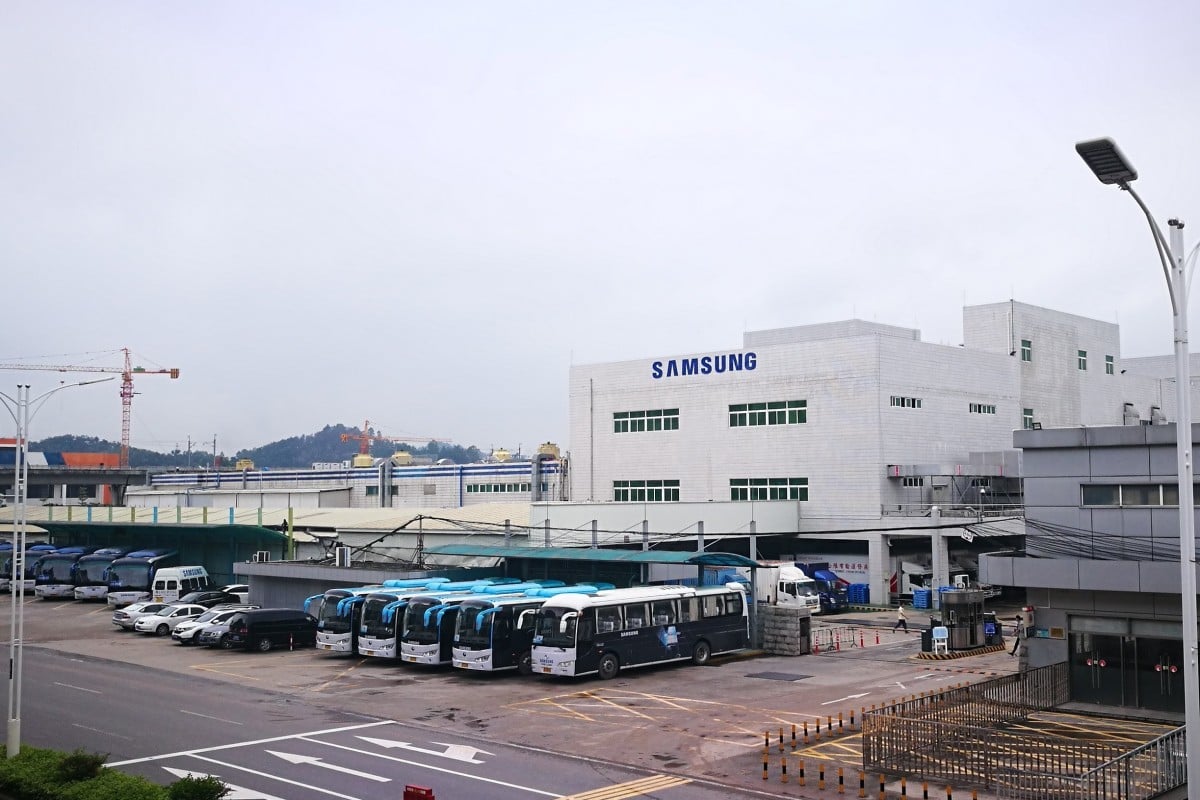
Samsung is another South Korean giant downsizing its Chinese manufacturing presence after it closed its Shenzhen production line in May 2018, followed by its Tianjin factory in December.

Samsung has been very aware of the potential issues around those closuresJason Wright

Its last remaining mobile phone production line in

China, in Huizhou, is also winding down,

implementing a voluntary retirement programme. Samsung is also considering moving some television manufacturing from China to Vietnam, according to a company insider.

However, it too, is carefully managing its exit strategy, said Jason Wright, founder of Hong Kong-based intelligence firm Argo Associates, who is advising a growing number of South Korean companies seeking to leave China. Samsung is still a large supplier of microchips to Chinese companies like Huawei, and to exit on negative terms could disrupt its ongoing business.
“Samsung has been quite generous in the packages that have been offered [to workers in the factories that it has closed],” Wright said. “Samsung has been very aware of the potential issues around those closures.”
As well as the political risks and tariffs, Samsung has seen its mainland market share in several product queues shrink dramatically due to competition from Chinese rivals. Its share of China’s smartphone market, for example, fell from 20 per cent in 2013 to just 0.8 per cent last year, according to Strategy Analytics, a market research firm.
Over the same period, it has been moving its supply chain out of China in a “subtle and imperceptible” way, according to Julien Chaisse, a professor of trade law at City University of Hong Kong who has advised, among others, Lotte on its plans to relocate to Vietnam.
Samsung Electronics opened its first plant in Vietnam in 2008. Photo: Cissy Zhou
As stories emerged in June that Apple was considering a partial exit of China, it was impossible not to see parallels. iPhone sales in China fell 30 per cent in the first quarter of 2019, according to research firm Canalys, while smartphones will be among those facing a potential tariff of up to 25 per cent, although this has been at least delayed after the trade war truce agreed by

US President Donald Trump

and Chinese President Xi Jinping at the

G20 summit in Osaka.

Meanwhile, South Korean car companies Kia and Hyundai’s combined market share in China fell to 2.7 per cent last year, from about 10 per cent at the beginning of the decade. Both companies, which have shared ownership, are downsizing their Chinese operations.

“In the past, China was just a great market, but for Korea, now China has become a competitor. So that is really a change in the dynamic over the last five years. China was not really able to compete with Korea in most areas,” said Wright from Argo Associates.

City University of Hong Kong professor Chaisse traces the exodus of South Korean firms back to 2014, before THAAD and before the trade war, and highlighted an arcane arbitration case at the United Nations’ dispute settlement courts as a turning point. After that case, South Korean companies in China faced an increasingly hostile environment.

Filed in 2014 and settled in 2017, the case emerged after South Korean company Ansung Housing had been forced to sell a golf resort it was developing in Eastern China after a change in the country’s real estate legislation.

Ansung took the case to an arbitration panel, claiming it breached a Sino-Korean investment treaty. The company won – only the second defeat for China in two decades of participation in the court, but this ushered in a “change in atmosphere” for South Korean firms.

“My take is that while the Korean case is unique for a number of reasons, it highlights what is going to happen to many other foreign companies operating in China,” Chaisse said.

“I think very soon even European companies will be reconsidering their businesses in China. Every time it will be a different story: different countries, different companies, in different economic sectors will have different reaction times and the magnitude of their withdrawal may vary.”

But for those now fleeing trade war tariffs, they may not have the luxury of long-term planning that companies like Samsung and Lotte have had, said Gilholm from Control Risks.

“Long term, I think the Korean firms that are moving out of China have had it easier because they haven’t had to do it under quite such pressured and scrutinised circumstances as a company which starts to move things now,” he said.

Source: SCMP

03/07/2019

Xi, Turkish president hold talks, agreeing to deepen strategic cooperation

CHINA-BEIJING-XI JINPING-TURKISH PRESIDENT-TALKS (CN)

Chinese President Xi Jinping holds a welcome ceremony for Turkish President Recep Tayyip Erdogan before their talks in Beijing, capital of China, July 2, 2019. Xi held talks with Erdogan at the Great Hall of the People in Beijing on Tuesday. (Xinhua/Yin Bogu)

BEIJING, July 2 (Xinhua) — Chinese President Xi Jinping held talks with his Turkish counterpart Recep Tayyip Erdogan at the Great Hall of the People on Tuesday, pledging more efforts to promote strategic cooperation between the two sides and work for sound bilateral ties.

Noting China and Turkey are both major emerging markets and developing countries, Xi said enhancing strategic cooperation is of great significance.

He called on the two sides to deepen political mutual trust, beef up strategic communication, respect each other’s core interests and major concerns on issues pertaining to national sovereignty, independence and territorial integrity, and consolidate the political foundation underlying the development of China-Turkey strategic cooperative relationship to keep bilateral ties on a healthy and stable track.

On anti-terrorism security cooperation, Xi said China appreciates Erdogan’s reiteration on many occasions about not allowing anti-China separatist activities instigated by any force in Turkey, and highly values the repeated emphasis by the Turkish side on supporting China’s anti-terrorism efforts, noting that China is ready to strengthen cooperation with Turkey in the field of international anti-terrorism.

Speaking of synergizing development strategies and expanding pragmatic cooperation, Xi called Turkey an important partner in jointly building the Belt and Road.

“China is willing to move faster in dovetailing the Belt and Road Initiative with the Middle Corridor project, steadily promote cooperation on trade, investment, science and technology, energy, infrastructure and major projects and actively seek cooperation in small and medium-sized programs and those that benefit the people, to deliver concrete benefits to more enterprises and the people,” the Chinese president said.

Xi also called for expanding people-to-people exchanges and tourism cooperation for better mutual understanding between the two peoples, to solidify the popular support for China-Turkey friendship.

In the face of major shifts in the international situation, China and Turkey should firmly uphold the international system with the United Nations at the core and the international law as the basis, safeguard multilateralism and international fairness and justice, as well as the multilateral trading regime with World Trade Organization at the core, Xi said.

He urged the two sides to deepen the strategic cooperative relationship, guard the common interests of China and Turkey as well as developing countries at large and jointly forge a new type of international relations featuring mutual respect, fairness and justice, and win-win cooperation.

“We should keep in contact and coordination in regional affairs and jointly advance political settlements for hotspot issues, to contribute to regional peace, stability and development,” Xi said.

Noting that the time-honored Turkey-China friendship which can be traced back to the time of ancient Silk Road is consolidated today, Erdogan said the close bilateral ties are significant for regional peace and prosperity.

Turkey stays committed to the one-China policy, Erdogan said, stressing that residents of various ethnicities living happily in Xinjiang Uygur Autonomous Region thanks to China’s prosperity is a hard fact, and Turkey will not allow anyone to drive a wedge in its relations with China. He also expressed the readiness to deepen political mutual trust and strengthen security cooperation with China in opposing extremism.

Voicing firm support for the Belt and Road Initiative, the Turkish president said he hopes the two sides can step up cooperation in areas such as trade, investment and 5G networks as well as exchanges in educational, cultural and scientific research sectors.

Prior to the talks, Xi held a welcoming ceremony for Erdogan.

Source: Xinhua

01/07/2019

Spotlight: Xi’s trip to Osaka drives multilateralism, G20 cooperation, global economy

JAPAN-OSAKA-XI JINPING-G20 SUMMIT

Chinese President Xi Jinping attends the 14th G20 summit held in Osaka, Japan, June 28, 2019. Xi called on G20 to join hands in forging high-quality global economy while addressing the 14th G20 summit held in the Japanese city of Osaka. (Xinhua/Xie Huanchi)

BEIJING, June 29 (xinhua) — Attending the summit of the Group of 20 (G20) major economies and holding meetings with his counterparts, Chinese President Xi Jinping paid a three-day visit to Osaka, Japan, which has proved a success with expanding consensus on the promotion of multilateralism and providing direction for both the G20 cooperation and global growth.

Chinese State Councilor and Foreign Minister Wang Yi made the remarks while noting that the 14th summit happened at a historic moment when chaos and uncertainties have brought the world to a critical crossroads, and that Xi’s tight diplomatic agenda marked China’s continuous efforts as a reliable and responsible major country to help with broad visions and workable solutions.

Envisioning a new type of international relations and a community with a shared future for mankind, Xi’s efforts were focused on promoting multilateralism, partnerships, mutually beneficial cooperation and joint development, which helped expand consensus, push forward cooperation, and increase confidence in global peace and development.

According to Wang, Xi’s speech at the G20 summit struck an extensive chord and China’s ideas received widespread support. In addition, the world is happy to see that Xi’s meetings with other leaders will help shape healthier major-country relations, that new opportunities will come with the new measures Xi announced for China’s further opening-up, and that Xi and U.S. President Donald Trump agreed that the two countries will restart trade talks.

WIDE CONSENSUS

During his trip to Osaka, by upholding multilateralism, the Chinese president guided the dialogue and discussions towards the direction of cooperation and inclusiveness in order to achieve win-win results.

Xi made four overseas trips since the beginning of June, setting a record for the history of the diplomacy of The People’s Republic of China, Wang said.

Xi put forward a four-point proposal in his speech at the summit, including exploring driving force for growth, improving global governance, removing development bottlenecks, and properly addressing differences.

Those proposals have outlined the direction to tackle the challenges facing the world economy, which is conducive to creating greater space for the global development and a better environment for international cooperation, Wang said.

With joint efforts, the G20 summit in Osaka has voiced support for multilateralism. It has been proven that upholding and practicing multilateralism is not just China’s choice, but a consensus and wish of the majority of countries in the world, Wang said.

Besides, on the sidelines of the G20 summit, Xi also attended a meeting of BRICS nations, China-Africa leaders’ meeting, China-Russia-India leaders’ meeting, and held a series of bilateral meetings.

During the meetings, Xi urged more efforts to promote global governance based on the principle of extensive consultation, joint contribution and shared benefits, safeguard the international system with the UN at the core and the international law as the foundation, preserve the multilateral trade regime with the World Trade Organization at the core and the rules as the foundation, promote multilateralism and free trade, push forward the democratization of international relations, and build an open world economy, Wang said.

Meanwhile, Xi met with Japanese Prime Minister Shinzo Abe with the two sides reaching a 10-point consensus to promote the development of bilateral relations.

When meeting with UN Secretary-General Antonio Guterres, Xi said the more complex and severe the situation is, the more necessary it is to highlight the UN’s authority and role.

Xi also exchanged views and reached new consensus with South Korean President Moon Jae-in on bilateral relations and the Korean Peninsula situation. Xi’s meetings with his French counterpart, Emmanuel Macron, and German Chancellor Angela Merkel will promote the in-depth development of China-Europe relations, Wang said.

Xi also met with Trump, South African President Cyril Ramaphosa, Indonesian President Joko Widodo during his visit.

COOPERATION, NOT CONFRONTATION

As China’s legitimate and lawful rights have been undermined by a series of unilateral and protectionist measures by the United States, China has to adopt necessary counter-measures, Wang said.

During the summit, Xi, at the invitation of his U.S. counterpart, met with President Trump, stating China’s stance on fundamental issues concerning the development of bilateral relations, and conducting candid communication over major challenges facing the two sides, Wang added.

Summing up the experience and illumination in the past the four decades since China and the United States established diplomatic ties, Xi said the two sides both benefit from cooperation and lose in confrontation, and that cooperation and dialogue are better than friction and confrontation.

China and the United States have highly integrated interests and extensive cooperation areas, and they should not fall into so-called traps of conflict and confrontation, Xi said.

On issues involving China’s sovereignty and dignity, China must safeguard its core interests, Xi stressed.

For his part, Trump said he values the good relationship with Xi and that it is of great significance for the two heads of state to maintain close contacts.

The U.S. side attaches importance to its relations with China, and harbors no hostility towards China, Trump said, adding that his country is willing to cooperate with China and that he hopes for better relations between the two countries.

During the meeting, Xi also reiterated the position of the Chinese government on the Taiwan issue, urging the United States to stick to the one-China principle and the three China-U.S. joint communiques.

The U.S. stance has not changed and it continues to pursue the one-China policy, Trump said.

When talking about the China-U.S. trade frictions, Xi emphasized that the essence of the China-U.S. economic and trade cooperation is mutual benefit and win-win, and that the two sides will eventually have to find a mutually acceptable solution to their differences through equal dialogue and consultation. Trump agreed with Xi in this regard.

Trump said the differences in such fields as economy and trade between the two sides should be properly settled, and that the United States will not add new tariffs on imports from China.

The most important consensus reached between the two heads of state is that China and the United States agree to continue to advance a China-U.S. relationship featuring coordination, cooperation and stability, Wang said.

They announced the restart of economic and trade consultations between their countries on the basis of equality and mutual respect. These significant consensuses send positive signals to the international community and global markets, Wang said.

As long as the two sides follow the principles and consensus established by the two heads of state, firmly grasp the correct direction of bilateral ties, expand cooperation based on mutual benefit, manage differences on the basis of mutual respect, and properly settle all problems that exist or will likely happen in bilateral relations, there is hope of a long-term and steady growth of the China-U.S. ties, and of more benefit to the two peoples and the people from other parts of the world, Wang said.

BRIGHT FUTURE OF CHINA

During the G20 summit and meetings with other world leaders, Xi explained China’s development philosophy and cooperation proposals.

According to Wang, Xi stressed that China is confident in pursuing its path, handling its own affairs well, achieving peaceful co-existence and win-win cooperation with all other countries, which has enhanced their understanding and support for China.

Stressing that the Chinese economy is registering a stable performance with good momentum for growth, Xi introduced a clear attitude and the latest measures on opening up the Chinese market, expanding imports, improving business environment as well as advancing free trade arrangements and regional economic integration, Wang said.

The Chinese president said China is breaking new ground in opening-up and pressing ahead with high-quality development.

Meanwhile, during the summit, Xi invited all interested parties to join the Belt and Road Initiative, amplifying the positive effects of the second Belt and Road Forum for International Cooperation.

Xi also advocated international cooperation in innovation so as to benefit more countries and people, Wang said.

According to Wang, all sides are optimistic about China’s development prospects, and believe that the new round of reform and opening-up measures announced by Xi are sincere and substantial, and the high-quality cooperation on building the Belt and Road corresponds with the trend of the times and the aspirations of people in the world.

It has been once again proven that China is a driving force for world economic growth, promoting openness in the world and providing a major market for other countries to explore business opportunities, Wang said.

Source: Xinhua

29/06/2019

‘Back on track’: China and U.S. agree to restart trade talks

OSAKA (Reuters) – The United States and China agreed on Saturday to restart trade talks with Washington holding off new tariffs on Chinese exports, signalling a pause in the trade hostilities between the world’s two largest economies.

Commenting on a long-running dispute over China’s Huawei, President Donald Trump said U.S. firms would be able to sell components to the world’s biggest telecoms network gear maker where there was no national security problem.
The truce offered relief from a nearly year-long trade standoff in which the countries have slapped tariffs on billions of dollars of each other’s imports, disrupting global supply lines, roiling markets and dragging on global economic growth.
“We’re right back on track and we’ll see what happens,” Trump told reporters after an 80-minute meeting with Chinese President Xi Jinping on the sidelines of a summit of leaders of the Group of 20 (G20) major economies in Osaka, western Japan.
Trump said while he would not lift existing import tariffs, he would refrain from slapping new levies on an additional $300 billion worth of Chinese goods – which would have effectively extended tariffs to everything China exports to the America.
“We’re holding back on tariffs and they’re going to buy farm products,” he said at a news conference, without giving any details of China’s future agricultural product purchases.

“If we make a deal, it will be a very historic event.”

He gave no timeline for what he called a complex deal but said he was not in a rush. “I want to get it right.”

HUAWEI HOPES

On Huawei, Trump said the U.S. commerce department would meet in the next few days on whether to take it off a list of firms banned from buying components and technology from U.S. companies without government approval.

China welcomed the step.

“If the U.S. does what it says, then of course, we welcome it,” said Wang Xiaolong, the Chinese foreign ministry’s envoy for G20 affairs.

U.S. microchip makers also applauded the move.

“We are encouraged the talks are restarting and additional tariffs are on hold and we look forward to getting more detail on the president’s remarks on Huawei,” John Neuffer, president of the U.S. Semiconductor Association, said in a statement.

Huawei has come under mounting scrutiny for over a year, led by U.S. allegations that “back doors” in its routers, switches and other gear could allow China to spy on U.S. communications.

While the company has denied its products pose a security threat, the United States has pressed its allies to shun Huawei in their fifth generation, or 5G, networks and has also suggested it could be a factor in a trade deal.

RELIEF AND SCEPTICISM

In a lengthy statement on the two-way talks, China’s foreign ministry quoted Xi as telling Trump he hoped the United States could treat Chinese companies fairly.

On the issues of sovereignty and respect, China must safeguard its core interests, Xi was cited as saying.

“China is sincere about continuing negotiations with the United States … but negotiations should be equal and show mutual respect,” the foreign ministry quoted Xi as saying.

Trump had threatened to extend existing tariffs to almost all Chinese imports into the United States if the meeting brought no progress on wide-ranging U.S. demands for reforms.

Source: Reuters

Slideshow (4 Images)

Financial markets are likely to breathe a sigh of relief on news of the resumption in U.S.-China trade talks.

“Returning to negotiations is good news for the business community and breathes some much needed certainty into a slowly deteriorating relationship,” said Jacob Parker, a vice-president of China operations at the U.S.-China Business Council.

“Now comes the hard work of finding consensus on the most difficult issues in the relationship, but with a commitment from the top we’re hopeful this will put the two sides on a sustained path to resolution,” he said.

Some, however, warned the pause might not last.

“Even if a truce happens this weekend, a subsequent breakdown of talks followed by further escalation still seems likely,” Capital Economics said in a commentary on Friday.

The United States says China has been stealing American intellectual property for years, forces U.S. firms to share trade secrets as a condition for doing business in China, and subsidizes state-owned firms to dominate industries.

ADVERTISEMENT

China has said the United States is making unreasonable demands and must also make concessions.

Talks collapsed in May after Washington accused Beijing of reneging on reform pledges. Trump raised tariffs to 25% from 10% on $200 billion of Chinese goods, and China retaliated with levies on U.S. imports.

The U.S.-China feud had cast a pall over the two-day G20 gathering, with leaders pointing to the threat to global growth.

In their communique, the leaders warned of growing risks to the world economy but stopped short of denouncing protectionism, calling instead for a free, fair trade environment after talks some members described as difficult.

28/06/2019

Xinhua Headlines: China-Africa trade expo to forge closer economic partnership

Xinhua Headlines: China-Africa trade expo to forge closer economic partnership

Justin Yifu Lin, former senior vice president and chief economist at the World Bank, delivers a speech at the China-Africa Economic and Trade Expo in Changsha, central China’s Hunan Province, June 27, 2019. (Xinhua/Xue Yuge)

by Xinhua writers Cao Kai, Chu Yi, Yang Jian and Zhang Yujie

CHANGSHA, June 27 (Xinhua) — The first China-Africa Economic and Trade Expo opened Thursday in Changsha, capital of central China’s Hunan Province, in a move to forge closer economic ties between the largest developing country and the largest developing continent.

The three-day event has attracted more than 10,000 guests and traders, including those from 53 African countries, according to the organizing committee.

Chinese President Xi Jinping has sent a congratulatory letter.

The expo, announced at the Beijing Summit of the Forum on China-Africa Cooperation (FOCAC) last September, was established to provide a platform for deepening economic and trade cooperation between the two sides, he stressed.

It is hoped that the two sides will strengthen coordination to better implement the eight major initiatives put forward at the Beijing summit of the FOCAC, actively explore new paths for cooperation, open up new points of growth for collaboration, and promote China-Africa economic and trade cooperation to a new level, Xi said.

“Industrial development and free trade amongst ourselves will foster faster growth for our mutual benefit,” said Ugandan President Yoweri Museveni at the opening ceremony. “This Forum should, among others, enable us to devise ways of turning these rays of hope into a reality.”

Hailing the long-term friendship with Africa, Chinese Vice Commerce Minister Qian Keming said at the expo that bilateral trade and economic cooperation should be practical and concrete to meet the development needs of African countries in areas such as infrastructure and talent cultivation.

China saw 3 percent year-on-year growth of foreign trade with African countries in the first five months this year, hitting 84.8 billion U.S. dollars. China’s direct investment to the continent has increased by 1.5 billion U.S. dollars in the past five months, up 20 percent year on year, according to Qian.

According to Assome Aminata Diatta, Senegal’s Minister of Trade and SMEs, China is an ideal partner for Africa to improve its capacity building when China is seeking higher-quality growth driven by innovation.

Bringing modern production lines to Africa, especially in the special economic zones, will likely provide tens of millions of jobs for Africa, accelerate its industrialization and improve the trade structure between China and Africa, Diatta said.

China has set a good example for other developing countries, especially those in Africa which, having a lot in common with China, may benefit from mutual complementarity in the area of development, said Justin Yifu Lin, former senior vice president and chief economist at the World Bank.

The experience, wisdom and programs that China will offer are very good reference for African countries that are now eager to work themselves out of poverty and pursue development, Lin said.

After the opening ceremony, 13 cooperation projects involving eight African countries were signed, worth a total of more than 2.5 billion U.S. dollars.

Conferences, seminars, forums and exhibitions focusing on agriculture, trade, investment and infrastructure construction will be held during the expo, with experts sharing views on closer bilateral exchanges.

The expo will feature exhibition areas covering more than 40,000 square meters, including national pavilions and display areas for enterprises that showcase the achievements and opportunities of China-Africa economic and trade cooperation.

TRADE AND INVESTMENT

With the theme “Win-Win Cooperation for Closer China-Africa Economic Partnership,” the expo, which will become a biennial event, will open a new chapter in the history of bilateral trade.

“Nigeria has a lot of non-oil products of high quality and we want China to buy more,” Uduak M. Etokowoh, an official with the Nigerian Export Promotion Council, told Xinhua.

Nigerian gemstones, Namibian oysters, Kenyan coffee and tea as well as South African wine are attracting many Chinese visitors at the expo.

“We used to export leather materials to Italy and Spain, who now have a wobbling economy,” said Nigerian businessman Mustapha Tijjani Garo. “We are now looking east for the market.”

China has been the largest trading partner of Africa for ten consecutive years. In 2018, trade volume between China and Africa amounted to 204.2 billion U.S. dollars, up 20 percent year on year.

China’s imports of non-resource products from Africa have increased significantly. In 2018, China’s imports from Africa went up 32 percent year on year, with the imports of agricultural products up 22 percent.

“Namibian oysters are selling well in Beijing, Shanghai and Guangzhou,” said Rinouzeu Katjingisiua. “We are hoping to find more partners here.”

For Chinese businessmen, with mounting pressure on labor-intensive industries as cost is surging and industrial upgrading is urgently needed, Africa is a great destination.

Wang Lianfang, owner of Qiqihar Quanlian Heavy Forging Company Ltd. based in northeast China’s Heilongjiang Province, set up an assembling plant in Senegal two years ago to find new markets amid slump domestic demand on agriculture machinery.

“Africa has strong demand,” said Wang, who is selling seeders, tractors and harvesters in the west African country.

“The output is expected to reach 2 billion yuan (291 million U.S. dollars) within 5 years,” said Wang, adding that the company has been working hard for survival in the past three years.

The transfer of labor-intensive industries from China can also give a strong push to Africa’s industrialization and modernization. It will expedite the economic take-off of Africa in the same way as how the industrial transfer had benefited China, Justin Yifu Lin said.

AGRICULTURE AND POVERTY REDUCTION

With abundant resources, a large population and a vast market, Africa is still the poorest continent and falls behind in the overall context of development and is battling poverty and hunger.

For 11 years, paddy land has been Hu Yuefang’s battlefield in Madagascar to fight against poverty.

“Madagascar can reach the self-sufficiency in rice as long as 15 percent of its rice planting area belongs to hybrid varieties,” Hu Yuefang said, adding that the average yield of hybrid rice produced by Chinese technologies in Africa is two to three times more than that of local ones.

Buried in the field all day, the 61-year-old agriculture expert from Yuan Longping High-tech Agriculture Co. Ltd. (LPHT) has been on the frontier of closer agriculture cooperation between the two sides.

He said though he could not come to the scene, he expected fruitful results from the inaugural expo to help tackle challenges and bring shared benefits to China and Africa.

China took deliberate steps using the agriculture sector to transform its economy by setting up favorable agricultural policies, the experience of which can be learned by us to accelerate our development, according to Ugandan Minister of Agriculture Vincent Bamulangaki Ssempijja at the expo.

“We strongly believe that by working together with our Chinese friends through joint venture businesses, investment arrangements and win-win cooperation, the majority of African countries can quickly eradicate poverty,” he said.

Hunger has long been bothering African countries. To help relieve the grain shortage, Chinese agricultural enterprises and experts, like Yuan, have been devoted to the continent for years, sharing China’s wisdom and experience.

“We put red flags on the map to show our steps in promoting hybrid rice in Africa in recent years, which have covered nearly 20 countries in southeastern, western and northern parts of the continent,” said Yao Zhenqiu, LPHT’s deputy general manager.

Guided by Yuan Longping, China’s “Father of Hybrid Rice,” the LPHT expert team has successfully cultivated five kinds of high-yielding hybrid rice seeds suitable for the local soil and climate.

So far, Chinese experts and technicians have carried out more than 300 small-scale projects in nine African countries, promoted 450 agricultural technologies, and trained nearly 30,000 local farmers and technicians, according to Ma Youxiang, an official with China’s Ministry of Agriculture and Rural Affairs, at the expo.

“We will continue to send high-level agricultural experts and vocational education teachers to African countries, to further expand training in Africa and help cultivate more talent in agriculture,” he said.

The World Food Programme (WFP), the food assistance branch of the United Nations, is also taking the expo as an opportunity to meet Chinese business society to tackle food problems in Africa.

WFP will work with China to help Africa achieve the goal of ‘Zero Hunger’, said Qu Sixi, WFP China Representative.

Source: Xinhua

28/06/2019

Xi puts forward 3-point proposal on developing China-African relations

JAPAN-OSAKA-XI JINPING-CHINA-AFRICA-LEADERS-MEETING

Chinese President Xi Jinping chairs a China-Africa leaders’ meeting in Osaka, Japan, June 28, 2019. The meeting was also attended by South African President Cyril Ramaphosa, also former African co-chair of the Forum on China-Africa Cooperation (FOCAC); Egyptian President Abdel-Fattah al-Sisi, also rotating chair of the African Union; Senegalese President Macky Sall, current African co-chair of the FOCAC; and UN Secretary-General Antonio Guterres. (Xinhua/Pang Xinglei)

OSAKA, June 28 (Xinhua) — Chinese President Xi Jinping put forward here Friday a three-point proposal on building a closer community with a shared future between China and African countries.

On the sidelines of the Group of 20 summit in the Japanese city of Osaka, Xi chaired a China-Africa leaders’ meeting, which was also attended by South African President Cyril Ramaphosa, also former African co-chair of the Forum on China-Africa Cooperation (FOCAC); Egyptian President Abdel-Fattah al-Sisi, also rotating chair of the African Union; Senegalese President Macky Sall, current African co-chair of the FOCAC; and UN Secretary-General Antonio Guterres.

Source: Xinhua

Law of Unintended Consequences

continuously updated blog about China & India

ChiaHou's Book Reviews

continuously updated blog about China & India

What's wrong with the world; and its economy

continuously updated blog about China & India