Archive for ‘Chinese President Xi Jinping’

20/04/2019

Indian foreign secretary heads to China for talks amid tense relations

  • Vijay Keshav Gokhale is expected to meet Chinese deputy foreign minister Kong Xuanyou and Foreign Minister Wang Yi during two-day visit
  • Beijing’s refusal to sanction a Pakistani militant leader and its belt and road push in the disputed Kashmir region have strained ties
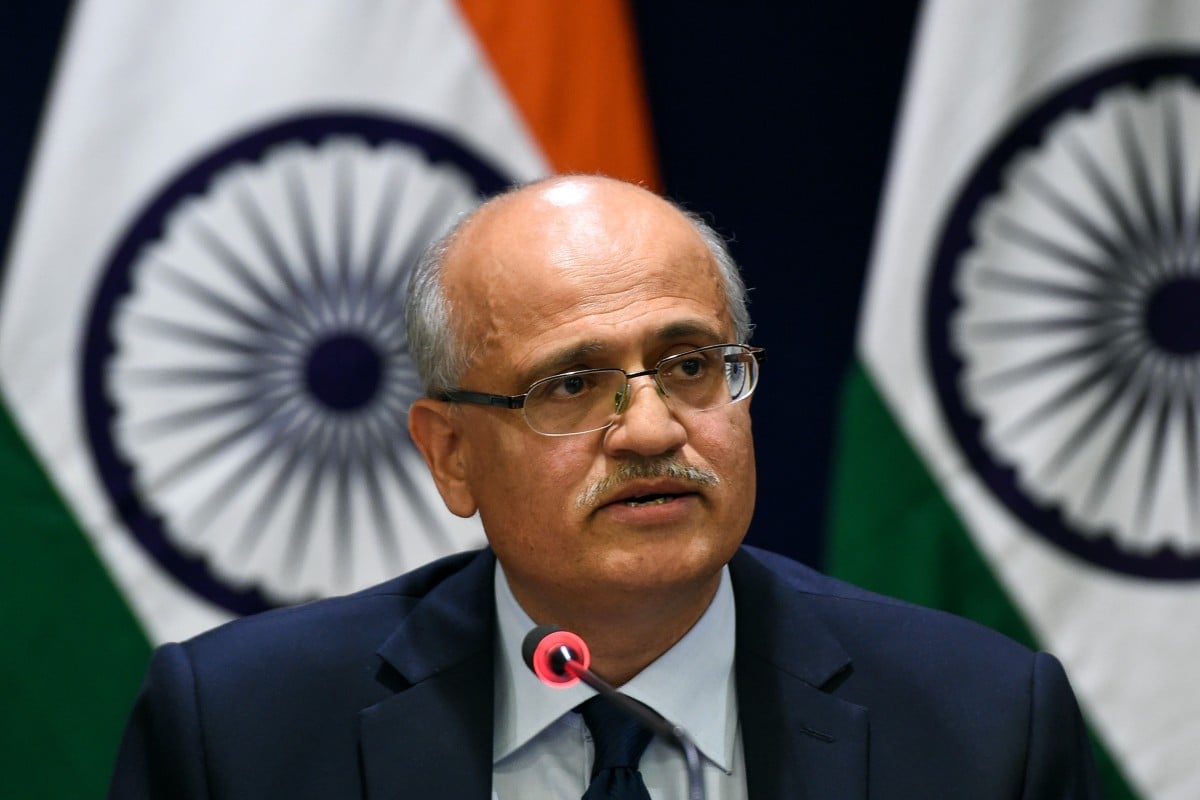
Indian Foreign Secretary Vijay Keshav Gokhale will visit China as part of “regular exchanges” between the two countries. Photo: AFP
Indian Foreign Secretary Vijay Keshav Gokhale will travel to Beijing on Sunday amid tensions between India and China over Beijing’s refusal to sanction a Pakistani militant leader and its infrastructure push in the disputed Kashmir region.
Gokhale’s two-day visit is part of “regular exchanges” between the two nations, the Indian embassy in Beijing said on Saturday.
During his stay, Gokhale is expected to meet Chinese deputy foreign minister Kong Xuanyou and Foreign Minister Wang Yi.

He will return to India on Monday, three days before the second Belt and Road Forum begins in the Chinese capital. Forty foreign leaders will attend the summit on Beijing’s global trade and infrastructure scheme, the “Belt and Road Initiative”, but India is not taking part.

Wang on Friday called on India, and other countries sceptical of the initiative, to join up, dismissing claims that it is a geopolitical tool. He also said China was ready to hold a leaders’ summit with India like the informal meeting held between Chinese President Xi Jinping and Indian Prime Minister Narendra Modi in Wuhan, Hubei province last year.
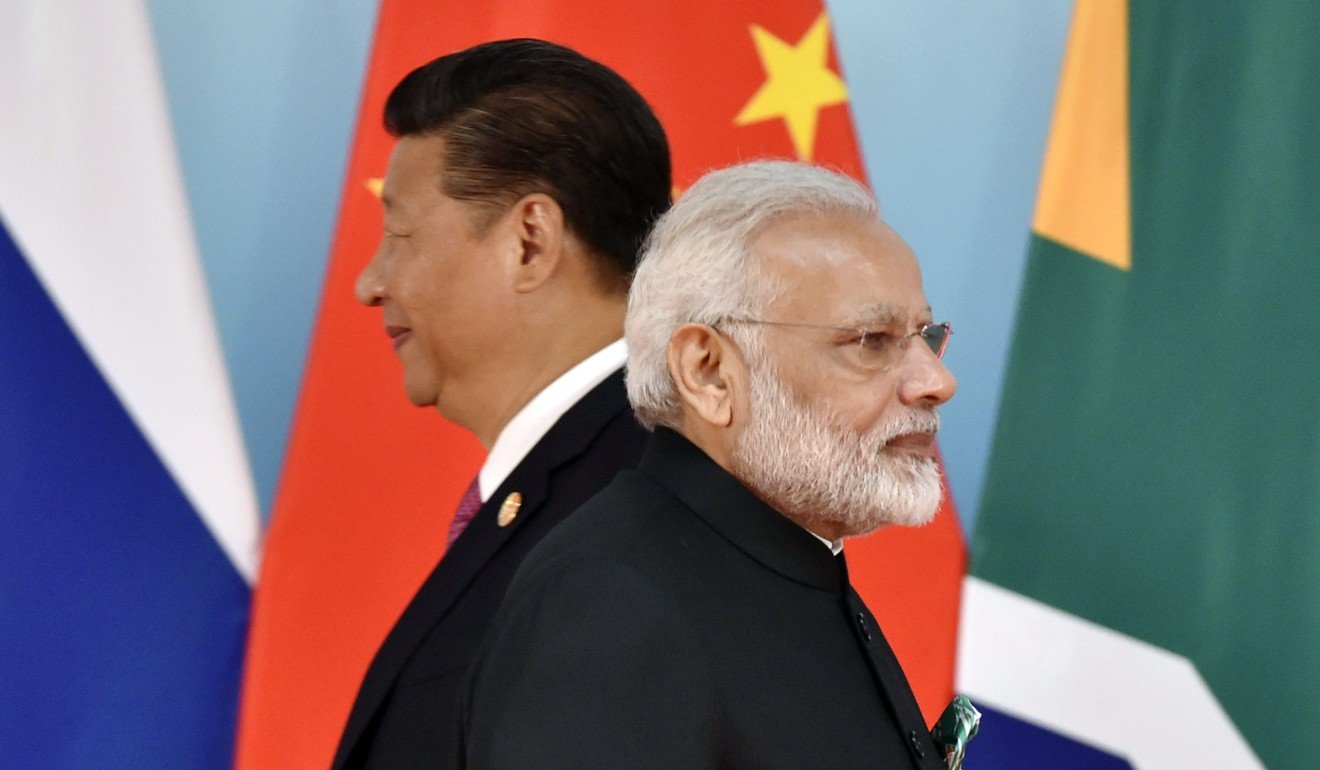
A summit between Xi Jinping (left) and Narendra Modi in Wuhan last year was seen as a breakthrough in China-India relations after the Doklam border dispute. Photo: AFP

Gokhale visited Beijing in February last year, and the Wuhan summit happened two months later. That meeting was seen as a breakthrough in the

China-India relationship

after a 73-day military stand-off over the Doklam plateau.

But the progress was overshadowed in February after a terror strike on Indian security forces in the Jammu and Kashmir province, which killed 40 Indian soldiers. The Pakistan-based Jaish-e-Mohammed group claimed responsibility for the attack. India has long wanted to designate its leader, Masood Azhar, as a terrorist under international law, but China has opposed the move.

During a visit to Pakistan in March, Kong said Beijing and Islamabad were all-weather strategic partners and would support each other on issues to do with their core interests.

What ‘Wuhan spirit’? Kashmir suicide attack reopens Modi’s China wound

Wang Dehua, head of the Institute for South and Central Asia Studies at the Shanghai Municipal Centre for International Studies, said China and India were looking to prevent their bilateral relations from deteriorating further.

“Both nations will elaborate on their stance on this matter, and China will probably deliver a message that the China-India relationship should not be affected by the dispute over Masood Azhar,” he said. “The positive sentiment out of Wuhan has been affected, and the two sides are seeking ways to continue the spirit of that informal summit.”

Du Youkang, director of Fudan University’s Pakistan Study Centre in Shanghai, said preparations for another informal summit of the nations’ leaders would only begin after India’s general election was over. Polling is being held in seven phases ending on May 19.

Gokhale’s trip would mainly be a chance to see how the two nations can push forward bilateral ties amid their disputes, Du said.

In addition to Azhar, India is also dismayed that some of China’s belt and road projects pass through the Pakistan-administered section of the disputed Kashmir region.

But Wang told reporters on Friday that the initiative did not target any third country, and that relations between China and India had improved after the Wuhan summit.

Source: SCMP

19/04/2019

Xi Focus: Xi delivers resolve, confidence at “critical stage” of poverty alleviation

CHINA-CHONGQING-XI JINPING-INSPECTION-SYMPOSIUM (CN)

Chinese President Xi Jinping, also general secretary of the Communist Party of China Central Committee and chairman of the Central Military Commission, talks with villagers, primary-level officials, cadres in charge of poverty alleviation work and village doctors in Huaxi Village of Shizhu Tujia Autonomous County, southwest China’s Chongqing, April 15, 2019. From April 15 to 17, Xi made an inspection tour to Chongqing. He also presided over and delivered a speech at a symposium to address the problems concerning the basic living needs of rural poor populations and their access to compulsory education, basic medical services, and safe housing. (Xinhua/Ju Peng)

CHONGQING, April 18 (Xinhua) — Eliminating absolute poverty in China has been an aspiration of the Communist Party of China (CPC) throughout its 98-year history and a goal for the 70-year-old People’s Republic of China and the 40 years of reform and opening-up.

It is a major concern for Xi Jinping, general secretary of the CPC Central Committee. During an inspection tour to southwest China’s Chongqing Municipality from Monday to Wednesday, he pledged to address this issue like “a hammer driving a nail.”

Since the 18th CPC National Congress held in late 2012, China has made incredible progress in fighting poverty. The number of rural residents living below the current poverty line has been reduced from 98.99 million in 2012 to 16.6 million in 2018.

“The battle against poverty has entered a decisive and critical stage. We must press ahead with our full strength and strongest resolve and never stop until securing a complete victory,” he said.

CONFIDENCE

When Xi walked into the home of Ma Peiqing, a resident of Huaxi Village, located deep in the mountains of Chongqing, it was around 6 p.m. Monday.

After flying from Beijing in the morning to Chongqing, he spent another three hours, first by train and then by road, to reach Huaxi Village, home to 85 households and 302 villagers who were registered as living below the current poverty line. Today, only eight households and 19 villagers remain on the list.

Huaxi Village is a typical case of China’s impoverished regions. The basic needs for food and clothing have been met, but more efforts are needed for compulsory education, basic medical care and safe housing.

“I was diagnosed with nasopharynx cancer in 2017,” said Zhang Jianfeng, an impoverished villager. “About 80,000 yuan (11,900 U.S. dollars) of my medical expenses were reimbursed by medical insurance. It was indeed a timely help.”

“After visiting the village, I feel reassured,” said Xi. “We may have about 6 million impoverished people and 60 impoverished counties left at the beginning of 2020. If we make sure this year’s work is well-implemented and push ahead next year, we will eliminate poverty.”

“We are confident about accomplishing the mission,” he added.

NO LAXITY

“Less than two years are left before fulfilling the objective of poverty alleviation. This year is particularly crucial,” Xi said at a symposium held Tuesday afternoon in Chongqing. “The most important thing at this stage is to prevent laxity and backsliding.”

Xi stressed that people need to be aware of the difficulties and problems and clearly define priorities.

What needs to be solved and can be solved must be tackled urgently, he said, adding that as for the long-term problems, plans should be made and solutions developed step by step.

Of the country’s 832 poverty-stricken counties, 153 have been removed from the state list while another 284 are under assessment.

“To get rid of poverty, we must consider both quantity and quality. We must strictly enforce the standards and procedures for evaluating whether people are poor or not, so as to ensure that genuinely poor people really get rid of poverty.”

SOLIDARITY

Tan Xuefeng, Party chief of the Zhongyi Township, shared with Xi his seven-year experience in the forefront of the fight against poverty.

“Last year, my colleagues and I only took three full weekends off, spending the rest on household surveys and implementing the policies,” said Tan.

Throughout the years, more than three million officials from governments above the county level, state-owned enterprises and public institutions have stayed in impoverished villages to offer assistance.

Reaffirming the Party’s commitment to poverty reduction, Xi said that no one should be left behind as the country marches toward building a moderately prosperous society in all respects, and the assistance must be offered to everyone in need because “that makes a Communist party.”

Source: Xinhua

16/04/2019

Xi goes to Chongqing on inspection tour

CHINA-CHONGQING-XI JINPING-INSPECTION (CN)

Chinese President Xi Jinping, also general secretary of the Communist Party of China Central Committee and chairman of the Central Military Commission, talks with villagers to learn about the progress of poverty alleviation and in solving prominent problems including meeting the basic need of food and clothing and guaranteeing compulsory education, basic medical care and safe housing, in Huaxi Village of Shizhu Tujia Autonomous County, southwest China’s Chongqing, April 15, 2019. Xi went on an inspection tour in southwest China’s Chongqing Municipality Monday. (Xinhua/Xie Huanchi)

CHONGQING, April 15 (Xinhua) — Xi Jinping, general secretary of the Communist Party of China Central Committee, went on an inspection tour in southwest China’s Chongqing Municipality Monday.

Source: Xinhua

10/04/2019

Commentary: Time to vigorously advance China’s ecological civilization

BEIJING, April 9 (Xinhua) — There are many ways to understand China’s ecological civilization, among which is the indispensable knowledge that top Chinese leaders are serving as role models in the country’s afforestation efforts.

A day after China’s Tomb-sweeping holiday, Chinese President Xi Jinping and other state and party leaders made a tree-planting tour in suburban Beijing. Xi called for wide participation in China to plant trees, stressing that tremendous efforts are needed to increase forests, improve vegetation and tackle fragile ecological environment.

Afforestation has long been a tradition in China, a country which once suffered severe desertification. Since the Standing Committee of the National People’s Congress designated March 12 as the National Tree Planting Day in 1979, it has become an annual ritual for top Chinese officials to plant trees in suburban Beijing around the Tomb-sweeping Festival, which fell on April 5 this year, a perfect time for spring plowing and sowing according to China’s lunar calendar.

Actions like these by the top leadership are particularly meaningful as the country embarks on a carefully-designed journey of realizing an ecological civilization, a new catchphrase in the country, to make the world’s second-largest economy a more livable place.

Respect nature, follow its way and protect it. The Chinese leadership has been tirelessly promoting a simple, moderate, green, and low-carbon life for Chinese people, and asked them to treat the ecological environment with the same importance they treat their own lives.

While most industrialized countries in the world have bitter memories of pollution and environmental degradation in their early days of economic growth, it is not too surprising that doubts emerge on whether China, the world’s economic powerhouse, could keep its economy expanding at a reasonable pace while keeping its pollution and environmental degradation in check.

Chinese leadership’s rhetoric on ecological conservation is grounded in reality.

Thanks to painstaking efforts, the forest coverage rate of China has increased by nearly 10 percentage points since the late 1970s. In 2018, China planted 7.07 million hectares of trees, and the country is home to the world’s largest man-made forest in scale.

A recent Boston University study based on NASA satellite data shows that over the last two decades, “the greening of the planet represents an increase in leaf area on plants and trees equivalent to the area covered by all the Amazon rainforests,” with China and India leading the charge. China alone accounts for 25 percent of the global net increase in leaf area although the country holds only 6.6 percent of the global vegetated area. This remarkable progress is a result of decades of persistent efforts by the Chinese government and people.

Ancient Chinese philosophers believed the overriding purpose of life was to seek harmony in society and the universe, which could form the philosophical basis of an ecological civilization of today. Efforts must be made to blend ancient Chinese value with a modern undertaking to create an ecological civilization that fits with today’s economic, social and ecological environment.

China plans to add 6.73 million hectares of afforested areas in 2019 to further expand forest coverage. Spring is short, so plant trees and make a difference not only in China, but also the world.

Source: Xinhua

09/04/2019

China supports France, Germany’s efforts in upholding multilateralism: spokesperson

BEIJING, April 8 (Xinhua) — China on Monday voiced its support for multilateralism after France and Germany jointly proposed an “Alliance for Multilateralism” during a recent session at the United Nations Security Council (UNSC).

French Foreign Minister Jean-Yves Le Drian and his German counterpart Heiko Maas intended to officially launch the Alliance during the 74th session of the UN General Assembly scheduled for September.

“China has always staunchly upheld, supported and practiced multilateralism,” spokesperson Lu Kang said at a press briefing while commenting on the proposed Alliance, adding that China supports the efforts of the international community including France and Germany in maintaining multilateralism.

Lu said China stands ready to work with all parties in preserving the international order and regime with the purposes and principles of the UN Charter at its core, and the rule-based multilateral trade regime with the World Trade Organization (WTO) at its core, with a commitment to multilateralism.

Against the backdrop of a surging trend toward economic globalization and multi-polarization as well as a constant increase in global challenges, the world needs multilateralism more than ever before, the spokesperson said.

Speaking of Chinese President Xi Jinping’s remarks at a forum on global governance attended by French, German and EU leaders during Xi’s recently-concluded European visit, Lu mentioned Xi’s advocacy for safeguarding multilateralism, enhancing international dialogue and cooperation, and jointly addressing the deficits in governance, trust, peace and development, so as to improve global governance.

“China is ready to work with all parties in facilitating a new type of international relations featuring mutual respect, fairness, justice and win-win cooperation, to jointly build a community of shared future for mankind,” Lu added.

Source: Xinhua

09/04/2019

Xi stresses wide participation in promoting afforestation

CHINA-BEIJING-LEADERS-TREE PLANTING (CN)

Chinese President Xi Jinping, also general secretary of the Communist Party of China Central Committee and chairman of the Central Military Commission, attends a tree-planting activity in Tongzhou District in Beijing, capital of China, April 8, 2019. Other Party and state leaders, including Li Zhanshu, Wang Yang, Wang Huning, Zhao Leji, Han Zheng and Wang Qishan, also attended the activity. (Xinhua/Xie Huanchi)

BEIJING, April 8 (Xinhua) — Chinese President Xi Jinping on Monday stressed efforts to carry forward the Chinese nation’s tradition of loving, planting and protecting trees, and to involve the whole society in promoting afforestation.

Wide participation by everyone in China should be encouraged in pushing for large-scale afforestation of the country to achieve more tangible results, said Xi, also general secretary of the Communist Party of China Central Committee and chairman of the Central Military Commission.

He made the remarks while attending a tree-planting activity in east Beijing’s Tongzhou District and planting saplings of different types of trees.

Other Party and state leaders, including Li Zhanshu, Wang Yang, Wang Huning, Zhao Leji, Han Zheng and Wang Qishan, also attended the activity.

Xi talked with school children who are also attending the tree planting activity, asking about their study and sport exercise, urging them to foster awareness about environmental protection starting in childhood, and encouraging them to build a more beautiful motherland with their own hands.

Xi said this year marks the 40th anniversary of National Tree Planting Day. In the past 40 years, China’s forest area and forest stock volume have doubled, respectively, and China is home to the world’s largest man-made forest. The proportion of China’s contribution to the world’s vegetation increase also ranked first.

At the same time, the lack of forests and vegetation, and fragile ecological environment are still problems that need tremendous efforts, said Xi.

Xi stressed that the Chinese nation has a good tradition of loving, planting and protecting trees. Wide participation by everyone in China should be encouraged and officials at all levels should set examples as volunteer tree planters.

Efforts should be taken to promote the high-quality development of afforestation, coordinate management of mountains, waters, forests, farmland, lakes and grassland, continuously advance the building of forest city and forest countryside, Xi said.

Xi called for solid efforts to improve people’s living environment, develop a green economy, and strengthen forest management and protection to achieve more tangible results.

Source: Xinhua

07/04/2019

Greece says EU’s China concerns must not harm its economic interests

  • Deputy prime minister Yannis Dragasakis hopes ‘logic will prevail’ ahead of EU-China summit
  • Affirms Greek support for Beijing’s belt and road plan for global trade
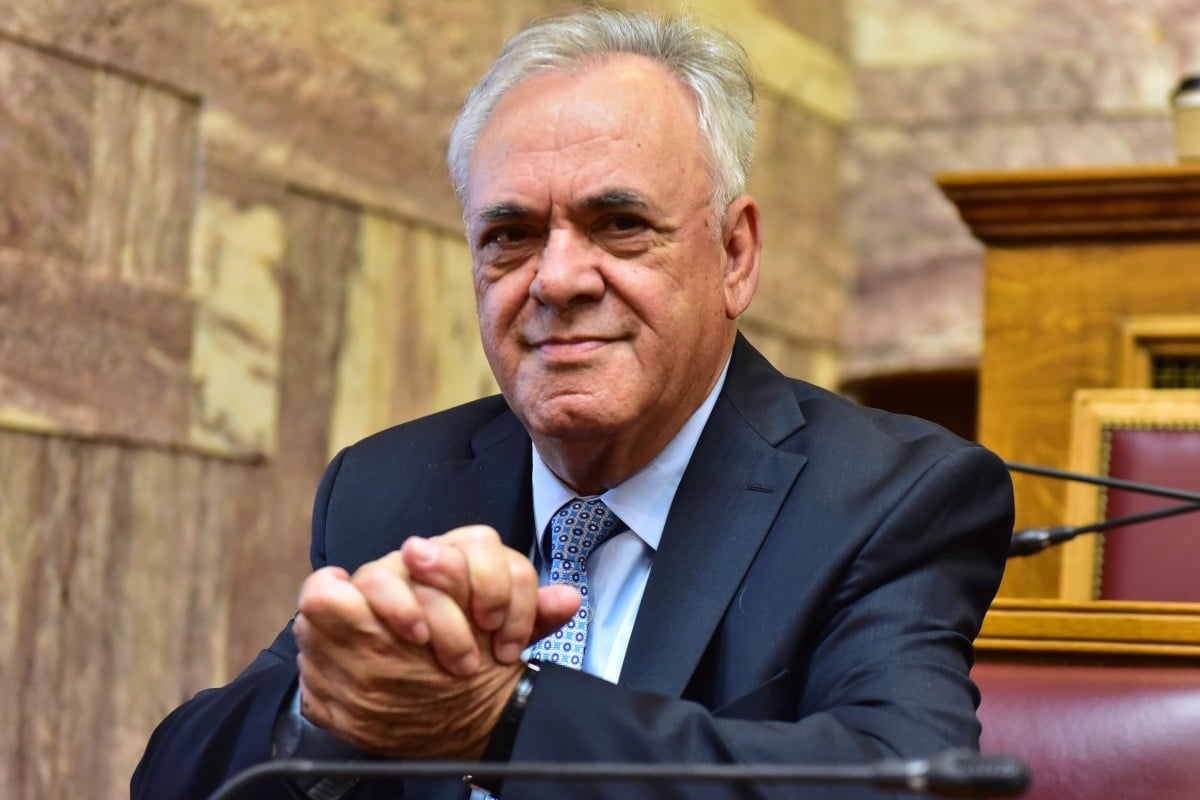
Greece’s deputy prime minister Yannis Dragasakis says the European Union’s suspicion about China is in danger of becoming a “self-fulfilling prophecy”. Photo: Alamy
The deputy prime minister of Greece has warned that European Union suspicion of China is in danger of becoming a “self-fulfilling prophecy” while reaffirming his country’s support for Beijing’s controversial “Belt and Road Initiative”.
In an exclusive interview with theSouth China Morning Post in Athens on Monday, Yannis Dragasakis said he hoped logic would prevail in the EU’s relationship with the world’s second-largest economy.
“We would like to see the EU having good relations with China,” he said.
“Seriously, we should start [the discussion about China] from the opposite end, which is, what are the needs and problems that we can work on with China?”
Dragasakis was speaking ahead of the annual summit between the EU and China in Brussels on Wednesday, which this year will take place against a backdrop of suspicion among some EU countries over Beijing’s political and commercial ambitions in the region.
Europe has been divided over whether to work with China’s enormous belt and road plan, which aims to link China by sea and land with southeast and central Asia, the Middle East, Europe and Africa, through an infrastructure network along the lines of the old Silk Road.
Italy becomes first G7 nation to sign up for China’s belt and road plan

Washington has criticised the scheme as a “vanity project”, and the EU looks set to refer to China as a “strategic rival”, with some European leaders fearing Beijing’s diplomatic manoeuvres could derail unity among member states.

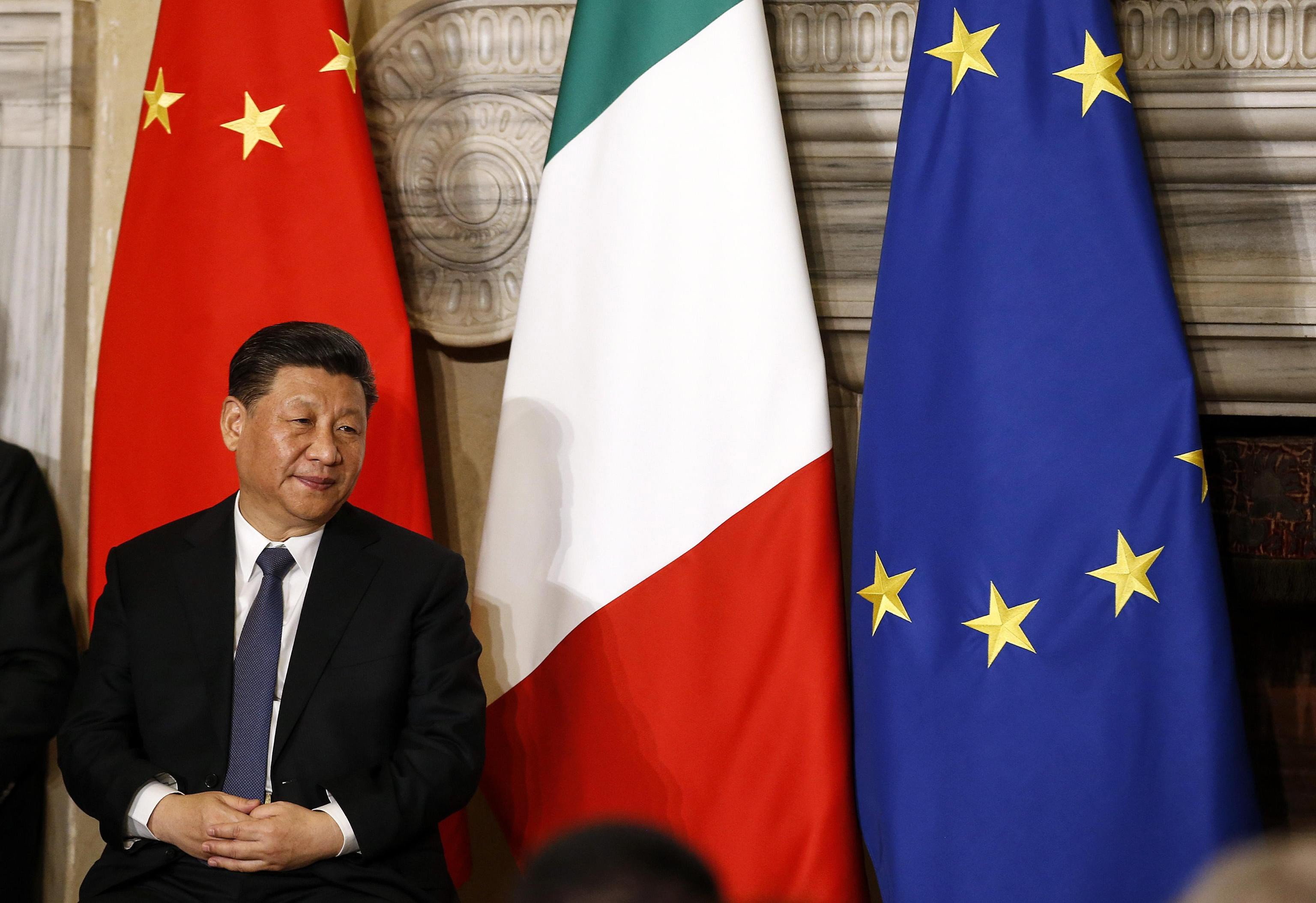
Last month Italy, which is grappling with its third recession in a decade, became the first G7 nation to join the belt and road programme, in a bid to boost exports and upgrade its port facilities.

Last year Greece – ranked second lowest in economic competitiveness within the EU by the World Economic Forum in 2018 – signed up to the scheme, after years of relying on China to help it through its own financial crisis.

Chinese state-owned shipping company Cosco bought a 51 per cent stake in Pireaus Port, Greece’s most important infrastructure hub in 2016 with an option to buy another 16 per cent after five years.

China aims to make the port the “dragon head” of its belt and road programme, serving as a gateway for its cargo to Europe and North Africa.

Will Greece be China’s bridge to the rest of Europe?

With its warming relationship with Beijing, Athens has, at times, departed from EU positions on China.

In 2016, Greece helped stop the EU from issuing a unified statement against Chinese aggression in the South China Sea. The following year, Athens stopped the bloc from condemning China’s human rights record. Days later, it opposed tougher screening on China’s investments in Europe.

Dragasakis was clear that the EU should not devise any policies that may hinder Greece’s ability to revive its economy.

“Greece badly needs investment. We hope logic will prevail at the end of the day, which means we should take advantage of all opportunities and build on these prospects to further our collaboration,” he said.

“Greece will keep following a multidimensional policy, an inclusive policy, without excluding anyone.”

Dragasakis hit back at France and Germany for treating China as a geopolitical rival, while simultaneously signing up to trade agreements with Beijing.

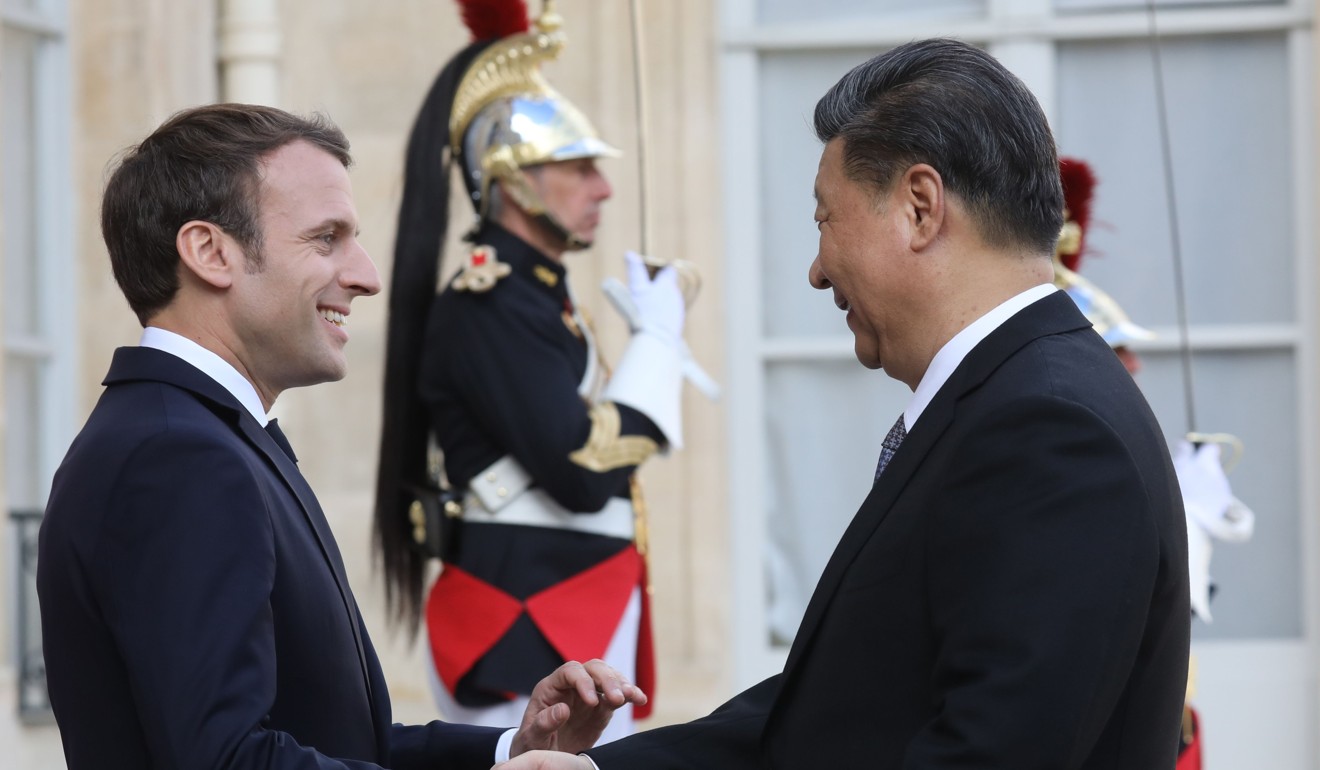
Days before receiving Chinese President Xi Jinping in France last month, President Emmanuel Macron declared that the “time of European naivety” towards China was over – a remark the Greek deputy prime minister described as “interesting” during the interview.

“It’s so interesting, yes. Mr Macron, despite his statement, actually signed very large-scale agreements with China,” he said, adding: “Germany, the same”.

French President Emmanuel Macron welcomes Chinese President Xi Jinping to the Elysee Palace in Paris last month. Photo: AFP

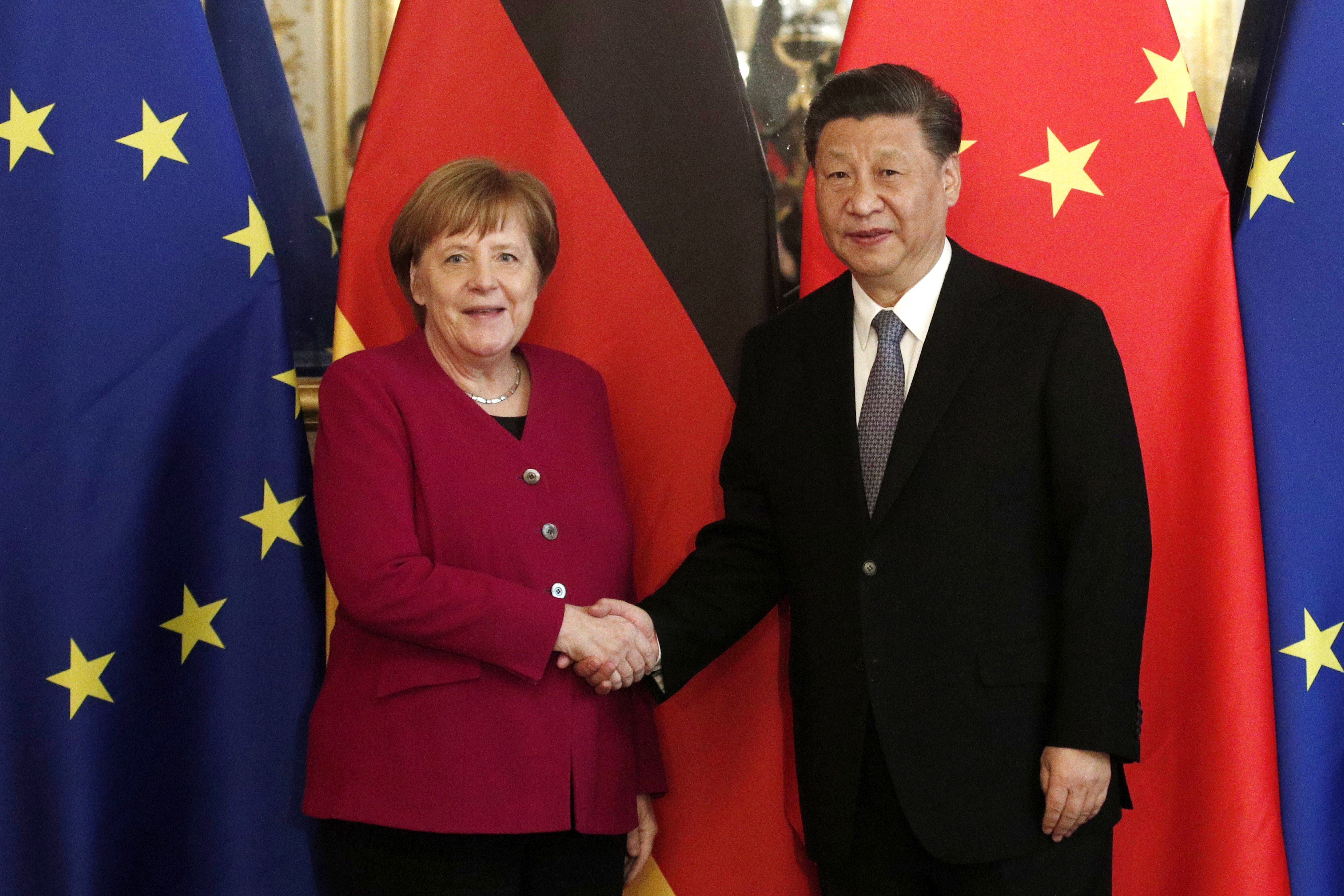
Macron invited German Chancellor Angela Merkel and European Commission President Jean-Claude Juncker to his meeting in Paris with Xi, where the four sought to reassure each other over economic cooperation between the European trading bloc and China.

Dragasakis said Greece’s relations with China were based on “very solid ground” with the two countries sharing complementary interests, particularly through the belt and road plan.

Greek Prime Minister Alexis Tsipras is understood to be considering joining Foreign Minister George Katrougalos at the belt and road summit in Beijing, which will be hosted by Xi later this month.

More than 40 heads of state are expected to attend the summit, with China’s foreign ministry recently saying that Europe had started to see the value of the scheme.

If confirmed, Tsipras’ presence at the summit will be interpreted as an attempt by Greece to consolidate Chinese support in the wake of Italy’s joining of the scheme.

He will also need to mend ties with Beijing, following a recent decision by Greece’s archaeological body to block a plan by Cosco to upgrade facilities at the Piraeus port, throwing the future of the multimillion euro privatisation deal into uncertainty.

Portugal’s support for China’s belt and road plan ‘bad news’ for EU

Dragasakis said there were strong prospects for the future relationship between Greece and China because of the two countries’ reciprocal interest.

Relations with other Asian countries, while not yet as close as Greek ties with China, would continue to be developed, he said.

Dragasakis said Athens would not adopt discriminatory policies against any country as it looked to shore up foreign investments to boost its economy.

India, for instance, has set its sights on Greece as a potential business partner, with President Ram Nath Kovind becoming its first titular head of state to visit Greece last year.

“Relations with India are lagging behind – they are not at the same level as with China, but of course we are mulling further developments with India,” Dragasakis said, adding that Greece would also work more closely with Japan, South Korea and Vietnam.

EU leaders hold out olive branch to Chinese ‘rival’ by saying they want active role in Belt and Road Initiative

EU leaders hold out olive branch to China over belt and road

Read more

China will not divide Europe, senior diplomat says

China will not divide Europe, senior diplomat says

Read more

Beijing calls for ‘objective’ assessment of human rights record.


Source: SCMP

07/04/2019

US and China edge closer to ‘epic’ trade deal, says Trump

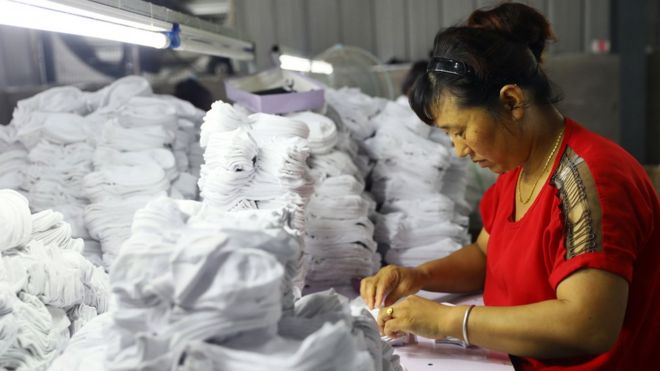
A woman works on socks that will be exported to the US at a factory in Huaibei in China's eastern Anhui province on August 7, 2018Image copyrightGETTY IMAGES

President Donald Trump says the US has found agreement on some of the toughest points in trade talks with China.

He said a deal could come in the next four weeks, but added some sticking points remained.

The Chinese echoed the optimism, with President Xi Jinping touting substantial progress, according to the Chinese state news agency Xinhua.

The US and China have been in talks since December trying to end a trade war that is hurting the global economy.

Mr Trump said the US and China had agreed on “a lot of the most difficult points” but that “we have some ways to go”.

He was speaking from the White House, before a meeting with Chinese Vice Premier Liu He.

The US president said if there was a deal, he would hold a summit with President Xi.

“This is an epic deal, historic – if it happens,” said Mr Trump.

“This is the Grand Daddy of them all and we’ll see if it happens. It’s got a very good chance of happening.”

Sticking points in negotiations in recent weeks have included how fast to roll back tariffs and how a deal would be enforced.

Mr Trump suggested at the press conference that some of these persisted.

He said it would be tough for the US to allow trade to continue with China in the same way as in the past, if a deal did not materialise.

‘Conflicting signals’

The world’s two largest economies imposed tariffs on billions of dollars worth of one another’s goods over the past year.

Negotiations between them have continued since a trade truce was agreed in December, but have at times been rocky.

The BBC’s China correspondent Robin Brant said that both sides were – yet again – giving conflicting signals.

Mr Liu said the US and China had reached a new consensus on important issues like the text of the economic and trade agreement, Xinhua reported.

While that echoed Mr Trump’s comments, US Trade Representative Robert Lighthizer sounded more cautious. He said there were still some major issues left in trade talks, according to reports.

Mr Brant said there was clearly still significant distance between the two sides on the crucial issue of enforcement.

What’s being discussed?

The US accuses China of stealing intellectual property from American firms, forcing them to transfer technology to China.

Washington wants Beijing to make changes to its economic policies, which it says unfairly favour domestic companies through subsidies and other support, and wants China to buy more US goods to rein in a lofty trade deficit.

China accuses the US of launching the largest trade war in economic history, and is unlikely to embrace broader structural changes to its economy.

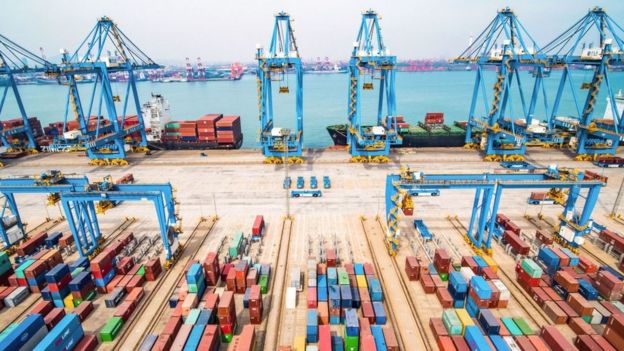
An aerial view of a port in Qingdao in China's eastern Shandong province on March 8, 2019Image copyrightGETTY IMAGES

What’s at stake?

Failure to achieve a deal may see the US more than double the 10% tariffs on $200bn (£153bn) of Chinese goods and impose fresh tariffs.

Mr Trump has in the past threatened to tax all Chinese goods going into the US.

The US has already imposed tariffs on $250bn worth of Chinese goods, and China has retaliated with duties on $110bn of US products.

The damaging trade war has already cast a shadow over global trade and the world economy.

Source: The BBC

05/04/2019

US and China edge closer to ‘epic’ trade deal, says Trump

A woman works on socks that will be exported to the US at a factory in Huaibei in China's eastern Anhui province on August 7, 2018Image copyrightGETTY IMAGES

President Donald Trump says the US has found agreement on some of the toughest points in trade talks with China.

He said a deal could come in the next four weeks, but added some sticking points remained.

The Chinese echoed the optimism, with President Xi Jinping touting substantial progress, according to the Chinese state news agency Xinhua.

The US and China have been in talks since December trying to end a trade war that is hurting the global economy.

Mr Trump said the US and China had agreed on “a lot of the most difficult points” but that “we have some ways to go”.

He was speaking from the White House, before a meeting with Chinese Vice Premier Liu He.

The US president said if there was a deal, he would hold a summit with President Xi.

“This is an epic deal, historic – if it happens,” said Mr Trump.

“This is the Grand Daddy of them all and we’ll see if it happens. It’s got a very good chance of happening.”

Sticking points in negotiations in recent weeks have included how fast to roll back tariffs and how a deal would be enforced.

Mr Trump suggested at the press conference that some of these persisted.

He said it would be tough for the US to allow trade to continue with China in the same way as in the past, if a deal did not materialise.

‘Conflicting signals’

The world’s two largest economies imposed tariffs on billions of dollars worth of one another’s goods over the past year.

Negotiations between them have continued since a trade truce was agreed in December, but have at times been rocky.

The BBC’s China correspondent Robin Brant said that both sides were – yet again – giving conflicting signals.

Mr Liu said the US and China had reached a new consensus on important issues like the text of the economic and trade agreement, Xinhua reported.

While that echoed Mr Trump’s comments, US Trade Representative Robert Lighthizer sounded more cautious. He said there were still some major issues left in trade talks, according to reports.

Mr Brant said there was clearly still significant distance between the two sides on the crucial issue of enforcement.

What’s being discussed?

The US accuses China of stealing intellectual property from American firms, forcing them to transfer technology to China.

Washington wants Beijing to make changes to its economic policies, which it says unfairly favour domestic companies through subsidies and other support, and wants China to buy more US goods to rein in a lofty trade deficit.

China accuses the US of launching the largest trade war in economic history, and is unlikely to embrace broader structural changes to its economy.

An aerial view of a port in Qingdao in China's eastern Shandong province on March 8, 2019Image copyrightGETTY IMAGES

What’s at stake?

Failure to achieve a deal may see the US more than double the 10% tariffs on $200bn (£153bn) of Chinese goods and impose fresh tariffs.

Mr Trump has in the past threatened to tax all Chinese goods going into the US.

The US has already imposed tariffs on $250bn worth of Chinese goods, and China has retaliated with duties on $110bn of US products.

The damaging trade war has already cast a shadow over global trade and the world economy.

Source: The BBC

02/04/2019

Xi calls for closer cultural exchanges between China, Pacific island countries

BEIJING, April 1 (Xinhua) — Chinese President Xi Jinping on Monday extended congratulations on the launch ceremony of the 2019 Year of Tourism for China and Pacific Island Countries, calling for closer cultural and personnel exchanges.

In a congratulatory message to the event, which was held in Apia, capital of Samoa, Xi noted that China and Pacific island countries have a time-honored tradition of friendly exchanges.

They are good friends who treat each other with sincerity and mutual respect, good partners who work together to pursue common development and win-win cooperation, and good brothers who understand and learn from each other, said the president, adding that they set a model for all countries treating each other as equals regardless of their sizes.

Xi recalled that in November last year, he held a collective meeting with leaders of Pacific island countries in Papua New Guinea (PNG), and they agreed to elevate their countries’ relations to a comprehensive strategic partnership featuring mutual respect and common development, opening a new chapter in the interaction between China and Pacific island countries.

The Chinese president emphasized that the tourism year is an important consensus he reached with leaders of Pacific island countries in their PNG meeting.

Xi expressed the hope that the two sides seize the opportunity to expand cultural and personnel exchanges, boost practical cooperation, deepen mutual understanding, and consolidate the public support for their comprehensive strategic partnership, so as to bring more benefits to the peoples of both China and the Pacific island countries.

Source: Xinhua

Law of Unintended Consequences

continuously updated blog about China & India

ChiaHou's Book Reviews

continuously updated blog about China & India

What's wrong with the world; and its economy

continuously updated blog about China & India