13/10/2019
- The likes of Saudi Arabia also saw an upswing in travellers from the mainland after the release of its new visa programme
- But fewer Chinese tourists went abroad this year, with a 15 per cent drop from 2018 attributed to more opting to visit local historical sites
Chinese tourists take photos in front of the Imperial Palace in Tokyo, Japan. Photo: Reuters
Fewer Chinese travellers went overseas during
“golden week” this year – but for those who did, Japan, Thailand and Singapore were the top-ranked destinations as tourists from the mainland gave Hong Kong a miss, according to China’s largest travel company Ctrip.
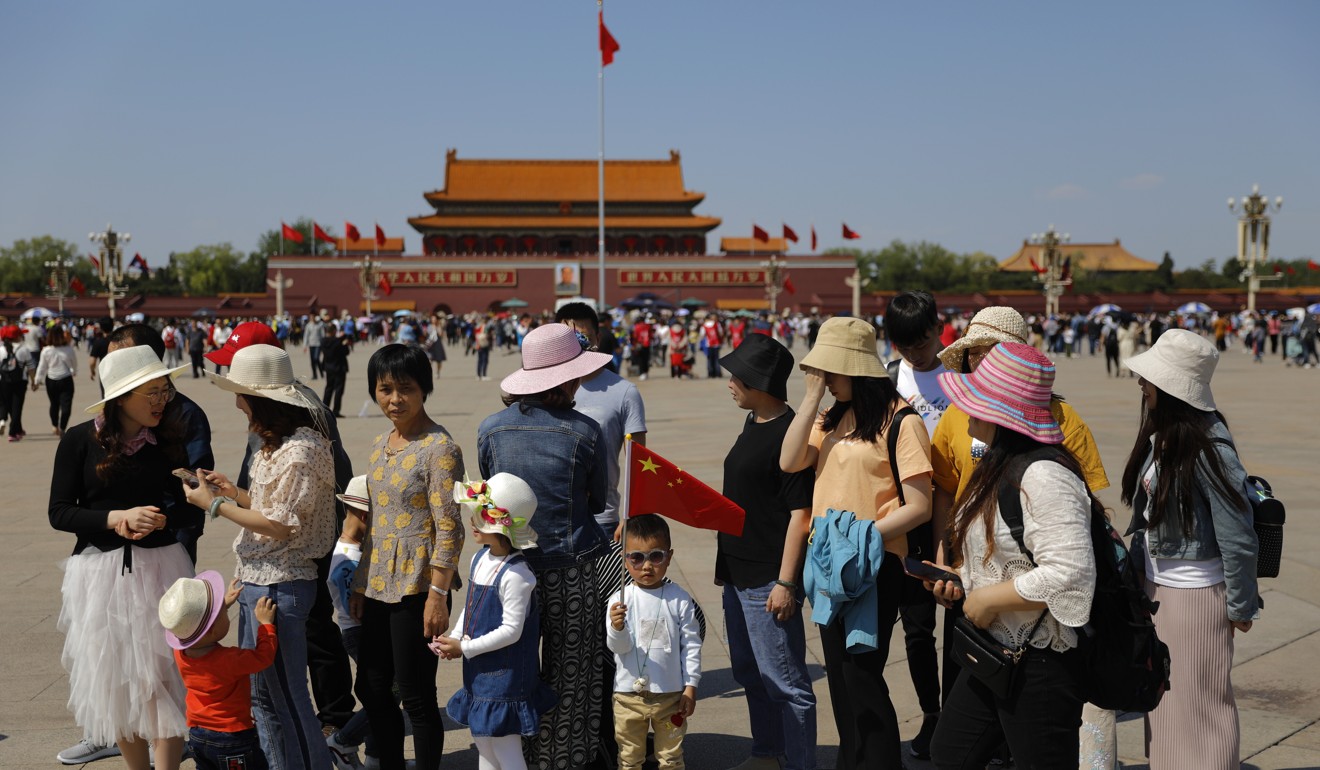
Chinese government data showed only 6.07 million people travelled during the national holiday between October 1-6, a 15.1 per cent drop from the corresponding period last year. Analysts attributed this to Chinese tourists opting for a “staycation”, as 782 million people – a 7 per cent increase from last year – chose to celebrate the 70th anniversary of the People’s Republic of China by visiting local historical sites.
How a new wave of Indian travellers are transforming tourism in Southeast Asia
For those who did venture abroad, Japan, Thailand and Singapore ranked as the top three most-booked countries in Asia during the week, according to Chinese travel firm Ctrip, as tourists from the mainland skipped protest-hit Hong Kong for other destinations.
The city, now in its 19th week of anti-government protests, over the week saw a 50 per cent overall drop in tourism from last year, as well as a 47.8 per cent reduction in border crossings at the Luohu border checkpoint, according to government figures.
Japan remained the most popular destination for Chinese tourists. In the first half of 2019, the nation saw 4.5 million visitors from China, up 11.7 per cent from the same period in 2018. In order of popularity, the top-visited cities were Osaka, Tokyo, Kyoto, Sapporo and Nagoya, according to Japanese media.
Over the same week, Japan increased its sales tax from 8 to 10 per cent, but Chinese shoppers – who accounted for 37 per cent, or US$15.4 billion, of the spending by international visitors to the nation last year – were undeterred.
Japan saw the highest volume of overseas transactions over the week, according Alipay Mobile, the world’s largest mobile payment platform. The firm declined to share the exact amount Chinese tourists had spent in Japan, but reported average spending per international traveller during golden week had increased by 15 per cent to 2,500 yuan (US$350).
From Nissan sales to Tsushima tourism, trade spat with Korea hits Japan in the pocket
Alipay is operated by Ant Financial, an affiliate of Alibaba Group Holding, which owns the Post.
Japanese department stores such as Sogo and Seibu celebrated the Chinese national holiday by holding golden week events and sales at 15 different branches across the nation, with food and arts promotions targeting Chinese shoppers.
Chinese travellers to Japan want cultural experiences involving local customs such as temple tours, heritage sites and cultural events, according to Emily Guo, a researcher at Hong Kong-based marketing research firm Cherry Blossoms.
Chinese tourists visit Tiananmen Square in Beijing. Analysts say 782 million people opted for “staycations” at local historical sites over golden week this year. Photo: EPA
Experts say Thailand – the second-most booked country during golden week, according to Ctrip – saw many repeat travellers return to the country. The nation saw 1.03 million arrivals from China in August, up 19 per cent from 2018.
Guo said these travellers were more budget-conscious than those who travelled to Japan, and enjoyed the good value and picturesque scenery for sharing on social media.
“They have already travelled to Southeast Asia before, and are therefore looking for personalised and local experiences like interacting with Thai residents, jungle treks and food tours,” she said, adding that many are willing to spend extra on immersive experiences such as a hotel in the countryside, or on a room with a forest view.
Thailand’s tourism industry gets jitters after currency surges, visitor numbers from China fall
According to Alipay Mobile, the sale of “durian experience” packages for Chinese tourists looking to taste the spiky, pungent fruit at local farms increased by 60 per cent in Thailand and Malaysia from last year.
Shopping remained on the agenda, too. Thailand ranked second for the highest volume of overseas transactions during the week, according to data from Alipay Mobile. Most Chinese shoppers frequented duty-free shops, convenience stores and local malls, according to local press.
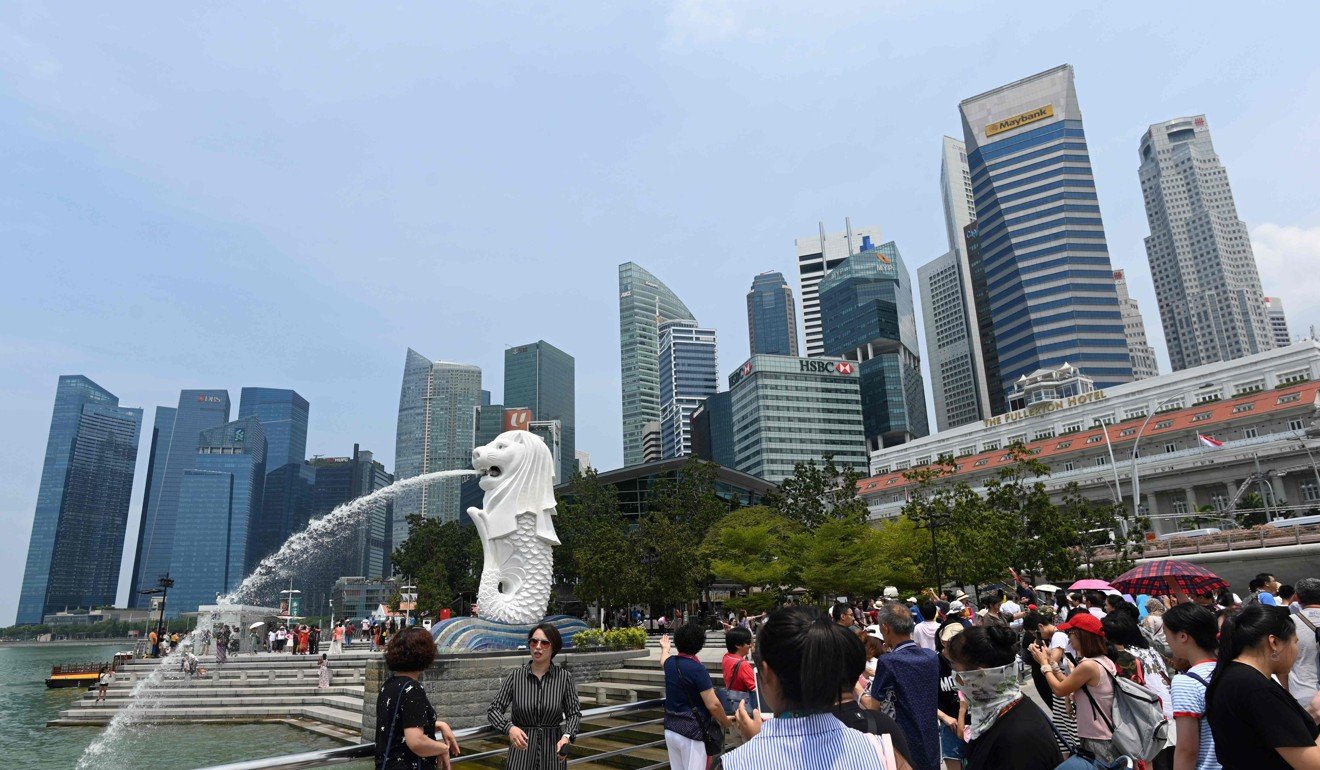
Singapore remained a destination of choice for tourists from the mainland. The city was among the most popular “traditional destinations” for them, according to China’s culture and tourism ministry, with others including Malaysia, Thailand, Japan, Australia, France, Italy, and Russia.
Chinese tourists visiting Singapore over golden week also seized the opportunity to check out property in the Lion City. Photo: AFP
July saw the Lion City break its record for the number of Chinese arrivals, at close to 390,000, an unprecedented 46 per cent jump from the previous month.
Analysts have attributed this to a diversion of tourists from Hong Kong, but property agents such as Clarence Foo, associate deputy group director at OrangeTee & Tie, said some of these Chinese tourists were using the golden week as a chance to eye Singaporean real estate.
“Compared to a normal week, there were probably 15 to 20 per cent more Chinese visitors who viewed property,” said Foo, who counts Singaporean and international buyers among his clients.” They are certainly more keen on Singapore [property] now as there isn’t another comparable investment destination in Asia.”
Meanwhile, the Middle East is emerging as a popular shopping destination for Chinese tourists. According to Ctrip, Dubai saw 501,000 travellers from the mainland in the first half of 2019, an 11 per cent increase from last year.
Saudi Arabia has also experienced a surge in Chinese tourists, with 7,931 heading to the country since it launched its new instant tourist visa programme on September 27. With the new visa, which can be obtained online or upon arrival, tourists can stay in the country for up to 90 days, and unwed foreign men and women can for the first time share hotel rooms.
“Saudi Arabia has the potential to become very popular with Chinese tourists,” said Guo from Cherry Blossoms, adding that travellers from the mainland are increasingly looking for exciting new adventures. “It’s a status symbol for them to visit a country others haven’t visited before.”
Source: SCMP
Posted in 70th anniversary, Alibaba Group Holding, Alipay Mobile, Australia, ‘golden week’, “staycation”, “staycations”, Beijing, benefit, celebrated, Chinese national holiday, chinese tourists, Ctrip, cultural events, cultural experiences, Dubai, durian experience, France, golden week, heritage sites, Hong Kong, Imperial Palace, Italy, Japan, Korea, Kyoto, Lion City, Luohu border checkpoint, mainland, Malaysia, Middle East, Nagoya, nation, Nissan, People’s Republic of China, Post, Russia, Sapporo, Saudi Arabia, Seibu, Singapore, Singaporean real estate, skip, Sogo, Southeast Asia, spiky, pungent fruit, temple tours, Thailand, Tiananmen Square, Tokyo, traditional destinations, travellers, Tsushima tourism, Uncategorized |
Leave a Comment »
24/09/2019
NANNING, Sept. 23 (Xinhua) — The Belt and Road Initiative (BRI) provides momentum for regional economic integration and connectivity, helping China and ASEAN forge a closer community of shared future, said Cambodian Deputy Prime Minister Hor Nam Hong.
Hor made the remarks Saturday at the opening ceremony of the 16th China-ASEAN Expo themed “Building the Belt & Road, Realizing Our Vision for a Community of Shared Future.”
The deputy vice prime minister envisioned that the China-ASEAN strategic partnership and the BRI will further deepen the cooperation between the two sides in the joint pursuit of shared prosperity.
Statistics show that China has signed cooperation agreements with more than 130 countries across the globe and 30 international organizations on jointly building the Belt and Road, benefiting people of the involved nations.
Highlighting regional economic cooperation, this year’s China-ASEAN expo is expected to lift the practical and comprehensive cooperation between China, ASEAN and other countries participating in the BRI to new heights.
The expo has served as a crucial platform for promoting investment and trade in Asia over the past 16 years, setting an example of friendly cooperation between China and ASEAN, said Luhut Binsar Pandjaitan, special envoy of the Indonesian president and coordinating minister for maritime affairs.
As the Country of Honor for this year’s expo, Indonesia will showcase its high-quality products from more than 100 Indonesian enterprises.
Speaking highly of the BRI, Luhut said cooperation under the China-proposed initiative will boost infrastructure construction and trade among members of ASEAN to facilitate the building of the ASEAN Community.
To push China-ASEAN ties to new heights, both sides are making joint efforts in constructing the Belt and Road and implementing the Master Plan on ASEAN Connectivity 2025 under the guidance of the China-ASEAN Strategic Partnership Vision 2030.
The BRI accelerates regional connectivity and improves people’s livelihoods, said Thai Deputy Prime Minister and Minister of Commerce Jurin Laksanawisit, adding that Thailand had formulated plans to contribute to the completion of the Regional Comprehensive Economic Partnership, alleviate volatility of the global economy and trade, and inject momentum into sustainable development.
Two-way investment between China and ASEAN countries grew robustly to reach 230 billion U.S. dollars in the first eight months of this year, with the establishment of 25 economic and trade cooperation zones creating over 100,000 jobs.
Meanwhile, the cooperation between China and ASEAN in fields including international production capacity, the digital economy and e-commerce is also leaping forward.
Hailing the achievements of cooperation under the BRI, Lao Deputy Prime Minister Sonexay Siphandone said Laos will take an active role in building the Belt and Road.
Citing the China-Laos railway, the largest cooperation project between the two sides so far, Sonexay said it will promote regional peace, prosperity and sustainable development.
Apart from prospering bilateral trade and investment, recent years have seen the deepening of China-ASEAN cooperation in various other fields. ASEAN has become the largest destination for Chinese tourists, with the number of personal exchanges hitting 57 million in 2018 and nearly 4,000 flights traveling between both sides every week.
Holding similar viewpoints, Myanmar’s Vice President U Myint Swe said the BRI provides opportunities for developing trade and cross-border exchanges and bridging infrastructure gaps.
Looking forward to shared prosperity, Jurin said Thailand, as well as ASEAN, will collaborate with China to strive for sustainable development.
Source: Xinhua
Posted in "Building the Belt & Road, Realizing Our Vision for a Community of Shared Future.", Association of Southeast Asian Nations (ASEAN), Belt and Road Initiative (BRI), Cambodian Deputy Prime Minister, China alert, China-ASEAN Expo, China-ASEAN ties, China-Laos railway, chinese tourists, embrace, Holding similar viewpoints, Myanmar's Vice President, Hor Nam Hong, Laos, Myanmar, Myanmar's Vice President, Regional Comprehensive Economic Partnership, Regional Comprehensive Economic Partnership (RCEP), shared future, Thailand, U Myint Swe, Uncategorized |
Leave a Comment »
24/09/2019
- Observers say domestic issues prompted Kremlin to tighten environmental protection around the lake in Siberia, but Chinese activities also played a part
- Businesses catering to growing number of visitors from China may be easy scapegoats as they are ‘among the most visible because they are foreign’
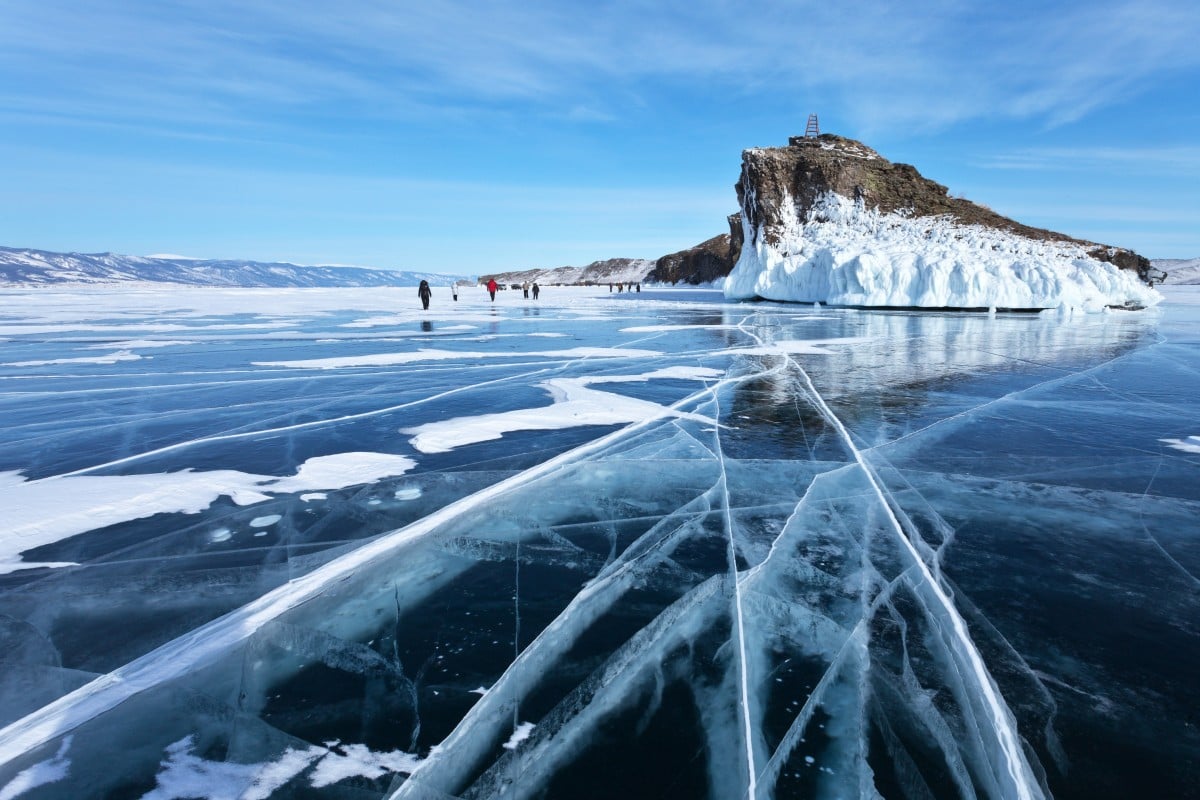
A growing number of Chinese tourists are visiting Lake Baikal in Siberia. Photo: Shutterstock
Russia has tightened environmental protection around Lake Baikal amid growing concerns over degradation, with Chinese development and tourism at the heart of recent debates on the nationally treasured Siberian lake.
New protocols signed by President Vladimir Putin on September 12 clarify how authorities will monitor “compliance with the law on Lake Baikal’s conservation and environmental rehabilitation”.
They also call for improved state environmental monitoring of the lake’s unique ecosystem, aquatic animal and plant life; prevention of and response to risks; analysis of the pressure from fishing on its biological resources; as well as measures to conserve those unique aquatic resources.
Observers say domestic issues – including a backlash over the government’s hand in accelerating environmental damage – prompted the Kremlin to act, but concerns over Chinese activities in the area also played a part.
Eugene Simonov, coordinator of the Rivers Without Boundaries International Coalition, said the protocols were a bid by Moscow to show it was concerned about the lake, where mismanagement and relaxed standards had damaged water quality and the ecosystem – drawing concern from Unesco, which has designated it a World Heritage Site.
But it was also related to local concerns that an influx of Chinese money and tourists in the region was making matters worse.
“One of the leading causes of problems on Lake Baikal is the development of the lake shore for tourism these days, which, at least in the Irkutsk region, is greatly driven by Chinese business,” said Simonov, who has worked extensively on the area’s environmental issues.
He pointed to the “not legal” hotels opened by local and Chinese businesses that cater to the increasing number of tourists from China, saying they stood out as easy scapegoats.
“The real driving force is the desire of locals to privatise the lake shore, illegally, but the Chinese demand is one of the reasons they want to privatise it, while Chinese businesses are among the most visible because they are foreign,” he said.
Public opposition to a water bottling plant being built by a Chinese-owned company pushed local authorities to halt the project in March. Photo: Weibo
Some 186,000 Chinese tourists visited the region last year, up 37 per cent from 2017, according to official Irkutsk figures. But while they accounted for about two-thirds of foreign visitors to the Irkutsk region, they made up only about 10 per cent of the 1.7 million tourists who visited last year.
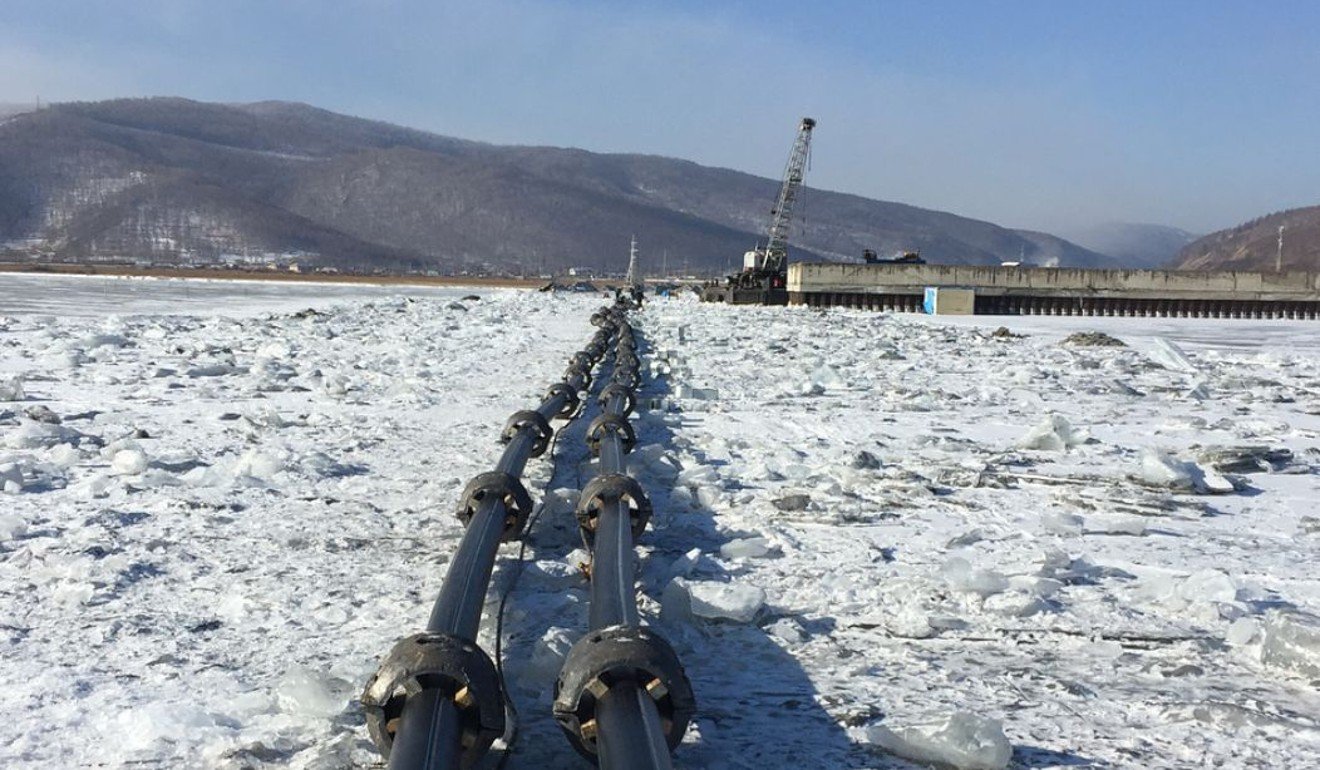
Concern about Chinese investment and development in the region reached a crescendo in March, when public opposition pushed local authorities to halt the construction of a water bottling plant operated by AquaSib, a Russian firm owned by a Chinese company called Lake Baikal Water Industry, based in China’s Heilongjiang province.
The Irkutsk government acted after more than a million people – more than the city’s population – signed a petition calling for the “Chinese plant” to be halted.
Adventures in the frozen wilderness: a Hong Kong man’s trek across icy Lake Baikal
“There were at least 10 problems [around Lake Baikal] that were much more important at that moment, but it was the Chinese plan that was the focus,” Simonov said, noting the nationalism surrounding the lake as a Russian point of pride.
Paul Goble, a Eurasia specialist who has been tracking the issues at Lake Baikal, said stirring up resentment over Chinese encroachment in Siberia and the country’s Far East had long been a government tactic to quell dissent and unite popular opinion.
But he said the new protocols showed Moscow realised that locals – facing the effects of a deteriorating environment including deforestation driven by China’s domestic market demand – may not be satisfied with that explanation.
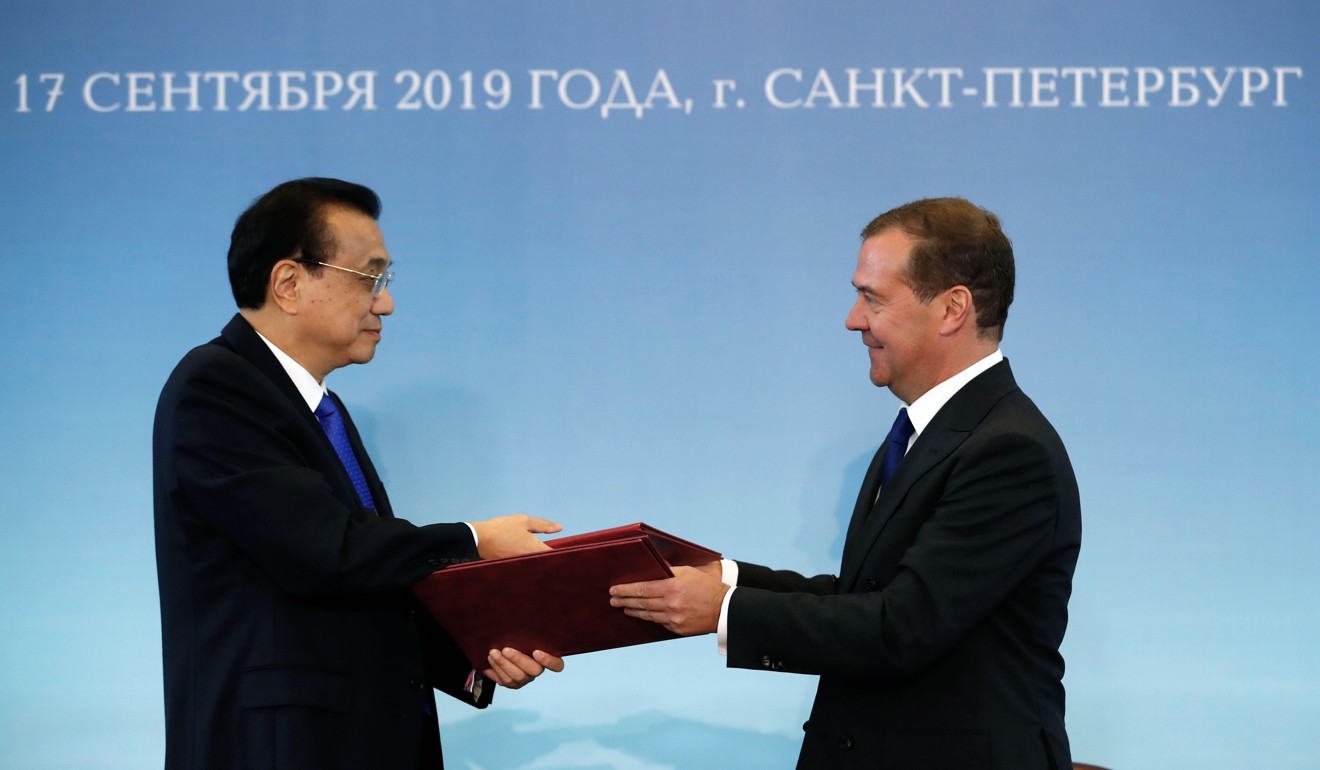
Chinese Premier Li Keqiang and Russian Prime Minister Dmitry Medvedev exchange documents after talks in St Petersburg on Tuesday. Photo: AFP
“People are angry not at China, as might have been the case a year ago or more, but they are angry at Moscow for not standing up to China and what it’s doing,” he said, pointing to this as the reason the Kremlin tightened environmental controls on the lake.
Concerns about the impact of Chinese activities on Russia’s environment come as the two neighbours are playing up closer diplomatic and economic ties. One of the outcomes of a
between Chinese Premier Li Keqiang and Russian heads of state last week was an agreement to increase bilateral trade to more than US$200 billion over the next five years.
But how that investment could be sustainable for Russia – a key supplier of raw materials needed by China such as oil, gas and timber – remained to be seen, observers said.
Are Chinese tourists the greatest threat to Lake Baikal?
“Our great relationship is going well, but we have not seen the accompanying rise in Chinese foreign direct investment into Russia – that remains very small, despite all the talk,” said Artyom Lukin, an associate professor with the School of Regional and International Studies at Far Eastern Federal University in Vladivostok.
“Russia is not satisfied with that, they would like to see more Chinese money, more Chinese greenfield investment coming into Russia, into more productive areas of the Russian economy, not just into the extraction sector like oil, timber or coal,” he said.
Lake Baikal has been seen as an area that could draw a lot of Chinese investment. Back in 2016 there were reports of a tourism development deal, worth up to US$11 billion, between Russian operator Grand Baikal and a consortium of Chinese firms, according to Russian state media reports.
But so far most development from Chinese businesses has remained at the small and medium scale.
The reasons for that, according to experts, range from the difficulty of competing with powerful local rivals and the need to tread carefully around anti-China sentiment.
However, the burden and liability of complying with environmental standards also kept operations at a smaller scale.
China and Russia: a fool’s errand for Trump to try to come between them
“It’s simpler and easier to operate smaller businesses and facilities, and it’s easier to monitor and manage them,” said Vitaly Mozharowski, a partner at Bryan Cave Leighton Paisner in Moscow, who specialises in environmental law, noting that concerns included management of waste water and garbage.
Meanwhile, big complexes were obvious targets for scrutiny, and that would only increase with the new protocols in place, Mozharowski said. “Any large-scale initiatives would be considered from the very top of the Russian establishment,” he said.
Source: SCMP
Posted in anger, AquaSib, aquatic animal, China and Russia, Chinese development, Chinese investment and development, Chinese premier Li Keqiang, chinese tourists, concerns, ecosystem, Environmental protection, Far Eastern Federal University, fishing, fool’s errand, Heilongjiang province, hotels, Irkutsk government, Kremlin, Lake Baikal, Lake Baikal Water Industry, Moscow, plant life, President Trump, president vladimir putin, protect, protocols, Rivers Without Boundaries International Coalition, Russia, russian president vladimir putin, Russian Prime Minister Dmitry Medvedev, scapegoats, School of Regional and International Studies, Siberia, St Petersburg, Uncategorized, Vladivostok, water bottling plant |
Leave a Comment »
23/06/2019
- Stalled denuclearisation talks also expected to be on the agenda when Chinese president meets Kim Jong-un this week
- Analysts say Korean peninsula has become intense diplomatic battleground between Beijing and Washington
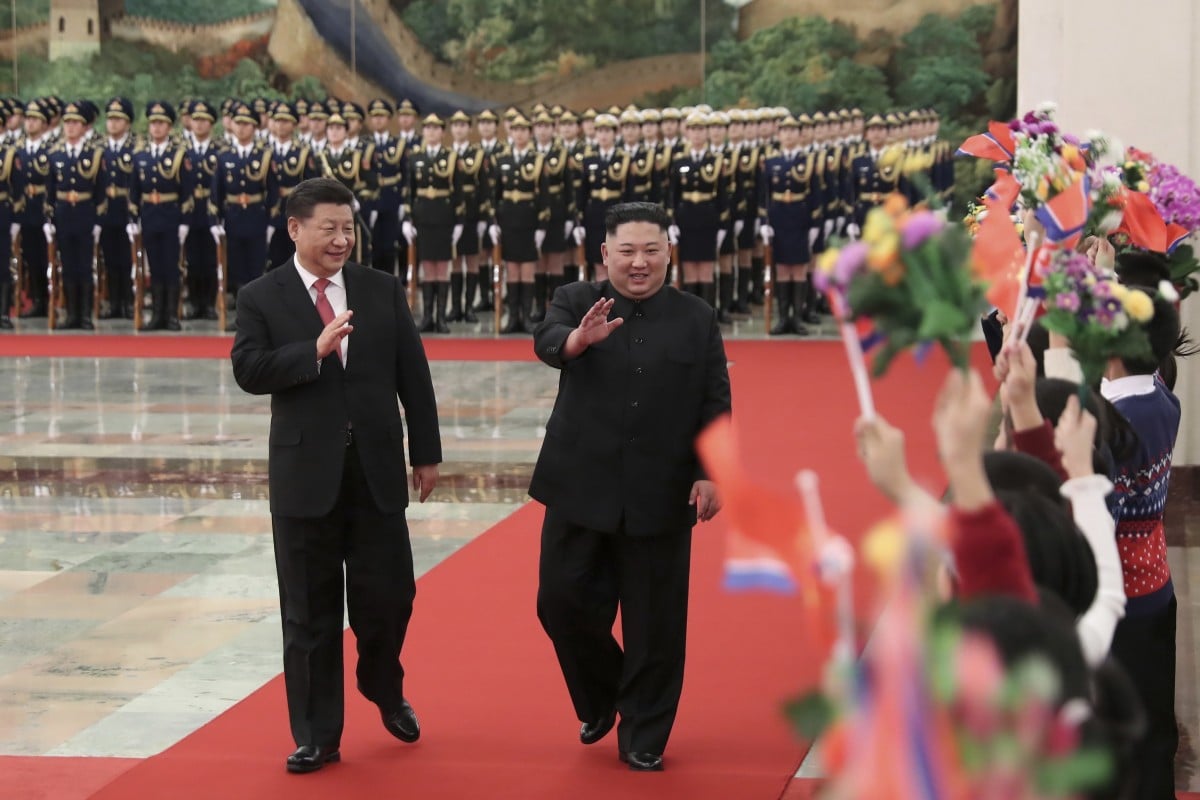
North Korean leader Kim Jong-un (right) attends a welcome ceremony in Beijing with Chinese President Xi Jinping in January. Xi will begin a visit to Pyongyang on Thursday. Photo: AP
Xi Jinping’s upcoming trip to
will be a state visit – a higher status than the last trip to the hermit kingdom by a Chinese president, highlighting the close bilateral ties between Beijing and Pyongyang.
Xi’s two-day trip, which
, is the first by a Chinese president to North Korea in 14 years and comes just a week before he is due to meet US President Donald Trump for talks on the sidelines of the Group of 20 summit in Japan.
“Leaders of the two countries will review the development of the bilateral relationship and carry out an in-depth exchange of opinions on the development of Sino-North Korean relations in the new era, and chart the future course of development,” state news agency Xinhua reported on Tuesday.
Xi’s predecessor, Hu Jintao, went to North Korea in October 2005 on a three-day trip described as an “official goodwill” visit.
Speaking at a regular press briefing in Beijing on Tuesday, foreign ministry spokesman Lu Kang said Xi’s visit aimed to “inject new impetus” into relations in the year the two countries marked the 70th anniversary of establishing diplomatic ties, and to give stalled denuclearisation talks a much needed push.
“Regarding the progress on denuclearisation, as I said, the result of the Hanoi leaders’ meeting in February was indeed a little unexpected. But after that, everyone actually looks forward to the resumption of dialogue in a good direction,” Lu said, referring to the failed talks between Trump and North Korean leader Kim Jong-un in the Vietnamese capital four months ago.
Trump hinted at the possibility of another meeting with Kim after receiving what he called “a beautiful letter” from the North Korean leader last week. On Tuesday, South Korea’s chief nuclear negotiator, Lee Do-hoon, said the US had been in contact with the North.
Life in North Korea the ‘admiration and envy’ of others, state media says
Washington will also send US Special Representative for North Korea Stephen Biegun to South Korea next week, days after Xi’s visit to Pyongyang, to fully align its position on North Korea with its ally.
Meanwhile, Trump confirmed he would meet Xi for talks in Osaka next week, saying in a tweet on Tuesday they had “a very good telephone conversation” and would hold “an extended meeting” at the G20 summit, where they are
over an almost year-long trade war.
Pyongyang has demanded the lifting of sanctions imposed on the regime following its nuclear and missile tests, while Beijing has said the livelihoods of North Koreans should not be affected. But Washington insists full sanctions should remain in place.
The US has also voiced scepticism about Chinese compliance with the sanctions. At a security summit in Singapore earlier this month, US acting Pentagon chief Patrick Shanahan – who on Wednesday stepped down from his role
– presented his Chinese counterpart Wei Fenghe with photographs and satellite images of North Korean ships transferring oil near China’s coast.
Analysts said Xi would seek to use the visit to boost China’s diplomatic leverage on the North Korean nuclear front, strengthening its hand in dealing with the US.
Exports from North Korea to China, which account for the bulk of its trade, plunged 87 per cent last year from 2017, and the country has faced other economic problems at a time when Kim has vowed to deliver on the economy.
A diplomatic source said China was expected to offer a large amount of humanitarian assistance, such as food and fertiliser, to North Korea, which could weaken the impact of sanctions.
China’s goal of denuclearisation on the Korean peninsula is unwavering and will not changeLu Chao, North Korean affairs expert at Liaoning Academy of Social Sciences
Communist Party mouthpiece People’s Daily on Tuesday said via its social media account that Xi would discuss economic and trade cooperation with Kim during the visit.
Quoting Zheng Jiyong, director of the Centre for Korean Studies at Fudan University in Shanghai, the newspaper said Pyongyang had taken steps to reform its economy and introduced China’s industrial manufacturing blueprint.
In September, Beijing proposed building a rail link from the city of Dandong, in China’s northeastern Liaoning province, to Pyongyang and then on to Seoul and Busan in the South, as well as a new road between Dandong and Pyongyang through Sinuiju.
Lu Chao, a North Korean affairs expert at the Liaoning Academy of Social Sciences, said large-scale economic cooperation between China and North Korea was unlikely because of the sanctions, but smaller moves were possible.
Chinese tourists flood North Korea as Beijing remains Pyongyang’s key ally
“For example, China may export daily necessities to North Korea. And if it’s needed, China is very likely to provide [food] assistance to North Korea,” Lu said. “I believe the UN sanctions on North Korea should change, because it has shown a more substantive approach to [achieving] denuclearisation.”
But analysts said Beijing remained firm on the need for Pyongyang to honour its pledges so that denuclearisation could be achieved.
“China’s goal of denuclearisation on the Korean peninsula is unwavering and will not change … China supports [North Korea] and the US continuing to hold talks,” Lu said.
Beijing also had an important part to play in the peace process, according to Boo Seung-chan, an adjunct professor at the Yonsei Institute for North Korean Studies in Seoul.
“China can have a positive role as a mediator to facilitate the peace process on the Korean peninsula,” Boo said.
Source: SCMP
Posted in aims, Asan Institute for Policy Studies, Beijing, Busan, Centre for Korean Studies, chinese tourists, Dandong, denuclearisation, diplomatic battleground, Fudan University, hermit kingdom, Hu Jintao, Kim Jong-un, Korean peninsula, Liaoning Academy of Social Sciences, Liaoning province, new impetus, North Korea, Patrick Shanahan, People’s Daily, President Donald Trump, President Xi Jinping, Pyongyang, Seoul, Shanghai, Singapore, Sino-North Korean relations, South Korea, State visit, ties, Uncategorized, US acting Pentagon chief, US Special Representative for North Korea, Washington, Wei Fenghe, Xinhua, Yonsei Institute for North Korean Studies |
Leave a Comment »
13/06/2019
- After a six-month closure, Boracay reopened in October with new rules that prohibit smoking, drinking, dining and littering on the beachfront. But the dos and don’ts seem to have escaped notice, especially among tourists from China and South Korea
-
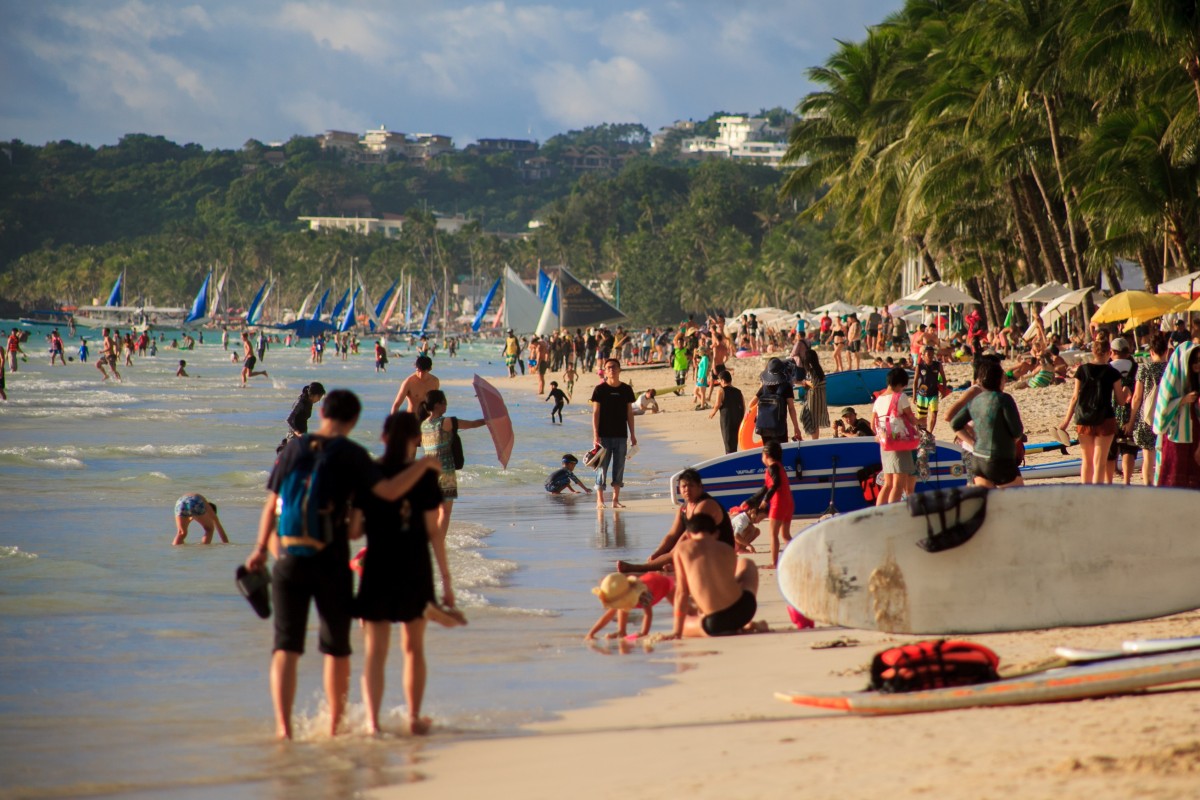
Tourists enjoy Boracay’s famous White Beach in January. Photo: Shutterstock
Travel has changed a lot since the 19th century. Obviously. But attitudes towards travellers have not, if the diaries of Francis Kilvert are anything to go by.
“Of all noxious animals, the most noxious is a tourist,” the English clergyman wrote in the 1870s, and while Kilvert asserted that it was the British who were “the most vulgar, ill-bred, offensive and loathsome” of them all – a contention that might be challenged today – an increasing number of places across the globe have had their fill of imprudent outsiders, regardless of where they are from.
The island of
, in the Philippines, the original face of overtourism in the region, is one of them. In February last year, Philippine President Rodrigo Duterte vowed to
the popular tourist hotspot, saying, “Boracay is a cesspool. It is destroying the environment of the Republic of the Philippines and creating a disaster.” The septic metaphor was no melodrama – a number of hotels, restaurants and other tourism-related businesses were dumping untreated sewage directly into the ocean, contaminating White Beach’s crystalline waters and tarnishing Boracay’s reputation. As Duterte decreed, the island shuttered for six months from April, during which time infrastructure was to be installed and new environmental requirements implemented.
When Boracay
, in October, it was heralded as a rare success in the ongoing fight against the tourist menace, despite the fact that thousands of
, the nation’s economic growth had suffered and, heaven forfend, holidaymakers had been forced to cancel hard-earned vacations. And the rehabilitation is far from complete. In January, the Boracay Inter-Agency Task Force, the organisation overseeing the ecological overhaul, announced a 25.3 billion peso (US$485 million) action plan, which, if approved, will fund 233 projects related to the enforcement of laws and regulations, pollution control and prevention, rehabilitation and recovery of the ecosystem, and the sustainability of land activities, according to a report on Philippine news site Rappler.
But still the tourists come, albeit in smaller numbers than before, and just as in pre-closure times, not all of them are welcome; in particular those who pay little attention to the new rules, which prohibit smoking, drinking, dining, littering, partying and fire dancing on the beachfront.
A complaint about Chinese tourists, posted to Facebook in April. Photo: Facebook / @philippinesdefense
On April 29, Wilson Enriquez, the Boracay Tourism Regulatory Enforcement Unit chief, revealed that tourists from China were the worst violators of these regulations, as stated in an article on the Philippines Lifestyle News website. Since the beginning of the year, 739 Chinese had been apprehended.
“Tour guides have informed them about the ordinances but [Chinese tourists] are really stubborn,” Enriquez told the news site. Korean tourists took a distant second, with 277 apprehensions, with most infractions recorded for smoking, eating and drinking on the beach, or littering.
Eighty per cent of the visitors Boracay received in the first quarter of this year hailed from China and South Korea, according to the local tourism office – the former accounting for almost half of all arrivals, 149,019 of 309,591 – so perhaps it is unsurprising that the Chinese break the most rules.
One disgruntled Filipino took to social media (where else) to air their grievance, writing that Boracay had been “teeming with loud, garbage-throwing, spitting everywhere Chinese tourists” during their Holy Week visit, while another told Philippines Lifestyle News, “I saw [Chinese tourists] with my own eyes, breaking ordinances all over the place.”
That there has been a recent rise in anti-China sentiment in the Philippines, a reaction to Duterte’s “love affair” with the Middle Kingdom, according to an article on SupChina’s website, should be noted. But really, if we want to be able to enjoy Boracay, or anywhere for that matter, for years to come, we should all stick to the rules and exercise respect for the community and environment hosting us.
Airbnb bounces back in Japan
A sign on the door to a block of flats in Tokyo communicating a ban on using units in the property for Airbnb, in March 2018. Photo: Reuters
It has been a year since Japan implemented its
minpaku law, aimed at regulating short-term lets, such as those advertised on home-sharing site
. It effectively rendered hosts whose homes were not licensed illegal, and all those without the required permit were forced to delist their properties and cancel bookings. Almost 80 per cent of listings disappeared.
However, Airbnb is back in business. In a statement published on June 6, the company said that 50,000 listings were now available in the country, as well as 23,000 rooms in hotels and ryokan. Just before the rules came into force last June, Airbnb had a total of 60,000 listings.
Presumably the company’s efforts to appease local regulations will pay off next year, when Japan hopes to receive 40 million visitors as host of the 2020 Summer Olympics. Whether those 40 million will be welcomed by residents remains to be seen.
Monkey troubles – wild macaque gets cheeky in Bali
If you need any reminder that the macaques that roam Ubud’s Sacred Monkey Forest, in the uplands of the Indonesian
, are wild animals, then this tourist’s experience should jog your memory. While posing for a picture, a monkey climbed onto the lap of Sarah Wijohn, a visitor from New Zealand, had a good old scratch and then yanked down her top, almost exposing her to the world.
Fortunately, neither Wijohn nor the primate seemed too scarred by the incident, unlike those who have written blog posts about being attacked by the animals and made videos advising how not to catch rabies from the “crazy monkey forest”.
Here’s an idea: don’t go.
Source: SCMP
Posted in all over the place, beachfront, Boracay, breaking rules, chinese tourists, dining, drinking, fire dancing, littering, overtourism, partying, Philippine President, prohibit, Republic of the Philippines, Rodrigo Duterte, Shutterstock, smoking, South Korea, Uncategorized, White Beach |
Leave a Comment »





 CHINDIA ALERT: You'll be living in their world, very soon