Archive for ‘church’

28/02/2020

Coronavirus: secretive South Korean church linked to outbreak held meetings in Wuhan until December

  • Around 200 Shincheonji Church of Jesus members continued to meet in the Chinese city amid rumours of virus, but ‘no one took [claims] seriously’ at first
  • Around half the Covid-19 cases in South Korea have been linked to members of the religious group
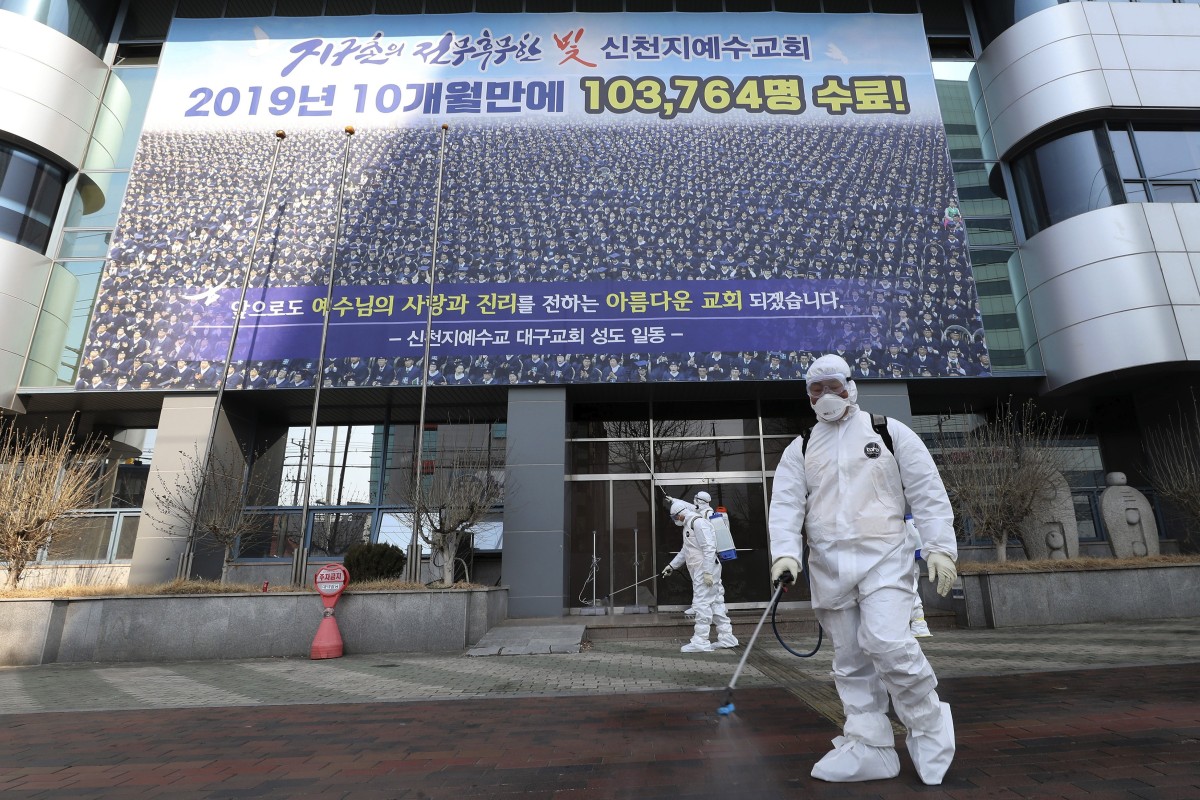
The Shincheonji church in Daegu has been linked to a cluster of infections. Photo: Yonhap via AP

Members of the Christian sect linked to a cluster of coronavirus cases in South Korea held meetings in Wuhan until December, only stopping when they realised that their community had been hit by Covid-19, the previously unknown disease caused by the virus.

The South China Morning Post has learned that the Shincheonji Church of Jesus in Wuhan, the Chinese city at the centre of the epidemic, has around 200 members, most of whom are currently under quarantine outside the city.

“Rumours about a virus began to circulate in November but no one took them seriously,” said one member, a 28-year-old kindergarten teacher.

“I was in Wuhan in December when our church suspended all gatherings as soon as we learned about [the coronavirus],” said the woman, who declined to be named because of the sensitivity of the matter.

She said the group was continuing to share sermons and teachings online, but most members had returned home at the start of the Lunar New Year holiday in late January.

The 250,000-member Shincheonji Church of Jesus is regarded by mainstream Christian groups as a secretive and unorthodox sect. Its founder, Lee Man-hee, has claimed that he is the second coming of Jesus Christ.

Around half the Covid-19 infections in South Korea have been linked to a branch of the church in Daegu.

Coronavirus spreads through Europe from Italy to Austria, Croatia, Tenerife
26 Feb 2020

According to the Korea Centres for Disease Control and Prevention, there were 977 confirmed cases as of Tuesday – the second highest number outside China – and 11 deaths.

Of the 84 new cases reported on Tuesday, over half were recorded in Daegu city.

Coronavirus: Churches on high alert as South Korea confirms huge rise in infections
A member of the church from Daegu reportedly visited China in January, and health officials in South Korea are investigating whether a cluster of infections in Cheongdo city is linked to a three-day funeral ceremony held at a local hospital.

Chinese sources said that the Shincheonji church has about 20,000 members in China – most of whom live in major cities such as Beijing, Shanghai, Dalian, Changchun and Shenyang.

One Christian pastor in Hubei province, who declined to be named, said that Shincheonji church members were hard-working and some continued to proselytise even during the outbreak.

Chinese cities quarantine travellers from South Korea amid spike in coronavirus cases

25 Feb 2020

The Wuhan kindergarten teacher said she was confident that the recent mass outbreaks in South Korea were not linked to Shincheonji church members from the city.

“I don’t think the virus came from us because none of our brothers and sisters in Wuhan have been infected. I don’t know about members in other places but at least we are clean. None of us have reported sick,” she said.

“There are so many Chinese travelling to South Korea, it’s quite unfair to pin [the disease] on us.”
Coronavirus: China reports 508 new Covid-19 cases, with only nine outside outbreak epicentre
She sidestepped questions on whether church members had travelled from Wuhan to South Korea after the outbreak.
The teacher said that in 2018 the Wuhan group’s “holy temple” in Hankou district had been raided by police “who branded us a cult”, but members continued to worship in small groups.
“We are aware of all the negative reporting out there after the outbreak in South Korea, but we do not want to defend ourselves in public because that will create trouble with the government,” she said. “We just want to get through the crisis first.”
Airfares from South Korea to China shoot up amid Covid-19 fears
25 Feb 2020

Bill Zhang, a 33-year-old Shanghai resident and a former missionary with Shincheonji, said the group’s secretive nature made it hard for the authorities to effectively crackdown on its activities.

He said the Shanghai branch held its main meetings on Wednesdays and Saturdays, attracting 300 to 400 people at a time.

“The Shincheonji church in Shanghai has been raided many times and police spoke to church leaders regularly.

“But the church members simply continued their meetings in smaller groups of eight-to-10 people and regrouped when the surveillance was relaxed.”

Zhang continued: “Shincheonji holds that it is the only real church that upholds the biblical truth and all other churches – mainstream or cults – are evil.”

Source: SCMP
24/02/2020

New coronavirus cases rise in Italy, Korea and Iran but fall in China

BEIJING/SEOUL (Reuters) – Italy, South Korea and Iran reported sharp rises in coronavirus infections on Monday, triggering concern from the World Health Organization (WHO), but China relaxed some curbs on movement, including in Beijing, as the rate of new infections there eased.

The virus has put Chinese cities into lockdown, disrupted air traffic to the workshop of the world and blocked global supply chains for everything from cars and car parts to smartphones.

The surge of cases outside mainland China triggered steep falls in global share markets and Wall Street stock futures as investors fled to safe havens. Gold soared to a seven-year high, oil tumbled nearly 4% and the Korean won KRW= fell to its lowest level since August.[MKTS/GLOB]

But U.S. Treasury Secretary Steven Mnuchin cautioned against jumping to conclusions about the impact on the global economy or supply chains, saying it was simply too soon to know.

The World Health Organization (WHO) said it no longer had a process for declaring a pandemic, but that the coronavirus outbreak remained an international emergency.

“We are specially concerned about the rapid increase in cases in … Iran, Italy and the Republic of Korea,” WHO head Tedros Adhanom Ghebreyesus told a news conference in Sweden via video link from Geneva.

South Korea reported 231 new cases, taking its total to 833. Many are in its fourth-largest city, Daegu, which became more isolated with Asiana Airlines (020560.KS) and Korean Air (003490.KS) suspending flights there until next month.

Iran, which announced its first two cases last Wednesday, said it had confirmed 43 cases and eight deaths. Most of the infections were in the Shi’ite Muslim holy city of Qom.

Elsewhere in the Middle East, Bahrain and Iraq reported their first cases and Kuwait reported three cases involving people who had been in Iran.

Saudi Arabia, Kuwait, Iraq, Turkey, Pakistan and Afghanistan imposed restrictions on travel and immigration from Iran. Afghanistan also reported its first case, officials said.

The WHO has been saying for weeks that it dreads the disease reaching countries with weak health systems.

Europe’s biggest outbreak is in Italy, with some 150 infections – compared with just three before Friday – and a fifth death.

‘SEVERE AND COMPLEX’

Scientists around the world are scrambling to analyze the virus, but a vaccine is probably more than a year away.

“Worryingly, it seems that the virus can pass from person to person without symptoms, making it extremely difficult to track, regardless of what health authorities do,” said Simon Clarke, an expert in cellular microbiology at the University of Reading in Britain.

China postponed the annual meeting of its parliament in Beijing.

But there was a measure of relief for the world’s second-largest economy as more than 20 province-level jurisdictions, including Beijing and Shanghai, reported zero new infections, the best showing since the outbreak began.

President Xi Jinping urged businesses to get back to work, though he said the epidemic was still “severe and complex, and prevention and control work is in the most difficult and critical stage”.

Excluding the central Hubei province, center of the outbreak, mainland China reported 11 new cases, the lowest since the national health authority started publishing nationwide daily figures on Jan. 20.

The coronavirus has infected nearly 77,000 people and killed more than 2,500 in China, most in Hubei.

Overall, China reported 409 new cases on the mainland, down from 648 a day earlier, taking the total number of infections to 77,150 cases as of Feb. 23. The death toll rose by 150 to 2,592.

Outside mainland China, the outbreak has spread to about 29 countries and territories, with a death toll of about two dozen, according to a Reuters tally.

Xi said on Sunday the outbreak would have a relatively big, but short-term, impact on the economy and the government would step up policy adjustments to help cushion the blow.

Mnuchin, speaking to Reuters in the Saudi city of Riyadh, said he did not expect the coronavirus to have a material impact on the Phase 1 U.S.-China trade deal.

“Obviously that could change as the situation develops,” he added.

In northern Italy, authorities sealed off the worst-affected towns and banned public gatherings across a wide area, halting the carnival in Venice, where there were two cases.

Austria briefly suspended train services over the Alps from Italy after two travelers coming from Italy showed symptoms of fever.

Both tested negative for the new coronavirus but Austrian Interior Minister Karl Nehammer said a task force would meet on Monday to discuss whether to introduce border controls.

Japan had 773 cases as of late Sunday, mostly on a cruise ship quarantined near Tokyo. A third passenger, a Japanese man in his 80s, died on Sunday.

In South Korea, authorities reported a seventh death and dozens more cases on Monday. Of the new cases, 115 were linked to a church in the city of Daegu.

Drone footage showed what appeared to be hundreds of people queuing in a neat line outside a Daegu supermarket under the winter sunshine to buy face masks. ( tmsnrt.rs/37WP6lA )

Source: Reuters

17/03/2019

As Xi heads to Italy, Vatican says China should not fear Church

VATICAN CITY (Reuters) – A top Vatican official says China’s government should not fear “distrust or hostility” from the Roman Catholic Church, writing amid speculation over whether President Xi Jinping will meet Pope Francis this week.

Senior Vatican sources have said Francis is willing to meet Xi and that intermediaries had made overtures to the Vatican, but the Chinese side had not yet formally asked for a meeting. Any encounter would be the first between a Chinese leader and a pope.

Xi’s visit, starting Thursday, is his first to Italy following a historic agreement in September between the Vatican and the Chinese government on the appointment of bishops in China.

Beijing cut diplomatic ties with the Vatican in 1951 and has remained concerned that an independent Church in China could threaten its authority.

“The Holy See (nurtures) no distrust or hostility towards any country,” Vatican Secretary of State Cardinal Pietro Parolin writes in the introduction of a new book on China to be published on Tuesday. An advance copy of Parolin’s comments in the book, “The Church in China – A Future Yet to be Written” – were made available to Reuters.

Parolin, second only to the pope in the Vatican hierarchy, said the Catholic Church’s work in China “cannot be separated from a stance of respect, esteem, and trust towards the Chinese people and their legitimate state authorities.”


This appeared to be another attempt by the Vatican to allay Beijing’s concerns.

While the historic September agreement initiated an unprecedented direct dialogue between the Vatican and China, Beijing and the Holy See have not resumed diplomatic, relations.

Parolin wrote that the previously “inextricable knots” in relations between China and the Vatican could be untied through a new, unified approach involving a mix of “theology, law, pastoral work, and even diplomacy.”

It is routine for heads of state and government visiting Italy to also meet the pope. A Vatican source said it could be inserted into Xi’s schedule “at the last minute”. A Vatican spokesman said it is not on the pope’s schedule.

The September deal, in the making for more than 10 years, gives the Vatican a long-sought say in the choice of bishops in China. Critics, particularly conservative Catholics, have labelled it a sellout to the Communist government.

China’s approximately 12 million Catholics have been split between an underground Church swearing loyalty to the Vatican and the state-supervised Catholic Patriotic Association. Now both sides recognise the pope.

Many believe the September deal is a precursor to resumption of diplomatic ties with Beijing.

That would mean severing relations with Taiwan, which Beijing regards as a renegade province. The Vatican is the self-ruled island’s last remaining diplomatic ally in Europe.

Source: Reuters

18/12/2018

China’s pre-Christmas church crackdown raises alarm

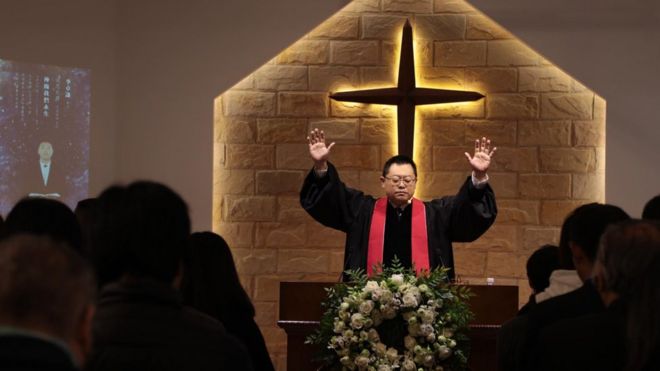
Wang Yi preaching at Early Rain Covenant ChurchImage copyrightFACEBOOK/EARLY RAIN
Image captionWang Yi was the outspoken leader of an influential unofficial church

A recent surge of police action against churches in China has raised concerns the government is getting even tougher on unsanctioned Christian activity.

Among those arrested are a prominent pastor and his wife, of the Early Rain Covenant Church in Sichuan. Both have been charged with state subversion.

And on Saturday morning, dozens of police raided a children’s Bible class at Rongguili Church in Guangzhou.

China is officially atheist, though says it allows religious freedom.

But it has over the years repeatedly taken action against religious leaders it considers to be threatening to its authority or to the stability of the state, which, according to Human Rights Watch, “makes a mockery of the government’s claim that it respects religious beliefs”.

The government pressures Christians to join one of the Three-Self Patriotic churches, state-sanctioned bodies which toe the Communist Party line and are led by approved priests.

Silencing of a critic

Despite this, the Christian population has grown steadily in recent years. There are now an estimated 100 million Christians in China, many of them worshipping in so-called underground churches.

Wang Yi is the leader of one such church, the Early Rain Covenant Church in Chengdu, the capital of south-western Sichuan province.

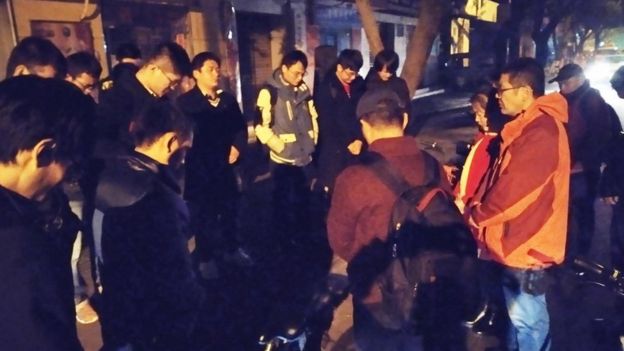
Early Rain members praying in publicImage copyrightFACEBOOK/EARLY RAIN
Image captionEarly Rain Covenant Church had posted pictures on Facebook of their public prayer meetings

The church is unusual in that it worships openly and regularly posts evangelical material online. The church says it has about 800 followers spread across the city. It also runs a small school.

Pastor Wang is also known for being outspoken – he has been fiercely critical of the state’s control of religion and had organised a widely shared petition against new legislation brought in this year which allowed for tighter surveillance of churches and tougher sanctions on those deemed to have crossed the line.

On 9 December, police raided the church and arrested Pastor Wang and his wife Jiang Rong. Over the following two days, at least 100 church members, including Wang’s assistant, were taken away.

One member of the church, who asked not to be identified for fear of reprisals, told the BBC that the lock on the church school had been broken, churchgoers’ homes had been ransacked and some were “under house arrest or are followed all the time”.

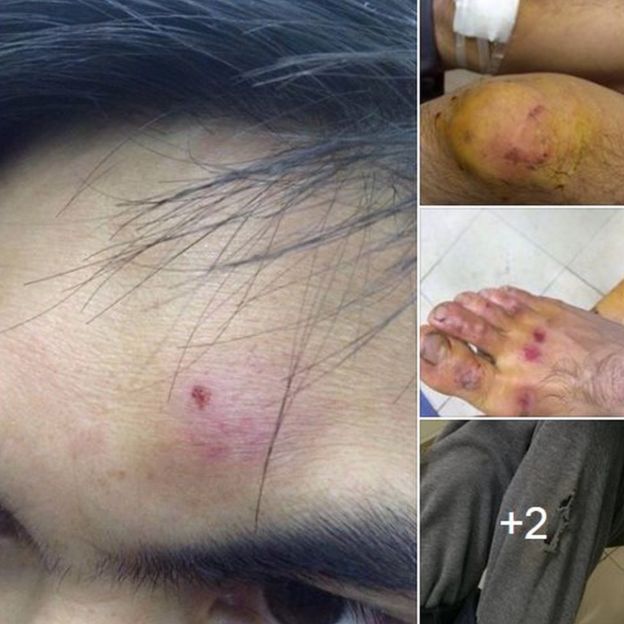
Facebook post showing alleged injuries to church members during detentionImage copyrightFACEBOOK/EARLY RAIN
Image captionThe church posted images it said showed injuries inflicted during police detention

She said police and other officials had been going to congregants’ homes to pressure them to sign documents pledging to leave the church and to take their children out of its school.

“On Sunday, some members tried to gather at other places for worship, but got taken away as well. The Church building has been manned with police and plain-clothes officers, not allowing anyone to enter to do worship service.”

The church alleges that some of those detained and then released were mistreated in custody.

Forty-eight hours after he was arrested, Early Rain Covenant Church released a letter from Pastor Wang, which he had pre-written for release in case something like this ever happened to him.

In it, he said he respected the Chinese authorities and was “not interested in changing any political or legal institutions in China”.

But he said he was “filled with anger and disgust at the persecution of the church by this Communist regime”.

“As a pastor of a Christian church, I must denounce this wickedness openly and severely. The calling that I have received requires me to use non-violent methods to disobey those human laws that disobey the Bible and God,” he said.

Pastor Wang and his wife – who have an 11-year-old son – have been charged with inciting subversion of state power, one of the most serious crimes against the state and a charge which is often used to silence dissidents. It carries a potential jail term of 15 years. Several senior members of the church face similar charges.

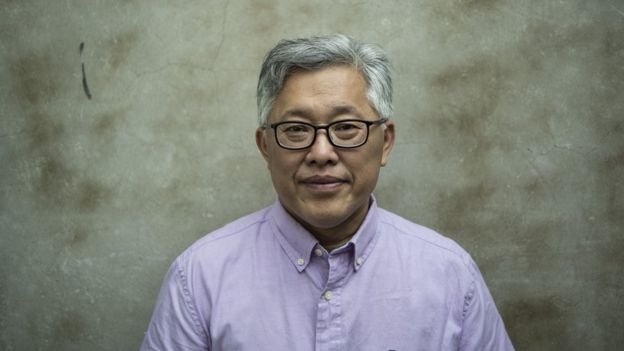
Jin Mingri, head pastor of the Zion churchImage copyrightGETTY IMAGES
Image captionJin Mingri resisted government pressure to install monitoring cameras in his Zion church in Beijing

Across the country in Guangzhou, the doors have also been sealed on the Rongguili Church, another un-sanctioned community.

On Saturday, a children’s Bible class was interrupted by the arrival of dozens of police officers.

Witnesses said they declared the church an illegal gathering, confiscated Bibles and other materials and shut the doors.

Officers took names and addresses and ordered everyone present to hand over their phones.

In September, the Zion church, one of the largest unofficial churches in Beijing was abruptly shut down. It had recently refused a request from the government to install security cameras to monitor its activities.

“I fear that there is no way for us to resolve this issue with the authorities,” Pastor Jin Mingri told Reuters news agency at the time.

There have also been a string of church demolitions, forced removal of crosses or other arrests over the year.

Human Rights Watch said the raids at Early Rain and at Rongguili Church were a further sign that under President Xi Jinping, China is seeking to tighten control over all aspects of society.

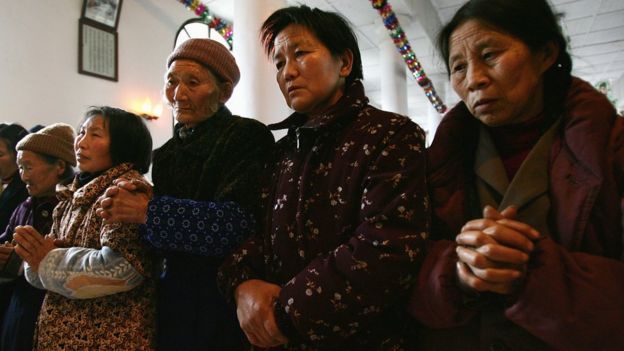
Women worship at a state-sanctioned Catholic church in Sichuan (file image)Image copyrightGETTY IMAGES
Image captionChina wants its Christians to worship at churches that are state-backed and closely monitored

“As major holidays in many parts of the world – Christmas and New Year – are approaching, we call on the international community to continue to pay attention to the situation of China’s independent churches and speak against the Chinese government’s repression,” said the group’s Hong Kong-based researcher Yaqiu Wang.

The Early Rain member who did not want to be identified said the idea of the Three-Self Patriotic churches was “hilarious”, saying they “don’t spread genuine gospel, but spread the thoughts of loving the Party, loving the country”.

Members of Early Rain Covenant Church worship outside on 16 DecemberImage copyrightEARLY RAIN
Image captionWith their church closed, Early Rain members worshipped outdoors last Sunday

Another Christian in Chengdu told the BBC such churches were “against Jesus, against gospel”.

He described the scale of the operations against Early Rain as “unprecedented” but said more could be expected, adding: “I’m very lucky they haven’t found me yet.”

The Early Rain community would survive, he said, but would now go further underground.

“We will continue the gathering. The church is shut down so it’s impossible to have a big gathering, but there will be small gatherings on Sunday and on Christmas Day.”

Ultimately, he said, repression might even increase the profile of the faith in China.

“Without repression, people may doubt about our religion. But when repression occurs, pastors and members’ reactions will make people who don’t believe in Jesus realise the charm of Christianity.”

Law of Unintended Consequences

continuously updated blog about China & India

ChiaHou's Book Reviews

continuously updated blog about China & India

What's wrong with the world; and its economy

continuously updated blog about China & India