Archive for ‘close’

17/04/2020

China’s virus-hit economy shrinks for first time in decades

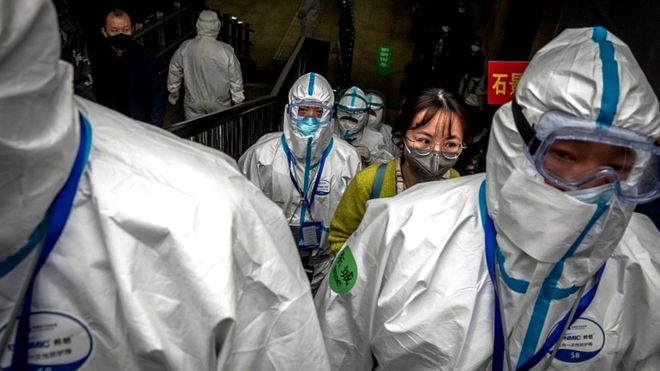
Train passengers arrive from WuhanImage copyright EPA

China’s economy shrank for the first time in decades in the first quarter of the year, as the virus forced factories and businesses to close.

The world’s second biggest economy contracted 6.8% according to official data released on Friday.

The financial toll the coronavirus is having on the Chinese economy will be a huge concern to other countries.

China is an economic powerhouse as a major consumer and producer of goods and services.

This is the first time China has seen its economy shrink in the first three months of the year since it started recording quarterly figures in 1992.

“The GDP contraction in January-March will translate into permanent income losses, reflected in bankruptcies across small companies and job losses,” said Yue Su at the Economist Intelligence Unit.

Last year, China saw healthy economic growth of 6.4% in the first quarter, a period when it was locked in a trade war with the US.

In the last two decades, China has seen average economic growth of around 9% a year, although experts have regularly questioned the accuracy of its economic data.

Its economy had ground to a halt during the first three months of the year as it introduced large-scale shutdowns and quarantines to prevent the virus spread in late January.

As a result, economists had expected bleak figures, but the official data comes in slightly worse than expected.

Among other key figures released in Friday’s report:

  • Factory output was down 1.1% for March as China slowly starts manufacturing again.
  • Retail sales plummeted 15.8% last month as many of shoppers stayed at home.
  • Unemployment hit 5.9% in March, slightly better than February’s all-time high of 6.2%.

Presentational grey line

Analysis: A 6% expansion wiped out

Robin Brant, BBC News, Shanghai

The huge decline shows the profound impact that the virus outbreak, and the government’s draconian reaction to it, had on the world’s second largest economy. It wipes out the 6% expansion in China’s economy recorded in the last set of figures at the end of last year.

Beijing has signalled a significant economic stimulus is on the way as it tries to stabilise its economy and recover. Earlier this week the official mouthpiece of the ruling Communist Party, the People’s Daily, reported it would “expand domestic demand”.

But the slowdown in the rest of the global economy presents a significant problem as exports still play a major role in China’s economy. If it comes this will not be a quick recovery.

On Thursday the International Monetary Fund forecast China’s economy would avoid a recession but grow by just 1.2% this year. Job figures released recently showed the official government unemployment figure had risen sharply, with the number working in companies linked to export trade falling the most.

Presentational grey line

China has unveiled a range of financial support measures to cushion the impact of the slowdown, but not on the same scale as other major economies.

“We don’t expect large stimulus, given that that remains unpopular in Beijing. Instead, we think policymakers will accept low growth this year, given the prospects for a better 2021,” said Louis Kuijs, an analyst with Oxford Economics.

Since March, China has slowly started letting factories resume production and letting businesses reopen, but this is a gradual process to return to pre-lockdown levels.
Media caption Why does China’s economy matter to you?

China relies heavily on its factories and manufacturing plants for economic growth, and has been dubbed “the world’s factory”.

Stock markets in the region showed mixed reaction to the Chinese economic data, with China’s benchmark Shanghai Composite index up 0.9%.

Japan’s Nikkei 225 jumped 2.5% on Friday, although this was largely due to gains on Wall Street after US President Donald Trump unveiled plans to ease lockdowns.

Source: The BBC
09/04/2020

Japan’s economy faces extreme uncertainty as coronavirus spreads: central bank head

TOKYO (Reuters) – Uncertainty over Japan’s economic outlook is “extremely high” as the coronavirus pandemic hits output and consumption, central bank Governor Haruhiko Kuroda said, stressing his readiness to take additional monetary steps to prevent a deep recession.

While aggressive central bank actions across the globe have eased financial market tensions somewhat, corporate funding strains were worsening, Kuroda told a quarterly meeting of the Bank of Japan’s regional branch managers on Thursday.

“The spread of the coronavirus is having a severe impact on Japan’s economy through declines in exports, output, demand from overseas tourists and private consumption,” he said.

Japan recorded 503 new coronavirus infections on Wednesday – its biggest daily increase since the start of the pandemic – as a state of emergency took effect giving governors stronger legal authority to urge people to stay home and businesses to close.

In contrast to stringent lockdowns in some countries, mandating fines and arrests for non-compliance, enforcement will rely more on peer pressure and a deep-rooted Japanese tradition of respect for authority.

The balancing act underscores the difficulty authorities have in trying to contain the outbreak without imposing a mandatory lockdown that could deal a major blow to an economy already struggling to cope with the virus outbreak.

Hideaki Omura, the governor of the central Japan prefecture of Aichi, said he would declare a state of emergency for his prefecture on Friday.

Omura said Aichi, which includes the city of Nagoya and hosts Toyota Motor Corp, was talking with the central government about being included in the national state of emergency as well, but felt he could not wait any longer to restrict movement.

“Looking at things the past week and watching the situation – the rise in patients, the number without any traceable cause – we judged that it was a very dangerous situation and wanted to make preparations,” he told a news conference.

Even with less stringent restrictions compared with other countries, analysts polled by Reuters expect Japan to slip into a deep recession this year as the virus outbreak wreaks havoc on business and daily life.

Shares of Oriental Land Co (4661.T) fell on Thursday after the operator of Tokyo Disneyland said it would keep the amusement park shut until mid-May.

Entertainment facility operator Uchiyama Holdings (6059.T) said it was closing 43 karaoke shops and 11 restaurants until May 6.

“For the time being, we won’t hesitate to take additional monetary easing steps if needed, with a close eye on developments regarding the coronavirus outbreak,” Kuroda said.

Kuroda’s remarks highlight the strong concern policymakers have over the outlook for Japan’s economy and how companies continue to struggle to generate cash, despite government and central bank promises to flood the economy with funds.

At its policy meeting later this month, the BOJ is likely to make a rare projection that the world’s third-largest economy will shrink this year, sources have told Reuters.

The BOJ eased monetary policy in March by pledging to boost purchases of assets ranging from government bonds, commercial paper, corporate bonds and trust funds investing in stocks.

The government also rolled out a nearly $1 trillion stimulus package to soften the economic blow.

Source: Reuters

07/04/2020

Coronavirus: nearly half a million Chinese companies close in first quarter as pandemic batters economy

  • Some 460,000 Chinese firms shut in the first quarter amid fallout from the coronavirus
  • Registration of new firms between January and March fell 29 per cent from a year earlier
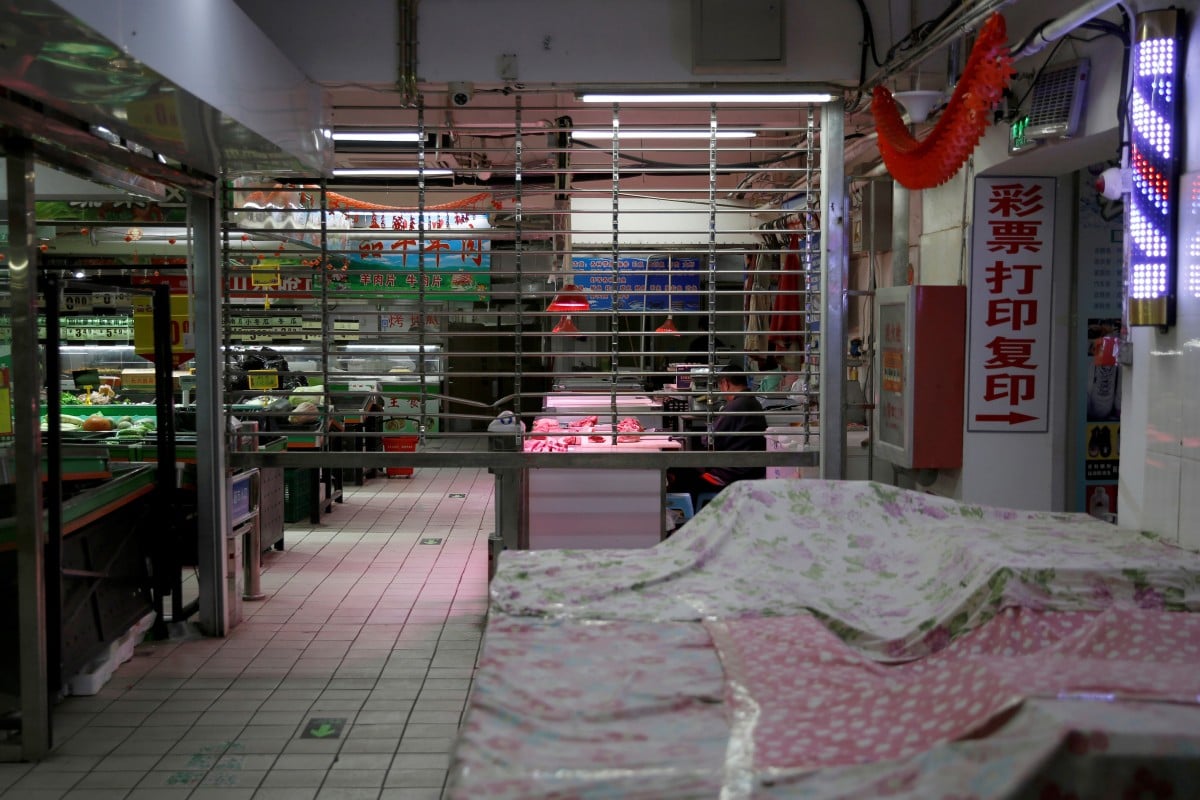
Many Chinese businesses are struggling from the economic fallout of the coronavirus. Photo: Reuters

More than 460,000 Chinese firms closed permanently in the first quarter as the coronavirus pandemic pummeled the world’s second largest economy, with more than half of them having operated for under three years, corporate registration data shows.

The closures comprised of businesses whose operating licenses had been revoked, as well as those who had terminated operations themselves, and included 26,000 in the export sector, according to Tianyancha, a commercial database that compiles public records.

At the same time, the pace of new firms being established slowed significantly. From January to March, around 3.2 million businesses were set up, a 29 per cent drop from a year earlier.

Most of these new companies were in traditional centres of economic power, such as Guangdong province in southern China, and close to half of them were in distribution or retail.

Coronavirus: Is the gig economy dead, and should the self-employed worry?
The number of business closures underlines the challenges facing China as it tries to revive its economy, which is at risk of a contraction in the first quarter for the first time since 1976.
“China has managed to get the Covid-19 outbreak largely under control and domestic supply disruptions have now mostly dissipated,” Yao Wei and Michelle Lam, economists from French bank Societe Generale, said in a recent note.

“However, there are signs of lasting damage to domestic demand, and on top of that the external shock resulting from widespread lockdowns in other major economies is arriving fast and furious.”

In Dongguan, a once thriving industrial hub in the Pearl River Delta, rows of empty shops and closed factories are becoming a noticeable feature of the landscape as companies grapple with slumping international demand.
Coronavirus: Chinese companies cut salaries and staff in industries hit hardest by Covid-19
In March, a local export-oriented manufacturer of tote bags and toys in the city, Dongguan Fantastic Toy Company, collapsed after overseas orders dried up, leaving some workers with unpaid salaries, the local labour authority said last month. The government has ordered the factory’s landlord to pay the outstanding wages.

Chinese business owners who can no longer afford to maintain operations face a number of hurdles before they can walk away from a company.

If an insolvent firm wants to cancel its company registration, it needs to go through bankruptcy procedures or show a liquidation report confirming it had no unpaid debt or other obligations.

Once shareholders or creditors file for bankruptcy, it can take months for courts to accept the case, followed by a long process of verification, creditors’ meetings and asset sales, said Li Haifeng, a partner at Baker McKenzie FenXun.

A new phase of coronavirus blame game: what is the legacy of Covid-19 on global supply chains?
“I expect a surge shortly after the situation settles down. We know many enterprises are already on the verge of bankruptcy. It’s just that they don’t have to declare or file for bankruptcy immediately,” Li said, adding he had received many queries on the matter in recent months.
Given the costly nature of bankruptcy proceedings, particularly for small businesses
 struggling with cash flow or without sufficient assets, the number of bankruptcy filings this year would not be high, said Zhu Bao, a Beijing-based lawyer.
Fears over a growing number of companies going bust also appears to have played some part in Chinese courts rejecting and delaying bankruptcy filings, according to lawyers and official documents.
Creditors who filed on behalf of suppliers that helped contain the coronavirus or companies on the brink of bankruptcy as a direct result of the pandemic usually had their claims knocked back, dozens of court documents filed over the past two months showed.

We know many enterprises are already on the verge of bankruptcy. It’s just that they don’t have to declare or file for bankruptcy immediately – Li Haifeng

The courts in these cases encouraged the creditors to reconcile with the struggling firms and ride out the difficulties.
This – along with disruptions to court proceedings due to virus lockdowns – helped slow the review of bankruptcies in Chinese courts to 1,770 in February and March, from 2,160 filings in January, according to the national enterprise bankruptcy information disclosure platform.
“The delay and rejection of taking corporate bankruptcy cases is certainly intended to keep the economy going. Too many bankruptcies cases do not do much to help economic recovery,” Zhu said.
China’s central leadership has maintained it wants to hit economic targets for this year, even as the country braces for a possible second wave virus outbreak.

The delay and rejection of taking corporate bankruptcy cases is certainly intended to keep the economy going – Zhu Bao

The odds of a first quarter economic contraction for China are growing, however, and economists are debating whether it still makes sense for Beijing to set a specific gross domestic product (GDP) growth target for 2020.

Ma Jun, an academic member of the People’s Bank of China’s monetary policy committee, is one prominent voice that has suggested Beijing drop a set target amid the uncertainty caused by the virus outbreak.

However, others like Yu Yongding, an economist from Chinese Academy of Social Sciences, said it was necessary to anchor the country’s economic expansion, though the government should be realistic about the goal, reported the Beijing-based financial media group Caixin.

Source: SCMP

28/03/2020

Coronavirus: Chinese cinemas told to close just a week after reopening

  • China Film Administration issues notice on Thursday as government seeks to prevent a new wave of Covid-19 cases, after locally transmitted infection is reported in Zhejiang
  • Cinemas in some parts of the country did reopen on March 20, but film-goers’ joy was short-lived
Beijing said it was working on a support package for the cinema industry, which has been hard hit by the Covid-19 pandemic. Photo: Weibo
Just a week after being given the green light to reopen, cinemas across China have been ordered to close once more as the government seeks to strike a balance between rebooting the economy and preventing a second wave of Covid-19 cases.
The notice was issued by the China Film Administration on Thursday, according to a report the same day by local news outlet Caixin.com. It was not otherwise made public.

While cinemas in some parts of the country have been back in business since March 20, those in major cities remained closed. The 24 million or so people who live in the eastern metropolis of Shanghai had been looking forward to their screens reopening on Friday.

Cinema managers were quoted by Caixin as saying that the closure notice might have been prompted by a locally transmitted case of Covid-10 that was reported on Thursday in Zhejiang province, which neighbours Shanghai.

The infection was one of 55 reported across China that day, but the only one that was not imported, the report said.

China’s cinema industry has been among the worst hit by the health crisis. Earlier on Thursday, the National Development and Reform Commission said it had spoken to industry executives and relevant organisations, and had drawn up proposals for a support package.
Source: SCMP
04/03/2020

China’s Hubei to close temporary hospitals as situation improves

WUHAN, March 3 (Xinhua) — Central China’s Hubei Province, the center of the outbreak of novel coronavirus disease (COVID-19), is expected to gradually shut down temporary hospitals and cut the number of hospitals designated for the disease, local authorities said Tuesday.

The province will classify areas based on different risks of infection for management as more cities have seen zero growth in newly confirmed cases, according to Tu Yuanchao, deputy head of the provincial health commission.

The province will gradually resume normal medical order while maintaining strict prevention and control measures, Tu said.

In Wuhan, the provincial capital and the epicenter of COVID-19, which is classified as high-risk, the commission has designated hospitals for treating patients in critical and severe conditions and those with emergency medical needs, Tu said.

As of Friday, Wuhan had over 5,000 spare beds in its 16 temporary hospitals, which were converted from gyms, exhibition centers and other facilities.

Hubei reported 114 newly confirmed cases of novel coronavirus infection Monday.

Source: Xinhua

28/10/2019

Military World Games of “historic” and “peace” close in Wuhan

(SP)CHINA-WUHAN-7TH MILITARY WORLD GAMES-CLOSING CEREMONY

Xu Qiliang, president of the 2019 Military World Games organizing committee and also vice chairman of China’s Central Military Commission, declares the 7th CISM Military World Games close during the closing ceremony of the Games in Wuhan, capital of central China’s Hubei Province, Oct. 27, 2019. (Xinhua/Xiao Yijiu)

WUHAN, Oct. 27 (Xinhua) — Xu Qiliang, president of the 2019 Military World Games organizing committee, also vice chairman of China’s Central Military Commission, declared the Games close on Sunday in Wuhan, central China, to wrap up the biggest ever “Olympics for the military”.

Chinese Vice Premier Sun Chunlan, also president of the Wuhan Military World Games organizing committee, thinks highly of the organization of the Games and the performances of worldwide athletes.

“We have experienced a successful, wonderful and unforgettable military games in the lastest 10 days. This is a military gala of sharing friendship and safeguarding peace,” said Sun at the closing ceremony.

“This Games have showcased the spirits of the military personnel, which uphold perseverance, challenging limits and striving for better. This Games are full of wonders and achievements and are set to leave China’s marks in its history,” she added.

According to Sun, seven world records had been set and 85 International Military Sports Commission (CISM) affiliated records had been broken here in the tournament, as athletes rated it as a high-level international event, which featured 67 Olympic and world champions.

After 10-day competitions, host China collected 133 golds and 239 medals in total, the first time for a country to grab 100 plus golds. The traditional powerhouse Russia obtained 51 golds and 161 medals in all as an evident runner-up in medal tally, followed by Brazil, the host for 2011 Games, with 21 golds and 88 medals. France, Poland and Germany lined up from fourth to sixth places, all clinching 10 plus golds.

Herve Piccirillo, CISM president, hailed the Games as great success and tagged it with two key words “historic” and “peace” on Friday, lauding its material and spiritual legacy to the host city and the world.

“These are games that will mark the history of military competitions and develop new practices in the future,” said Piccirillo in an interview with Xinhua.

The president picked the word “historic” for its history-making participation of nearly 10,000 military personnel, investment for games organization, mobilization of volunteers and passion from Chinese people.

Explaining the word “peace”, he said, “because the message that is carried by a whole people, because beyond the games, it is all the Chinese people who are spreading this message of solidarity and peace, which corresponds to ‘friendship through sport’, the motto of the CISM.”

The 52-year-old Frenchman repeated his praise on the Games on Sunday at the closing ceremony, saying “the Military World Games leaves Wuhan unparalleled tangible and intangible heritage for the future generations.”

Piccirillo applauded the Athletes’ Village and sports facilities built for the Games. “Athletes’ Village represents the effectiveness of the city government’s effort to balance between urban development and environmental protection,” said he. “The multiple sports venues built in line with highest standards in the world can serve any future international sports event that Wuhan may step up to host.”

It’s the first time all competitions for the Games had been staged in a single city. The size of the host city, as well as its diversified terrain and abundant water resources, made it possible in Wuhan, where 35 sports venues were built or renovated to meet international standards.

A 30-building Village was built to accommodate the athletes and coaches, which is also the first attempt in the Games’ 24-year history.

Piccirillo expressed his sincere thanks to the organizers and volunteers for their contributions and services to the promotion of military sports, commenting “you have completed your jobs excellently.”

“I would like to thank the governments of China, Hubei province, and Wuhan city for enabling us all, valid and disabled, to share the common value of the military under the banner of inclusiveness, equality, universal love and sharing, and this is the greatest success of the event,” said Piccirillo.

“All these will not have been possible without the conscientious efforts of the organizing committee. The volunteers have made our stay in Wuhan better, easier and more convenient.”

Ma Guoqiang, Party secretary of Wuhan city, paid tributes to the participants across the world, saying they have been “writing down a brand-new page in the history of world military sports,” and honored their performances at the event.

“Military athletes from 109 countries have come here and given their full and best plays in the competitions. They have not only demonstrated excellent sports skills, but also showed high morale,” said Ma at the ceremony.

He also praised the athletes with disabilities, noting they have exemplified the military dignity and showcased the power of life with their firm determination and great perseverance.

Ma underlined the theme of “peace” delivered from the Games and the sign of goodwill from China. “Peace is an eternal theme and a shared aspiration of the human society, as well as an unremitting pursuit of the Chinese people,” said Ma.

“This Games, as a sign of goodwill from the Chinese government, the Chinese armed forces, and the Chinese people, convey our yearning and blessing for peace. We hope the Games, like bright sunshine, can dispel the darkness of war and build a bridge of friendship to promote exchanges between civilizations.”

The 2019 Games has attracted the largest number of athletes and presented the most sports in history. Nearly 10,000 soldiers from 109 nations have competed for 329 gold medals in events from athletics, football, swimming, and basketball to parachuting, lifesaving, aeronautical and naval pentathlons.

It’s the first time the Games are open to the public, instead of being confined to barracks. Over 600,000 tickets had been sold, according to the Games executive committee, with men’s basketball, women’s volleyball, swimming and diving in highest demand.

The Games will also leave Wuhan with huge benefits to infrastructure improvements, new subway lines, and environmental upgrades. Over the past three years, the city renovated 1,300 kilometers of its urban roads and saw its metro network reach 330 kilometers in total length. Meanwhile, a total of 360,000 trees were planted.

First held in 1995 in Rome, the Military World Games are a multi-sports event for military personnel organized by the CISM.

Source: Xinhua

Law of Unintended Consequences

continuously updated blog about China & India

ChiaHou's Book Reviews

continuously updated blog about China & India

What's wrong with the world; and its economy

continuously updated blog about China & India