06/04/2020
- Official news agency Xinhua says the three died in Saturday’s attack in the province of Ituri
- Central African country is major source of cobalt and copper but armed rebels pose a persistent risk
Mines have been targeted by armed rebels in the past. Photo: Reuters
A gun attack in a mining area in the Democratic Republic of Congo (DRC) has killed three Chinese nationals, the official news agency Xinhua reported on Monday.
The attack took place on Saturday in the northeastern province of Ituri, which borders Uganda and South Sudan, Xinhua said, citing the Chinese embassy.
It did not name the mine in question or the company operating it.
The DRC is the world’s biggest producer of mined cobalt – a key ingredient in batteries for electric vehicles – and one of Africa’s biggest copper producers, although its key copper-cobalt producing region is in the southwest, far from the site of the attack.
The country has attracted billions of dollars in investment from Chinese miners in recent years despite security risks.
Congo sends in troops to guard Chinese-owned copper mine amid fears of human rights abuses
Canadian gold miner Banro, which owns mines in Maniema, a DRC province south of Ituri, suspended operations last year after several of its mines were overrun by armed rebels.
The Chinese embassy has asked the Congolese government to “take effective measures to protect the lives and property of Chinese citizens” in the DRC, as well as to expedite an investigation into the killings, Xinhua said, noting that the embassy had repeatedly advised Chinese citizens against travel to Ituri due to the presence of armed groups.
The embassy did not immediately respond to a request for comment on Monday, a public holiday in China.
Source: SCMP
Posted in armed rebels, attack, Banro, batteries, Canadian gold miner, Chinese embassy, Chinese miners, Chinese nationals, cobalt, Congolese government, copper, copper-cobalt producing region, Democratic Republic of Congo, electric vehicles, human rights abuses, Ituri, killed, Maniema, mine, South Sudan, Uganda, Uncategorized, Xinhua |
Leave a Comment »
23/10/2019
- International rules on seabed mining set for approval in 2020, with China most likely to lead the race, UN body says
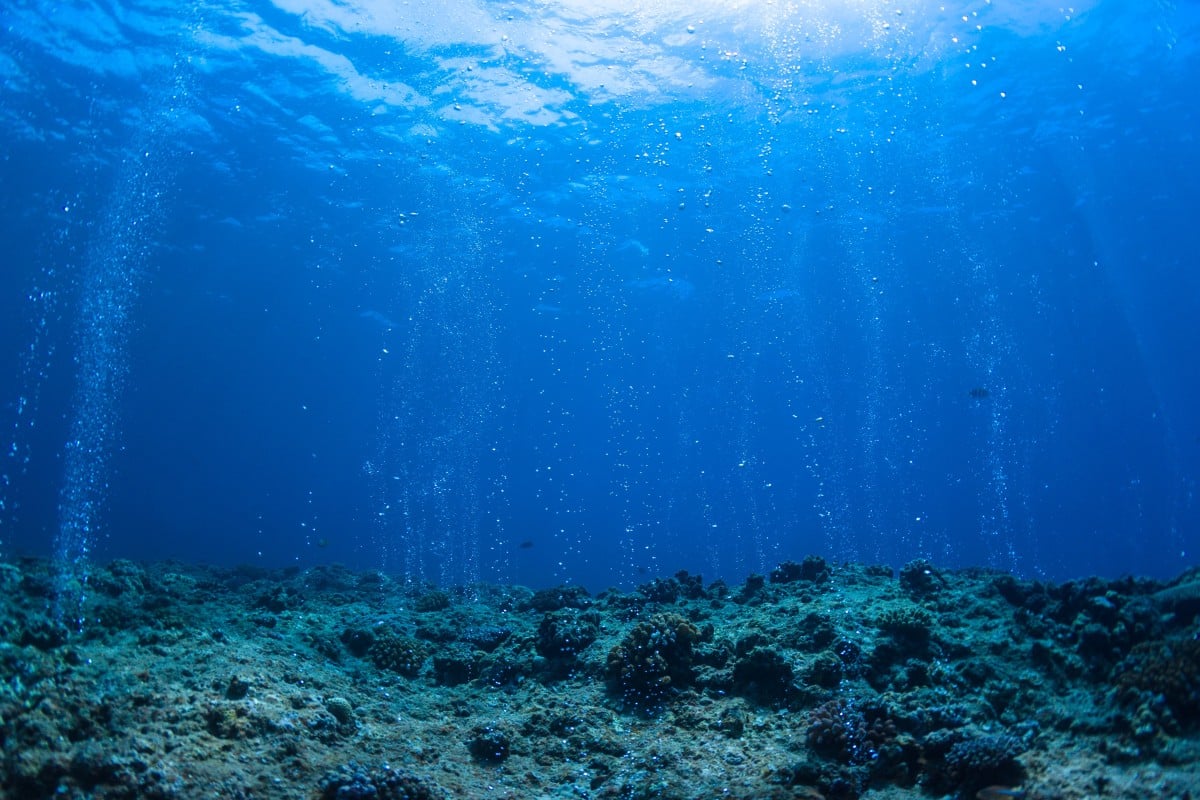
Governments, research institutions and commercial entities have already signed contracts for the exploration phase to extract minerals from the seabed, with China holding the most. Photo: Shutterstock
China is in pole position for the global race to start deep sea mining operations to extract valuable minerals used in smartphones and electric car batteries from the seabed.
The head of the International Seabed Authority (ISA) said China was likely to become the first country in the world to start mining seabed minerals if the international rules for exploitation were approved next year.
The ISA has already signed 30 contracts with governments, research institutions and commercial entities for exploration phase, with China holding the most, five contracts.
The body, which was established to manage the seabed resources by the United Nations Convention on the Law of the Sea (UNCLOS), is aiming to adopt seabed mineral exploitation rules by July 2020.
As China leads the hunt for deep-sea minerals, environmental concerns surface
“I do believe that China could easily be among the first (to start exploitation),” said Michael Lodge, ISA general secretary, who visited China last week.
“The demand for minerals is enormous and increasing, there is no doubt about the market.”
There is also interest from European countries including Belgium, Britain, Germany and Poland, as well as from the Middle East.
The quest to exploit seabed minerals – such as polymetallic nodules containing nickel, copper, cobalt and manganese – is driven by demand for smartphones and electric car batteries, and the need to diversify supply.
However, no one has yet shown that deep sea mining can be cost effective and some non-governmental organisations have questioned whether it would be possible to reach a deal on exploitation rules next year.
“I think, it’s pretty good. I think the current draft is largely complete,” Lodge said, when asked about prospects of adopting the rules by next July.
One of the issues yet to be agreed is proportionate financial payments to the Jamaica-based ISA for subsea mineral exploitation outside national waters.
“We are looking at ad valorem royalty that would be based on the value of the ore at a point of extraction … The middle range is 4 per cent to 6 per cent ad valorem royalty, potentially increasing over time,” Lodge said.
New iPhone models to use recycled rare earths, Apple says
If the rules are approved, it could take about two to three years to obtain permits to start deep sea mining under the current draft, Lodge said.
Canadian Nautilus Minerals had tried to mine underwater mounds for copper and gold in the national waters off Papua New Guinea, but ran out of money and had to file for creditor protection earlier this year.
This has not deterred others, such as Global Sea Mineral Resources (GSR), a unit of Belgian group DEME, and Canada’s DeepGreen, to continue technology tests and research.
In July, Greenpeace called for an immediate moratorium on deep sea mining to learn more about its potential impact on deep sea ecosystems, but the ISA has rejected such a proposal.
Source: SCMP
Posted in Apple, Belgian, Belgium, Britain, canada, Canadian Nautilus Minerals, China alert, cobalt, copper, deep sea, DeepGreen, DEME, electric car batteries, exploit, first country, Germany, Global Sea Mineral Resources (GSR), Gold, Greenpeace, International rules, International Seabed Authority (ISA), IPhone, manganese, Middle East, minerals, national waters, Nickel, Papua New Guinea, Papua New Guinea (PNG), Poland, polymetallic nodules, rare earths, recycled, seabed mining, smartphones, Uncategorized, United Nations Convention on the Law of the Sea (UNCLOS), valuable minerals |
Leave a Comment »



 CHINDIA ALERT: You'll be living in their world, very soon