09/05/2020
- Nations may need help from China during virus outbreaks but remain wary of Beijing as adversary in disputed waters
- Analysts say code of conduct negotiations are too sensitive and important for virtual meetings and may be delayed until coronavirus crisis is resolved
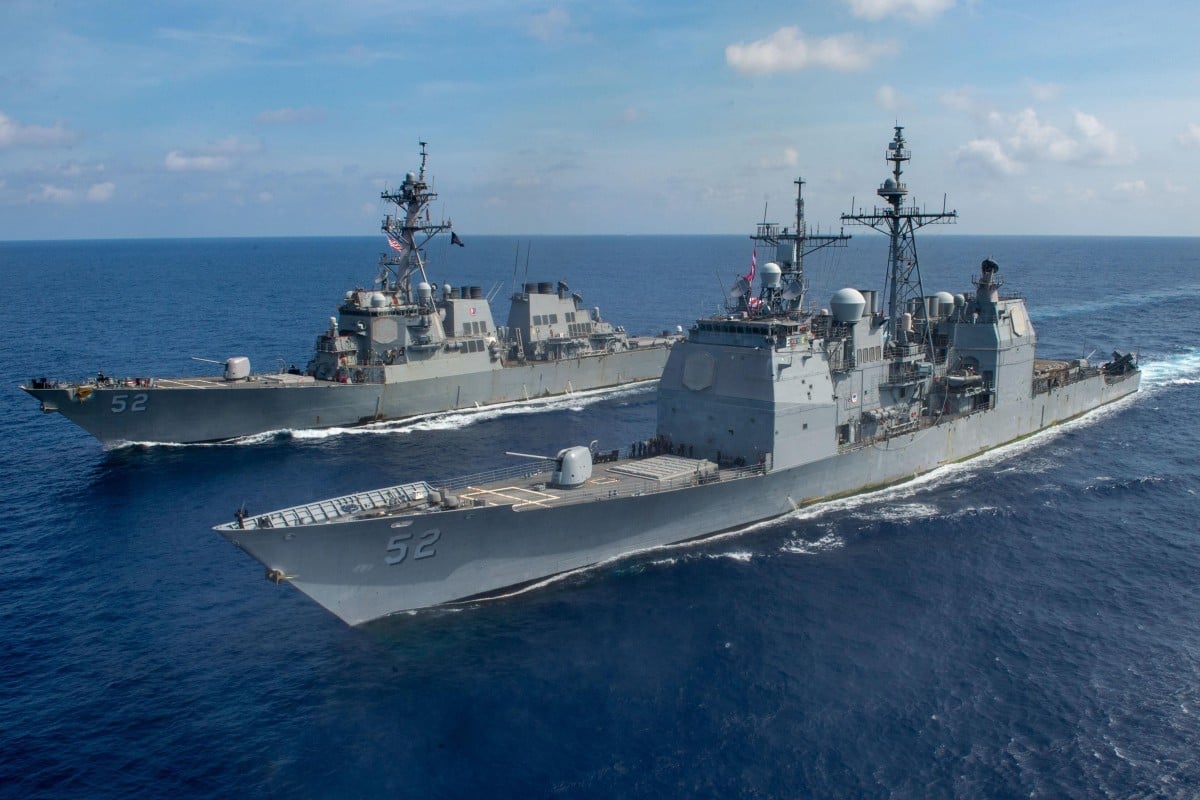
On April 18, the US Navy Ticonderoga-class guided missile cruiser USS Bunker Hill (front) and Arleigh-Burke class guided-missile destroyer USS Barry transit the South China Sea. The presence of both Chinese and American navy ships in the area in recent weeks worries Southeast Asian nations. Photo: US Navy
Negotiations between China and its Southeast Asian neighbours for a
South China Sea
code of conduct have been postponed as the nations involved put their efforts into containing
the Covid-19 pandemic, creating uncertainty about whether the two sides can work together amid rising tensions in the contested territory.
Southeast Asian nations are increasingly caught in a dilemma whether to maintain relations with Beijing during the pandemic while also fearing that tensions over the disputed waters are spiralling out of control. Both Chinese and United States navies are sending vessels to the area more frequently.
Indonesian Foreign Minister Retno Marsudi expressed concern over recent activities in the South China Sea, noting that they might potentially escalate tensions at a time when global collective effort to fight Covid-19 was essential.
Speaking on Wednesday, she called on all parties to respect international law, particularly the United Nations Convention on the Law of the Sea.
“While negotiation of the code of conduct is being postponed due to Covid-19, Indonesia calls on all relevant parties to exercise self-restraint and to refrain from undertaking action that may erode mutual trust and potentially escalate tension in the region,” she said.
Indonesia’s Foreign Minister Retno Marsudi. Photo: AP
Calls for a binding code of conduct surfaced in 1995 when China occupied Mischief Reef
, a maritime feature claimed by the Philippines. China did not agree to start talks until 1999, and subsequent negotiations led to a non-binding Declaration on Conduct in 2002.
The
Association of Southeast Asian Nations (Asean) and China agreed in 2018 on a draft code laying the foundations for conduct in the disputed waters. At that time, Chinese Premier Li Keqiang said China hoped to complete the negotiation by the end of 2021, a move he said could show China and Asean could jointly maintain regional peace.
Named and claimed: is Beijing spoiling for a new fight in the South China Sea?
27 Apr 2020
But tensions over the South China Sea have not calmed and, in fact, have surged in recent months with both Beijing and Washington seen to be using the Covid-19 pandemic to create a stronger presence there.
This year, the US has conducted four freedom of navigation operations in the South China Sea and China has scrambled air and sea patrols to expel US vessels.
The confrontation between Beijing and Southeast Asian nations has also intensified. Last month,
a Vietnamese fishing boat sank after a collision with a Chinese coastguard vessel near the Paracel Islands, known in China as the Xisha Islands, and in Vietnam as the Hoang Sa Islands.
On Saturday, the 35th escort fleet of the Chinese navy also
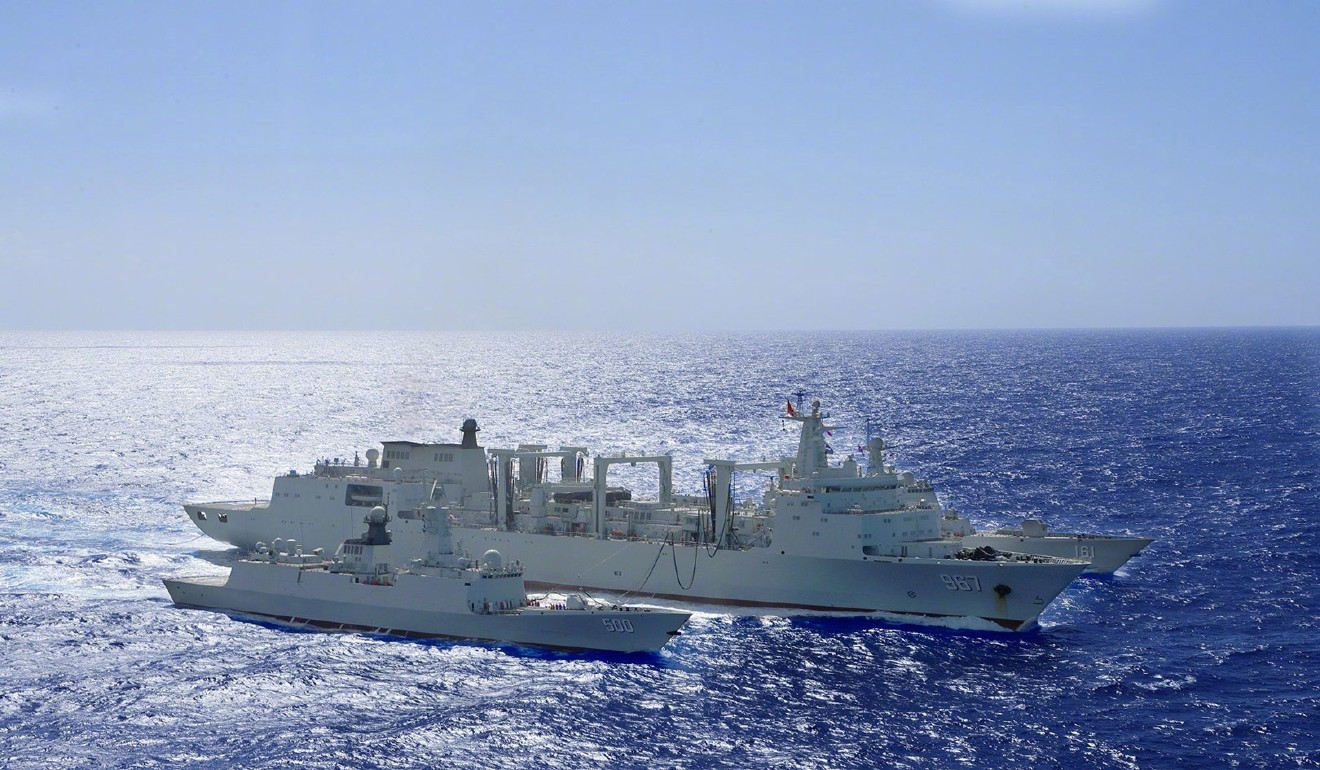
conducted drills in the Spratly Islands chain – known as Nansha Islands in China – after completing an operation in the Gulf of Aden, off Somalia. Analysts said the drill aimed to boost far-sea training for combat ships and boost protection against piracy for Chinese merchant ships.
Collin Koh, a research fellow at the S. Rajaratnam School of International Studies, based at Nanyang Technological University in Singapore, said the code of conduct talks had been delayed because of the pandemic, but Beijing was consolidating its position in the South China Sea amid the outbreak.
“So it’s doing what it can now to consolidate and further enhance its position before talks restart, and by then these moves will raise Beijing’s leverage in the negotiations with its Asean counterparts,” he said.
“The current situation gives it a window of opportunity amid this interlude on the talks, to further advance its physical hold in the South China Sea, especially while Asean parties have their hands full on the pandemic”.
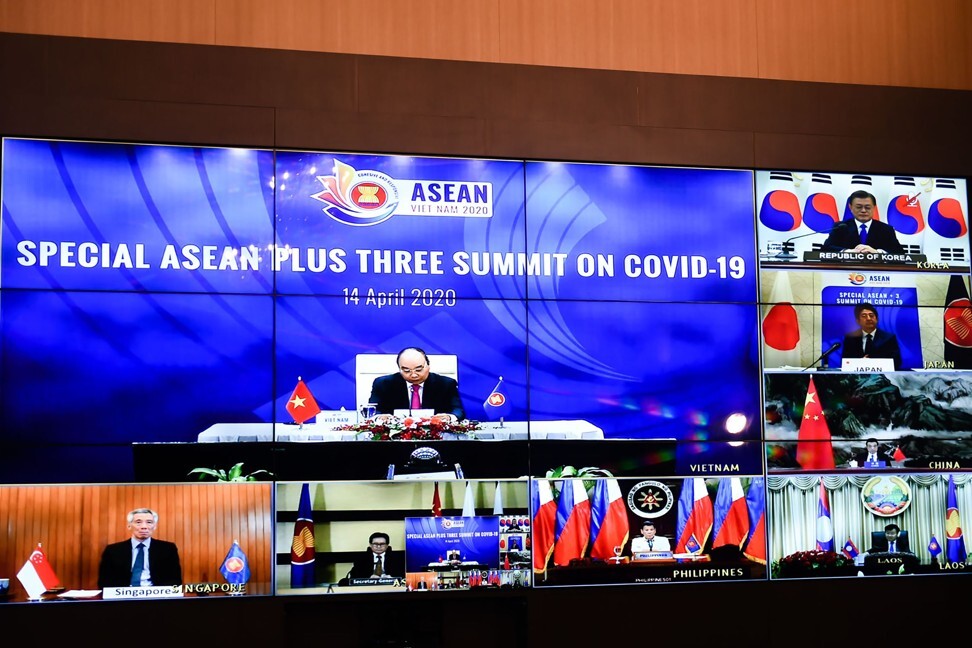
Asean nations have turned their attention to coping with coronavirus outbreaks in their own countries. On April 14, a live video conference for the special Asean Plus Three Summit on the coronavirus pandemic was held in Hanoi. Photo: AFP
Kang Lin, a researcher with Hainan University, said progress for the code of conduct would still go ahead, but it might be affected as face-to-face meetings between officials were disrupted.
“The negotiations involves multiple departments, such as diplomacy, maritime affairs, fisheries and even oil and gas-related departments,” he said, adding that those discussions might go online and might not be as effective.
“It is not easy to predict to what extent it will affect next year's goals. If the pandemic cannot be eliminated in the first half of next year, it may be longer than the three-year period we had previously scheduled,” he said.
Richard Heydarian, an academic and former Philippine government adviser, said video-conference meetings would be inadequate for negotiations about the future of the South China Sea.
“The problem with the negotiation of the code is that these are very sensitive, difficult negotiations. I don't think you can really do it just online, these are things that are done in the corridors of power,” he said. “It’s close to impossible to have that right now with the suspension of all international meetings in the Asean.”
Heydarian said Southeast Asian nations hoped to get help from China to contain the pandemic, but were showing unease about Beijing.
“I think there is a lot of resentment building against China,” he said. “There is also a lot of desperation to get assistance from China and, at the same time, complete helplessness with the fact that it is very hard to conduct any important extended international meeting on the level of Asean and beyond under current circumstances.”
Chinese Foreign Ministry spokesman Hua Chunying said on Thursday that China would push forward negotiations on the code of conduct, and hoped the code would be useful for peace and stability over the South China Sea.
Source: SCMP
Posted in adversary, ASEAN, Association of Southeast Asian Nations (ASEAN), Beijing, China, China’s, chinese foreign ministry spokesman, Chinese premier Li Keqiang, Code of conduct, complex, coronavirus crisis, delayed, disputed waters, during, expose, guided missile cruiser, guided-missile destroyer, gulf of aden, Hanoi, important, Indonesian Foreign Minister, Nansha Islands, Nanyang Technological University, nations, negotiations, neighbours, outbreaks, pandemic, piracy, relationship, resolved, S. Rajaratnam School of International Studies, sensitive, Singapore, Somalia, South China Sea, southeast asian nations, Spratly Islands, talks, Uncategorized, United Nations Convention on the Law of the Sea (UNCLOS), US Navy, virtual meetings, Virus, wary |
Leave a Comment »
28/02/2020
- US Pacific Fleet calls the action last week ‘unsafe and unprofessional’ and a breach of code of conduct
- Analyst describes it as a ‘serious provocation’ that could have posed a navigational hazard
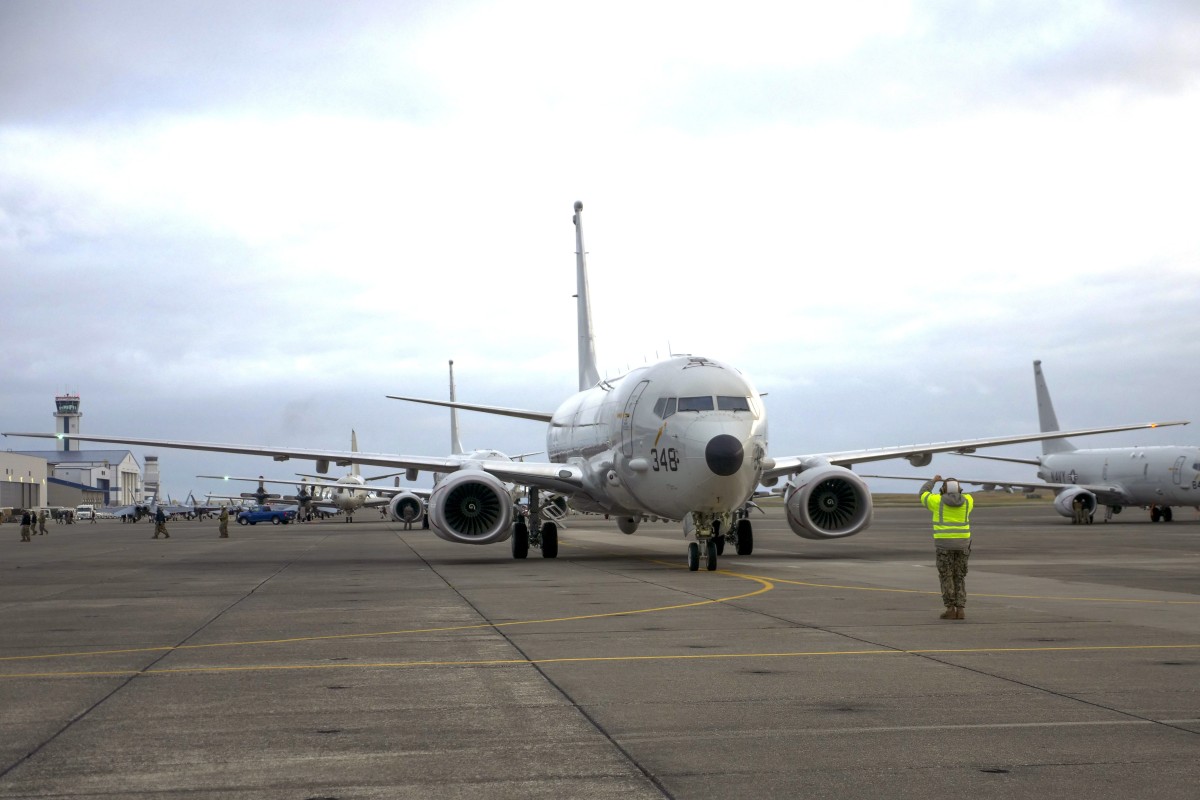
The US said a P-8A Poseidon maritime patrol aircraft was targeted as it flew over international waters in the western Pacific last week. Photo: AP
A Chinese destroyer pointed a laser at an American maritime patrol aircraft over the western Pacific Ocean last week, the US Navy said, calling the incident “unsafe and unprofessional”.
The US Pacific Fleet said in a statement on Friday that the destroyer targeted the P-8A Poseidon aircraft as it flew over international waters about 610km (380 miles) west of Guam on February 17.
“The laser, which was not visible to the naked eye, was captured by a sensor on board the P-8A,” the statement said. “Weapons-grade lasers could potentially cause serious harm to aircrew and mariners, as well as ship and aircraft systems.”
It said the action by the Chinese warship had breached the multilateral Code for Unplanned Encounters at Sea, which “specifically addresses the use of lasers that could cause harm to personnel or damage to equipment”.
China’s arms industry back in business despite disruption by coronavirus
The action was also “inconsistent” with a memorandum of understanding reached between the US and Chinese defence ministries on rules of behaviour for safety during air and maritime encounters, the US Pacific Fleet said.
The P-8A is deployed to the Kadena Air Force Base in Okinawa, Japan, and is part of a squadron that conducts routine operations, maritime patrols and reconnaissance in the US 7th Fleet area of operations, according to the statement.
China and the United States have exchanged tough words as tensions simmer over their military activities in the Asia-Pacific region, particularly over the South China Sea and Taiwan.
A Chinese destroyer is said to have pointed a laser at a US Navy aircraft near Guam.
Photo: Weibo The Chinese South Sea Fleet completed a 41-day drill in the western Pacific earlier this week, according to state media, in a move to show its military exercises were continuing even as the country battles the coronavirus epidemic.
Collin Koh, a research fellow with the S Rajaratnam School of International Studies at Singapore’s Nanyang Technological University, said the latest incident was a “serious provocation”, noting that the Chinese military had also pointed lasers at the US in Djibouti.
The South China Sea dispute explained
“Use of lasers is as dangerous as manoeuvring one’s aerial or naval asset too close to another to cause the potential of collision – the lasers can pose a serious navigational hazard,” Koh said.
“While both [the Chinese and US navies] have the legitimate right to carry out their activities on the high seas out there in the western Pacific – including the use of these platforms to monitor each other – the use of lasers to endanger navigation in fact represents a serious provocation,” he said.
“The US Navy P-8A might have flown lower for closer observation, but I don’t think it went to the point of risking a collision with the [Chinese] warship.”
The incident was likely to further undermine trust and military stability between China and the United States, Koh said.
Conflict prevention in the South China Sea depends on China abiding by the existing rules of navigation
“It also wouldn’t be the first time the [Chinese navy] formations would have had ‘company’ from US military assets keeping tabs on them,” he said.
But Hong Kong-based military commentator Song Zhongping rejected the US Navy’s claim that the Chinese warship had violated the code of conduct, saying its action was just a routine warning.
“The US is unhappy because the Chinese fleet was very close to Guam, and it saw the Chinese fleet as taking an unfriendly measure against the US,” he said.
“But it’s normal for a naval fleet and aircraft to send warnings to each other,” Song said. “If the other side’s reconnaissance plane gets too close to vessels, it can be a security risk. So they take self-defence measures.”
Source: SCMP
Posted in ‘serious provocation’, ‘unsafe and unprofessional’, Chinese, Code of conduct, coronavirus epidemic, Guam, Japan, Kadena Air Force Base, laser, navigational hazard, Okinawa, P-8A Poseidon, patrol aircraft, pointed, Singapore’s Nanyang Technological University, The Chinese South Sea Fleet, Uncategorized, US Pacific Fleet, warship |
Leave a Comment »




 CHINDIA ALERT: You'll be living in their world, very soon