31/05/2020
BEIJING, May 31 (Xinhua) — The U.S. government has been slammed at home and abroad after announcing on Friday “terminating” its relationship with the World Health Organization (WHO).
U.S. health experts and lawmakers have expressed concern over the decision announced by President Donald Trump amid the COVID-19 outbreak.
Patrice Harris, president of the American Medical Association, described Trump’s move as a “senseless” action with “significant, harmful repercussions.”
“COVID-19 affects us all and does not respect borders; defeating it requires the entire world working together,” Harris was quoted by CNN as saying, urging Trump to reverse the course.
Lawrence Gostin, a professor of global health law and director of the O’Neill Institute for National and Global Health Law at Georgetown University, described the move as “foolish and arrogant” in his Twitter account.
“Trump’s action is an enormous disruption and distraction during an unprecedented health crisis,” said Gostin, also the director of the WHO collaborating center on national and global health law. “The President has made us less safe.”
Democratic Senator Joe Manchin of West Virginia said that “the United States cannot eliminate this virus on its own and to withdraw from the World Health Organization — the world’s leading public health body — is nothing short of reckless,” according to a CNN report.
Even within the Republican party, some Republicans also expressed their disagreement. Senate Health Committee Chairman Lamar Alexander reportedly said he disagreed with Trump’s decision, because, without U.S. funding, clinical trials to develop a COVID-19 vaccine might be hampered.
In addition, the European Union (EU) has urged the United States to reconsider its termination of ties with the WHO, warning that Trump’s move would erode global efforts to curb the spread of the virus.
“The WHO needs to continue being able to lead the international response to pandemics, current and future. For this, the participation and support of all is required and very much needed. In the face of this global threat, now is the time for enhanced cooperation and common solutions. Actions that weaken international results must be avoided,” Ursula von der Leyen, president of the European Commission, and Josep Borrell, the EU High Representative for Foreign Affairs and Security Policy, said in the statement on Saturday.
“In this context, we urge the U.S. to reconsider its announced decision,” the statement said.
German Health Minister Jens Spahn tweeted that Trump’s move was “a disappointing backlash for International Health.”
“The EU must take a leading role and engage more financially,” Spahn said, noting that this would be one of Germany’s priorities when it becomes the bloc’s rotating presidency on July 1.
British Prime Minister Boris Johnson’s spokesperson said earlier that Britain “has no plans to stop funding the WHO, which has an important role to play in leading the global health response.”
“Coronavirus is a global challenge and it is essential that countries work together to tackle this shared threat,” the spokesperson was quoted by The Guardian as saying.
Irish Minister for Health Simon Harris on Friday described Trump’s move as an “awful decision.”
“A global pandemic requires the world working together … We should unite in our fight against it (COVID-19) & not fight each other,” Harris tweeted.
Russian Foreign Ministry spokesperson Maria Zakharova told TASS news agency that Washington “dealt a blow” to the international framework for cooperation in healthcare at the moment when the world needed to join forces.
Source: Xinhua
Posted in "awful decision.", "dealt a blow", "eliminate", "foolish and arrogant", "senseless" action, "terminating", abroad, American Medical Association, announcing, at home, Beijing, blast, Boris Johnson's spokesperson, Britain, British Prime Minister, clinical trials, CNN, cooperation, COVID-19 outbreak, COVID-19 vaccine, Democratic Senator, disagreement, disappointing backlash, disruption, distraction, enormous, EU High Representative for Foreign Affairs and Security Policy, European Commission, European Union (EU), expressed, faces, Georgetown University, German Health Minister, Germany's, global health law, hampered, health crisis, healthcare, international framework, International Health, Irish Minister for Health, lawmakers, leading public health body, O'Neill Institute for National and Global Health Law, on its own, President Donald Trump, priorities, reckless, reconsider, relationship, Republican Party, Republicans, Russian Foreign Ministry spokesperson, Senate Health Committee, significant, harmful repercussions, slammed, termination, The Guardian, ties, to join forces, to withdraw, tweeted, Twitter, U.S. funding, U.S. government, U.S. health experts, Uncategorized, United States, unprecedented, Washington, WHO, World, World Health Organization, World Health Organization (WHO) |
Leave a Comment »
31/05/2020
- China’s leadership has made it clear to its people that the world will become more dangerous and they must be prepared for hard times
- Beijing’s relatively small stimulus response to Covid-19 suggests it wants to save its economic policy ammunition for a bigger battle
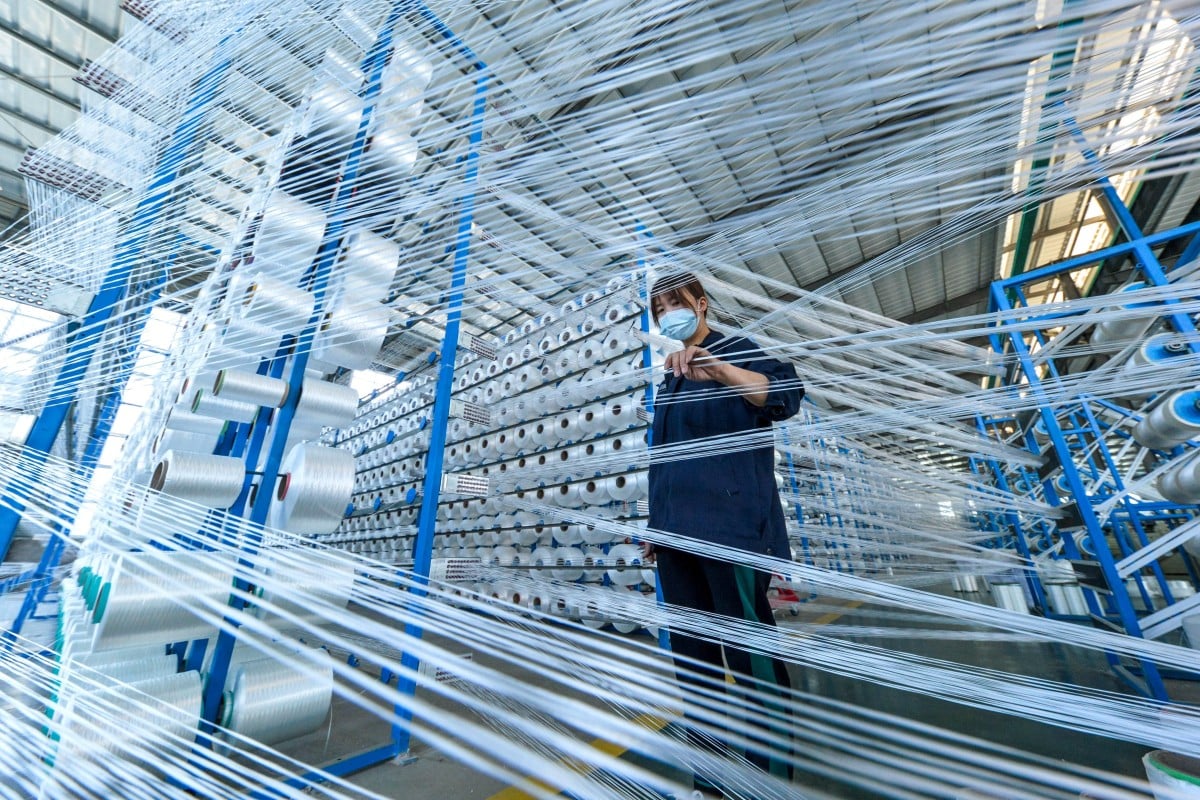
China opted not to set a GDP target for 2020. Photo: Xinhua
Beijing’s decision not to set an annual GDP target for 2020 – for the first time since 2002 – is a sign it is putting stability ahead of growth as part of its preparations for an escalating conflict with the
United States.
Economic development has always been the central theme for Beijing since it established diplomatic relations with the US in 1979. But this year it has given priority to job creation and tackling poverty. The coronavirus outbreak might appear to have been the reason for the shift, but the underlying factor is the tension with the US.
Covid-19 offered a preview of what a decoupling of China and US might look like: aircraft grounded, cargo flows disrupted, value chains broken, goodwill and cooperation lost, blame games started.
Both countries have suffered heavy human and economic losses from the coronavirus, yet that did not inspire them to work together. Instead, hostility and rivalry has thrived, and neither wants to blink first.
The Chinese leadership has made it clear to its people that the world will become more dangerous and they must be prepared for hard times. As such, the government is saving its economic policy ammunition.
While the stimulus plans introduced in the US, Germany, Japan and France exceed 10 per cent of their national GDP and interest rates have been cut to the bone, Beijing stopped at just 1 trillion yuan (US$140 billion) worth of special treasury bonds and 1.6 trillion yuan of additional local government bonds. In total, about 2.6 per cent of GDP.
Interest rates in China – 2.7 per cent on 10-year bonds – are some of the highest among major economies.
China’s 6.6 per cent defence spending boost lowest in three decades
China’s budget fiscal deficit has increased to 3.6 per cent of GDP for 2020, but the larger deficit is mainly from tax and fee cuts instead of increased fiscal expenses, except for an increased military spending.
Beijing is calling on provincial and local authorities to tighten their belts, which is unusual for a government that has huge assets and can increase spending at any time through quantitative easing.
So why is the government, which is known for intervening in the economy, being so restrained?
It is bracing itself for a perceived period of turbulence and hardship as its relationship with the US turns sour. It is putting jobs and social stability on top of its agenda, instead of growth.
Beijing is refraining from excessive spending, eliminating sources of potential instability, making appeals to the most vulnerable social groups, and saving its power for a bigger test.
Against that backdrop, the National People’s Congress passed the national security legislation on Hong Kong. Beijing knew the bill would anger the US, but did it anyway.
Hong Kong is known as China’s gateway to the international capital market and the largest offshore yuan market, but Beijing is ready to trade losses on the financial and economic front for potential gain on a fortified national security fence.
All this points to the suggestion that Beijing is preparing for the possibility of decoupling from the US, even if it doesn’t necessarily want to.
The threat of a new Cold War is clouding the world. The theme of life for one or two generations of people on both sides of the Pacific may shift from growth and prosperity to struggle and confrontation.
China and the US have yet to collide totally, but that moment is drawing near.
Source: SCMP
Posted in 1979, 2020, aircraft grounded, ammunition, ‘new cold war’, be prepared, Beijing, Beijing’s, bigger battle, blame games, cargo flows disrupted, central theme, Chinese leadership, collide, CONFRONTATION, cooperation, coronavirus, coronavirus outbreak, Decoupling, diplomatic relations, Economic development, economic losses, Economic policy, France, from, GDP target, Germany, goodwill, growth, hard times, hostility, Japan, leadership, lost, military spending, more dangerous, National People’s Congress, Pacific, People, preparing, prosperity, rivalry, small stimulus response, struggle, The US, thrived, to decouple, Uncategorized, United States, value chains broken, World |
1 Comment »
30/05/2020
- Chinese groups calling for more ‘fighting spirit’ are getting the upper hand on those who favour calm and cooperation, government adviser says
- From Hong Kong to Covid-19, trade to the South China Sea, Beijing and Washington are clashing on a growing number of fronts and in an increasingly aggressive way
Efforts to promote dialogue and cooperation between the US and China are failing, observers say. Photo: AFP
Moderates who favour dialogue and cooperation as a way to resolve China’s disputes with the
United States are losing ground to hardline groups bent on taking the fight to Washington, according to political insiders and observers.
“There are two camps in China,” said a former state official who now serves as a government adviser and asked not to be named.
“One is stressing the combat spirit, the other is trying to relieve tensions. And the former has the upper hand.”
Relations between China and the US are under intense pressure. After Beijing moved to introduce a national security law for Hong Kong, US President Donald Trump said on Friday that Washington would begin eliminating the special policy exemptions it grants the city, as it no longer considers it autonomous from mainland China.
Beijing’s decision to enact a national security law for Hong Kong was met with anger from the US and other Western countries. Photo: Sam Tsang
The two nations have also clashed over trade, Xinjiang, Taiwan and the South China Sea, with the US passing several acts denouncing Beijing and sanctioning Chinese officials.
China has also experienced turbulence in its relations with other countries, including Australia and members of the European Union, mostly related to the Covid-19 pandemic
and Beijing’s efforts to position itself as a leader in the fight against the disease with its policy of “mask diplomacy”.
After Canberra appealed for an independent investigation to be carried out to determine the origins of the coronavirus, Beijing responded by imposing tariffs on imports of Australian barley, showing it is prepared to do more than just trade insults and accusations with its adversaries.
Pang Zhongying, a professor of international relations at Ocean University of China in Qingdao, said there was a worrying trend in China’s relations with other nations.
“We need political and diplomatic means to resolve the challenges we are facing, but … diplomatic methods have become undiplomatic,” he said.
“There are some who believe that problems can be solved through tough gestures, but this will never work. Without diplomacy, problems become confrontations.”
said during his annual press conference on the sidelines of the National People’s Congress last weekend that China and the United States must work together to prevent a new Cold War.
His words were echoed by
Chinese Premier Li Keqiang, who said during a press conference after the closure of the legislative session on Thursday that the many challenges facing the China-US relations could only be resolved through cooperation.
However, the government adviser said there was often quite a chasm between what China’s leaders said and what happened in reality.
“Even though we say we do not want a Cold War, what is happening at the working level seems to be different.” he said. “The implementation of policies is not properly coordinated and often chaotic.”
Tensions between China and the US have been in a poor state since the start of a trade war almost two years ago. After multiple rounds of negotiations, the sides in January signed a phase one deal, but the positivity that created was short-lived.
In February, Beijing expelled three reporters from The Wall Street Journal over an article it deemed racist, while Washington has ramped up its military activity in the South China Sea and Taiwan Strait, and threatened to revoke the visas of Chinese students studying science and technology in the US over concerns they might be engaged in espionage.
Beijing has also used its state media and army of “
Wolf Warrior” diplomats to promote its narrative, though many Chinese scholars and foreign policy advisers have said the latter’s nationalistic fervour has done more harm than good and appealed to Beijing to adopt a more conciliatory tone.
However, Hu Xijin, editor-in-chief of Chinese tabloid Global Times, said China had no option but to stare down the US, which regarded the world’s most populous nation as its main rival.
“Being contained by the US is too high a price for China to pay,” he said. “I think the best thing people can do is forget the old days of China-US ties”.
Jin Canrong, a professor of international relations at Renmin University in Beijing, wrote in a recent newspaper article that Beijing’s actions – notably enacting a national security law for Hong Kong – showed it was uncompromising and ready to stand its ground against the US.
Wu Xinbo, dean of international studies at Fudan University in Shanghai, agreed, saying relations between the two countries were likely to worsen in the run-up to the US presidential election in November and that Beijing should be prepared for a fight.
But Adam Ni, director of China Policy Centre, a think tank in Canberra, said the issue was not that the moderate camp had been sidelined, but rather Beijing’s perception of the US had changed.
“Beijing has woken up to the idea that America’s tough policy on China will continue and it is expecting an escalation of the tensions,” he said.
“The centre of gravity in terms of Beijing’s perception of the US has shifted, in the same way the US perception of China has shifted towards a more negative image”.
Beijing was simply responding in kind to the hardline, assertive manner of the US, he said.
Source: SCMP
Posted in aggressive way, annual, appealed, Australia, Australian, autonomous, ‘fighting spirit, “Wolf Warrior”, barley, Beijing, calm and cooperation, Canberra, chaotic, chasm, China-US relations, China-US ties, Chinese foreign minister Wang Yi, Chinese groups, Chinese premier Li Keqiang, Chinese scholars, Chinese students, Chinese tabloid, clashing, Cold War, conciliatory, confrontations, contained, cooperation, coordinated, coronavirus, COVID-19, Covid-19 pandemic, diplomacy, diplomats, editor-in-chief, Espionage, European Union, favour, foreign policy advisers, Fudan University, Global Times, growing, hardliners, Hong Kong, implementation, increasingly, independent investigation, lose out, main rival, Mainland China, moderate camp, moderates, more harm than good, narrative, National People’s Congress, national security law, November, number of fronts, observers, origins, policies, political insiders, presidential election, press conference, problems, promote, Qingdao, Renmin University, resolved, revoke, science and technology, Shanghai, sidelines, South China Sea, special policy exemptions, studying, Taiwan, Taiwan Strait, tariffs, The Wall Street Journal, think tank, threatened, tone, Trade, two camps, Uncategorized, uncompromising, undiplomatic, United States, upper hand, US President Donald Trump, US-China tensions, Visas, Washington, Western countries, world’s most populous nation, worsen, Xinjiang |
Leave a Comment »
24/05/2020
- Countries must respect each others’ systems and be wary of US political forces who want to ‘hijack relations’, Wang tells press conference at ‘two sessions’
- Beijing is not looking for confrontation and wants to work with Washington to fight coronavirus, minister says
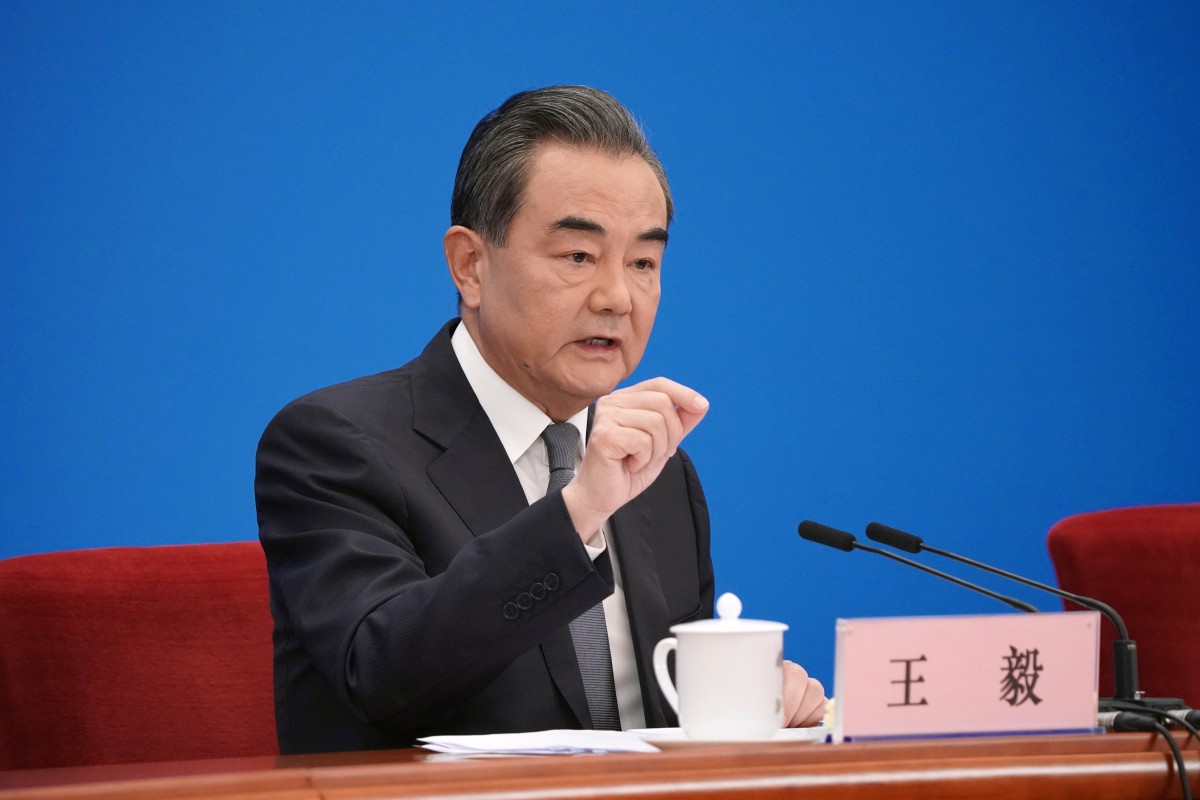
Foreign Minister Wang Yi said China did not want to replace or change the US. Photo: Xinhua
China and the US should try to avoid a new cold war and find new ways to cooperate despite their differences, China’s Foreign Minister Wang Yi said on Sunday.
“We need to be alert to efforts by some political forces in America to hijack China-US relations and who try to push the two countries towards a so-called ‘new cold war’.
“This is a dangerous attempt to turn back the course of history,” Wang told a press conference on the sidelines of the annual parliamentary meetings known as the ‘two sessions’.
Ties between the two countries have further worsened due to escalating tensions over the handling of the Covid-19 pandemic.
Voices calling for decoupling have been on the rise in the US, with some arguing that the two countries are edging towards a new cold war akin to that against the Soviet Union.
Wang called for the two countries to respect each other’s political systems and to find a way to get along despite their differences.
The two nations should step up cooperation on global pandemic control, and coordinate on macro policies to deal with the economic impact.
“China has no intention of changing the United States, much less replacing it. The US should give up the wishful thinking that it can change China.”
“For the benefit of the two peoples, as well as the future and well-being of humankind, China and the US should and must find a way to coexist peacefully despite the differences in system and cultures of the two societies.”
Wang said China will not seek confrontation with the United States, but China is determined to protect its sovereignty, territorial integrity and development.
Posted in America, annual, attempt, ‘hijack relations’, ‘new cold war’, ‘two sessions’, Beijing, benefit, Board of Councilors of the Japan Business Federation, calling, changing, China, China-US relations, coexist, Cold War, CONFRONTATION, cooperate, cooperation, coordinate, coronavirus, countries, course of history, Covid-19 pandemic, cultures, dangerous, Decoupling, determined, development, differences, economic impact, escalating, fight, Foreign Minister Wang Yi, future, global, handling, hijack, humankind, intention, macro policies, pandemic control, parliamentary meetings, peacefully, people's, political forces, press conference, protect, replacing, sidelines, societies, sovereignty, Soviet Union, system, systems, tensions, territorial integrity, to turn back, Uncategorized, United States, Voices, Washington, well-being, wishful thinking, worsened |
Leave a Comment »
15/05/2020
- Hungarian Foreign Minister Peter Szijjarto tells Chinese counterpart, Wang Yi, that his country ‘always upholds the one China principle’
- Wang also speaks to foreign ministers of Estonia and Bosnia and Herzegovina ahead of World Health Assembly, which starts on Monday
Chinese Foreign Minister Wang Yi spoke to three European foreign ministers on Thursday. Photo: AP
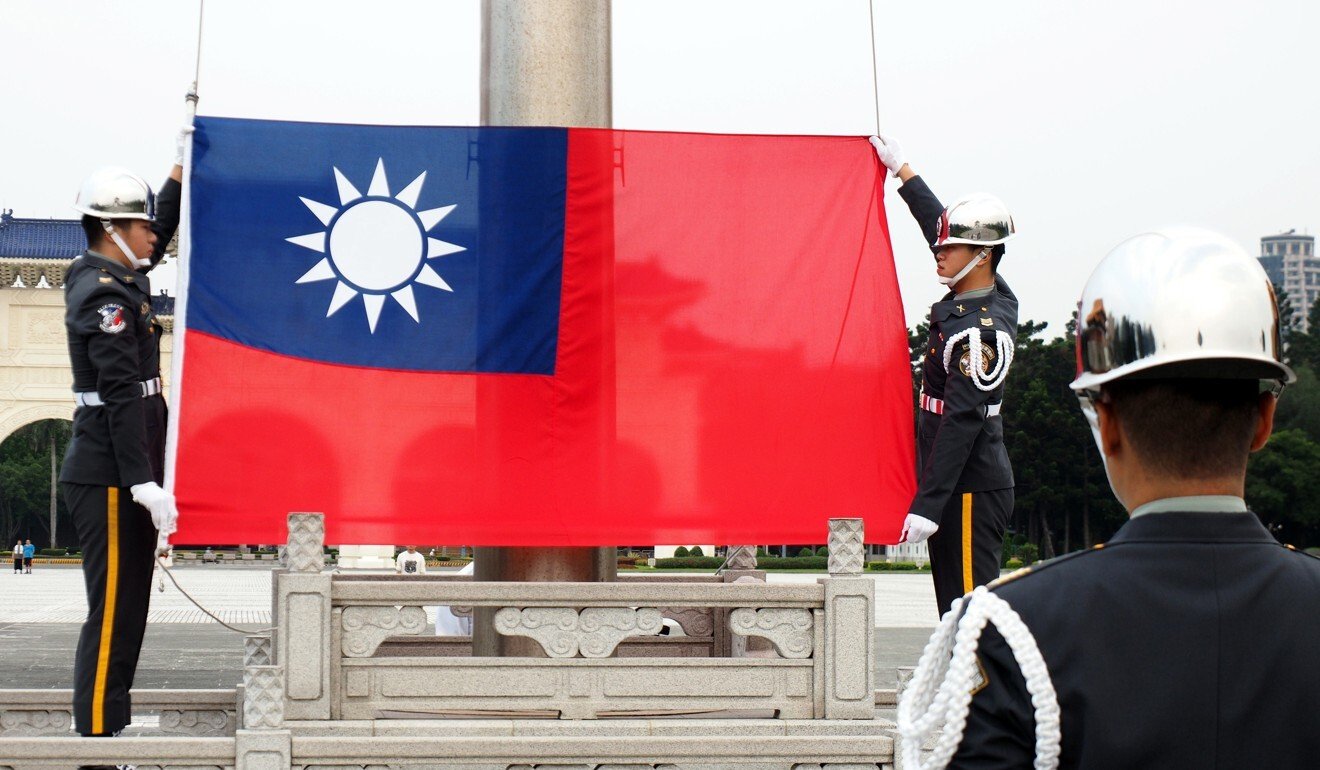
Hungary supports Beijing’s efforts to prevent
Taiwan taking part in the upcoming World Health Assembly (WHA), according to a Chinese statement issued after a telephone conversation between the two countries’ foreign ministers.
China’s Foreign Minister Wang Yi called his European counterpart, Peter Szijjarto, on Thursday, the foreign ministry in Beijing said.
During the call, Szijjarto told Wang that Budapest would not support Taiwan’s accession to the World Health Organisation (WHO) ahead of the annual gathering of health ministers from around the world that starts in Geneva on Monday and which Taipei is keen to attend.
Hungary “always upholds the one China principle”, Szijjarto was quoted as saying.
A report about the ministers’ call by the Hungarian foreign ministry, however, made no mention of Taiwan.
It said that Szijjarto thanked Wang for the medical supplies China had sent to Hungary board 121 flights since the start of the Covid-19 pandemic.
The pair also discussed cooperation on 5G and the development of a rail project between Budapest and the Serbian capital, Belgrade, it said.
Beijing opposes Taiwan’s involvement in the WHO. Photo: EPA-EFE
As well as speaking to Szijjarto, Wang called the foreign ministers of Estonia and Bosnia and Herzegovina on Thursday to discuss the Covid-19 pandemic, but Taiwan was not mentioned, the Chinese statement said.
Taipei donated 80,000 face masks to Estonia in April, and last week, Urmas Paet, an Estonian member of the European parliament urged Budapest to support Taiwan’s membership of the WHO and “not allow itself to be manipulated by China”.
Taiwan has long campaigned to regain observer status at the WHO and has ramped up those efforts since the start of the global health crisis. Despite the devastation caused by Covid-19,
Taiwan has reported just 440 confirmed cases and seven deaths.
Taiwan attended the WHA meetings as an observer between 2009 and 2016, unopposed by Beijing as at the time the island was led by president Ma Ying-jiu from the mainland-friendly Kuomintang.
However, relations between Taipei and Beijing have soured since 2016 and the election of
President Tsai Ing-wen, from the pro-independence Democratic Progressive Party, who won a second term of office in January.
WHO put nations at risk by excluding Taiwan from knowledge sharing, US report says
13 May 2020
Taiwan has not been alone in its campaign to regain its WHO status, with the United States, Australia, New Zealand, Canada and several European countries backing the move.
Last week, US Secretary of State Mike Pompeo called on all nations to support Taipei’s participation as an observer at the WHA, and urged WHO director general Tedros Adhanom Ghebreyesus to allow it.
Despite the support, Taiwan’s Vice-Premier Chen Chien-jen said on Thursday that because of the pressure from Beijing there was now little chance of Taiwan attending the WHA.
China’s foreign ministry spokesman Zhao Lijian said last week it was “resolutely opposed” to New Zealand’s support for Taiwan.
In his calls to Europe, Wang also said that cooperation between Beijing and 17 central and eastern European nations – under the “17+1” banner – would not be affected by the health crisis and that further talks would be held once it had been brought under control.
Source: SCMP
Posted in 5G, around the world, Australia, Beijing, Belgrade, Bosnia, Budapest, canada, cooperation, Covid-19 pandemic, Democratic Progressive Party, development, Estonia, European countries, foreign ministers, Geneva, health ministers, Herzegovina, Hungarian Foreign Minister, Hungary, Kuomintang, medical supplies, membership, Mike Pompeo, New Zealand, one-China principle, opposing, President Tsai Ing-wen, pro-independence, rail project, Serbian capital, stands, Taipei, Taiwan’s, Uncategorized, United States, US Secretary of State, Wang Yi, World Health Assembly, World Health Organisation |
Leave a Comment »
05/05/2020
Joint mission will send two unmanned probes into orbit around the closest planet to the sun
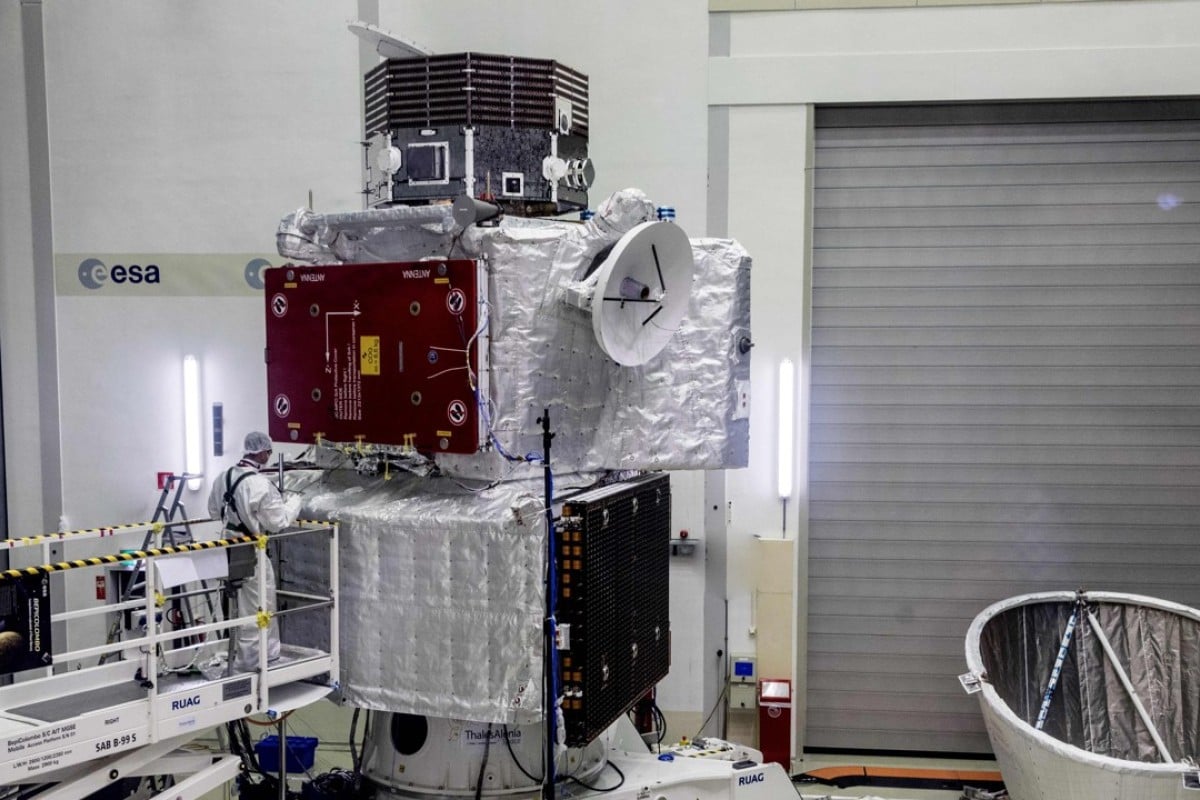
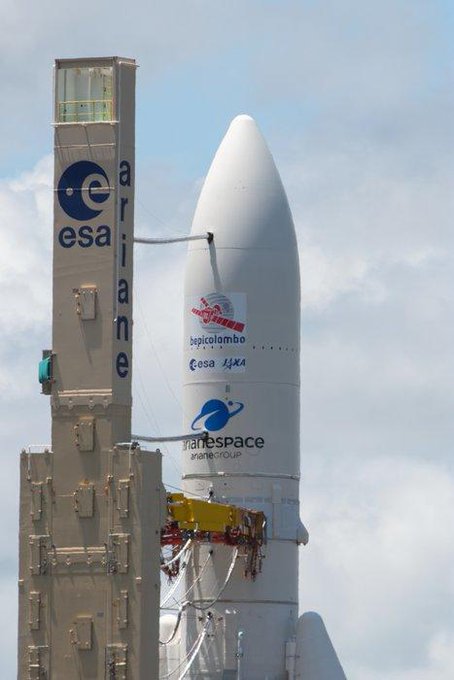
The BepiColombo standing in position at a test facility in Spijkenisse. Its mission to Mercury is scheduled for launch on an Ariane 5 from Europe’s Spaceport in Kourou, French Guiana on October 20. Photo: AFP Photo
Final preparations were underway on Friday for the launch of a joint mission by European and Japanese space agencies to send twin probes to Mercury, the closest planet to the sun.
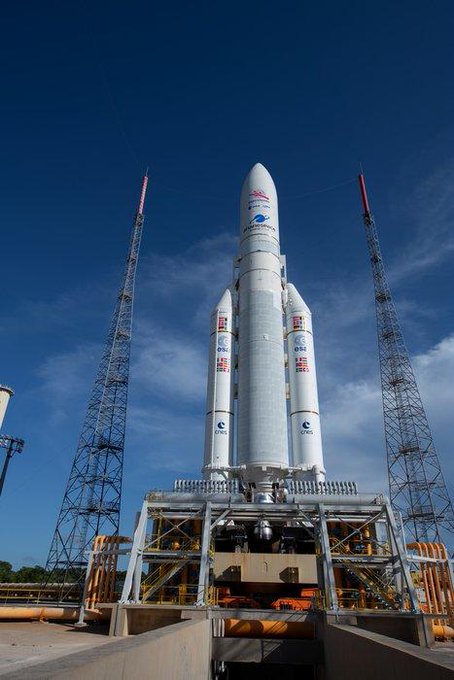
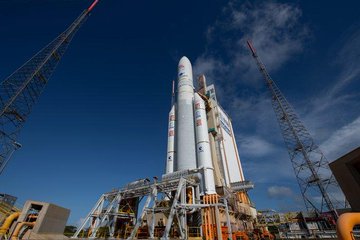
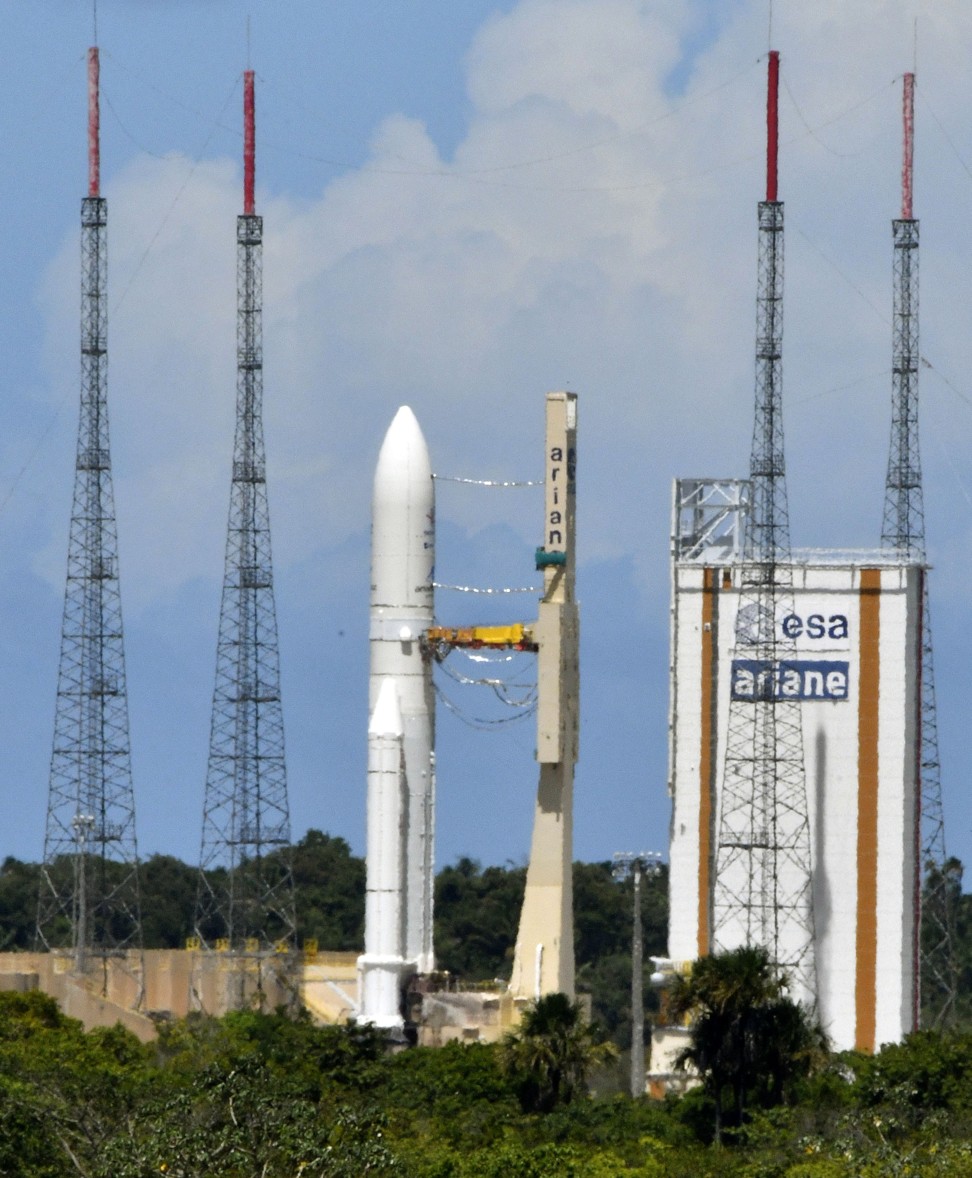
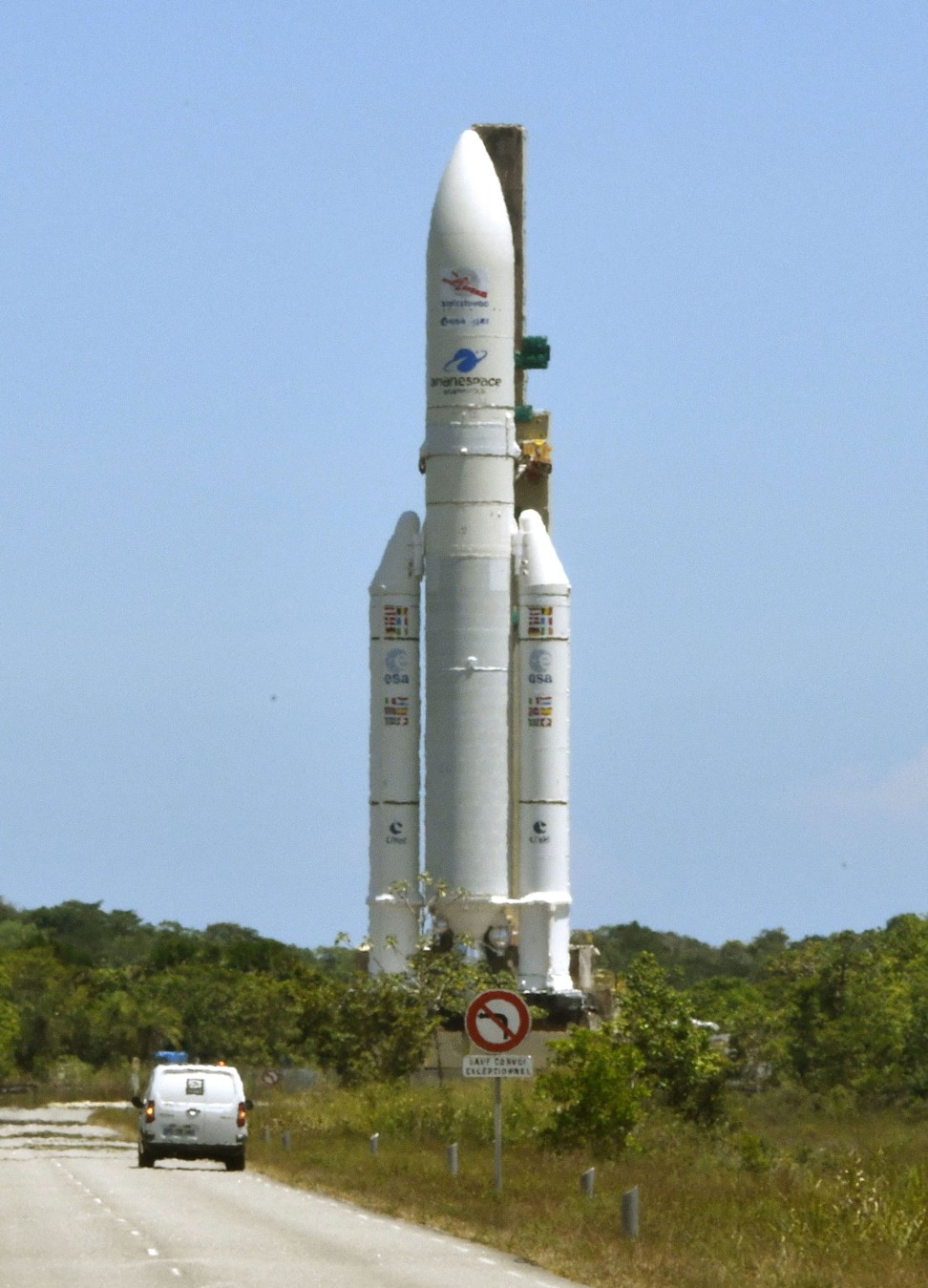
An Ariane 5 rocket is scheduled to lift the unmanned spacecraft into orbit from French Guiana shortly before midnight, the start of a seven-year journey to the solar system’s innermost planet.
Mercury is seen in silhouette, lower third of image, as it transits across the face of the sun. Photo: AFP PHOTO / NASA / BILL INGALLS
The European Space Agency says the €1.3 billion (US$1.5 billion) mission is one of the most challenging in its history. Mercury’s extreme temperatures, the intense gravity pull of the sun and blistering solar radiation make for hellish conditions.
An Ariane-5 rocket is set for launch at the Guiana Space Centre in Kourou in French Guiana. Photo: Kyodo
Newly developed electrical ion thrusters will help nudge the spacecraft, which was named after Italian scientist Giuseppe “Bepi” Colombo, into the right orbit.
Aborted launch astronauts may head to International Space Station this year: Nasa head says
When it arrives, BepiColombo will release two probes – Bepi and Mio – that will independently investigate the surface and magnetic field of Mercury. The probes are designed to cope with temperatures varying from 430 degrees Celsius (806F) on the side facing the sun, and -180 degrees Celsius (-292F) in Mercury’s shadow.
An Ariane-5 rocket is transported to its launch site at the Guiana Space Centre in Kourou. Photo: Kyodo
Scientists hope to build on the insights gained by Nasa’s Messenger probe, which ended its mission in 2015 after a four-year orbit of Mercury. The only other spacecraft to visit Mercury was Nasa’s Mariner 10 that flew past the planet in the mid-1970s.
Japanese space robots have landed on asteroid to carry out world-first survey
22 Sep 2018
Mercury, which is only slightly larger than Earth’s moon, has a massive iron core about which little is known. Researchers are also hoping to learn more about the formation of the solar system from the data gathered by the BepiColombo mission.
Source: SCMP
Posted in 2015, 2025, 7-year, Ariane 5, arriving, asteroid, begins, Bepi, BepiColombo, between, blistering, carry out, closest planet, conditions, cooperation, countdown, December, destination, dropped, earlier, Earth, Earth’s, electrical ion thrusters, elliptical path, Europe, Europe's Spaceport, European, European Space Agency, Europeans, fly-by, French Guiana, German-French rover, Giuseppe “Bepi” Colombo, gravity pull, Guiana Space Centre, Hayabusa2, hellish, innermost, International Space Station, iron core, Italian scientist, Japan, Japan Aerospace Exploration Agency, Japanese, JAXA’s, Joint mission, journey, Kourou, landed, Mariner 10, massive, Mercury, Messenger probe, Mio, mission, Moon, named after, NASA, nudge, orbit, Planet, prepare, Rocket, Ryugu, slow down, solar radiation, solar system’s, space agencies, space robots, spacecraft, Spijkenisse, sufficiently, sun, survey, this month, this year, Uncategorized, unmanned probes, Venus, world-first |
Leave a Comment »
03/04/2020
- ‘As two of the great countries on Earth, cooperation between China and the US could, and should, be used to bring a more positive outcome for all humankind,’ academics say
- ‘Political bickering does nothing to contribute to the healthy development of Sino-US relations, nor will it help the people of the world to rationally and accurately understand and cope with the pandemic,’ they say
Chinese academics have urged nations to cooperate to find a solution to the global public health crisis. Photo: AFP
A group of 100 Chinese scholars has signed an open letter calling on the
and China to put an end to their political blame game and work together to fight the
.
The signatories, who include former diplomats and academics from various fields, including political science, international relations and sociology, said that while the origins of the coronavirus remained unknown, hurling accusations achieved nothing but hurt.
Nations should stop “complaining, finger-pointing and blaming one another” and instead cooperate to find a solution to the global public health crisis, they said.
“Political bickering does nothing to contribute to the healthy development of Sino-US relations, nor will it help the people of the world to rationally and accurately understand and cope with the pandemic,” the scholars said in the letter published on Thursday in online news magazine The Diplomat.
“As two of the great countries on Earth, cooperation between China and the US could, and should, be used to bring a more positive outcome for all humankind,” it said.
The scholars also urged the two sides to put aside their bickering over where and how the disease originated.
“At this stage of the pandemic, the exact source and origin of Covid-19 remain undetermined, but these questions are unimportant and finger-pointing is demeaning and hurtful to everyone,” they said.
US and Chinese officials have sparred for weeks over the origins of the coronavirus, which was first detected in the central Chinese city of
Wuhan but has since spread around the world, infecting more than 1 million people and killing close to 53,000.
Donald Trump has repeatedly referred to the pathogen as the “Chinese virus”. Photo: Bloomberg
US President Donald Trump has repeatedly referred to the pathogen as the “Chinese virus”, while other US politicians have said it was created in a Chinese laboratory. For China’s part, foreign ministry spokesman Zhao Lijian suggested the coronavirus
might have been carried into the country by US soldiers.
China’s ambassador to the US
Cui Tiankai said in an interview on American television last month that speculating about the origin of the virus was “harmful”, but the finger-pointing on both sides has plunged relations between the two countries to a new low.
The open letter was the idea of Wang Wen, executive dean of the Chongyang Institute for Financial Studies at Renmin University in Beijing, who said its aim was not only to show the willingness of China’s intellectual elite to promote solidarity and reduce tensions, but to make clear that the priority right now was saving lives.
“We did not criticise anyone in the letter, or mention any names. We did not want to fuel the current disputes and confrontations,” he said.
“Most Chinese intellectuals are peaceful, rational and constructive, and thankfully we quickly reached consensus on the content of the letter.”
China to stage day of mourning for thousands killed by Covid-19
The scholars said that after months of battling the coronavirus and seeing the situation at home improve, China now wanted to share its experience and knowledge with other countries as they seek to contain its spread.
“Chinese people have made unimaginable efforts and sacrifices to achieve hard-won results,” Wang said.
“We are grateful for the support of the international community, including donations from American friends, during the most critical stage of the fight … and we are willing to share our experiences with other countries and provide all available assistance to them.”
Wu Sike, a former Chinese special envoy to the Middle East, was among the signatories to the open letter. Photo: Xinhua
Among the other signatories were Wu Sike, a senior fellow at the Chongyang Institute for Financial Studies and former special envoy to the Middle East, and Wang Yiwei, an international relations professor at Renmin University, who described the Covid-19 pandemic as a “global issue that overrides geopolitics concerns”.
Chinese President Xi Jinping and Trump agreed in a telephone call last week to work together to contain the spread of Covid-19, but critics have questioned how long their cordiality can last against a backdrop of rising China-US tensions over trade, the media and regional security.
Source: SCMP
Posted in Academics, “Chinese virus”, Beijing, blaming, China-US tensions, China’s ambassador to the US, Chinese academics, Chinese President Xi Jinping, Chinese special envoy to the Middle East, come together, complaining, cooperation, coronavirus, COVID-19, Covid-19 pandemic, Earth, finger-pointing, former diplomats, global, great countries on Earth, humankind, international relations,, nations, open letter, origins, pandemics, Political bickering, political blame game, political science, positive outcome, public health crisis, regional security, Renmin University, signatories, Sino-US relations, sociology, The Diplomat, Uncategorized, United States, urges, US President Donald Trump, US soldiers, Washington, Wuhan |
Leave a Comment »
29/02/2020

Japanese Prime Minster Shinzo Abe (R, front) meets with Yang Jiechi (L, front), a member of the Political Bureau of the Communist Party of China (CPC) Central Committee and director of the Office of the Foreign Affairs Commission of the CPC Central Committee, in Tokyo, Japan, Feb. 28, 2020. (Xinhua/Gang Ye)
TOKYO, Feb. 28 (Xinhua) — China and Japan agreed on Friday to step up public health cooperation to contain the outbreak of the novel coronavirus (COVID-19) epidemic.
The pledge was made during a meeting between Japanese Prime Minister Shinzo Abe and Yang Jiechi, a member of the Political Bureau of the Communist Party of China (CPC) Central Committee and director of the Office of the Foreign Affairs Commission of the CPC Central Committee.
During the meeting, Yang said China and Japan assisted each other in the fight against COVID-19 and worked together to overcome the difficulties, thus deepening the friendship between the two countries.
China sincerely thanks Japan for its precious support, and is willing to continue providing support and help for Japan’s fight against the epidemic, strengthen bilateral and multilateral medical and health cooperation, so as to jointly safeguard the health and wellbeing of the peoples of the two countries and the world, he said.
Yang said the China-Japan relations have maintained a sound momentum of development. He noted that Chinese President Xi Jinping and Abe held two successful meetings last year, leading efforts in building China-Japan relations in line with the requirements of the new era.
China is ready to work with Japan to implement the important consensus reached by the leaders of the two countries, respect each other, seek common ground while reserving differences, and work together to build a new pattern of bilateral relations featuring joint cooperation, win-win and mutual benefit, said Yang.
Xi’s upcoming state visit to Japan is of great significance and China is ready to maintain close communication with Japan and make preparations for the visit, he said.
China firmly supports Japan in successfully hosting the Tokyo Olympic Games, he added.
For his part, Abe said Xi’s upcoming state visit to Japan this year is of great importance and Japan will make careful preparations to ensure the success and fruitful results of the visit.
The peoples of Japan and China have shown friendly feelings in their joint fight against the COVID-19 epidemic, Abe said.
He said Japan speaks highly of China’s positive achievements in the fight against the virus and is ready to strengthen exchanges and cooperation with China in information sharing and epidemic prevention and control, and send a positive signal to the international community of jointly tackling the challenges to global public health security.
Also on Friday Yang attended the eighth China-Japan high-level political dialogue with head of Japan’s national security council Shigeru Kitamura and met with Japanese Foreign Minister Toshimitsu Motegi.
Source: Xinhua
Posted in China, China-Japan relations, Chinese President Xi Jinping, cooperation, COVID-19 epidemic, fighting, Japan, Japanese, Japanese Foreign Minister, Japanese Prime Minister, Japanese Prime Minister Shinzo Abe, member of the Political Bureau of the Communist Party of China (CPC) Central Committee, Office of the Foreign Affairs Commission of the CPC Central Committee, pledge, Uncategorized, Yang Jiechi |
Leave a Comment »
20/02/2020

Chinese State Councilor and Foreign Minister Wang Yi meets with Vietnamese Deputy Prime Minister and Minister for Foreign Affairs Pham Binh Minh in Vientiane, Laos, Feb. 19, 2020. (Photo by Kaikeo Saiyasane/Xinhua)
VIENTIANE, Feb. 19 (Xinhua) — Chinese State Councilor and Foreign Minister Wang Yi met here Wednesday with Vietnamese Deputy Prime Minister and Minister for Foreign Affairs Pham Binh Minh, with both sides pledging to further promote bilateral ties and jointly advance Lancang-Mekong cooperation.
Wang is in Vientiane, capital of Laos, for the Special ASEAN-China Foreign Ministers’ Meeting on Coronavirus Disease and the fifth Lancang-Mekong Cooperation Foreign Ministers’ Meeting.
During the meeting with Pham Binh Minh, Wang said that under the strong leadership of the Communist Party of China Central Committee with Xi Jinping at the core, the whole party and the whole country are rallying together to counter the COVID-19 epidemic.
Thanks to the arduous efforts, China’s measures to prevent and control the epidemic have been achieving visible progress, he noted.
It is necessary for China and the Association of Southeast Asian Nations (ASEAN), linked by mountains, rivers and waters and sharing weal and woe, to timely share information and work together to tackle the epidemic so as to safeguard people’s health of China and ASEAN countries, Wang said.
Vietnam, as the ASEAN chair, has made active response to China’s proposal to hold the Special ASEAN-China Foreign Ministers’ Meeting on Coronavirus Disease, Wang said, noting that it testifies to the fine tradition of their shared spirit of “good neighbor, good friend, good comrade and good partner” as well as supporting and helping each other, he said.
Wang expressed belief that the Special ASEAN-China Foreign Ministers’ Meeting on Coronavirus Disease to be held Thursday will achieve success, thus sending out an explicit message that China and ASEAN countries will overcome difficulties with concerted efforts.
This year marks the 70th anniversary of the establishment of the diplomatic relations between China and Vietnam, Wang said, noting that the China-Vietnam comprehensive strategic cooperative partnership has entered into a critical phase of inheriting the past and ushering in the future.
He called on the two sides to carry forward the friendly cause initiated by past generations of leaders of both sides, implement the important consensus reached by leaders of the two countries, maintain high-level strategic communication and advance exchanges and cooperation across the board and at sub-national levels.
He also said that the two countries should properly manage and control differences, steadily promote practical cooperation in various fields and well uphold the common strategic interests of the two socialist countries.
China attaches great importance to the Lancang-Mekong cooperation, Wang said, adding that China stands ready to work together with the Vietnamese side to actively develop greater synergy between the Lancang-Mekong cooperation and the construction of the “new land-sea corridor” so as to give a boost to the economic development of the Mekong River areas.
Pham Binh Minh, for his part, said Vietnam speaks highly of the efforts China has made in the fight against the COVID-19 epidemic, believing that the Chinese government and the Chinese people will tide over the difficulties and win the fight.
Minh told Wang that those in Vietnam affected by the virus have almost recovered.
He said his country is willing to work together with China to ensure that the Special ASEAN-China Foreign Ministers’ Meeting on Coronavirus Disease will be held successfully here on Thursday.
Noting that the development of bilateral relations has maintained good momentum for the time being, Minh hoped that the two sides will boost strategic coordination, jointly hold activities to celebrate the 70th anniversary of the establishment of the diplomatic ties between the two countries and promote the cooperation in all fields so as to make greater achievements.
He said Vietnam is willing to strengthen mutual political trust with China, properly handle maritime issues and encourage the cooperation between localities of the two countries, especially in the border areas.
Minh also said his country is willing to strengthen coordination and cooperation with China within the framework of multilateralism.
Vietnam applauds the achievements made in Lancang-Mekong cooperation and is ready to join hands with China to advance the mechanism, he added.
Source: Xinhua
Posted in ASEAN-China Foreign Ministers' Meeting, Association of Southeast Asian Nations (ASEAN), capital, China, Chinese State Councilor and Foreign Minister Wang Yi, Communist Party of China Central Committee, cooperation, Coronavirus Disease, countries, COVID-19 epidemic, jointly advance, Lancang-Mekong, Lancang-Mekong Cooperation Foreign Ministers' Meeting, Laos, mountains, Pham Binh Minh, promote, rivers, sharing weal and woe, Special ASEAN-China Foreign Ministers' Meeting on Coronavirus Disease, ties, Uncategorized, Vientiane, Vietnam, Vietnamese Deputy Prime Minister and Minister for Foreign Affairs, vow, waters, Xi JinPing |
Leave a Comment »
20/12/2019
TAIYUAN, Dec. 20 (Xinhua) — China and Brazil will continue to develop more satellites together and deepen aerospace cooperation, said Chinese and Brazilian officials after a new satellite jointly produced by the two countries was sent into space on Friday.
The launch of the China-Brazil Earth Resource Satellite-4A (CBERS-4A) also marks the 45th anniversary of the establishment of diplomatic relations between China and Brazil.
The two countries will expand the application of the CBERS satellite data in their own countries and those participating in the Belt and Road Initiative, said Wu Yanhua, deputy director of the China National Space Administration (CNSA).
China and Brazil have devised a 10-year plan to collaborate in developing remote-sensing, meteorological and communication satellites. The cooperation could also be expanded to deep space exploration, lunar exploration, manned space and aerospace education, said Wu.
In 1988, the two countries signed an agreement to start the China-Brazil earth resource satellite program. They shared the costs and separately developed its systems. Both sides brought different advantages to the table and were highly complementary.
In 1999, the first China-Brazil earth resource satellite was successfully launched, giving each country their first transmission-type remote-sensing satellite. It was rated one of the top 10 scientific and technological advances of the year in China.
It was also the first satellite jointly developed by China and another country, and was a model for space technology cooperation among developing countries.
The partnership has lasted more than 30 years. The two countries have sent six satellites into space, and the resolution of the images has gradually improved.
The China-Brazil earth resource satellites have provided more than 6 million images to users in the two countries, and the data have been widely used in agriculture, forestry, water conservation, land and resources, environmental protection, and disaster prevention and mitigation, helping the Brazilian government monitor the Amazon rainforest and the country’s environmental changes, according to the CNSA.
The remote-sensing data are also provided to developing countries for free, and have helped monitor disasters such as forest fires in Australia, floods in Pakistan, and an earthquake and tsunami in Japan.
China has also helped train Brazilian personnel, and scientists and technologists of the two countries have conducted many exchanges over the past 30 years.
“The space cooperation between China and Brazil has been very successful, and sets a good example for space cooperation among developing countries,” Wu said.
Brazilian Minister of Science, Technology, Innovation and Communication Marcos Cesar Pontes said the cooperation has contributed to international economic and social development.
Source: Xinhua
Posted in Aerospace, Brazil, Brazilian Minister of Science, Technology, Innovation and Communication, China alert, China National Space Administration (CNSA), China-Brazil Earth Resource Satellite-4A (CBERS-4A), cooperation, deepen, Uncategorized |
Leave a Comment »










 CHINDIA ALERT: You'll be living in their world, very soon