28/02/2020
- US Pacific Fleet calls the action last week ‘unsafe and unprofessional’ and a breach of code of conduct
- Analyst describes it as a ‘serious provocation’ that could have posed a navigational hazard
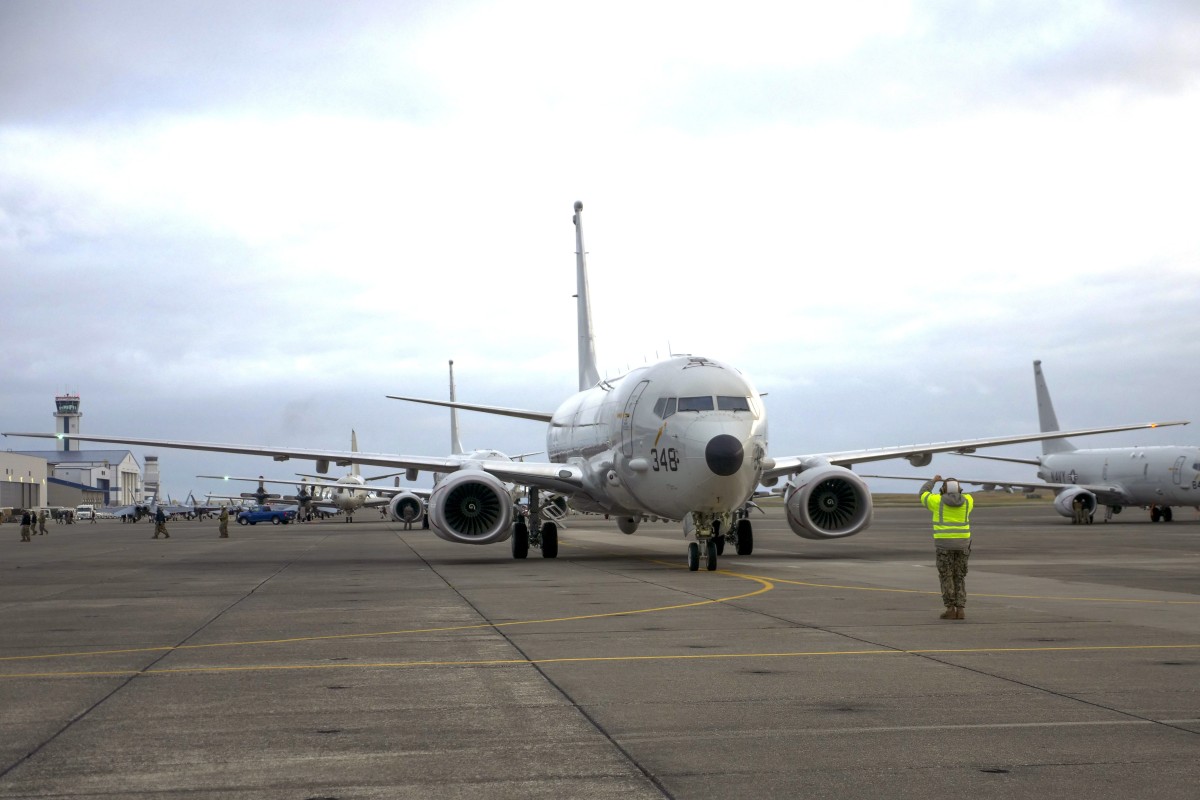
The US said a P-8A Poseidon maritime patrol aircraft was targeted as it flew over international waters in the western Pacific last week. Photo: AP
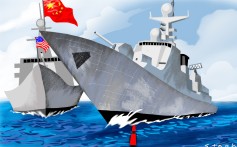
A Chinese destroyer pointed a laser at an American maritime patrol aircraft over the western Pacific Ocean last week, the US Navy said, calling the incident “unsafe and unprofessional”.
The US Pacific Fleet said in a statement on Friday that the destroyer targeted the P-8A Poseidon aircraft as it flew over international waters about 610km (380 miles) west of Guam on February 17.
“The laser, which was not visible to the naked eye, was captured by a sensor on board the P-8A,” the statement said. “Weapons-grade lasers could potentially cause serious harm to aircrew and mariners, as well as ship and aircraft systems.”
It said the action by the Chinese warship had breached the multilateral Code for Unplanned Encounters at Sea, which “specifically addresses the use of lasers that could cause harm to personnel or damage to equipment”.
China’s arms industry back in business despite disruption by coronavirus
The action was also “inconsistent” with a memorandum of understanding reached between the US and Chinese defence ministries on rules of behaviour for safety during air and maritime encounters, the US Pacific Fleet said.
The P-8A is deployed to the Kadena Air Force Base in Okinawa, Japan, and is part of a squadron that conducts routine operations, maritime patrols and reconnaissance in the US 7th Fleet area of operations, according to the statement.
China and the United States have exchanged tough words as tensions simmer over their military activities in the Asia-Pacific region, particularly over the South China Sea and Taiwan.
A Chinese destroyer is said to have pointed a laser at a US Navy aircraft near Guam.
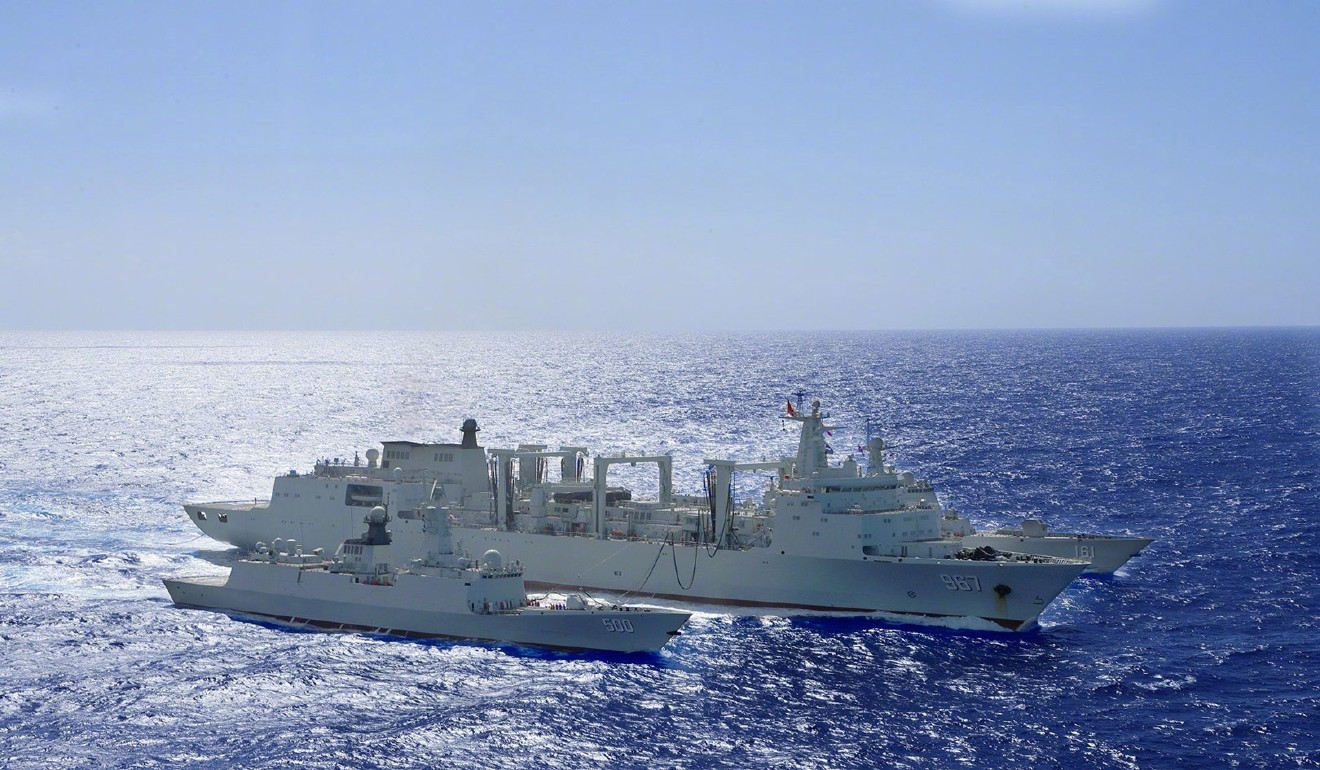
Photo: Weibo The Chinese South Sea Fleet completed a 41-day drill in the western Pacific earlier this week, according to state media, in a move to show its military exercises were continuing even as the country battles the coronavirus epidemic.
Collin Koh, a research fellow with the S Rajaratnam School of International Studies at Singapore’s Nanyang Technological University, said the latest incident was a “serious provocation”, noting that the Chinese military had also pointed lasers at the US in Djibouti.
The South China Sea dispute explained
“Use of lasers is as dangerous as manoeuvring one’s aerial or naval asset too close to another to cause the potential of collision – the lasers can pose a serious navigational hazard,” Koh said.
“While both [the Chinese and US navies] have the legitimate right to carry out their activities on the high seas out there in the western Pacific – including the use of these platforms to monitor each other – the use of lasers to endanger navigation in fact represents a serious provocation,” he said.
“The US Navy P-8A might have flown lower for closer observation, but I don’t think it went to the point of risking a collision with the [Chinese] warship.”
The incident was likely to further undermine trust and military stability between China and the United States, Koh said.
Conflict prevention in the South China Sea depends on China abiding by the existing rules of navigation
“It also wouldn’t be the first time the [Chinese navy] formations would have had ‘company’ from US military assets keeping tabs on them,” he said.
But Hong Kong-based military commentator Song Zhongping rejected the US Navy’s claim that the Chinese warship had violated the code of conduct, saying its action was just a routine warning.
“The US is unhappy because the Chinese fleet was very close to Guam, and it saw the Chinese fleet as taking an unfriendly measure against the US,” he said.
“But it’s normal for a naval fleet and aircraft to send warnings to each other,” Song said. “If the other side’s reconnaissance plane gets too close to vessels, it can be a security risk. So they take self-defence measures.”
Source: SCMP
Posted in ‘serious provocation’, ‘unsafe and unprofessional’, Chinese, Code of conduct, coronavirus epidemic, Guam, Japan, Kadena Air Force Base, laser, navigational hazard, Okinawa, P-8A Poseidon, patrol aircraft, pointed, Singapore’s Nanyang Technological University, The Chinese South Sea Fleet, Uncategorized, US Pacific Fleet, warship |
Leave a Comment »
21/02/2020
- China Passenger Car Association said sales fell to just 4,909 units in the first 16 days of February, from 59,930 in the first quarter of 2019
- The growth rate for China’s imports and exports is expected to decline sharply in the January-February period
Commuters make their way along an expressway during rush hour in Beijing. Photo: AP
A 92 per cent drop in car sales in China in the first half of February provided the first real indicator of the economic impact of the coronavirus epidemic, with officials also warning of a sharp decline in Chinese exports and imports for the first two months of the year.
The China Passenger Car Association (CPCA) on Friday said that sales dropped to just 4,909 units in the first 16 days of the month, down from 59,930 vehicles in the same period a year earlier.
“Very few dealerships opened in the first weeks of February and they have had very little customer traffic,” said the CPCA.
China’s car market is likely to see sales slide more than 10 per cent in the first half of the year due to the outbreak, and around 5 per cent for the whole year, provided the virus is effectively contained before April, the country’s top industry body, the China Association of Automobile Manufacturers (CAAM), said last week.
Chinatowns around the world feel effects of coronavirus fears
The sector was already under pressure from the cooling economy, with car sales falling 3 per cent in 2018 in the first sales contraction since the 1990s, and 8.2 per cent in 2019, CAAM said.
“We must firmly believe that China’s auto market still has great development space and potential, and the automobile consumption demand is still strong,” Wang Bin, vice-director of the commerce market operation department at the commerce ministry, said on Thursday.
To stabilise the market, in which more than 25 million vehicles were sold last year, China’s commerce ministry said it will introduce more measures to
boost consumption.
Li Xingqian, head of foreign trade at the Ministry of Commerce, said the growth rate for China’s exports and imports would decline sharply in the January-February period due to a collapse in logistics and the delayed
start of work following the extended Lunar New Year holiday, which was aimed at controlling the coronavirus outbreak.
“The impact of the epidemic on the first quarter is here objectively, should not be underestimated, but [growth] is still within the tolerable range,” he said on Friday. “As the
prevention and control [measures] achieve new staged results, foreign trade will inevitably resume its growth. China’s
foreign trade development is expected to remain within a reasonable range throughout the year.”
China cancelled the release of its January trade data, with the General Customs Administration of China saying it will combine January and February’s data in an effort to remove
seasonal volatility from the Lunar New Year period. Statistics will be released in early March.
Trade is traditionally volatile over the first two months of the year in China. Shipments are heavily affected by the Lunar New Year break, with this volatility to be exacerbated by the coronavirus outbreak, which causes the disease officially known as Covid-19.
Zong Changqing, head of the commerce ministry’s foreign investment department, also conceded the virus could hit inward investment over the entire first quarter of 2020. Zong claimed the impact would only be temporary, and that China remained an attractive environment for foreign investment.
Foreign direct investment (FDI) in China in 2019 rose 5.8 per cent from a year earlier to 941.5 billion yuan (US$134 billion), according to the commerce ministry. FDI in China also saw a steady year-on-year increase of 4 per cent last month, compared with a growth of 4.8 per cent registered in January 2019.
The impacts of the outbreak on foreign investment have begun to show, and are expected to become greater in February and March. Zong Changqing
“The impacts of the outbreak on foreign investment have begun to show, and are expected to become greater in February and March,” Zong said.
He confirmed that the ministry asked local authorities in Shandong province to push all 32 South Korean-owned car parts companies to restart production by the end of last week to keep the global supply chain stable.
He also said that over 80 per cent of key foreign-owned enterprises in Shanghai, Shandong and Hunan province had reopened, with most regions expected to restore production by the end of February, provided the spread of the virus is contained.
However, a survey by the American Chamber of Commerce in Shanghai, released earlier this week, found that in the vast majority of cases, factories that have reopened are running at a fraction of their production capacity.
Source: SCMP
Posted in car sales collapse, China Association of Automobile Manufacturers (CAAM), China Passenger Car Association, China Passenger Car Association (CPCA), Chinatowns, coronavirus epidemic, exports and imports, Foreign Direct Investment (FDI), foreign trade development, General Customs Administration of China, global supply chain, Hunan Province, lunar new year, Ministry of Commerce, prevention and control [measures], seasonal volatility, shandong province, Shanghai, sharp trade decline, South Korean-owned car parts companies, Uncategorized |
Leave a Comment »
25/01/2020
- Teams from Shanghai, Guangdong – including experts who helped tackle Sars – arrive in Wuhan to lend their support
- Tencent, JD.com, Lenovo among raft of private firms offering financial aid to those battling deadly outbreak
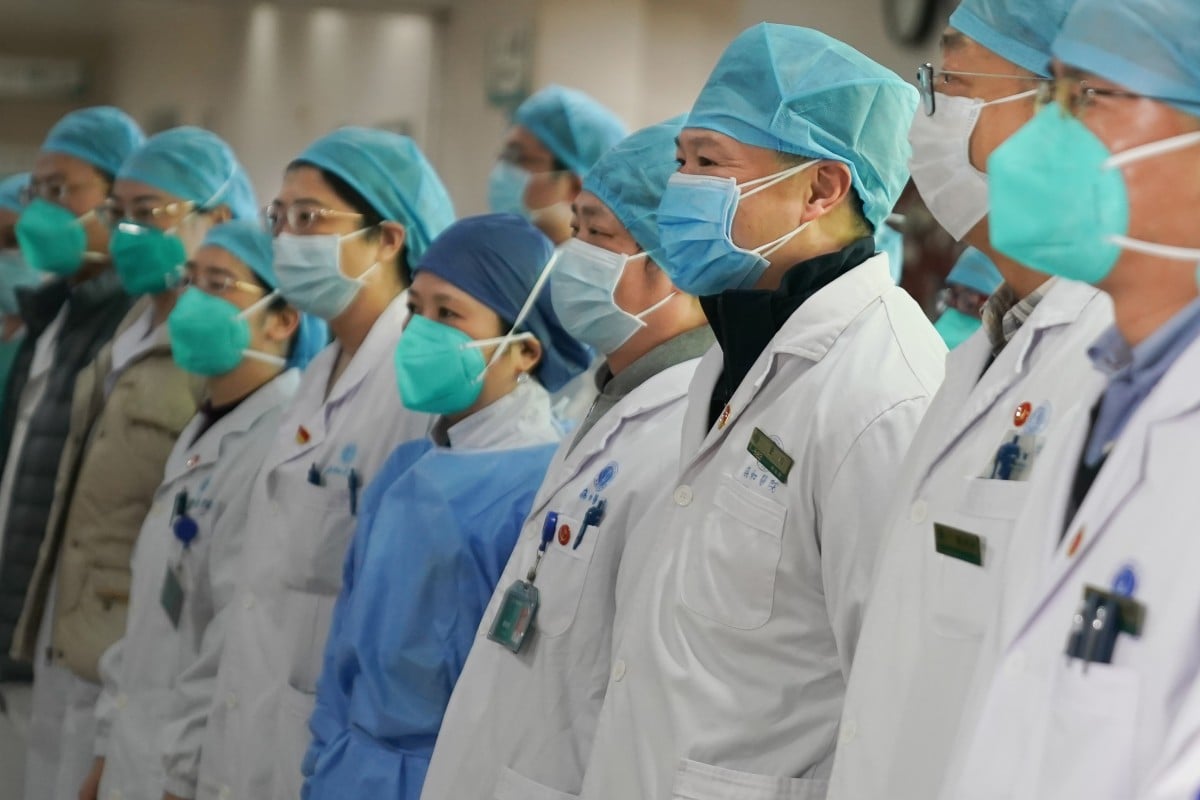
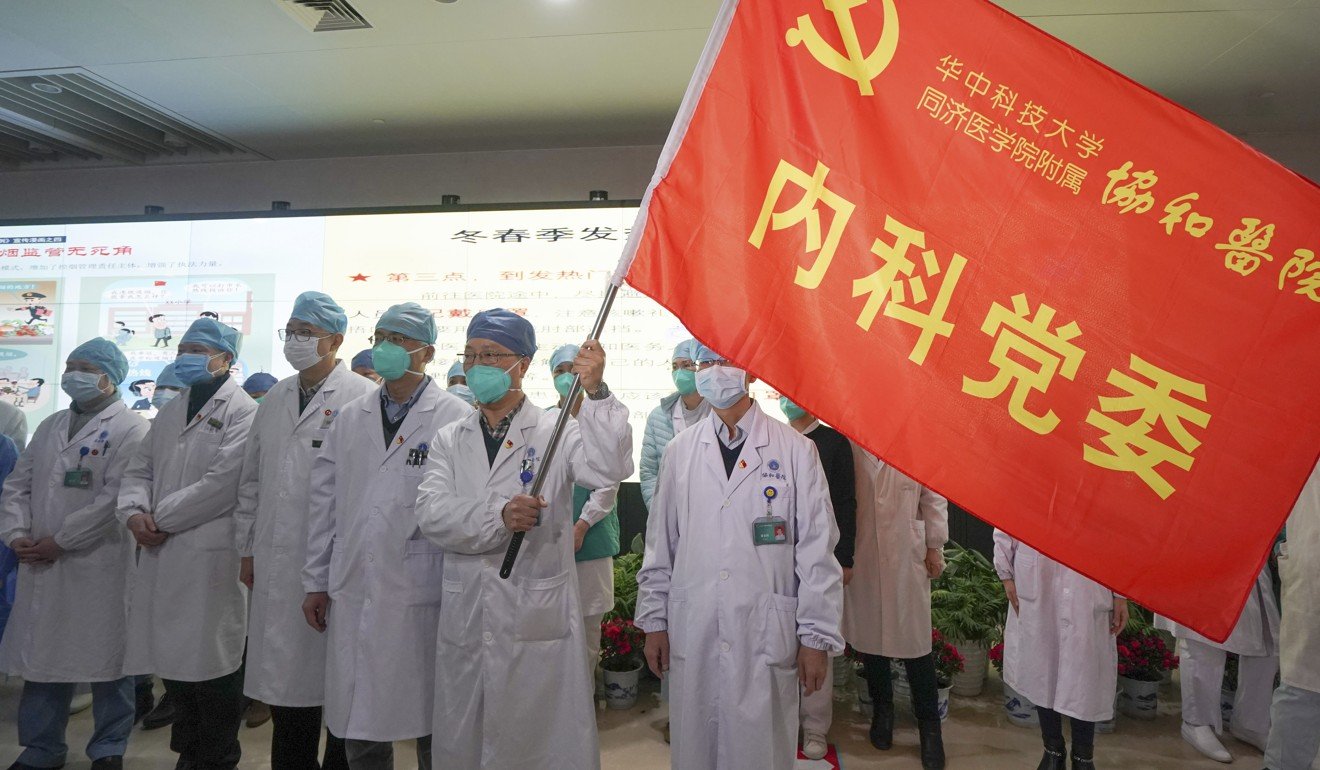
Doctors and nurses from across China are being dispatched to help tackle the coronavirus epidemic in Hubei province. Photo: Xinhua
Chinese authorities and private enterprises are stepping up their support for embattled medical teams in Hubei province as they continue to fight the
coronavirus epidemic, while neighbouring governments ramp up their efforts to prevent its further spread.
Hospitals across Wuhan – the city at the centre of the outbreak – have been overwhelmed by the flood of patients and doctors are becoming increasingly frustrated at the lack of support, both in terms of supplies and personnel, they have received.
But national bodies say they are responding to the crisis.
On Saturday, China’s National Health Commission (NHC) said that six medical teams comprising 1,230 staff had been set up and dispatched to help fight the deadly virus in Hubei.
Three medical units from Shanghai, Guangdong and the armed forces had already arrived in the province, it said, though did not make clear if they were in addition to or part of the six teams.
Chen Dechang, a doctor from Ruijin Hospital in Shanghai who is among those sent to Hubei, said it was important there were more medical staff on the scene.
“We can help save more patients in the intensive care unit if we are on the front line,” he said.
Authorities in Shanghai have also sent 81 ECMO (extracorporeal membrane oxygenation) life-support machines to Jinyintan Hospital, which is one of the designated facilities treating patients in Wuhan.
The ECMO technique – which involves removing blood from a person’s body, removing the carbon dioxide and oxygenating red blood cells before pumping them back into the patient – has already been used on one critically ill patient at Wuhan University’s Zhongnan Hospital, according to Shanghai-based news outlet Thepaper.cn.
Though the report did not say how effective the treatment had been.
Medical teams in Wuhan have been under huge pressure since the outbreak began. Photo: Xinhua
The team from Guangdong comprised 42 doctors and 93 nurses, the NHC said. The deployment came after a group of current and former medical staff from Southern Medical University in Guangzhou – who had helped tackle the Sars (severe acute respiratory syndrome) outbreak in 2002-03 – signed a petition saying they were willing to help in Wuhan.
“We are a team of experienced practitioners who fought Sars,” they said in the petition, a copy of which was posted on the social media accounts of Communist Party mouthpiece People’s Daily.
“We cannot back away from our responsibility to help 17 years later as people are facing the outbreak of a new coronavirus. We are willing to be deployed to the front line to make our contributions.”
A team of 135 doctors from Chongqing arrived in Wuhan on Friday evening, the NHC said, without elaborating.
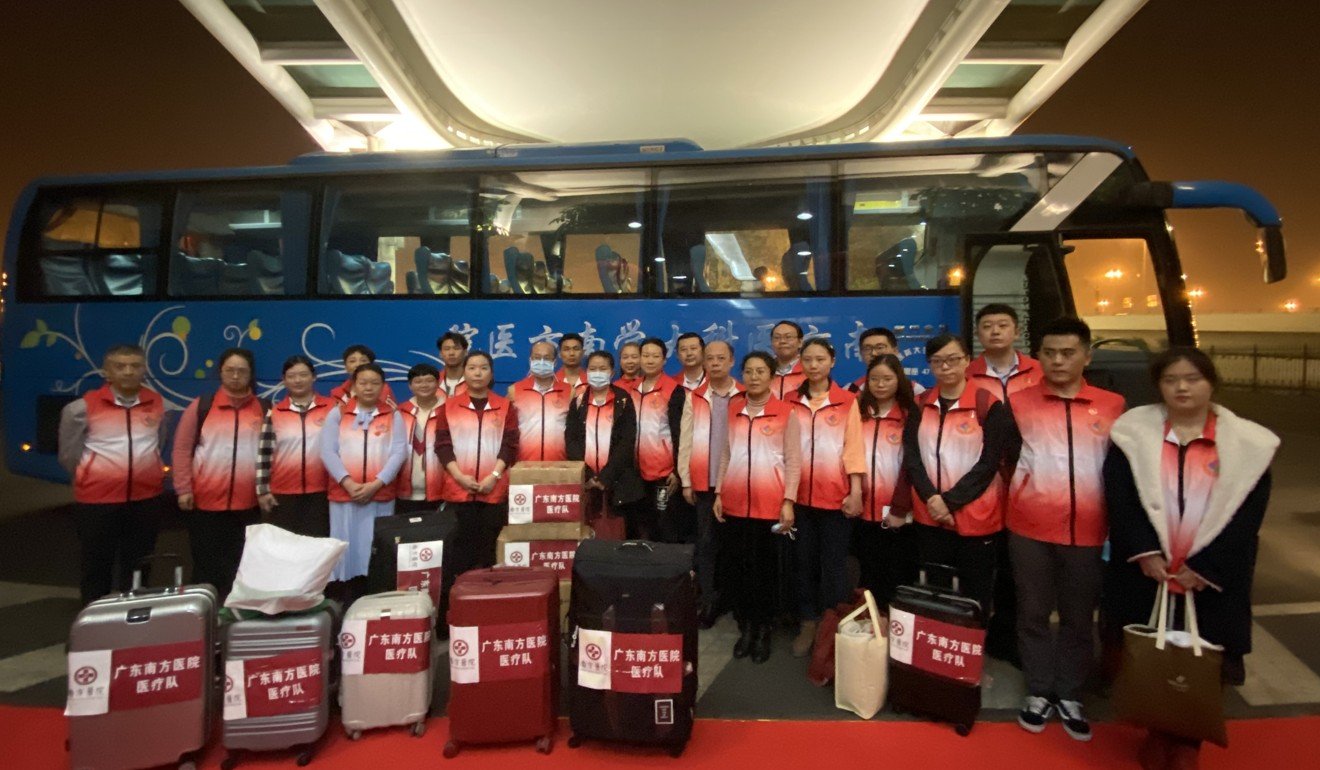
A medical team from Guangdong province prepares to travel to Wuhan. Photo: Xinhua
As well as the wave of medical support, several private companies said they had provided financial support to help fight the epidemic.
According to Chinese media reports, Shanghai Ocean Forest Assets has donated 10 million yuan (US$1.4 million) to the cause, while Shanghai-based asset management firm, Jinglin Assets is coordinating efforts to buy urgently needed medical supplies from South Korea and Japan.
Shenzhen’s Fantasia Holdings said it would donate 6 million yuan and send medical supplies, including surgical masks, to Wuhan, while tech giant Tencent said it would donate 300 million yuan from its charity. E-commerce platform JD.com said it had donated 1 million surgical masks and 60,000 other medical items.
Chinese smartphone manufacturer Xiaomi said on Friday it had sent a first batch of medical equipment – masks and thermometers worth more than 300,000 yuan – to Wuhan, while tech firm Lenovo said on Saturday it would donate all of the IT equipment required by the new specialist treatment centre being built in the city.
Authorities set a target to have the 1,000-bed facility up and running within six days of starting construction.
Aside from the support from the private sector, state lender China Development Bank on Friday issued a 2 billion yuan emergency loan to Wuhan, while a day earlier, China’s finance ministry said it had allocated 1 billion yuan to authorities in Hubei to help tackle the epidemic.
Across the country, authorities have introduced a number of measures to help prevent the further spread of the coronavirus, including the closure of all cinemas in Shanghai.
Wuhan residents stockpile food, medical supplies
25 Jan 2020
Also on Saturday it was reported that Liang Wudong, a doctor at Xinhua Hospital in Wuhan, had become the first medical professional to die after treating people infected with the virus.
Liang, 62, was suspected of having contracted the virus last week and had been transferred to Jinyintan Hospital for treatment. He died at 7am on Saturday, Thepaper.cn reported.
According to official figures, 41 people have been killed by the coronavirus and there have been more than 1,280 confirmed cases. The vast majority are in the Chinese mainland, but there have also been confirmed cases in Hong Kong, Macau, Taiwan and eight other countries, including the United States and Europe.
Tens of millions of people in cities across Hubei are effectively on lockdown after the introduction of travel bans to help control the spread of the virus.
Source: SCMP
Posted in China, China Development Bank, chinese authorities, Chongqing, coronavirus, coronavirus epidemic, deploys, doctors and nurses, ECMO (extracorporeal membrane oxygenation) life-support machines, ECMO technique, Europe, Guangdong, help fight, Hong Kong, Hubei, hubei province, Japan, JD.com, Jinglin Assets, Jinyintan Hospital, Lenovo, Macau, money, National Health Commission (NHC), People’s Daily, pledge, private enterprises, private firms, Ruijin Hospital, SARs, Shanghai, Shanghai Ocean Forest Assets, Shenzhen’s Fantasia Holdings, smartphone manufacturer, South Korea, Southern Medical University, supplies, Taiwan, Teams, TENCENT, Uncategorized, United States, Wuhan, Wuhan University, Xinhua Hospital, Zhongnan Hospital |
Leave a Comment »





 CHINDIA ALERT: You'll be living in their world, very soon