Chindia Alert: You’ll be Living in their World Very Soon
aims to alert you to the threats and opportunities that China and India present. China and India require serious attention; case of ‘hidden dragon and crouching tiger’.
Without this attention, governments, businesses and, indeed, individuals may find themselves at a great disadvantage sooner rather than later.
The POSTs (front webpages) are mainly 'cuttings' from reliable sources, updated continuously.
The PAGEs (see Tabs, above) attempt to make the information more meaningful by putting some structure to the information we have researched and assembled since 2006.
Image copyright EPAImage caption The world’s second-most populous country has reported about 182 infections
“We have a simple message to all countries – test, test, test,” World Health Organisation (WHO) head Tedros Adhanom Ghebreyesus told reporters in Geneva earlier this week.
He was alluding to the coronavirus outbreak, which has killed more than 10,000 people and infected nearly 250,000 in at least 159 countries.
“All countries should be able to test all suspected cases, they cannot fight this pandemic blindfolded,” he said.
With 182 reported infections and four deaths so far, is India taking this advice seriously? Is the world’s second-most populous country testing enough?
The jury is out on this one. India had tested some 14,175 people in 72 state-run labs as of Thursday evening – one of the lowest testing rates in the world. The reason: the country has limited testing. So, only people who have been in touch with an infected person or those who have travelled to high-risk countries, or health workers managing patients with severe respiratory disease and developing Covid-19 symptoms are eligible for testing.
Why is a densely populated country with more than a billion people testing so little? The official assumption is the disease has still not spread in the community. As early “evidence” health authorities say 826 samples collected from patients suffering from acute respiratory disease from 50 government hospitals across India between 1 and 15 March tested negative for coronavirus. Also, hospitals have not yet reported a spike in admissions of respiratory distress cases.
“It is reassuring that at the moment there is no evidence of community outbreak,” says Balram Bhargava, director of the Indian Council of Medical Research (ICMR). He believes Mr Ghebreyesus’s advice is “premature” for India, and it would only “create more fear, more paranoia and more hype”.
Media caption Dr Ramanan Laxminarayan: “India’s going to be the next hot spot for this epidemic”
But experts are not so sure.
Many of them believe India is also testing below scale because it fears that its under-resourced and uneven public health system could be swamped by patients. India could be buying time to stock up on testing kits and add isolation and hospital beds. “I know mass testing is not a solution, but our testing appears to be too limited. We need to quickly expand to restrict community transmission,” K Sujatha Rao, former federal health secretary and author of But Do We Care: India’s Health System, told me.
On the other hand, say virologists, random, on-demand testing will create panic and completely strain the feeble public health infrastructure. Increased and targeted “sentinel screening” of patients suffering from influenza and diagnoses in hospitals across the country can provide a better idea of whether there is community transmission, they say. “We need focused testing. We cannot do a China or Korea because we simply don’t have the capacity,” a senior virologist told me.
In many ways, it is all about India trying to battle a pandemic with limited resources. Experts talk about the country’s success in defeating polio, combating small pox, successfully controlling the spread of HIV/Aids, and more recently H1N1 with rigorous surveillance, sharp identification of vulnerable people, targeted intervention, and an early engagement with the private sector to prevent disease spread.
Yet, coronavirus is one of the deadliest transmissible viruses in recent history. Every day lost in effective response means the looming danger of a surge in infections. India spends a paltry 1.28% of its GDP on health care, and that may begin to bite if there’s a full-blown outbreak. Partial lockdowns in many cities – shutting schools, colleges, businesses and suspending some rail transport – proves that the government fears that community transmission of the virus might have begun.
Image copyright GETTY IMAGESImage caption The official assumption is the disease has still not spread in the community
Bracing for the inevitable, India is scaling up testing. Officials say existing labs are able to provide results in six hours and each lab has the capacity to test 90 samples a day which can be doubled. Fifty more state labs are expected to begin testing samples by the end of the week, bringing the total number of testing facilities to 122. Authorities claim that together, the labs will be able to test 8,000 samples a day – a significant scaling up. In addition, the government is planning to allow around 50 private labs to start testing, but they will take up to 10 days to procure kits. (Testing at state-run labs is free, and it is unclear whether the private labs will charge.)
Two rapid testing labs, capable of doing 400 tests a day, are expected to be operational by the end of the week. India has also placed orders for a million test kits, and will be possibly asking the WHO for a million more.
“On testing, the government response has been proportionate, taking into account scope, need and capacity,” Henk Bekedam, WHO Representative to India told me. “We recognise that laboratory networks are expanding the scope and testing and they now include patients with severe acute respiratory infection and influenza-like illness detected through the surveillance system. It would also be important to look at ‘atypical pneumonia’ cases. If they are without any distinctive cause, then they need to be considered for testing.”
Image copyright GETTY IMAGESImage caption India could be buying time to stock up on testing kits and add isolation and hospital beds
The weeks and months ahead will show whether these steps have been enough. “We cannot say India has escaped community transmission,” Mr Bhargava says candidly. And if and when there is an explosion of infections and more sick people require hospitalisation, India will face formidable challenges.
India has eight doctors per 10,000 people compared to 41 in Italy and 71 in Korea. It has one state-run hospital for more than 55,000 people. (Private hospitals are out of reach for most people). The country has a poor culture of testing, and most people with flu symptoms do not go to doctors and instead try home remedies or go to pharmacies. There’s a scarcity of isolation beds, trained nursing staff and medics, and ventilators and intensive care beds.
India’s influenza cases peak during the monsoon season, and there is no reason why the coronavirus will not make a second coming, virologists say. “Given the way it is progressing in India, it seems it is about two weeks behind Spain and three weeks behind Italy. But that’s the number of known cases. And without sufficient testing and shutting down large gatherings, the numbers could be a lot worse,” Shruti Rajagopalan, economist and a Senior Research Fellow at the Mercatus Center at George Mason University, told me.
India’s traditional neglect of public healthcare will begin to bite if the disease spreads to its teeming small towns and villages. “This is a very unique and real public health challenge,” says Ms Rao. And it’s early days yet.
NANJING, March 19 (Xinhua) — Chinese cities are encouraging residents to dine out and shop with measures such as handing out e-vouchers to boost consumption sectors hit hard by the novel coronavirus outbreak.
Like many living in the eastern city of Nanjing, Wang Linlin was waked up by her alarm clock at midnight and with a few clicks on her cellphone, she was ready to meet her luck of the draw: getting a meal voucher worth 100 yuan (about 14.2 U.S. dollars).
“I’ve always been thinking about hanging out and having hotpot with my friends after the epidemic, so getting a voucher would be great,” Wang said.
Nanjing has been giving out vouchers worth 318 million yuan to its residents since Sunday. People are invited to participate in lotteries for e-vouchers which can be used in restaurants, gymnasiums, bookshops as well as tourist spots, helping the service sector bounce back.
The voucher bonus has been well received as more than 1.6 million local citizens have registered for the lotteries as of Monday, according to the Nanjing Big Data Administration Bureau.
Besides Nanjing, many other regions have also been taking similar actions.
Macao gives out vouchers totaling 2.2 billion patacas (about 275 million U.S. dollars) to its residents. The city of Ningbo in east China’s Zhejiang Province is issuing consumption vouchers worth 100 million yuan while the city of Jinan, east China’s Shandong Province, is handing out vouchers worth 20 million yuan to stimulate spending on tourism and culture.
Due to the coronavirus outbreak, Chinese customers have shied away from restaurants and shopping malls. China’s retail sales of consumer goods, a major indicator of consumption growth, declined 20.5 percent year on year in the first two months of this year, according to the National Bureau of Statistics.
“People are more willing to dine out with the vouchers, which can boost confidence in the catering sector and finally get the economy back on track,” said Shen Jiahua, chairman of a chain restaurant company in Nanjing.
After the coronavirus outbreak ends, people are eager to spend generously. According to a survey conducted by the Jiangsu consumers council, nearly 90 percent of the respondents expressed suppressed consumption desire.
Restaurants, shopping malls, movie theaters, gymnasiums and tourist spots are the top five destinations for consumers to unleash their spending spree after normal life resumes, the survey showed.
Local officials across China have been taking the lead in recent days in patronizing restaurants and shopping malls, hoping to use their appearances in public to persuade more residents to go outside.
In provinces such as Jiangsu, Anhui, and Jiangxi, government notices have urged officials to dine out and go shopping to help related businesses through the epidemic period.
“Government officials are using their actions to convey confidence and support work resumption and consumer spending,” commented a Chinese netizen.
Image copyright GETTY IMAGESImage caption Small groups of young people can be seen playing sports as schools, colleges and even gyms are shut.
Life in India has changed dramatically as the world’s second-most populous country grapples with the coronavirus outbreak.
Otherwise crowded and chaotic cities have quietened down as people stay home, traffic slows and even weddings shrink in size and scale.
India has confirmed 151 active cases and three deaths – but public health experts fear that the low count is the result of limited testing and under-reporting. The country has only conducted about 12,000 tests so far, partly because of a shortage of testing kits.
So it’s still unclear if and to what extent community transmission exists in India – community transmission means a patient had no known contact with another confirmed case or travelled from a country badly affected by the pandemic.
However, India’s central government, several state governments and city administrations have already responded with drastic measures.
Image copyright GETTY IMAGES
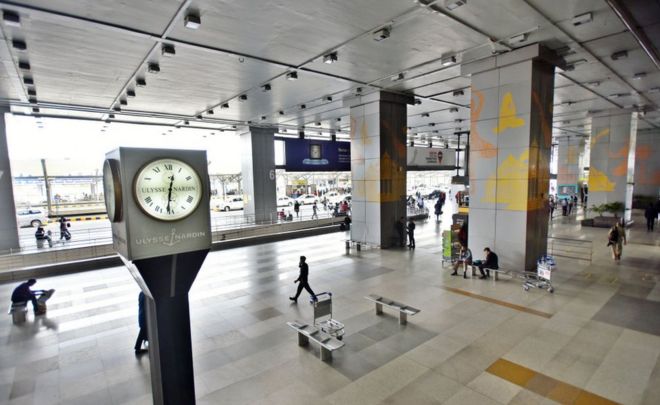
The Indira Gandhi international airport in the national capital Delhi, is the country’s busiest airport but it appears deserted nowadays.
India has barred entry to everyone, including citizens, flying from certain countries, including the UK and most European nations. It has also cancelled most entry visas to people (excluding citizens) flying in from other countries.
This has led to numerous flight cancellations.
Airlines are also struggling as fewer people are flying even within India, wary that new regulations could see them stranded away from their homes. Two of India’s top airlines are reportedly considering grounding planes amid plummeting demand for flights.
Image copyright GETTY IMAGES
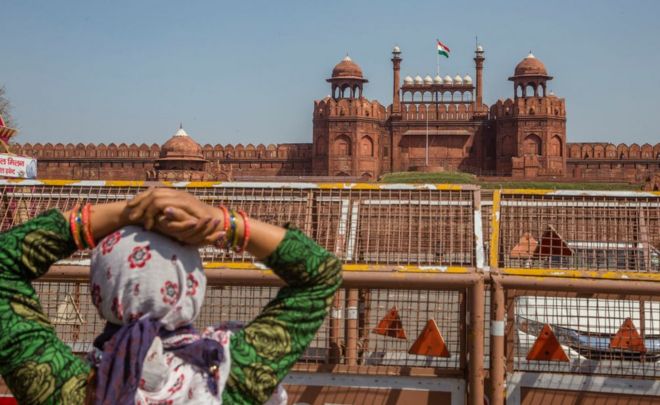
Popular Indian monuments – such as the 16th Century Red Fort in Delhi – have been shut to visitors to prevent large gatherings.
Taj Mahal, the country’s most iconic monument, closed its doors on Tuesday, along with more than 140 other monuments and museums.
With fewer people visiting and closures of public places likely to go up, tourism is expected to take a huge hit across India – the Taj alone draws as many as 70,000 people a day.
Image copyright GETTY IMAGES
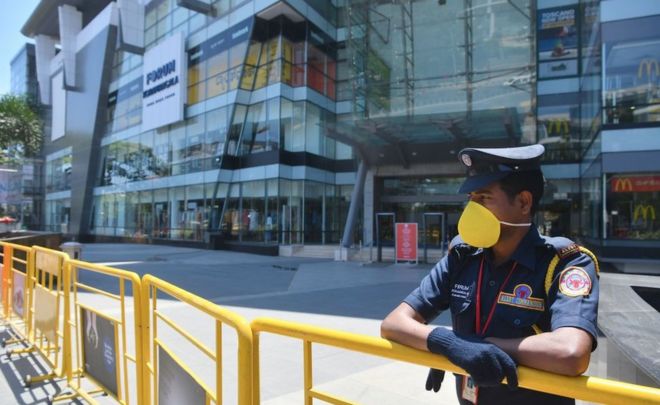
Bangalore, an IT hub in southern India, is among the major cities that has shut down its malls – such as the one above – and schools, colleges, cinema halls and other public places have been closed since late last week. Other major cities such as Delhi, the financial hub Mumbai and Hyderabad in the south, have done the same.
City officials have also imposed restrictions on large gatherings such as weddings, cricket matches or any public ticketed events.
Image copyright GETTY IMAGES
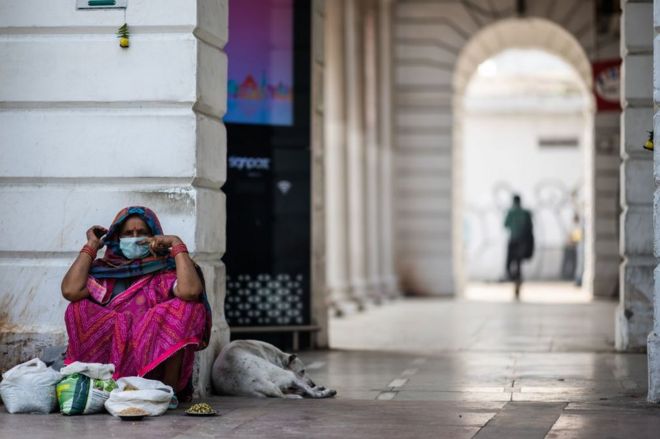
Some of Delhi’s busiest spots, such as Connaught Place, are mostly empty.
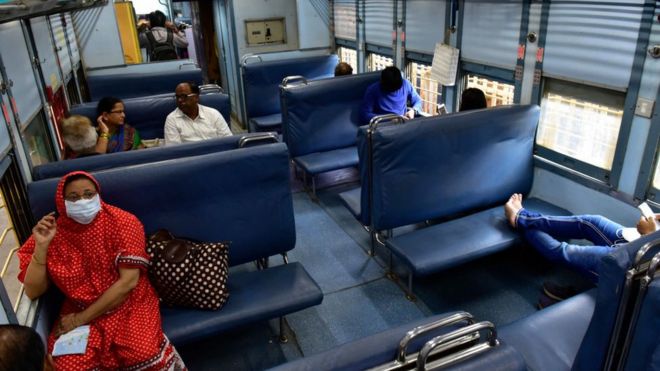
There has also been a significant drop in the number of people using trains, which remain the most popular form of transport in India.
Image copyright GETTY IMAGES
The service from Mumbai to Pune city – which takes about three to four hours – has seen about a 30% fall in passenger traffic, according to some estimates.
The western state of Maharashtra, where both cities are located, has reported the highest number of cases in India so far. The central railways has already cancelled 23 long distance trains going to and from Mumbai – officials say the reason is both the virus and the lower number of passengers.
Overall, more than 150 trains have been cancelled across India. This number could increase in coming days.
Image copyright GETTY IMAGES
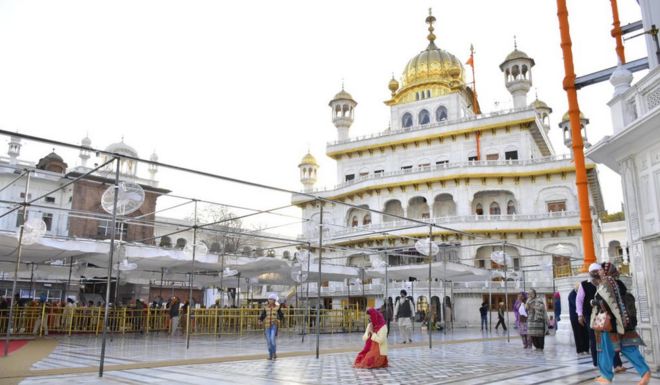
Many holy sites, including the Golden Temple – one of the holiest shrines in Sikhism – remain open, although the footfall is much lower. It’s quite unusual to see such few people in what is one of India’s busiest shrines.
Tirumala Tirupati, the richest Hindu temple, has cancelled many of its daily rituals and is restricting the number of pilgrims for the first time.
Some major Hindu temples, such as the Siddhivinayak temple in the heart of Mumbai, and the Vaishno Devi cave shrine, have closed.
Image copyright GETTY IMAGES
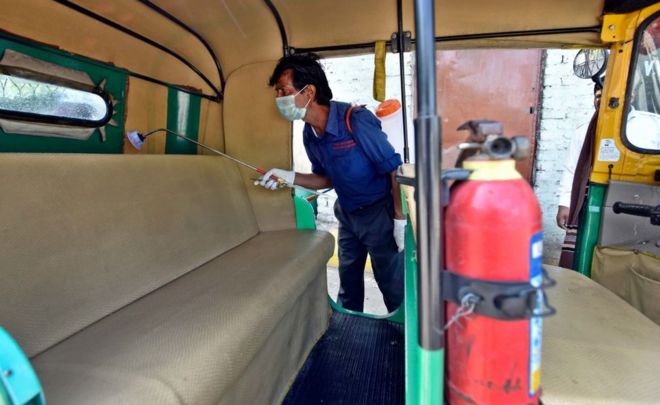
City officials in Delhi have begun sanitising auto rickshaws and taxis to contain the spread of the virus.
Public transport poses a major challenge to containing the outbreak. But it continues to be used regularly across India, even as governments encourage people to stay home as much as possible.
But not all offices have work from home options, and this is especially a challenge for the millions who work in India’s informal sector – these include domestic help, street vendors and daily wage workers.
Image copyright GETTY IMAGES
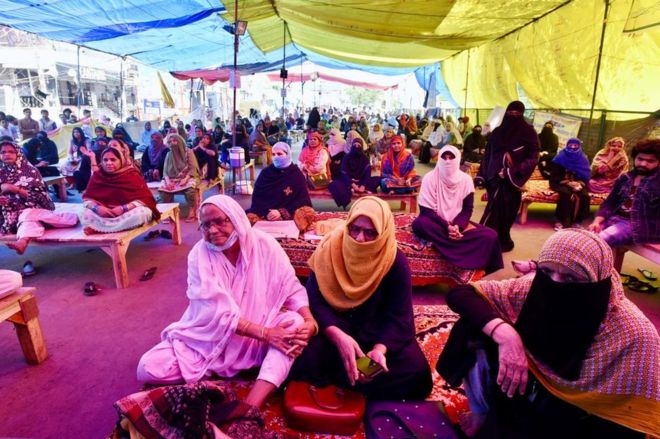
Surprisingly, sit-in protests against India’s controversial new citizenship law continue in some cities, including Delhi and Bangalore.
The most prominent of these, pictured above, is happening in Delhi’s Shaheen Bagh neighbourhood. Thousands of protesters, mostly Muslim women, have been demonstrating against the law, which critics say is anti-Muslim, since December.
But Delhi has shut down schools, colleges, gyms, night clubs, spas and swimming pools – and Chief Minister Arvind Kejriwal has said all social, political and religious gatherings with more than 50 people would be stopped.
Image copyright GETTY IMAGES
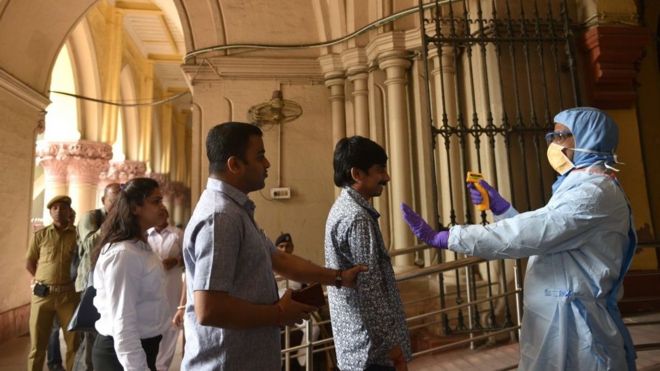
Temperature checks have become a common feature across cities – here, people are being screened before they enter the high court in the eastern city of Kolkata (formerly Calcutta).
This practice has been adopted at airports, corporate offices and several other places that remain open despite the restrictions.
Image copyright GETTY IMAGES
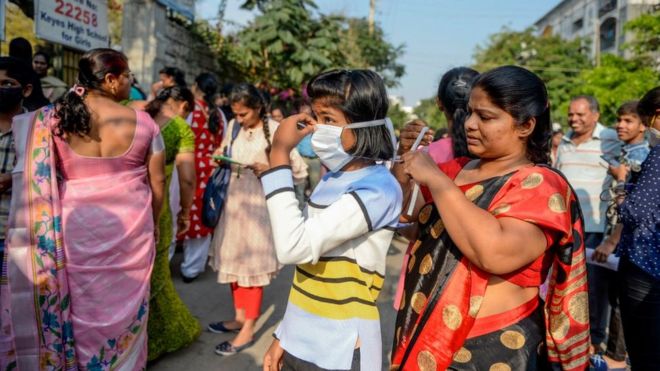
In the southern city of Hyderabad, students appeared for their school-leaving exams, but they came armed with masks.
Delhi, however, has postponed all school examinations.
Experts say India could impose more sweeping lockdowns as the toll climbs further.
Alibaba co-founder Jack Ma has sent the first shipment of surgical masks and coronavirus test kits to the US.
The Chinese billionaire tweeted two pictures of the pallets of goods being loaded on to a plane in Shanghai.
Earlier this month he said he would give 500,000 testing kits and one million masks to America.
Mr Ma is also sending consignments of medical supplies to Europe as he called for international cooperation efforts to combat the pandemic.
In his first tweet, Asia’s richest person posted photos of a China Eastern Airlines jet being loaded with boxes of coronavirus test kits and face masks as they were shipped to the US.
It comes after the Jack Ma Foundation and the Alibaba Foundation last week announced that they had prepared 500,000 testing kits and 1 million masks to be sent to America.
They also said that they had already donated supplies to other countries including Japan, South Korea, Italy, Iran and Spain, with two million protective masks pledged for distribution across Europe.
The first consignment of 500,000 masks and other medical supplies such as test kits, which was destined for Italy, arrived in Belgium on Friday.
He joins other high-profile technology executives in pledging support for coronavirus research and disease prevention.
Microsoft co-founder Bill Gates, who is the world’s second-richest person, has announced that the Bill and Melinda Gates Foundation would give $100m to help efforts to stop the spread of the virus.
On Friday Mr Gates announced that he was stepping down from Microsoft’s board to spend more time on philanthropic activities. He said he wanted to focus on global health and development, education and tackling climate change.
Chinese tech giants, including Tencent, ride-hailing company Didi Chuxing, and TikTok owner ByteDance, have all pledged money and resources to fight the coronavirus outbreak.
China is now making more than 100 million masks a day, up from 20 million before the coronavirus outbreak, and may start to export more to other countries
Mask shortages elsewhere once more raise the debate about an over-reliance on China, with critics pointing to a lack of US industrial policy
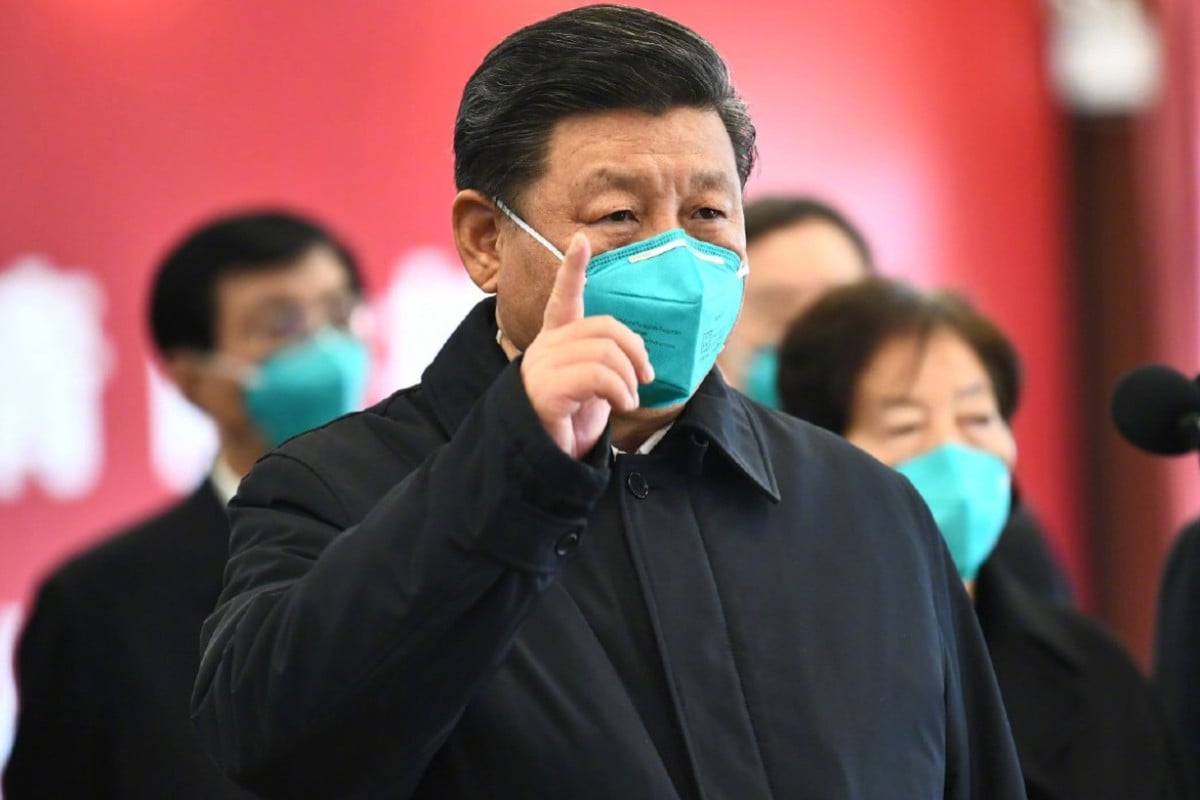
China was producing 116 million masks per day of February 29, including a mix of disposable and high-end masks like the American-designed N95 model worn by President Xi Jinping on his trip on Tuesday to Wuhan. Photo: Xinhua
The Liu family factory has been making diapers and baby products in the Chinese city of Quanzhou for over 10 years, but in February, for the first time, it started making face masks, as demand soared spectacularly due to the coronavirus outbreak.
The business – which employs 100 people in the Southeastern Fujian province – has added two production lines to make up to 200,000 masks a day.
And while the decision was primarily commercial, “encouragement” from the Chinese government – in the form of subsidies, lower taxes, interest-free loans, fast-track approvals for expansion and help alleviating labour shortages – made the decision an obvious one, said Mr Liu who preferred only to give his family name.
“The government is advocating an expansion in production,” Liu said. “With faster approvals, producers need to prioritise the government’s needs over exports.”
WHO declares coronavirus crisis a pandemic
The factory is one of thousands of refitted pop-ups around China making masks and other protective equipment for the first time, part of a massive industrial drive to respond to the spread of the coronavirus.
Before the outbreak, China already made about half the world’s supply of masks, at a rate of 20 million units a day. That rose to 116 million as of February 29, according to China’s state planning agency, a mix of disposable and high-end masks like the American-designed N95 model worn by President Xi Jinping on his trip on Tuesday to Wuhan, the epicentre of the outbreak.
This exponential jump is the result of a wartime-like shift in industrial policy, with Beijing directing its powerful state-owned enterprises to lead the nationwide mask-making effort, and the country’s sprawling manufacturing engine following their lead.
For me, this is the big advantage of China, the speed Thomas Schmitz
“For me, this is the big advantage of China, the speed,” said Thomas Schmitz, president of the China branch of Austrian engineering giant Andritz, which has seen a big uptick in demand for its wet wipe-making machines in recent weeks, also due to the virus. “When you need to run, people know how to run, and this is something which has been lost in other countries since their industrial heydays.”
Chinese oil and gas major Sinopec upped production of mask raw materials such as polypropylene and polyvinyl chloride in January. This week, it set up two production lines in Beijing to produce melt-blown non-woven fabric, intended to make four tonnes of the fabric each day, which can then be used to produce 1.2 million N95 respirators or six million surgical masks a day.
The maker of China’s new J-20 stealth fighter jet, Chengdu Aircraft Industry Group, repurposed part of its factory to design a mask production line, according to local media reports. The SichuanDaily said 258 of the company’s engineers spent three days fast-tracking development of an assembly line with more than 1,200 components.
Coronavirus: From mysterious origins to a global threat
More than 2,500 companies in China have reportedly started making masks, among them 700 technology companies including iPhone assembler Foxconn and smartphone makers Xiaomi and Oppo, in an extraordinary mobilisation of resources.
The result resembles “the war effort” in the middle of the last century in the United States and western Europe, but arguably no other nation could undergo such a transformation so quickly today.
It is a reminder of what can happen in a centrally-planned economy with a strong manufacturing base, but also brings into sharp focus some of the geopolitical issues which have characterised China’s at-times difficult relationship with the rest of the world, particularly the European Union and US, over the past couple of years.
China’s dominance in manufacturing has become all the more evident as the rest of the world scrambles to shore up their own dwindling medical supplies, leading many to wonder why the world is so dependent on it for vital supplies.
The lesson for Washington is not that we need to emulate the Chinese economic model, but rather that we need to better steward the industrial base in key sectors Rush Doshi
The Italian government, which is dealing with the highest number of coronavirus cases and deaths after China, is to take shipment of 1,000 ventilators, 2 million masks, 100,000 respirators, 200,000 protective suits and 50,000 testing kits from China.
Italian foreign minister Luigi Di Maio said after a phone call with Chinese counterpart Wang Yi, they had agreed the export deal in the same week that European neighbours France and Germany banned masks from being exported because of low domestic supplies.
The Italy export deal showed that “China is emerging as a global public goods provider as the US proves unable and unwilling to lead,” said Rush Doshi, the director of the China Strategy Initiative at the Washington-based Brookings Institute think tank.
“China’s ability to produce what is needed to fight coronavirus is not simply a product of its economic model – it’s also a product of its industrial capacity,” Doshi said. “The US once had this capacity too, but it has lost important parts of it. The lesson for Washington is not that we need to emulate the Chinese economic model, but rather that we need to better steward the industrial base in key sectors.”
The frustration is felt acutely by Michael Einhorn, president of medical equipment distributor Dealmed-Park Surgical in New York, who has been trying to source stock from China for weeks, “but cannot get straight answers” from vendors.
Einhorn said he placed an order with a private seller in China’s virus-stricken city last week, but that the goods had not been shipped.
“Everyone is running out here, people are panicking in hospitals and we want to be able to help our most important customers,” Einhorn said. “We are dealing with hospitals that do not have products, how in the United States of America in 2020 did this happen?”
With the number of confirmed coronavirus cases in China falling daily, it is not inconceivable that the sort of export deal struck with Italian leaders becomes commonplace, although for now, it deal can be chalked up as a significant public relations coup for Beijing.
The World Medical Association is unable to specify how many masks are required to supply frontline medical staff in virus-hit areas, but said that “this crisis should be a wake up call for politicians and societies to make the necessary investment in emergency preparedness and to look into the vulnerability of our supply chains”.
Australian-listed manufacturer Eagle Health announced on Friday that it had installed production lines at its Xiamen factory in southern China to make 300 million masks a year and said it had already received orders from China and would be securing further larger orders internationally.
The group, which normally makes products including amino acids, protein supplements and lozenges in China, said it would prioritise meeting the large domestic demand, but was aware of an impending global shortage.
Eagle Health has already commenced production of its first order of 3.2 million medical masks for the Yiling Hospital Management Group in China, a process which will take 10 days. It has other smaller orders from Chinese government agencies and expects to receive more orders outside China.
The decision to make more masks came from increased demand. These are opportunities. The global demand for high quality masks will be significant Xu Gang
“The decision to make more masks came from increased demand. These are opportunities,” said chief executive Xu Gang. “The global demand for high quality masks will be significant. Imagine when the schools open. The situation will take some time to peak.”
Last week, the Australian Dental Association said supplies of masks at many practices were expected to run out within four weeks. The Australian government has since arranged a supply of 54 million masks for both the dental and medical industries.
At the same time, the US only has 1 per cent of the 3.5 billion masks it would need to counter a serious outbreak, Bloomberg reported.
While China has no quota on the volume of masks that had to be hived off for local consumption, the government has said domestic demand needs to be prioritised.
Businesses are free to export but overseas demand has yet to explode like it has in China, said Fujian factory owner Liu.
Wendy Min, sales director of Pluscare, a manufacturer based near the virus’ epicentre in Hubei province, said her company is making 200,000 masks per day, much of which are sold to the government, with exports still restricted by partial lockdown of workers and cargo transport.
“We previously exported to Europe, South America and other parts of Asia,” Min said. “But at the moment we can’t export. We are trying to discuss this with the government, but we cannot wait any more – we have to export soon.”
Min said that while she was receiving countless cold calls up until last week from people in China looking for masks, these have stopped, perhaps unsurprising given the abundance in supplies becoming available.
An influx of Chinese-made masks, though, is likely to be welcomed in other virus-stricken parts of the world.
Self-quarantine of all international travellers to Beijing as China fights import of coronavirus
Miguel Luiz Gricheno, CEO of Brazilian mask manufacturer Destra, said that his company is making 30,000 masks a day, but cannot meet local demand due to a lack of supplies, including the non-woven fabric from which masks are made.
“In disposable masks, most Brazilian companies are paralysed due to the lack of raw materials,” Gricheno said. “With the arrival of the coronavirus in Brazil, the demand has increased a lot but the main raw material comes from abroad.”
However, a short-term supply fix will not answer underlying questions about how so many countries found themselves in such dire straits,meaning the geopolitical fallout of the coronavirus will be extensive.
Decades of weak industrial policy helped elect US President Donald Trump, who said he would bring manufacturing jobs back to America at China’s expense. While he has waged a bruising two-year trade war with China in response, the current situation shows just how difficult it will be to change the global manufacturing processes, which are so heavily controlled by China.
One of the great flaws of globalisation is that everyone wanted things cheaper, but did you compromise your health care infrastructure in the process? Stephen Roach
“In the guise of trying to improve efficiency and create value for price-sensitive consumers, we’ve created a global production network that is very difficult to unwind,” said Stephen Roach, a professor of economics at Yale University and a veteran China watcher. “One of the great flaws of globalisation is that everyone wanted things cheaper, but did you compromise your health care infrastructure in the process.
Reuters reported that Trump is considering invoking the emergency provisions of the Defence Production Act, which would allow the government to instruct companies to alter production to help address the domestic shortage of medical supplies like masks. If a company is producing 20 per cent N95 masks and 80 per cent standard masks, the White House could order them to rejig the ratio, an unnamed official said.
The New York Times reported on Wednesday that the White House is preparing an executive order that would allow the government to buy medical supplies from overseas in the hope that it will incentivise companies to make them within the US.
But these changes still do not give Trump the sort of sweeping powers enjoyed by Chinese counterpart Xi.
“When you have a pluralistic, democratic situation that Trump is overseeing, it becomes more unwieldy” to take the steps necessary to address a crisis situation, said Harry Broadman, chair of the emerging markets practise at the Berkeley Research Group and a senior US government official in the 1980s and 1990s.
“That is why I think Trump looks at Xi with envy, because he doesn’t have to deal with a disparity of views or democratic interests,” Broadman said. “I think Trump is at heart a bilateral guy, as you saw with the phase one [US-China] trade deal and the state-to-state purchases. That is why he likes dealing with [Russian President Vladimir] Putin and Xi, because each of them can move mountains. I think Trump is very envious of that ability.”
BEIJING, March 11 (Xinhua) — China will take new measures to keep the foreign trade and investment stable, and help the enterprises tide over difficulties to mitigate the impact of the coronavirus outbreak.
Further steps will be taken to smooth the industrial and capital chain, and promote work and production resumption in coordination, according to a State Council executive meeting chaired by Premier Li Keqiang Tuesday.
Li urged continued efforts to give better play to the role of reloan and rediscount to ensure supply of materials for epidemic prevention and control and support firms in difficulty.
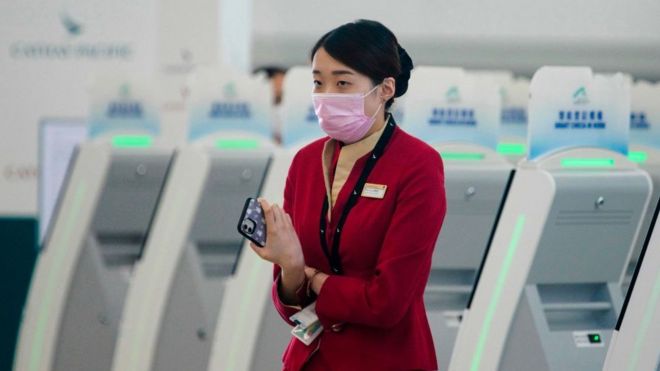
Cathay Pacific has said it expects a “substantial” loss in the first half of this year as the impact of the coronavirus outbreak takes it toll.
The Hong Kong carrier also saw a 28% drop in 2019 profits as it struggled during the city’s political protests.
The airline is now battling with the fallout of the virus as passenger numbers plummet.
Chairman Patrick Healy said the first half of 2020 was expected to be “extremely challenging financially”.
The development comes with thousands of flights already cancelled worldwide, as airlines struggle to cope with a slump in demand caused by the coronavirus outbreak.
British Airways, Ryanair and EasyJet have all cancelled flights to and from Italy until April, while Norwegian Air and American Airlines have also announced significant cuts to services.
Calling 2019 a “turbulent year”, Mr Healy said he expected “our passenger business to be under severe pressure this year and that our cargo business will continue to face headwinds”.
While Cathay Pacific has reduced flights to help save costs, “we expect to incur a substantial loss for the first half of 2020,” he added.
The airline reported a net profit of HK$1.69bn (£170m) for last year, down from a HK$2.35bn profit in 2018.
In other developments:
Dutch airline KLM is cancelling all its flights to and from Milan, Venice and Naples until 3 April
Austrian rail operator OBB has announced it is suspending all trains in and out of Italy – which has more than 10,000 confirmed cases of the virus – until further notice
Seat, the Spanish unit of car-maker Volkswagen, is considering temporary lay-offs at its Barcelona plant
Ride-hailing app Uber says it plans to offer an as-yet unspecified amount of financial assistance to its drivers who have to self-isolate for up to 14 days
Embattled sector
The airline industry faces a loss of revenue of up to $113bn this year, according to aviation trade body IATA, as thousands of planes are grounded amid travel restrictions across the globe.
After UK-based airline Flybe went into administration last week, analysts are warning of more failures to come for the embattled airline industry.
Earlier this week, Korean Air warned the coronavirus outbreak could threaten its survival, in a memo sent to employees.
The global spread of the coronavirus has hit both holidaymakers and business travellers. The Global Business Travel Association said on Wednesday that 43% of its member companies have cancelled business trips booked for this month.
BEIJING (Reuters) – Chinese President Xi Jinping visited Wuhan, the epicentre of the coronavirus outbreak, on Tuesday, the first time he has done so since the epidemic began and a sign that Beijing believes its efforts to control the virus are working.
His arrival in the city, where the virus is believed to have first taken hold late last year, comes after its spread in mainland China has sharply slowed in the past week and as attention has turned to preventing imported infections from overseas hot spots such as Iran, Italy and South Korea.
News of the visit gave a lift to Chinese stocks, with the blue-chip index .CSI300 climbing back into positive territory after falling as much as 1% in morning trade.
“It is obvious that Xi could not have visited Wuhan earlier because the risk of him contracting the virus there was initially too high,” Zhang Ming, a professor at Renmin University in Beijing, told Reuters.
“He is there now to reap the harvest. His being there means the CCP (Communist Party of China) may declare victory against the virus soon,” Zhang said.
China came in for criticism at home and globally over its early response to the outbreak, suppressing information and downplaying its risks, but its draconian efforts at control, including the lock-down of Wuhan and Hubei province where it is originated, have been effective at curbing the spread.
Hubei province, of which Wuhan is the capital, said on Tuesday it would implement a “health code” system to allow people in areas at a medium or low risk of contracting the coronavirus to start travelling.
During his trip to Wuhan, Xi will “visit and express regards to medical workers, military officers and soldiers, community workers, police officers, officials and volunteers who have been fighting the epidemic on the front line, as well as patients and residents during the inspection,” state news agency Xinhua said.
Separately, Taiwan’s government said on Tuesday a second round of evacuations of its citizens who had been stranded in Wuhan had begun, after weeks of arguments between the Chinese-claimed island and Beijing over the arrangements.
NEW CASES FALL
Mainland China had 19 new coronavirus infections on Monday, the National Health Commission said on Tuesday, down from 40 a day earlier. It also marked the third straight day of no new locally transmitted coronavirus cases outside of Hubei.
Of the new cases, 17 were in Wuhan, while one was in Beijing and one other in Guangdong due to people arriving from abroad, according to the health authority.
That brings the total number of confirmed cases in mainland China so far to 80,754.
However, Chinese authorities have ramped up warnings about the risks from foreigners and Chinese nationals travelling to China from viral hot spots abroad such as Iran and Italy.
The one case in Beijing on Monday was due to a traveller from Britain, and the one in Guangdong was an imported case from Spain. As of Monday, there have been 69 imported cases.
More than 114,300 people have been infected by the coronavirus globally and over 4,000 have died, according to a Reuters tally of government announcements.
Outside China, Italy, South Korea and Iran have reported the most cases and deaths.
Since the outbreak, 59,897 patients have been discharged from hospitals in China. Recently discharged patients need to go into quarantine for 14 days.
In Wuhan, 12 of the 14 temporary hospitals dedicated to treating coronavirus patients have closed, with the remaining two due to shut on Tuesday.
On Saturday, a small hotel used to quarantine people under observation in southern Fujian province collapsed, killing 20, while 10 had yet to be rescued.
Of the 71 people inside the hotel in Quanzhou city at the time of the collapse, 58 were in under quarantine, the Quanzhou city government said.
As of the end of Monday, the overall death toll from the coronavirus outbreak in China reached 3,136, up by 17 from the previous day.
Hubei reported 17 new deaths, all of which were in Wuhan.
Xi, who was mostly absent from Chinese state media coverage of the crisis in its early days, has become for more visible in recent weeks.
The Global Times, a nationalist tabloid published by the official People’s Daily, on Tuesday detailed the various instructions and actions Xi had given and taken between Jan. 7 and March 2 to combat the epidemic.
“Xi personally commands the people’s war against the epidemic. He has been paying constant attention to the epidemic prevention and control work and made oral or written instructions every day,” the newspaper said.
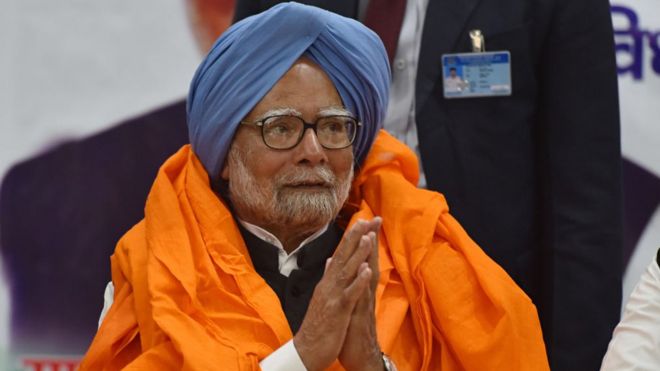
The article comes in the wake of the most violent riots to take place in capital, Delhi, in decades.
Mr Singh also referred to slowing growth and the possibility of a coronavirus outbreak.
More than 50 Indians have died in recent religious riots sparked by clashes over a controversial citizenship law in Delhi.
“The India that we know and cherish is slipping away fast. Wilfully stoked communal tensions, gross economic mismanagement and an external health shock are threatening to derail India’s progress and standing,” Mr Singh wrote.
He said he worried deeply that “this potent combination of risks may not only rupture the soul of India but also diminish our global standing as an economic and democratic power in the world”.
Mr Singh, who belongs to the main opposition Congress party, was the prime minister from 2004 to 2014.
Mr Singh said it was “well accepted” that a lack of new investment from the private sector only highlighted a “floundering” economy.
“Social harmony, the bedrock of economic development, is now under peril. No amount of tweaking of tax rates, showering of corporate incentives or goading will propel Indian or foreign businesses to invest, when the risk of eruption of sudden violence in one’s neighbourhood looms large.”
The former prime minister said a lack of investment meant fewer jobs and lower incomes, leading to diminished demand in the economy.
“A lack of demand will only further suppress private investments. This is the vicious cycle that our economy is stuck in.”
Media caption GDP: Why India’s growth rate is shrinking rapidly
Mr Singh also addressed the threat of coronavirus in India, saying the country needs a “full-scale operation” to deal with the health crisis. He warned that an outbreak would have a significant impact on Indian business.
“India’s economic growth was already tepid and this external health shock is bound to make things much worse.”
Mr Singh concluded his article with some advice to the ruling Hindu nationalist Bharatiya Janata Party (BJP) government, saying they must “reassure” the country.
He said the government should embark on a “three-point plan”: containing the coronavirus threat, withdrawing or amending the citizenship law and a fiscal stimulus to boost demand and revive the economy.
SEOUL (Reuters) – Makers of soju, South Korea’s national drink and one of the world’s best selling spirits, are jumping into the fight on the largest outbreak of coronavirus outside China by sharing their stockpiles of alcohol with makers of sanitisers.
Disinfectants, such as hand sanitisers, are flying off the shelves, along with medical-grade masks, as infections in South Korea have surged past 5,000 in just over a month since its first patient was diagnosed.
South Korean soju makers have responded to soaring ethanol demand for sanitisers by donating the alcohol that goes into the drink, a distilled spirit with 17% to 20% alcohol by volume traditionally based on rice, but now often wheat or potatoes.
“Ethanol demand for disinfection has grown while supply is limited…we have decided to provide it,” an official of Daesun Distilling, based in the southeastern city of Busan, told Reuters.
To banish the virus, the company has pledged to donate 32 tonnes of ethanol for use in disinfecting buildings and public places in Busan and southeastern Daegu, the city at the centre of South Korea’s outbreak.
“We plan to keep donating until the coronavirus outbreak is stabilised and to donate 50 tonnes more,” added the official, who sought anonymity as he was not authorised to speak to media.
South Koreans drink an average of about 12 shots of soju each week, media say, citing industry figures. Ethanol for alcoholic drinks can be produced by fermentation or distillation, typically from grains and plants.
The chemical can also be made from petrochemical feedstock.
Whether used for liquor or disinfection, both have the same chemical structure and can break apart the virus particle, said Lee Duckhwan, a chemistry professor at Sogang University in Seoul, the capital.
“If there’s any difference, that is the liquor tax imposed on ethanol produced by liquor makers,” Lee said.
The virus fears boosted February sales of soaps and hand sanitisers, including those with an alcohol base, to four times the level a year ago, data from a major retailer Lotte Mart shows. Shares of ethanol producers also jumped.
Following Daesun Distilling, Hallasan Soju, based on the resort island of Jeju, also provided 5 tonnes of ethanol to authorities on Tuesday, a company official said.


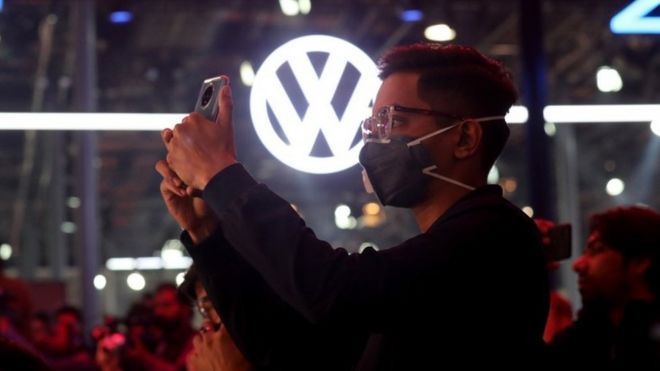 Image copyright EPA
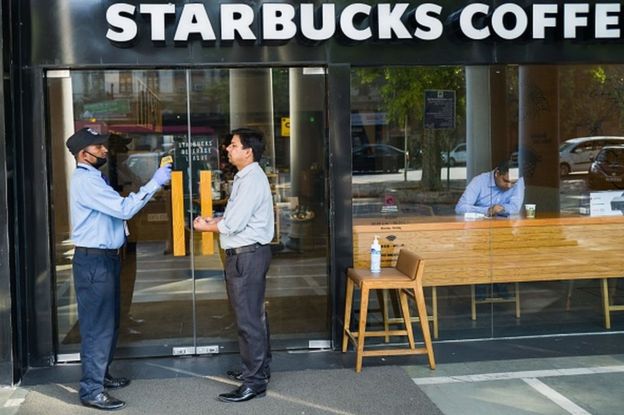 Image copyright GETTY IMAGES
 Image copyright GETTY IMAGES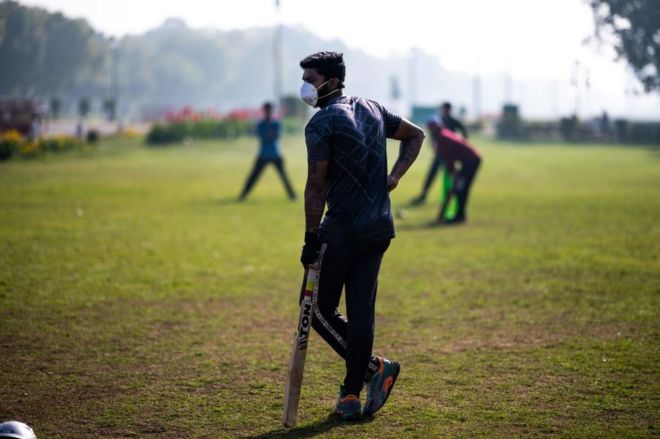

 CHINDIA ALERT: You'll be living in their world, very soon