Chindia Alert: You’ll be Living in their World Very Soon
aims to alert you to the threats and opportunities that China and India present. China and India require serious attention; case of ‘hidden dragon and crouching tiger’.
Without this attention, governments, businesses and, indeed, individuals may find themselves at a great disadvantage sooner rather than later.
The POSTs (front webpages) are mainly 'cuttings' from reliable sources, updated continuously.
The PAGEs (see Tabs, above) attempt to make the information more meaningful by putting some structure to the information we have researched and assembled since 2006.
Seoul’s handling of the outbreak emphasises transparency and relies heavily on public cooperation in place of hardline measures such as lockdowns
While uncertainties remain, it is increasingly viewed by public health experts as a model to emulate for authorities desperate to keep Covid-19 in check
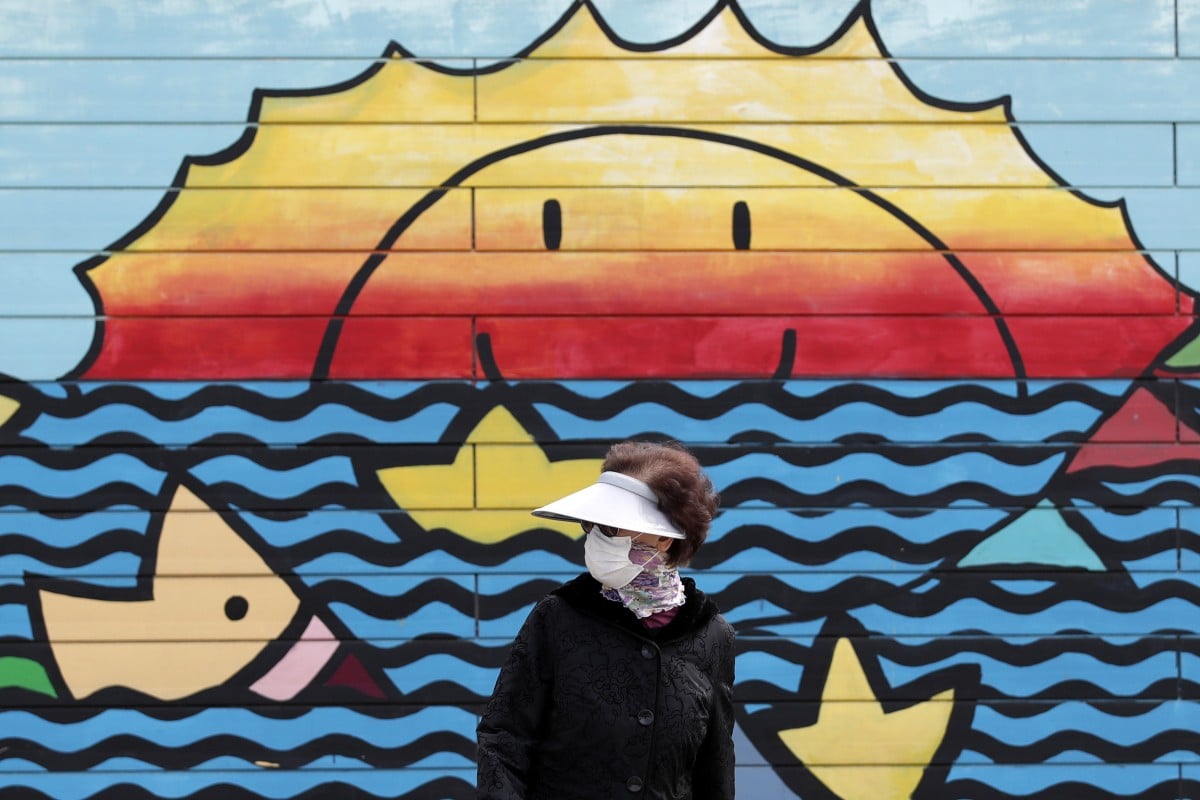
A woman wearing a face mask walks along the Han river at a park in Seoul, South Korea. Photo: AP
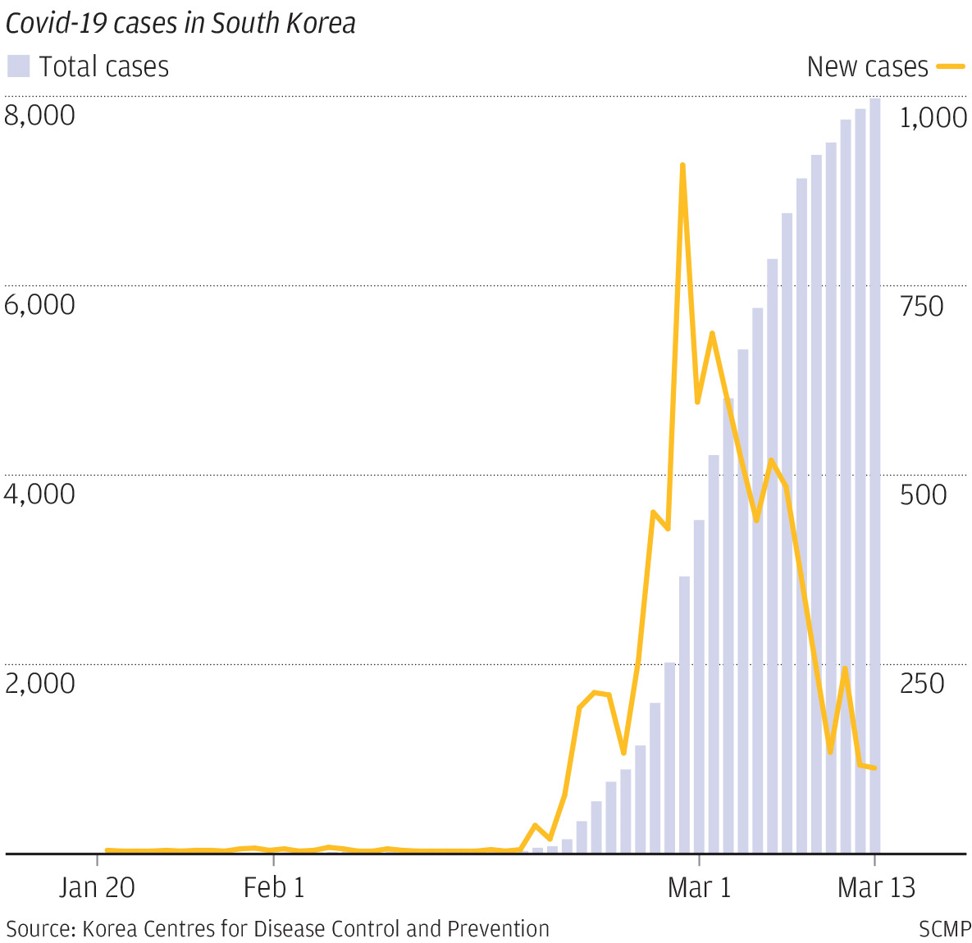
After announcing 600 new cases for March 3, the authorities reported 131 new infections a week later. On Friday, officials reported just 110, the lowest daily toll since February 21. The same day, the number of recovered patients, 177, exceeded new infections for the first time.President Moon Jae-in, while cautioning against premature optimism, has expressed hope that South Korea could soon enter a “phase of stability” if the trend holds firm.
With about 8,000 confirmed cases and more than 65 deaths, it was until recently the country with the most confirmed cases outside China – but South Korea has since emerged as a source of inspiration and hope for authorities around the world as they scramble to fight the pandemic.
South Korea’s infection rate falls without citywide lockdowns like China, Italy
11 Mar 2020
As countries ranging from the United States to Italy and Iran struggle to manage the virus, Seoul’s handling of the outbreak – involving a highly coordinated government response that has emphasised transparency and relied heavily on public cooperation in place of hardline measures such as lockdowns – is increasingly viewed by public health experts as a model to emulate for authorities desperate to keep the virus under control.
Whereas China, where the virus originated, and more recently Italy have placed millions of their citizens on lockdown, South Korea has not restricted people’s movements – not even in Daegu, the southeastern city at the centre of the country’s outbreak.
Instead, authorities have focused mandatory quarantine on infected patients and those with whom they have come into close contact, while advising the public to stay indoors, avoid public events, wear masks and practise good hygiene.
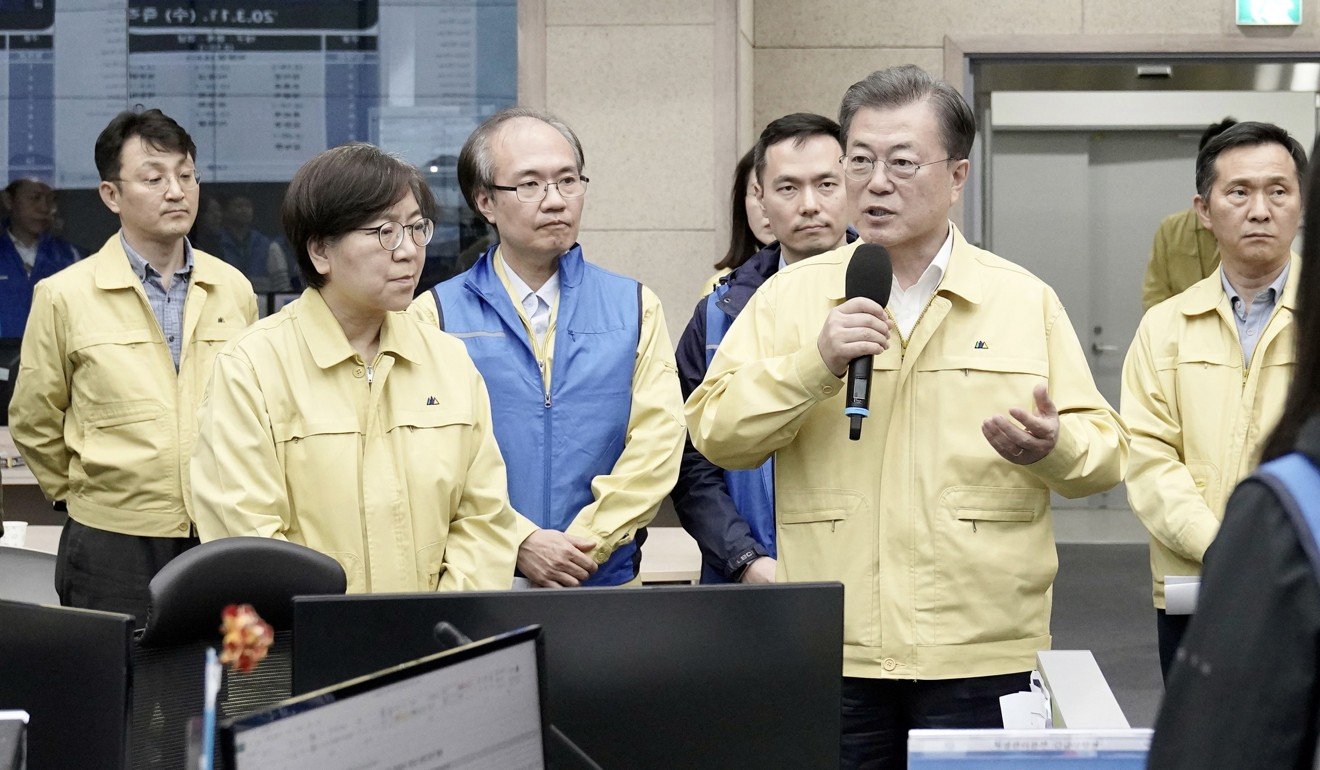
South Korean President Moon Jae-in visits the Korea Centres for Disease Control and Prevention on March 11. Photo: EPA
And while numerous countries have imposed sweeping travel bans – including the US, which has introduced dramatic restrictions on travel from Europe – Seoul has instead introduced “special immigration procedures” for heavily affected countries such as China, requiring travellers to undergo temperature checks, provide verified contact information and fill out health questionnaires.
[South Korea’s] approach seems less dramatic and more usable by other countries, compared with that used in mainland China – Ian MacKay, virologist at the University of Queensland
“More than a week of downward-trending case counts shows that the approach in South Korea has turned around an epidemic,” said Ian Mackay, a virologist at the University of Queensland, Australia. “This approach seems less dramatic and more usable by other countries, compared with that used in mainland China. If these trends continue, they will have managed to stop the growth of their epidemic.”
‘A SPECTACULAR FEAT’
The linchpin of South Korea’s response has been a testing programme that has screened more people per capita for the virus than any other country by far. By carrying out up to 15,000 tests per day, health officials have been able to screen some 250,000 people – about one in every 200 South Koreans – since January.
To encourage participation, testing is free for anyone referred by a doctor or displaying symptoms after recent contact with a confirmed case or travel to China. For anyone simply concerned about the risk of infection, the cost is a relatively affordable 160,000 won (US$135). Testing is available at hundreds of clinics, as well as some 50 drive-through testing stations that took their inspiration from past counterterrorism drills and can screen suspected patients in minutes.
“This country has a universal health-coverage system for the whole population and the economic burden for testing is very low,” said Kim Dong-hyun, president of the Korean Society of Epidemiology. “Tests are conducted for free if you have proper symptoms.”
The massive volume of data collected has enabled the authorities to pinpoint clusters of infection to better target their quarantine and disinfection efforts, and send members of the public text-message alerts to inform them of the past movements of infected patients in their area – even down to the names of shops and restaurants they visited.
This country has a universal health coverage system for the whole population and the economic burden for testing is very low – Kim Dong-hyun, president of the Korean Society of Epidemiology
“South Korea’s capability to test for early detection of viruses has developed greatly as it went through the 2009 new influenza outbreak and 2015 Mers [Middle East respiratory syndrome] outbreak,” said Kim Woo-joo, a professor of medicine at Korea University’s College of Medicine. “It ranks among the world’s top countries in this field.”
South Korea’s ‘drive-through’ coronavirus testing stations
Collecting this amount of data has also allowed the South Korean authorities to glean a clearer indication of the potential lethality of the virus, the fatality rate of which has diverged significantly from about 5 per cent in Italy to about 0.8 per cent in South Korea. Although factors including quality of health care, patient age and public awareness can affect the fatality rate of a virus, the scale of testing is among the most influential.
By comparison, in neighbouring Japan – which has confirmed more than 600 cases, not including the virus-stricken Diamond Princess cruise ship – the authorities had as of Friday tested over 10,000 people.
In the United States, where the authorities are unable to confirm the number of tests since they are being carried out by a patchwork of federal, state and private laboratories, the total was estimated to be fewer than 5,000 in a survey of available data by The Atlantic.
William Schaffner, a professor of preventive medicine and infectious diseases at Vanderbilt University School of Medicine in the US, said South Korea had pulled off a “spectacular” feat that was allowing health officials to track the virus and assess its intensity.
“We are unsure where our infection is and how intensely it is being transmitted in the US and we are only now starting to test,” he said.
Coronavirus is now classified as a pandemic
13 Mar 2020
South Korea is not unique in claiming some success in its fight against the virus. Singapore, Taiwan and Hong Kong, informed by past outbreaks such as severe acute respiratory syndrome (Sars) and Mers, have managed to keep confirmed cases low while eschewing the sort of draconian measures implemented in mainland China.
Early on, Hong Kong took some of the most comprehensive steps to implement “social distancing” – in which events are cancelled and venues closed to minimise contact between people – by shutting schools in late January, while the authorities produced a digital map of confirmed cases to allow people to avoid potentially infected areas.
In Taiwan, officials have pooled information from immigration and health insurance databases to track people’s travel histories and symptoms, and used phone tracking to ensure compliance with quarantine. Singapore has similarly tracked infected patients and traced their contacts, with stiff penalties for those who disobey quarantine or mislead the authorities about where they have travelled.
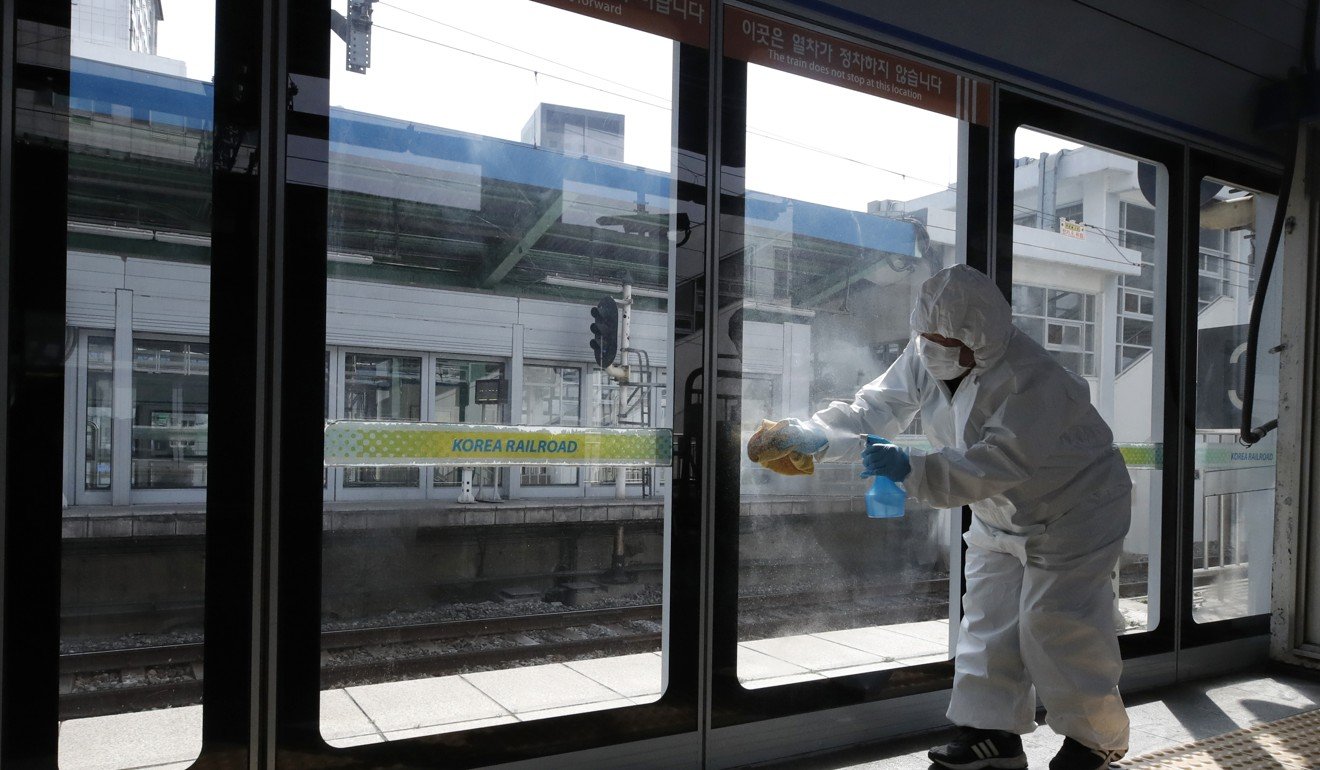
A worker disinfects a Seoul subway station as a precaution against the new coronavirus. Photo: AP
OPENNESS AND TRANSPARENCY
But where South Korea has stood apart is seemingly turning the tide against a major outbreak while maintaining openness and transparency. The largest cluster of cases in the country is linked to a secretive religious sect, Shincheonji, members of which have been accused of negligently spreading the virus as well as evading medical follow-ups and testing.
In addressing the Covid-19 outbreak, sound decision-making should not be about making a choice between maximised protection or minimal disruption – Yanzhong Huang, Council on Foreign Relations
“South Korea’s experience suggests that a country can contain the spread of the virus in a relatively short period of time without relying on draconian, at-all-costs containment measures,” said Yanzhong Huang, a senior fellow for global health at the Council on Foreign Relations in New York.
“For countries like the US, the Korean experience offers an acceptable, likely more viable, alternative to addressing the outbreak. In addressing the Covid-19 outbreak, sound decision-making should not be about making a choice between maximised protection and minimal disruption.”
China effectively barred 60 million people in Wuhan – ground zero of the outbreak – and the rest of the province of Hubei from leaving their homes, while restricting the movements of hundreds of millions of others across the country by shutting down public transport, banning private cars and setting up roadblocks.
‘I was stupidly overconfident’: a Korean coronavirus survivor’s tale
15 Mar 2020
The country claims to have effectively halted the spread of the virus after recording more than 80,000 cases and 3,100 deaths, and its daily updates have in recent weeks fallen from thousands of new cases to dozens. However, scepticism lingers over official figures after local and provincial officials in Hubei initially tried to hide the extent of the outbreak.
In a move widely seen to be aimed at touting the success of Beijing’s hardline measures, Chinese President Xi Jinping on Tuesday made his first visit to Wuhan, during which he called for businesses and factories to return to work as normal and for the country to refocus on economic growth.
“While China has been able to control Covid-19, I don’t think its draconian methods are worth copying in liberal democracies,” said Lawrence Gostin, director of the O’Neill Institute for National and Global Health Law at Georgetown University Law Centre in Washington. “Most democracies value human rights and freedoms … [not] the degree of social control we’ve seen in China. South Korea offers a better model.”
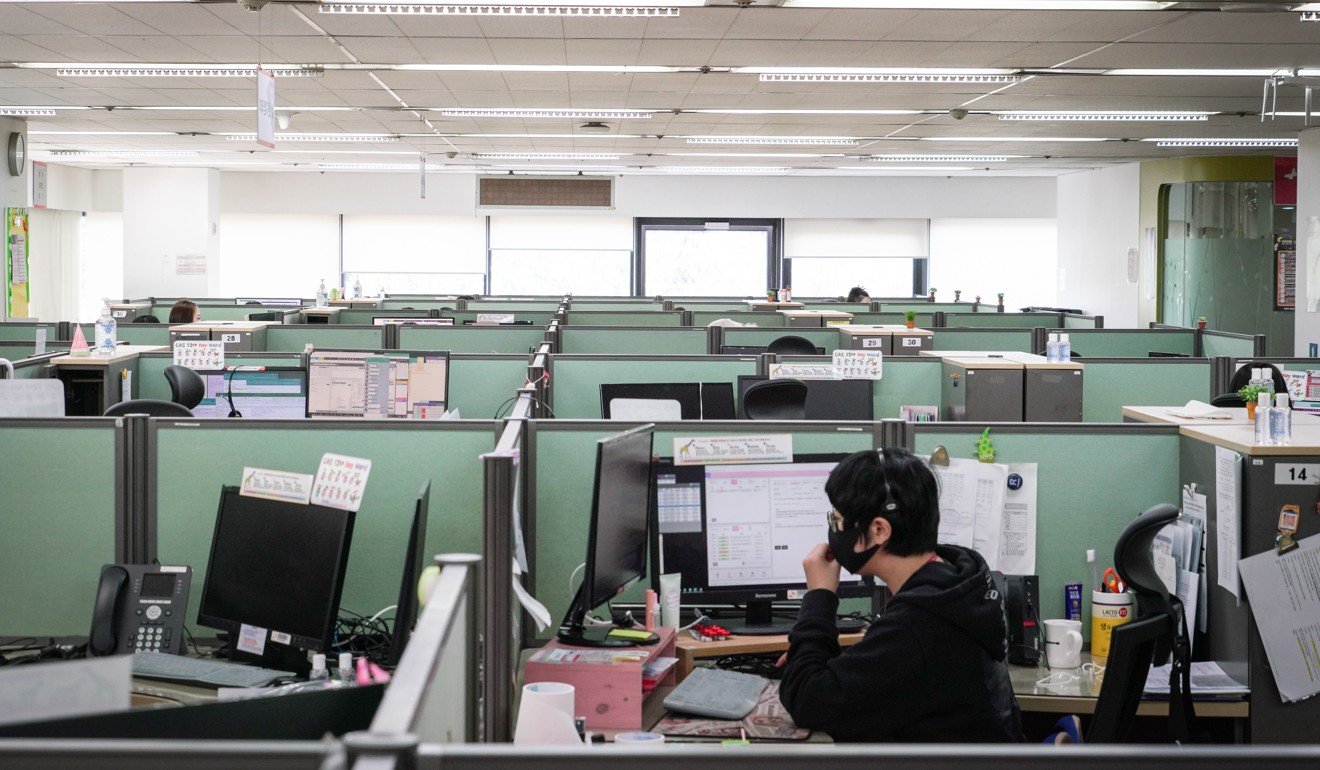
A nearly empty customer call centre in the Gocheok-dong neighbourhood of Seoul as workers isolate or work from home. Photo: EPA
But in a striking indication that Beijing’s harsh tactics could inform even liberal democratic societies, Italy on Monday announced a nationwide quarantine after a massive spike in cases caught the authorities off guard. Shops, restaurants and bars have been closed, while public gatherings and most travel have been banned in the European country, which has confirmed more than 15,000 cases and 1,000 deaths as of Friday – making it the site of the biggest outbreak outside China.
In the Philippines, President Rodrigo Duterte on Thursday announced a lockdown of the entire Metro Manila region and its 12.8 million people.
David Hui Shu-cheong, an expert in respiratory medicine at the Chinese University of Hong Kong, said Italy had responded “very slowly” to the outbreak, in contrast to South Korea.
Southeast Asia at risk of missing coronavirus cases amid dengue outbreak: experts
11 Mar 2020
Even as Beijing touted its success at fighting the virus, with state media recently insisting the “world owes China a ‘thank you’”, South Korea – which democratised in the late 1980s following decades of military dictatorship – has made no secret of its desire to promote a more liberal alternative.
At a press conference with foreign media this week, vice-health minister Kim Gang-lip said that while drastic measures such as locking down affected areas had demonstrated “modest effectiveness”, they suffered from being “coercive and inflexible”.
“Korea, as a democratic country, values globalisation and a pluralistic society,” he said.
“Therefore we believe we must transcend the limitations of the conventional approach to fighting infectious disease.”
Kim stressed that public trust was crucial to the government’s strategy. “The more transparently and quickly accurate information is provided, the more the people will trust the government,” he said. “They will act rationally for the good of the community at large.”
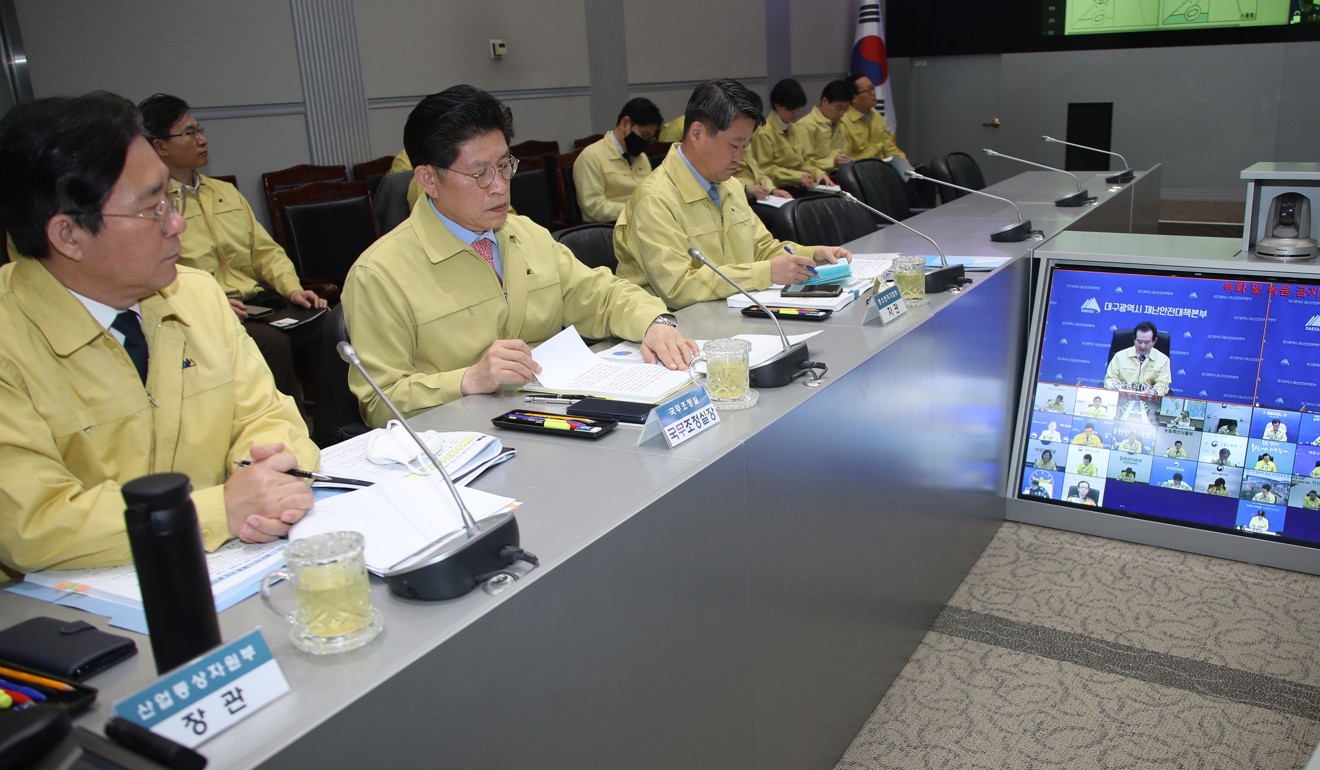
South Korean ministers listen to Prime Minister Chung Sye-kyun (on screen) during a meeting to discuss measures to deal with the spread of the new coronavirus. Photo: EPA
UNKNOWN FACTORS
Although the authorities have shut down schools nationwide, South Koreans have largely embraced self-isolation and social distancing of their own accord.
In the past fortnight, more than 12,000 businesses have applied for subsidies to pay the wages of employees while they temporarily close their doors due to the outbreak, according to the country’s labour ministry. Many shops in Daegu, the site of more than three-quarters of the country’s cases, have shut their doors, while shopping malls and cinemas across the country have become largely deserted as people stay at home. Catholic churches and Buddhist temples nationwide have suspended mass and prayer services.
“To an outsider, South Korea has handled an enormous surge in cases very well and seemed to mitigate further spread through forms of … passive social isolation,” said Howard P. Forman, a professor of public health policy at Yale School of Management.
Indonesian firms doing business with China face tough times with coronavirus outbreak
12 Mar 2020
Some experts suggest South Korean society’s emphasis on discipline and community may have given it room to avoid implementing more draconian measures.
“This measure appears to have been very successful but is reliant on the local population working with the response,” said Jeremy Rossman, an honorary senior lecturer in virology at the University of Kent. “It is not clear how effective this approach would be in other cultures and it does require effective communication with the local population.”
How a secretive church in South Korea became a coronavirus ‘super spreader’
However, South Korea’s response has not been without missteps or critics.
In mid-February, before it emerged that the virus had spread rapidly among Shincheonji followers, Moon made the ill-fated prediction that the outbreak would “disappear before long”.
The Korean Medical Association – the country’s largest association of doctors – and conservative media have criticised the president for not outright banning travel from China.
Nearly 1.5 million South Koreans have signed an online petition calling for Moon’s impeachment over his handling of the outbreak, and his approval rating this week dropped to just under 45 per cent – although, in a sign of reviving fortunes, an opinion poll released on Friday saw the president’s response rated favourably.
Medical workers attend to a woman who was feeling unwell upon her arrival at the Keimyung University hospital in Daegu. Photo: AFP
It is still too early to say whether the response is working – Kim Dong-hyun, president of the Korean Society of Epidemiology
Some experts caution that it is too early to tell if South Korea truly has the virus under control. The discovery of a new cluster of about 100 infections at a call centre in densely populated Seoul prompted a sudden uptick in cases on Wednesday, raising fears the virus could be on the verge of spreading uncontrollably nationwide.
“It is still too early to say whether the response is working,” said Kim, the president of the Korean Society of Epidemiology. “There is an optical illusion involved in the figures. The daily numbers of new cases appear to be decreasing as the screening of Shincheonji followers is coming to an end, but it must be noted that there are new clusters emerging in Seoul and other areas. We can’t lower vigilance.”
Like elsewhere, the country is facing unknown factors such as warming temperatures in the coming weeks and the arrival of travellers from new and emerging infection hotspots overseas. “We are seeing that in South Korea, large epidemics can be slowed,” said Mackay from the University of Queensland. “Can they be prevented? That will be the challenge for countries who have yet to see widespread community transmission.”
In the face of uncertainty, South Korea appears determined to hold firm to its strategy. During a visit to the Korea Centres for Disease Control and Prevention on Wednesday, Moon said the country’s response had received international recognition and allowed it to avoid the “extreme choice” of sweeping travel bans.
The next day, responding to the World Health Organisation’s decision to declare the virus a global pandemic, the president called on South Koreans to maintain hope that the virus would be overcome.
“It might take more time than we thought,” Moon said. “Everyone, please don’t become fatigued.”
AutoNavi’s latest data shows increase in offline traffic and searches of major business districts
Traffic data could signal that consumer activity in China has entered a recovery
AutoNavi’s mobile app users can search the names of malls and shops to see real-time traffic data. Photo: AP
Data from AutoNavi, the maps app operated by Alibaba Group Holding, shows that traffic in major shopping districts in China picked up by an average of 30 per cent over the past month, as consumer activity gradually returns to normal now that the coronavirus infection rate appears to have peaked in the country.
The early sign of increased consumer activity in China contrasts with the panic and economic uncertainty now engulfing Europe and the US, as the widening pandemic forces governments around the world to take lessons from China on how to tackle the spread of the disease with curfews and social distancing measures.
AutoNavi’s latest big data report, released on Monday, shows that traffic in and around shopping districts in several major cities in the country rose 30 per cent over the weekend of March 14-15 compared with the weekend of February 15-16, when the coronavirus in China was at its height and many areas in the country were under lockdown.
China’s Meituan Dianping to join maps service battle
15 Aug 2019
“Consumer confidence is starting to rebound as the coronavirus comes under control,” said Guo Ning, vice-president of AutoNavi. “We are seeing more and more people stepping out, with offline consumption slowly recovering.”
Alibaba is the owner of the South China Morning Post.
China’s nearly two-month lockdown has dealt a hammer blow to the economy, with retail sales – a key metric of consumption – down by 20.5 per cent across the combined two months of January and February, marking the first decline on record. The virus has however proved a boon for China’s e-commerce sector, as shoppers stuck at home buy even more online.
The new data appears to show that the country’s offline economy could now see a slow recovery. This does not mean that retail businesses can slack off on preventive measures – hand sanitiser, extra cleaning and temperature monitoring are likely to remain fixtures of everyday life in shopping malls.
AutoNavi’s mobile app users can search the names of malls and shops to see real-time traffic data – often used to avoid visiting malls at peak periods. AutoNavi said the average 30 per cent increase in traffic refers to the combined volume of people using the app to navigate the shopping destinations.
Alibaba’s AutoNavi crosses 100 million daily users
5 Oct 2018
AutoNavi has more than 400 million monthly active users, according to company data. It was the first domestic travel platform to exceed 100 million daily active users.
Digital maps have become a key tool in China’s attempts to control the coronavirus pandemic, with competitor map apps from Baidu and Tencent also launching features to track population flows and provide information on clinics able to test for and treat the disease.
Covid-19, as the novel coronavirus is known, has now killed over 3,200 people in China and infected just over 80,000, of which around 68,000 have recovered. There are now around 87,000 confirmed cases outside China, according to the latest figures from health authorities.
Image copyright GETTY IMAGESImage caption Chief Executive Carrie Lam said the majority of Hong Kong’s cases had been imported
Hong Kong will quarantine all people arriving from abroad for 14 days, its leader Carrie Lam has said.
The restrictions, which will kick in on Thursday, will not apply to those from Macau or Taiwan. Entrants from mainland China already had to self-isolate.
Ms Lam said the majority of Hong Kong’s cases had been imported, adding that “strict measures” were needed.
Hong Kong has seen 57 new infections over the past two weeks, 50 of which were imported, said Ms Lam.
“If we exclude these imported, we only have seven local cases in the past week,” she said.
“If we do not impose strict measures, our previous efforts could be wasted.”
Ms Lam also advised residents to avoid all non-essential travel.
There are at least 155 confirmed cases in the territory, which detected its first cases in January.
The territory – a special administrative region of China – has so far been able to avoid the contagion seen elsewhere, thanks partly to a quick government response.
In January, cross-border travel with mainland China was slashed. Soon afterwards, health workers went on strike to demand a total border shutdown.
Some of the restrictions in the Asia-Pacific region, as of 17 March:
Australia – All travellers will have to self-isolate for 14 days. Foreign nationals who have been to China, Iran, Korea and Italy not allowed in
New Zealand – Everyone entering the country will have to self-isolate for 14 days. This excludes those from small Pacific islands with no confirmed virus cases
South Korea – Travellers from China’s Hubei province not allowed in. International arrivals from certain countries will need to submit papers on their health condition
Singapore – All visitors with travel history to France, Germany, Italy, Spain, South Korea and China banned from entering or transiting. Residents with recent history to these countries will have to self-isolate for 14 days. All those entering from Japan, Switzerland, the UK and Asean countries will have to self-isolate for 14 days
Malaysia – All foreign visitors have been banned, all Malaysians will not be allowed to travel overseas until 31 March. All returning Malaysians will have to self quarantine for 14 days
Japan – Ban on entry to travellers who have been to parts of China, South Korea, Iran or Italy in 14 days before arrival
The number of confirmed coronavirus cases and deaths outside China has now surpassed the number inside.
More than 100,000 people have been infected outside China, while just over 80,000 cases have been reported inside.
There have been more than 182,000 confirmed cases of coronavirus globally and over 7,000 deaths, according to a tally from Johns Hopkins University.
Media caption Steps the NHS says you should take to protect yourself from Covid-19
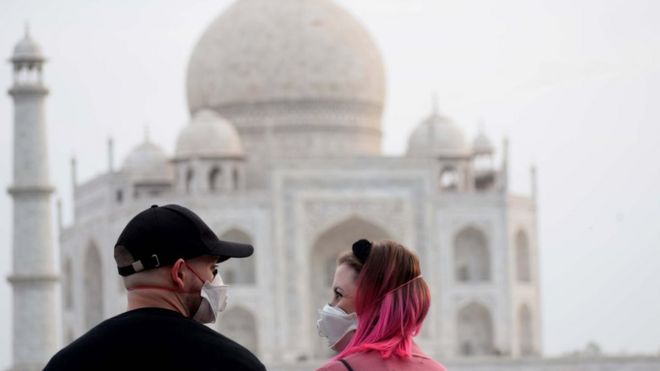
Image copyright GETTY IMAGESImage caption The Taj Mahal is one of the world’s leading tourist attractions.
India’s iconic monument Taj Mahal has shut down to halt the spread of the coronavirus, officials say.
The culture ministry said tens of thousands visit the “monument of love” every day and it was “imperative to shut it down”.
The Taj Mahal is one of the world’s leading tourist attractions, and draws as many as 70,000 people every day.
India has 137 reported cases of Covid-19 and three related deaths. It has tested 6,000 people so far.
On Tuesday, the Indian government announced that all monuments and museums run by the Archaeological Survey of India across the country have also been shut to keep people safe.
Culture Minister Prahlad Patel said all the 143 monuments and museums would remain shut until 31 March and the decision would be reviewed after the shutdown period.
On Tuesday, a 60-year-old doctor in the southern state of Karnataka tested positive after treating a man who died from the coronavirus last week.
Media caption Everything you need to know about the coronavirus explained in one minute
India has taken a number of steps to halt the spread of Covid-19:
All visas, barring a select few categories, have been suspended for a month
Visa-free travel afforded to overseas citizens of the country has been suspended until 15 April and even those allowed in could be subject to 14 days of quarantine
Schools, colleges and movie theatres in most states have been shut until 31 March
The Indian Premier League (IPL), featuring nearly 60 foreign players and scheduled to begin on 29 March, has been postponed to 15 April
India’s health ministry says it was among the first countries in the world to prepare for an outbreak of the respiratory illness, and denied allegations that it was slow in testing suspected cases.
Experts say that India is in a critical phase where it needs to halt community transmissions. The country has only tested 6,000 people so far and many believe that it’s not enough to halt the spread. Experts say that India needs to start testing thousands daily to effectively stop community transmissions.
The government says it’s prepared and has now allowed even private labs to test, apart from government-run labs.
South Africa, Kenya latest to halt arrivals from ‘high-risk’ countries as cases across the continent double over the weekend
Concerns are growing over whether health care systems in some African nations will be able to cope
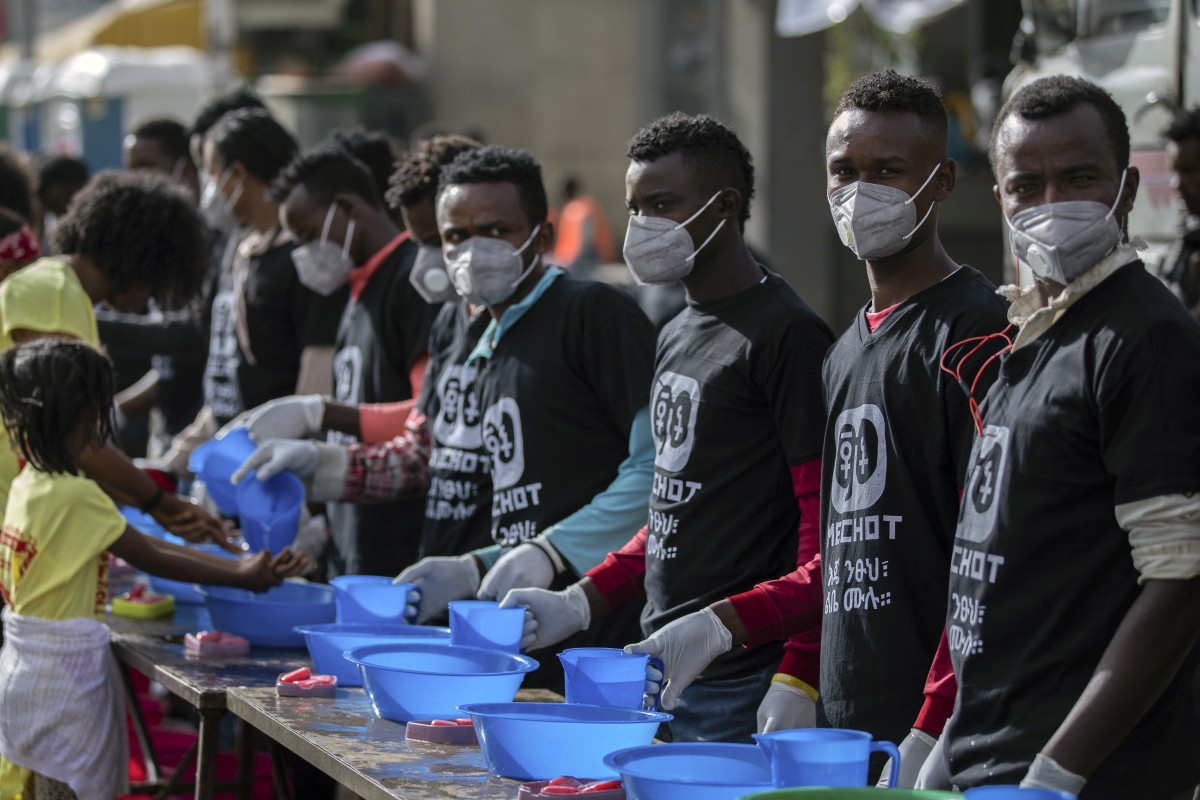
Masked volunteers provide soap and water for participants to wash their hands against the new coronavirus at a women’s 5km fun run in Addis Ababa, Ethiopia on Sunday. Photo: AP
Travel bans and school closures were announced in South Africa and Kenya on Sunday, as concerns grew over the capacity of the continent’s fragile health systems to cope with the spread of the deadly new coronavirus, with more than a dozen countries reporting their first cases.
South African President Cyril Ramaphosa declared a national state of disaster, banning arrivals by foreign nationals from high-risk countries including Italy, Iran, South Korea, Spain, Germany, the United States, Britain and China, effective Wednesday.
“We have cancelled visas to visitors from those countries from today and previously granted visas are hereby revoked,” Ramaphosa said in a televised address on Sunday evening, adding that any foreign national who had visited high-risk countries in the past 20 days would be denied a visa.
South African schools will also be closed from Wednesday until after the Easter weekend. Gatherings of more than 100 people have been banned and mass celebrations for Human Rights Day and other events cancelled. “Never before in the history of our democracy has our country been confronted with such a severe situation,” Ramaphosa said.
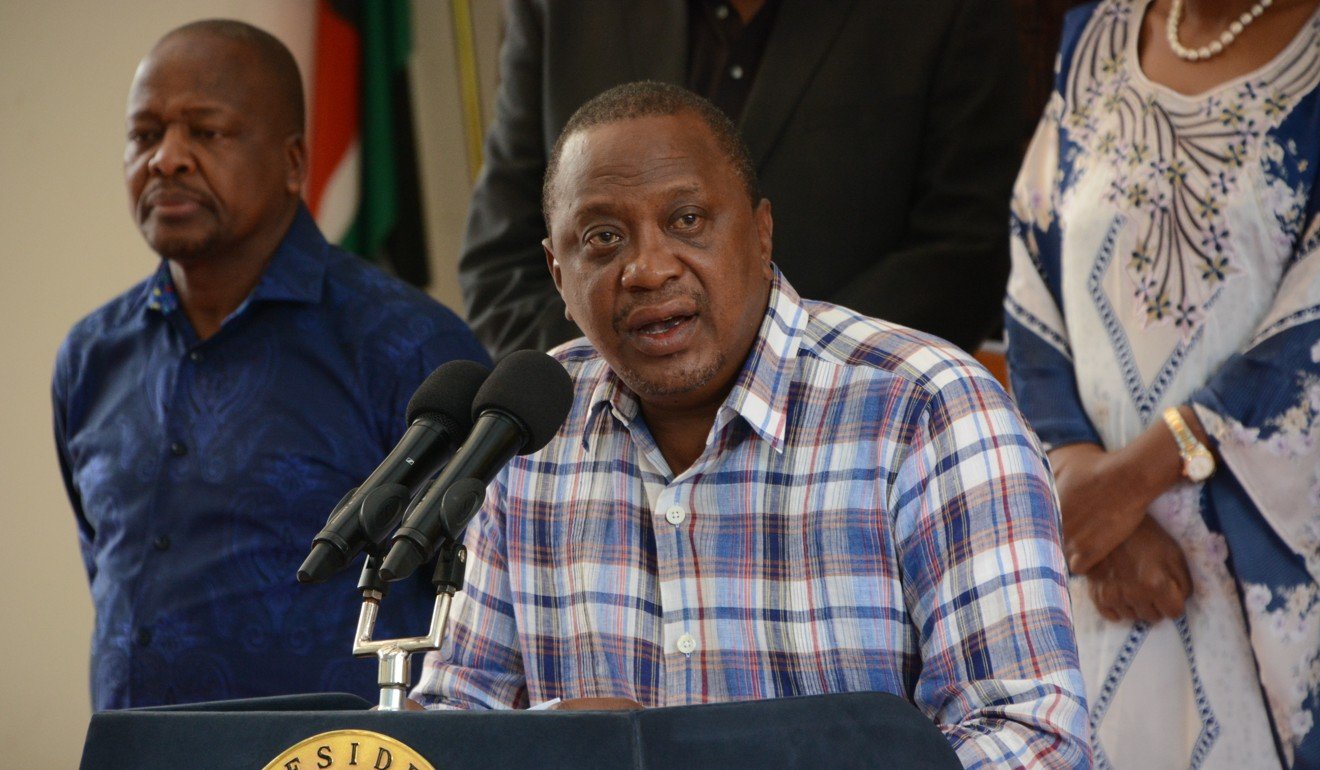
In Kenya, where three cases of Covid-19 – the disease caused by the new coronavirus – have now been confirmed, President Uhuru Kenyatta suspended travel from any country with reported infections. Only Kenyan citizens and foreigners with valid residency permits would be allowed entry, provided they proceeded to self-quarantine or a government-designated quarantine facility, he said.
Kenyan President Uhuru Kenyatta reports two more cases of coronavirus in the country, bringing its total number of cases to three. Photo: DPA
Kenyatta also suspended learning in all educational institutions with immediate effect. “Some of the measures may cause inconvenience, but I want to assure you they are designed to ensure that we effectively contain the spread of the virus,” he said.
Kenya and South Africa join Ghana, Rwanda and Morocco in implementing travel restrictions or outright bans, while others are closing churches, museums, sporting activities, nightclubs and tourist attractions in a bid to curb the spread of the disease.
The continent was largely spared in the early days of the outbreak but has now recorded more than 300 cases and six deaths. Algeria, Morocco, Senegal and Tunisia all reported more new cases over the weekend, which saw numbers of new infections across Africa more than double in just two days.
As numbers rise, the Africa Centres for Disease Control and Prevention (CDC) has said there are around a dozen countries on the continent without the capacity to do their own testing.
They will have to send samples to countries like South Africa, which itself is struggling to contain the virus, with confirmed cases doubling to 61 on Sunday, a day after 114 of its citizens were repatriated from the central Chinese city of Wuhan, the original epicentre of the outbreak and the first to be placed in lockdown.
John Nkengasong, director of the Africa CDC, warned that the risk of other African countries detecting new cases of Covid-19 remained high. “Our strategy is clear: we want to capacitate the member states, so they can quickly detect and mitigate the effects of the disease in Africa, and, if widespread transmission occurs, prevent severe illness and death,” he said.
The World Health Organisation has already warned that critical gaps remain in the capacity of many African nations to trace, detect and treat the disease. On Friday, the WHO Africa office said it was “striving to help member states fill these gaps” but warned of global shortages in personal protective equipment (PPE) including gloves, masks and hand sanitiser.
Major coronavirus outbreak in Africa ‘just a matter of time’
13 Mar 2020
WHO said its first blanket distribution of PPEs, to 24 African countries, had been completed and another wave of distributions was planned.
“With Covid-19 officially declared a pandemic, all countries in Africa must act,” said Dr Matshidiso Moeti, WHO regional director for Africa. “Every country can still change the course of this pandemic by scaling up their emergency preparedness or response.
“Cases may still be low in Africa and we can keep it that way with robust all-of-government actions to fight the new coronavirus.”
The 55 member states of the African Union have suspended meetings until May, while the six countries that make up the East African Community have suspended all planned meetings until further notice.
In Algeria – one of the worst-hit North African countries, with 48 cases and four deaths, as of Monday morning – all schools and universities have been closed, while Senegal, with 24 cases to date, has closed schools and cancelled its Independence Day festivities on April 4, which this year marks 60 years since its independence from France. Cruise ships have also been banned from docking in Senegal.
On Sunday, Rwanda closed all its places of worship and suspended large gatherings such as weddings and sporting activities. Schools and universities in the central African country are also closed. National airline RwandAir has also suspended flights between the capital Kigali and Mumbai until April 30.
This is in addition to earlier suspensions of its routes with Tel Aviv and the southern Chinese city of Guangzhou, which remain in place until further notice.
While most African airlines have suspended flights to cities in mainland China, Ethiopian Airlines has continued flying to most of its destinations, describing its China routes as among its most profitable. Nevertheless, chief executive Tewolde GebreMariam last week said coronavirus fears had cut demand by a fifth on most of its routes.
Alibaba co-founder Jack Ma has sent the first shipment of surgical masks and coronavirus test kits to the US.
The Chinese billionaire tweeted two pictures of the pallets of goods being loaded on to a plane in Shanghai.
Earlier this month he said he would give 500,000 testing kits and one million masks to America.
Mr Ma is also sending consignments of medical supplies to Europe as he called for international cooperation efforts to combat the pandemic.
In his first tweet, Asia’s richest person posted photos of a China Eastern Airlines jet being loaded with boxes of coronavirus test kits and face masks as they were shipped to the US.
It comes after the Jack Ma Foundation and the Alibaba Foundation last week announced that they had prepared 500,000 testing kits and 1 million masks to be sent to America.
They also said that they had already donated supplies to other countries including Japan, South Korea, Italy, Iran and Spain, with two million protective masks pledged for distribution across Europe.
The first consignment of 500,000 masks and other medical supplies such as test kits, which was destined for Italy, arrived in Belgium on Friday.
He joins other high-profile technology executives in pledging support for coronavirus research and disease prevention.
Microsoft co-founder Bill Gates, who is the world’s second-richest person, has announced that the Bill and Melinda Gates Foundation would give $100m to help efforts to stop the spread of the virus.
On Friday Mr Gates announced that he was stepping down from Microsoft’s board to spend more time on philanthropic activities. He said he wanted to focus on global health and development, education and tackling climate change.
Chinese tech giants, including Tencent, ride-hailing company Didi Chuxing, and TikTok owner ByteDance, have all pledged money and resources to fight the coronavirus outbreak.
(Reuters) – France and Spain joined Italy in imposing lockdowns on tens of millions of people, Australia ordered self-isolation of arriving foreigners, and Argentina and El Salvadore extended entry bans as the world sought to contain the spreading coronavirus.
Panic buying in Australia, the United States and Britain saw leaders appeal for calm over the virus that has infected over 138,000 people globally and killed more than 5,000.
Several countries imposed bans on mass gathering, shuttered sporting, cultural and religious events, while medical experts urged people to practice “social distancing” to curb the spread.
All of Pope Francis’ Easter services next month will be held without the faithful attending, the Vatican said on Sunday, in a step believed to be unprecedented in modern times.
The services, four days of major events from Holy Thursday to Easter Sunday, usually draw tens of thousands of people to sites in Rome and in the Vatican.
RELATED COVERAGE
EU finance ministers to hold video call on virus on Monday
Coronavirus forces closure of all French ski resorts
Australian Prime Minister Scott Morrison said from midnight Sunday international travellers arriving in the country would need to isolate themselves for 14 days, and foreign cruise ships would be banned for 30 days, given a rise in imported cases.
“What we’ve seen in recent weeks, is more countries having issues with the virus and that means the source of some of those transmissions are coming from more and more countries,” Morrison told a news conference.
Australia’s latest restrictions mirror those announced by neighbouring New Zealand on Saturday. Australia has recorded more than 250 coronavirus cases and three deaths.
TRAVEL BANS, AIRLINE CUTBACKS
U.S. President Donald Trump declared a national emergency on Friday. The United States has recorded more than 2,000 cases and 50 deaths, but has been criticised for slow testing.
Travel bans and a plunge in global air travel saw further airline cut backs, with American Airlines Inc (AAL.O) planning to cut 75% of international flights through May 6 and ground nearly all its widebody fleet.
The dramatic announcement by the largest U.S. airline came hours after the White House said the United States would widen new travel restrictions on Europeans to include travellers in the United Kingdom and Ireland, starting Monday night.
Washington has already imposed flight restrictions on China.
China tightened checks on international travellers arriving at Beijing airport on Sunday, after the number of imported new coronavirus infections surpassed locally transmitted cases for a second day in a row.
Anyone arriving to Beijing from abroad will be transferred directly to a central quarantine facility for 14 days for observation starting March 16, a city government official said.
China, where the epidemic began in December, appears to now face a greater threat of new infections from outside its borders as it continues to slow the spread of the virus domestically.
China has reported 80,984 cases and 3,203 deaths, according to a Reuters tally, of which 66,911 have recovered in mainland China, which has imposed draconian containment policies, locking down several major cities.
LOCKDOWNS, STAY HOME
Spain put its 47 million inhabitants under partial lockdown on Saturday as part of a 15-day state of emergency to combat the epidemic in Europe’s second worst-affected country after Italy.
Spain had 193 coronavirus deaths and 6,250 cases, public broadcaster TVE said on Saturday, up from 120 deaths reported on Friday.
France will shut shops, restaurants and entertainment facilities from Sunday with its 67 million people were told to stay home after confirmed infections doubled in 72 hours.
French Prime Minister Edouard Philippe said the government had no other option after the public health authority said 91 people had died in France and almost 4,500 were now infected.
“We must absolutely limit our movements,” he said.
Britain is preparing to ban mass gatherings, while isolating people aged over 70 for up to four months is part of its action plan to tackle coronavirus which will be implemented in the coming weeks, Health Secretary Matt Hancock said on Sunday.
Argentina banned entry to non-residents who have travelled to a country highly affected by coronavirus in the last 14 days, the government officially announced late on Saturday.
The ban will last 30 days. Argentina has 45 cases of coronavirus, the health ministry said, up from 21 on March 12.
Panama said flights arriving from Europe and Asia would be temporarily suspended, with the exception of flights that transport doctors, medical equipment or other humanitarian aid.
Colombia will expel four Europeans for violating compulsory quarantine protocols, just hours after it closed its border with Venezuela, the government said on Saturday.
ANTI-TERRORISM TRACKING TO FIGHT VIRUS
Israel will use anti-terrorism tracking technology and partially shutdown its economy to minimise transmission risks, Prime Minister Benjamin Netanyahu said on Saturday.
Cyber tech monitoring would be deployed to locate people who have been in contact with those carrying the virus, subject to cabinet approval, Netanyahu told a news conference in Jerusalem.
Starting Sunday, South Korea began to subject visitors from France, Germany, Britain, Spain and the Netherlands to stricter border checks, after imposing similar rules for China, Italy and Iran which have major outbreaks.
Visitors from those countries now need to download an app which will report whether they have symptoms. South Korea has been testing hundreds of thousands of people and tracking potential carriers using cell phone and satellite technology.
Image copyright EPAImage caption India has stopped exports of masks to make sure there are ample domestic supplies
A 68-year-old woman from Delhi has been confirmed as the second Indian to die from the coronavirus.
The woman, who had underlying health conditions, is thought to have been infected by her son who travelled to Switzerland and Italy last month.
India’s first fatality from the virus was confirmed on Thursday.
The 76-year-old man, from the southern state of Karnataka, died after returning from a month-long visit to Saudi Arabia on 29 February.
People who came in contact with the man are being traced and quarantined, the state’s health minister said. India has 82 confirmed cases of the virus, the health ministry says.
The Delhi woman’s son was “initially asymptomatic but developed a fever and cough after one day”, a government statement said. The family were then screened and the mother and son admitted to hospital.
The 76-year-old Karnataka man was screened at the airport on his return but showed no symptoms at the time. After he developed difficulties last week, he was taken to hospital. He died on Tuesday but it was not reported until Thursday.
India’s Supreme Court has said it will only hear urgent cases from Monday, and has restricted the number of people who can enter a courtroom.
Karnataka has banned all gatherings including weddings, sports events and conferences for a week as the country attempts to slow the spread of the virus.
Malls, movie theatres, pubs and night clubs have also been shut.
“The government will decide on further action after a week following a review,” the state’s chief minister BS Yediyurappa announced on Friday.
But he said that government offices would continue to function as normal.
India has taken a number of steps to halt the spread of Covid-19:
All visas, barring a select few categories, have been suspended for a month
Visa-free travel afforded to overseas citizens of the country has been suspended until 15 April and even those allowed in could be subject to 14 days of quarantine
Schools, colleges and movie theatres in the capital, Delhi, have been shut until 31 March
The Indian Premier League (IPL), featuring nearly 60 foreign players and scheduled to begin on 29 March, has been postponed to 15 April
Two one-day cricket matches between India and South Africa will be played behind closed doors
India’s health ministry says it was among the first countries in the world to prepare for an outbreak of the respiratory illness, and denied allegations that it was slow in testing suspected cases.
“Our surveillance system is strong and we are able to quickly identify any symptomatic patients,” RR Gangakhedkar from the Indian Council of Medical Research (ICMR) told reporters on Thursday.
However, there are concerns about whether the country will be fully equipped to prevent and treat an outbreak.
It would be near impossible for India to force its citizens into mass quarantine and hospitalise people in numbers like China, says the BBC’s Soutik Biswas.
Our correspondent says there are also concerns about the country’s poor healthcare data. India has a shoddy record in even recording deaths and disease – only 77% of deaths are registered, and doctors are more likely to get the cause of death wrong than right, according to a study the Toronto-based Centre for Global Research. There is patchy data for flu-related deaths.
Government records suggest first person infected with new disease may have been a Hubei resident aged 55, but ‘patient zero’ has yet to be confirmed
Documents seen by the Post could help scientists track the spread of the disease and perhaps determine its source
The first known case of Covid-19 in China dates back to November, but the hunt for “patient zero” goes on. Photo: EPA-EFE
The first case of someone in China suffering from Covid-19, the disease caused by the novel coronavirus, can be traced back to November 17, according to government data seen by the South China Morning Post.
Chinese authorities have so far identified at least 266 people who were infected last year, all of whom came under medical surveillance at some point.
Some of the cases were likely backdated after health authorities had tested specimens taken from suspected patients.
Interviews with whistle-blowers from the medical community suggest Chinese doctors only realised they were dealing with a new disease in late December.
Scientists have been trying to map the pattern of the early transmission of Covid-19 since an epidemic was reported in the central China city of Wuhan in January, two months before the outbreak became a global health crisis.
Understanding how the disease spread and determining how undetected and undocumented cases contributed to its transmission will greatly improve their understanding of the size of that threat.
According to the government data seen by the Post, a 55 year-old from Hubei province could have been the first person to have contracted Covid-19 on November 17.
From that date onwards, one to five new cases were reported each day. By December 15, the total number of infections stood at 27 – the first double-digit daily rise was reported on December 17 – and by December 20, the total number of confirmed cases had reached 60.
On December 27, Zhang Jixian, a doctor from Hubei Provincial Hospital of Integrated Chinese and Western Medicine, told China’s health authorities that the disease was caused by a new coronavirus. By that date, more than 180 people had been infected, though doctors might not have been aware of all of them at the time.
With pandemic declared, the race is on to develop a coronavirus vaccine
13 Mar 2020
By the final day of 2019, the number of confirmed cases had risen to 266, On the first day of 2020 it stood at 381.
While the government records have not been released to the public, they provide valuable clues about how the disease spread in its early days and the speed of its transmission, as well as how many confirmed cases Beijing has recorded.
Scientists are now keen to identify the so-called patient zero, which could help them to trace the source of the coronavirus, which is generally thought to have jumped to humans from a wild animal, possibly a bat.
Of the first nine cases to be reported in November – four men and five women – none has been confirmed as being “patient zero”. They were all aged between 39 and 79, but it is unknown how many were residents of Wuhan, the capital of Hubei and the epicentre of the outbreak.
It is possible that there were reported cases dating back even earlier than those seen by the Post.
According to the World Health Organisation’s website, the first confirmed Covid-19 case in China was on December 8, but the global body does not track the disease itself but relies on nations to provide such information.
A report published in medical journal The Lancet by Chinese doctors from Jinyintan Hospital in Wuhan, which treated some of the earliest patients, put the date of the first known infection at December 1.
Dr Ai Fen, the first known whistle-blower, told People magazine in an interview that was later censored, that tests showed that a patient at Wuhan Central Hospital was diagnosed on December 16 as having contracted an unknown coronavirus.
With pandemic declared, the race is on to develop a coronavirus vaccine
13 Mar 2020
Accounts by other doctors seem to suggest the medical community in Wuhan became aware of the disease in late December.
Previous reports said that although doctors in the city collected samples from suspected cases in late December, they could not confirm their findings because they were bogged down by bureaucracy, such as having to get approval from the Chinese Centre for Disease Control and Prevention, which could take days. They were also ordered not to disclose any information about the new disease to the public.
As late as January 11, Wuhan’s health authorities were still claiming there were just 41 confirmed cases.
System analyses hundreds of images in seconds, then advises doctors what to do next
China has offered free use of the machine around the world, but US Centres for Disease Control says it does not recommend using scans to diagnose Covid-19
Chinese doctors are using AI to help them diagnose Covid-19 patients. Photo: AFP
A supercomputer in China offers doctors around the world free access to an artificial intelligence diagnostic tool for early identification of Covid-19 patients based on a chest scan.
The AI system on the Tianhe-1 computer can go through hundreds of images generated by computed tomography (CT) and gave a diagnosis in about 10 seconds, according to the National Supercomputer Centre in Tianjin, which hosts the machine.
An employee at the facility said the results could then be used to help medical professionals – especially those in areas that have limited test kits or are hit by a sudden increase in suspected cases – to quickly distinguish between patients infected with the novel coronavirus and those with common pneumonia or another illness.
The accuracy of the analysis was higher than 80 per cent “and increasing steadily every day”, he said.
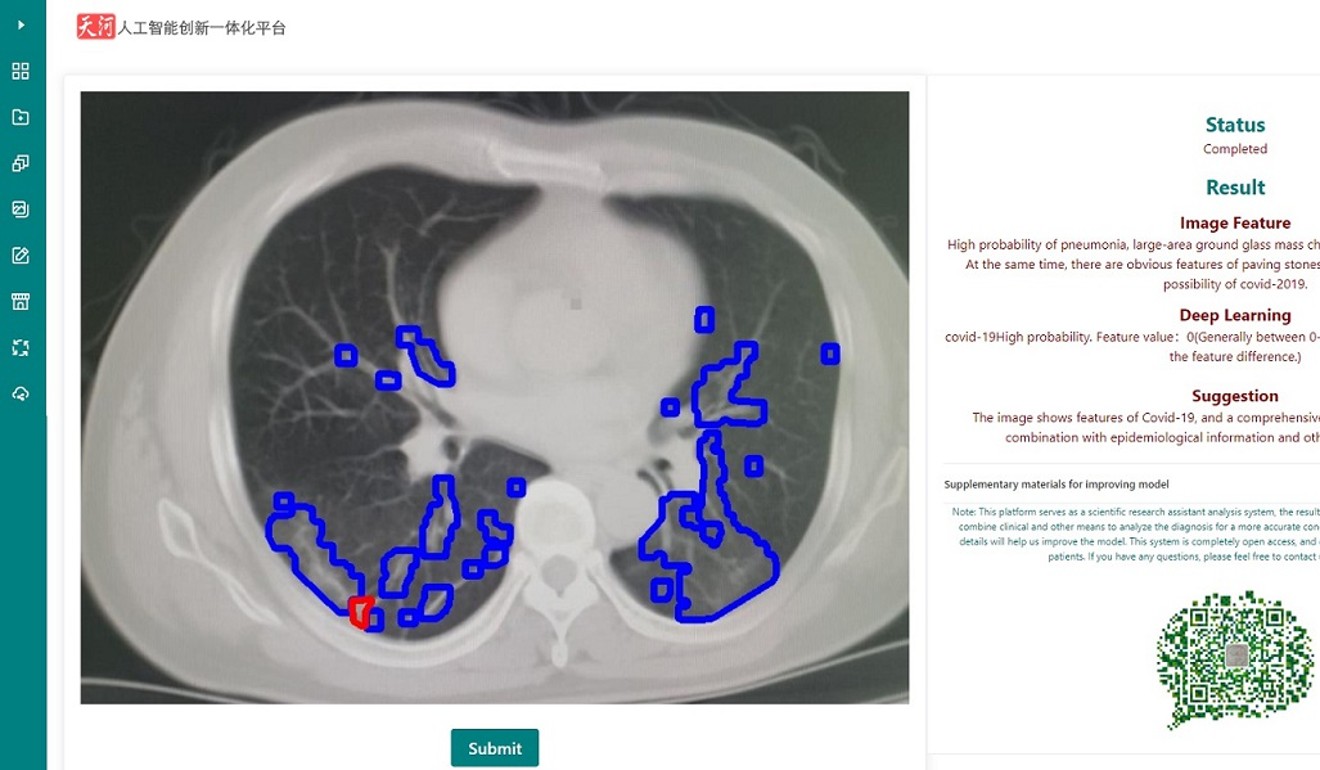
The system has an English interface and the reports it produces direct doctors to those areas of the patient’s lungs that require special attention by circling them in different colours.
It also provides an estimate of the likelihood of the person having contracted Covid-19, in a range from zero to 10, with lower numbers suggesting a higher probability of infection.
It even advises on what to do next, based on the experiences and lessons learned from doctors who have treated coronavirus patients.
Dr Xu Bo, a lead scientist on the project at Tianjin Medical University, said in an interview this week withScience and Technology Daily that the accuracy of the system was initially “rather poor”.
But the team worked round the clock to train the machine using the latest information from doctors with experience of Covid-19 and their clinical practices, he said.
The AI system directs doctors to those areas of the patient’s lungs that require special attention by circling them in different colours. Photo: Handout
As the number of samples increased, the AI’s performance improved significantly, and is now helping medical teams fighting the coronavirus in more than 30 hospitals in Wuhan and other cities.
Xu said that it would take an experienced doctor about 15 minutes to go through the 300 images generated by a CT scan, while the AI did the job in about 10 seconds.
The system could be accessed via a computer or even a mobile phone, he said.
The use of chest scans for diagnosis was first proposed by doctors fighting the Covid-19 epidemic in Wuhan. After the city went into lockdown, a large number of suspected patients appeared and testing them for infection using genetic methods took from several hours to several days. Many people are thought to have died while waiting for their results to come back.
In a series of studies, including a paper published in medical journal The Lancet, Chinese doctors showed that CT scans were a reliable tool because the lungs of coronavirus patients had features unseen in other diseases.
The Chinese government accepted their advice and said scan results could be used as credentials for treatment. Many scientists have said that decision played an important role in controlling the outbreak in the country.
But not all countries agree with that methodology. The US Centres for Disease Control, for instance, “does not currently recommend CXR or CT to diagnose Covid-19”.
It said the reason was that using scans would attract more suspected cases to hospitals and in turn raise the likelihood of them infecting other patients and staff.
The American College of Radiology said: “CT should not be used to screen for or as a first-line test to diagnose Covid-19.”
After the device was used on a suspected patient, it could take an hour to clean the test room, the college said on Wednesday.
A doctor working at a Beijing hospital treating Covid-19 patients said the CT machine could scan hundreds of patients a day in China, but because of the different protocols in some Western countries, the number there fell to just one or two.
“Governments should not let the CT sit idle during a major public health crisis,” she said.
“If you can’t give the people a test, give them a scan.”












 CHINDIA ALERT: You'll be living in their world, very soon