Archive for ‘cost’

29/04/2020

Coronavirus: China risks local government debt surge as Beijing tries to spur economic growth

  • Concerns are rising that China is repeating its mistake of a decade ago by pursuing short-term debt-fuelled economic growth at the cost of long-term sustainability
  • Local governments are stepping up spending on infrastructure projects in a bid to offset the slowdown caused by the coronavirus outbreak and subsequent lockdowns
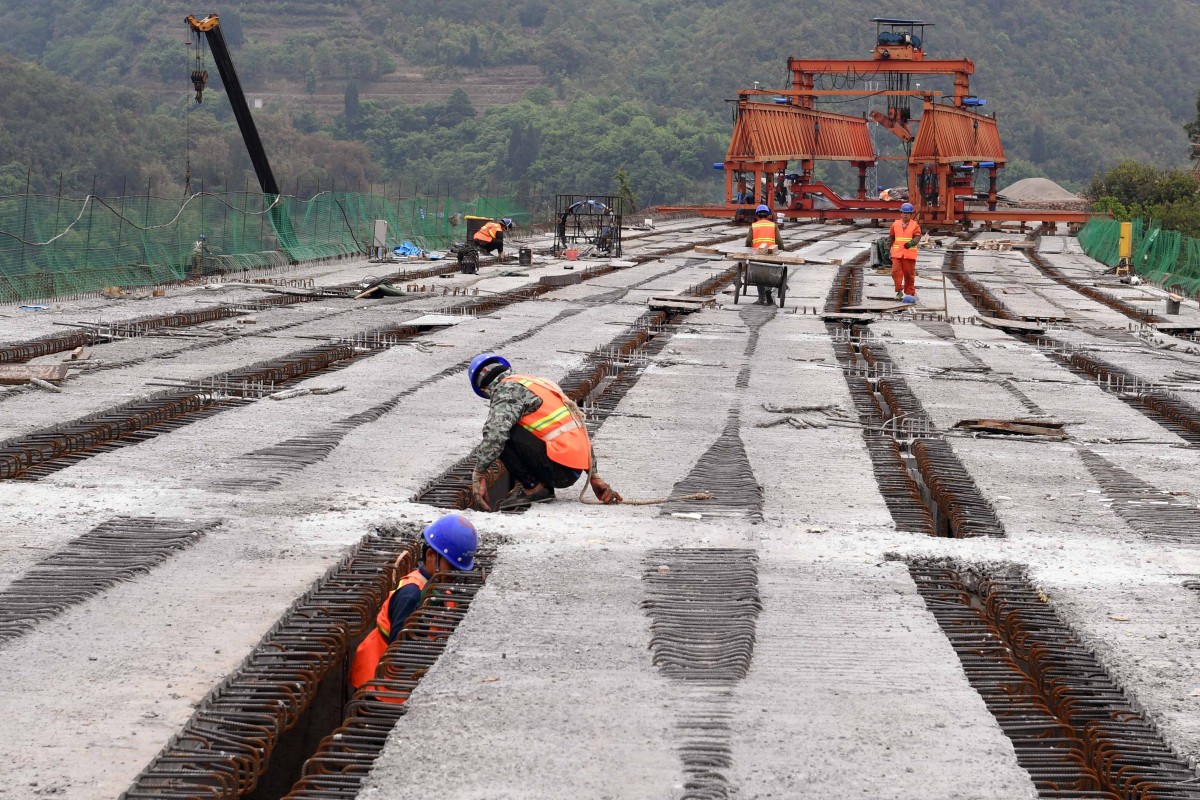
Construction of high-speed railways, motorways and airports is an old tactic that Beijing dusted off after the pandemic led to a 6.8 per cent economic contraction in the first quarter. Photo: Xinhua

China’s huge stockpile of local government debt, one of the biggest “grey rhino” risks threatening the Chinese economy’s future, is set to rise steeply as local authorities rush to increase capital spending to help offset the damage caused by the coronavirus outbreak.

As Beijing discusses increasing the central government budget deficit and monetary policy easing to spur economic growth, many local governments see the situation as a golden opportunity to realise their investment ambitions, fanning concerns that China is repeating its mistake of a decade ago by pursuing short-term debt-fuelled economic growth at the cost of long-term sustainability.
In one of the latest investment drives, the southeastern province of Fujian announced on Sunday that it had signed contracts for 391 new projects with a combined investment value of 783.6 billion yuan (US$110.6 billion). Projects undertaken by central government-owned companies, which received significant lending support in the first quarter, accounted for more than half of the promised investment in Fujian, some 92 projects worth 424.5 billion yuan.
The landlocked eastern province of Anhui is also planning 2,583 new projects this year at a cost of 450 billion yuan, a third of which have been created in the last two weeks.
Construction begins for major sea crossing to link Shenzhen and Zhongshan in Greater Bay Area
In addition to work on existing construction projects, costing around 850 billion yuan, the province has also prepared a list of 3,300 reserve projects with a total investment value of 5.4 trillion yuan (US$762 billion) which could theoretically be started at any point in the future, pending government approval and funding support.

“The most powerful and effective way to offset the economic slowdown is to increase the size of investments,” Wang Qikang, an official with the Anhui economic planning office said on Friday. “[We] must quicken the pace of construction, working day and night to win back the lost time [from the coronavirus lockdowns].”

Construction of high-speed railways, motorways and airports is an old tactic that Beijing dusted off after the pandemic led to a 6.8 per cent economic contraction in the first quarter.

Infrastructure construction has already been hit hard amid the lockdowns, plunging 19.7 per cent in the first three months of the year compared to a year earlier.

Many [local governments] are still striving to achieve a high growth rate without the guidance of a national [gross domestic product] target – Liu Xuezhi

“The investment stimulus mindset has hardly been eradicated at the local level,” said Liu Xuezhi, a senior researcher with the Bank of Communications in Shanghai. “In particular, many [local governments] are still striving to achieve a high growth rate without the guidance of a national [gross domestic product] target.”

Before the start of the coronavirus outbreak, Beijing was thought to be targeting a

growth rate

of around 6 per cent this year after achieving 6.1 per cent in 2019, although many local governments appear to be setting their own annual targets still using the original expected goal as a guide.

However, that target was never made public because the meeting of the

National People’s Congress (NPC)

scheduled for early March, where the growth target would normally have been released, was postponed due to the virus.

The government announced on Wednesday that the NPC will be held from May 22, when a new, likely lower, growth target could be announced.
China’s first-quarter GDP shrinks for the first time since 1976 as coronavirus cripples economy
International rating agency Moody’s warned that greater infrastructure spending would result in higher debt for regional and local governments, increasing their financial risks amid a sharp slowdown in tax revenues.

“Such investments are less likely to be a main support measure [chosen by Beijing] now given the government’s focus on avoiding a rapid increase in leverage and asset price inflation,” Moody’s analysts Michael Taylor and Lilian Li said on Tuesday.

At the end of March, local government debt stood at 22.8 trillion yuan (US$3.2 trillion), according to the Ministry of Finance. But implicit liabilities, which are hidden in local financing vehicles, state firms and public-private partnership projects, are believed to be much larger, with some estimates pointing towards an additional debt of over 30 trillion yuan.

Chinese central bank governor Yi Gang, along with other officials, have already warned against excessive economic stimulus, saying it would add risks to China’s financial system.

A key risk is that local governments are front-loading China’s long-term investment plan, especially in the railway sector, with more than 357 railway projects proposed by local governments.

Shandong province, for example, is preparing to build four new railway lines, including the Shandong portion of a second high-speed railway between Beijing to Shanghai.

“There is still a chance for infrastructure investment growth to hit 10 per cent if the government releases 2 trillion yuan (US$282 billion) in funding through local special purpose bonds and special treasury bonds,” said Haitong Securities’ chief economist Jiang Chao on Monday.

However, a local government debt monitoring report issued on Tuesday by the National Institution of Finance and Development warned that China’s local government fiscal situation is worsening rapidly as expenses surge and revenues drop.

“All levels of local governments in China will face huge debt repayment pressure in five years,” warned Yin Jianfeng, deputy director of the Beijing-based think-tank.

Source: SCMP
29/02/2020

Coronavirus: cost to China’s economy may be larger than Beijing hopes as February manufacturing and service sectors plunge

  • Purchasing managers’ indexes for both manufacturing and service sectors drop to all-time lows
  • Steep falls raise questions over extent of damage epidemic has caused to China’s economy and how long it will take the country to recover
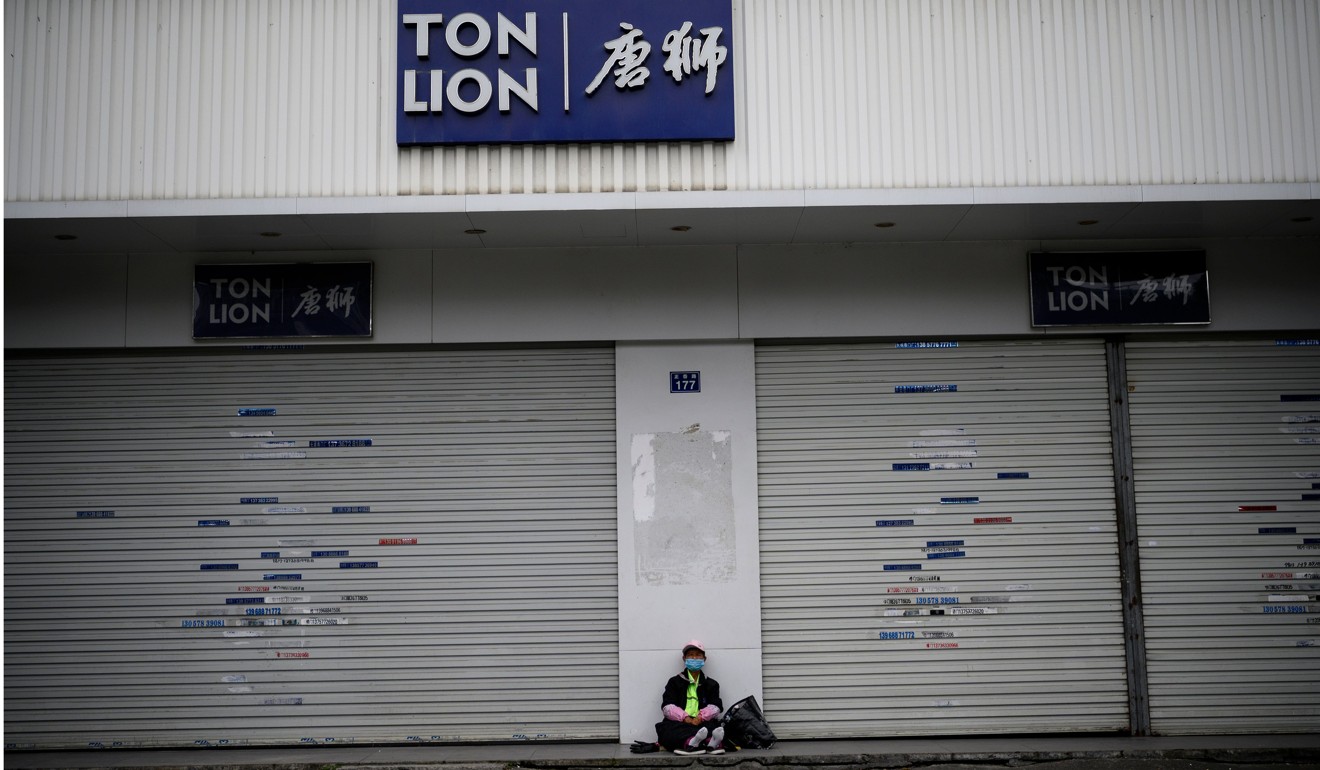
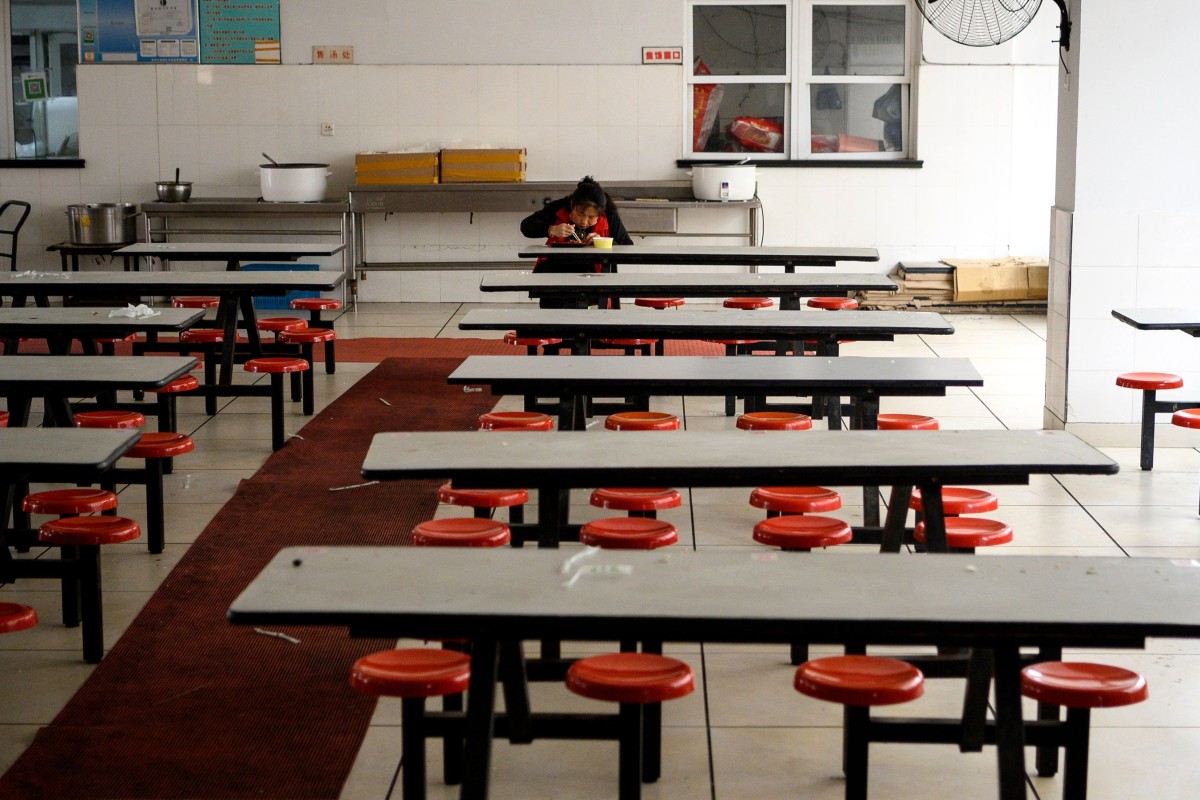
Many Chinese factories have faced a labour shortage as migrants have been unable to return to work because of the coronavirus outbreak. Photo: AFP
The damage caused by the coronavirus outbreak to China’s US$14 trillion economy could be much worse than Beijing hoped, as official measures for the country’s factory and service activity indicated on Saturday, threatening President Xi Jinping’s vision for 2020 and underscoring his urgent appeal to get production back to normal.
Monthly economic indicators for February sank to all-time lows as the coronavirus halted China’s manufacturing machine and froze activity in the service sector – from retailing to recycling – painting a bleak picture of the world’s second-biggest economy and challenging Beijing’s repeated assurance that the impact would be manageable and short-lived.
Covid-19, the disease caused by the coronavirus – was first reported in Wuhan in December. Since then it has spread to more than 50 countries and more than 85,000 people have been infected. The outbreak has disrupted travel and cargo shipments, and caused stock markets to slump.

China’s official February purchasing managers’ indexes (PMI) for both manufacturing and services, released by the National Bureau of Statistics on Saturday, confirmed fears that China’s economy was in bad shape and fanned speculation that it may even contract in the first quarter.

Larry Hu, chief China economist at Macquarie Capital in Hong Kong, said in a note that Beijing might report negative growth for “the first time since the Cultural Revolution”.

The manufacturing PMI, which measures factory activity, dropped to 35.7 in February – below the previous all-time low of 38.8 set in November 2008 during the global financial crisis – from 50 in January when the impact of the epidemic was not apparent.

A reading below 50 indicates a contraction in activity.

The February PMI figures confirmed fears that China’s economy was in bad shape. Photo: AFP
All of the sub-indexes of the PMI pointed to the difficult situation facing Chinese factories. Output plummeted, new orders vanished, exports and imports stopped, and logistics were badly disrupted. Input prices, which reflects the costs factories must pay, was the only sub-index that remained above 50.

The non-manufacturing PMI – a gauge of sentiment in the services and construction sectors – also dropped, to 29.6 from 54.1 in January. This was also the lowest on record, beating the previous low of 49.7 in November 2011, according to the China Federation of Logistics and Purchasing, which produces the index with the National Bureau of Statistics.

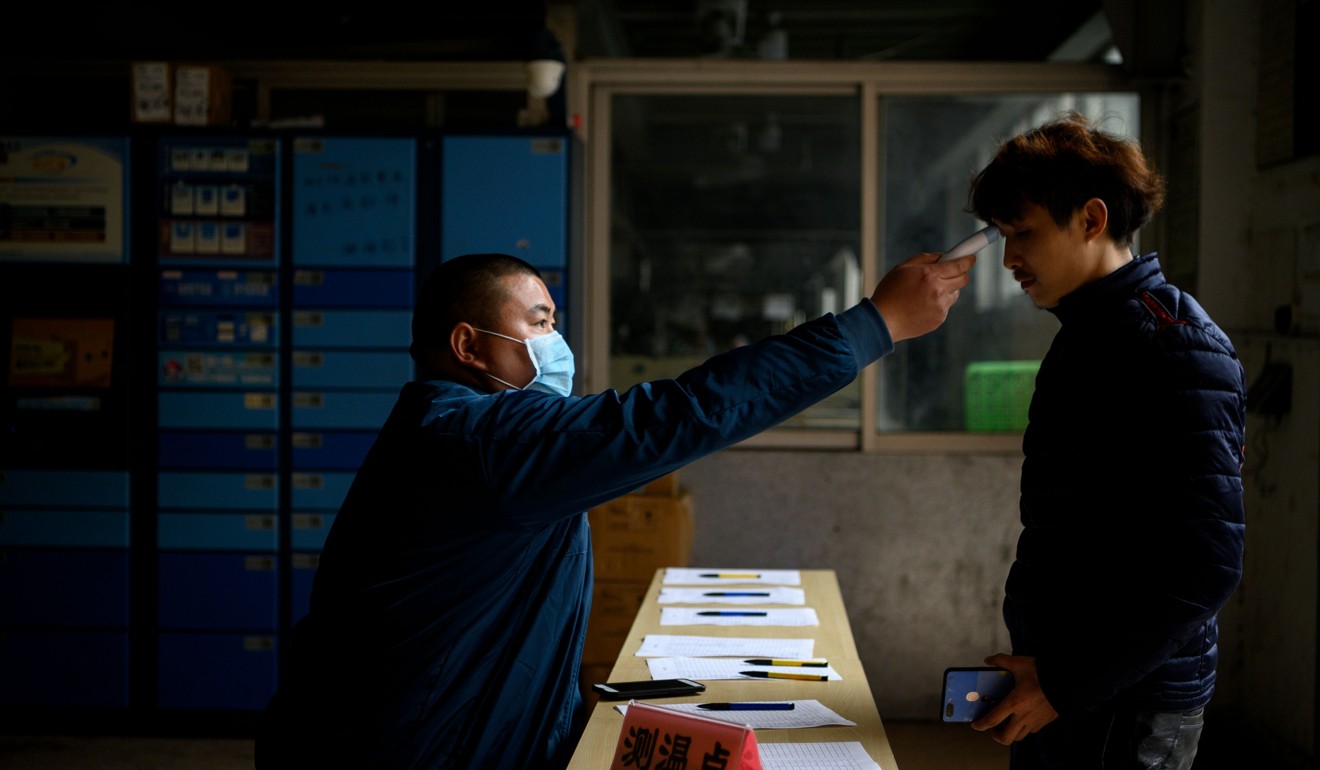
The declines in the February reflect the difficulties businesses are having in bringing production back online due to shortages of labour as well as difficulties receiving supplies or shipping goods to market because of transport restrictions enacted to contain the spread of the virus.

An extended slump would put upwards pressure on unemployment, especially among small, private sector service firms. Beijing, which worries that rising joblessness could cause social unrest, has called on local governments to remove unnecessary restrictions to get businesses back to work.

The employment sub-index in the manufacturing PMI fell to 31.8 in February.

“It is not because factories have stopped hiring migrant workers, it is because the flow of migrant workers to factories has been blocked,” said Hua Changchun, an analyst at brokerage Guotai Junan Securities. “There’s no point talking about resuming production if workers can’t return to their jobs.”

Zhang Qiqun, a researcher with the Development Research Centre of State Council, said in a statement that the major economic indicators for this quarter would see “obvious drops” and China must “be prepared”.

The employment sub-index in the manufacturing PMI fell to 31.8 in February. Photo: AFP
How quickly China can dig itself out of the coronavirus hole is a matter of debate.
According to the PMI survey, about 90 per cent of medium and large-sized manufacturers are expected to resume production in March, meaning about 10 per cent will still be closed four weeks from now.
As for small firms, the industry ministry said this week that two-thirds would still be closed at the end of February.
China’s production difficulties have resulted in economic problems for nations around the world that rely on supply chains that begin or pass through the country. The global spread of the coronavirus will only exacerbate the problem.
Barclays and Nomura forecast China’s first-quarter growth at 2 per cent, while Capital Economics said it would contract in year-on-year terms.
“The sharp drop in China’s manufacturing PMI in February reinforces our view that the normalisation in economic activity will be delayed,” said Xing Zhaopeng, an economist at Australia & New Zealand Banking Group.
“There’s scant chance for a V-shaped rebound – the authorities are using targeted aids more than stimulus to stabilise the economy and that will lead to a gradual bounce.”
The National Bureau of Statistics tried to put a brave face on the data, saying there would be a substantial improvement in March.
“The resumption of work is ramping up and market confidence is steadily recovering,” said Zhao Qinghe, a senior statistician at the NBS.
“Although the novel coronavirus pneumonia epidemic has caused a larger impact on production and operations of Chinese enterprises … currently the epidemic has come under initial containment, and the negative impact on production is gradually weakening.”
Source: SCMP
27/09/2019

Shuping Wang: Whistleblower who exposed HIV scandal in China dies

Photo of Shuping WangImage copyright HAMPSTEAD THEATRE
Image caption “Speaking out cost me my job, my marriage and my happiness at the time,” Dr Wang said

A whistleblower who exposed HIV and hepatitis epidemics in central China in the 1990s, potentially saving tens of thousands of lives, has died aged 59.

Dr Shuping Wang lost her job, was attacked, and had her clinic vandalised after she spoke out.

She died in Utah in the US, where she moved after the scandal.

A play inspired by her life is currently running in London, with the playwright calling her a “public health hero”.

Dr Wang never returned to China after leaving, saying it did not feel safe.

Why did Dr Wang speak out?

In 1991 in the Chinese province of Henan, Dr Wang was assigned to work at a plasma collection station. At the time, many locals sold their blood to local government-run blood banks.

It wasn’t long before she realised the station posed a huge public health risk.

Poor collection practices, including cross-contamination in blood-drawing, meant many donors were being infected with hepatitis C from other donors.

She warned senior colleagues at the station to change practices, but was ignored and according to her own account, was told that such a move would “increase costs”.

Undeterred, she reported the issue to the Ministry of Health. As a result, the ministry later announced that all donors would need to undergo hepatitis C screening – reducing the risk of the disease being spread.

But because of her whistleblowing, Dr Wang said, she was forced out of a job.

Her seniors said her actions had “impeded the business”. She was transferred, and assigned to work in a health bureau. But in 1995, she uncovered another scandal.

Dr Wang at workImage copyright HAMPSTEAD THEATRE

Dr Wang discovered a donor who had tested HIV positive – but had still sold blood in four different areas.

She immediately alerted her seniors to test for HIV in all the blood stations in Henan province. Again, she was told this would be too costly.

She decided to take things into her own hands, buying test kits and randomly collecting over 400 samples from donors.

She found the HIV positive rate to be 13%.

She took her results to officials in the capital, Beijing. But back home, she was targeted. A man she described as a “retired leader of the health bureau” came to her testing centre and smashed her equipment.

When she tried to block him, he hit her with his baton.

‘I’m not a man. I’m a woman’

In 1996, all the blood and plasma collection sites across the country were shut down for “rectification”. When they re-opened, HIV testing was added.

“I felt very gratified, because my work helped to protect the poor,” she said. But others were not happy.

At a health conference later that year, a high-ranking official complained about that “man in a district clinical testing centre [who] dared to report the HIV epidemic directly to the central government”.

“He said, [who is] the guy – how dare he [write] a report about this?” Dr Wang told the BBC’s Woman’s Hour in an interview earlier this month.

“I stood up and said I’m not a man. I’m a woman and I reported this.”

Later that year, she was told by health officials that she ought to stop work. “I lost my job, they asked me to stay home and work for my husband,” Dr Wang said.

Her husband, who worked at the Ministry of Health, was ostracised by his colleagues. Their marriage eventually broke down.

A scene from The King of Hell's PalaceImage copyright HAMPSTEAD THEATRE
Image caption A scene from The King of Hell’s Palace

In 2001, Dr Wang moved to the US for work, where she took the English name “Sunshine”.

In the same year, the Chinese government admitted that it faced a serious AIDS crisis in central China. More than half a million people were believed to have become infected after selling their blood to local blood banks.

Henan, the province that Dr Wang had worked in, was one of the worst hit.

The government later announced that a special clinic had been set up to care for those suffering from Aids-related illnesses.

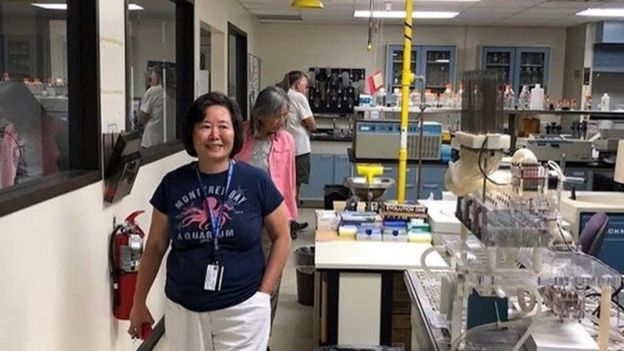
Several years later, Dr Wang re-married and moved with her husband Gary Christensen to Salt Lake City, where she began working at the University of Utah as a medical researcher.

But her past followed her. In 2019, she said, Chinese state security officers made threatening visits to relatives and former colleagues in Henan, in an attempt to cancel the production of a play inspired by her life.

She refused, and the play titled “The King of Hell’s Palace” premiered at London’s Hampstead Theatre in September.

Dr Wang died on 21 September while hiking in Salt Lake City with friends and her husband. It’s thought she may have had a heart attack.

Dr Wang with playwright Frances Ya-Chu
Image caption Dr Wang with playwright Frances Ya-Chu

“Speaking out cost me my job, my marriage and my happiness at the time, but it also helped save the lives of thousands and thousands of people,” she had told the Hampstead Theatre website in an interview just one month before her death.

“She was a most determined, relentless optimistic and most loving woman,” wrote her friend David Cowhig after news of her death.

“She chose the English name Sunshine for a reason. Perhaps her exuberance and love for the outrageous – made possible [the] perseverance she had.”

Source: The BBC

21/05/2019

Chinese street cleaner says unlicensed taxi drivers who throw cigarette ends cost him nearly half a day’s wages

  • Man says his pay packet takes a hit every time cabbies flick butts onto the street
  • Zhengzhou city management says supervisors are too zealous with staff fines
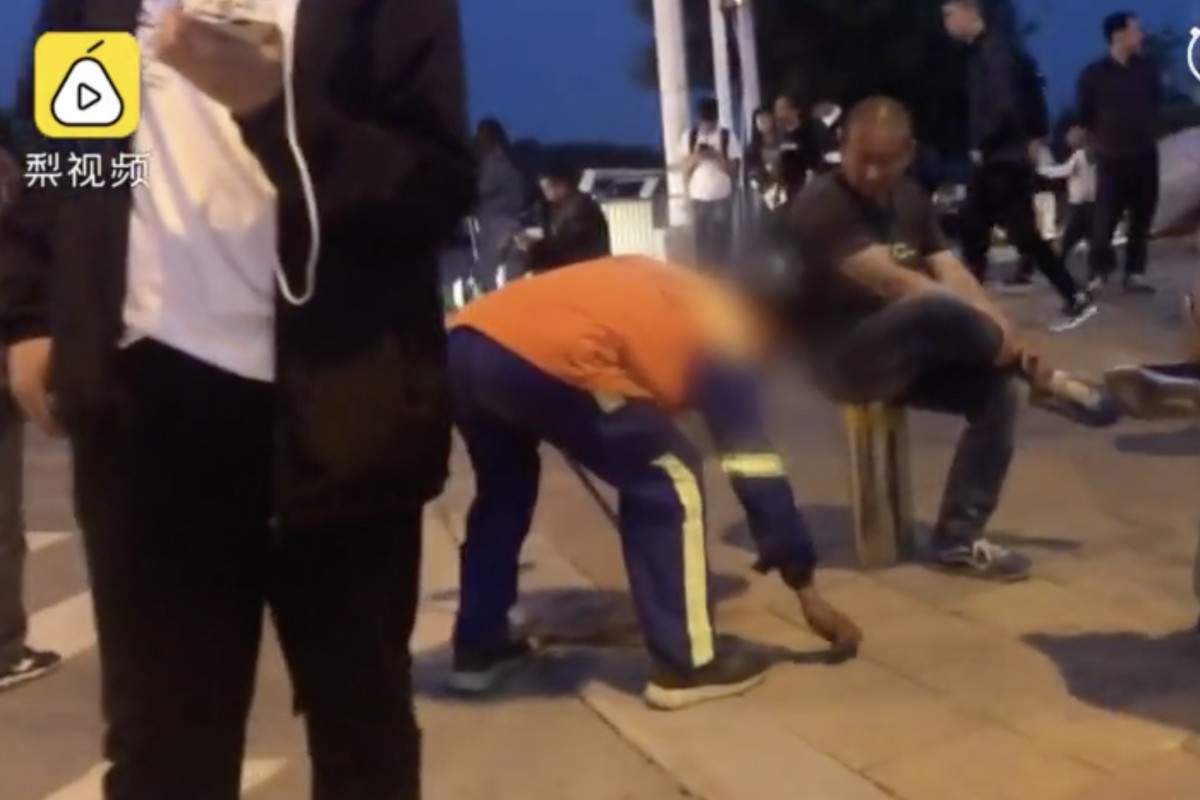
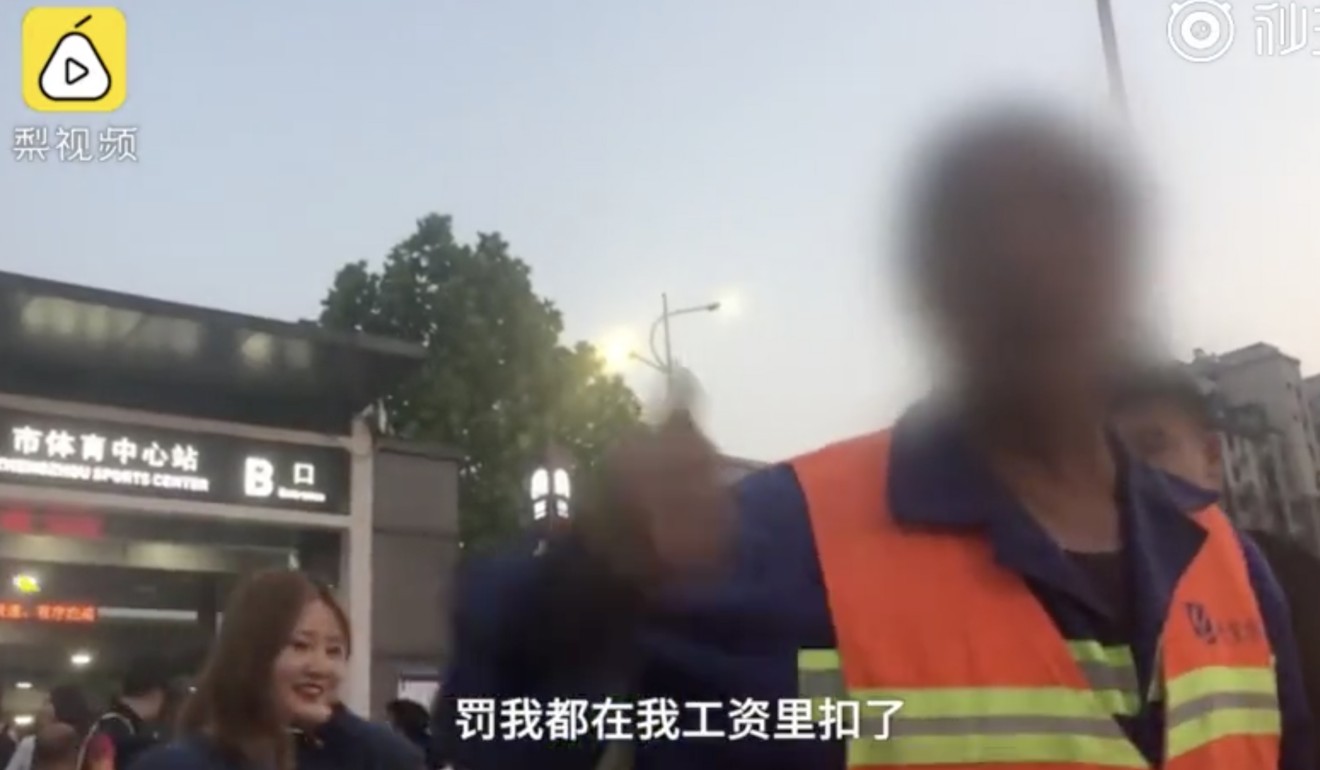
Local authorities say a street cleaner in Henan province fined for the cigarette butts left by smokers on his beat may be the victim of a zealous supervisor. Photo: Weibo
A street cleaner in eastern China who was filmed complaining about the hefty fines he had to pay for the cigarette ends found littering his section of road has won a hearing for his case and the support of internet users, social media site Pear Video said on Tuesday.
In the video taken on Saturday, the elderly man from Zhengzhou in Henan province claimed that he was once fined 260 yuan (US$38) – 7 yuan (about US$8) per cigarette end – from an 86 yuan per day pay packet.
“Today, I had to clean up five or six thousand cigarette butts,” the man said in the video while working outside a subway station.
“All the fines come out of my salary. This month they docked me a few hundred yuan.”
The Zhengzhou street cleaner says he can pick up thousands of cigarette ends off the street each day but the littering in his section does not stop. Photo: Weibo

The man blamed littering on unauthorised taxi drivers who throw cigarette ends into the street.

“These black cab drivers come here every day, again and again. They never stop coming here,” the cleaner was quoted as saying.

Pear Video spoke to other street cleaners in Zhengzhou, who confirmed that they were fined 7 yuan per cigarette butt found after cleaning.

It’s a dirty job, but don’t treat them like trash: Hong Kong’s cleaners are an aged, overlooked group
However, city authorities denied that the penalty system was strictly enforced and blamed overzealous monitoring officers.

“[Management patrol] will say things like this because they want to supervise the street cleaners. But there are no detailed written guidelines, and this was never formally implemented,” a representative from the Zhengzhou City Management Command Centre was quoted as saying in the report.

“It is just for the purpose of verbal supervision and encouragement.”

The Zhengzhou official said the centre would investigate further and speak to the street cleaners about fines.

In response to the cleaner’s complaints, city authorities in Zhengzhou say they will investigate and speak to staff about fines. Photo: Weibo

The video stirred up angry reactions on Weibo, China’s Twitter-like platform.

“When [Pear Video] investigated they say it hasn’t been implemented. If they didn’t investigate, they would have just carried on giving fines,” read one comment that attracted more than 17,000 likes.

Street cleaners in China often earn meagre salaries for gruelling manual labour for long periods of time.

Last month, it emerged that more than 500 street cleaners in the city of Nanjing were ordered to wear GPS tracking bracelets that would alert authorities if they stayed in the same place for more than 20 minutes. The manufacturer removed the feature after a backlash inside and outside China.

Source: SCMP

Law of Unintended Consequences

continuously updated blog about China & India

ChiaHou's Book Reviews

continuously updated blog about China & India

What's wrong with the world; and its economy

continuously updated blog about China & India