Archive for ‘COVID-19’

19/03/2020

Coronavirus: China and the virus that threatens everything By John Sudworth

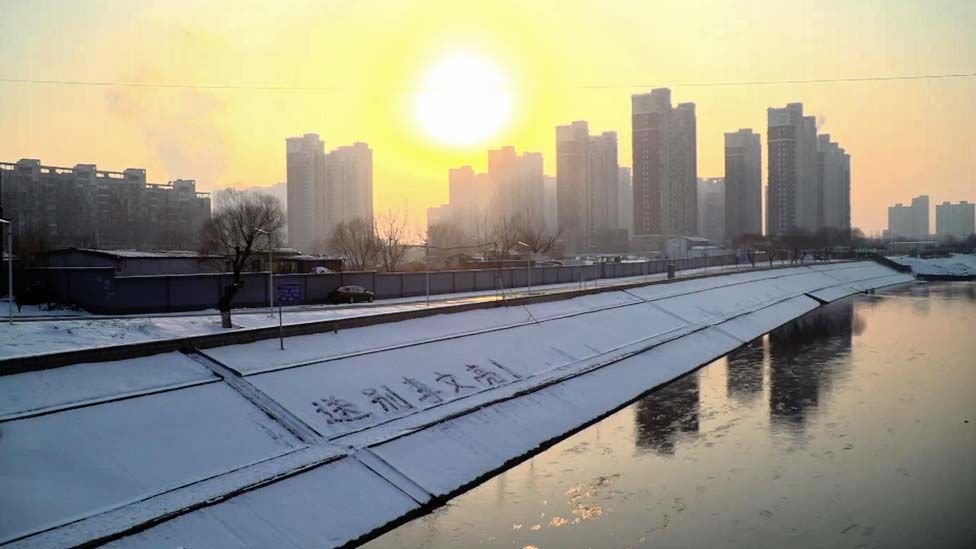
Chinese characters in the snow on the banks of the Tonghui river in Beijing read "Goodbye Li Wenliang!"
Image caption A message written in the snow alongside the Tonghui river reads “Goodbye Li Wenliang!”

On a cold Beijing morning, on an uninspiring, urban stretch of the Tonghui river, a lone figure could be seen writing giant Chinese characters in the snow.

The message taking shape on the sloping concrete embankment was to a dead doctor.

“Goodbye Li Wenliang!” it read, with the author using their own body to make the imprint of that final exclamation mark.

Five weeks earlier, Dr Li had been punished by the police for trying to warn colleagues about the dangers of a strange new virus infecting patients in his hospital in the Chinese city of Wuhan.

Now he’d succumbed to the illness himself and pictures of that frozen tribute spread fast on the Chinese internet, capturing in physical form a deep moment of national shock and anger.
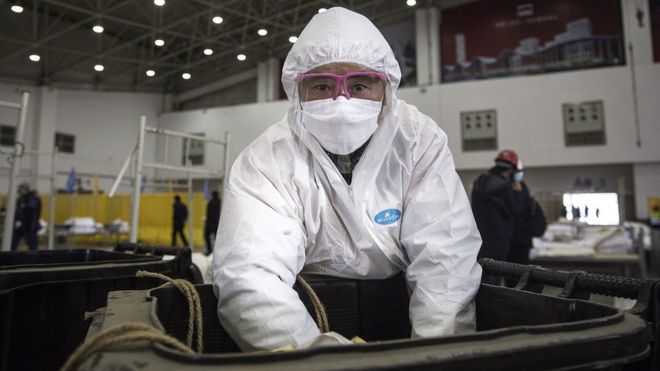
A worker wears a protective mask while cleaning construction waste at WuhanKeting on February 4th.2020 in Wuhan.Hubei Province,China.Image copyright GETTY IMAGES
Image caption A worker in a Chinese factory wears a protective mask

There’s still a great deal we don’t know about Covid-19, to give the disease caused by the virus its official name. Before it took its final fatal leap across the species barrier to infect its first human, it is likely to have been lurking inside the biochemistry of an – as yet unidentified – animal. That animal, probably infected after the virus made an earlier zoological jump from a bat, is thought to have been kept in a Wuhan market, where wildlife was traded illegally.

Beyond that, the scientists trying to map its deadly trajectory from origin to epidemic can say little more with any certainty.

But while they continue their urgent, vital work to determine the speed at which it spreads and the risks it poses, one thing is beyond doubt. A month or so on from its discovery, Covid-19 has shaken Chinese society and politics to the core.

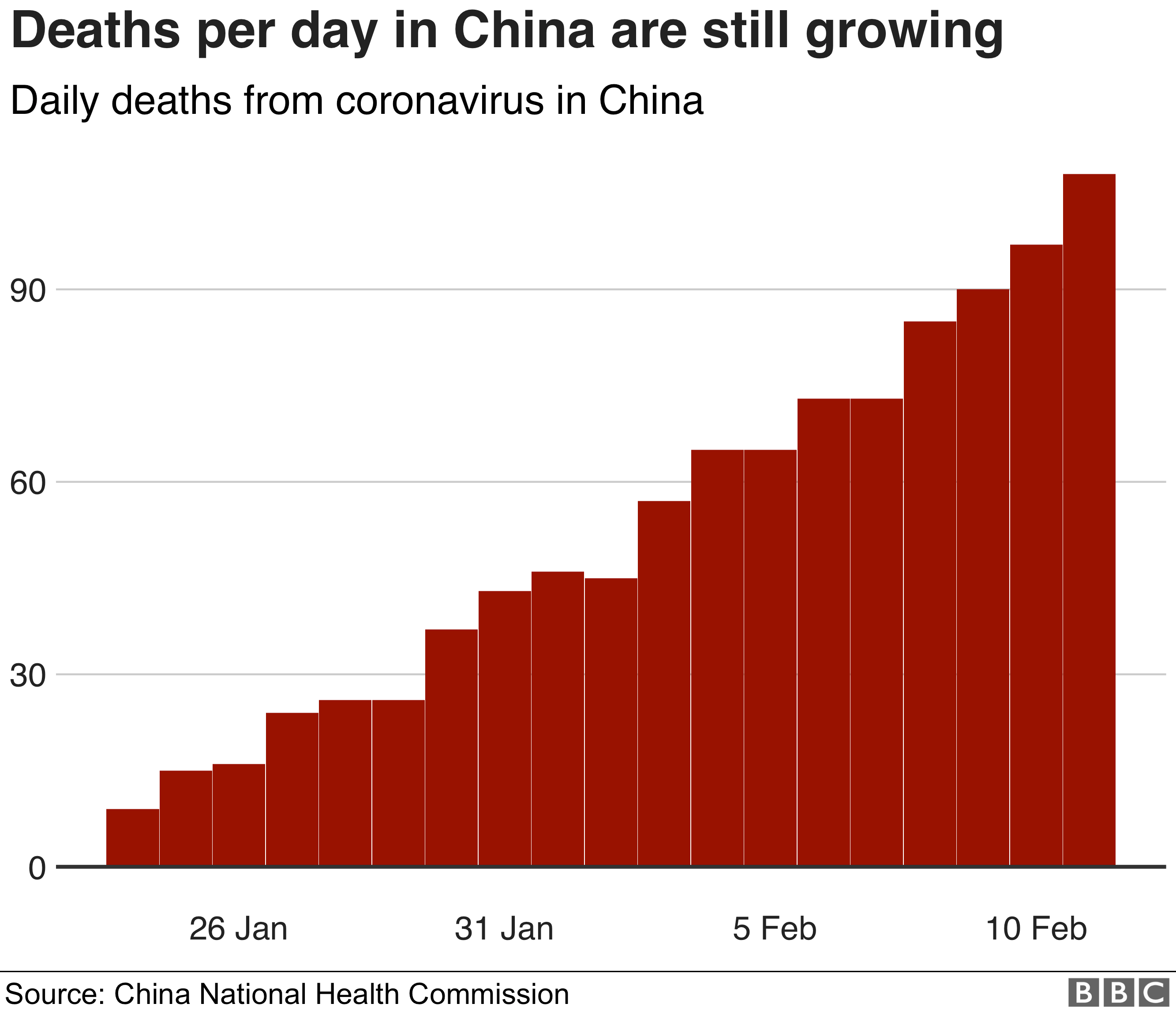
That tiny piece of genetic material, measured in ten-thousandths of a millimetre, has set in train a humanitarian and economic catastrophe counted in more than 1,000 Chinese lives and tens of billions of Chinese yuan. It has closed off whole cities, placing an estimated 70 million residents in effective quarantine, shutting down transport links and restricting their ability to leave their homes. And it has exposed the limits of a political system for which social control is the highest value, breaching the rigid layers of censorship with a tsunami of grief and rage.

The risk for the ruling elite is obvious.

It can be seen in their response, ordering into action the military, the media and every level of government from the very top to the lowliest village committee.
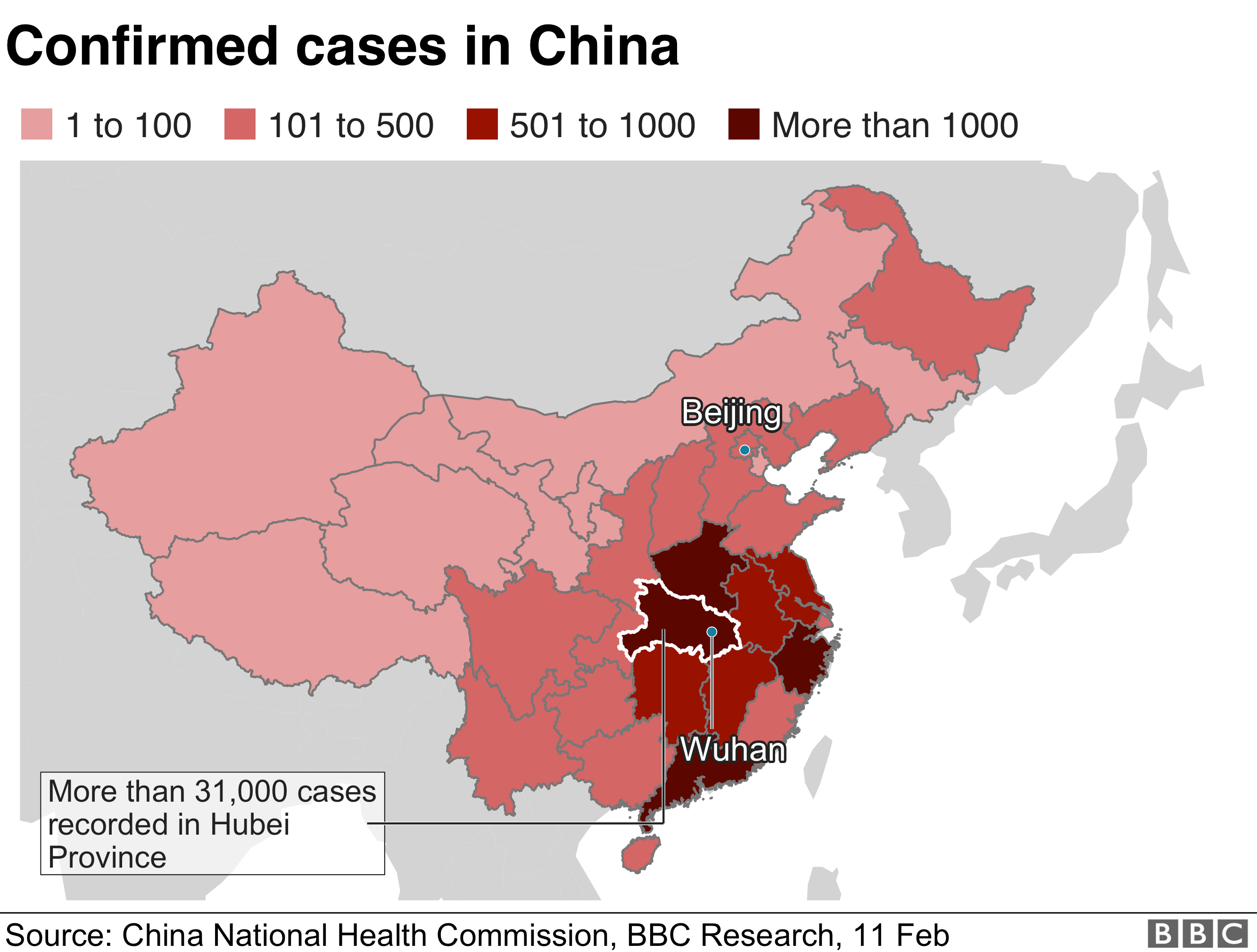
Map showing confirmed cases in China

The consequences are now entirely dependent on questions no one knows the answers to; can they pull off the complex task of bringing a runaway epidemic under control, and if so, how long might it take?

Across the world, people seem unsure how to respond to the small number of cases being detected in their own countries. The public mood can swing between panic – driven by the pictures of medical workers in hazmat suits – to complacency, brought on by headlines that suggest the risk is no worse than flu. The evidence from China suggests that both responses are misguided. Seasonal flu may well have a low fatality rate, measured in fractions of 1%, but it’s a problem because it affects so many people around the world.

Graphic showing rising number of coronavirus deaths in China

The tiny proportion killed out of the many, many millions who catch it each year still numbers in the hundreds of thousands – individually tragic, collectively a major healthcare burden.

Very early estimates suggested the new virus may be at least as deadly as flu – precisely why so much effort is now going into stopping it becoming another global pandemic. But one new estimate suggests it could prove even deadlier yet, killing as many as 1% of those who contract it. For any individual, that risk is still relatively small, although it’s worth noting such estimates are averages – just like flu, the risks fall more heavily on the elderly and already infirm.
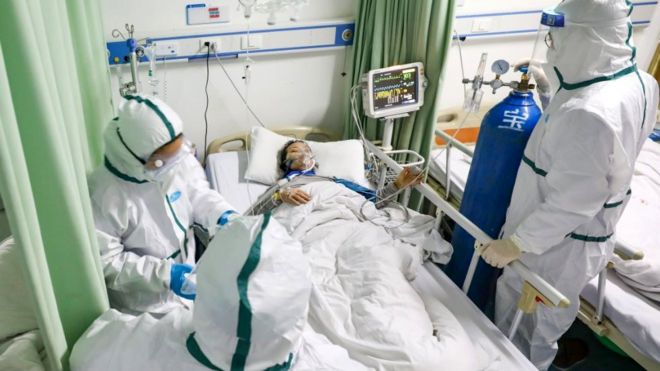
Patient in hospital bed in WuhanImage copyright REUTERS
Image caption Despite the death toll, an increasing number of patients are recovering

But China’s experience of this epidemic demonstrates two things. Firstly, it offers a terrifying glimpse of the potential effect on a healthcare system when you scale up infections of this kind of virus across massive populations. Two new hospitals have had to be built in Wuhan in a matter of days, with beds for 2,600 patients, and giant stadiums and hotels are being used as quarantine centres, for almost 10,000 more.

Despite these efforts, many have still struggled to find treatment, with reports of people dying at home, unregistered in the official figures. Secondly, it highlights the importance of taking the task of containing outbreaks of new viruses extremely seriously. The best approach, most experts agree, is one based on transparency and trust, with good public information and proportionate, timely government action.

But in an authoritarian system, with strict censorship and an emphasis on political stability above all else, transparency and trust are in short supply.
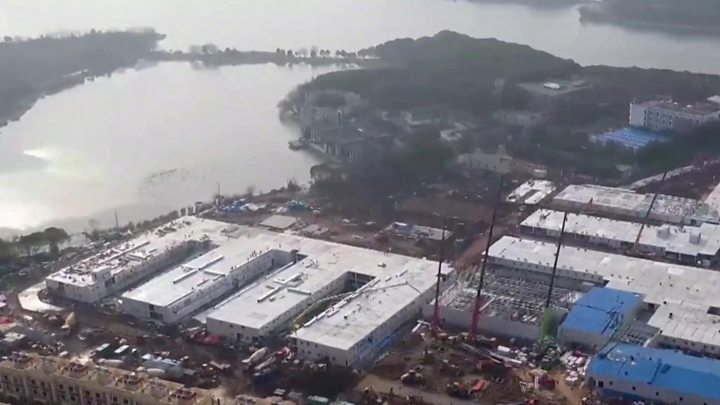
Media caption Aerial time-lapse shows Wuhan hospital construction

China’s response may have sometimes looked like panic – with what’s been called the “biggest quarantine in history” and harsh enforcement against those who disobey.

But those measures have become necessary only because its initial response looked like the very definition of complacency.

There’s ample evidence that the warning signs were missed by the authorities, and worse, ignored. By late December, medical staff in Wuhan were beginning to notice unusual symptoms of viral pneumonia, with a cluster linked to the market trading in illegal wildlife. On 30 December, Dr Li Wenliang, an ophthalmologist working in Wuhan’s Central Hospital, posted his concerns in a private medical chat group, advising colleagues to take measures to protect themselves. He’d seen seven patients who appeared to be suffering with an illness similar to Sars – another coronavirus that began in an illegal Chinese wildlife market in 2002 and went on to kill 774 people worldwide.

A few days later, he was summoned by the police.

Dr Li was made to sign a confession, denouncing the messages he’d posted as “illegal behaviour”.

The case received national media attention, with a high-profile state-run TV report announcing that in total, eight people in Wuhan were being investigated for “spreading rumours”. The authorities, though, were well aware of the outbreak of illness. The day after Dr Li posted his message, China notified the World Health Organization, and the day after that, the suspected source – the market – was closed down.

But despite the multiplying cases and the concerns among medics that human-to-human transmission was taking place, the authorities did little to protect the public. Doctors were already setting up quarantine rooms and anticipating extra admissions when Wuhan held its important annual political gathering, the city’s People’s Congress.

In their speeches, the Communist Party leaders made no mention of the virus. China’s National Health Commission continued to report that the number of infections was limited and that there was no clear evidence that the disease could spread between humans.

And on 18 January the Wuhan authorities allowed a massive community banquet to take place, involving more than 40,000 families. The aim was to set a record for the most dishes served at an event. Two days later, China finally confirmed that human-to-human transmission was indeed taking place.

Delicacies from Wuhan banquet
Image caption Images from Chinese state TV show the large banquet in Wuhan

Most remarkable of all perhaps, the following day, Wuhan held a Lunar New Year dance performance, attended by senior officials from across the surrounding province of Hubei. A state media report of the event, since hurriedly deleted but captured here, says the performers, some with runny noses and feeling unwell, “overcame the fear of pneumonia… winning praise from the leaders”.

By the time the national authorities had woken up to the impending disaster, and closed the city down on 23 January, it was too late – the epidemic was out of control. Before Wuhan’s transport links were cut, an estimated five million people had left the city for the Lunar New Year break, travelling across China and the world.

Some have begun calling the disaster “China’s Chernobyl”.

The parallels in failures to pass bad news up the chain of command and the incentives to put the short-term interests of political stability ahead of public safety, seem all too apparent. Li Wenliang, who’d gone back to work after being warned to keep quiet, soon discovered he’d also been infected.

He died earlier this month, leaving a five-year-old son and a pregnant wife.

Anger was already simmering over the authorities’ failure to issue timely warnings, with the crisis now being aired in full view. Wuhan’s politicians were blaming senior officials for failing to authorise the release of the information; senior officials appeared to be preparing to hang Wuhan’s politicians out to dry.

But the death of a man, silenced for simply trying to protect his colleagues, burst open the dam with a wave of online fury directed not just at individuals, but at the system itself. So great was the public outrage, China’s censors appeared unsure what to censor and what to let through. The hashtag #Iwantfreedomofspeech was viewed almost two million times before it was blocked. Aware of the tide of emotion, the Party began paying its own tributes to Dr Li.

It quickly hailed him a national hero.
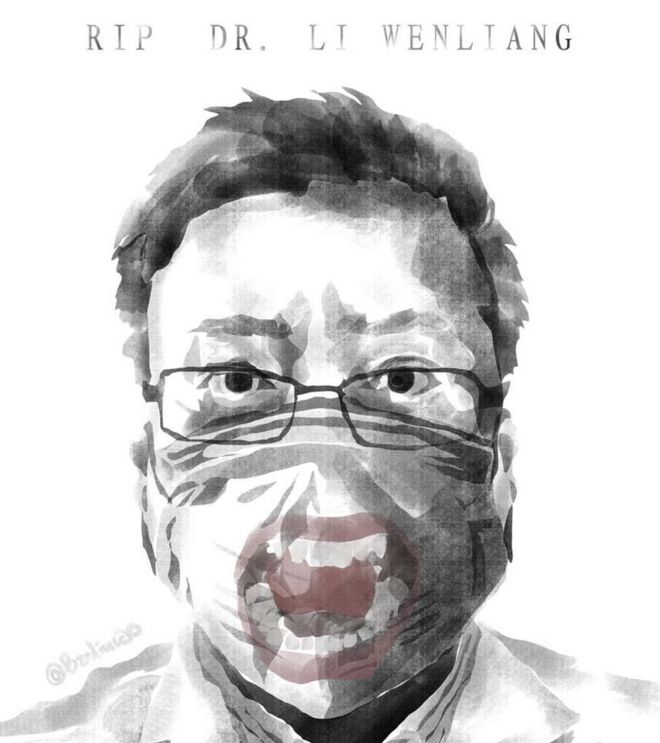
Doctor Li Wenliang tried to warn authorities about the new virus and died after contracting itImage copyright COURTESY BADIUCAO
Image caption Doctor Li Wenliang tried to warn authorities about the new virus and died after contracting it

China’s rulers, untroubled by the inconveniences of the ballot box, have far deeper and older fears of what might sweep them from office. The wars, famines and diseases that shook the dynasties of old have given them their inheritance; an acute historical sense of the danger of the unforeseen crisis. They will also know well what Chernobyl did for the legitimacy of the ruling Communist Party in the former USSR.

“It’s impossible to know if Li Wenliang’s death will serve as the catalyst for something bigger,” Jude Blanchette, an expert on Chinese politics at the Center for Strategic and International Studies in Washington, tells me. “But the raw emotion that surged when news of his condition broke indicates deep levels of frustration and anger exist within the country.”

Precisely because it feels the weight of history, however, the Communist Party has made holding onto power a living obsession, and it has an ever more formidable domestic security apparatus to help it to do so. Over the past few decades it has proven nothing if not resilient, enduring through political chaos, devastating earthquakes and man-made disasters.

But one sign that might hint at an awareness of just how great the current risks are comes in the role being played by China’s President Xi Jinping. This week – for the first time since the crisis began – he ventured out to meet health workers involved in the fight, visiting a hospital and a virus control centre in Beijing.

In contrast, his premier, Li Keqiang, has been sent to the front lines in Wuhan and appointed head of a special working group to tackle the epidemic.

While it is common for the premier to be the face of reassurance during national disasters, some observers see another reason why Mr Xi might be wise to be seen to delegate.
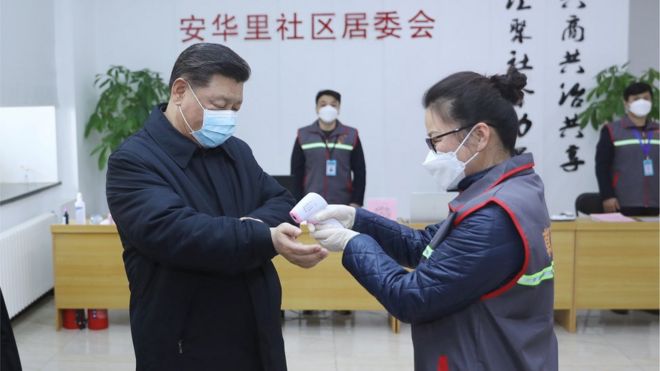
Chinese president Xi Jinping has his temperature recorded during a trip to a hospital in Beijing (10 February)Image copyright EPA
Image caption China’s president has kept a low profile since the outbreak began

“Xi’s absence from this crisis is yet another demonstration that he doesn’t so much lead as he does command,” Mr Blanchette says. “He’s clearly worried that this crisis will blow up in his face, and so he’s pushed out underlings to be the public face of the CCP’s response.”

Already there are signs that the censorship is being ratcheted up once again, with Mr Xi ordering senior officials to “strengthen the control over online media”.

A few days ago, I spoke by phone to the lawyer and blogger, Chen Qiushi, who’d travelled to Wuhan in an attempt to provide independent reporting about the situation. Videos from Mr Chen, and a fellow activist, Fang Bin, have been widely watched, showing not the ranks of patriotic soldier-medics and the building of hospitals that fill state media coverage, but overcrowded waiting rooms and body bags.

He told me he was unsure how long he’d be able to carry on. “The censorship is very strict and people’s accounts are being closed down if they share my content,” he said.

Mr Chen has since gone missing.

Friends and family believe he’s been forced into Wuhan’s quarantine system, in an attempt to silence him.

China’s leaders now find their fate linked to the daily charts of infection rates, published city by city, province by province. There are some signs that the extraordinary quarantine measures may be having an effect – outside of Hubei Province, the worst affected area, the number of new daily infections is falling.

But with the need to try to restart the economy – all but frozen now for over a week – the country has begun a slow return to work.
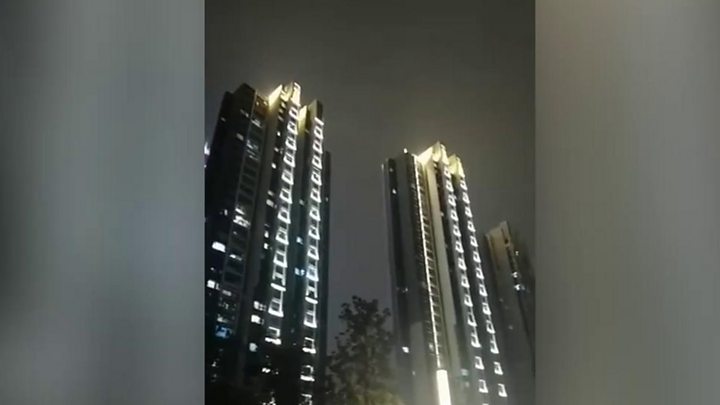
Media caption “Wuhan, add oil!”: Watch residents shouting to boost morale in quarantined city

Strict quarantine measures will remain in force in the worst affected areas, but workers from other parts of the country are trickling back to the cities, with the task of monitoring and managing their movements being handed to local neighbourhood committees.

It will be a difficult balancing act.

Too tough an approach risks further choking off business activity, commerce and travel in a consumer environment already suffocating under the deep psychological fear of contagion. Too lax, and any one of the many potential reservoirs of infection, now scattered across the country, could explode into another, separate epidemic.

That would require further harsh action, knocking domestic confidence and prolonging the international border closures and flight restrictions put in place at such enormous economic cost.

China is insisting that it is a fight well on the way to being won with “unconquerable will” and that lessons have been learned and “shortcomings in preparedness” identified.

Questions about the systemic failings behind the disaster are dismissed as foreign “prejudice”, as the propaganda machine cranks into overdrive, channelling the narrative and muting the criticisms.

But the devastating scale and scope of China’s world-threatening catastrophe have already revealed something important. The thousands who have lost family members, the millions living under the quarantine measures and the workers and businesses bearing the financial costs have been asking those difficult questions too.
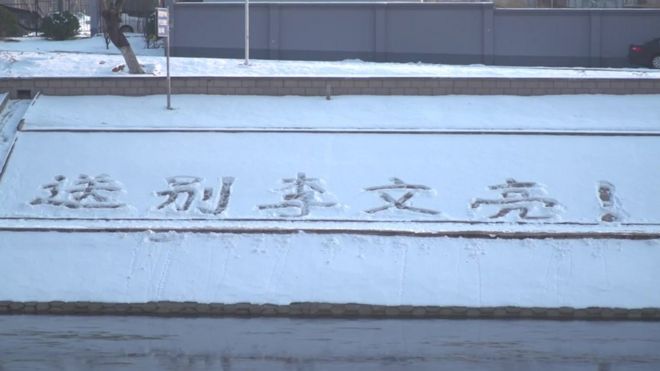
Chinese characters in the snow on the banks of the Tonghui river in Beijing read "Goodbye Li Wenliang!"
Image caption A tribute in snow to doctor Li Wenliang

On the snowy banks of the Tonghui river, the giant tribute to Li Wenliang remains intact. When we visited, a few locals were taking photos and talking quietly to each other.

A police car crawled slowly by.

Soon, with the warming weather, the characters will be gone.

Source: The BBC
19/03/2020

Rich world pumps aid to fight coronavirus, epicentre Europe reeling

LONDON/BEIJING (Reuters) – The world’s wealthiest nations poured unprecedented aid into the traumatized global economy on Thursday as coronavirus cases ballooned in the current epicentre Europe even as they waned at the pandemic’s point of origin, China.

With almost 219,000 infections and more than 8,900 deaths so far, the epidemic has stunned the world and drawn comparisons with painful periods such as World War Two, the 2008 financial crisis and the 1918 Spanish flu.

“This is like an Egyptian plague,” said Argentinian hotelier Patricia Duran, who has seen bookings dry up for her two establishments near the famous Iguazu Falls.

“The hotels are empty – tourist activity has died.”

Tourism and airlines have been particularly battered, as the world’s citizens hunker down to minimize contact and curb the spread of the flu-like COVID-19. But few sectors have been spared by a crisis threatening lengthy global recession.

On markets, investors have dumped assets everywhere, many switching to U.S. dollars as a safe haven. Other currencies hit historic lows, with Britain’s pound near its weakest since 1985.

Policymakers in the United States, Europe and Asia have slashed interest rates and opened liquidity taps to try to stabilise economies hit by quarantined consumers, broken supply chains, disrupted transport and paralysed businesses.

The virus, thought to have originated from wildlife on mainland China late last year, has jumped to 172 other nations and territories with more than 20,000 new cases reported in the past 24 hours – a new daily record.

Cases in Germany, Iran and Spain rose to over 12,000 each. An official in Tehran tweeted that the coronavirus was killing one person every 10 minutes.

LONDON LOCKDOWN?

Britain, which had sought to take a gradual approach to containment, was closing dozens of underground stations in London and ordering schools shut from Friday.

Some 20,000 military personnel were on standby to help and Queen Elizabeth was due to leave Buckingham Palace in the capital for her ancient castle at Windsor. Britain has reported 104 deaths and 2,626 cases, but scientific advisers say the real number of infections may be more than 50,000.

Italian soldiers transported corpses overnight from an overwhelmed cemetery in Europe’s worst-hit nation where nearly 3,000 people have died. Germany’s military was also readying to help despite national sensitivities over its deployment dating back to the Nazi era.

Supermarkets in many countries were besieged with shoppers stocking up on food staples and hygiene products. Some rationed sales and fixed special hours for the elderly.

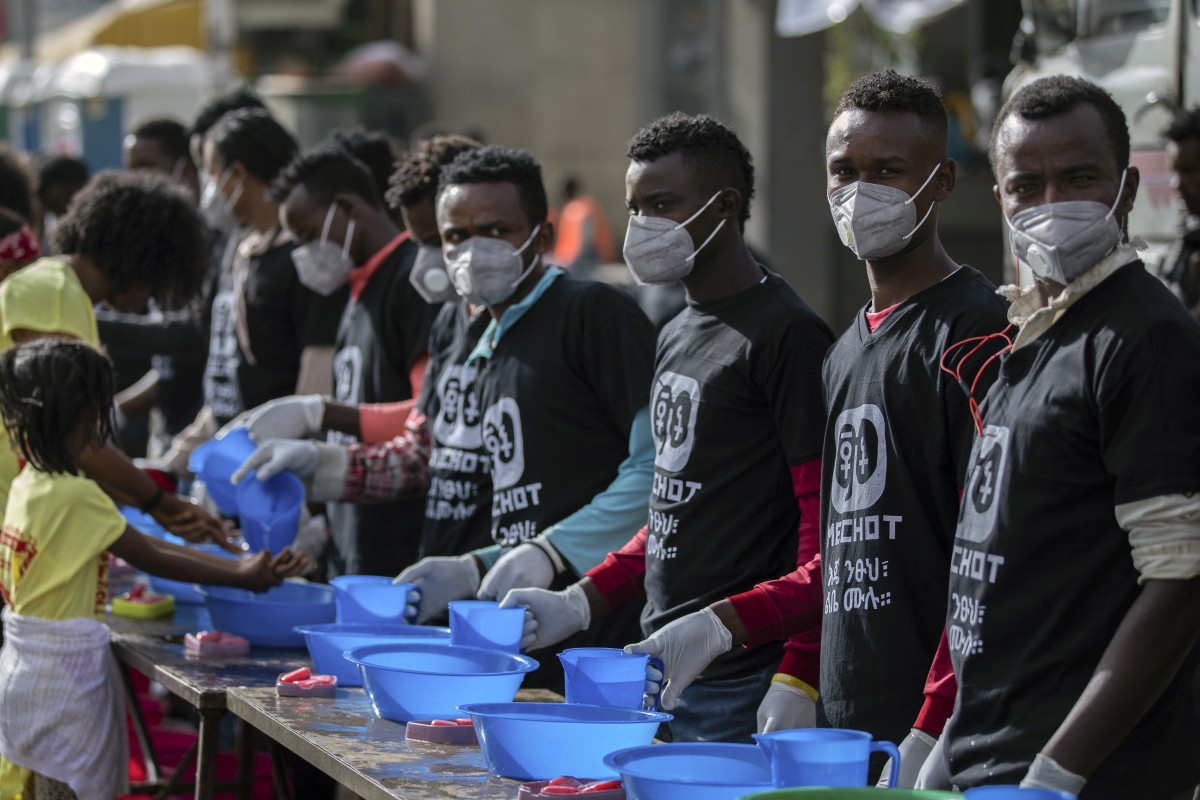
Solidarity projects were springing up in some of the world’s poorest corners. In Kenya’s Kibera slum, for example, volunteers with plastic drums and boxes of soap on motorbikes set up handwashing stations for people without clean water.

Russia reported its first coronavirus death on Thursday.

Amid the gloom, China provided a ray of hope, as it reported zero new local transmissions in a thumbs-up for its draconian containment policies since January. Imported cases, however, surged, accounting for all 34 new infections.

The United States, where President Donald Trump had initially played down the coronavirus threat, saw infections close in on 8,000 and deaths reach at least 151.

Trump has infuriated Beijing’s communist government by rebuking it for not acting faster and drawn accusations of racism by referring to the “Chinese virus”.

“EXTRAORDINARY TIMES”

In a bewildering raft of financial measures around the world, the European Central Bank launched new bond purchases worth 750 billion euros ($817 billion). That brought some relief to bond markets and also halted European shares’ slide, though equities remained shaky elsewhere.

“Extraordinary times require extraordinary action,” ECB President Christine Lagarde said, amid concerns that the strains could tear apart the euro zone as a single currency bloc.

The U.S. Federal Reserve rolled out its third emergency credit programme in two days, aimed at keeping the $3.8 trillion money market mutual fund industry functioning.

China was to unleash trillions of yuan of fiscal stimulus and South Korea pledged 50 trillion won ($39 billion).

The desperate state of industry was writ large in Detroit, where the big three automakers – Ford Motor Co (F.N), General Motors Co (GM.N) and Fiat Chrysler Automobiles NV (FCHA.MI) (FCAU.N) – were shutting U.S. plants, as well as factories in Canada and Mexico.

With some economists fearing prolonged pain akin to the 1930s Great Depression but others anticipating a post-virus bounceback, gloomy data and forecasts abounded.

In one of the most dire calls, J.P. Morgan economists forecast the Chinese economy to drop more than 40% this quarter and the U.S. economy to shrink 14% in the next.

There was a backlash against conspiracy theories and rumours circulating on social media, with Morocco arresting a woman who denied the disease existed.

And in Brazil, where President Jair Bolsonaro initially labelled the virus “a fantasy”, more members of the political elite fell ill. At night, housebound protesters banged pots and pans, shouting “Bolsonaro out!” from their windows.

Source: Reuters

18/03/2020

China developing 9 potential vaccines in global race for coronavirus cure

  • Company making front-runner appeals for people to take part in trial stage, which nine potential Chinese vaccines are set to enter in April
  • US trialling vaccine that copies virus’ genetic code, amid international search for a drug to help limit the outbreak’s human and economic impact
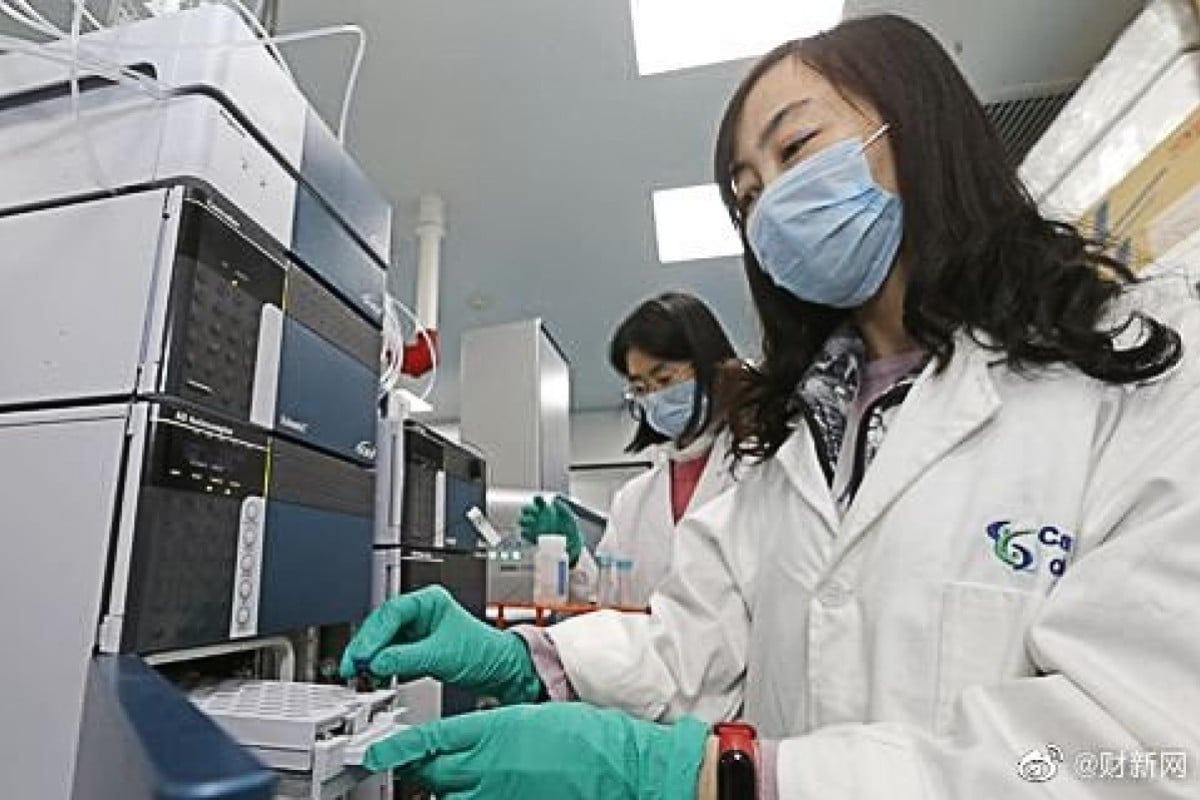
CanSino is recruiting healthy volunteers for a clinical trial of its vaccine candidate. Photo: Weibo
The race to develop a Covid-19 vaccine is on, with the United States already starting a clinical trial and China close behind.
On Tuesday, vaccine producer CanSino Biologics, in Tianjin in China’s northeast, said it was looking for volunteers to take part in a six-month clinical trial of a treatment it had developed jointly with the Academy of Military Medical Sciences.
“The vaccine does not contain infectious substances, is highly safe and stable, and requires only one inoculation,” the Hubei Centre for Disease Control and Prevention (CDC) said in its request for volunteers.
Its announcement came a day after the first participant began a phase I trial for an experimental vaccine funded by the US National Institutes of Health and developed by biotech startup Moderna.
Chinese scientists identify two major types of the new coronavirus in preliminary study

It uses messenger ribonucleic acid (mRNA) technology that copies the genetic code of the virus instead of the actual virus. To date, no mRNA vaccine has been approved for humans.

China’s own mRNA vaccine candidate, jointly developed by the Chinese Centre for Disease Control and Prevention, Tongji University and Stermina in Shanghai, is undergoing animal trials and is expected to enter the clinical phrase in mid-April.

Developed by the CanSino and the Academy of Military Medical Sciences, the vaccine is the front-runner of nine that China is developing. All are in the process of completing preclinical trial studies and will enter clinical trials in April, with some expected to advance faster than others, according to Wang Junzhi, a biological products quality control expert and academician with the Chinese Academy of Sciences.

US Covid-19 testing accelerates as companies step in where government failed

18 Mar 2020

“China’s research and development of a vaccine for the coronavirus is, generally speaking, among the most advanced in the world,” Wang said at a press briefing in Beijing on Tuesday. “[We] will not be slower than other countries.”

Coronavirus: Scientists dismiss claim that humans engineered the deadly contagion

Hopes have been pinned on developing a vaccine, especially for vulnerable groups such as the elderly, in the face of an epidemic with no known cure that has brought the world to a partial standstill.

Scientists around the world are conducting experiments, and the US is reported to have tried to buy a Germany vaccine developer so that it would supply to the US only – with the German government reportedly offering its own financial incentives for the biopharmaceutical company concerned, CureVac, to stay in the country.

“A vaccine is the most effective medical means for epidemic prevention and control as it can effectively stop the spread of the virus,” Lei Chaozi, director of science and technology at China’s Ministry of Education, said.

“Vaccines also play an important part in … stabilising the economy and enabling the country to return to normal as work and production resume.”

Why did a ‘cured’ coronavirus patient die in China? His widow wants answers

7 Mar 2020

President Xi Jinping called for faster development of coronavirus vaccines and treatment drugs when he inspected the Academy of Military Medical Sciences two weeks ago.

About 1,000 Chinese scientists have been working on the push for vaccines, with nine vaccines developed through five different approaches, including an inactivated vaccine, a viral vector-based vaccine and a gene vaccine.

Wang said that the vaccines needed to satisfy strictly the relevant regulations and technical standards – as well as World Health Organisation requirements – before starting clinical trials.

The potential vaccine developed by CanSino and military researchers, led by virologist Chen Wei, is genetically engineered. “Spikes” on the surface of the coronavirus bind to human cells and enable the virus to invade the human cells, causing the sometimes fatal infection known as Covid-19. In theory, vaccines can rehearse such an attack and trigger the human body to be primed to respond to a real infection.

CanSino has submitted the pre-investigational new drug review application for the Ad5-nCoV vaccine to Chinese regulatory authorities, and is in the process of submitting the related technical documents.

According to the Hubei CDC, volunteers for the trial must be 18 to 60 years old with no history of coronavirus infection.

Source: SCMP

17/03/2020

South Korea’s coronavirus response is the opposite of China and Italy – and it’s working

  • Seoul’s handling of the outbreak emphasises transparency and relies heavily on public cooperation in place of hardline measures such as lockdowns
  • While uncertainties remain, it is increasingly viewed by public health experts as a model to emulate for authorities desperate to keep Covid-19 in check
A woman wearing a face mask walks along the Han river at a park in Seoul, South Korea. Photo: AP
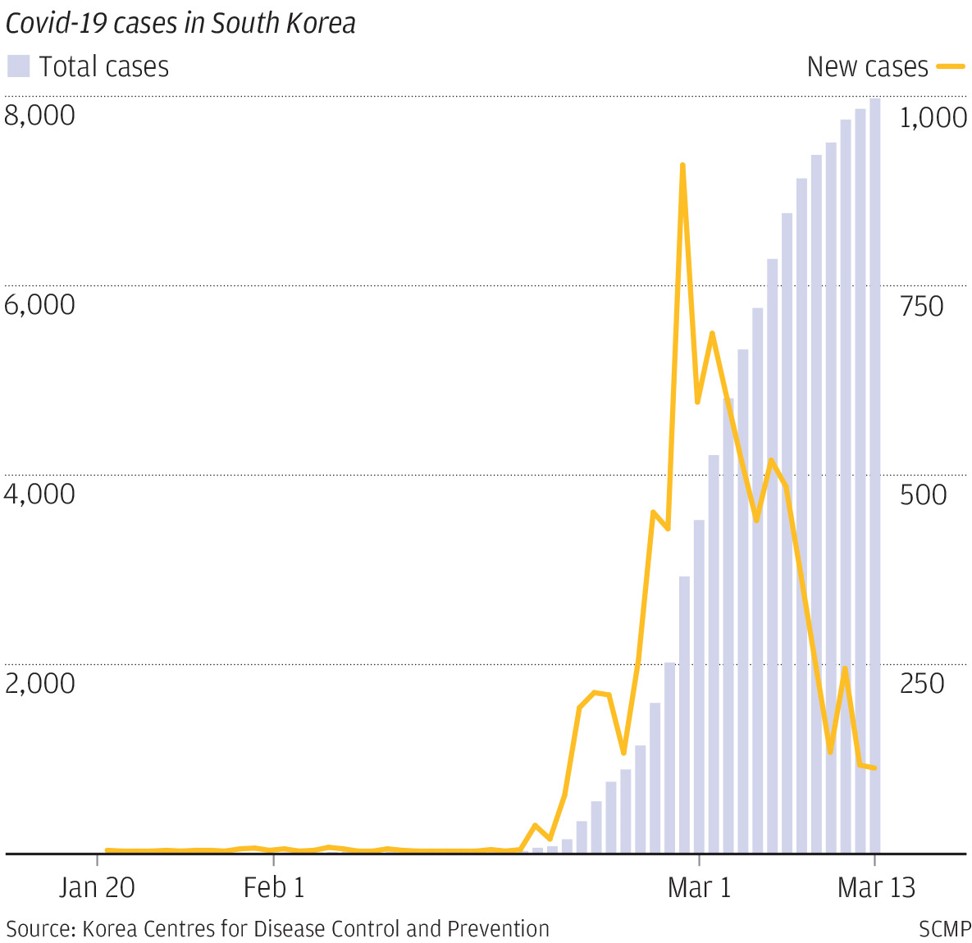
For weeks, the graph charting new cases of Covid-19 in South Korea rose in a steep line – a literal illustration of the rapid, seemingly unstoppable spread of the coronavirus. Then the line began to curve.
After announcing 600 new cases for March 3, the authorities reported 131 new infections a week later. On Friday, officials reported just 110, the lowest daily toll since February 21. The same day, the number of recovered patients, 177, exceeded new infections for the first time.President Moon Jae-in, while cautioning against premature optimism, has expressed hope that South Korea could soon enter a “phase of stability” if the trend holds firm.
With about 8,000 confirmed cases and more than 65 deaths, it was until recently the country with the most confirmed cases outside China – but South Korea has since emerged as a source of inspiration and hope for authorities around the world as they scramble to fight the pandemic.
South Korea’s infection rate falls without citywide lockdowns like China, Italy
11 Mar 2020

As countries ranging from the United States to Italy and Iran struggle to manage the virus, Seoul’s handling of the outbreak – involving a highly coordinated government response that has emphasised transparency and relied heavily on public cooperation in place of hardline measures such as lockdowns – is increasingly viewed by public health experts as a model to emulate for authorities desperate to keep the virus under control.

Whereas China, where the virus originated, and more recently Italy have placed millions of their citizens on lockdown, South Korea has not restricted people’s movements – not even in Daegu, the southeastern city at the centre of the country’s outbreak.

Instead, authorities have focused mandatory quarantine on infected patients and those with whom they have come into close contact, while advising the public to stay indoors, avoid public events, wear masks and practise good hygiene.

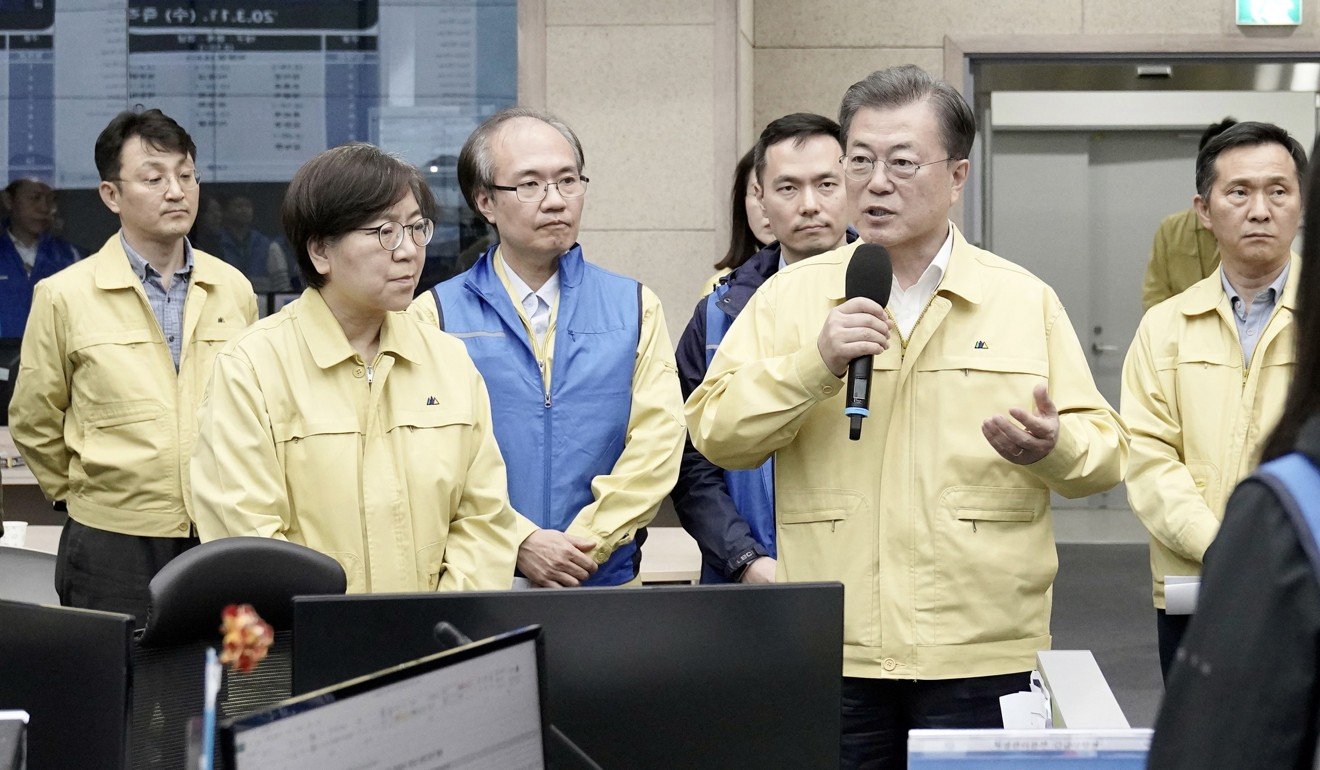
South Korean President Moon Jae-in visits the Korea Centres for Disease Control and Prevention on March 11. Photo: EPA
And while numerous countries have imposed sweeping travel bans – including the US, which has introduced dramatic restrictions on travel from Europe – Seoul has instead introduced “special immigration procedures” for heavily affected countries such as China, requiring travellers to undergo temperature checks, provide verified contact information and fill out health questionnaires.

[South Korea’s] approach seems less dramatic and more usable by other countries, compared with that used in mainland China – Ian MacKay, virologist at the University of Queensland

“More than a week of downward-trending case counts shows that the approach in South Korea has turned around an epidemic,” said Ian Mackay, a virologist at the University of Queensland, Australia. “This approach seems less dramatic and more usable by other countries, compared with that used in mainland China. If these trends continue, they will have managed to stop the growth of their epidemic.”

‘A SPECTACULAR FEAT’

The linchpin of South Korea’s response has been a testing programme that has screened more people per capita for the virus than any other country by far. By carrying out up to 15,000 tests per day, health officials have been able to screen some 250,000 people – about one in every 200 South Koreans – since January.

To encourage participation, testing is free for anyone referred by a doctor or displaying symptoms after recent contact with a confirmed case or travel to China. For anyone simply concerned about the risk of infection, the cost is a relatively affordable 160,000 won (US$135). Testing is available at hundreds of clinics, as well as some 50 drive-through testing stations that took their inspiration from past counterterrorism drills and can screen suspected patients in minutes.

“This country has a universal health-coverage system for the whole population and the economic burden for testing is very low,” said Kim Dong-hyun, president of the Korean Society of Epidemiology. “Tests are conducted for free if you have proper symptoms.”

The massive volume of data collected has enabled the authorities to pinpoint clusters of infection to better target their quarantine and disinfection efforts, and send members of the public text-message alerts to inform them of the past movements of infected patients in their area – even down to the names of shops and restaurants they visited.

This country has a universal health coverage system for the whole population and the economic burden for testing is very low – Kim Dong-hyun, president of the Korean Society of Epidemiology

“South Korea’s capability to test for early detection of viruses has developed greatly as it went through the 2009 new influenza outbreak and 2015 Mers [Middle East respiratory syndrome] outbreak,” said Kim Woo-joo, a professor of medicine at Korea University’s College of Medicine. “It ranks among the world’s top countries in this field.”

South Korea’s ‘drive-through’ coronavirus testing stations
Collecting this amount of data has also allowed the South Korean authorities to glean a clearer indication of the potential lethality of the virus, the fatality rate of which has diverged significantly from about 5 per cent in Italy to about 0.8 per cent in South Korea. Although factors including quality of health care, patient age and public awareness can affect the fatality rate of a virus, the scale of testing is among the most influential.

By comparison, in neighbouring Japan – which has confirmed more than 600 cases, not including the virus-stricken Diamond Princess cruise ship – the authorities had as of Friday tested over 10,000 people.

In the United States, where the authorities are unable to confirm the number of tests since they are being carried out by a patchwork of federal, state and private laboratories, the total was estimated to be fewer than 5,000 in a survey of available data by The Atlantic.

William Schaffner, a professor of preventive medicine and infectious diseases at Vanderbilt University School of Medicine in the US, said South Korea had pulled off a “spectacular” feat that was allowing health officials to track the virus and assess its intensity.

“We are unsure where our infection is and how intensely it is being transmitted in the US and we are only now starting to test,” he said.

Coronavirus is now classified as a pandemic

13 Mar 2020

South Korea is not unique in claiming some success in its fight against the virus. Singapore, Taiwan and Hong Kong, informed by past outbreaks such as severe acute respiratory syndrome (Sars) and Mers, have managed to keep confirmed cases low while eschewing the sort of draconian measures implemented in mainland China.

Early on, Hong Kong took some of the most comprehensive steps to implement “social distancing” – in which events are cancelled and venues closed to minimise contact between people – by shutting schools in late January, while the authorities produced a digital map of confirmed cases to allow people to avoid potentially infected areas.

In Taiwan, officials have pooled information from immigration and health insurance databases to track people’s travel histories and symptoms, and used phone tracking to ensure compliance with quarantine. Singapore has similarly tracked infected patients and traced their contacts, with stiff penalties for those who disobey quarantine or mislead the authorities about where they have travelled.

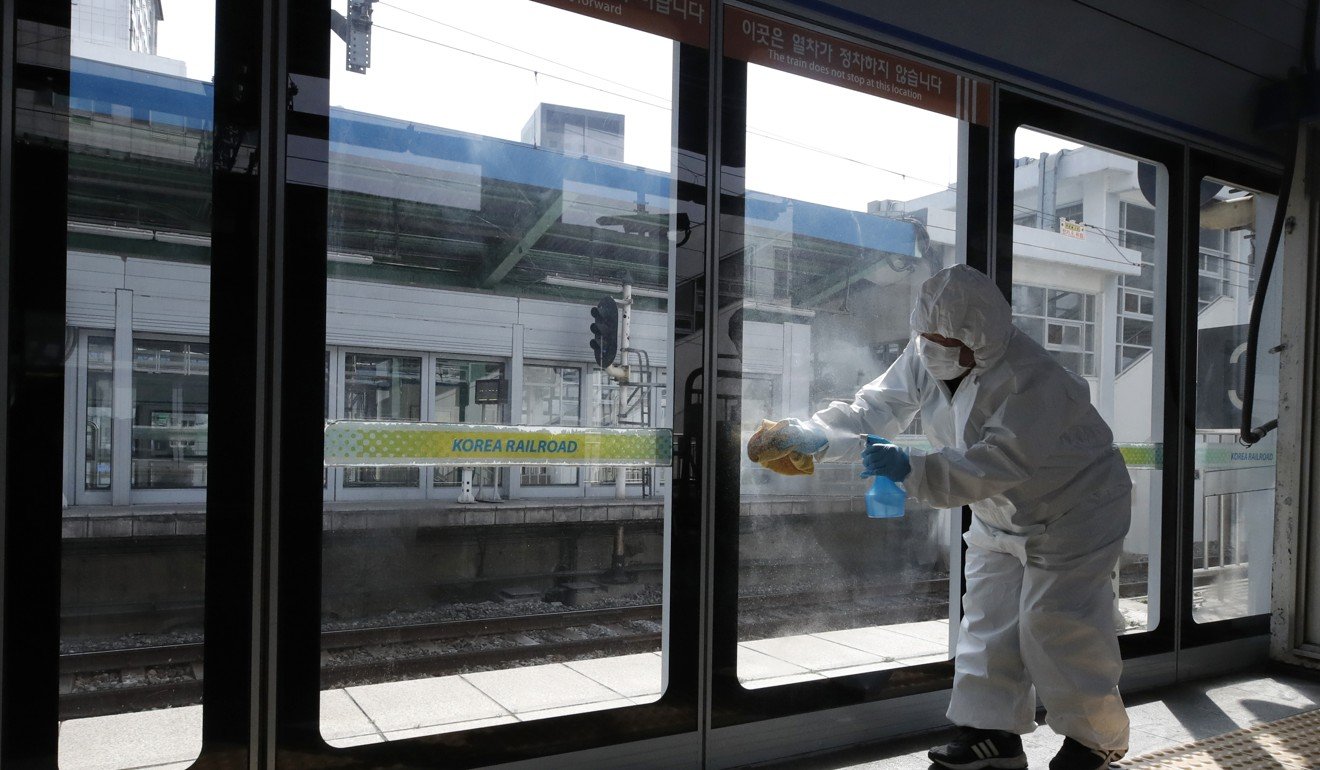
A worker disinfects a Seoul subway station as a precaution against the new coronavirus. Photo: AP
OPENNESS AND TRANSPARENCY
But where South Korea has stood apart is seemingly turning the tide against a major outbreak while maintaining openness and transparency. The largest cluster of cases in the country is linked to a secretive religious sect, Shincheonji, members of which have been accused of negligently spreading the virus as well as evading medical follow-ups and testing.

In addressing the Covid-19 outbreak, sound decision-making should not be about making a choice between maximised protection or minimal disruption – Yanzhong Huang, Council on Foreign Relations

“South Korea’s experience suggests that a country can contain the spread of the virus in a relatively short period of time without relying on draconian, at-all-costs containment measures,” said Yanzhong Huang, a senior fellow for global health at the Council on Foreign Relations in New York.

“For countries like the US, the Korean experience offers an acceptable, likely more viable, alternative to addressing the outbreak. In addressing the Covid-19 outbreak, sound decision-making should not be about making a choice between maximised protection and minimal disruption.”

China effectively barred 60 million people in Wuhan – ground zero of the outbreak – and the rest of the province of Hubei from leaving their homes, while restricting the movements of hundreds of millions of others across the country by shutting down public transport, banning private cars and setting up roadblocks.

‘I was stupidly overconfident’: a Korean coronavirus survivor’s tale

15 Mar 2020

The country claims to have effectively halted the spread of the virus after recording more than 80,000 cases and 3,100 deaths, and its daily updates have in recent weeks fallen from thousands of new cases to dozens. However, scepticism lingers over official figures after local and provincial officials in Hubei initially tried to hide the extent of the outbreak.

In a move widely seen to be aimed at touting the success of Beijing’s hardline measures, Chinese President Xi Jinping on Tuesday made his first visit to Wuhan, during which he called for businesses and factories to return to work as normal and for the country to refocus on economic growth.

“While China has been able to control Covid-19, I don’t think its draconian methods are worth copying in liberal democracies,” said Lawrence Gostin, director of the O’Neill Institute for National and Global Health Law at Georgetown University Law Centre in Washington. “Most democracies value human rights and freedoms … [not] the degree of social control we’ve seen in China. South Korea offers a better model.”

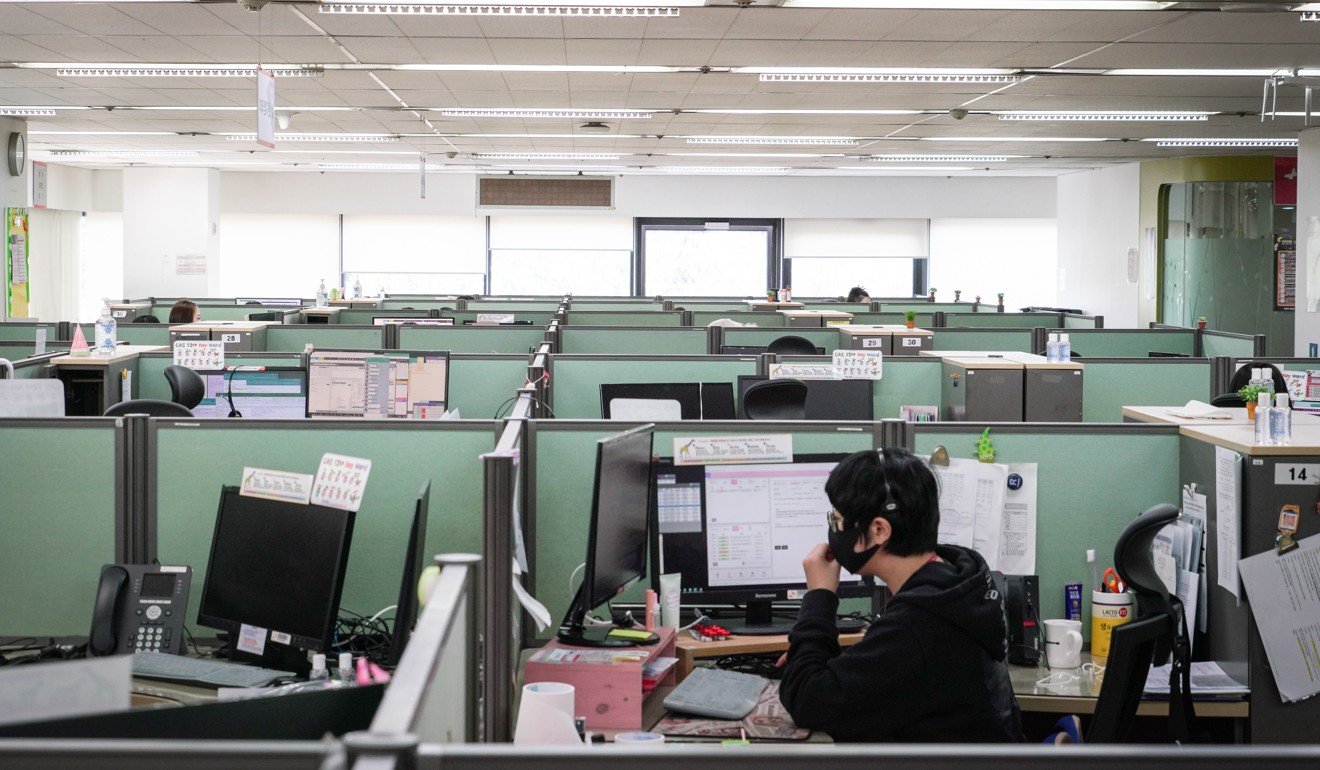
A nearly empty customer call centre in the Gocheok-dong neighbourhood of Seoul as workers isolate or work from home. Photo: EPA
But in a striking indication that Beijing’s harsh tactics could inform even liberal democratic societies, Italy on Monday announced a nationwide quarantine after a massive spike in cases caught the authorities off guard. Shops, restaurants and bars have been closed, while public gatherings and most travel have been banned in the European country, which has confirmed more than 15,000 cases and 1,000 deaths as of Friday – making it the site of the biggest outbreak outside China.
In the Philippines, President Rodrigo Duterte on Thursday announced a lockdown of the entire Metro Manila region and its 12.8 million people.
David Hui Shu-cheong, an expert in respiratory medicine at the Chinese University of Hong Kong, said Italy had responded “very slowly” to the outbreak, in contrast to South Korea.
Southeast Asia at risk of missing coronavirus cases amid dengue outbreak: experts
11 Mar 2020

Even as Beijing touted its success at fighting the virus, with state media recently insisting the “world owes China a ‘thank you’”, South Korea – which democratised in the late 1980s following decades of military dictatorship – has made no secret of its desire to promote a more liberal alternative.

At a press conference with foreign media this week, vice-health minister Kim Gang-lip said that while drastic measures such as locking down affected areas had demonstrated “modest effectiveness”, they suffered from being “coercive and inflexible”.

“Korea, as a democratic country, values globalisation and a pluralistic society,” he said.

“Therefore we believe we must transcend the limitations of the conventional approach to fighting infectious disease.”

Kim stressed that public trust was crucial to the government’s strategy. “The more transparently and quickly accurate information is provided, the more the people will trust the government,” he said. “They will act rationally for the good of the community at large.”

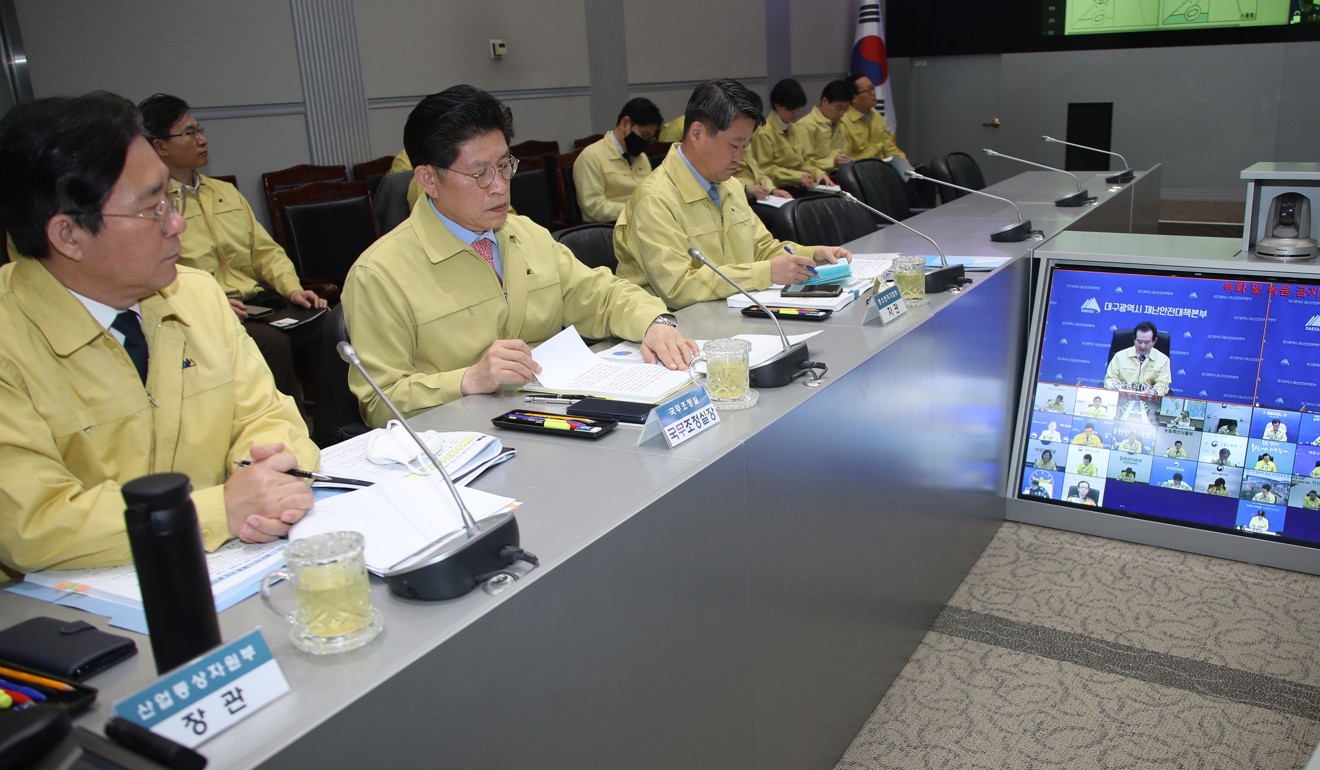
South Korean ministers listen to Prime Minister Chung Sye-kyun (on screen) during a meeting to discuss measures to deal with the spread of the new coronavirus. Photo: EPA
UNKNOWN FACTORS
Although the authorities have shut down schools nationwide, South Koreans have largely embraced self-isolation and social distancing of their own accord.
In the past fortnight, more than 12,000 businesses have applied for subsidies to pay the wages of employees while they temporarily close their doors due to the outbreak, according to the country’s labour ministry. Many shops in Daegu, the site of more than three-quarters of the country’s cases, have shut their doors, while shopping malls and cinemas across the country have become largely deserted as people stay at home. Catholic churches and Buddhist temples nationwide have suspended mass and prayer services.
“To an outsider, South Korea has handled an enormous surge in cases very well and seemed to mitigate further spread through forms of … passive social isolation,” said Howard P. Forman, a professor of public health policy at Yale School of Management.
Indonesian firms doing business with China face tough times with coronavirus outbreak
12 Mar 2020

Some experts suggest South Korean society’s emphasis on discipline and community may have given it room to avoid implementing more draconian measures.

“This measure appears to have been very successful but is reliant on the local population working with the response,” said Jeremy Rossman, an honorary senior lecturer in virology at the University of Kent. “It is not clear how effective this approach would be in other cultures and it does require effective communication with the local population.”

How a secretive church in South Korea became a coronavirus ‘super spreader’

However, South Korea’s response has not been without missteps or critics.

In mid-February, before it emerged that the virus had spread rapidly among Shincheonji followers, Moon made the ill-fated prediction that the outbreak would “disappear before long”.

The Korean Medical Association – the country’s largest association of doctors – and conservative media have criticised the president for not outright banning travel from China.

Nearly 1.5 million South Koreans have signed an online petition calling for Moon’s impeachment over his handling of the outbreak, and his approval rating this week dropped to just under 45 per cent – although, in a sign of reviving fortunes, an opinion poll released on Friday saw the president’s response rated favourably.

Medical workers attend to a woman who was feeling unwell upon her arrival at the Keimyung University hospital in Daegu. Photo: AFP

It is still too early to say whether the response is working – Kim Dong-hyun, president of the Korean Society of Epidemiology

Some experts caution that it is too early to tell if South Korea truly has the virus under control. The discovery of a new cluster of about 100 infections at a call centre in densely populated Seoul prompted a sudden uptick in cases on Wednesday, raising fears the virus could be on the verge of spreading uncontrollably nationwide.
“It is still too early to say whether the response is working,” said Kim, the president of the Korean Society of Epidemiology. “There is an optical illusion involved in the figures. The daily numbers of new cases appear to be decreasing as the screening of Shincheonji followers is coming to an end, but it must be noted that there are new clusters emerging in Seoul and other areas. We can’t lower vigilance.”
Like elsewhere, the country is facing unknown factors such as warming temperatures in the coming weeks and the arrival of travellers from new and emerging infection hotspots overseas. “We are seeing that in South Korea, large epidemics can be slowed,” said Mackay from the University of Queensland. “Can they be prevented? That will be the challenge for countries who have yet to see widespread community transmission.”

In the face of uncertainty, South Korea appears determined to hold firm to its strategy. During a visit to the Korea Centres for Disease Control and Prevention on Wednesday, Moon said the country’s response had received international recognition and allowed it to avoid the “extreme choice” of sweeping travel bans.

The next day, responding to the World Health Organisation’s decision to declare the virus a global pandemic, the president called on South Koreans to maintain hope that the virus would be overcome.

“It might take more time than we thought,” Moon said. “Everyone, please don’t become fatigued.” 

Source: SCMP

17/03/2020

AutoNavi maps data shows recovery in traffic around shopping areas in China as coronavirus fears recede

  • AutoNavi’s latest data shows increase in offline traffic and searches of major business districts
  • Traffic data could signal that consumer activity in China has entered a recovery
AutoNavi’s mobile app users can search the names of malls and shops to see real-time traffic data. Photo: AP

Data from AutoNavi, the maps app operated by Alibaba Group Holding, shows that traffic in major shopping districts in China picked up by an average of 30 per cent over the past month, as consumer activity gradually returns to normal now that the coronavirus infection rate appears to have peaked in the country.

The early sign of increased consumer activity in China contrasts with the panic and economic uncertainty now engulfing Europe and the US, as the widening pandemic forces governments around the world to take lessons from China on how to tackle the spread of the disease with curfews and social distancing measures.

AutoNavi’s latest big data report, released on Monday, shows that traffic in and around shopping districts in several major cities in the country rose 30 per cent over the weekend of March 14-15 compared with the weekend of February 15-16, when the coronavirus in China was at its height and many areas in the country were under lockdown.

China’s Meituan Dianping to join maps service battle
15 Aug 2019

“Consumer confidence is starting to rebound as the coronavirus comes under control,” said Guo Ning, vice-president of AutoNavi. “We are seeing more and more people stepping out, with offline consumption slowly recovering.”

Alibaba is the owner of the South China Morning Post.

China’s nearly two-month lockdown has dealt a hammer blow to the economy, with retail sales – a key metric of consumption – down by 20.5 per cent across the combined two months of January and February, marking the first decline on record. The virus has however proved a boon for China’s e-commerce sector, as shoppers stuck at home buy even more online.

The new data appears to show that the country’s offline economy could now see a slow recovery. This does not mean that retail businesses can slack off on preventive measures – hand sanitiser, extra cleaning and temperature monitoring are likely to remain fixtures of everyday life in shopping malls.

AutoNavi’s mobile app users can search the names of malls and shops to see real-time traffic data – often used to avoid visiting malls at peak periods. AutoNavi said the average 30 per cent increase in traffic refers to the combined volume of people using the app to navigate the shopping destinations.

Alibaba’s AutoNavi crosses 100 million daily users

5 Oct 2018

AutoNavi has more than 400 million monthly active users, according to company data. It was the first domestic travel platform to exceed 100 million daily active users.

Digital maps have become a key tool in China’s attempts to control the coronavirus pandemic, with competitor map apps from Baidu and Tencent also launching features to track population flows and provide information on clinics able to test for and treat the disease.

Covid-19, as the novel coronavirus is known, has now killed over 3,200 people in China and infected just over 80,000, of which around 68,000 have recovered. There are now around 87,000 confirmed cases outside China, according to the latest figures from health authorities.

Source: SCMP

17/03/2020

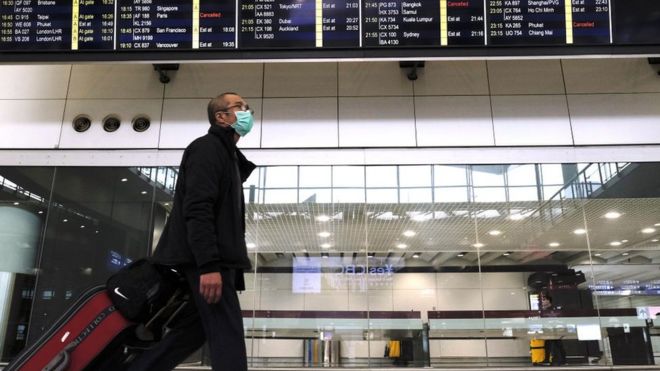
Coronavirus: Hong Kong to quarantine all arrivals from abroad

Aman wearing a mask pulls suitcase as he walks past a flight information display boardImage copyright GETTY IMAGES
Image caption Chief Executive Carrie Lam said the majority of Hong Kong’s cases had been imported

Hong Kong will quarantine all people arriving from abroad for 14 days, its leader Carrie Lam has said.

The restrictions, which will kick in on Thursday, will not apply to those from Macau or Taiwan. Entrants from mainland China already had to self-isolate.

Ms Lam said the majority of Hong Kong’s cases had been imported, adding that “strict measures” were needed.

Hong Kong has seen 57 new infections over the past two weeks, 50 of which were imported, said Ms Lam.

“If we exclude these imported, we only have seven local cases in the past week,” she said.

“If we do not impose strict measures, our previous efforts could be wasted.”

Ms Lam also advised residents to avoid all non-essential travel.

There are at least 155 confirmed cases in the territory, which detected its first cases in January.

The territory – a special administrative region of China – has so far been able to avoid the contagion seen elsewhere, thanks partly to a quick government response.

In January, cross-border travel with mainland China was slashed. Soon afterwards, health workers went on strike to demand a total border shutdown.

Presentational grey line

Some of the restrictions in the Asia-Pacific region, as of 17 March:

  • Australia – All travellers will have to self-isolate for 14 days. Foreign nationals who have been to China, Iran, Korea and Italy not allowed in
  • New Zealand – Everyone entering the country will have to self-isolate for 14 days. This excludes those from small Pacific islands with no confirmed virus cases
  • South Korea – Travellers from China’s Hubei province not allowed in. International arrivals from certain countries will need to submit papers on their health condition
  • Singapore – All visitors with travel history to France, Germany, Italy, Spain, South Korea and China banned from entering or transiting. Residents with recent history to these countries will have to self-isolate for 14 days. All those entering from Japan, Switzerland, the UK and Asean countries will have to self-isolate for 14 days
  • Malaysia – All foreign visitors have been banned, all Malaysians will not be allowed to travel overseas until 31 March. All returning Malaysians will have to self quarantine for 14 days
  • Japan – Ban on entry to travellers who have been to parts of China, South Korea, Iran or Italy in 14 days before arrival
Presentational grey line

The number of confirmed coronavirus cases and deaths outside China has now surpassed the number inside.

More than 100,000 people have been infected outside China, while just over 80,000 cases have been reported inside.

There have been more than 182,000 confirmed cases of coronavirus globally and over 7,000 deaths, according to a tally from Johns Hopkins University.

Media caption Steps the NHS says you should take to protect yourself from Covid-19

Source: The BBC

17/03/2020

China gives go-ahead for human trials of potential COVID-19 vaccine – state media

BEIJING (Reuters) – China has given the go-ahead for researchers to begin human safety tests of an experimental coronavirus vaccine in the race to develop a shot against the COVID-19 epidemic that has killed more than 7,000 people worldwide.

Researchers at China’s Academy of Military Medical Sciences, – affiliated to the Chinese People’s Liberation Army (PLA) -received approval to launch early-stage clinical trials of the potential vaccine starting this week, the ruling Communist Party’s People’s Daily reported on Tuesday.

Scientists in the United States said on Monday that clinical trials had begun for a vaccine developed by its National Institute of Allergy and Infectious Diseases and the U.S. biotech firm Moderna.

Details in the Chinese clinical trial registration database show that a “Phase 1” test that will examine whether experimental shot is safe in humans aims to recruit 108 healthy people to take part between March 16 and December 31.

The trial will be conducted by China’s Academy of Military Medical Sciences and the Hong Kong-listed biotech firm CanSino Biologics, the database showed.

Experts at the World Health Organization say they do not expect any fully tested and approved vaccine to reach the market until the middle of next year.

Source: Reuters

17/03/2020

Taj Mahal: ‘Monument of love’ shuts down amid coronavirus fears

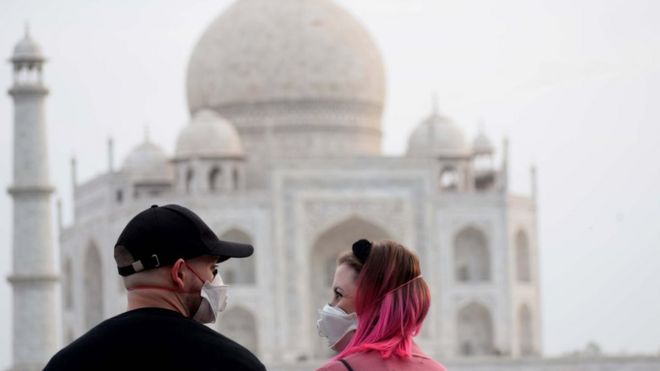
Tourists wear face masks as a preventive measure against the spread of the COVID-19 coronavirus outbreak, near Taj Mahal in Agra on March 5, 2020Image copyright GETTY IMAGES
Image caption The Taj Mahal is one of the world’s leading tourist attractions.

India’s iconic monument Taj Mahal has shut down to halt the spread of the coronavirus, officials say.

The culture ministry said tens of thousands visit the “monument of love” every day and it was “imperative to shut it down”.

The Taj Mahal is one of the world’s leading tourist attractions, and draws as many as 70,000 people every day.

India has 137 reported cases of Covid-19 and three related deaths. It has tested 6,000 people so far.

On Tuesday, the Indian government announced that all monuments and museums run by the Archaeological Survey of India across the country have also been shut to keep people safe.

Culture Minister Prahlad Patel said all the 143 monuments and museums would remain shut until 31 March and the decision would be reviewed after the shutdown period.

On Tuesday, a 60-year-old doctor in the southern state of Karnataka tested positive after treating a man who died from the coronavirus last week.

Media caption Everything you need to know about the coronavirus explained in one minute

India has taken a number of steps to halt the spread of Covid-19:

  • All visas, barring a select few categories, have been suspended for a month
  • Visa-free travel afforded to overseas citizens of the country has been suspended until 15 April and even those allowed in could be subject to 14 days of quarantine
  • Schools, colleges and movie theatres in most states have been shut until 31 March
  • The Indian Premier League (IPL), featuring nearly 60 foreign players and scheduled to begin on 29 March, has been postponed to 15 April

India’s health ministry says it was among the first countries in the world to prepare for an outbreak of the respiratory illness, and denied allegations that it was slow in testing suspected cases.

Experts say that India is in a critical phase where it needs to halt community transmissions. The country has only tested 6,000 people so far and many believe that it’s not enough to halt the spread. Experts say that India needs to start testing thousands daily to effectively stop community transmissions.

The government says it’s prepared and has now allowed even private labs to test, apart from government-run labs.

Source: The BBC
16/03/2020

As coronavirus spreads in Africa, countries move quickly to contain disease with travel bans, closures

  • South Africa, Kenya latest to halt arrivals from ‘high-risk’ countries as cases across the continent double over the weekend
  • Concerns are growing over whether health care systems in some African nations will be able to cope
Masked volunteers provide soap and water for participants to wash their hands against the new coronavirus at a women’s 5km fun run in Addis Ababa, Ethiopia on Sunday. Photo: AP
Travel bans and school closures were announced in South Africa and Kenya on Sunday, as concerns grew over the capacity of the continent’s fragile health systems to cope with the spread of the deadly new coronavirus, with more than a dozen countries reporting their first cases.

South African President Cyril Ramaphosa declared a national state of disaster, banning arrivals by foreign nationals from high-risk countries including Italy, Iran, South Korea, Spain, Germany, the United States, Britain and China, effective Wednesday.

“We have cancelled visas to visitors from those countries from today and previously granted visas are hereby revoked,” Ramaphosa said in a televised address on Sunday evening, adding that any foreign national who had visited high-risk countries in the past 20 days would be denied a visa.

South African schools will also be closed from Wednesday until after the Easter weekend. Gatherings of more than 100 people have been banned and mass celebrations for Human Rights Day and other events cancelled. “Never before in the history of our democracy has our country been confronted with such a severe situation,” Ramaphosa said.

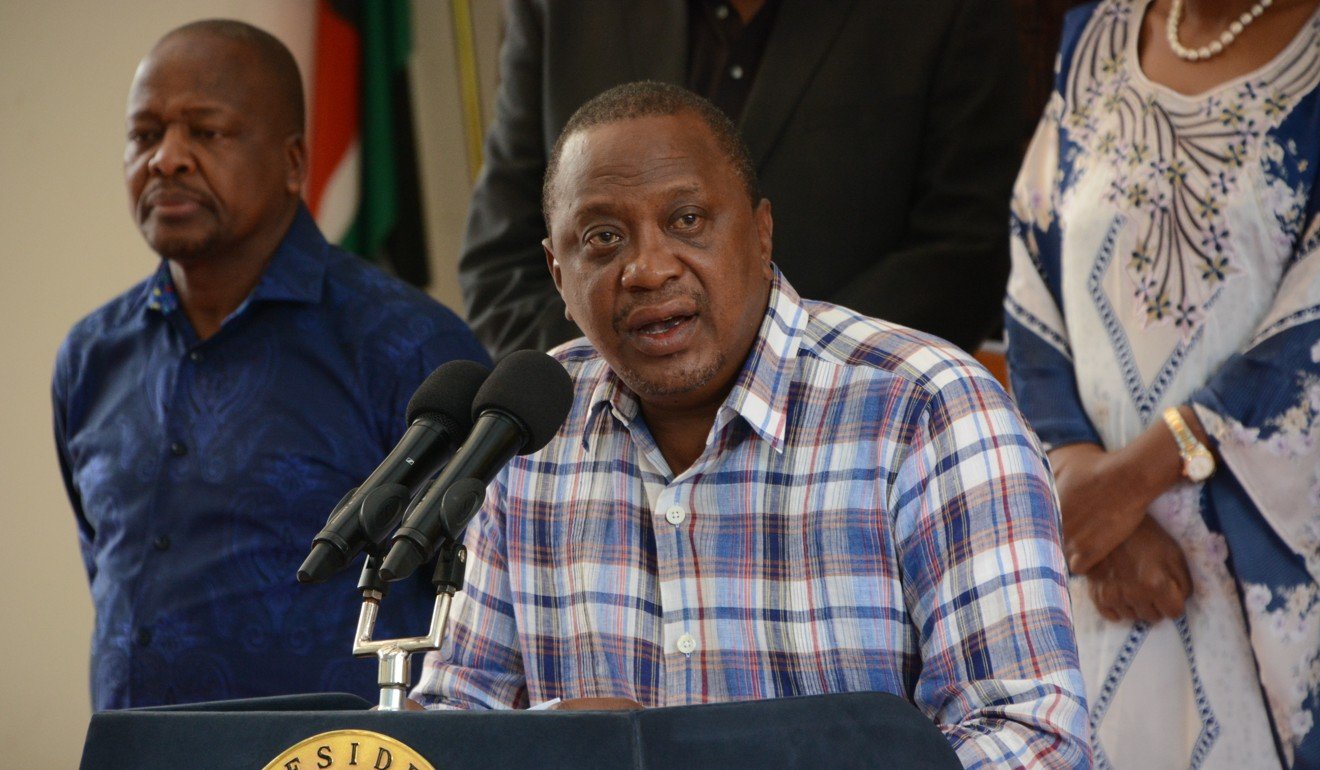
In Kenya, where three cases of Covid-19 – the disease caused by the new coronavirus – have now been confirmed, President Uhuru Kenyatta suspended travel from any country with reported infections. Only Kenyan citizens and foreigners with valid residency permits would be allowed entry, provided they proceeded to self-quarantine or a government-designated quarantine facility, he said.
Kenyan President Uhuru Kenyatta reports two more cases of coronavirus in the country, bringing its total number of cases to three. Photo: DPA
Kenyatta also suspended learning in all educational institutions with immediate effect. “Some of the measures may cause inconvenience, but I want to assure you they are designed to ensure that we effectively contain the spread of the virus,” he said.

Kenya and South Africa join Ghana, Rwanda and Morocco in implementing travel restrictions or outright bans, while others are closing churches, museums, sporting activities, nightclubs and tourist attractions in a bid to curb the spread of the disease.

The continent was largely spared in the early days of the outbreak but has now recorded more than 300 cases and six deaths. Algeria, Morocco, Senegal and Tunisia all reported more new cases over the weekend, which saw numbers of new infections across Africa more than double in just two days.

As numbers rise, the Africa Centres for Disease Control and Prevention (CDC) has said there are around a dozen countries on the continent without the capacity to do their own testing.

They will have to send samples to countries like South Africa, which itself is struggling to contain the virus, with confirmed cases doubling to 61 on Sunday, a day after 114 of its citizens were repatriated from the central Chinese city of Wuhan, the original epicentre of the outbreak and the first to be placed in lockdown.

John Nkengasong, director of the Africa CDC, warned that the risk of other African countries detecting new cases of Covid-19 remained high. “Our strategy is clear: we want to capacitate the member states, so they can quickly detect and mitigate the effects of the disease in Africa, and, if widespread transmission occurs, prevent severe illness and death,” he said.

The World Health Organisation has already warned that critical gaps remain in the capacity of many African nations to trace, detect and treat the disease. On Friday, the WHO Africa office said it was “striving to help member states fill these gaps” but warned of global shortages in personal protective equipment (PPE) including gloves, masks and hand sanitiser.

Major coronavirus outbreak in Africa ‘just a matter of time’

13 Mar 2020

WHO said its first blanket distribution of PPEs, to 24 African countries, had been completed and another wave of distributions was planned.

“With Covid-19 officially declared a pandemic, all countries in Africa must act,” said Dr Matshidiso Moeti, WHO regional director for Africa. “Every country can still change the course of this pandemic by scaling up their emergency preparedness or response.

“Cases may still be low in Africa and we can keep it that way with robust all-of-government actions to fight the new coronavirus.”

The 55 member states of the African Union have suspended meetings until May, while the six countries that make up the East African Community have suspended all planned meetings until further notice.

Coronavirus delays Nigeria’s US$1.5 billion Chinese-built rail project

7 Mar 2020

In Algeria – one of the worst-hit North African countries, with 48 cases and four deaths, as of Monday morning – all schools and universities have been closed, while Senegal, with 24 cases to date, has closed schools and cancelled its Independence Day festivities on April 4, which this year marks 60 years since its independence from France. Cruise ships have also been banned from docking in Senegal.

On Sunday, Rwanda closed all its places of worship and suspended large gatherings such as weddings and sporting activities. Schools and universities in the central African country are also closed. National airline RwandAir has also suspended flights between the capital Kigali and Mumbai until April 30.

This is in addition to earlier suspensions of its routes with Tel Aviv and the southern Chinese city of Guangzhou, which remain in place until further notice.

While most African airlines have suspended flights to cities in mainland China, Ethiopian Airlines has continued flying to most of its destinations, describing its China routes as among its most profitable. Nevertheless, chief executive Tewolde GebreMariam last week said coronavirus fears had cut demand by a fifth on most of its routes.

Source: Reuters

15/03/2020

Temporary hospitals play key role in curbing virus spread in Wuhan: expert

WUHAN, March 14 (Xinhua) — Temporary treating centers converted from public facilities have played a key role in curbing the spread of the novel coronavirus in Wuhan, the central Chinese city at the epicenter of the epidemic outbreak, a medical expert said.

The experience in setting up temporary hospitals in Wuhan should be drawn on in the future and could help other countries fight the pandemic of COVID-19, Wang Chen, a respiratory disease specialist and vice president of the Chinese Academy of Engineering, told Xinhua in a recent interview.

The hospitals were converted from public venues such as exhibition centers and gymnasiums in early February in an effort to treat patients with mild symptoms and isolate the source of infections amid strained medical resources.

Over more than a month, the 16 temporary hospitals have received more than 12,000 patients until the last two of them were shut down Tuesday as the city sees more patients recover and a sharp drop in the number of new infection cases, according to Wang.

The temporary hospitals were set up in Wuhan at the grimmest moment of its fight against the virus, when medical institutions were overwhelmed by an influx of patients and over 10,000 infected patients were unable to receive proper medical treatment, Wang said.

Under the principle of “leaving no patients unattended” established by Chinese central authorities, these hospitals have performed three major functions — isolation, treatment and monitoring, Wang said.

“These hospitals can keep patients under quarantine to block household and social contacts, offer proper treatments to patients with mild symptoms and monitor their conditions in case of exacerbation,” he added.

“One of the characteristics of COVID-19 is that most patients have mild symptoms, but they need proper treatments to avoid possible exacerbation. And the key is to keep them isolated to stem the spread of the virus,” said Wang, explaining why temporary hospitals are important to curbing the epidemic in Wuhan.

Source: Xinhua

Law of Unintended Consequences

continuously updated blog about China & India

ChiaHou's Book Reviews

continuously updated blog about China & India

What's wrong with the world; and its economy

continuously updated blog about China & India