Chindia Alert: You’ll be Living in their World Very Soon
aims to alert you to the threats and opportunities that China and India present. China and India require serious attention; case of ‘hidden dragon and crouching tiger’.
Without this attention, governments, businesses and, indeed, individuals may find themselves at a great disadvantage sooner rather than later.
The POSTs (front webpages) are mainly 'cuttings' from reliable sources, updated continuously.
The PAGEs (see Tabs, above) attempt to make the information more meaningful by putting some structure to the information we have researched and assembled since 2006.
Police investigation reveals animal had escaped from a nearby restaurant
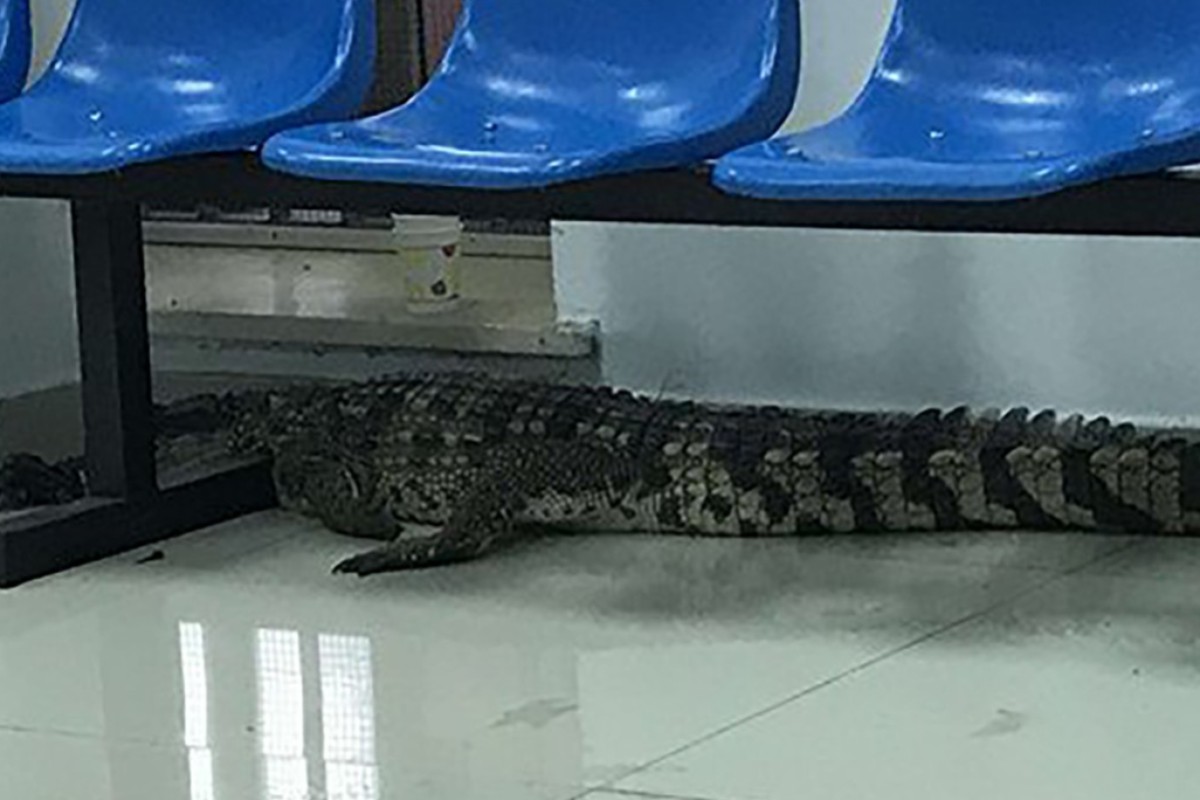
The escaped crocodile was captured by police officers and taken to the local station. Photo: Handout
A security guard at a beauty spot in eastern China was shocked to discover a 2-metre (6ft 6in) crocodile while on his rounds in the early hours of Monday morning.
The animal was lying motionless on a road at Xinlonghu Park in Changzhou, Jiangsu province, with its jaws tied by a strip of cloth, when it was spotted by the security guard, who immediately called the police, according to the Modern Express newspaper.
It took a number of officers to capture the crocodile and take it to the local police station, where an investigation revealed the animal had escaped from a nearby restaurant. The animal was returned and the restaurant owner was “criticised” by police, who urged that a close eye be kept on the animal, the report said.
“They bought it from a farm somewhere as a food material to attract customers. It has been killed for crocodile meat dishes,” an officer told the South China Morning Post on Wednesday.
Crocodiles were once vegetarians – but it was just a phase
Police said it was fortunate that the crocodile had been caught before it had entered the park’s lake or caused any danger to people.
It is unclear what species the crocodile belonged to but China permits the commercial breeding and use of the critically endangered Siamese crocodile, as well as saltwater and Nile crocodiles, which are listed as least concern species.
A staff member of the restaurant, called No. 1 Lakeside, told the Post stewed crocodile meat was on the menu for 168 yuan (US$23.60) a serving, while stewed crocodile claw was also available at 258 yuan.
Crocodile appears in ancient Chinese medicine books as a treatment for respiratory illnesses and the meat has long been regarded as a delicacy, especially in southern China, such as Guangdong province. Crocodile skin also remains a popular material for luxury handbags and other leather goods.
In June, another crocodile, measuring about 1.5 metres, was found in a road puddle during a heavy rain in Wuhan, in the central province of Hubei, where many restaurants have crocodile meat on their menus, the Chutian Metropolis Daily reported.
In that incident it took three officers to capture the animal which was sent to a wildlife centre where a physical check-up showed it had been bred in captivity, most likely for food.
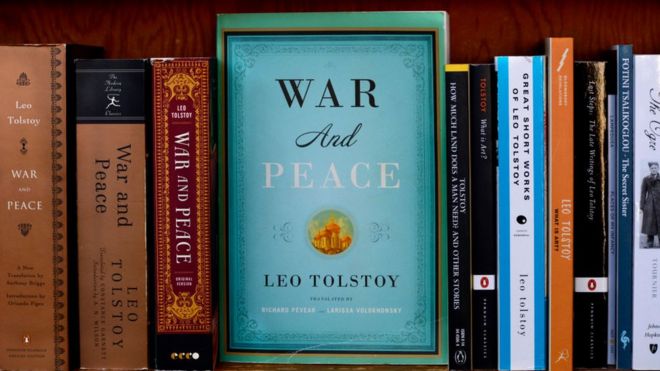
Leo Tolstoy’s War and Peace is in the news in India after a judge asked an activist to explain why he had a book “about war in another country”.
Vernon Gonsalves had appeared in the high court in Mumbai city on Wednesday for a hearing on his bail plea.
The judge’s question sparked a flurry of tweets, with users both outraged and bemused by it.
Five activists, including Mr Gonsalves, were arrested in August 2018 in connection with caste-based violence.
Police raided and searched their homes at the time and submitted a list of books, documents and other belongings to the court. The public prosecutor told the court that police had found “incriminating evidence” in Mr Gonsalves’ home, including “books and CDs with objectionable titles”.
“Why were you having these books and CDs at your home? You will have to explain this to the court,” the judge told Mr Gonsalves.
Police said that all five activists incited Dalits (formerly untouchables) at a large public rally on 31 December 2017, leading to violent clashes that left one person dead. They accused them of “radicalising youth” and taking part in “unlawful activities” which led to violence and showed “intolerance to the present political system”.
The arrests had been criticised by many at the time who saw them as an attack on free speech, and even a “witch hunt” against those who challenged the governing Bharatiya Janata Party (BJP).
So the judge’s question quickly made news and War and Peace was soon trending on Twitter.
The tweets ranged from jokes to shock over the state of India’s judiciary.
Others wondered how they would fare in a courtroom given what’s on their bookshelf, and some have issued a call out asking people to share books from their own “subversive” collection.




 CHINDIA ALERT: You'll be living in their world, very soon