Chindia Alert: You’ll be Living in their World Very Soon
aims to alert you to the threats and opportunities that China and India present. China and India require serious attention; case of ‘hidden dragon and crouching tiger’.
Without this attention, governments, businesses and, indeed, individuals may find themselves at a great disadvantage sooner rather than later.
The POSTs (front webpages) are mainly 'cuttings' from reliable sources, updated continuously.
The PAGEs (see Tabs, above) attempt to make the information more meaningful by putting some structure to the information we have researched and assembled since 2006.
Staff members pose for a group photo to celebrate the timely finding of the return capsule of the trial version of China’s new-generation manned spaceship that successfully returned to the Dongfeng landing site in north China’s Inner Mongolia Autonomous Region, May 8, 2020. The return capsule successfully returned to the Dongfeng landing site at 1:49 p.m. (Beijing Time) Friday, according to the China Manned Space Agency (CMSA). (Photo by Wang Jiangbo/Xinhua)
by Xinhua writers Quan Xiaoshu, Yu Fei and Li Guoli
JIUQUAN, May 8 (Xinhua) — The return capsule of the trial version of China’s new-generation manned spaceship successfully returned to the Dongfeng landing site in north China’s Inner Mongolia Autonomous Region at 1:49 p.m. (Beijing Time) Friday, according to the China Manned Space Agency (CMSA).
The test was a complete success, the agency said.
Following the instructions from the Beijing Aerospace Control Center, the experimental spaceship applied the brake and entered the return orbit at 12:21 p.m., and its return capsule separated with its service capsule at 1:33 p.m.
After it re-entered the atmosphere and reached the designated altitude, the two deceleration parachutes and three main parachutes on the return capsule opened, slowing the flight speed of the spacecraft to the driving speed of an urban vehicle. Before touching down, its six airbags were deployed and inflated to help it land softly, according to the China Aerospace Science and Technology Corporation (CASC).
At 1:49 p.m., the return capsule landed safely. The search team found it in a timely manner and confirmed that the capsule structure was intact.
China launched the trial version of the new spaceship without a crew by the Long March-5B carrier rocket from the Wenchang Space Launch Center in southern China’s island province of Hainan on Tuesday.
The experimental spaceship flew in orbit for two days and 19 hours, during which it carried out a series of space science and technology experiments, including space 3D printing, said CMSA.
It also tested key technologies including the heat shielding and control during its re-entry into the atmosphere, as well as multi-parachute recovery and partial reuse, CMSA said.
The new-generation manned spaceship is an advanced space transport vehicle adapted to multiple tasks. It can be used not only in low-Earth orbit missions to support the construction of China’s space station but also for deep-space exploration, such as manned lunar exploration, CMSA said.
INNOVATIVE DESIGN
Developed by the China Academy of Space Technology (CAST) under the CASC, the test spaceship is nearly 9 meters tall and about 4.5 meters at its widest point. It weighs more than 20 tonnes.
Different from the three-capsule structure of Shenzhou spaceships currently in use, the new spacecraft comprises a return capsule, which is the command center and the living place for astronauts, and a service capsule, which provides power and energy, according to the CAST.
In Shenzhou spaceships, astronauts have to go back and forth between two smaller capsules for life and work. The return capsule of the new ship has a larger sealed space. In the future, it can be partitioned to set up a work area, entertainment area, dining area and bathroom, so as to provide a more comfortable living environment for astronauts.
The capsule can also be equipped with large screens for entertainment and display instruments connected with wearable devices so that astronauts can enjoy colorful space travel and be kept informed of the ship’s conditions.
The new design can also shorten the spaceship development cycle and cut the development costs, which will show a significant advantage in the future with space exploration activities more and more frequent, said Yang Qing, a designer of the experimental spaceship with the CAST.
Researchers have integrated the power supply, propulsion, fuel resources and other subsystems all into the service capsule, so that the same return capsule can be paired with different service capsules to meet variant needs of multiple tasks, including the space station operation and subsequent manned space missions.
The return capsule is designed to be reusable. Star sensors, computers and other high-value equipment have been moved from the service capsule to the return capsule so that they can be recycled after returning to Earth.
The return capsule is wrapped in two items of “clothing.” The inner layer is made of new metal materials and acts as a “wall” around the “driving cab.” The outer layer is made of a new type of light heat-resistant material, which can withstand ablation of thousands of degrees Celsius in the process of re-entry and return, according to Guo Bin, a member of the development team of the experimental spaceship with the CAST.
The new heat-resistant materials, adopted for the first time, are lighter than the traditional materials by 30 percent but have a greater heat-shielding capacity. They are also replaceable to improve the reusable rate of the capsule, Guo said.
The return capsule also uses a non-toxic propulsion system, consisting of 12 monopropellant-powered engines with the largest thrust in the world, which are applied for the first time in China to make the capsule safer and reusable, Guo said.
NEW DREAM SHIP
China started its manned space program in 1992 and has so far witnessed 11 astronauts enter space and return safely.
However, when the country eyes on the moon and the deeper space, Shenzhou spaceships and Tianzhou cargo spacecraft are no longer enough to meet its greater dreams.
Engineers started to create the new test spaceship from January 2017 and completed it in just three years after making many technological breakthroughs.
It can transport both people and goods, greatly expanding the capability and application of China’s manned spacecraft, Yang said.
It can be called a “space bus” as it is able to send six to seven astronauts at a time into low-Earth orbit. It can also be converted into a “space truck” according to new mission requirements, delivering a large number of supplies to the space station or bringing back space engineers’ test samples to Earth, Yang said.
The reliability, safety, comfort, economy and intelligence of the new spaceship have been greatly improved.
When in orbit, the ship’s “brain” — the guidance, navigation and control systems — can control the flight independently without relying on instructions from the ground. Through the combination of high-performance computers and sensors, the ship can fulfill emergency orbit entry, orbit raising and lift control autonomously, enabling it to cope with various emergencies quickly and calmly.
If a “health problem” occurs, the new spaceship can make a diagnosis itself through its intelligent system to locate the lesion and remove it temporarily or permanently. It will then share the work of the malfunctioning part by optimizing and recombining the functions of other parts, which can greatly simplify the ground control and support work.
In addition to the non-toxic monopropellant-powered engines, the new spacecraft adopts a series of advanced technologies, including the distributed integrated electronic system, solar cells with high conversion efficiency and multi-terminal human-computer interaction system, which improve its overall performance by leaps and bounds.
The engineers also installed a data acquisition system in the test spaceship, which will help provide scientific reference for the development and optimization of the follow-on versions of the new spaceship.
“The new and old spaceships will compliment each other. Just as trucks, buses and vans are all available on the road, there should be more transport means between space and Earth, and the new ship will enrich the selections,” Yang said.
BEIJING (Reuters) – China’s factory activity likely rose for a second straight month in April as more businesses re-opened from strict lockdowns implemented to contain the coronavirus outbreak, which has now paralysed the global economy.
The official manufacturing Purchasing Manager’s Index (PMI), due for release on Thursday, is forecast to fall to 51 in April, from 52 in March, according to the median forecast of 32 economists polled by Reuters. A reading above the 50-point mark indicates an expansion in activity.
While the forecast PMI would show a slight moderation in China’s factory activity growth, it would be a stark contrast to recent PMIs in other economies, which plummeted to previously unimaginable lows.
That global slump, caused by heavy government-ordered lockdowns, as well as the cautious resumption of business in China, suggests any recovery in the world’s second-largest economy is likely to be some way off.
“The recovery so far has been led by a bounce-back in production, however, the growth bottleneck has decisively shifted to the demand side, as global growth has weakened and consumption recovery has lagged amid continued social distancing,” Morgan Stanley said in a note.
“The expected slump in external demand has likely capped further recovery in industrial production.”
The latest official data showed 84% of mid-sized and small business had reopened as of April 15, compared with 71.7% on March 24.
Hobbled by the coronavirus, China’s economy shrank 6.8% in the first quarter from a year earlier, the first contraction since current quarterly records began.
That has left Chinese manufacturers with reduced export orders and a logistics logjam, as many exporters grapple with rising inventory, high costs and falling profits. Some have let workers go as part of the cost-cutting efforts.
A China-based brokerage Zhongtai Securities estimated that the country’s real unemployment rate, measured using international standards, could exceed 20%, equal to more than 70 million job losses and much higher than March’s official reading of 5.9%.
Sheng Laiyun, deputy head at the statistics bureau, said on Sunday migrant workers and college graduates are facing increasing pressures to secure jobs, while official jobless surveys show nearly 20% of employed workers not working in March.
Chinese authorities have rolled out more support to revive the economy. The People’s Bank of China earlier in April cut the amount of cash banks must hold as reserves and reduced the interest rate on lenders’ excess reserves.
SHANGHAI (Reuters) – China’s smog-prone northern province of Hebei met its air quality targets by a big margin over the winter after concerted efforts to tackle emissions, a local official said on Sunday, without mentioning coronavirus-related factory shutdowns.
Average PM2.5 concentrations over the October-March period dropped 15% from a year earlier to 61 micrograms per cubic metre, while sulphur dioxide also fell by a third, said He Litao, vice-head of the provincial environmental bureau.
Most experts have attributed the significant decline in air pollution throughout China in the first quarter to the coronavirus outbreak and tough containment measures, which saw cities and entire provinces locked down and sharply reduced traffic and industrial activity throughout the country.
With millions staying at home, concentrations of lung-damaging PM2.5 particles fell by nearly 15% in more than 300 Chinese cities in the first three months of 2020.
Shanghai saw emissions fall by nearly 20% in the first quarter, while in Wuhan, where the pandemic originated, monthly averages dropped more than a third compared to last year.
However, He of the Hebei environmental bureau attributed the local decline in pollution to the “conscientious implementation” of government decisions even in the face of unfavourable weather conditions.
According to a winter action plan published last year, 10 cities in Hebei were expected to cut lung-damaging small particles known as PM2.5 by 1%-6% compared to the previous year.
Despite the decline, average PM2.5 was still much higher than China’s official standard of 35 micrograms, and the recommended World Health Organization level of 10 micrograms.
BENGALURU (Reuters) – The Indian economy is likely to suffer its worst quarter since the mid-1990s, hit by the ongoing lockdown imposed to stem the spread of coronavirus, according to a Reuters poll, which predicted a mild and gradual recovery.
Over 2.6 million people tmsnrt.rs/3aIRuz7 have been infected by the coronavirus worldwide and more than 180,000 have died. Business and household lockdowns have disrupted supply chains globally, bringing growth to a halt.
The April 17-22 Reuters poll predicted the economy expanded at an annual pace of 3.0% last quarter but will shrink 5.2% in the three months ending in June, far weaker than expectations in a poll published last month for 4.0% and 2.0% growth, respectively.
The predicted contraction would be the first – under any gross domestic product calculation, which has changed a few times – since the mid-1990s, when official reporting for quarterly data began.
“The extended lockdown until early May adds further downside risk to our view of a 5% year-on-year GDP fall in the current quarter, the worst in the last few decades,” said Prakash Sakpal, Asia economist at ING.
“We don’t consider economic stimulus as strong enough to position the economy for a speedy recovery once the pandemic ends,” he said.
(Graphic: Reuters poll graphic on coronavirus impact on the Indian economy IMAGE link: here)
The Indian government announced a spending package of 1.7 trillion rupees in March to cushion the economy from the initial lockdown, which has been extended until May 3.
In an emergency meeting last week, the Reserve Bank of India cut its deposit rate again, after reducing it on March 27 and lowering the main policy rate by 75 basis points. It also announced another round of targeted long-term repo operations to ease liquidity.
But even with those measures, 40% of economists, or 13 of 32 – who provided quarterly figures – predicted an outright recession this year. Only one had expected a recession last month.
In the worst case, a smaller sample of respondents predicted, the economy would contract 9.3% in the current quarter. That compares with 0.5% growth in the previous poll’s worst-case forecast in late March, underscoring how rapidly the outlook has deteriorated.
The latest poll’s consensus view still shows the economy recovering again slowly in the July-September quarter, growing 0.8%, then 4.2% in October-December and 6.0% in the final quarter of the fiscal year, in early 2021.
But that compares with considerably more optimistic near-term forecasts of 3.3%, 5.0% and 5.6%, respectively, in the previous poll.
“A rebound in economic activity following the disruption is expected, but the low starting point of growth implies a gradual recovery,” said Upasana Chachra, chief India economist at Morgan Stanley.
“Indeed, before disruptions related to COVID-19, growth was slowing, with domestic issues of risk aversion in financial sector … (and) those concerns will likely stay after the COVID-19 disruptions have passed unless the policy response is much larger than expected,” she said.
The unemployment rate has tripled to 23.8% since the lockdown started on March 25, according to the Centre for Monitoring Indian Economy, a Mumbai-based research firm.
The Indian economy was now forecast to expand 1.5% in the fiscal year ending on March 31, 2021 – the weakest since 1991 and significantly lower than 3.6% predicted in late March. It probably grew 4.6% in the fiscal year that just ended.
Under a worst-case scenario, the median showed the economy shrinking 1.0% this fiscal year. That would be the first officially reported economic contraction for a 12-month period since GDP was reported to have contracted for calendar year 1979.
“Unless fiscal policy is also loosened aggressively alongside monetary policy, there is a big risk the drastic economic slowdown currently underway morphs into an annual contraction in output and that the recovery is hampered,” said Shilan Shah, senior India economist at Capital Economics.
All 37 economists who answered a separate question unanimously said the RBI would follow up with more easing, including lowering the repo and reverse repo rates and expanding the new long-term loans programme.
The RBI was expected to cut its repo rate by another 40 basis points to 4.00% by the end of this quarter. Already lowered twice over the past month by a cumulative 115 basis points, the reverse repo rate was forecast to be trimmed by another 25 points by end-June to 3.50%.
BEIJING (Reuters) – China will cut its subsidies on new energy vehicles (NEV) by 10% this year, and will expand government purchases of NEVs, the finance ministry said on Thursday.
China will in principle cut such subsidies by 20% in 2021 and 30% in 2022, the finance ministry said in a statement. However, it will not cut subsidies on qualified new energy commercial vehicles earmarked for public purposes this year.
Under the plan, China would extend subsidies for NEV purchases to 2022, rather than ending them this year, and extend their purchase tax exemption for two years.
China will slightly lift the requirements for the driving range and power efficiency of cars qualified for the subsidies, the statement said, adding authorities will support the sales of cars with swappable batteries, a technology that has been pursued by Chinese electric vehicle makers Nio Inc (NIO.N) and BAIC BluePark (600733.SS).
Only passenger cars cheaper than 300,000 yuan (34,330.23 pounds) will be offered subsidies, it said. The price is higher than starting price of Tesla Inc’s (TSLA.O) China-made Model 3 sedans.
China also said authorities will give priority to purchase new energy vehicles for government use but did not give further details.
The new policy is effective from April 23. NEVs include battery-powered electric, plug-in hybrid and hydrogen fuel-cell vehicles.
China has set an aggressive goal for NEVs to account for a fifth of auto sales by 2025 compared with the current 5%, as it seeks to reduce pollution and cultivate homegrown champions.
Sales of NEVs, however, contracted for a ninth month in a row in March and were down over 50% from a year earlier, according to data from the China Association of Automobile Manufacturers (CAAM).
Fu Chengyu, the former chairman of China National Offshore Oil Corporation (CNOOC), says hostility towards Beijing will increase after the coronavirus
US will try to ‘thwart China’s rise’ and economic fallout from Covid-19 will be worse than the global financial crisis, says Fu
Former Sinopec chairman Fu Chengyu says China will face a more hostile world post coronavirus. Photo: EPA
The world is set to become more hostile for China after the coronavirus as the risk of “black swan” events gathers for Beijing, a heavyweight in China’s state oil industry has warned, reflecting growing wariness about the geopolitical environment among political and business elites.
Fu Chengyu, the former chairman of both China National Offshore Oil Corporation (CNOOC) and Sinopec Group, painted an ominous picture of increasing antagonism from the United States and damaging unforeseen events, known as black swans, like Covid-19
at an online symposium organised by business magazine Caijing.
The US would “mercilessly” suppress China in the fields of economics, trade, finance and technology, and Washington was set on taking advantage of the coronavirus pandemic to “forge a less favourable international environment for” the nation, Fu said this week.
“We’ve smelled the odours and new plots against China are in formation,” he said.
After the epidemic, the external environment for our survival will be more severe – Fu Chengyu
“After the epidemic, the external environment for our survival will be more severe … we must prepare for the worst and do our best to achieve the best possible results.”
While Fu has retired from his posts at state companies, he is an influential voice in
with decades of experience and contacts in the US petroleum sector.
Fu was a counterpart of Rex Tillerson, who was chairman of ExxonMobil from 2006 to 2017, and served as US State Secretary under President Donald Trump until March 2018.
While at the helm of CNOOC in the early 2000s, he felt political heat from Washington over a US$18.5 billion takeover bid for the American oil company Unocal in 2005, which the company was subsequently forced to withdraw.
China says no evidence to suggest coronavirus virus came from Wuhan’s lab
Speaking at the event in Beijing, Fu said that the coronavirus, which has heightened tensions between Beijing and Washington, will have impacts on global value chains and the world trade landscape for years to come.
“The crisis stemming from the coronavirus pandemic won’t be over in just one or two years … the impact will last longer than the 2008 global financial crisis,” he said.
He added that China would face numerous “black swan” risks in the future.
President Xi Jinping warned in 2019 that China must be on guard for black swan risks as well as “grey rhino” events, referring to an obvious threat that is often neglected.
Geopolitics is getting worse and worse, and we need to be very careful. The US will try various ways to thwart China’s rise, and energy is an important area
To respond to the economic fallout from the coronavirus, China must do more to create a self-sustaining domestic economy, Fu said, and in particular reduce input prices for gas and electricity and boost public services such as health care and education.
“Geopolitics is getting worse and worse, and we need to be very careful,” Fu said. “The US will try various ways to thwart China’s rise, and energy is an important area.”
The US could potentially form a new oil export alliance with Saudi Arabia and Russia to make it possible to cut oil supplies to China, he said.
“China must be prepared for such a scenario, and even when supplies are cut off, we can have some basic self-protection.”
WUHAN, China (Reuters) – China reported a drop in new coronavirus infections for a fourth day as drastic curbs on international travellers reined in the number of imported cases, while policymakers turned their efforts to healing the world’s second-largest economy.
The city of Wuhan, at the centre of the outbreak, reported no new cases for a sixth day, as businesses reopened and residents set about reclaiming a more normal life after a lockdown for almost two months.
Smartly turned out staff waited in masks and gloves to greet customers at entrances to the newly-reopened Wuhan International Plaza, home to boutiques of luxury brands such as Cartier and Louis Vuitton.
“The Wuhan International Plaza is very representative (of the city),” said Zhang Yu, 29. “So its reopening really makes me feel this city is coming back to life.”
Sunday’s figure of 31 new cases, including one locally transmitted infection, was down from 45 the previous day, the National Health Commission said.
As infections fall, policymakers are scrambling to revitalise an economy nearly paralysed by months-long curbs to control the spread of the flu-like disease.
On Monday, the central bank unexpectedly cut the interest rate on reverse repurchase agreements by 20 basis points, the largest in nearly five years.
The government is pushing businesses and factories to reopen, as it rolls out fiscal and monetary stimulus to spur recovery from what is feared to be an outright economic contraction in the quarter to March.
China’s exports and imports could worsen as the pandemic spreads, depressing demand both at home and abroad, Xin Guobin, the vice minister of industry and information technology, said on Monday.
The country has extended loans of 200 billion yuan (22.75 billion pounds) to 5,000 businesses, from 300 billion allocated to help companies as they resume work, Xin said.
Authorities in Ningbo said they would encourage national banks to offer preferential credit of up to 100 billion yuan to the eastern port city’s larger export firms. The city government will subsidize such loans, it said in a notice.
VIRUS CONCERNS
While new infections have fallen sharply from February’s peak, authorities worry about a second wave triggered by returning Chinese, many of them students.
China cut international flights massively from Sunday for an indefinite period, after it began denying entry to almost all foreigners a day earlier.
Average daily arrivals at airports this week are expected to be about 4,000, down from 25,000 last week, an official of the Civil Aviation Administration of China told a news conference in Beijing on Monday.
The return to work has also prompted concern about potential domestic infections, especially over carriers who exhibit no, or very mild, symptoms of the highly contagious virus.
Northwestern Gansu province reported a new case of a traveller from the central province of Hubei, who drove back with a virus-free health code, national health authorities said.
Hubei authorities say 4.6 million people in the province returned to work by Saturday, with 2.8 million of them heading for other parts of China.
Most of the departing migrant workers went to the southern provinces of Guangdong and Fujian, the eastern provinces of Zhejiang and Jiangsu, and northeast China.
In Hubei’s capital of Wuhan, more retail complexes and shopping streets reopened.
Electric carmaker Tesla Inc has also reopened a showroom in Wuhan, a company executive said on Weibo.
Shoppers queued 1-1/2 metres (5 ft) apart for temperature checks at Wuhan International Plaza, while flashing “green” mobile telephone codes attesting to a clean bill of health.
To be cleared to resume work, Wuhan residents have been asked to take nucleic acid tests twice.
“Being able to be healthy and leave the house, and meet other colleagues who are also healthy is a very happy thing,” said Wang Xueman, a cosmetics sales representative.
(Reuters) – Europe’s auto industry is facing a slowdown in demand for new cars, as well as disruption from the coronavirus epidemic and import tariffs between China and the United States. As a result, several companies have announced plans to cut costs and jobs.
Volkswagen said in March 2019 it would cut up to 7,000 positions and aim to deliver 5.9 billion euros ($6.7 billion) of annual savings at its core VW brand by 2023.
Volkswagen’s luxury car unit Audi (NSUG.DE) said in November it would cut one in ten jobs by 2025, up a total of 9,500, to fund its shift towards electric vehicle production.
PSA’s German unit Opel said in February it was ruling out forced redundancies until July 2025, but would reopen a voluntary leave programme for older employees.
Unions at Fiat Chrysler, which is planning a merger with PSA, said management promised to avoid redundancies and get all group employees off special furlough arrangements and back to work by 2022.
The merger aims to achieve annual savings of 3.7 billion euros.
In November, BMW management and its German labour representatives reached an agreement on changes to payout schemes and bonuses to reduce costs in Germany while avoiding “drastic measures”. BMW has said it will keep headcount stable, as hiring in software development will offset voluntary staff reductions in other areas.
In February, German business daily Handelsblatt reported Daimler (DAIGn.DE) was intensifying its cost-cutting measures and planning to cut up to 15,000 jobs. Daimler declined to comment.
Daimler Chief Executive Ola Kaellenius said in February the company would cut 1,100 leadership positions worldwide, or about 10% of its management over the next three years.
The company also said it would revamp the management of its portfolios to remove duplicate layers between Mercedes-Benz and Daimler AG.
VOLVO CARS
In July 2019, Volvo Cars announced plans to cut fixed costs by 2 billion Swedish crowns ($214 million), adding the savings drive – on which it did not provide details – would come into effect in the second half of 2019 and run into the first half of 2020.
JAGUAR LAND ROVER
In February, Britain’s biggest carmaker Jaguar Land Rover (TAMO.NS) said it would reduce or stop production on certain days at two of its British factories as it was pursuing cost-cutting measures in response to falling demand.
A month earlier, the company said it would cut around 10% of the workforce at its northern English Halewood factory, which has about 4,500 employees, as it was changing shift patterns to boost efficiency at the site.
After Renault’s first full-year loss in a decade, the French automaker said it would cut costs by 2 billion euros over the next three years and did not exclude job cuts during a performance review across its factories.
BOSCH
In January, German engineering company Bosch said it would make staff changes via shorter working hours, voluntary redundancy and severance packages, but declined to provide a global figure for headcount reductions.
German automotive supplier Continental said in November it would pare back its engine manufacturing activities, which could result in around 5,040 job losses by 2028.
President Yoweri Museveni tells Chinese diplomat Yang Jiechi trade between African nations is unsustainable
China is the continent’s largest trading partner and lender, but imports mostly its oil and minerals
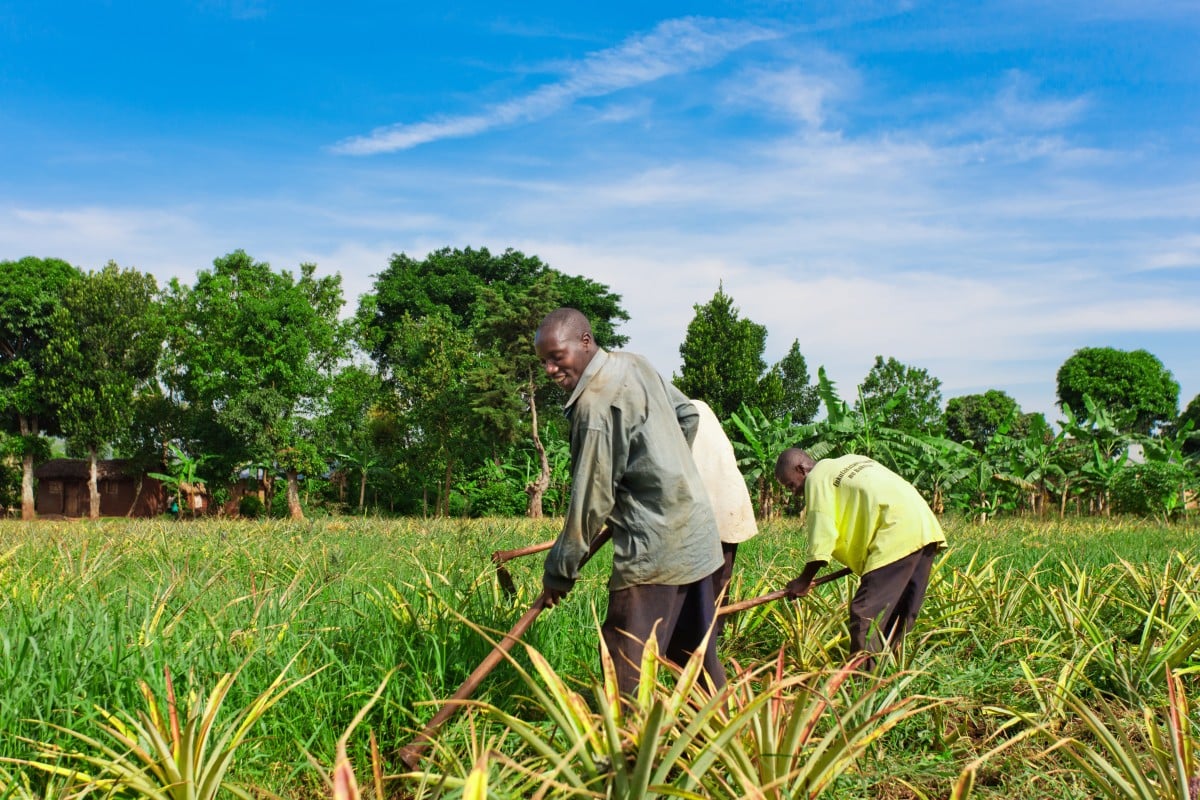
Africa has a surplus of agricultural products, Uganda’s leader says. Photo: Shutterstock
African countries want China to open up its markets to the continent’s agricultural products, Uganda’s President Yoweri Museveni told top Chinese diplomat Yang Jiechi after Beijing vowed to boost agricultural trade with the United States.
In a meeting with Yang in Uganda, Museveni said an increasing number of African
countries wanted to sell to the lucrative Chinese market.
He said Africa had a surplus of agricultural products despite exporting to Europe and the US, partly because trade between African countries remained low.
“Africa’s 54 countries have come together through market integration in blocs such as Comesa [Common Market for Eastern and Southern Africa] that are not sustainable,” Museveni said. “The surplus of production needs another intercontinental market and an external market like China to come in.”
China is Africa’s largest trading partner, having surpassed the US in 2009. Africa’s trade with China was worth US$204 billion last year, according to figures from China’s Ministry of Commerce.
China is also the continent’s largest lender, having advanced more than US$143 billion between 2000 and 2017 to African countries for building motorways, power dams and railways, according to figures from the China Africa Research Initiative at the Johns Hopkins School of Advanced International Studies in Washington.
Museveni said China was interested in importing some aquatic products from Uganda, such as the Nile perch fish, which he said had high demand globally.
China pledges another US$60b to Africa as leaders meet in Beijing
4 Sep 2018
With China exporting far more to the continent than it imports from it, African nations are aiming to restructure the trading relationship to narrow their trade deficit by working out what Chinese consumers want and how to get it to them.
China’s imports of African goods are dominated by natural resources such as crude oil, copper, cobalt, iron ore, diamonds, gold and titanium, which it buys to meet its industrial and manufacturing needs. In return, Africa imports machinery, electronics and manufactured consumer goods.
The call from Museveni came after China and the US reached an interim deal to resolve aspects of their protracted trade war. US Trade Representative Robert Lighthizer has said that, under the deal, China had agreed to buy US$80 billion in American agricultural products over two years.
China has not confirmed the figure, but the deal is being watched closely by China’s other trading partners. Since the dispute with the US began in July last year, Beijing has diversified its agricultural product suppliers to include Argentina, Australia, Brazil, Germany, New Zealand and Spain.
China’s agricultural trade with Africa increased from US$650 million in 2000 to US$6.92 billion in 2018, Chinese Minister of Agriculture Han Changfu said this month. Han said he hoped that the figure would reach US$10 billion in the next decade.
Museveni said in the meeting with Yang that Beijing had “supported the continent’s prosperity through trade”, and that the memorandum of understanding he had signed last year with Chinese President Xi Jinping had “intensified the relationship” between their countries. A pipeline being constructed to Tanzania, to connect Uganda’s oil fields to the Indian Ocean, is being funded partly by Chinese investment, along with new industrial parks.
Yang said China would work with Uganda to implement the agreements reached by their respective heads of state and the outcomes of the Beijing Summit of the Forum on China-Africa Cooperation.
Beijing set to pledge further billions to Africa despite lending fears 2 Sep 2018
He said China would help Uganda to grow its economy, increase trade between the two countries, and build industrial parks and infrastructure. Beijing would continue to fund projects through the Belt and Road Initiative, its transcontinental infrastructure investment strategy, and through Uganda’s development plan Uganda Vision 2040, without providing details.
After Uganda, Yang will continue his African tour by visiting Congo-Brazzaville. The tiny oil-dependent central African nation recently fell into debt distress when global oil prices dropped, forcing Beijing to restructure its loans to unlock a bailout by the International Monetary Fund.
Xi denies China is spending money on African ‘vanity projects’
3 Sep 2018
Yang will then visit the West African nation of Senegal, where Beijing is funding large infrastructure projects.
Several other leading Chinese diplomats have made trips to Africa this year, including Foreign Minister Wang Yi, who visited South Africa in October. Last week, Ji Bingxuan, vice-chairman of the Standing Committee of the National People’s Congress – the permanent body of China’s legislature – led a group of officials visiting Congo-Brazzaville.
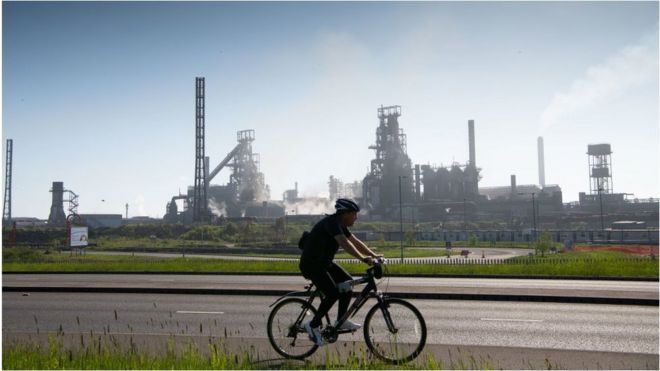
Image copyright GETTY IMAGESImage caption Port Talbot employs just under half of Tata’s 8,385 UK workforce
Tata Steel plans to cut as many as 3,000 jobs across its European business in another bid to come to terms with a “severe” international steel market.
The company wants to focus on higher-value products, it said, adding there would be no plant closures.
About two thirds of the job cuts will be office-based, it added.
The announcement comes after a merger with German rival Thyssenkrupp was blocked during the summer. Bosses had hoped the deal could reduce costs.
“Today we are highlighting important proposals towards building a financially strong and sustainable European business,” said Henrik Adam, chief executive of Tata Steel in Europe.
“We plan to change how we work together to enable better cooperation and faster decision-making. This will help us become self-sustaining and cash positive in the face of unprecedented severe market conditions, enabling us to lead the way towards a carbon-neutral future.”
The business employs about 20,000 people and is owned by India’s Tata.
Port Talbot steelworks employs just under half of Tata’s 8,385-strong workforce in the UK.
Wales’ economy minister Ken Skates said: “I am seeking an urgent conversation with Tata to establish what this means for workers in Wales and how we can support those affected by this announcement.”
It also said it would seek to “preserve thousands of jobs in a key foundation industry for the UK” but did not put a number on how many would be saved.
British Steel employs about 4,000 people in Scunthorpe and Teesside.




 CHINDIA ALERT: You'll be living in their world, very soon
